Category: Georgia

  • Rendahl: From Yerevan to Athens

    Rendahl: From Yerevan to Athens

    It was already evening in Yerevan when I boarded a bus bound for Istanbul. My round-trip ticket cost $70, it was January of 1998, and I was 22 years old. When I reached Istanbul the following day, I had planned I would spend a few days touring the city before taking another bus to meet my dearest college friend, Cathy, in the Plaka in Athens.

    Kristi Rendahl: You may expect this story to have an unfortunate ending, but I can assure you that it was as brilliant in practice as it was in theory.

    Kristi Rendahl: You may expect this story to have an unfortunate ending, but I can assure you that it was as brilliant in practice as it was in theory.

    The closed border between Armenia and Turkey made it impossible to take a direct route between the two cities. The bus would travel north through Armenia, and west across much of Georgia and all of Turkey, adding at least an extra 100 miles to the journey.

    I got a lot for my money. There were only seven people on a charter-sized bus, so I had plenty of personal space. But it didn’t have a bathroom. No matter, I thought, surely I’m not the only person who will need to stop for one.

    A few hours later, we had only reached a northern province of Armenia and nature called, but I was too embarrassed to request a stop so soon. Ever the Girl Scout, I knew that I could manage a solution. My scheme, inspired in part by years of going behind bushes when necessary, was to drink the juice I’d brought with me, then open the box and pee in it. (That’s entirely too much information for readers, but it is the absolute truth.)

    You may expect this story to have an unfortunate ending, but I can assure you that it was as brilliant in practice as it was in theory. Privacy was not an issue, since there were so few passengers. Fitting between the seats, aiming into the mini-box, and stopping the flow when it was full were all tricky maneuvers, to be sure, but well worth the effort. I left enough room at the top to fold down the carton, then I placed it standing up in the trash can attached to the bench in the aisle. And so the journey continued.

    When we reached the Georgian border, we encountered no significant issues until we tried to cross border control on the Georgian side. The process, if one can call it that, took hours. I fell into a very peaceful sleep, as I am able to do yet today in most any place or position. I slept until another passenger, an older woman, woke me to say that they wanted $5 from each of us, that otherwise they wouldn’t let us cross the border. Fair enough, I thought, as long as they’ll let me go back to sleep, and I groggily handed over the cash.

    At one point during the hours that it took to actually cross both borders, I was at the front of the bus with the other passengers who were from various countries in the region. The bus was lit with a black light. I remember because it brought to attention the detergent that glowed in my jeans from poorly executed hand washing. I saw the other women notice the offensive blotches. “She can’t even wash her own clothes,” they thought, “These Americans can’t do anything.” Shame.

    It was daylight when we stopped to eat in a rest area of sorts. The others immediately began cleaning the bus, sweeping the floor, and clearing our trash. I did my part and carried out my box with no one any the wiser.

    There were mandarines on the trees and shit all over the floor of the bathroom facility. Quite a juxtaposition. We all opted to line up outside as we had behind a building on the border. “Are you done yet?” an older Armenian woman asked me as she stood up. “No,” I said. Performance anxiety, I thought. “Go ahead without me.”

    Everyone shared their food with the others, so there was plenty to eat. It seemed a microcosm of what the world ought to be doing.

    When we reached the Georgia-Turkey border, I was told that I could not cross, that I needed a Turkish visa. The border agent, who happened to be Armenian, and I had been living in Armenia for seven months at that point, instructed me to go to Batumi. What is that, I wondered, some kind of governmental ministry? Not intending to visit the Republic of Georgia, I hadn’t done enough research to learn that Batumi was in fact a city in Georgia. I stood there forlorn, while my travel companions got back onto the bus.

    Already 11 p.m., the border personnel told me I could wait there until morning when a bus would be coming through en route to Batumi. They offered me a white plastic chair for the night.

    Dreading a nine-hour overnight sit in now-slovenly clothes with border guards and my stuffed backpack, I assumed a genuinely pathetic look and asked if there were a hotel nearby. Bewildered by how I’d gotten myself into this mess, two-parts impatient and one-part taking pity on my high-maintenance request, they directed me to a man who was going to Batumi that night.

    Now clear that Batumi was a town where I could get a Turkish visa, I got in his car and silently hoped that the stuffed animal hanging from his rearview mirror was indicative of a man with children. And a conscience.

    Just 10 miles or so back into Georgia, he took me to the front desk of a hotel and explained my curious predicament. He told me, or them (it’s hard to recall), what I needed to do in the morning. Not a smile crossed this man’s face, but he’d gone out of his way for me. Lingering a bit before leaving, perhaps wondering if his kindness would reap rewards of some kind or another, I closed the evening with a handshake and a grateful smile.

    The next morning I saw that I was on the shores of the Black Sea. I’m told it’s much more beautiful now, but I thought it was more than fine then. It was big and beautiful and still. The Turkish consulate didn’t open for several hours, so I sat on the rocky beach and watched the cargo ships. For a different reason this time, I drank another juice box.

    I showed up at the consulate on time, but there was already a line of people. Mostly Georgians who were curious about an American’s presence, they insisted that I go to the front of the line. They brought over a Georgian girl who spoke English and who, in effect, asked me what on earth I was doing there. They were incredulous about the American girl who lives in Armenia, but is traveling through Georgia en route to Turkey on her way to Greece.

    But they were happy to help, and so showed me to the afternoon shuttle traveling to Trabzon in eastern Turkey. The driver of the shuttle, a lively chap, sat me in the front seat and became quite animated about taking the damsel in distress closer to her destination. He remained so until we reached the border, my second time in two days, and I was turned away once again.

    The border agent was not Armenian this time. It was a repeat of my first border crossing attempt, but this time I was missing Georgian paperwork. Unlike the first driver, this one looked truly remorseful to leave me behind.

    The border employees connected me with yet another person driving to Batumi, this time displaying only pity, and I wondered if I would ever be allowed to leave this country.

    The man, George, knew some 100 words in English, which is surprisingly adequate for communication. When we reached Batumi, he asked, “Friend, Turkish consulate, friend?” The irony that he didn’t understand or didn’t acknowledge was that Armenians and Turks are not the best of friends, despite their shared border and similar customs, and I was coming directly from Armenia.

    I shrugged to say, “I don’t know,” tears silently falling down my face. He gently mocked my crying before getting out of the car to see if anyone at the Turkish consulate could help. His insensitivity was quite like the grin-and-bear-it kind of upbringing I’d had in a Scandinavian family in the Mid-West. I immediately felt better.

    When he returned to the car, he told me that someone was going to help. That someone had remembered me from earlier in the day and was apparently some kind of high-level police officer in town. He regretted my situation because it could have been avoided if he’d noticed I was missing the Georgian visa, which I had been told was not an issue when you have an Armenian residency card.

    Remarkably, the officer invited me to stay with his family. He did so with the translation assistance of an Armenian grandmother from the neighborhood. “They’re a good family, jan,” she assured me in Armenian. And so I went to their third-floor apartment across the street from the Turkish consulate. His wife greeted me warmly, even if confused by my sudden and rather unannounced appearance. They invited over the English teacher from the high school to have tea and discuss my situation. With this kind of graciousness, it was obvious at this point that my problems would be solved, though I didn’t know exactly how.

    The family had a wonderful pink bathtub with hot running water, which was most welcome after another day on the road and the prior seven months without either. She made a delicious khatchapouri in the morning and he sent over two police officers to guide me through my day. God knows I needed a guide at that point.

    Our first stop was to take visa photos, which they kindly paid for. Then we went directly to the Georgian consulate across town, where they began processing my application and told me to return later that day. As we left the consulate, to my great surprise, we ran into two Americans I knew, Hannah and Ritchie, also Peace Corps volunteers in Armenia at the time. They were encountering the same problems and were accompanied by another man named George, a paper salesman, who had gotten out of the bus to help them at the border.

    Now veterans of paperwork hassles, the police officers expedited their processes, so that we could all make the 4 o’clock shuttle to Trabzon, a religiously conservative town in eastern Turkey. While the consulates did their work, we went out for a joyful lunch with Georgian wine—me, the police officers, George the paper salesman, Hannah, and Ritchie. George was a gifted artist and entertained us all by sketching images of our situation, complete with tears that were shed on the border.

    The days of kindness had filled my heart and it was sad to leave for Trabzon that afternoon. A gypsy child pretended to cry while begging for money just as our shuttle was to pull away. I pretended to cry, too, and a smile splayed across his face. I was confident that I’d get out of the country this time, so I gave him all of my Georgian lari.

    At the border, there were friendly smiles all around as we successfully crossed into Turkey. A Georgian woman who was on her way to sell her pottery in Turkey gave each of us a beautiful vase she’d crafted. The vase still sits on my piano.

    George the paper salesman, who was bound for Istanbul, was also in the shuttle and he checked us into a hotel once we arrived. One room for the girls, one room for the boys.

    Hannah and Ritchie stayed to tour the area, but I was running low on time before I needed to be in Athens. George and I made plans to take a domestic flight to Istanbul the following morning. No more buses. The flight was at 4 a.m. and he bought my $50 ticket. “Why are you being so generous?” I asked him. “The next time you see someone who needs help, what are you going to do?” he asked in response. Point taken.

    He already had a hotel selected in Istanbul, so he got me my own room there, too. That day was Orthodox Christmas and he’d arranged to see friends for dinner that evening. We gathered for the festivities in the hotel’s restaurant in the basement, where we ate and drank for hours.

    I rested easy that night knowing that George had already researched the station from where I could take a bus to Greece. He’d also given me a first-rate tour of the city’s main tourist sites and insisted that I call my father from his cell phone to tell him of my whereabouts. My father sounded suspicious about such a charitable stranger. “Are you sure he doesn’t want something in return?” he asked. After nearly three days together, it was clear that his expectations were as pure as a father could hope for.

    He took me to the bus station the next morning and I got my ticket for Athens. We gave each other parting kisses on the cheek, a hug, and I was on my way. I’m only sorry to say that we haven’t kept in touch.

    On the ride to Athens, I was talking with a Chinese tourist and it came up that I was living in Armenia. A guy about my age sitting across from me was listening to our conversation and finally asked me why I kept mentioning Armenia. He was Greek-Armenian, he told me in English, and so we switched to speaking Armenian. We talked until we reached his hometown of Alexandroupoli, a port city in northeastern Greece.

    At his stop, we said goodbye, but he came back a few minutes later with a bag of treats for the journey and gave me a fast peck on the lips. I heard a loud disapproving tsk from the man seated in front of me, but I thought it was terribly sweet and oh-so Armenian. I’d told him where I’d be staying in Athens, so he called to say hello a few times over the next two weeks, but we were never to meet again.

    The two weeks with Cathy in Greece were full of other stories, but the time finally came to return to Armenia. I’d intended to return by bus, but I would have had the same problems, so I bought an airline ticket with the credit card my parents gave me for emergencies. At just over $400, it cost the equivalent of nearly four months of my stipend as a Peace Corps volunteer.

    But no credit card in the world could have bought that trip from Yerevan to Athens.
  • Turkey and Ukraine Lead the Most Visited Countries among Georgians

    Turkey and Ukraine Lead the Most Visited Countries among Georgians

    Written by Tako Khelaia

    The FINANCIAL — 1,793,449 foreign guests visited Georgia during first 8 month of 2011, which is a 43% growth in accordance to last year’s index according to the Georgian National Tourism Agency (GNTA).

    For the first 8 month of 2010, 1,258,488 foreigners visited Georgia which is 534,961 less in accordance to 2011. As GNTA notes, for the first 8 months of 2009, 942, 371 foreigners traveled to Georgia and the number of guests in 2009 was 35% less in accordance to the first 8 months of 2010.


    The number of Georgian tourists visiting foreign countries has also increased by 4% this year. According to the index of the first 8 months of 2011, 1,415,385 Georgians visited foreign countries, while in 2010 only 1,356,599 did which were 58,786 less comparing to the first 8 months of 2011.


    According to the GNTA, Turkey still tops the list of the most visited countries. A total of 28% of Georgian tourists visited Turkey during the first 8 months of 2011. Ukraine holds the second place of the most frequently visited countries. Overall 16% of Georgian tourists visited Ukraine , 15% Armenia, 9% Germany, 9% Azerbaijan, 4% USA, 4% United Kingdom,3% Italy, 2% Egypt, 2% Poland and the remaining 8% to other parts of the world.


    Tbilisi has been the most popular tourism destination among foreign tourists. A total of 60% of the total visitors to Tbilisi during the first 8 months of 2011 were foreigners. Batumi was visited by 43% of tourists, Mtskheta by 8%, Kutaisi by 6%, Lagodekhi 5%, Kazbegi 4%, Gori 4%, Kobuleti 3%, Mestia/Ushguli, 2%, Davit Gareji, 2%, Vardzia 1%, Telavi 1%, Bakuriani 1%, Gudauri 1 % and the other 9% belongs to different other destinations in Georgia.


    “For the purpose of leisure and recreation, 34% of foreigners visited Georgia during the first 8 months of 2011. For visiting friends and relatives, 26% of tourists visited our country and 20% of foreign guests were on their business and professional trips in Georgia during the first 8 months of 2011. 10% of foreign tourists visited our country for the purpose of transit, 3% due to education and training and 3% for employment,” the GNTA notes.


    “2 % of foreign guests visited Georgia during the first 8 months of 2011 for the purpose of shopping, 2% for health and medical care, 0.2 % for religious reasons or pilgrimages and 0.1 % of foreigners were on diplomatic missions,” GNTA notes.


    The majority of tourists are business travelers and transit travelers (31%) who stayed for one day in Georgia. According to the statistics 26% of tourists stayed for just 2-3 days, 12 % for 4-5 days, 8% for 6-7 days, 10% for 8-14 days, 4% for 15-20 days, 5% for 21-30 days and 4% for 31 or more days. The average number of nights spent in Georgia was 8, while for the purpose of leisure and recreation the average length of a visit to Georgia was 6 days. While visiting friends and relatives in Georgia, the average length of a visit was 11 days and for the purpose of business or professional duty the average length of a visit was 13 days.


    According to the GNTA, 42% of tourists preferred to stay with their families, 38% used hotel accommodation, 9% guesthouses or cottages, 8% hired a flat, 5% stayed in transport facilities, 1% stayed in camping or trailer park and 0.3% were in Airport s or in railway stations. The average expenditure of one tourist during 8 days spent in Georgia was 1,470 GEL.


    The number of domestic tourism for the first 8 month of 2011 has as well increased in Georgia and in accordance to the same period of last year the number has raised by 20%. For the first 8 months of 2011 the number of domestic tourists was 866,551, while in 2010 there were 721,382, which is 145,175 times less in accordance to this year’s index.


    “The region of Adjara was visited by 1,006,319 tourists during the first 8 months of 2011, of which 655,419 were Georgians and 350,900 were foreign tourists. The number of tourists visiting Adjara has increased by about 36% this year. During the first 8 months of 2010, 741,475 tourists visited Adjara from which 498,393 were Georgians and 243,082 foreigners,” the GNTA notes.


    “Among the purposes of domestic tourists for traveling within the territory of Georgia, visiting friends and relatives was the most prioritized. A total of 49% of domestic tourists visited their friends and relatives, 39% were visiting different parts of Georgia for leisure and recreation, 6% for business and professional purpose, 3% for Health and medical care, 2% for pilgrimage, 1% for employment, 1% for shopping and 0.3% for education or trainings,” GNTA officials note.


    According to the GNTA the average length of domestic tourists’ visits to different parts of Georgia was 5 days. 23% of domestic tourists stayed for one day, 35% for 2-3 days, 10% for 4-5 days, 12% for 6-7 days, 12% for 8-14 days, 3% for 15-20 days, 3% for 21-30 days and 1% for 31 or more days. 75% of domestic tourists preferred to stay with their families, 5% stayed at guesthouses or cottages, 4% in hotels, 2% hired a flat, 1% stayed in different transport facilities, 1% went for camping or staying in trailers, 1% in monasteries, 0.4 % in hospitals and 12% didn’t spent the night at all.


    “The most attractive tourism destination for Georgians was Tbilisi which was visited by 13% of tourists during the first 8 months of 2011. Batumi was visited by 8% of Georgian tourists, Kutaisi/Motsameta/Sataplia by 6%, Tskneti/Manglisi/Tsavkisi/Kodjori by 3% Mtskheta/Armazi/Akhatani/Saguramo by 3%, Kobuleti by 3%, Khashuri/Surami/Kvishkheti by 3% and Bakuriani by 2%,” the GNTA notes.


    “Zugdidi was visited by 2% of Georgian tourists, Gori by 2%, Sighnaghi/Bodbe by 2%, Zestafoni by 2%, Telavi by 2%, Chiatura, Kaspi, Lagodekhi, Samtredia, Borjomi and Ozurgeti were also visited by 2% of Georgian tourists. The other destinations in Georgia were visited by 42 % of domestic tourists,” the GNTA notes.


    The average expenditure of Georgian tourists in Georgia was on average 581 GEL during 5 days. The average expenditure of domestic tourists on residence for 5 days was 211 GEL, on food and drinks 117 GEL, on souvenirs and gifts 53 GEL, on transport 43 GEL, on train fares 26 GEL, on transport 46 GEL and on other important goods and products 85 GEL.

  • IMPERIAL  NATIONALISM  &  TURKISH  UNION

    IMPERIAL NATIONALISM & TURKISH UNION

    Republic of Turkey , born from the ashes of a 600-year Empire and having the character of independence , has pioneered many freedom movements which resulted with the establishment of new free countries within the first half of 20th century . The founders of the Republic under the leadership of Ataturk set up this new state by giving the whole nation  , desolated and impoverished , the spirit of resistance and by getting their rights with force against the Western Allies at that time ; therefore , they deserve our feelings of gratitude and respect .

    Today , at this point , we , as Turkey , need to follow much more active government policies . Personally , I strongly believe that the nationalism concept taking place among the founding principles of the Republic  should be considered as Imperial Nationalism . In other words , Turkey , will exert its power and authority in every piece of land which it already exists or existed before and which it strongly wishes to exist in the future . No need to say , this is not an enlargement basing on the military power , but on the contrary , an enlargement policy by using all the historical and cultural close relations and by creating a land of attraction for other states and people . Military power must always be respected and must create hesitation among the possible enemies .

     First of all , I want to start wit a basic fact of creation : every entity in the universe has an energy and the power of this energy is directly proportional to its mass .

     If we apply this fact to politics , the way to gain power in world politics goes through creating unity , as our ancestors wisely said “union makes us strong” . Examples are many : USA today , Ottoman & Roman Empires in the past … Of course , the age of empires ended long time ago , but there is always a future for the unions . Even the United States , despite its present power and influence , continuously brainstorms about establishing a One-World-Government under the authority of the United Nations controlled & directed by the USA .

     Under the light of the basic reality above , Turkey , in order to be effective in world politics , needs to unite . The candidates for setting up a union stand next to us : Azerbaijan , Kazakhstan , Turkmenistan , Uzbekistan , Kyrgyzstan and , due to geographical and historical ties , Georgia and Tajikistan . Except the last two , all Turkish origin states … This unification process can first start with the establishment of confederation and may end up with a federation .

     Due to its historical experience and the effectiveness in state establishment , Turkey must perform a leadership for establishing “Eurasia Federation” consisting of the eight states above . This new Federation will represent  a union covering approximaely 5 million square kilometers and a population of 150+ million , which is hard to ignore .

     It is obvious that many of the other actors in the world politics will try every way in order to prevent such a powerful union . Moreover , the present administrators in these eight countries will be reluctant in giving up the power they currently use . However , nobody can claim that it will be easy . I personally do believe that the people forming the nations of those states will look at this unification idea with sympathy .

    Finally , the last but not least , this new “Eurasia Federation” will need a technology-creating reliable partner in order to set up a confederation . That partner is JAPAN . Imagine Japan and Turkey with their own distinctive and leading characteristics and , right beside them , all other participating countries with their natural and social wealth . The future lies in the united political and social entities .

    Even the idea itself is exciting !… Don’t you think this is worth trying ???

  • Georgian Wine Attracts Thousands of Buyers Daily at Istanbul Ataturk Airport

    Georgian Wine Attracts Thousands of Buyers Daily at Istanbul Ataturk Airport

    Georgian Wine Attracts Thousands of Buyers Daily at Istanbul Ataturk Airport

    Written by Mariam Papidze

    05/09/2011 07:37 (20:35 minutes ago)


    The FINANCIAL — Six leading Georgian wine companies: Badagoni, Tbilvino, Kvanchkara LTD, Kindzmareulis Marani, Teliani Valley and Kakheti Traditional Wine Making are offering famous Georgian wine to the millions of passengers visiting Istanbul Ataturk International Airport .

    The six-month negotiations regarding this have been successfully completed.

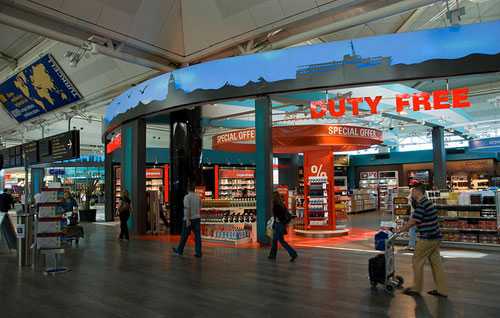
    As a result of cooperation between the Ministry of Agriculture and TAV Holding, a ‘Georgian Wine Corner’ was opened in the Duty Free in Istanbul Ataturk International Airport on August 15, 2011. “This will help not only the popularization of Georgian wine, but will also raise awareness of the national wine production and international market position to expand,” announced the Ministry of Agriculture of Georgia.

    In 10 days 36,000 bottles of wine have already been sold.

    “On the first day, 120 bottles of wine were sold in one hour. Among them 50 were bought by Georgian customers,” said Tamer Cigeroglu, the manager of ATU Georgia. “Mainly Russian, Japanese and Chinese people buy Georgian Wine. The most popular Georgian Wines are dry red and white wines. The cheapest wine costs 4 EUR and the most expensive is priced at 35 EUR. The most delicious and pleasant drinking among all represented wines in Duty Free is a Georgian wine.” added Cigeroglu.

    In the Duty Free area only one flag can be seen: the Georgian one. The Georgian corner takes up 4 square metres and has 4 shelves. Georgian wine is currently competing with Spanish, Italian and French wines also represented in Ataturk International Airport . Among them are the most expensive wines costing 1400 EUR. The companies which want to sell their products in Istanbul Ataturk International Airport are expected to pay between 1 and 15 million EUR per year.

    From September 5, 2011 Georgian wine will be sold in Ankara and Izmir International Airport s as well. As well as this, Georgian wine will be represented in Tbilisi and Batumi International Airport s from September 25, 2011. As for the budget of this project, the reconstruction of a new Duty Free shop in Tbilisi International Airport will 230,000 EUR. A minimum of 70,000 EUR worth of products will be placed in the shop.

    With Tbilisi and Batumi International Airport s an annual agreement will be made. But in the case of Turkish Airport s the term isn’t restricted. “The agreement is perpetual. There will be a Georgian corner in the Duty Free zone as long as we require it,” said Cigeroglu.

    As Tea Zakaradze, Administration Manager of TAV Airport s Holding said, the new Duty Free shop is being built, where 10 Georgian wine companies can sell their wines.

    “Beforehand, we cooperated with only Teliani Valley. But as our goal is to popularize Georgian wine the network expansion was necessary. Over 823,000 passengers were registered in Tbilisi International Airport in 2010. This year, we are expecting about a million passengers. Now we are also negotiating with other Airport s operated by us. By the end of December we’ll know in which Airport s Georgian wines will be sold,” said Zakaradze.

    Besides Tbilisi , Batumi and Istanbul Ataturk International Airport , TAV Airport s Holding operates another 9 Airport s all over the world. Among them are Ankara, Izmir and Antalya Airport s in Turkey, 2 international Airport s in Tunisia and 2 in Macedonia. Also, TAV Holding has Airport s in Riga and Arabia. Approximately 300 airline companies of TAV Airport s Holding completed 416,000 flights and served about 48 million passengers in 2010.

    “Those companies, who will make an agreement with Tbilisi International Airport , would sell their products in our other operating Airport s as well. By this time, only 6 wine companies have been willing to cooperate with us. TAV Holding and the Ministry of Agriculture of Georgia offered to all Georgian wine companies their cooperation,” added Zakaradze.

    “This is good advertisement for Badagoni Wine and for Georgian Wine. The wines of Badagoni were awarded several medals and honourable diplomas by various national and international companies, so we’ll be representing Georgia properly,” said Liza Bagrationi, PR Manager of Badagoni.

    Those companies, who don’t participate in this project, have refrained from making any comments. Some of them say financial problems were the reason and some of them say they weren’t offered the chance to sell their wines in the Duty Free zone.

    via The FINANCIAL – Georgian Wine Attracts Thousands of Buyers Daily at Istanbul Ataturk Airport.

  • Turkey Remains the Top Summer Destination for Georgians

    Turkey Remains the Top Summer Destination for Georgians

    Written by Tako Khelaia


    The FINANCIAL — Turkey tops the list of most popular summer destination for Georgians according to Georgian tour operators


    Despite the fact that the prices for trips to Turkey have significantly increased in 2011 compared to last year, Georgians still prefer to spend their summer vacations in neighbouring Turkey. Demand for European destinations has also increased compared to last year.
    Spain, Italy and Prague are among the most commonly visited European destinations according to Georgian tour operators.

    “Turkey remains the number one summer destination for Georgian tourists, mainly because of the easy customs service and low accommodation costs,” said Ella Karapetyan, Director of BusinessTravel.Com. “All inclusive service is quite expensive in Europe and hence most tourists from Georgia choose a simpler Bed and Breakfast service. For that reason, for the majority of holidaying Georgians it’s preferable to take a break in an all inclusive hotel with affordable prices in nearby Turkey.”

    “Getting a Schengen visa for unemployed citizens is very difficult in Georgia, especially for people who can’t prove their financial income, whereas they can freely visit Turkey. Turkish hotels offer the highest quality entertainment service, so people don’t have to visit many different places as they can have a fun time at their hotel. Antalya, Belek, Kusadasi, Bodrum, Marmaris, Alanya and Side are the most popular resorts in Turkey.

    The price for a one week holiday at a Turkish resort starts from 850 USD for a double room. The price includes a round trip airline ticket, insurance, transfer and accommodation. The cost of 11 nights in Khurgada, Egypt, at a 4 star hotel for 2 people starts from 1,300 USD at Sky.ge.

    According to Georgian tour operators the number of people visiting European countries has increased in 2011.

    “The number of Georgians visiting Europe has increased compared to last year. Combined tours     are one of the most popular products. People prefer such tours as they can save money and visit two or more countries in a short period of time. The Prague-Vienna-Barcelona tour is one of the most popular combined tours. The cost of such a tour starts from 700 USD for a week. Early bookings allow one to save another hundred USD or so. Our clients can choose different destinations and we will always provide them with the highest quality service,” said Lika Gugushvili, Owner of CG Tours.

    “This summer Turkey is the leader out of the most popular destinations as usual,” Gugushvili said. “The cost of a tour for 3 people in one room at a 3 star hotel starts from 500 USD. The price of a tour in a 5 star hotel in Egypt’s Khurgada resort starts from 700-800 USD per person. The cost of a Prague-Italy or Prague-Spain tour starts from about 700-800 EUR,” Gugushvili said.

    Georgian tour operator InterContinental is offering exclusive 2-person tours to Egypt from 23 August to 2 September at a 5 star, all inclusive hotel in Khurgada for about 1,627 USD. This price includes ticket cost, insurance, transfer to hotel and guide.

    Honeymoon tours have become more popular this summer according to some of leading Georgian tour operators.

    “Spain, Italy, Vienna and the Czech Republic are some of the favourite destinations of Georgian tourists. The cost of a tour in Spain costs about 1,200 EUR.  This price includes ticket price, transfer and Bread and Breakfast for two people for 1 week. The number of tourists aiming to visit Europe this summer has increased by about 20-30%. The number of people visiting European countries on their honeymoon has also risen recently,” stated BusinessTravel.Com.

    “A wedding tour that includes in itself 2 days in Prague and 1 week in Barcelona, Costa Brava starts from 950 EUR. This sum doesn’t include a wedding arrangement price. We are going to actively promote this tour and cooperate with wedding arrangement companies in Prague. Georgian couples may be deciding to celebrate their weddings in Prague in the not too distant future,” Gugushvili said.

    In recent times demand for trips to exotic corners of the world like Malaysia and Thailand has increased according to some Georgian tour operators.

    “Singapore and Malaysia for a 7 day tour fare (based on minimum 15 paxs) with Twin Sharing costs 1,997 USD per person and a Single Room Supplement 300 USD per person. The tour fare includes:  Return air ticket from Tbilisi to Singapore, 3 nights’ accommodation in Singapore at Lion City Hotel or similar class (3 star) hotel, 1 night accommodation in Kuala Lumpur Radius International Hotel or similar (3 stars) hotel, 2 nights’ accommodation in Malacca Everly Beach Resort Hotel or similar (3.5 star) beach resort, 6 Breakfasts & 6 Dinners, All transport & transfers by deluxe air-conditioned coaches, all entrance fees to places of sightseeing, Russian speaking guide and visa for Singapore,” Tikatours notes.

    “6 nights and seven days in Ibitsa Piscis Park’s 2 star Bed and Breakfast (BB) costs 339 EUR, in Hotel Neptuno 3 star (BB) – 409 EUR, Tres Torres 4 star (BB) – 479 EUR, Quilibra Aguas De Ibiza 5 star (BB) – 949 EUR. The price includes transfer from the Airport , insurance and hotel. This price doesn’t include air ticket cost, which starts from 450 EUR at the moment. People can spend their vacations in Ibiza from about 750 EUR,” Elite Tour noted.

    Georgia is in 6th place in the list of Places to Visit in 2011 according to the New York Times. The first 10 countries suggested by the NYT in order are: 1. Santiago, Chile; 2. San Juan Islands, Wash; 3. Koh Samui, Thailand; 4. Iceland; 5. Milan; 6. The Republic of Georgia; 7. London; 8. Loreto, Mexico; 9. Park City, Utah; 10. Cali, Colombia.

    Lonely Planet’s top 10 cities for 2011 are: 1. New York; 2. Tangier; 3. Tel Aviv; 4. Wellington; 5. Valencia; 6. Iquitos; 7. Ghent; 8. Delhi; 9. Newcastle; 10. Chiang Mai.

  • High-speed trains may be used on Baku-Tbilisi-Istanbul railway line

    High-speed trains may be used on Baku-Tbilisi-Istanbul railway line

    Baku is hosting the 11th session of the coordination council for rehabilitation, reconstruction and construction of the Marabda-Kartsakhi (Turkish border) railway line within the project of the new Baku-Tbilisi-Kars railway line, Trend reports.

    The session will hold talks on the rehabilitation, reconstruction and construction of the Tetriskaro-Tsalka and Tsalka-Akhalkalaki railways.

    It will also consider adjustments to expenditure on the Akhalkalaki-Karstakhi railway line, presented by the Azerinshaatservice.

    The sides will discuss construction of the Akhalkalaki railway station.

    Azerbaijan and Georgia will consider use of Spanish high-speed trains, produced by TALGO, on the Baku-Tbilisi-Istanbul line.

    They will approve a new budget for the Marabda-Kartsakhi Railway Company for 2011.

    via High-speed trains may be used on Baku-Tbilisi-Istanbul railway line | Vestnik Kavkaza.