Category: Armenia

  • The Azerbaijan-Turkey-Israel triangle both in Tel Aviv and in the Muslim Middle East

    The Azerbaijan-Turkey-Israel triangle both in Tel Aviv and in the Muslim Middle East

    Gulnara Inanc
    Director, Ethnoglobus
    An International Online Information and Analysis Center
    The first ever visit by an Azerbaijani foreign minister to Israel and Palestine, a visit all sides called historic, underscored the growing strategic partnership between Baku and its two partners in the Middle East.  The first person Elmar Mammadyarov met in Israel was the chairman of the Knesset Commission on Foreign Affairs and Defense, Avigdor Lieberman, who had long lobbied for close cooperation and a strategic partnership with Azerbaijan.  In large measure as a result of his efforts, earlier attempts by the Armenian lobby to raise the so-called “Armenian genocide” in the Knesset were blocked.  Last year, in response to the latest such attempt, Israeli President Shimon Peres and A. Lieberman, who was then Israeli foreign minister, openly declared that because of the country’s strategic partnership with Azerbaijan, the issue of the “Armenian genocide” would not be discussed in the Knesset.
    Mammadyarov arrived in Tel Aviv on March 24th, the very day Armenians have declared a memorial day for the “genocide.”  Armenian media on that occasion put out information about a Knesset discussion of the “genocide,” but that did not happen.  Undoubtedly, it was very important for Azerbaijan to receive reassurance that the recognition of the so-called “Armenian genocide” would not be considered in the Knesset.
    Among the notable outcomes of the Azerbaijani foreign minister’s visit to Israel was Baku’s declaration on his return that Azerbaijan is ready to sign a broad agreement concerning the resolution of the Nagorno-Karabakh conflict. [1] Israel beyond any doubt is not in a position to promise something regarding that conflict or to resolve it in some way.  But Tel Aviv is in a position to seek the broader support of Jewish groups around the world regarding the Azerbaijani-Armenian conflict.  And consequently, the growing ties between Azerbaijan and Israel open the way for progress in the talks just as was the case some five years ago.
    Earlier this year, the Jewish community of the United States held a conference on “Israeli Relations with the States of the South Caucasus.”  Avigdor Lieberman, with whom Foreign Minister Mammadyarov met in Israel, and President Shimon Peres have been devoting particular attention to the development of relations with the South Caucasus countries in general and Azerbaijan in particular. [2] Following his meeting with Lieberman, Mammadyarov went to Ramallah where the Palestinian authority declared its support for Baku’s position on the Nagorno-Karabakh conflict and on the issue of the so-called “Armenian genocide.”
    Azerbaijan supports the independence of Palestine and the division of Jerusalem, and in response to this support, it is seeking Palestinian backing on the two issues of greatest importance to itself.  A conference in Baku scheduled to be held later this summer can be considered part of the result of the Ramallah talks.
    Palestine enjoys authority and is at the center of attention of the Islamic world.  Azerbaijan, in turn, has grown into an economically and politically powerful country not only in the South Caucasus, but more broadly as well.  Rid al Maliki, the foreign minister of the Palestinian Autonomy, stressed this in his meeting with his Azerbaijani counterpart, noting that Azerbaijan enjoys authority in the leading international organizations. [3] Therefore, the support of Ramallah is significant, because it brings with it the attention of the Islamic and international community.  Thus, Azerbaijan was able to achieve its goal of gaining Palestine’s support for its positions.  In view of this, it is worth recalling the declaration made by Saudi Arabia’s foreign minister, Prince Haled ben Saud ben Haled, that the international community must mount pressure on Armenia to secure a settlement of the Nagorno-Karabakh conflict [4] and a second declaration by Iranian leader Ali Khamenei that “Karabakh is a Muslim land … something that is supported at the highest levels.”
    Both of these declarations can be seen as the result of Baku’s careful and balanced foreign policy.  Of course, one should focus attention on the fact that this historic visit to Israel took place after the Turkish-Israel rapprochement.  Interestingly, one of the clearest opponents of that rapprochement, A. Lieberman, nonetheless agreed with it.  The Israeli media suggested that he had not been informed about the plans for this new coming together.  Lieberman thus had to “close his eyes” and put out the red carpet for Mammadyarov.  Having lost its Arab partners after the Arab spring, Israel had no choice but to return to strategic relations with Turkey.  That, in turn, has increased the importance of the Azerbaijan-Turkey-Israel triangle both in Tel Aviv and in the Muslim Middle East.
    Azerbaijan’s geographic location next to Iran also increases its strategic significance, something that Israeli President Peres went out of his way to stress.  This does not mean that Baku offered or is planning to offer its territory as a place des armesfor a military operation against Iran.  Baku has repeatedly indicated that cooperation with Israel does not include that and is generally not aimed against Iran, even though many observers tend to see Baku’s cooperation with Israel as the former’s way of restraining Iran.
    Notes
    [1] See https://www.amerikaninsesi.org/a/elmar_memmedyarov/1649480.html (accessed 28 April 2013).
    [2] See http://izrus.co.il/dvuhstoronka/article/2012-02-28/17144.html#ixzz2QngVkiJZ (accessed 28 April 2013).
    [3] See  (accessed 28 April 2013).
    [4] See  (accessed 28 April 2013).
    AZERBAIJAN IN THE WORLD
    ADA Biweekly Newsletter
  • Turkey’s ‘Hidden’ Armenians keen to regain lost identity

    Turkey’s ‘Hidden’ Armenians keen to regain lost identity

    Posted on 1 week ago

    TUNCELI Turkey (AFP) – They dropped their language and religion to survive after the 1915 genocide, but close to 100 years on Turkey s “hidden Armenians” want to take pride in their identity.

    Some genocide survivors adopted Islam and blended in with the Kurds in eastern Turkey s Dersim mountains to avoid further persecution.

    Several generations down the road, the town of Tunceli hosted a landmark ceremony Wednesday for Genocide Remembrance Day, something which has only ever happened in Istanbul and the large city of Diyarbakir.

    The massacre and deportation of Ottoman Armenians during World War I, which Armenians claim left around 1.5 million dead, is described by many countries as genocide although Ankara continues to reject the term.

    Speaking in front of the ruins of the Ergen church — one of the few remnants of Christian Armenian heritage in the region — Miran Pirginc Gultekin, president of the Dersim Armenian Association, explained it was still rare to declare oneself openly as Armenian in Turkey.

    “We decided that we had to get back to our true nature, that this way of living was not satisfactory, that it was not fair to live with another s identity and another s faith,” he said.

    Despite converting to Alevism, a heterodox sect of Islam, and taking Turkish names, the ethnic Armenians who stayed on their ancestral land suffered from continued discrimination and the elders often struggle to summon their memories.

    “My mother told me how her family was deported. She was a baby at the time and her mother considered drowning her in despair,” said Tahire Aslanpencesi, a sprightly octogenarian from the village Danaburan.

    “My mother used to say all the misery that came after would have been avoided had her mother drowned her,” she recalled.

    After converting to Islam, many of the so-called “crypto-Armenians” said they still faced unfair treatment: their land was often confiscated, the men were humiliated with “circumcision checks” in the army and some were tortured.

    Hidir Boztas grandfather converted to Islam, gave his son a Turkish name and the clan intermarried with a Kurdish community in the village of Alanyazi.

    “We feel Armenian nonetheless and in any case the others always remind us of where we come from. No matter how many of their daughters we marry, and how many of ours we give them, they will continue to call us Armenians,” he said.

    The Armenian community shared the Kurds suffering when the regime cracked down on Kurdish rebellions, from the 1938 revolt to the insurrection started by the PKK group in 1984.

    For a long time, only those who had left the ancestral homestead dared to make their Armenian roots known.

    “Armenians in Istanbul are in a big city, they have their neighbourhoods, their churches, nobody can do anything to them. But in these villages, there s rejection and insults,” said Hidir Boztas, 86.

    Human rights campaigners gathered Wednesday in downtown Istanbul carrying portraits of genocide victims.

    They were only a handful but they argued that the simple fact that such an event was authorised and groups such as theirs invited proved that attitudes were changing.

    “Ten years ago, such an event was impossible in Turkey,” said Benjamin Abtan,” a European activist.

    One of Hidir s nephews, 42-year-old Mustafa, a businessman, is one of a growing number of Muslim Armenians who want to be proud of their identity.

    Mustafa has decided to name his construction firm Bedros after Hidir s grandfather, who was deported during the genocide.

    “It symbolised my past. My great-grandfather was called Bedros, and I wanted his name to live on. I am against radicalism, and I don t do this through racism or religious extremism, but I don t deny my origins — everyone knows them.”

    He said he hoped the unprecedented ceremony in Tunceli Wednesday would encourage more members of the community to come out in the open.

    “The aim is to allow people to assert their identity more freely and also to generate more interest for the little Christian heritage left in the region,” said Miran Pirginc Gultekin.

    His society was created three years ago and has around 80 members.

  • Flash News!!!! Boston Bomber Master Mind is Armenian

    Flash News!!!! Boston Bomber Master Mind is Armenian

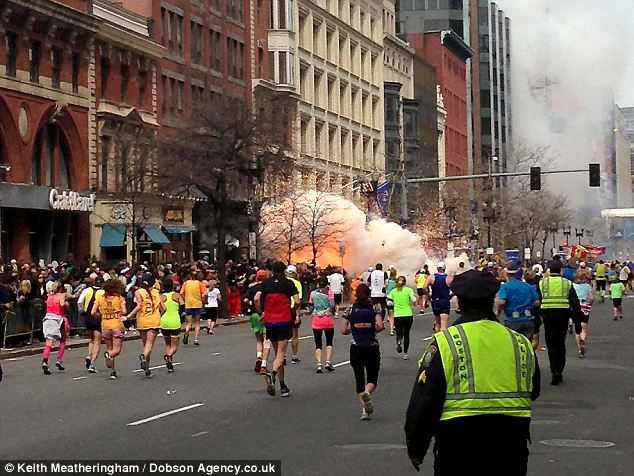
    bostonThe hunt for Misha: Bomb investigators search for mysterious ‘bald, red-bearded Armenian man’ accused of radicalizing Tamerlan

    • Tamerlan Tsarnaev is thought to have fallen under the influence of a new friend, a Muslim convert known only as Misha
    • He is said to have steered the 26-year-old elder Boston bomber to a radical strain of Islam
    • ‘Somehow, he just took his brain,’ said Tamerlan’s uncle, Ruslan Tsarni, who recalled conversations with Tamerlan’s worried father about Misha’s influence
    • Zubeidat Tsarnaeva, mother of the bomber’s said it was ‘nonsense’ that Misha converted her son to terrorism

    According to Daily Mail, as the investigation into why and how the Boston bombers unleashed their deadly attacks continues, the focus has centered to an elusive and mysterious Muslim convert known only as Misha.
    Family members of Tamerlan Tsarnaev describe Misha as the guiding influence in the elder bomber developing radicalized views – but to date it is believed that law enforcement and the media have failed to find him.
    Speculation as to who Misha is wildly varies, with some suggesting he is the mastermind behind the marathon bombings while others think that he could be a Russian spy – sent to identify and keep tabs on young men like Tamerlan who are at risk of turning to militant.

  • AFP: Turkey’s Muslim Armenians come out of hiding

    AFP: Turkey’s Muslim Armenians come out of hiding

    By Nicolas Cheviron (AFP) – 1 day ago

    TUNCELI, Turkey — They dropped their language and religion to survive after the 1915 genocide, but close to 100 years on Turkey’s “hidden Armenians” want to take pride in their identity.

    Some genocide survivors adopted Islam and blended in with the Kurds in eastern Turkey’s Dersim mountains to avoid further persecution.

    Several generations down the road, the town of Tunceli hosted a landmark ceremony Wednesday for Genocide Remembrance Day, something which has only ever happened in Istanbul and the large city of Diyarbakir.

    The massacre and deportation of Ottoman Armenians during World War I, which Armenians claim left around 1.5 million dead, is described by many countries as genocide although Ankara continues to reject the term.

    Speaking in front of the ruins of the Ergen church — one of the few remnants of Christian Armenian heritage in the region — Miran Pirginc Gultekin, president of the Dersim Armenian Association, explained it was still rare to declare oneself openly as Armenian in Turkey.

    “We decided that we had to get back to our true nature, that this way of living was not satisfactory, that it was not fair to live with another’s identity and another’s faith,” he said.

    Despite converting to Alevism, a heterodox sect of Islam, and taking Turkish names, the ethnic Armenians who stayed on their ancestral land suffered from continued discrimination and the elders often struggle to summon their memories.

    “My mother told me how her family was deported. She was a baby at the time and her mother considered drowning her in despair,” said Tahire Aslanpencesi, a sprightly octogenarian from the village Danaburan.

    “My mother used to say all the misery that came after would have been avoided had her mother drowned her,” she recalled.

    After converting to Islam, many of the so-called “crypto-Armenians” said they still faced unfair treatment: their land was often confiscated, the men were humiliated with “circumcision checks” in the army and some were tortured.

    Hidir Boztas’ grandfather converted to Islam, gave his son a Turkish name and the clan intermarried with a Kurdish community in the village of Alanyazi.

    “We feel Armenian nonetheless and in any case the others always remind us of where we come from. No matter how many of their daughters we marry, and how many of ours we give them, they will continue to call us Armenians,” he said.

    The Armenian community shared the Kurds’ suffering when the regime cracked down on Kurdish rebellions, from the 1938 revolt to the insurrection started by the PKK group in 1984.

    For a long time, only those who had left the ancestral homestead dared to make their Armenian roots known.

    “Armenians in Istanbul are in a big city, they have their neighbourhoods, their churches, nobody can do anything to them. But in these villages, there’s rejection and insults,” said Hidir Boztas, 86.

    Human rights campaigners gathered Wednesday in downtown Istanbul carrying portraits of genocide victims.

    There were fewer than 200 people there but the protestors stressed such an event would have been unthinkable only a decade ago.

    One of Hidir’s nephews, 42-year-old Mustafa, a businessman, is one of a growing number of Muslim Armenians who want to be proud of their identity.

    Mustafa has decided to name his construction firm Bedros after Hidir’s grandfather, who was deported during the genocide.

    “It symbolised my past. My great-grandfather was called Bedros, and I wanted his name to live on. I am against radicalism, and I don’t do this through racism or religious extremism, but I don’t deny my origins — everyone knows them.”

    He said he hoped the unprecedented ceremony in Tunceli Wednesday would encourage more members of the community to come out in the open.

    “The aim is to allow people to assert their identity more freely and also to generate more interest for the little Christian heritage left in the region,” said Miran Pirginc Gultekin.

    His society was created three years ago and has around 80 members.

    via AFP: Turkey’s Muslim Armenians come out of hiding.

  • Armenian NGOs against the moving of UN regional offices to Istanbul

    Armenian NGOs against the moving of UN regional offices to Istanbul

    Anna Nazaryan

    “Radiolur”

    Turkey is trying to affect the UN decisions and spares no financial means to transfer the UN regional offices to Istanbul. A number of Armenian NGOs assess this as a political step and are concerned with the initiative, which is a violation of the fundamental principles and objectives of the UN, particularly some points of the UN Charter.

    The Armenian NGOs have addressed a letter to UN Secretary General Ban Ki-Moon. A few days ago they applied to the visiting Deputy Prime Minister of Slovenia, urging the EU to give assessment to the issue.

    Another letter has been prepared in cooperation with representatives of the National Assembly and the Ministry of Foreign Affairs, member of the Public Council, President of the Association for Stable Human Development Karine Danielyan told reporters today. Everything should be done to prevent the transfer of UN regional offices to Istanbul.

    Head of the  Center for the Development of Civil Society Svetlana Aslanyan added that other countries also stand against the initiative.

    Former Human Rights Defender Larisa Alaverdyan said the intention to move UN regional offices to Istanbul pursues political purposes, although it is said that the initiative aims to eliminate the technical obstacles and settle the financial issues.

    Turkey is rather generous unlike many other UN member states, and most probably, this has served as a ground for the move of UN offices to Istanbul, Larisa Alaverdyan said.

    Turkey will thus have an opportunity to influence UN decisions, which does not meet Armenia’s interests, the ex-Ombudswoman said.

    How can a country that has committed genocide try to convince the world of its humanism? Ethnographer Hranush Kharatyan believes the world should know that the Ottoman Empire is a ‘genocidal country.’

    Greece has officially declared it stands against the intention to move US regional offices to Istanbul. It’s time for Armenia to do the same, she said.

    via Armenian NGOs against the moving of UN regional offices to Istanbul | Public Radio of Armenia.

  • Ex-minister rules out Turkey’s opening border with Armenia without Azerbaijan’s consent

    Ex-minister rules out Turkey’s opening border with Armenia without Azerbaijan’s consent

    Opening Turkey’s border with Armenia is only possible after an agreement with Azerbaijan, former Turkish Foreign Minister Hikmet Cetin told Trend news agency on Thursday.

    Hikmet_Chetin_040413_2

    According to him, Azerbaijan and Turkey have a very close relationship, and Turkey can not unilaterally open the border with Armenia.

    “Turkey and Azerbaijan have a special relationship. Nobody has described it better than the great leader Heydar Aliyev: “One nation – two states.” Turkey’s border with Armenia can not be opened unilaterally. This is very important in terms of relations with the South Caucasus, in particular with Azerbaijan. The border was open back when I was the Minister of Foreign Affairs. However, we shut it down when Armenia occupied Nagorno-Karabakh and the surrounding regions.

    The opening of the border between Turkey and Armenia is only possible after an agreement with Azerbaijan has been reached. Turkey should not make any decision potentially harmful for Azerbaijan,” Cetin said.

    With regard to the opening of the Van-Yerevan flight, the ex-minister said that was a decision of a private company, not the Turkish government.

    “Turkey is an open country, and private companies can make any decisions. However, observing Azerbaijan’s concern on the issue, the decision was canceled,” Cetin said.

    According to him, peace must be established in the region. However, this peace must be consistent with international laws and the UN resolutions.

    “The Nagorno-Karabakh conflict should be solved step by step. At the first stage, at least five regions surrounding Nagorno-Karabakh must be freed. This would mark a sign to promote the settlement of the conflict,” Cetin said.

    Azerbaijan and Armenia fought a lengthy war in the early 1990s. Armenian armed forces have since occupied over 20 percent of Azerbaijan’s internationally recognized territory, including Nagorno-Karabakh and seven adjacent regions. The UN Security Council has adopted four resolutions on Armenia’s withdrawal from the Azerbaijani territory, but they have not been enforced to this day.

    A precarious cease-fire was signed in 1994. However, units of the Armenian armed forces commit armistice breaches on the frontline almost every day.

    Russia, France and the U.S. — co-chairs of the OSCE Minsk Group — are mediating peace negotiations. Peace talks have been mostly fruitless so far.

    via Ex-minister rules out Turkey’s opening border with Armenia without Azerbaijan’s consent – AzerNews.