Category: Armenia

  • THE IRON SILK ROAD ADVANCES FURTHER

    THE IRON SILK ROAD ADVANCES FURTHER


    THE IRON SILK ROAD ADVANCES FURTHER

    By Vladimir Socor

    Friday, July 25, 2008


    Presidents Ilham Aliyev of Azerbaijan, Mikheil Saakashvili of Georgia, and Abdullah Gul of Turkey inaugurated on July 24 in Kars the construction work on the Turkish section of the Kars-Tbilisi-Baku (KTB) railroad. A project of inter-continental significance, connecting Europe and Asia through the South Caucasus, this “Iron Silk Road” is being built by the region’s countries through their own efforts.

    Azerbaijan is the locomotive in the KTB railroad, as in the region-wide energy projects. Baku single-handedly finances the railroad’s construction on Georgian territory, drawing on early oil revenues to invest in this strategic railroad. Azerbaijan rescued the project after the European Union, international financial institutions, and Turkey for various reasons had declined to finance the Iron Silk Road. According to Turkish Transportation Minister Bineli Yildirim, “If Ilham Aliyev had not demonstrated resolve, this project would not have been possible. Azerbaijan’s decision to finance the Georgian section is the most important step in the implementation of this project” (Trend Capital, July 14).

    The KTB project involves construction of 105 kilometers of new rail tracks from scratch, including 76 kilometers on Turkish territory to the Georgian border and 29 kilometers within Georgia. It also necessitates repair and upgrading of 183 kilometers of existing rail track on Georgian territory. The overall costs are estimated (in 2007 U.S. dollar terms) at $600 million, including $422 million for the railroad itself and nearly $200 million for associated infrastructure.

    The International Bank of Azerbaijan has provided a $200 million loan for the project on uniquely preferential terms: 25-year repayment period, at only 1 percent annual interest. Georgia will repay the loan by using part of the revenue generated by the railroad on Georgian territory.

    Azerbaijan, Georgia, and Turkey signed the intergovernmental agreement on KTB in February 2007. Construction work on the Georgian section started in November 2007, with Azerbaijan’s Azerinshaat Service company acting as general contractor.

    Speaking at the inauguration of work on the Turkish section on July 24, Saakashvili remarked that Azerbaijan is acting in practical terms as a “guarantor of Georgia’s independence,” financing the railroad now after having supplied Georgia with low-cost gas during the Russian blockade of January-February 2006. “The Georgian people will never forget this,” Saakashvili commented (Kavkas-Press, July 24).

    The railroad is scheduled for completion in 2011. It is expected to carry 1.5 million passengers and 6.5 million tons of cargo per year during the first three years of operation. Traffic is projected to increase to 3 million passengers and 15 million tons of cargo per year until 2015. This could stimulate a substantial expansion in the capacity of Turkish State Railways, which currently handles 19.5 million tons of cargo annually (Anatolia Agency, Turkish Daily News, July 20, 21).

    Functionally interrelated with the KTB, though a distinct entity, is Turkey’s Marmaray project to build a railroad tunnel under the Bosporus. With completion expected by 2010, the tunnel will enhance the KTB railroad’s commercial attractiveness. Trains will be able to travel without interruption from any point in Europe (e.g., London) continuously to the Caspian Sea.

    On the eastern Caspian shore, Kazakhstan is interested in a trans-Caspian linkup with KTB’s terminal in Baku. The KTB railroad will open direct access for Kazakhstan to European Union territory for the first time. Kazakhstan plans a massive increase in its commodity exports to Europe, including grain exports. With this in mind, Kazakhstan is completing an 800,000-ton grain-handling terminal near Baku, for trans-shipment from barges to the railroad.

    Asked about Armenia’s absence from the KTB project, President Gul commented in general terms that countries wishing to participate in region-wide projects should respect the territorial integrity of their neighbors (Zaman, July 24). This diplomatic comment reflects the ongoing feelers between Turkey and Armenia about a possible high-level meeting to ameliorate relations (see article by Gareth Jenkins below). In fact, Yerevan had actively opposed the KTB project and worked with its allies in the United States and Europe to block international funding for it.

    Yerevan had hoped to force a change of route, diverting the KTB line from Kars to Gyumri in Armenia. This would have made no economic sense inasmuch as the Kars-Gyumri line (existent, but closed by Turkey due to Yerevan’s occupation of Azerbaijani lands) is a sideline, of merely local interest. Earlier, and similarly, Yerevan and allied groups in the West had unsuccessfully opposed the Baku-Tbilisi-Ceyhan oil pipeline.

    Thanks to KTB, Azerbaijan and Turkey will be linked with each other by railroad for the first time, albeit through Georgia. In addition, Baku and Ankara intend to connect Nakhchivan, the Azerbaijani exclave, with Turkey’s railroad system. President Aliyev and Turkish Prime Minister Recep Tayyip Erdogan agreed during their recent meeting in Nakhchivan to go ahead with this project (Trend Capital, July 14).

    In a related development, Turan Air company in Baku inaugurated on July 21 regular direct flights between Haidar Aliyev International Airport and Kars (Day.az, July 21). Azerbaijan, Georgia, and Turkey are beginning to form what amounts to a common economic region, increasingly connected with Europe and potentially with Central Asia, on either side of this region’s territory.
  • TURKEY AND ARMENIA: FROM SECRET TALKS TO “SOCCER DIPLOMACY”?

    TURKEY AND ARMENIA: FROM SECRET TALKS TO “SOCCER DIPLOMACY”?


    TURKEY AND ARMENIA: FROM SECRET TALKS TO “SOCCER DIPLOMACY”?

    By Gareth Jenkins

    Friday, July 25, 2008


    On July 24, the presidents of Turkey, Georgia and Azerbaijan formally inaugurated the Turkish section of the Baku-Tbilisi-Kars railroad, which will eventually provide the first ever rail link between the three countries. Speaking at the groundbreaking ceremony, Turkish President Abdullah Gul declared, in an unmistakable reference to Armenia, that “this project is open to all countries in the region who wish to contribute to good, neighborly relations, peace and prosperity” (NTV, CNNTurk, July 24).

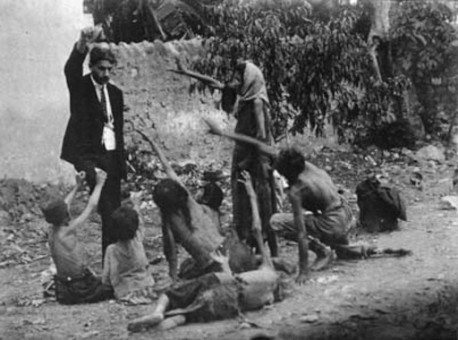
    Armenia and Turkey do not have any official diplomatic relations and the border between the two countries has been closed since 1993, following the war in Nagorno Karabakh between ethnic Armenians and the Azeri government in Baku. In recent years, hopes of an improvement in relations between Turkey and Armenia have been frustrated by continuing differences over the status of Nagorno Karabakh and—more intractably—the treatment of ethnic Armenians during the final years of the Ottoman Empire, culminating in 1915-16 in the massacre and deportation of virtually the entire Armenian population of Anatolia.

    As a result, Ankara has consistently excluded Armenia from its plans to make Turkey into an energy and transportation hub. The Baku-Tbilisi-Ceyhan (BTC) oil pipeline and the Baku-Tbilisi-Erzurum (BTE) natural gas pipeline both pointedly circumvent Armenia. The 76 kilometer (48 mile) Turkish section of the Baku-Tbilisi-Kars railroad is currently expected to be completed in late 2010 or early 2011 at a total cost of $241 million. The initial target is for the railroad to carry 1.5 million passengers and 6.5 million tons of freight in the first year after it comes into service (Today’s Zaman, July 25).

    In addition to connecting Turkey, Georgia and Azerbaijan, Ankara hopes that the railroad will form another link in a rail network that will eventually connect, via Turkey, China and Central Asia to western Europe. The Marmaray Project to bore a rail tunnel under the Bosporus and connect the Asian and European shores of Istanbul is currently scheduled for completion in 2011.

    Armenia opposed the building of the Baku-Tbilisi-Kars railroad, pointing out that there is already a railway running from Tbilisi to Kars via the Armenian town of Gyumri, although it has been out of use since the closure of the Turkish-Armenian border in 1993.

    It is currently unclear what concessions Gul envisaged when he apparently made Armenian participation in the new rail project conditional on Yerevan making a contribution to “good, neighborly relations, peace and prosperity.” For the moment at least, the respective positions of Turkey and Armenia on issues such as Nagorno Karabakh and the massacres and deportations of ethnic Armenians in the late Ottoman Empire appear so far apart as to be irreconcilable. Even if the two countries could reach some form of understanding over the latter, a solution to the problem of Nagorno Karabakh is beyond Turkey’s control as it depends on an agreement between Armenia and Azerbaijan. There is currently no indication that one is imminent.

    Nevertheless, there have recently been signs of a slight thaw between Turkey and Armenia. Even though the border between the two countries remains closed, there are now regular flights between Turkey and Armenia by both the privately-owned Turkish Atlas Jet and the Armenian state-owned carrier Armavia.

    On July 18, Turkish Foreign Minister Ali Babacan appeared to confirm rumors in the Turkish media that diplomats from Turkey and Armenia had met in Switzerland for several days of informal talks about ways of improving ties. “Such talks are held from time to time,” said Babacan. “We have problems about current issues and disagreements about the events of 1915. It is essential that these problems are handled through dialogue” (Today’s Zaman, July 19).

    The Turkish Ministry of Foreign Affairs (MFA) also issued a statement admitting that in recent years there had been occasional informal contacts between Turkey and Armenia and noting that Turkey had been one of the first countries to recognize Armenia when it declared its independence from the Soviet Union in 1991. “Meetings between members of the foreign ministries of the two countries are part of these contacts. We believe that no different meaning should be attributed to these meetings,” said the MFA statement (Today’s Zaman, July 19).

    A previous series of informal discussions in 2005 failed to produce any result. In recent years, hopes of an improvement in relations have been complicated by events such as the motion brought before the U.S. Congress in fall 2007 calling on the United States to recognize what happened to the Armenians in 1915 as a genocide and the racist murder in Istanbul in January 2007 of Turkish-Armenian journalist Hrant Dink.

    But, even if diplomats from Turkey and Armenia remain reluctant to be seen meeting with each other, the two countries will come together in the most public of ways later this year. On September 6, the Turkish and Armenian national soccer teams are due to meet in Yerevan in the first ever match between the countries after they were both drawn in the same group in the qualifying stages for the 2010 soccer World Cup in South Africa. Armenian President Serzh Sarksyan has already invited Gul to Yerevan to watch the match. Gul has yet to reply to the invitation. Given the often extreme mutual antagonism between nationalists in both countries, traveling to Yerevan would require Gul to display both personal and political courage; as it would for Sarksyan to attend the return match in Istanbul. But there is also little doubt that, even if it did not produce any immediate results, such “soccer diplomacy” could contribute to a further easing of tensions and perhaps lay the foundations for an eventual reconciliation.

  • Armenian spy killed on Azerbaijan border, says Baku

    Armenian spy killed on Azerbaijan border, says Baku

    20 July 2008 | 00:54 | FOCUS News Agency

    BAKU. Azerbaijani soldiers overnight killed a suspected Armenian intelligence agent who tried to cross the border, Azerbaijan’s defence ministry said Saturday in a statement.

    The incident occurred in a village in Azerbaijan’s north-western Tovuz region, the ministry said, adding that two other intelligence agents fled.

    Armenia and Azerbaijan remain locked in a tense stand-off over the enclave of Nagorny Karabakh, where ethnic Armenian forces took control during a war in the early 1990s that killed thousands and forced nearly a million people on both sides to flee their homes.

    A ceasefire was signed between the two former Soviet republics in 1994 but the dispute remains unresolved after more than a decade of negotiations, and shootings are common. Up to 16 soldiers were killed in a clash last month.

    Nagorny-Karabakh is a 4,400-square-kilometre (1,700-square-mile) enclave surrounded by Azerbaijan.

    Source: www.focus-fen.net, 20 July 2008

  • Dashnaks Leader Uneasy Over Armenian Overtures To Turkey

    Dashnaks Leader Uneasy Over Armenian Overtures To Turkey

    Rustamian

    By Anna Saghabalian

    A leader of the Armenian Revolutionary Federation (Dashnaktsutyun) reiterated on Wednesday his party’s misgivings and unease about President Serzh Sarkisian’s diplomatic overtures to Turkey.

    Armen Rustamian warned that Turkish President Abdullah Gul will face street protests by Dashnaktsutyun if he accepts Sarkisian’s invitation to visit Yerevan and watch the first-ever match between the two countries’ national soccer teams to be played on September 6.

    “We must not allow Turkey to create an illusion about the existence of relations [with Armenia,]” he told journalists. “This is all it wants.”

    Rustamian said Dashnaktsutyun, which is a junior partner in Armenia’s governing coalition, would “remind” Gul of the 1915 Armenian genocide and other problems existing between the two nations. “We have the right to express our protest within the civilized norms,” he said. “We are currently thinking about what forms it could take.”

    The Armenian and Turkish governments raised new hopes for the normalization of the historically strained relations between their nations shortly after Sarkisian took over as Armenia’s new president in April. Official Yerevan responded positively to Ankara’s offer of a “dialogue.” As well as inviting Gul to pay a first-ever visit to Armenia by a Turkish head of state, Sarkisian signaled last month his government’s readiness to agree, in principle, to the creation of a Turkish-Armenian commission of historians that would study the mass killings of Armenians in the Ottoman Empire.

    Sarkisian’s predecessor, Robert Kocharian, rejected the idea floated by Turkish Prime Minister Recep Tayyip Erdogan in 2005, saying that the highly sensitive issue must be addressed by the two governments, rather than historians. In an interview late last month, Kocharian faulted Sarkisian for extending the extraordinary invitation to Gul welcomed by the United States.

    Rustamian agreed with Kocharian’s stance, while playing down the significance of the invitation. “If I were the president I wouldn’t invite him,” he said.

    Rustamian, who also chairs the Armenian parliament’s foreign relations committee, insisted at the same time that there are no “strategic differences” within Armenia’s leadership on how to improve relations with Turkey.

    Successive Armenian governments have stood for an unconditional normalization of Turkish-Armenian relations, saying that the two countries should establish diplomatic relations and open their border before tackling their outstanding problems. Dashnaktsutyun has traditionally favored a harder line that makes Turkish recognition of the genocide a necessary condition for a Turkish-Armenian rapprochement.

    (Photolur photo: Armen Rustamian.) 

    Wednesday 23, July 2008

  • Azerbaijani political scientists are sceptical about that Turkey will establish relations with Armenia

    Azerbaijani political scientists are sceptical about that Turkey will establish relations with Armenia

    [ 19 Jul 2008 12:23 ]

    Baku. Tamara Grigorieva –APA. “I don’t think that contacts between Turkey and Armenia can reach a level of negotiations because usually negotiations have concrete subject”, political scientist Rasim Musabeyov told APA.

    Commenting the secret talks between the Turkish and Armenian diplomats in Switzerland, Musabeyov said level of representation of the sides was not clear. “I think the press overstates the weight of this meeting. The countries continue such contacts for almost 15 years”. Musabeyov said there was no ground for the serious progress in the Turkish-Armenian relations today. Political scientists Rustam Mammadov said Armenia was seeking alternative gateways to Europe now. In his opinion triangle game between Armenia, Iran and Russia gives no result for a long time and significance of Armenian-Turkish factor is increasing in this plan. The expert doesn’t believe that Turkey will establish relations with Armenia without solution of the problem of Azerbaijan’s territorial integrity. He said probably the issue was put on agenda in such a manner at the meeting. Deputy Executive Secretary of New Azerbaijan Party, political observer and member of the parliament Mubariz Gurbanli said it would negatively impact on Azerbaijani-Turkish relations if Turkey began negotiations and signed documents with Armenia. He is doubtful of any official meeting between Armenia and Turkey. Gurbanli said he was against establishing relations between Turkey and Armenia without solution of Azerbaijani Nagorno Karabakh problem. The expert emphasized that problems between Turkey and Armenia existed before the Nagorno Karabakh conflict.

    Source:

  • House Panel Blocks Sharp Cut In U.S. Aid To Armenia`

    House Panel Blocks Sharp Cut In U.S. Aid To Armenia`


    House Panel Blocks Sharp Cut In U.S. Aid To Armenia`


    By Emil Danielyan

    A key subcommittee of the U.S. House of Representatives rejected late Wednesday an almost 60 percent cut in regular U.S. economic assistance to Armenia which is sought by the administration of President George W. Bush.

    The administration’s draft foreign assistance budget for the fiscal year 2009 submitted to Congress in February would cut funding to Armenia to $24 million from this year’s level of $58 million.

    In what has been a pattern, the House Foreign Operations Subcommittee raised the proposed allocation to $52 million at the urging of leading pro-Armenian lawmakers. It also approved $8 million in separate direct aid to Nagorno-Karabakh and voted to maintain parity in U.S. military assistance to Armenia and Azerbaijan. The armed forces of the two warring nations would each continue to receive $3 million worth of aid.

    Joe Knollenberg, a Michigan Republican co-chairing the congressional Armenian Caucus, demanded that U.S. military aid to Azerbaijan be cut altogether because of its continuing threats to resolve the Karabakh conflict by force. The motion was narrowly voted down by the subcommittee.

    The two leading Armenian-American lobby groups in Washington commended Knollenberg for nearly succeeding in pushing the measure through the panel. “We are confident that Members will be looking at additional steps to address Azerbaijan’s war mongering,” Bryan Ardouny, executive director of the Armenian Assembly of America, said in a statement.

    The aid allocations need to be approved by the full House Appropriations Committee before they can be considered by the full chamber. A corresponding committee of the U.S. Senate was scheduled to debate the Senate version of the foreign aid bill late Thursday.

    The volume of U.S. aid to Armenia, which has totaled about $2 billion, has slowly but steadily declined since the 1990s when it averaged over $100 million per annum. U.S. officials have attributed the drop to an overall reduction of its foreign aid budgets and Armenia’s economic growth. They have also pointed to the Bush administration’s decision in 2005 to provide the country with $236 million in additional assistance under the Millennium Challenge Account program.


    Thursday 17, July 2008