Category: South Asia

  • Afghan refugees leave Iran for Turkey

    Afghan refugees leave Iran for Turkey

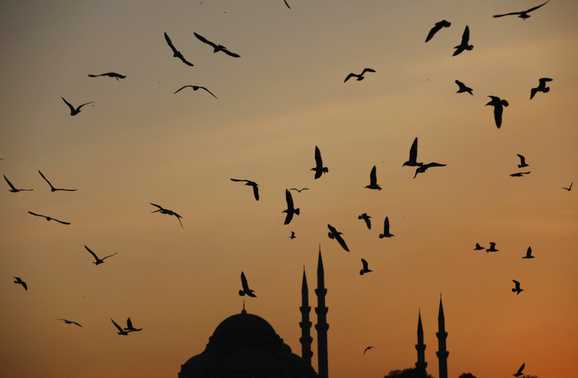
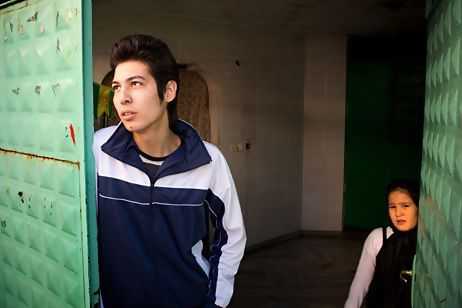
    ISTANBUL // A dark and damp basement of an Istanbul mosque is home to about 30 people who have nowhere else to go, victims of a new and largely unnoticed refugee crisis in Turkey.
    AD20130217459527-1-Sajjad_Ramizani

    Most of the inhabitants of the basement, which used to serve as the mosque’s morgue, are Afghan refugees. They are new arrivals, not from Afghanistan directly, but from Turkey’s eastern neighbour Iran, where conditions for refugees have started to worsen.

    There are about 20,000 Afghan refugees in Turkey, most of whom have arrived in recent months, according to the Ankara office of UNHCR, the UN refugee agency.

    At the mosque in the neighbourhood of Zeytinburnu, just outside the ancient city walls, a local charity has been providing shelter, food and clothes for the Afghans and several Iranians, who have also moved into the basement.

    “What else can we do,” Kiyaz Aras, the deputy chairman of the charity that runs the mosque, said this week. “They would be out on the street otherwise.”

    One of the refugees, Sajjad Ramizani, 18, son of a family of Afghan refugees in Iran, said his parents decided to send him to Turkey with his grandmother and an uncle half a year ago.

    He and other refugees say there is increasing pressure on Afghans in Iran to leave, as Tehran is facing growing economic difficulties, caused in part by western sanctions in response to Iran’s nuclear programme.

    Mr Ramizani’s parents remain in Iran. “But they want to come as soon as they have the money,” he said.

    In the past two years, efforts to help refugees in Turkey have focused on the region bordering Syria, where close to 180,000 Syrians are sheltered in government-run camps. But in the shadow of the Syrian crisis, the number of Afghan refugees in Turkey has started to rise dramatically.

    Only 7,000 Afghans are officially registered, the UN agency said in a written response to questions this week. “As a result of a sharp increase from June 2012 onwards an additional 13,000 have approached UNHCR.”

    Most of the Afghans arriving here come not straight from their homeland, but from Iran, home to around 820,000 Afghan refugees.

    The UNHCR said the increase was “due to many factors, including the fear of Afghans for what will happen in Afghanistan after the international troops pull out in 2014 and the economic situation in Iran which makes it very difficult for many Afghans in Iran to be able to survive”.

    Abdulriza Sagagi, a spokesman for the Iranian embassy in Ankara, denied that his country was pushing the Afghans out.

    “There is no pressure whatsoever,” Mr Sagagi said by telephone. He suggested that such complaints came from Afghans who wanted to improve their chances of being accepted by a western country.

    But refugees, such as Mr Ramizani, said the pressure was real.

    Born into a family of Afghan refugees in the Iranian city of Isfahan, Mr Ramizani said his family was suddenly confronted with a hostile attitude by Iranian authorities last year.

    “We had a shop there, and we had a car,” Mr Ramizani said. “Then the police came and closed down our shop and took away our car.”

    Mr Ramizani now works as a helper at a car park in Istanbul and tries to keep in touch with his parents by calling them from one of the phone shops in Zeytinburnu that advertise cheap telephone calls to Afghanistan, Iran and central Asian countries.

    Up the road from the mosque, Aci Nusrat, another newly-arrived Afghan refugee, was taking a walk in the warm February sun.

    Mr Nusrat, 60, fled Afghanistan shortly after the Soviet invasion of 1979 and settled in the Iranian city of Shiraz, where he worked as a teacher in a karate school. Then, about two months ago, the life he had known for 30 years came to an abrupt end.

    “All of a sudden, they refused to give new papers to Afghans,” he said about Iranian authorities. Mr Nusrat and his family of seven decided to go to Turkey, which they reached after a trek over the mountains. After arriving in Zeytinburnu, his son found work at a construction company so the family can afford its own apartment.

    Since coming to Istanbul, Mr Nusrat, whose crushing handshake betrayed the lifelong athlete, has been trying to keep fit by working out on gym machines in a public park on the shore of the nearby Sea of Marmara. Although he entered Turkey illegally and lacks valid identity papers, he said he was not concerned about being extradited from Turkey.

    “The police here are good, they are bad in Iran,” he said. “I want to stay here.”

    Turkey does not grant refugee status to Afghans, but agrees to let them stay in the country while UNHCR officials try to find countries willing to take them in, a process that can take years.

    Taner Kilic, director of the Association for Solidarity with Refugees (Multeci-Der), an NGO, said Afghan refugees in Turkey had to wait up to four years before getting their first interview at the UNHCR to talk about a possible move to another country.

    via Afghan refugees leave Iran for Turkey – The National.
  • Turkey seeks more air connectivity with India to boost tourism, trade

    Turkey seeks more air connectivity with India to boost tourism, trade

    NEW DELHI: Turkey today said it wants to double the number of flights from Delhi and Mumbai connecting the country to boost tourism and enhance trade and investments relations.

    “We want to double the frequency of flights from Delhi and Mumbai. We also want to start flights to more Indian destinations. It will help in boosting tourism sector in both the countries,” Ambassador of Turkey to India Burak Akcapar said here at a CII function.

    At present, a total of seven flights from Mumbai and Delhi connect India to Turkey.

    “We have completed all the procedures from our side (to increase flight frequency). Now the ball is in India’s court,” he added.

    Akcapar emphasised on the need to increase awareness among the business community of both the countries to enhance trade and investments relations.

    He said that the bilateral trade between the countries reflects that a lot needs to be done to increase two-way commerce as India is lagging behind several of its peers including China and several African nations.

    “Trade figure is very low. India lags behind in the way it represents in Turkey. It lags behind China, Africa and its peers in the world,” he said.

    The bilateral trade stood at USD 4.5 billion in 2011-12. The Ambassador said that huge opportunities exists in Turkey for Indian business community in sectors like infrastructure, IT and automobile.

    He also emphasised to increase cultural cooperation between the countries and urged the Indian Prime Minister to visit Turkey.

    Major imports from Turkey comprise minerals, fertilisers, nuclear reactors and machinery, while exports include pharma, manmade yarn and electronic goods.

    via Turkey seeks more air connectivity with India to boost tourism, trade – The Economic Times.

  • Turkey: Land where climates, people and cultures meet

    Turkey: Land where climates, people and cultures meet

    Sunday, February 10, 2013 – Islamabad —Viewing Turkey through the lens of Erkut Onart was pleasantly refreshing for many as the photographs reflected a Turkey, culturally rich and diverse. Erkut Onart’s photography exhibition titled “Turkey: the land where climates, people and cultures meet” that opened here at Satrang Gallery was attended by art enthusiast and diplomats. Mr. Onart himself, H.E Babur Hizlan, Ambassador of Turkey, and Faisal Karim Kundi, Deputy Speaker of National Assembly were the chief guests at the occasion. The exhibition is first of the events as part of the cultural activities between Pakistan and Turkey. “2013-2014 would be celebrated as the Cultural Years of Turkey in Pakistan and Pakistan in Turkey to strengthen the ties of the two countries” said the Turkish Ambassador, Babur Hizlan. Faisal Kundi hoped that Pakistani artists would also go to Turkey under the cultural exchange program.

    The vibrant photographs, portraying places, people, architecture and landscapes of Turkey, depicted a rich culture full of diversity. “Mr. Onart has truly captured the beauty and spirit of the people and places of Turkey,” said Asma Khan, director of the Gallery. Every photograph allows a glance into nature, ambiance, people and places of different cultures. “Each photo reflects a different region of Turkey and is a great opportunity for Pakistanis to learn about the country” remarked Madame Hizlan.

    The exhibition reflects the diversity and richness of the Turkish culture. “It is refreshing and different from what we generally see in Turkish dramas on our (Pakistani) channels” said Ahsan Akhtar, a visitor, who was impressed enough to plan a visit to Turkey.

    Places of Istanbul are the highlight of the exhibition but the photographer has brought out other striking places as well such as the city of Bursa and Konya, city of Rumi and the Whirling Dervishes. Photographs of the Blue Mosque, the prestigious landmark of Istanbul; photo Dolmabahce Palace, in all its glory, stood tall among other photos on display.

    via Turkey: Land where climates, people and cultures meet.

  • Pakistan opens Turkey-helped rapid bus lane system

    Pakistan opens Turkey-helped rapid bus lane system

    Lahor Metrobus system will carry 100K passengers daily.

    World Bulletin / News Desk

    IBB METROBUS PROJESINI PAKISTAN'A TASIDI

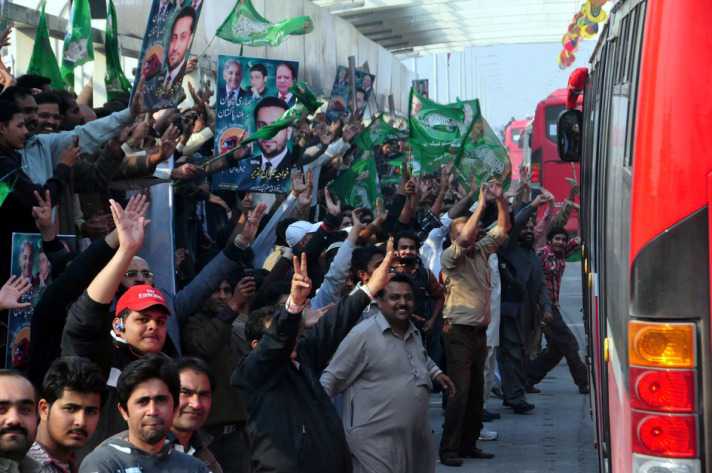
    Lahor’s rapid bus lane system was inaugurated on Sunday in a ceremony attended by Turkish Deputy Prime Minister Bekir Bozdag.

    Bozdag and and Pakistan main opposition leader Nawaz Sharif inaugurated the Metrobus system, a rapid public transit network similar to Istanbul’s fleet operating on dedicated bus lanes.

    “This is an important example of the cooperation between Turkey and Pakistan. Our two brotherly countries should further improve cooperation in commerce, education, health and social life,” Bozdag told the ceremony.

    The bus lane project was prepared by the Istanbul Metropolitan Municipality and part of the lane was constructed by Albayrak Holding, a Turkish contractor, which also won operating rights of the system for 8 years.

    The 27-kilometer lane will carry 100,000 passengers a day.

    via Pakistan opens Turkey-helped rapid bus lane system | Asia-Pasific | World Bulletin.

  • Istanbul to Islamabad journey to take 11 days with Gul Train

    Istanbul to Islamabad journey to take 11 days with Gul Train

    Director General of Turkey’s State Railways (TCDD) Suleyman Karaman said that in their talks with Pakistani and Afghan ministers, a decision was taken to increase the frequency of the Gul Train travelling between Istanbul and Islamabad and to increase the amount of cargo carried, according to a report published by Turkish Weekly.

    Speaking to the Anadolu Agency (AA), Suleyman Karaman stressed that they aimed to bring down the number of days required for the Gul Train to reach Islamabad from Istanbul to 11 days from the previous mark of 15 days.

    via Istanbul to Islamabad journey to take 11 days with Gul Train | Pakistan Today | Latest news | Breaking news | Pakistan News | World news | Business | Sport and Multimedia.