Category: South Asia

  • Turkey to invest in Afghan energy

    Turkey to invest in Afghan energy

    Mr Taner Yildiz Turkish Minister for Energy and Natural Resources as saying that Afghanistan had great resources for production of electricity and announced plans to invest in Afghan energy industry.

    TPAO, a Turkish petroleum corporation, won the tender for oil extraction at the Mazar i Sharif Province of Afghanistan and will invest about USD 100 million. Turkish companies won the tender for gold mining in Afghanistan.

    Source – Vestnikkavkaza.net

    via Turkey to invest in Afghan energy – 304759 – 2013-03-09.

  • Violence In Afghanistan Has No Religious Justification Say Muslim Clerics At A Conference in Istanbul

    Violence In Afghanistan Has No Religious Justification Say Muslim Clerics At A Conference in Istanbul

    What the Mullahs Are Mulling

    By ANDREW FINKEL

    ISTANBUL — Midday in Istanbul’s historical Beyazit district and the air suddenly fills with the call to prayer from the many royal mosques nearby. It is a reminder that a part of the city that now bustles with shoppers, university students and tourists was once the heart of a great Islamic empire.

    Istanbul is no longer home to the caliphate, but it still transmits to the faithful: At the beginning of the week, leading Muslim scholars from across the world — Indonesia, Britain, Pakistan — met in a modestly sized hotel conference room to hammer out the rights and wrongs of the conflict in Afghanistan.

    Although I was told not to identify participants without their permission for fear of reprisals by the Taliban, no one seemed afraid to call a spade a spade. Much effort was spent debunking the notion that the struggle in Afghanistan is a holy war rather than a straightforward tussle for power.

    The conference, “Islamic Cooperation for a Peaceful Future in Afghanistan,” was the brainchild not of a cleric but of Neamatollah Nojumi, a professor of conflict resolution at George Mason University who came to the subject the hard way. At the age of 14 he was a mujahid fighting the Soviets in his native Afghanistan.

    Simply by gathering people of good will in one room, the organizers believe they have succeeded where national authorities have failed.

    Now his mission is to stop Afghans from fighting Afghans. The method is straightforward. Senior Afghan clerics meet with the world’s leading Islamic theologians to discuss suicide bombings, the targeting of civilians, the destruction of historical artifacts — even domestic violence.

    This week’s conference culminated in a detailed and strongly worded resolution that reaffirmed Islam’s compatibility with universal human norms and called on religious institutions in Afghanistan, Pakistan and neighboring countries to end violence. The document will be circulated to more than 160,000 mosques in Afghanistan so that its findings may trickle into individual consciences there.

    The meeting was the third of its kind, and the overall effort has started to make a difference, according Ataur Rahman Salim, director of the Scientific Islamic Research Center in Kabul. It is now easier to oppose the men of violence. “The majority of Islamic scholars are not afraid to speak out,” he said.

    But “some are sitting on the fence,” he added. Indeed. Several speakers supported the Taliban over the Afghan government and were more critical of NATO bombings than of suicide attacks by insurgents.

    I sat next to the Indian scholar Aijaz Arshad Qasmi, who is closely associated with the ultra-orthodox Deoband community. He believes that NATO, not Pakistan, is complicating the situation in Afghanistan and that government is supported by a mere 10 percent of the population. And yet he parts company with the Taliban when it comes to the use of violence. “Conflict will not solve conflict,” he told me. “Islam does not mean war.”

    Nor does Islam mean denying women access to education and health services, according to the draft of the final resolution. The document also states that the violation of women’s rights contradicts the tenets of Islam.

    Participants did not expect this process to solve Afghanistan’s main problem — “government without governance,” according to Nojumi — but it does allow a burgeoning civil society movement to call both the Afghan government and insurgents to account and to put pressure on interfering neighbors to back off.

    ANDREW FINKEL

    Simply by gathering people of good will in one room, the organizers believe they have succeeded where national authorities have failed. Whereas four clerics from Pakistan attended this conference, the Afghan and Pakistani governments have tried and have not managed to organize a meeting of clerics since the beginning of the year.

    Given the diversity of participants, the degree of unanimity was remarkable. The recourse to violence in Afghanistan had no religious justification, speaker after speaker said. Or, in the words of the final declaration, “A crime committed in the name of Islam is a crime against Islam.”

    Andrew Finkel has been a foreign correspondent in Istanbul for over 20 years, as well as a columnist for Turkish-language newspapers. He is the author of the book “Turkey: What Everyone Needs to Know.”

    via Violence In Afghanistan Has No Religious Justification Say Muslim Clerics At A Conference in Istanbul – NYTimes.com.
  • Istanbul man finds blood donor in Bangalore

    Istanbul man finds blood donor in Bangalore

    BANGALORE: A 70-year-old from Istanbul in Turkey needed blood and help came from Bangalore. Ahmed, while undergoing medical tests, was found to have Bombay O+ blood group. Seven days later, he was diagnosed with lung cancer.

    The hospital in Turkey required three units of blood to conduct his surgery. And that’s when it became clear how rare the Bombay blood group was.

    But luck prevailed. On February 20, Sankalp India Foundation in Bangalore received a blood request from the Department of Thoracic Surgery, Istanbul University, Turkey. They had come across an initiative of the Foundation, which networks Bombay Blood Group donors, needy and associated blood banks in India.

    Ten days ago, Ahmed’s 21-year-old son Zirak Ahmed flew back to Istanbul from Bangalore, after collecting blood units from the Sankalp blood bank. Such happy endings have been facilitated many times by the Foundation.

    Four months ago, a 60-year-old patient at M S Ramaiah hospital was looking for the same blood group for his heart ailment. “We had to airlift the blood units of Bombay blood group from a donor in Mumbai. Persons with this rare blood group are usually found in Maharashtra, north coastal Karnataka and West Bengal. But due to migration, such patients can be seen utside India also,” said Dr V Nandakishore, chief of blood bank at M S Ramaiah hospital.

    He says there are cases where patients with Bombay blood phenotype have donated blood to themselves in what is called autologous process. “In case of non-availability of blood during surgeries, we draw required units of blood from the same patient and use it during the surgery. Autologous blood transfusion can be done depending upon the stability of patients,” said Dr Nandakishore.

    WHAT IS BOMBAY BLOOD GROUP?

    Bombay Blood Group is present in 0.0004% of global human population, belonging to O+ve category. In India, one among 10,000-17,000 persons has this blood group. Individuals with this blood group can only be transfused with similar blood.

    This phenotype was discovered by Dr Y N Bhende in Bombay in 1952. Individuals with this blood group lack ‘H’ antigen or protein or substance in their red blood cells, which is a rarity.

    According to Dr C Shiva Ram, vice-chairman, Indian Society of Blood Transfusion and Immunohaematology, four years ago, there were only 4-6 such donors in Bangalore, but now the number is around 600. But this number is limited compared to the number of requests we get.

    “We have maintained a database of donors. When a patient with Bombay blood group is identified, closer relatives will also be screened. Because this is a rare blood group,

    Such patients must also have details of donors. Not all blood banks will have units of this blood group ,” said Dr Shiva Ram.

    No registry in India

    Unlike US and UK, in India there is no registry maintained by the government to help persons with rare blood groups. “We are making our efforts to form such a registry which can save many lives,” said Dr Shiva Ram. In the absence of such registry, Sankalp India Foundation has established , that provides the network among persons with the rare blood group.

    via Istanbul man finds blood donor in Bangalore – The Times of India.

  • Istanbul mayor pays rich

    Istanbul mayor pays rich

    Istanbul mayor pays rich

    tribute to CM

    LAHORE: Istanbul Mayor Kadir Topbas said that the metro bus project has transformed the brotherly relations between Pakistan and Turkey into a solid reality.

    In his letter, the Istanbul mayor, while paying rich tribute to Punjab Chief Minister Shahbaz Sharif, expressed his belief that contrary to the past, instead of only words jugglery in the name of brotherly relations, “our ties will yield positive results in the future”. He said that Punjab would make bigger achievements than the metro bus project under the leadership of Shahbaz Sharif and the hard work of his team in the future.

    Topbas said that the commitment and dynamic leadership displayed by the CM during the construction of the metro bus project would become an everlasting movement of exemplary cooperation between the people of both the countries. pr

    via Daily Times – Leading News Resource of Pakistan – Istanbul mayor pays rich.

  • Former Guantanamo Bay Detainee Resettled to Turkey

    Former Guantanamo Bay Detainee Resettled to Turkey

    By JONATHAN KAMINSKY Associated Press

    February 27, 2013 (AP)

    r-GUANTANAMO-BAY-large570

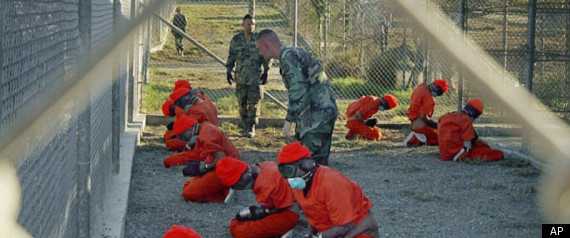
    One of six Chinese nationals held by the U.S. at its Guantanamo Bay prison and released to Palau in 2009 has resettled in Turkey, the tiny island republic’s former president confirmed Wednesday.

    Johnson Toribiong, reached by phone from the U.S., said Adel Noori left Palau shortly before Toribiong’s term ended late last year.

    A U.S. official familiar with the situation who asked not to be identified said Toribiong’s administration informed the U.S. that Noori, 43, had made arrangements on his own to leave the country.

    Noori and the five other men — all of them Uighurs, an ethnic minority that has clashed with China’s central government — were released to Palau after spending nearly eight years at Guantanamo Bay. They were captured in Afghanistan and Pakistan in 2001.

    The Pentagon determined in 2008 that they were not “enemy combatants” and they were released to Palau on what was billed as a temporary basis the following year.

    “I guess the term temporary is a term of ambiguity,” said Toribiong.

    Uighurs are from Xinjiang, an isolated region of China that borders Afghanistan, Pakistan and six Central Asian nations. They are Turkic-speaking Muslims who say they have long been repressed by the Chinese government.

    Noori and his compatriots have said they fear they would be arrested, tortured or executed if sent back to China.

    China has said that insurgents are leading an Islamic separatist movement in Xinjiang and wants the men returned.

    Ian Moss, a U.S. State Department spokesman, declined to confirm Noori’s location.

    “We are aware of Mr. Noori’s departure from Palau,” Moss said. “We are not going to comment on diplomatic discussions with another government or the whereabouts of a private individual.”

    A local newspaper, Tia Belau, reported earlier this month that Noori had made his way to Turkey to be with his wife and baby. The report also said Noori had transited through Japan, but Foreign Ministry officials in Tokyo said they had no information about that.

    Toribiong, who was voted out of office in November, said he feels “a little anxious about the fact that the next president (of Palau) has had to be responsible” for the remaining five Uighurs and their families. There are 14 or 15 of them now living on the island.

    “I assumed that I would be able to take care of them and by the end of my term find them a permanent place to go to,” he said.

    via Former Guantanamo Bay Detainee Resettled to Turkey – ABC News.

  • Solen Istanbul — a treat from Turkey

    Solen Istanbul — a treat from Turkey

    Spicy Turkish dishes including Lahmacun and Kofta Izgara delighted people. PHOTO: PUBLICITY

    KARACHI: A Turkish man’s gastronomical obsession, a bit of dreaming and a great deal of destiny is what brought Turkish restaurant Solen Istanbul to Pakistan.

    Restaurateur Mehmet Celal Ulutatar came to Karachi to set up a business venture, and realised during his stay how much potential the port city has. “I see a lot of potential in Karachi for Solen Istanbul. Destiny brought me here,” said Ulutatar at the opening of his restaurant at Dolmen City Mall in Clifton on Friday.

    Solen Istanbul, which is a chain of restaurants, has five outlets in Turkey’s capital Istanbul. At the event, the excited Turkish Consul General Murat M Onart said that he had been hoping that a Turkish restaurant would open in the city. “It is sheer luck. Whatever I dream of becomes true. It was just a dream which has finally become a reality.”

    Guests present at the event were treated to Turkish delicacies, including Lahmacun — a round, thin piece of dough flattened and topped with minced meat and chopped vegetables. The herbs included onions, tomatoes and parsley and the bread was baked to perfection. Turkish pizza, made by stuffing pita bread with spicy minced meat, red tomatoes and bell pepper was also served to guests who kept asking for more.

    Chefs, Abdullah, Abdul Hakim and Omar Farooq were specially flown into Karachi to train the staff. The local crew was taught to cook Turkish cuisine including Kofta Izgara (grilled meatballs) and Sutlac (rice pudding).

    Onart, who is very hopeful of the restaurant’s success said, “Pakistanis would love the splendours of Turkish cuisine — we are as obsessed with food as them!” Endorsing his statement, Ulutatar added, “I hope that people find the food extraordinary for their taste buds.” He also recommended that people try Iskender, a Turkish shawarma.

    Among the locals present at the event to host the Turkish expats was Talha Nawabi, who said, “It is surely going to be a treat for those who enjoy Turkish cuisine.” Nawabi added that people are losing interest in fast food and that Solen Istanbul will become a hit because most of the meat is grilled.

    For Pakistanis accustomed to spicy and chatpata food, Turkish cuisine may seem a little bland. Authentic Turkish food concentrates on retaining the flavour of the meat instead of adding spices, so Solen Istanbul’s fate really depends on whether or not desi foodies can live without their mirchi.

    Published in The Express Tribune, February 19th, 2013.

    Like Life & Style on Facebook for the latest in fashion, gossip and entertainment.

    via Solen Istanbul — a treat from Turkey – The Express Tribune.