Category: Asia and Pacific

  • Putin’s Friend, Wanted by Ukraine, Perpetrator of Crimes in Karabakh

    Putin’s Friend, Wanted by Ukraine, Perpetrator of Crimes in Karabakh

    By Azer HASRET

    I believe that this information will be of interest to our esteemed readers. That’s why I’m reprinting it. The information below is not my investigation. It was published by one of the X users and as I see seems very trustworthy. I do deal with the issues in our region, especially with the problem of conflict between Armenia and Azerbaijan. I know quite well the roots of the Karabakh conflict as well. And I’m aware of Ruben Vardanyan’s illegal activities in the territory of Azerbaijan.

    For those who need a bit more information, Ruben Vardanyan alongside other criminal separatist elements of Karabakh was stopped and brought to Baku to be investigated. He is among those who fueled ethnic hatred between Armenians and Azerbaijanis. He was arrested after a 1-day local anti-terror operation led by the Azerbaijani military on September 19-20, 2023. Before that, he and others were called to lay down arms and cease. But they continuously ignored peaceful calls. Then Azerbaijan had to launch an anti-terror operation, which resulted in success.

    Now let’s see who this friend of Russian President Vladimir Putin and a perpetrator of crimes even in Ukraine Ruben Vardanyan is.
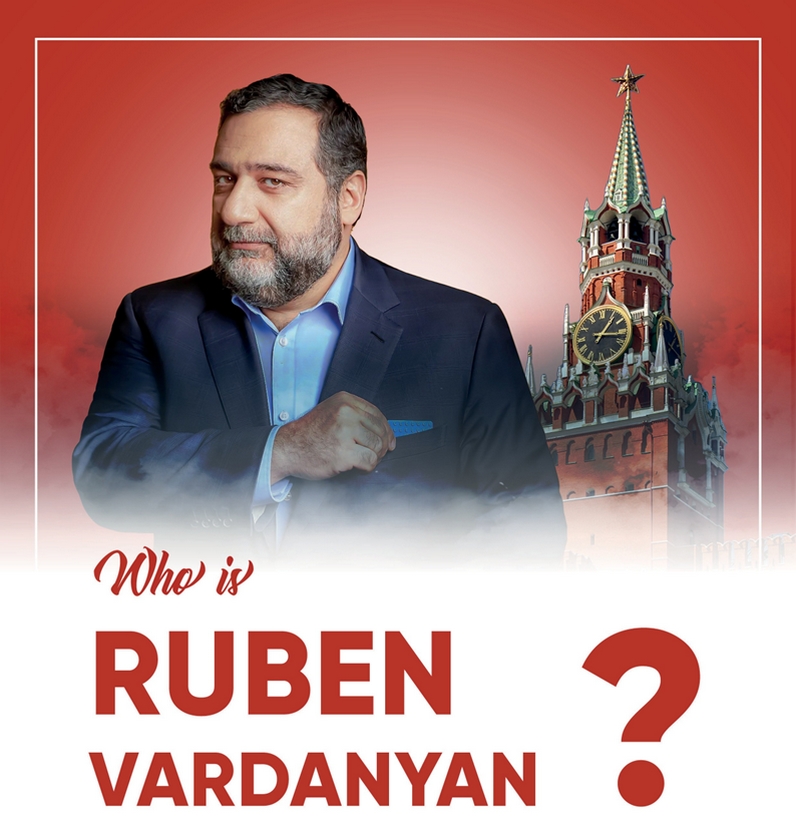
    Backed by Kremlin Ruben Vardanyan was very sure that he will not be punished…

    GENERAL INFORMATION

    Ruben Vardanyan, born in Yerevan on 25 May 1968, is a Russian oligarch of Armenian descent, a billionaire, and former minister of the state of the so-called “Nagorno-Karabakh Republic”, an entity not recognized anywhere in the world.

    Vardanyan was the initiator, one of the founders, and the first president of the Moscow School of Management in Skolkovo. President Vladimir Putin attended the groundbreaking ceremony for the campus in 2006.

    According to the Washington Times, Vardanyan is a friend of Vladimir Putin.
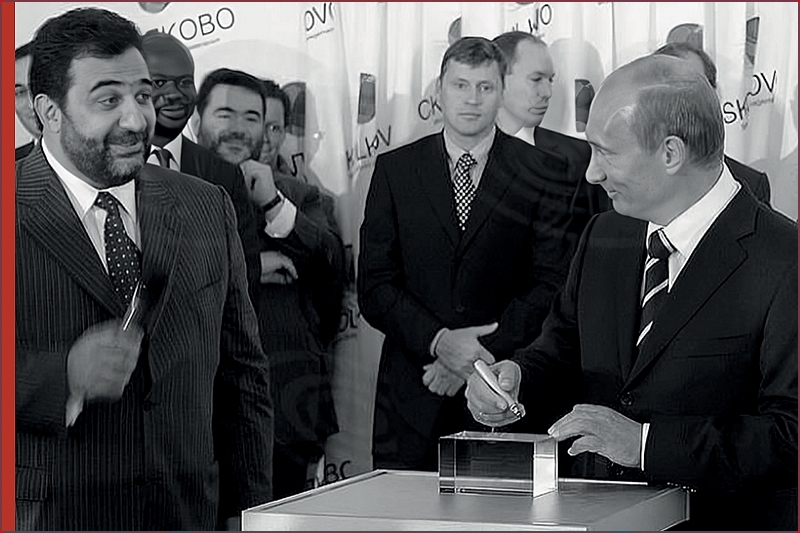
    Ruben Vardanyan with the Russian President Vladimir Putin

    Vardanyan was once the head and main partner of Troika Dialog, an investment company that created an extensive network of offshore companies involved in money laundering from Russia. Since 2011, Forbes has included him in its ranking of Russia’s richest people.

    In September 2021, Ruben Vardanyan renounced his Russian citizenship but continued to actively participate in Russian business, where his partner is the head of ROSTEC, Sergei Chemezov. Together they hold positions on the Board of Directors of KAMAZ OJSC and receive significant payments for their work. In addition, Vardanyan owns a stake in the car manufacturer KAMAZ through a consortium of investors in which ROSTEC also participates.

    In 2018, Vardanyan’s foundation and a subsidiary of ROSTEC invested in facial recognition technology by buying shares in the company. In addition, Vardanyan was a former co-owner of Avtovaz, but sold his stake for $180 million in 2013, remaining in partnership with ROSTEC.

    SKOLKOVO PROJECT

    Back in 2009, well-known Russian opposition actor Alexei Navalny (now dead) investigated Skolkovo’s financing scheme and noted in his blog that, despite Vardanyan’s statement about the charitable nature of Skolkovo, the school’s project was estimated at $500 million, with half of that amount coming from the founders’ donations and the remaining $250 million coming as a loan from Sberbank.

    “The loan was granted under unclear conditions and with unclear guarantees. Both the Skolkovo school and Sberbank categorically refuse to disclose the terms of the loan,” Navalny said.

    “The construction of the Skolkovo school was financed from the funds of the state-owned Sberbank, and no one was going to pay back the money, but Vardanyan and the rest of the gang of tycoons told the naive public and journalists that this was a very “cute” commercial project”, Navalny added.

    ORGANIZED CRIME AND CORRUPTION REPORTING PROJECT (OCCRP) ABOUT TROIKA DIALOG

    For more than two decades, Ruben Vardanyan was the face of Western-style investment banking as the founder of Troika Dialog during the birth of Russian capitalism, with successes that earned him billionaire status and ties to the Kremlin.

    The system dubbed the Troika Laundromat by the Organized Crime and Corruption Reporting Project, involved at least 75 offshore companies and exported about $4.8 billion between 2006 and 2013, often through fictional deals, with the help of a now-defunct Lithuanian bank, according to the OCCRP’s investigative journalists.

    Sergey Roldugin, a cellist and friend of Vladimir Putin, was among the ultimate recipients of the funds.

    While Vardanyan wasn’t personally accused of wrongdoing, he was president, chief executive officer, and chairman of Troika during this period, as well as its main partner. According to the OCCRP, he used the bank to pay millions of dollars in personal expenses.

    In March of 2019, the European Parliament members wrote a letter to the European Commission President Jean-Claude Juncker, in which they stated the need to introduce sanctions against the ex-owner of Troika Dialog Ruben Vardanyan and others linked to Troika Dialog’s “offshore eco-system”. The letter was signed by 22 MEPs representing Lithuania, Poland, Sweden, Germany, Great Britain, and other countries.

    VARDANYAN’S INVOLVEMENT IN AGGRESSION AGAINST UKRAINE

    Known for his active pro-Russian stance, Ruben Vardanyan was included in the Ukrainian “Peacekeeper” sanctions database for his assistance to the Russian invaders and his involvement in crimes committed by the Russian authorities against Ukraine and its citizens. He is also accused of denying and publicly justifying Russian aggression and financing military actions in the post-Soviet space. The list designates him as a person subject to “immediate arrest and transfer to the law enforcement authorities of Ukraine and NATO countries”.

    Bob Blackman, a Conservative member of the British parliament, said Vardanyan was an accomplice to aggression against Ukraine. “We have to understand that this is someone who has been sanctioned as part of Russia’s involvement in Ukraine, and it is believed that Russia is trying to strengthen its capabilities in terms of its war effort. His companies have been well used and well involved in the whole process of expanding the military presence in Ukraine and Nagorno-Karabakh”, the British MP said.

    Vardanyan also has links with Tehran, which is helping Moscow in its regular attacks on Ukraine. His ties to Iran can be traced through Russia’s Gorchakov Foundation, which organizes events in various countries, including Armenia, with government-approved speakers from Tehran.

    In September 2022, Vardanyan renounced his Russian citizenship to avoid Western sanctions, but Ukraine included him on its sanctions list for providing logistical support to the Russian occupation army.

    IN THE TERRITORY OF AZERBAIJAN

    After renouncing his Russian citizenship to avoid Western sanctions, Vardanyan came to “power” in Karabakh and illegally seized copper, molybdenum, and gold deposits in the region, which belongs to Azerbaijan. The resources, guarded by the Russian peacekeepers, were plundered in violation of environmental regulations. The Azerbaijani authorities demanded that experts be given access to the deposits, but this was repeatedly blocked.

    According to Canada’s Geopolitical Monitor, the Kremlin appointed Vardanyan to the post of “Minister of State of the Republic of Nagorno-Karabakh” in order to thwart the European Union’s potential success in reaching a peace agreement.

    Bulgarian National Radio noted that Vardanyan was engaged in active propaganda that did not contribute to the resolution of the conflict between Baku and Yerevan.

    There are reasonable grounds to suspect that Vardanyan has committed offenses under Articles 214-1 (Financing terrorism), 279.3 (Participation in the creation and activities of paramilitary groups or groups not provided for by law), and 318.1 (Illegal crossing of the state border of Azerbaijan) of the Criminal Code of Azerbaijan.
  • Uzbekistan keeps relying on Russia for its military equipment

    Uzbekistan keeps relying on Russia for its military equipment

    Over the recent years, Russian and international media have been actively writing about various contracts of Uzbekistan for the purchase of Russian military equipment, some of them are the most modern, and the other part are a legacy of the USSR. The numerous deals indicate Tashkent’s determination to take arms sales talks with Moscow to a higher level. In 2017, Uzbekistan committed to modernizing its armed forces as part of a five-year development strategy. Another factor that may have spurred Uzbekistan’s Defense Ministry recently was the intra-Afghan conference in Qatar, which resulted in the adoption of a nascent peace resolution. Tashkent has a lot at stake in this process, since any withdrawal of Western (particularly American) troops as a result of the resolution will have direct security consequences. Thus, Uzbekistan will take sole responsibility for protecting its border with Afghanistan.

    In addition, in 2019, Uzbekistan purchased 12 Mi-35M military helicopters. These transport helicopters, which can also be used to attack ground targets, have been in production since the 2000s. Besides, Uzbekistan has ordered an unspecified number of BTR-82A armored personnel carriers (APCs), capable of carrying three crew members and seven soldiers. Previously, Tashkent also purchased “several dozen” special-purpose armored vehicles VPK-233136 “Tiger”, capable of transporting up to seven military personnel (according to TASS).

    In addition to modernizing equipment for its ground forces, Uzbekistan plans to enter into contracts for the Air Force and order new fighter jets and a radar system. In particular, Tashkent is negotiating the purchase of Su-30SM multirole fighters, which Russia has deployed in Syria. Uzbekistan has also expressed interest in acquiring Sopka-2 radar systems, which monitor airspace, as well as upgrading the country’s existing military radars to Sopka-2 levels.

    Closer-than-usual military cooperation between Russia and Uzbekistan began with President Shavkat Mirziyoyev’s first trip to Moscow in April 2017 and President Vladimir Putin’s return visit to Tashkent in October 2018. During these meetings, the parties discussed issues of military cooperation and modernization of Uzbekistan’s military equipment using Russian assets; the real details of these conversations are only surfacing now. And, no doubts, Uzbekistan’s recent purchases of Russian weapons, along with ongoing negotiations between the two sides, are directly related to these aforementioned summits.

    A number of factors indicate that Uzbekistan’s efforts to update its military arsenal are related to the dynamically developing situation in Afghanistan. Earlier this year, the Chief of Staff of the Armed Forces of Uzbekistan, Major General Pavel Ergashev, spoke about the movement of “centres of instability” in northern Afghanistan (i.e. areas close to or bordering Uzbekistan), which, in his opinion, threatens stability in Central Asia. The fact that these purchases came after intense peace negotiations in Afghanistan, which were supported by Uzbekistan, is not a mere coincidence. Assuming a subsequent withdrawal of US troops from the theater of operations in the short to medium term, the burden of defending the Afghan-Uzbek border will now fall solely on Tashkent.

    Despite the fact the Turkish drones such as the Bayraktar TB2 have become extremely popular due to their successful deployment in multiple conflicts around the globe and have also popped up in Central Asia, Uzbekistan seems to rely more on the Russian drone system. In August 2021, Uzbek armed forces performed a readiness drill with Russian-made drones in an area near the country’s southern border. The Yug-2021 exercise was held jointly with the Russian army against the backdrop of worsening stability in neighboring Afghanistan.

    Uzbekistan has tried to develop domestic defense capabilities elsewhere too. In October 2021, the State Defense Industry Committee announced it had developed its own remote-controlled heavy machine gun. A month later, the same body said it had begun production of a domestically designed light-armored vehicle called Qalqon (Shield).

    It is much more profitable for Uzbekistan to purchase military equipment from Moscow rather than from NATO for a number of reasons. Firstly, in the current conditions of logistical difficulties, the delivery of military equipment from Russia is much safer and cheaper than from NATO countries. Secondly, given Uzbekistan’s Soviet past, many standards and the language of instructions for Russian equipment are clearer than Western ones. Thirdly, the United States is gradually curtailing its geographic scope of military operations, since it cannot support them financially, and accordingly, supplies of depleted equipment to Uzbekistan will cost more, and their effectiveness is quite low. Finally, Uzbekistan is also aware of the strategic risks of purchasing military equipment from NATO – ultimately this will lead to the deployment of NATO military bases on the country’s territory under the pretext of “maintaining and monitoring” equipment in proper condition, joint exercises, etc.

    Thus, these factors and global changes are motivating Uzbekistan to quickly acquire military equipment from the country where most of its obsolete military equipment originally came from.

  • When Armenia Occupied Azerbaijani Lands Josep Borrell Was Very Silent…

    When Armenia Occupied Azerbaijani Lands Josep Borrell Was Very Silent…

    By Azer HASRET

    During his press remarks after the Foreign Affairs Council the High Representative on Foreign Affairs of the European Union Josep Borrell voiced baseless and unjustified claims regarding Azerbaijan. He noted that Azerbaijan has territorial claims against Armenia. He had even stressed that the President of Azerbaijan Ilham Aliyev voiced these claims.

    To see the issue deeper let’s read through what was said by Mr. Borrell on Jan 22, 2024, during his press remarks.

    “…we agreed that Azerbaijan needs to return to substantive peace and normalization talks with Armenia. The latest territorial claims by President [of Azerbaijan, Ilham] Aliyev are very concerning. And any violation of Armenia’s territorial integrity will be unacceptable and will have severe consequences for our relations with Azerbaijan.”

    As is seen Mr. Borrell is talking about President Aliyev’s territorial claims against Armenia. But as a citizen of Azerbaijan, plus as a person closely following political developments not only within, but outside of Azerbaijan I can strongly oppose these claims by Mr. Borrell and assure that President Aliyev never voiced territorial claims against Armenia. What I know the President continuously states that Azerbaijan has no intention to occupy any piece of territory of any other country including Armenia.

    This is obvious and even Mr. Borrell has an opportunity to contact Mr. Aliyev and ask him if he has territorial claims against Armenia. But as we see Mr. Borrell didn’t dare to do this and check the truthfulness of the claims spread by some propaganda centers. He made himself a tool of propaganda for those centers. Unfortunately…

    Now we’ll see which country has the territorial claims against its neighbor. That is Armenia, not Azerbaijan having territorial claims. And we have quite enough evidence to prove this.

    Let’s read through The Constitution of Armenia. Just in its Preamble, we can see that Armenia has territorial claims against Azerbaijan! And this is the major soul of that Constitution thus making this country an aggressor.

    To see the details let’s read through the mentioned Preamble:

    “The Armenian People, accepting as a basis the fundamental principles of Armenian statehood and pan-national aspirations enshrined in the Declaration on the Independence of Armenia, having fulfilled the sacred behest of its freedom-loving ancestors to restore the sovereign state, dedicated to the strengthening and prosperity of the fatherland, with the aim of ensuring the freedom, general well-being, and civic solidarity of the generations, and affirming its commitment to universal values, adopts the Constitution of the Republic of Armenia”.

    One who doesn’t know the issue well would say that where is the territorial claim here? We’ll explain.

    The Preamble is quoting The Declaration on the Independence of Armenia. And very this document openly expresses territorial claims against Azerbaijan!

    Let’s see this time the mentioned Declaration:

    “The Supreme Council of the Armenian Soviet Socialist Republic

    Expressing the united will of the Armenian people;

    …Based on the December 1, 1989, joint decision of the Armenian SSR Supreme Council and the Artsakh National Council on the “Reunification of the Armenian SSR and the Mountainous Region of Karabakh”;..

    Declares

    The beginning of the process of establishing of independent statehood positioning the question of the creation of a democratic society based on the rule of law;..”

    This Declaration was adopted on August 23, 1990, and is taken as a basis for The Constitution of Armenia. Mr. Borrell before accusing Azerbaijan of territorial claims against Armenia could look through this Constitution and see the real territorial claimers…

    And this is not even the last evidence showing Armenia’s territorial claims against its neighbors. The Constitution of Armenia has one more piece of evidence, this time against Türkiye.

    Let’s see again The Constitution:

    Article 21. The Symbols of the Republic of Armenia

    …The coat of arms of the Republic of Armenia shall depict, in the center on a shield, Mount Ararat with Noah’s ark and the coats of arms of the four kingdoms of historical Armenia…

    Thus, once again a person with no imagination about the region would see nothing here. But if look deeper one can see that Armenia has territorial claims against Türkiye. As we know the mount which Armenia calls “Ararat” is a Mount Aghri based in the territory of Türkiye. Why would a country depict a natural object of another country on its national symbol? Where is the logic?

    This is one more piece of evidence proving that Armenia has territorial claims against at least two of its neighbors: Azerbaijan and Türkiye. But Mr. Borrell is accusing Azerbaijan of “having territorial claims against Armenia”…

    Going through this evidence we can once more see that the EU High Representative Josep Borrell is voluntarily acting as part of the Armenian propaganda machine. But we here in Azerbaijan and other countries of the region were seeing the European Union and its representatives as those who could guarantee more freedom, justice, and well-being for our people…

    P.S. Armenia kept under its occupation about 20 percent of the territory of Azerbaijan for more than 28 years. This very Mr. Borrell never talked about Armenia’s obvious occupation while the evidence was very clear. But now he is accusing Azerbaijan for having territorial claims against Azerbaijan while he has no single evidence to prove this…

  • Greetings to you all from India

    Greetings to you all from India

    Turkish Forum Advisory Board Member Ms. Unver has a letter from India.

    Greetings to you all from India,

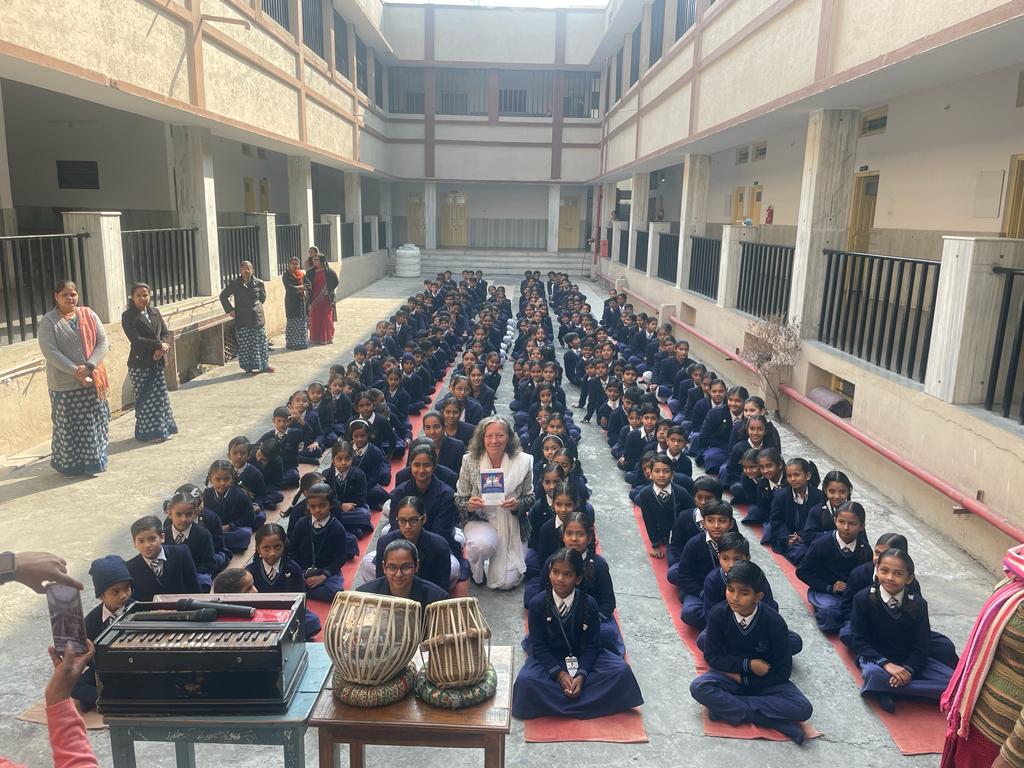
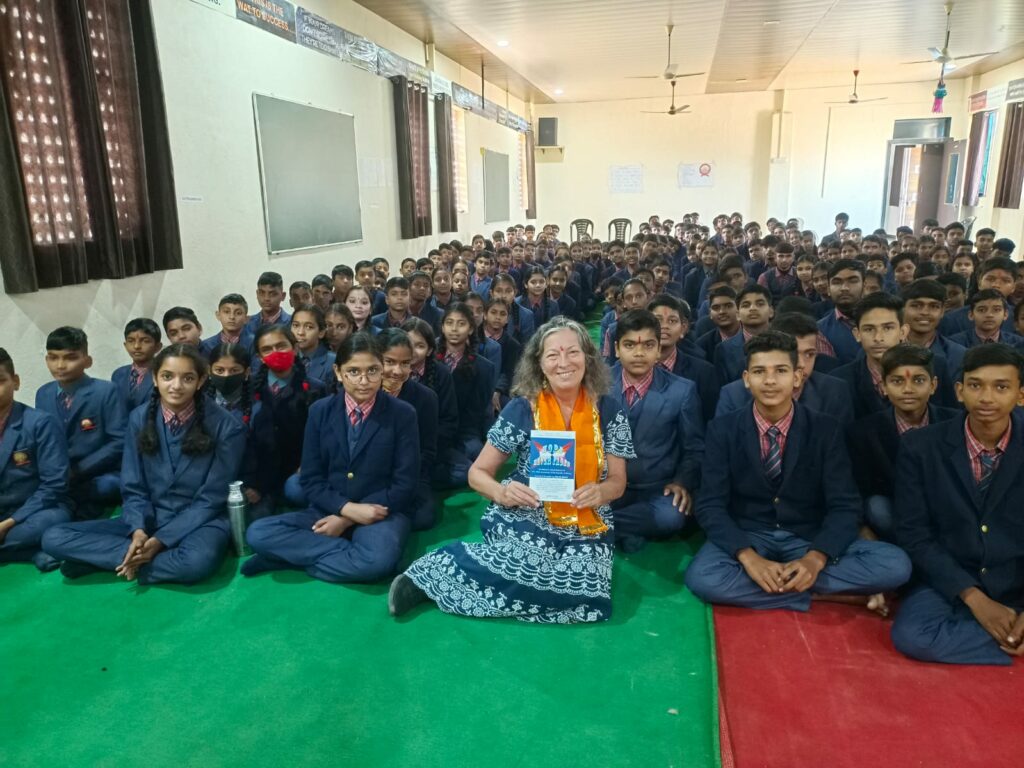
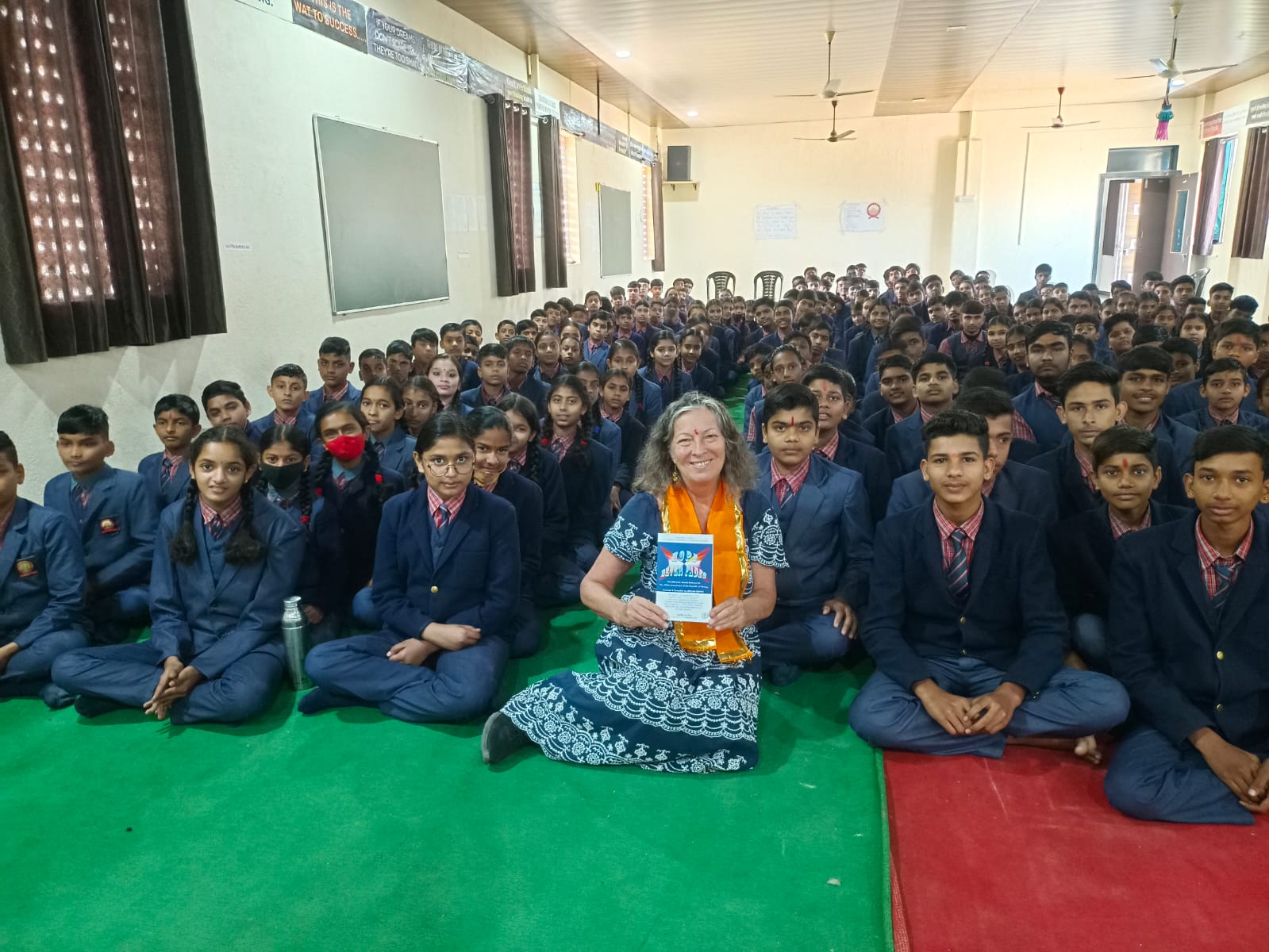
    Today, as of January 19; I gave 2 lectures to different Secondary and High School students in Rajsamand, introduced The Light Millennium Global, Universal Declaration of Human Rights, J.U.C. Awards, Water Action Decade.

    SDG-6, and Gandhi’s philosophy and vision on nonviolence, along with our collaboration with the Anuvrat (Anuvibha) Global Organization and UNDGC associations.

    Tomr. morning, I will leave of the Children Peace Palace here to Ahmedabad, from there to Chennai. I would like to thank with full heartily to Dr. S.L. Gandhi, Arvind Vora and Sanchay Jain for the kindest invitation, which turned out one of the best experiences that I had have so far in India.

    The visited schools are:

    1. Bal Niketan Gandhi Seva Sadan (E.M) School (300 students);

    2. Pragati Secondary School (approx 70 students).

    I also thank to my translator; Monica, Tanisha (who took the photos) and Lehru and Jagdish; along with to the principles and teachers of the each school.

    Bircan Unver

  • Preserving Armenian roots on Turkey!

    Preserving Armenian roots on Turkey!

    See the solution of an Armenian commenter on preserving Armenian roots on Turkey

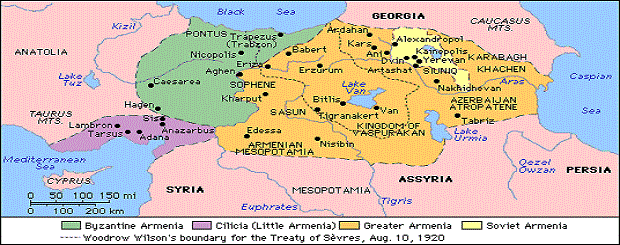
    It is what it is. Turkey has successfully made sure historical Armenian lands will never be under Armenian governmental/Armenian Republic rule. Many factors played into it: Depopulation of Armenians, Armenian state being under Soviet state for nearly 70 years, treaties being signed between Western superpowers and Turkey, it’s just too late. The boat for saving western Armenia has already sailed. Yes, I do wish that Ani and other historic Armenian territories would return to its rightful owner, but the Turkish government is very territorial government. The best way to preserve Armenian roots in these lands are if mass amount of Armenians return to these lands and start reproducing like the Kurds and Turks. Every Armenian family should have 7-8 kids. That way they’ll be able to replenish the Armenian roots again.

    Historic Armenia – Peter Musurlian documentary on Western Armenia

  • U.S. Religious Freedom report… compiled by Armenia…

    U.S. Religious Freedom report… compiled by Armenia…

    By Azer HASRET

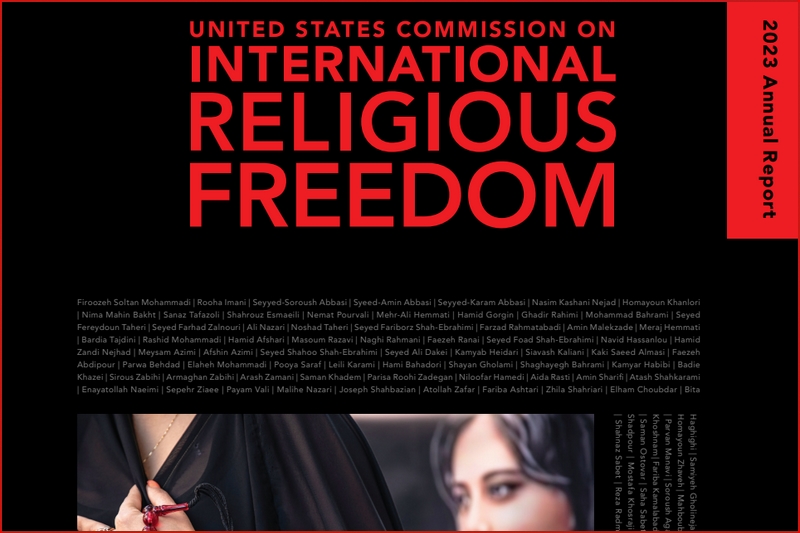
    “The U.S. Commission on International Religious Freedom (USCIRF) is an independent, bipartisan federal government entity established by the U.S. Congress to monitor, analyze, and report on religious freedom abroad.”

    This is stated by the mentioned Commission on its “Annual Report of The U.S. Commission on International Religious Freedom”. This means that the Commission is independent of any outside influence.

    Is it?

    We’ll see…

    Recently The Commission has announced its 2023 report where Azerbaijan among other several Turkic and Muslim countries is accused of “suppressing the religious freedoms”. All Turkic countries – Azerbaijan, Kazakhstan, Uzbekistan, Türkiye and Turkmenistan – except Kyrgyzstan are those which is seen by this very Commission as “a perpetrator of religious freedoms”.

    According to this report’s Azerbaijan chapter (just 2 pages) this country is in a very disturbing position and must be included “on the State Department’s Special Watch List” for violating religious freedoms…

    Now let’s see some citations from the Report:

    1. “This report provides an update on religious freedom conditions in Azerbaijan in 2023. It describes the legislative framework that facilitates the official regulation of religious practice, concerns for religious sites in Nagorno-Karabakh, the ongoing repression of Shi’a Muslim religious activists, and the impact of the government’s refusal to allow conscientious objection.”

    “Concerns for religious sites in Nagorno-Karabakh”. One must think that the Report is overseeing the destruction of more than 60 Mosques in Karabakh during its occupation by Armenia. Yes, even all Mosques in Karabakh and other occupied lands of Azerbaijan were wiped off by Armenia. But no single word about this in the Report!

    Plus, we must add that there is no territorial entity within Azerbaijan called “Nagorno-Karabakh”. Seems the compliers of the Report are using occupant Armenia’s terminology while talking about Azerbaijan…

    While talking about “the ongoing repression of Shi’a Muslim religious activists” The Commission forgets about the realities of our region. Those so-called “repressed Shi’a Muslims”, who are defended by the US Government are mostly the followers of Iranian General Qasem Soleimani. This General was eliminated on Jan 3, 2020, by the US drones in Baghdad, Iraq as a terrorist. And those so-called Shi’a Muslims “repressed by Azerbaijan” are mostly the supporters and followers of this very terrorist! So, the U.S. must decide and rethink if this very country has killed Qasem Soleimani by mistake…

    2. “The law also prohibits non-Azerbaijani citizens from engaging in “religious propaganda” or missionary activity without explicit state permission.”

    What is strange here? Why Azerbaijan must be accused of preventing its citizens from the religious propaganda? People, even foreigners are free to practice their religion. But religious propaganda by foreigners is and must be prevented!

    3. “In May 2023, the chairman of the SCWRA Mubariz Gurbanli explicitly called for Armenian priests to abandon the Dadivank Monastery in the Kalbajar region as he falsely claimed that they had no connection to the site. While a United Nations mission to Nagorno-Karabakh completed in October 2023 reported that it “saw no damage…to cultural or religious structures”, human rights organizations continued to urge the government to ensure protections for religious and cultural sites and rights.”

    I would say that No Comment! But The Commission needs a bit explanation and enlightenment. The Monastery which they claim to be called as “Dadivank” is Khudaveng Monastery and has nothing to do with Armenians. It was built by Albanian Christians and is under state protection of Azerbaijan. But as other religious sites it was occupied by Armenia and then renovated a bit to prove that it is “an ancient Armenian Monastery”. Even the UN mission also stated that no damage “to cultural and religious structures”.

    4. “The government has particularly targeted the unregistered Muslim Unity Movement (Müsəlman Birliyi Hərəkatı) or MUM, a group that has criticized the government’s repressive policies toward religion and whose persecution many human rights defenders believe to be politically motivated.”

    This so-called Muslim Movement is that very organization which supports Qasem Soleimani and Iran’s clerical regime. These people hate the U.S. and other major Western democracies and want to overthrow the government in Azerbaijan… in order to establish a new one which would support such terrorist organizations like HAMAS, Hezbollah…

    5. “The United States should pressure Azerbaijan to address its severe violations of religious freedom and place the country on the State Department’s Special Watch List until the Azerbaijani government amends its 2009 law “On Freedom of Religious Beliefs” in line with international human rights standards and ceases other policies and practices that routinely infringe upon its citizens’ freedom of religion or belief.”

    I’d ask, are you serious? Do you really think that Azerbaijan must be included in this List just only for preventing the country and its people from the so-called religious interference of the terror-sponsor state – Iran? What is the connection between Iran and The U.S. Commission which compiles such reports?

    Maybe there is someone in The Commission who has the ties with Iran or its close allies?

    Yes, there is someone called Danielle Saroyan Ashbahian, who is a Chief of Public Affairs at The Commission. If review her social media accounts, one easily can see that she is an active member of Armenian propaganda against Turks – Azerbaijan and Türkiye! But she must be neutral person, isn’t it?

    This very Danielle worked for the Armenian Assembly of America before joining The Commission dealing with the religious issues throughout the world…

    “Danielle Saroyan Ashbahian is the Chief of Public Affairs at the U.S. Commission on International Religious Freedom, overseeing the Communications and Congressional Relations. Before joining USCIRF, she was the Director of Communications at the Armenian Assembly of America. Prior to that, she was the Layout Editor at the Public Diplomacy Magazine and worked at the Los Angeles Consular Corps. She has had previous experience at the office of former U.S. Congresswoman Janice Hahn, the United Nations Department of Public Information in Armenia, the Lebanese Consulate in Los Angeles, and the San Francisco Ethics Commission” reads The Commission’s web site…

    One more important point: The Commission is trying to support its claims against Azerbaijan siting so-called “Caucasus Heritage Watch”, a pro-Armenian entity launched in 2020 by Armenians, supported by Armenian organizations…

    Just again, No Comment!

    BTW, there is no report on Armenia at all! We’ll remind The Commission that for example the Jewish Synagogue was set to fire in Yerevan in 2023. Or all Muslims are religiously cleansed from Armenia! And Armenia is one of the very few countries of the world denying multiculturalism and having even 98 percent of population of Armenian ethnic background…