Category: China

  • UPDATE 3-Uighur protests as China’s Xi visits Turkey

    UPDATE 3-Uighur protests as China’s Xi visits Turkey

    * Turkish PM called 2009 Chinese crackdown on riots “genocide”

    * Uighur protesters burn Chinese flag, Xi poster

    * China is Turkey’s 15th biggest export market

    * Erdogan says will visit China in coming months (Adds meeting with Erdogan)

    By Tulay Karadeniz

    ANKARA, Feb 21 (Reuters) – Activists from China’s Muslim Uighur minority burnt Chinese flags in Ankara on Tuesday where China’s leader-in-waiting Xi Jinping was holding talks with Turkish officials on regional issues.

    About 60 Turkic-speaking Uighurs from China’s northwestern Xinjiang province protested outside the hotel where Xi was staying in the Turkish capital on the last leg of a trip that also took him to the United States and Ireland.

    Xi, almost sure to succeed Hu Jintao as president in just over a year, praised Turkey’s role in trying to resolve issues such as the Iranian nuclear dispute and Middle East conflicts.

    Waving the flag of East Turkestan, pale blue with a white star and crescent, the protesters burnt a Chinese flag and a poster of Xi before police moved in to disperse them.

    Rights groups accuse China of abuses during a crackdown after Uighur riots in 2009 and Turkish Prime Minister Tayyip Erdogan then described the events as a “genocide”. Turkey is home to thousands of Uighurs who have fled Xinjiang since the Chinese Communists took over the region in 1949.

    Xi said China had made great strides to raise the living standards of all ethnic groups in Xinjiang.

    Turkey and China are at either end of a political and economic axis stretching along the old silk road though Central Asia, Iran and Afghanistan. Both have strong, sometimes competing economic interests in the region.

    Turkey, now the world’s 16th biggest economy and only second to China in growth last year, has projected itself as a stable Muslim democracy, making it a key player at a time of turmoil and unrest in the Middle East.

    “A member of the G20 with a growing economy and an important country in the Middle East, Turkey has for a long time tried to bring stability and development to the region and played an active role in trying to solve ‘hot’ issues,” Xi told Turkey’s Sabah newspaper listing Afghanistan, the Iranian nuclear and Middle East peace efforts.

    BILLION DOLLAR DEALS

    Turkey has sought to mediate between the West and Iran in a dispute over Iran’s nuclear programme and has broadly shared China’s opposition to stronger sanctions against Tehran.

    But on Syria their positions have been sharply at odds.

    While Turkey has taken a leading role in pressuring Syria’s President Bashar al-Assad to step down, China, along with Russia, this month blocked a draft U.N. Security Council resolution that backed an Arab plan urging him to quit.

    China has also not decided whether to accept an invitation to discuss Syria with other world powers this week in Tunisia, a meeting Turkey’s foreign minister will attend and Ankara hopes will keep up pressure for Assad to step down.

    Xi met President Abdullah Gul on Tuesday and signed seven bilateral economic agreements.

    The central banks of Turkey and China signed a three-year currency swap agreement worth $1.6 billion which will be effective for three years, both sides said. The two countries could discuss extending its maturity after that.

    China has signed a series of bilateral currency agreements with foreign countries as part of efforts to promote the use of the yuan in cross-boarder trade and investment.

    The Turkish energy ministry also said China’s Avic International and Turkey’s Hema Endustri, a Turkish engineering manufacturing company, will sign a $1 billion deal for power plant and coal production equipment.

    Energy Minister Taner Yildiz said the agreement could lead to cooperation with China on building Turkey’s first nuclear power plant.

    Xi later travelled to Istanbul for talks with Erdogan, who is recovering from surgery at home there. Citing prime ministerial officials, Turkish state media said the two men met for one hour where they agreed to increase economic cooperation.

    During the meeting, which was closed to the media, Erdogan accepted a formal invitation by Xi to visit China and said he would travel there in the coming months, state-run Anatolian news agency reported.

    On Wednesday, Xi attends a business forum in Istanbul, where he is likely to be assailed by exporters eager to try to bridge a gaping trade gap.

    China is Turkey’s 15th biggest export market with nearly $2.5 billion of Turkish goods sold there last year, a rise of 8.7 percent. But some $21.6 billion worth of Chinese goods were imported to Turkey in 2011, up 26 percent from 2010. (Additional reporting by Jon Hemming, Orhan Coskun and Jonathon Burch; Writing by Jon Hemming; Editing by Maria Golovnina)

    via UPDATE 3-Uighur protests as China’s Xi visits Turkey | Reuters.
  • China, Turkey Sidestep Syria Issue to Sign Business Pacts

    China, Turkey Sidestep Syria Issue to Sign Business Pacts

    By BRIAN SPEGELE And JOE PARKINSON

    ISTANBUL—China and Turkey set aside differences on how to quell escalating violence in Syria on Tuesday, as Vice President Xi Jinping began the final leg of a diplomatic tour seen as a dress rehearsal for Chinese leadership by overseeing a series of bilateral business deals, including a central bank swap deal to boost trade in local currencies.

    Agence France-Presse/Getty Images

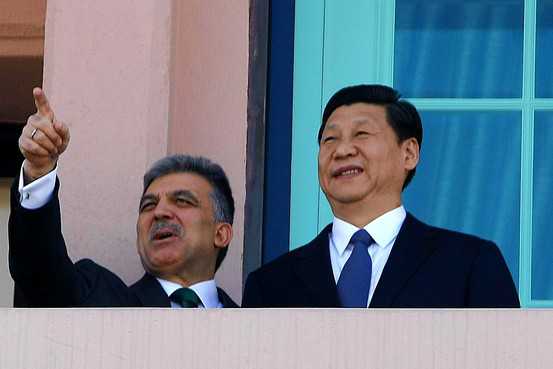
    Turkey’s President Abdullah Gul, left, and China’s Vice President Xi Jinping during a welcoming ceremony in Ankara

    Mr. Xi, widely presumed to be China’s next top leader, signed the three-year currency-swap pact between Turkey’s central bank and the People’s Bank of China alongside Turkey’s President Abdullah Gul in Ankara on Tuesday.

    The two leaders, who signed five other business agreements, didn’t make any public statements before the Chinese vice president headed to Istanbul to meet Prime Minister Recep Tayyip Erdogan, but Turkish officials were expected to relay their growing concerns over the gathering violence in neighboring Syria.

    Ankara has repeatedly said the world can’t remain silent in the face of an 11-month revolt against President Bashar al-Assad, which appears to be degenerating into civil war. China, along with Russia, has vetoed two United Nations Security Council resolutions backing Arab League plans seeking an end to the conflict and condemning a crackdown on protests that killed 5,400 in 2011 alone, according to the U.N.

    Ankara reacted furiously when Beijing, along with Moscow, vetoed the second resolution earlier this month, proposing a summit on Syria to help coordinate policy outside the Security Council.

    As activists reported that Syrian government troops continued to shell restive districts in the opposition stronghold of Homs, killing at least 16 people, official communication from Mr. Xi’s diplomatic visit made no mention of Syria, or the stalling diplomatic attempts to halt the violence.

    China’s state-run Xinhua news agency reported that Mr. Xi and the Turkish President discussed “regional and international affairs of common concerns,” though neither side initially offered details.

    Turkey’s state-run Anadolu Agency reported that China was interested in investing in Turkish economic projects and that Prime Minister Erdogan had accepted Mr. Xi’s offer to visit Beijing.

    The conspicuous silence on developments across the border in Syria disappointed Turkish analysts, who had hoped the meeting of two rising powers with expanding interests in the Middle East, could offer some clue on whether Beijing would soften its objection to intervention to quell the violence amid growing fears that the revolt against the Assad regime is degenerating into civil war.

    China in recent weeks has given little indication it would support Western intervention, despite heightened criticism in Turkey, Europe and the U.S. that it was serving as an obstructionist to restoring peace there. Rather, senior Chinese leaders and state-run media have delivered unusually direct defenses of China’s position. China has a strict foreign policy of noninterference in other countries’ internal affairs, which in recent years it has used to block international intervention on humanitarian grounds alone. Additionally, China fears unrest toward authoritarian regimes in the Arab world could spread to Beijing if aided by the West, analysts say.

    “Our position hasn’t changed,” said Foreign Ministry spokesman Hong Lei at a news briefing Tuesday. He said China was willing to work with the international community to resolve the crisis in Syria, but said China didn’t welcome external arms or interference in the conflict.

    Mr. Hong confirmed China had received an invitation to a “Friends of Syria” meeting backed by Western powers and the Arab League set for Friday in Tunis, but didn’t say whether China would participate. Russia confirmed on Tuesday that it wouldn’t participate in the meeting because the Syrian government wouldn’t be represented, stoking fears that the group would struggle to gain legitimacy.

    Mr. Xi, who will become China’s Communist Party chief in a once-a-decade leadership transition that begins late this year, will have to forge a consensus on sensitive foreign-policy issues among powerful political forces in China, including state-owned enterprises and the military.

    Many questions remain about his approach to policy, though he is viewed by U.S. officials and other political analysts as a business-friendly politician, perhaps less driven by communist ideology than his predecessors.

    Nonetheless, analysts said Mr. Xi wouldn’t be able stray significantly from the prevailing party line on Syria and other Middle East issues, lest he risk upstaging China’s current leadership, including President Hu Jintao.

    Chinese leaders, including Premier Wen Jiabao, have said China isn’t defending the Assad regime. They argue the U.N. Security Council resolution calling for Mr. Assad’s resignation ran afoul with the U.N. charter. In addition to vetoing the Security Council’s resolution, China last week was one among just 12 U.N. member states to oppose a nonbinding resolution condemning the Syrian government.

    Earlier on Turkey on Tuesday Mr. Xi was confronted with one sensitive domestic issue, as a group of protesters gathered outside his Ankara hotel to demonstrate against Beijing’s crackdown against Turkic-speaking Uighurs in China’s northwestern Xinjiang province, according to Turkey’s state-run Anadolu Agency. Violence between Muslim Uighurs and Han Chinese, China’s dominant ethnic group, left nearly 200 dead in western China in 2009 in the worst riots in the country’s far west in more than a decade.

    Turkey’s Parliament Speaker Cemil Cicek earlier said that Ankara respects China’s “sovereignty and territorial unity” in an apparent reference to the issue.

    via China, Turkey Sidestep Syria Issue to Sign Business Pacts – WSJ.com.

  • National Geographic China Promotes Istanbul

    National Geographic China Promotes Istanbul

    National Geographic China Promotes Istanbul

    SHANGHAI, Feb 20 (Bernama) — The China edition of the National Geographic Traveller, one of the biggest culture and travel magazines in the world, published a supplement and promoted Istanbul.

    The 21-page supplement included observations of a Chinese citizen living in the Turkish metropolis, and told about traditional Ottoman and Turkish cultures.

    According to Anadolu news agency, it also published an interview with Nobel literature laureate Orhan Pamuk.

    Chinese teacher, Ging Yang, has been living in Istanbul since 2007.

    The supplement wrote about Turkish people’s tea affection, and promoted Istanbul’s history, mosques, culture and Turkish food, particularly Turkish doner kebab.

    — BERNAMA

    via BERNAMA – National Geographic China Promotes Istanbul.

  • Turkey and China ‘helping Iran evade UN sanctions’

    Turkey and China ‘helping Iran evade UN sanctions’

    Turkey and China are helping Iran to evade UN sanctions by providing them with secret banking facilities to purchase goods, according to Western security officials.

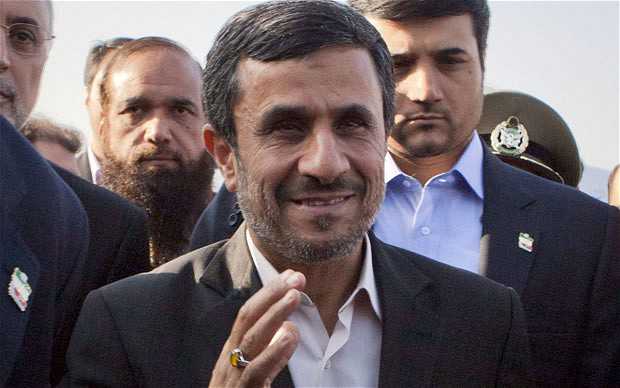
    Iran's President Mahmoud Ahmadinejad  Photo: REUTERS
    Iran's President Mahmoud Ahmadinejad Photo: REUTERS

    By Con Coughlin

    8:00PM GMT 19 Feb 2012

    In an attempt to escape the effects of the wide-ranging sanctions imposed over Iran’s illegal nuclear programme, Iran’s central bank is using a number of financial institutions in China and Turkey to fund the purchase of vital goods to keep the Iranian economy afloat.

    According to Western security officials China, which is Iran’s largest oil trading partner, is playing a major role in helping Iran to avoid the sanctions.

    Instead of transferring payments to Iran owed from oil purchases, Chinese banks are using the money to buy goods on behalf of the Iranians and then shipping them to Iran.

    “It is like an old-fashioned barter mechanism,” explained a senior security official. “The money Iran earns from oil sales goes into banks in China and is then used for Iranian purchases of other goods and materials. It is a very good way of getting round the sanctions.” Security officials have also identified a number of financial institutions in Turkey that are helping Iran to evade sanctions.

    Turkey, which maintains good diplomatic relations with Tehran, is particularly useful to Tehran because of its close trading ties with Europe.

    Investigators claim they have found evidence of Turkish businesses trying to purchase financial institutions in Europe on behalf of Iran which can then be used by Tehran to purchase much-needed goods and materials for its stricken economy.

    According to security officials responsible for monitoring the effectiveness of the sanctions, the sanctions-busting operation is being masterminded by Iran’s Revolutionary Guards, who are said to own more than 50 percent of the Iranian economy.

    They are taking an increasingly influential role in the running of the Central Bank of Iran, which is itself the subject of international sanctions. “Today the Central Bank of Iran is being run like an intelligence operation,” said one investigator.

    Iran is particularly keen to have access to banks in Germany, which is one of the world’s leading handlers of euros. U.S. Treasury department officials have identified a number of transactions passing through German banks that appear to have come from Turkey, but in fact are being controlled by Tehran. In addition to the eurozone Iran is also trying to transfer funds through Ukraine and Belorussia.

    The visit takes place amid warnings from diplomats based in Vienna, the headquarters of the International Atomic Energy Agency, that Iran may be preparing to expand its nuclear programme to an underground site near the city of Qom, enabling it to speed up the production of enriched uranium, a vital component for nuclear weapons.

    Reports said Tehran has put finishing touches for the installation of thousands of new-generation centrifuges at the facility – machines that can produce enriched uranium much more quickly and efficiently than its present machines.

    via Turkey and China ‘helping Iran evade UN sanctions’ – Telegraph.

  • FORMER WORLD BANKER WOLFENSOHN MAKES STUNNING CONFESSION

    FORMER WORLD BANKER WOLFENSOHN MAKES STUNNING CONFESSION

    THE VIDEO EVERYONE NEEDS TO SEE, BUT FOR DIFFERENT REASONS… THE FORMER PRESIDENT OF THE WORLD BANK, JAMES WOLFENSOHN, MAKES STUNNING CONFESSIONS AS HE ADDRESSES GRADUATE STUDENTS AT STANFORD UNIVERSITY. HE REVEALS THE INSIDE HAND OF WORLD DOMINATION FROM PAST, TO THE PRESENT AND INTO THE FUTURE. THE SPEECH WAS MAS MADE JANUARY 11TH, 2010. THE NEXT 19 MINUTES MAY OPEN YOUR MIND TO A VERY DELIBERATE WORLD.

    HE TELLS THE GRAD STUDENTS WHAT’S COMING, A “TECTONIC SHIFT” IN WEALTH FROM THE WEST TO THE EAST. BUT HE DOESN’T TELL THE STUDENTS THAT IT IS HIS INSTITUTION, THE WORLD BANK, THAT’S DIRECTING AND CHANNELING THESE CHANGES.

    WOLFENSOHN’S OWN INVESTMENT FIRM IS IN CHINA, POISED TO PROFIT FROM THIS “IMMINENT SHIFT” IN GLOBAL WEALTH.

  • China has no plans to ‘buy out Europe’: state media

    China has no plans to ‘buy out Europe’: state media

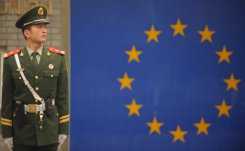
    A policeman stand guard near the European Union Delegation in Beijing in November 2011. China has no intention to "buy out Europe", a top state-run newspaper said Monday, reiterating comments made by Premier Wen Jiabao ahead of a major summit with the European Union in Beijing.
    A policeman stand guard near the European Union Delegation in Beijing in November 2011. China has no intention to "buy out Europe", a top state-run newspaper said Monday, reiterating comments made by Premier Wen Jiabao ahead of a major summit with the European Union in Beijing.

    AFP – China has no intention to “buy out Europe”, a top state-run newspaper said Monday, reiterating comments made by Premier Wen Jiabao ahead of a major summit with the European Union in Beijing.

    The Chinese government has in recent weeks sought to calm concerns in Europe that a wave of investment by Chinese companies and government-backed funds will give Beijing too much influence over struggling European economies.

    “China not only does not have the appetite or ability to ‘buy out Europe’ or ‘control Europe’ like some in Europe have said, but also supports the euro and European Union from start to finish,” the People’s Daily said.

    The commentary in the overseas edition of the Communist Party mouthpiece also reiterated comments made by Wen earlier this month that China was mulling helping out in the European debt crisis, through the International Monetary Fund or bailout funds.

    “For many years, the European Union has been China’s biggest export market and largest source of technology, as well as a major provider of foreign investment,” it said.

    “This is the main consideration behind what Premier Wen said — that ‘helping Europe is actually helping China itself’.”

    The comment piece comes a day ahead of a major EU-China summit that takes place against a backdrop of concern over the eurozone crisis, which has seen a wave of credit-rating downgrades and brought Greece to the brink of bankruptcy.

    European Commission President Jose Manuel Barroso and European Council President Herman Van Rompuy will attend the summit in Beijing on Tuesday, as will Wen.

    European leaders have previously called on China, which has the world’s largest foreign exchange reserves, to invest in a bailout fund to rescue debt-stricken countries.

    China has so far made no firm commitment to provide financial assistance, other than Wen’s comments made during German Chancellor Angela Merkel’s visit and reiterated in the People’s Daily on Monday.

    But Chinese companies and funds have ramped up their investment in Europe, buying up utilities, energy firms and even luxury yacht makers, in a move welcomed by some but eyed with concern by others.

    Analysts say bargain-hunting — and not the secret hand of Beijing — is driving the recent wave of acquisitions as Chinese firms seek to expand abroad and the country’s sovereign wealth fund diversifies away from US bonds.