Category: World

  • David Grimason, whose son was killed by gunman in Turkey welcomes global treaty to regulate international arms trade

    David Grimason, whose son was killed by gunman in Turkey welcomes global treaty to regulate international arms trade

    David Grimason -1783868

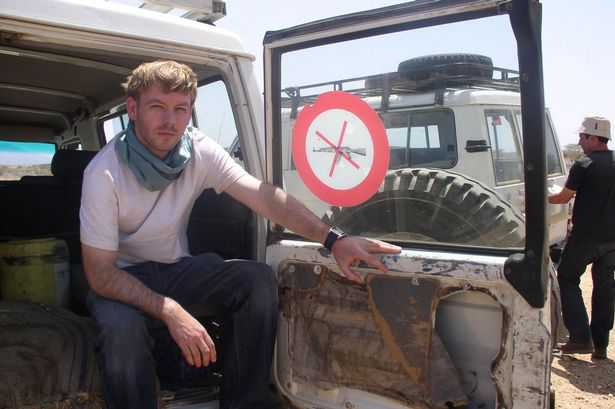
    THE anti-gun campaigner was present at the Arms Trade Treaty Talks in New York, when the treaty was approved.

    David Grimason travelled to New York last week to lobby the UN to tighten up international arms trade

    Oxfam/PA

    A Scots dad whose toddler son was killed by a gunman with an illegal weapon has welcomed the first global treaty to regulate the international arms trade.

    David Grimason, who lost his two-year-old son Alistair in 2003, was present at the Arms Trade Treaty talks at the United Nations in New York when the treaty was approved.

    He has been campaigning for tighter controls on the trade of weapons since his son was killed during a gunfight at a cafe in the seaside village of Foca, Turkey, almost a decade ago, in July 2003.

    The toddler was asleep in his pram when an argument broke out at a nearby table and a man opened fire, killing the boy from East Kilbride, South Lanarkshire.

    Mr Grimason said: “It’s been an emotional day for me. It’s an overwhelming majority of nations that have recognised the need for an Arms Trade Treaty. The world recognised it was needed. We overcame the sceptics today and by such an amazing majority, it’s just incredible.

    “As someone who is living with the effects of gun violence, I realise the necessity for a Treaty that will restrict the flow of weapons and stop them getting into the hands of people that are going to abuse them. So for me, I recognise how much of a victory it is for humankind.

    “This treaty will have a legacy and that will be a future where restricting the movement of illegal arms and guns will save lives and will prevent others from suffering violence and terror.”

    Mr Grimason, who now lives in Aberdeen, was in New York as part of his work with Oxfam, which is a leading member of the Control Arms Coalition.

    Alistair Grimason

    More than 100 civil society groups working in 120 countries are represented by the Control Arms Coalition which is urging all states to sign and ratify the treaty.

    Anna MacDonald, Oxfam’s head of Arms Control, described the outcome in New York as an “incredible moment”.

    She said: “The agreement of the Arms Trade Treaty sends a clear message to arms dealers who supply war lords and dictators that their time is up. They will no longer be able to operate and arm themselves with impunity. The world will be watching and will hold them accountable.”

    Last week there was a setback as Syria, Iran and North Korea refused to ratify the treaty and delayed progress towards enshrining a set of rules to regulate the global arms trade in international law.

    “It is right that after consensus was blocked, states moved swiftly to adopt the treaty by voting. It is right that the will of the majority wins out, not the tiny minority of sceptics who were intent on wrecking the process,” said Ms MacDonald.

    “From the streets of Latin America, to the camps in eastern Congo, to the valleys of Afghanistan, communities living in fear of attacks because of the unregulated arms trade can now hope for a safer future. The world will be a more secure place to live in once the Treaty is in place,” she added.

    Alex Galvez, a survivor of armed violence and executive director of the Transitions Foundation of Guatemala, said: “This is a good day for armed violence survivors everywhere, and a proud day for the Control Arms Campaign. But the work doesn’t stop here. We have to make sure that this treaty actually makes a difference on the ground. States must move to ratify the ATT now, and make its swift implementation a top priority.”

    via David Grimason, whose son was killed by gunman in Turkey welcomes global treaty to regulate international arms trade – Daily Record.

  • TURKEY : commercial banks to count gold deposits toward their reserve requirements

    TURKEY : commercial banks to count gold deposits toward their reserve requirements

    PRECIOUS METALS
    gold-bar
    ALLEN SYKORA
    Kitco News

    “Turkey’s move … to allow commercial banks to count gold deposits toward their reserve requirements … would mean a “renaissance” of gold as a monetary asset…””…on the monetary side, this is pure genius,” “…central banks looking to diversify away from major currencies such as the dollar.”
    Turkey’s move one and a half years ago to allow commercial banks to count gold deposits toward their reserve requirements potentially could be emulated by other central banks, and if so, would mean a “renaissance” of gold as a monetary asset, a New York-based consultancy says.

    The end result of the Turkish rules has been to free up lending to support the economy at a time when many other countries are struggling to get banks to provide funds to borrowers, the consultancy said.

    The privately owned gold held in Turkish commercial banks has shown up on the balance sheet for the central bank, resulting in news reports of inflated official-sector reserves in the country, the consultancy said.

    “But on the monetary side, this is pure genius,” said Jeffrey Christian, managing director of CPM Group. “We think that it will be emulated by other governments and other central banks.”

    And if so, this would be a “major move forward toward what a lot of major central banks would like to see,” which CPM Group said is monetary and private-sector financial reserves dispersed across currencies – including gold – rather than the heavy global reliance upon the U.S. dollar as the world’s reserve currency.

    This ultimately would provide an underpinning for the price of gold, even if it doesn’t directly mean higher prices from increased buying, Christian said.

    “This is potentially a really big step forward in the rehabilitation of gold as a monetary-reserve asset,” he said.

    In September 2011, neighbouring Greece was in the throes of a massive debt crisis. European leaders were struggling to deal with the situation. Around the same time, U.S. lawmakers were in a stalemate over how to deal with their deficits and the country’s credit rating was downgraded. Gold prices hit a record high on safe-haven buying. Money and gold were moving into Turkey, Christian said.

    The country’s central bank acted by creating the “Reserve Operation Mechanism.” This provided its commercial banks the option of meeting a portion of their Turkish lira reserve requirements with alternatives, said Erica Rannestad, commodity analyst with CPM Group.

    Initially, banks could meet 10 per cent of this with other currencies such as the dollar or euro, plus another 10 per cent with gold held on deposit at their banks. This was unprecedented in modern times for a central bank, the consultancy said. The percentage for gold was increased to 20 per cent in March 2012, then 25 per cent in June and finally 30 per cent by August.

    So far, the measures have been successful for Turkey’s central bank, Rannestad said. They have meant more liquidity for the financial system and lower borrowing costs.

    “You could see other central banks become more interested in adopting similar policies,” Rannestad said. In particular, she cited potential for India to take such steps. The country historically has been the world’s largest gold-buying nation and its denizens collectively have what Rannestad described as a large amount of “under-the-mattress” gold. Should India follow Turkey’s example, this could mean increased funding for the economy at a time of slower economic growth.

    Ironically, despite the affinity for gold in India, the government also has been taking steps to limit gold imports – such as implementing duties – to control a high current-account deficit that has undermined the Indian rupee in recent years.

    “The Indian government and Reserve Bank of India have been trying to figure out ways to reduce gold imports and mobilize the gold in their country,” Rannestad said. She later added, “This could be an alternative solution to their issues.”

    Such policies by themselves might not necessarily increase the overall demand for gold, she said. Turkish banks are not actually increasing their purchases. Instead, they are better able to utilize existing holdings of clients to free up liquidity in the banking system.

    Still, “this could be a renaissance for gold in its role in the monetary system,” Rannestad said.

    Already, Rannestad said, there is a renaissance of gold as a monetary tool, as reflected by increased buying in recent years from central banks looking to diversify away from major currencies such as the dollar. The consultancy said central banks collectively have been net buyers since 2008, after previously being mostly net sellers since 1965. And, as gold becomes a more important tool in the monetary system, central banks likely would continue their accumulation, CPM Group said.

    Reports Of Turkish Central-Bank Holdings Often Distorted

    The consultancy cautioned that one impact of the Turkish rules has been to create the impression that central-bank purchases of gold have been even higher than has actually been the case. CPM Group estimated central banks added 9.5 million ounces in 2012, or roughly 8 per cent of mined and secondary supply.

    However, CPM Group said, the privately owned gold held by commercial banks in Turkey was showing up in data as though it was holdings of the central bank itself. As a result, the consultancy has adjusted its data on net official transactions to account for this. The consultancy said from October 2011 to December 2012, the country’s reported monetary reserves rose 7.8 million ounces. However, this was not gold bought by the central bank on the open market and instead was gold held by investors and others in commercial banks.

    “It’s still a bullish story,” Rannestad said of global central-bank purchases. “But it could lead to inflated views of central-bank activity.”

    Daniela Cambone contributed to this story.

    Security Price Change
    GLD-N SPDR Gold E.T.F. 154.67 0.20
    0.129%
    Add to watchlist
    GC-FT Gold 1603.7 2.80
    0.175%
    Add to watchlist
    • GC-FT
    • GLD-N
    Live Discussion of GC on StockTwits
    More Discussion on GC-FT


  • Would Turkey in the Shanghai Co-op Cause a Global Power Shift?

    Would Turkey in the Shanghai Co-op Cause a Global Power Shift?

    By Jeff Uscher, Contributing Writer, Money Morning – February 15, 2013

    Is Turkey about to join the Shanghai Cooperation Organization (SCO)?

    After years of delay on its application to join the European Union (EU) as a full member, Turkey has made overtures to the SCO as an alternative to the EU.

    Turkish Prime Minister Recep Tayyip Erdogan said after a meeting with Russian Prime Minister Vladimir Putin that Turkey was seriously considering becoming a member of the SCO instead of continuing its efforts to join the EU.

    “The European Union needs to stop stalling us,” Erdogan said. “We have a strong economy. I told [Putin], ‘You should include us in the Shanghai Five [the former name of the SCO] and we will say farewell to the European Union.’ The Shanghai Five is much better off economic-wise. It is much more powerful. We told them, “If you say come, we will.’”

    What’s the Shanghai Cooperation Organization?

    The SCO’s full members are China, Russia, Kazakhstan, Kyrgyzstan, Tajikistan and Uzbekistan. Mongolia, India, Iran and Pakistan have observer status in the SCO while Turkey is a dialogue partner along with Sri Lanka and Belarus.

    Originally formed in 1996 to demilitarize the border between China and the former Soviet Union, the SCO was expanded in 2001 to include Uzbekistan.

    According to a background study by the Council on Foreign Relations, the SCO has the potential to be an important body for regional energy and security cooperation in Central Asia, but has so far not achieved anything substantial.

    Both China and Russia have secured bilateral agreements with other SCO members to build pipelines from the energy-rich Caspian Sea region to their respective home markets but this has taken place outside of the SCO.

    “The competing efforts of Russia and China to secure influence in the region are a potential obstacle to extensive SCO energy cooperation,” the Council on Foreign Relations concluded.

    If genuine energy cooperation could be achieved by the SCO, particularly if it included Iran, that would be a boon for Turkey, which depends on imported energy to fuel its rapidly growing economy.

    Would SCO Bid Affect Turkey’s NATO Status?

    Turkey is a member of NATO, while the SCO is seen as acting as a counterweight to American interests in Central Asia – if not outright anti-American.

    The SCO has called for U.S. troops to leave the region but the U.S. has military bases in several Central Asian countries, including SCO members Kyrgyzstan and Uzbekistan, to support the war in Afghanistan.

    Although those bases are subject to bilateral agreements with the countries involved and not with the SCO, the issue of what happens to those bases when the U.S. withdraws from Afghanistan at the end of 2014 will be a thorny one.

    Of course, the U.S. has a major military presence in Turkey. If Turkey joins the SCO, what will happen to the U.S. bases there? Will Turkey want to withdraw from NATO?

    As the U.S. State Department said, if Turkey joins the SCO, it will be “interesting.”

    SCO a Cover for Big Power Diplomacy?

    Many experts feel that the SCO can never be an effective security or energy cooperative organization because of its membership.

    Russia has a proprietary interest in the Central Asian countries Kazakhstan, Kyrgyzstan, Tajikistan and Uzbekistan, which used to be part of the Soviet Union, and clearly wants to keep rival China out.

    For its part, China wants to get access to the energy-rich area around the Caspian Sea which, according to the BP Energy Survey, holds about 21% of the world’s oil and 45% of the world’s natural gas.

    Would Russia or China really welcome Turkey, a significant power with regional ambitions of its own, into the SCO?

    That, too, would be “interesting.”

    via Would Turkey in the Shanghai Co-op Cause a Global Power Shift? – Money Morning.

  • Adobe confirms Reader flaws targeted in ‘Turkey visa’ PDF zero-day attacks

    Adobe Firmasının Açıklaması : “Turkey Visa” isminde gönderilen dosya virüs içermektedir. Dosyayı açmayın.

    Summary: Attacks on Adobe Reader are a truly European affair with Italian JavaScript, Spanish domains and Irish IP servers.

    Liam Tung

    By Liam Tung | February 14, 2013 — 11:15 GMT (03:15 PST)

    Adobe has confirmed there are two previously undocumented flaws in the latest updates of its PDF products Adobe Reader and Acrobat that hackers were exploiting with a Turkish visa form.

    The two vulnerabilities (CVE-2013-0640, CVE-2013-0641) affect Adobe Reader and Acrobat XI (11.0.01), X (10.1.5) and 9.5.3 and earlier for Windows and Mac, Adobe said in an advisory on Wednesday.

    Adobe said the targeted attacks were designed to trick Windows users into clicking on emailed malicious PDF attachments, however the flaws affect the products for OS X systems as well. The company is working on a fix, it said.

    At present there are few clues to who the attackers are. However, details provided to ZDNet from FireEye, the security firm that discovered the Adobe Reader and Acrobat exploits this week, suggest it is a European campaign aimed at would-be travellers to Turkey — a popular holiday spot for Europeans seeking winter sun.

    A FireEye spokesperson told ZDNet on Thursday that the lure was PDF file labeled “Visaform Turkey.pdf”, which is required by all foreign travellers to the country.

    The callback from infected machines reveal that malware is communicating with a Spanish domain hosted on Irish IP servers while the JavaScript embedded in the maliciously crafted PDF is written in Italian.

    FireEye has released an updated technical report here, detailing how the exploit circumvents some of the anti-exploitation technologies, such as sandboxing, that Adobe has been building into Reader and Acrobat X and XI.

    It appears that security hardening measures Adobe introduced through “Protected View” in Reader and Acrobat XI to prevent such exploits will stop the exploit being used. Protected View was one of the main features Adobe touted at the product’s release last year, however Adobe said in its advisory that users will need to manually enable it for the protective measure to actually work.

    “Enterprise administrators can protect Windows users across their organization by enabling Protected View in the registry and propagating that setting via GPO or any other method,” the software company added.

    Besides this option, users could install alternative readers, such as (via CNET) Foxit, PDF-Xchange Viewer, Sumatra and Nitro among others.

    Topic: Security

    via Adobe confirms Reader flaws targeted in ‘Turkey visa’ PDF zero-day attacks | ZDNet.

  • Genetic Origins of the proto Turkic Peoples and their Relatives :Prof Spencer Wells : VIDEO

    Genetic Origins of the proto Turkic Peoples and their Relatives :Prof Spencer Wells : VIDEO

    SPENCER WELLS


    Published on Mar 26, 2012

    Genetic History of Central Asia (Turkestan) and genetic migrations. Blood relationships of Turks and Native Americans. Genetic link between Turks, Native Americans, Indians, Europeans, Asians.

    Konusu; insanlığın bilinen en eski genetik kökeninin, Kazakistan’da yaşamakta olan bir kişide olduğu..


    (Bu arada, kan ile, kemik ile ilgilenen bizler olsaydık “kafatasçı”, “faşist” olarak etiketlendirilirdik, oysa ilgilenenler yabancı olunca bunun adı, “bilimsel çalışma” oluyor)


    Prof. Spencer Wells,  bir genetik antropoloji araştırmacı. DNA’yı esas alarak, insanın dünya üzerindeki yayılımını araştırmakta. 100 bin yıl içindeki göç hareketleri ile ilgilenmiş.


    Hemen başta söylediği: Yaşam Afrika’da başlamışsa da, bakılıp büyütüldüğü yer, Orta Asya’dır. 


    Bu video’da Spencer Wells, Kazakistan’da yaşamakta olan Niyazov’a giderek tanışıyor ve anlatıyor:


    Wells’e göre; insanlığın ortaya çıkışı 60 bin yıl kadar önce Afrika’dan. Yine ona göre,  45 bin yıl kadar önce asıl çoğalma ve yayılma Orta Asya’dan olmuş.


    Niyazov’un DNA’sını ve kanını incelemiş ve Niyazov’un 2 bin kuşaktır etnik saflığını koruduğu anlaşılmış.

    Tüm Avrupa, Rusya, Kızılderililer ve kuzey Hintliler dahil, 1 milyardan fazla insanın atasının bu Orta Asyalı Niyazov’un ailesinden geldiği genetik antropoloji ile belirlenmiş.  


    Wells Kazakistan’daki 2 bin kişiden kan ve DNA örneği almış. Bunlardan Niyazov’unki olağan dışı  önemli. Çünkü Niyazov 40 bin yıl önce burada yaşamış olan bir aileden gelmekte.

    Genetik olarak M 173 –yani Orta Asya işareti- denilen DNA damgasını taşıyan ilk kabileden bir üye, Niyazov. Başka bölgeden biri ile karışma olmamış. Bu özel damganın tüm kuzey yarımkürede yayıldığı ve 1 milyardan fazla insanın DNA’sında bulunduğu bilinmekte. Niyazov’un atalarından gruplar kuzey yarım küreye yayılmışlar; Avrupa, Rusya, kuzey Hindistan, Asya’nın bazı bölgeleri, kuzey ve güney Amerika nüfusunu oluşturmuşlar. Kabilenin geri kalan üyeleri Kazakistan’daki aynı yerde yaşamaya devam etmekte.


    Wells’e göre Niyazov 2 bin kuşak (40 bin yıl) burada yaşamakta olan bir aileden gelme.


    Y-kromozomuna dayalı çalışmalar yapıldığında Niyazov’un varlığı, çok büyük önem taşımakta.


    (Wells bu video’da Türk sözcüğünden hiç bahsetmemekte. Niyazov’a bir ara, “Uygurlar, Tacikler, Pamirler’den önce..” diye bahsederken hemen keser,  “herkesten önce DNA’nın ne olduğunu biliyor musun?” diye sorar. “Evet” yanıtını aldıktan sonra kaldığı yerden devam etmez)


    Wells, Uygur’u, Pamir’i, Tacik’i sıralarken o anda Niyazov’un hafifçe, “Turki..” dediği duyulur ama devamı gelmez, havada kalır…


    Wells Türk sözcüğünü hiç ağzına almaz ama, “gece 9.’da doğu Kürdistan’dan yola çıktık” diye bahseder; artık Kürdistan’ın doğusu neresiyse?!


    Bu sıralarda ülkemizde birileri Türksüz anayasa için harıl harıl çalışırken, bir yerlerde başka birileri de Türksüz tarih, Türksüz bir dünya hazırlamak için var güçleriyle çalışmakta…


    Oysa İstanbul üniversitesinin hocalarından Alman Prof. Neumark demişti ki:

    “Tarihten Türk çıkarılırsa tarih kalmaz. Osmanlı arşivi tam olarak ortaya çıkarsa, bugünkü tarihlerin yeniden yazılması gerekir”.


    Dostlukla,

    LALE GURMAN

    ============================

    Spencer Wells

    Image of Spencer Wells
    • From the Author
    •  |
    • From Wikipedia

    Spencer Wells is an Explorer-in-Residence at the National Geographic Society and Frank H. T. Rhodes Class of ’56 Professor at Cornell University. He leads the Genographic Project, which is collecting and analyzing hundreds of thousands of DNA samples from people around the world in order to decipher how our ancestors populated the planet. Wells received his Ph.D. from Harvard University and conducted postdoctoral work at Stanford and Oxford. He has written three books, The Journey of Man, Deep Ancestry, and Pandora’s Seed. He lives in Washington, D.C. with his wife, a documentary filmmaker.


    Books by Spencer Wells (See all books)


    • All Formats
    • Kindle Edition
    • Hardcover
    • Paperback
    • More Options  
    1-6 of 6
    Sort:


    The Journey of Man: A Genetic Odyssey
    The Journey of Man: A Genetic Odyssey
    Paperback: $10.17 Kindle Edition: $11.99
    February 17, 2004
    4.3 out of 5 stars   (79)
    Expand See Book Details
    Deep Ancestry: Inside The Genographic Project
    Deep Ancestry: Inside The Genographic Project
    Paperback: $10.36 Kindle Edition: $9.39
    November 20, 2007
    3.8 out of 5 stars   (51)
    Expand See Book Details
    Pandora's Seed: The Unforeseen Cost of Civilization
    Pandora’s Seed: The Unforeseen Cost of Civilization
    Hardcover: $10.40 Kindle Edition: $11.99
    June 8, 2010
    3.5 out of 5 stars   (31)
    Expand See Book Details
    Deep Ancestry, 2nd Edition: How DNA Reveals the Roots of Your Family Tree
    Deep Ancestry, 2nd Edition: How DNA Reveals the Roots of Your Family Tree
    Kindle Edition: $9.99
    December 31, 2035
    Expand See Book Details
    Pandora's Seed: Why the Hunter-Gatherer Holds the Key to Our Survival
    Pandora’s Seed: Why the Hunter-Gatherer Holds the Key to Our Survival
    Paperback: $9.63
    September 13, 2011
    4.6 out of 5 stars   (5)
    Expand See Book Details
    Pandora's Seed: Why the Hunter-Gatherer Holds the Key to Our Survival (Penguin Press Science)
    Pandora’s Seed: Why the Hunter-Gatherer Holds the Key to Our Survival (Penguin Press Science)
    Paperback: $25.25
    July 1, 2011
    Expand See Book Details


  • Ten Things to Know About Voting Technology

    Ten Things to Know About Voting Technology

    1. Voting is not like any other transaction.

    The first remark I usually hear on the subject of Internet voting is, “I
    can shop online, I can bank online, why can’t I vote online?” The answer
    is that voting is not like those transactions. Credit card companies and
    banks tolerate a degree of fraud in all of their transactions. We could
    not similarly accept some degree of fraud in the voting process. And,
    when you make a deposit to your checking account over the Internet, your
    bank sends you back a message confirming the transaction and the amount
    of your deposit. But if we are to preserve our right to cast a secret
    ballot, then we would not want to vote online and have our election
    agencies send back to us a note confirming our choices.

    Casting a secret ballot in a fair and democratic election is, in fact,
    unlike any other kind of transaction. Think about it: each person only
    gets to vote once, in a limited time frame, and every voter must be
    authenticated while at the same time preserving that voter’s right to
    cast a secret ballot. Voters must be confident that their votes have
    been accurately recorded and the voting system must create an audit
    trail in case a recount is needed that also preserves the secret ballot.
    It is not impossible to build an online voting system, but it’s
    important to realize that to do so creates unique challenges because
    voting is unlike any other transaction.

    2. There are two kinds of Internet voting: polling place Internet
    voting, and remote Internet voting.

    It’s important to distinguish between polling place Internet voting and
    remote Internet voting, which is voting from home or work. Both remote
    and polling place Internet voting use computers in the voting process
    and both use the Internet to transfer ballots to the central counting
    center. The important difference between the two methods is ownership of
    the computer that’s acting as a voting machine. With polling place
    Internet voting, the voting machine is owned and controlled by election
    officials. With remote Internet voting, the voting machine is owned and
    controlled by either the voter or their employer.

    In our January 2000 report, the California Internet Voting Task Force
    made this important distinction between polling place and remote
    Internet voting, and concluded that while polling place Internet voting
    can and should be explored, remote Internet voting could greatly expose
    the voting process to fraud. For this reason we made no prediction of
    when, if ever, remote Internet voting would be possible.

    3. Remote Internet voting is highly susceptible to voter fraud.

    A voting machine owned and maintained by a county election office can be
    controlled, but a third party machine, owned by the voter or their
    employer, is highly susceptible to attack. For example, a remote
    Internet voter could unknowingly download a “Trojan Horse” or virus that
    sits on the voter’s computer. When the voter opens his Internet ballot
    on his computer desktop, at that point the ballot is no longer encrypted
    and would therefore be susceptible to manipulation by a virus or
    malicious code. A Trojan horse could then, for example, rearrange the
    appearance of the voting boxes on the ballot, leading you to believe,
    for example, that you voted for the incumbent but actually returning
    your ballot with a vote for the challenger. You would then send your
    ballot back encrypted to your election agency, and since we cast a
    secret ballot neither you nor your election agency would know that your
    vote had not been properly recorded.

    If you think this scenario is far-fetched, consider this: already some
    Internet users have unknowingly downloaded programs known as “spyware”
    that keep track of their computer usage and page visits without their
    knowing it and report this information via the the user’s Internet
    connection to commercial and marketing interests. Already the vast
    majority of Internet users visit web sites that set “cookies” in their
    web browsers used to track their online movements. Few even know what a
    cookie is, let alone know how to remove one or how to set their browser
    preferences to refuse them altogether.

    Consider also the fact that remote Internet voting will give rise to a
    whole new wave of voter fraud attacks from people living in foreign
    countries as well as those who previously had no interest in elections
    but enjoy a good hacking challenge. The Pentagon detected more than
    22,000 attempts to probe, scan, hack into, infect with viruses or
    disable its computers in 1999 alone, and anticipates the number of
    attacks will only increase with time. And let’s not be naive about our
    country’s record on voter fraud. Though voter fraud is not as much of a
    problem here as it has been in other countries, history shows that in
    close races some campaigns do resort to cheating in order to win.
    Automating the voting process gives one person the ability to make a
    much greater impact when they attempt to cheat.

    When you consider the likely increase in attempts at voter fraud,
    combined with the low level of computer literacy we have now, both among
    users and the election community, it is unrealistic to think we are
    ready for remote Internet voting anytime soon.

    4. Remote Internet voting may erode our right to cast a secret ballot
    and lead to political coercion in the workplace.

    Currently we cast our ballots in a private polling booth, and in some
    counties voters place their ballots inside an envelope so that poll
    workers and other voters won’t catch a glimpse of their votes before
    they drop their ballot into the ballot box. Polling place Internet
    voting can preserve the secret ballot and the sanctity and privacy of
    the polling place. Remote Internet voting, on the other hand, can lead
    to voting from work, which is where most of us connect to the Internet
    during the day. And for many of us, our workplace computers are far from
    private.

    If we were to vote from work, our coworkers or supervisors might
    casually or deliberately watch us as we make our choices. Even if they
    aren’t standing over your shoulder, the company intranet could easily
    retain a copy of your ballot. These are not insurmountable obstacles,
    but it does mean that if we allow for voting in the workplace, we’ll
    need new policies to protect employees from potential political coercion
    in the workplace. New policies would need to be developed to protect the
    right to cast a secret ballot in the workplace on your employer’s
    computer, and such policies would contradict with existing laws that
    assert an employer’s right to review any material their employees create
    on a company computer, including personal email. Simply put, voting in
    the workplace could be a nightmare for employers and employees alike,
    and if we were to move forward with remote Internet voting in the future
    we’d be wise to prohibit voting in the workplace altogether.

    5. Remote Internet voting poses a threat to personal privacy.

    How would we authenticate remote Internet voters? Authenticating voters
    is one of the primary steps we take to protect our elections from fraud.
    We have to make sure that people are eligible to vote, vote only once,
    and cast their own ballots. Using a pin number in combination with other
    pieces of personally identifiable information, as the Arizona Democratic
    Party did in its March 2000 Primary, is not sufficient to protect our
    elections from vote selling, vote swapping, and voter fraud. Digital
    signatures may be an option, and we have a long way to go before that
    technology is widely understood and accepted by the public, and digital
    signatures still cannot protect Internet voters’ ballots from a Trojan
    horse attack.

    The most secure way to authenticate voters is to use biometric scanning
    procedures, such as retinal or finger-printing scans. I, like many
    Americans, find such security measures invasive, and believe it would be
    unwise to sanction government agencies to begin collecting sensitive
    biometric data on American citizens. There is a general rule I follow:
    for every degree of convenience we gain through technology there is
    usually a corresponding loss of privacy. Remote Internet voting would
    make voting more convenient, but that convenience will come at a price
    that, in my opinion, is too high.

    6. There is a huge politics and technology information gap.

    In my seven years of working in politics and technology, I have found
    there are unfortunately too few people who have a working knowledge of
    both fields. This huge gap between politics and technology appears to be
    widening, not closing over time, and is becoming increasingly evident
    around the issue of Internet voting. Many of the political experts who
    talk about Internet voting don’t appreciate the technological dangers of
    voting online. Then there’s the technologically-savvy but politically
    naive people who say, “Wouldn’t it be great if we could vote on
    everything?”, failing to understand either the benefits of
    representative democracy or the complexities of the voting process. If
    we are going to close the politics and technology gap, we are all going
    to have to make a great effort to educate the experts and bring people
    from diverse fields together online and offline through conferences and
    public meetings. It’s going to take a lot of work, but if we address the
    politics and technology information gap it will make for better public
    policy in every area impacted by technology.

    7. There is a generational technology gap.

    Older people are not as familiar with new technology as younger people
    are, and surveys show that younger voters are sometimes intimidated by
    existing voting technology. The generational technology gap turns up in
    many places. The Democracy Online Project’s post-2000 general election
    survey found that the younger the voter, the more likely they used the
    Internet to access election information.

    Internet voting polls also find that younger voters find the idea of
    Internet voting much more appealing than older voters do. For example, a
    poll conducted by ABC News in 1999 found that only 19 percent of
    Americans age 65 and over would support Internet voting even if it could
    be made secure from fraud. Similarly, a year ago the Public Policy
    Institute of California surveyed Californians and found that public
    support for Internet voting is highest among 18-34 year olds (59
    percent) and lowest among those 55 and over (27 percent). There is no
    doubt that new technology provides an unprecedented opportunity to
    engage alienated young people in the democratic process, but we must be
    careful that we don’t alienate older voters along the way.

    8. Changing technology alone isn’t enough; voter education is also
    needed.

    It made me angry to hear people ridicule Florida’s voters for casting
    their votes incorrectly. As an experienced voter educator, it no longer
    surprises me to hear about the elements in our voting process that
    voters find confusing. There is an intolerable lack of reliable,
    nonpartisan voting information available for U.S. voters; most of what
    passes for election information comes in the form of campaign mailers
    and thirty second spots designed to confuse, manipulate or scare voters
    and do just about anything but inform them.

    We take so much for granted when it comes to voter education, and it is
    shameful that the United States poses as a model democracy for other
    countries to emulate when we make virtually no effort to educate our own
    voters and prepare them to vote on Election Day. We can begin to address
    this problem by appropriating federal and state funds to nonpartisan
    voter education efforts. We already spend $31 million a year on the
    National Endowment for Democracy to advance democracy abroad; we can
    certainly afford to spend at least the same amount to advance democracy
    at home.

    9. Transparency in the voting process fosters voter confidence and
    security.

    Whatever changes we make to our voting technology, we must not sacrifice
    the trust that is gained by having a transparent vote casting and
    counting process. The old voting technology that we are talking about
    replacing, in particular the punch card ballot, functions in a way that
    is transparent to the voter. You mark or punch your ballot, you drop it
    into a locked box, and the box is transported to the central counting
    center by pollworkers where the public can (and often does) watch the
    counting of ballots.

    Now, as we consider introducing computers into the voting process, we
    must look at how transparency may be affected. Whether we are talking
    about Internet voting or any kind of computerized voting, one inevitable
    result is that very few people, and certainly not your typical voter,
    have the expertise to review the software used for a computerized system
    and know that it is functioning properly. Consequently, it will require
    much more faith on the part of the voter in both the voting technology
    and their election officials to trust that a computerized system
    accurately records and counts their votes. And faith, unfortunately, is
    something that’s in short supply right now in our democracy, so we must
    be careful that we don’t erode it any further when we upgrade our voting
    technology.

    10. Software used in the voting process should be open to public
    inspection.

    One way to build public confidence in computerized voting is to require
    voting software code be made public. Election officials often cringe at
    this suggestion for two reasons: they think that making voting
    technology source code public will undermine the security of the voting
    process; and they expect that voting technology companies will object to
    revealing their source code because it undermines their competitiveness
    in the marketplace. In fact, many of the leading voting technology
    companies are not necessarily opposed to public source software, and
    some have already indicated they will comply with a public source code
    requirement if it’s imposed on everyone.

    The first concern — the public source undermines the security of the
    voting process — reflects the misguided “security through obscurity”
    approach to software, which is the idea that keeping your source code
    secret makes your technology more secure. In fact, there is consensus in
    the security industry that public source code leads to more secure
    computer systems than closed source.

    In fact, the Pentagon, our number one military agency, recently decided
    to no longer purchase closed source, commercial software programs from
    companies such as Microsoft, Netscape and Lotus to use in its most
    sensitive systems. The reason given by a Pentagon official, speaking
    anonymously to the Washington Post, is because they found that these
    closed source programs had too many holes, backdoors and trapdoors that
    place the department in greater danger of a computer attack than using
    public and open source software would.

    No software program is perfect, and any voting software program will
    inevitably have holes and some problems. If the source code is closed,
    those who want to manipulate the outcome of an election will eventually
    find and exploit those holes. If the source code is open and public,
    then the good guys in the security industry can find the holes first and
    help fix the software.

    One high-profile example of this shift toward public source for
    high-security operations is the National Security Agency’s initiative to
    develop “Security Enhanced Linux”. This is a new, security-enhanced
    operating system that was just released this month. It’s based on Linux,
    a very successful open source operating system, and anyone in the world
    can go online to www.nsa.gov/selinux/ and download its source code. If
    the agency entrusted with protecting our national security finds public
    source code more secure than closed source code, it should be a clear
    signal that the election community would be wise to follow suit.

    Of course, we can’t assume the good guys are going to forever be
    reviewing voting software code, so it’s crucial that a continuous
    recertification process is also established. Computerized voting
    machines, unlike punch cards, are based on dynamic, not static
    technology. We must anticipate that any computerized system will need to
    have security holes fixed, upgrades made, and new computer and Internet
    protocols supported. Even if we have public source voting software, we
    will still have a limited number of experts capable of evaluating its
    reliability. And what some security experts are saying is that it will
    be difficult, if not impossible to know for certain if the software
    that’s been certified and is publicly available is the same software
    that’s running on your voting machine. It’s worth noting that some of
    the strongest objections to computerized voting are made by computer
    security experts. For this reason, and also to foster voter confidence
    in new voting technology, it would be wise to consider a way to use a
    mix of paper ballots and computers in the voting process, and to require
    that paper ballots be counted along with digital ballots so that we
    could create a paper audit trail and thwart attempts to rig voting
    software.

    III. Conclusion

    New voting technology has many advantages, but it also brings new
    challenges to the voting process. And not all current voting technology
    is inadequate. Many voters in the U.S. cast ballots using optical scan
    systems, which are affordable, accurate, have a paper audit trail that
    can provide for a recount, and some of which feature a ballot scanner at
    the polling place that helps voters avoid overvoting or spoiling their
    ballots. Whatever we do to upgrade voting technology, we must ensure
    that all voters have an equal chance of having their votes counted.

    We need to close the politics and technology gap and continue to bring
    experts from different fields together to share information and learn
    from each other. We need our elected representatives to demonstrate
    patience, good judgment and leadership, and we need the media and public
    to pay close attention to voting technology policy as it develops. And
    we need to get serious about voter education in this country and spend
    the public resources needed to prepare people to vote on Election Day.

    It is remarkable that the first Presidential election of the new
    millennium came down to the question of whether we have more faith in
    people or machines to accurately and fairly count votes. The U.S.
    Supreme Court decided the answer was machines. This ruling sets a
    dangerous precedent. Technology can do a lot for us, but it cannot and
    should not trump human judgment.

    I raise concerns about Internet voting not because I am pessimistic; on
    the contrary, I am very optimistic about the opportunities before us to
    advance and transform democracy using computers and the Internet. I am
    critical of voting technology not because I am opposed to it, but
    because I cherish democracy and think computerized voting is both one of
    the most exciting and potentially dangerous ideas of our time.

    – – – – – – – – – – – – – – – – – – – – – – – – –

    The California Voter Foundation is an independent, non-profit
    organization advancing new technologies to improve democracy and
    providing non-partisan voter information on the Internet at
    www.calvoter.org. CVF-NEWS is the California Voter Foundation’s free,
    electronic newsletter featuring news and updates about politics and the
    Internet, emphasizing activities taking place in California.