Category: Travel

  • Turkey to see number of tourists to Tanzania increases

    Turkey to see number of tourists to Tanzania increases

    By The guardian reporter

    15th December 2011

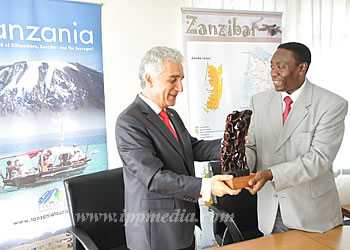
    Outgoing Turkish ambassador to Tanzania Dr Sander Gurbuz (L) receives a certificate of recognition from Tanzania Tourists Board managing director Dr Aloyce Nzuki for his contribution in promoting Tanzanian tourism.

    The Turkish government has pledged to continue supporting Tanzania’s tourism sector and is now gearing up to see tourists from the Asian country increase in number in the next few years.

    Over 10,000 Turkish tourists have visited Tanzania in the last few years and it is predicted that the figure may double to 200,000 within the next few years.

    This was revealed by the out-going Turkish Ambassador to Tanzania, Dr. Sander Gurbuz at a farewell party organised by the Tanzania Tourist Board (TTB) in honour of his contribution to the latter country’s tourism sector.

    Ambassador Gurbuz said he was very instrumental in convincing his home country to open up an embassy in Tanzania something that helped to lure more tourists from Turkey to Tanzania.

    He noted that his close cooperation with tourism authorities that include TTB and the Tanzania National Parks Authority (Tanapa) managed to lure more Turkish businessmen into the country thus increasing the country’s foreign exchange earnings.

    He added that with his personal efforts, there are now direct flights from Istanbul to Dar es Salaam launched in mid last year that have helped to bring the two countries closer.

    “I personally wanted to stay much longer but I have to go back to my home country and engage in a number of other developmental activities. The relationship with the country will not end here though. I and my government will continue to play a big role in Tanzania’s tourism,” he said adding that during his stay in the country, he has managed to learn a lot from the people.

    “The country has big tourism potentials. There is no doubt that with a concrete plan to advertise such potentials, the number of tourists eyeing Tanzania will increase simultaneously,” he said.

    The envoy was awarded by the board a certificate of recognition for his contribution in developing the country’s tourism sector.

    Earlier, the TTB Managing Director Dr Aloyce Nzuki said Ambassador Gurbuz has been so exceptional and dedicated to seeing Tanzania achieve big through the tourism sector.

    “With his efforts, the cordial relationships between the two countries have grown. We expect much from our relationship with Turkey since it is one of the developed countries,” he said.

    TTB has been instrumental in advertising the country’s tourism potential to the outside world including Turkey that has seen the tourist board win a number of accolades during international showcases.

    via Home.

  • Doing It the Evliya Celebi Way

    Doing It the Evliya Celebi Way

    Doing It the Evliya Celebi Way

    By ANDREW FINKEL

    ISTANBUL — Whenever I set out to tour Turkey with my wife, I understand exactly what Diana, Princess of Wales, meant when she complained about there being “three of us” in her marriage. My rival’s name is Evliya Celebi, and he spent much of his life on a horse. He was born 400 years ago and Unesco decided to celebrate his birth this year. I can’t compete.

    For a start, he was more productive than I, or indeed most people, could hope to be. Once Evliya hit the road in 1640, he never stopped traveling. (“Celebi” means “esquire.”) The accounts of his journeys run to 2,400 folios, or ten volumes in the recently completed Turkish edition. He is Marco Polo and Samuel Pepys rolled into one; a Muslim Michel de Montaigne, an Ottoman Herodotus.

    Through his eyes we witness a dental operation at the Hapsburg court; the risqué shenanigans in a bathhouse in Bursa, Turkey; torture in Safavid, Iran; and the Parthenon in all its 1668 glory — 20 years before a cannonball hit an ammunition dump inside the temple and blew it to smithereens. He fends off brigands in the forests of deepest Anatolia and leads the call to prayer after the Ottoman conquest of Crete. Above all, he is the historian of the common people and offers a unique first-hand account of everyday life at the peak of the Ottoman Empire.

    So while my wife Caroline, a historian of the period, is happy to leave home without me, she’ll never leave without Evliya. Only the other day she set out to recreate the first stages of his 1671 pilgrimage to Mecca. Caroline and a group of like-minded enthusiasts, including botanists and cultural historians, rode in his hoof-prints for 40 days. They wound their way from a spot across the Gulf of Izmit near Istanbul, inland down the west of Turkey toward Kutahya, Evliya’s ancestral home. In so doing, they carved out what has now been dubbed the Evliya Celebi Way, Turkey’s 13th official cultural route and the only such trek documented for both riders and hikers, with G.P.S. coordinates and detailed descriptions.

    The route winds through settlements and along paths that have been largely unchanged since antiquity. Exploring this landscape through Evliya’s eyes is not just a game of historical make-believe but a way of preserving it for the future. Developing long-distance treks in Turkey as a way of saving the environment was the brainchild of Kate Clow, an IT specialist turned eco-warrior. Her mission has been to prevent Turkey’s booming tourism industry from churning up everything in its path.

    For years Turkey vowed not to replicate the Costa del Chaos of Spanish-style budget resorts, and for years developers built one bed-factory after another. Some 30 million tourists visit Turkey every year; the industry is worth $20 billion. Yet no one has calculated the environmental cost of establishing golf courses along the arid Mediterranean coast or bulldozing great swathes of it. Meanwhile, the profits might soon hit a cap. Those hoping to get rich quick off the sun-broiled backs of Northern Europeans should consider this paradox: the more visitors come, the less they spend. Expenditure per tourist in Turkey is going down.

    Clow set out to generate more sustainable tourism by appealing to people’s appetite for traveling in time. Visitors who come to Turkey to take in its natural and historical wonders contribute more to the economy than those whose purview is limited to bars and beaches. Clow’s first long-distance trekking route, the 500-kilometer Lycian Way, which opened in 1999, now attracts some 15,000 visitors every year (most don’t walk the entire stretch, however). Hikers stay in tents or rural homestays, not concrete towers. And they provide an income for the villages through which they pass, encouraging the natural custodians of the countryside to stay on the land.

    Backpacking or riding horses through river beds isn’t everyone’s idea of a restful two-week holiday. But with Evliya at one’s side it’s easier to remember that the journey is often more interesting than the destination. Even I can get used to the idea of that ménage à trois.

    Andrew Finkel has been a foreign correspondent in Istanbul for over 20 years, as well as a columnist for Turkish-language newspapers. His latest book, “Turkey: What Everyone Needs to Know,” will be published next year.

    via Doing It the Evliya Celebi Way – NYTimes.com.

  • Turkey revives ancient history for Mayor Burget

    Turkey revives ancient history for Mayor Burget

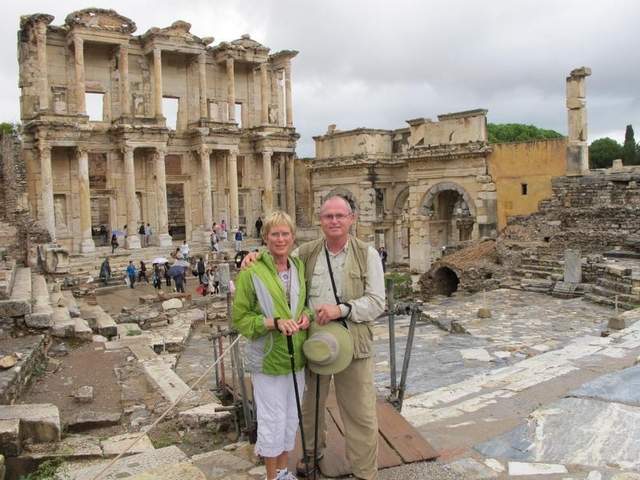
    Mayor Tim Burget, right, and his wife Diane explored the ruins of Ephesus, located on the west coast of Turkey, during their trip in October. / SUBMITTED PHOTO

    Written by

    TIMOTHY MEINCH

    For Altoona mayor and ancient-history buff Tim Burget, book pages and maps are no match for tangible, life experiences – even when that means facing howler monkeys threatening to throw feces at him.

    The monkeys did not stop the mayor and his wife, Diane, from climbing to the top of a pyramid in Belize in 2006, just as a bad back did not stop the mayor from traveling around Turkey for 15 days in October this year.

    He slept on the floor of every hotel they stayed at, and spent four nights sleeping on the deck of a boat in the Mediterranean, and loved every minute of it.

    The trip, like many others the mayor has taken, validated and enriched the historical stories and facts he has read about and learned from a distance.

    “That’s why you go to these sites, to find out what is right in history,” Burget said a few weeks after returning from Turkey.

    The Burgets chose Turkey partially due to their wonderful experience with the people in Egypt and Jordan in 2009. Plus, Burget could not resist exploring the wealth of ancient historical sites.

    A four-day cruise aboard a Turkish gulet covered about 250 miles of the Mediterranean Sea, making frequent stops for swimming and hiking to Roman sites, such as the ruins of Ephesus where the Apostle Paul preached for many years.

    Other highlights included visiting The Blue Mosque in Istanbul and the ancient city of Cappadocia, where the Burgets enjoyed a hot-air-balloon ride above the partially-underground city built in the rocks.

    via Turkey revives ancient history for Mayor Burget | The Des Moines Register | DesMoinesRegister.com.

  • A taste of tradition in old Istanbul

    A taste of tradition in old Istanbul

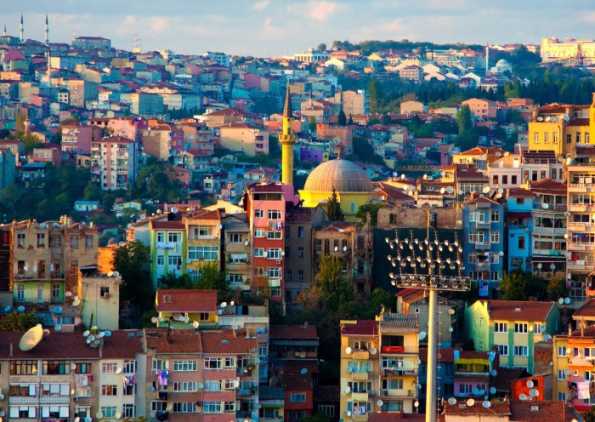
    MBCH An aerial view of Istanbul, Turkey.
    Published on Tuesday 6 December 2011 15:51

    Cold weather, cultural clashes and cuisine worthy of Sultans follow Sarah O’Meara around her week-long tour of Istanbul.

    A wise restaurant manager once told me Turkey enjoys what residents call ‘a posthumous summer’. Mid-way through October, a brief cold and often very wet snap descends before the thermostat resets and Turks enjoy another bout of late autumnal heat ahead of winter’s final chilly victory.

    Unfortunately, this sage came into my life too late for me to pack a brolly for my recent week-long trip to Istanbul. Dripping wet, my husband and I heard the story on our first night in the city, along with the only other couple who’d ventured out to Asitane restaurant that stormy night.

    “We’ve had 21 couples cancel,” explained the manager of the authentic Ottoman restaurant. Still, a steaming plate of fruity lamb nestled in a carved-out melon (a dish first served by Sultan Suleiman to celebrate his sons’ circumcision in November 1539, apparently), did something to dry our dampened spirits.

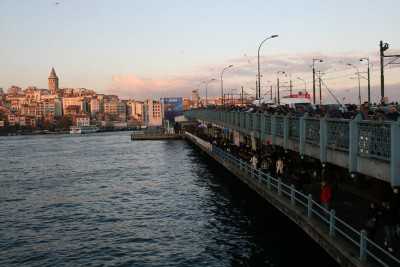
    For thousands of years, emperors, sultans and their millions of loyal citizens have enjoyed the very special Bosphorus riverside location of Istanbul, which is at its best when the sun’s out and the water twinkles with optimism.

    While it may no longer be the seat of a grand continent-spanning empire – as Constantinople (now Istanbul) was during the Roman and subsequent Ottoman period, from 1453 until 1923 – it still hums with optimistic energy on both its European and Asian shores.

    In keeping with her Asian neighbours, Istanbul’s 12 million residents, up from three million in the 1970s, are enjoying an economic boom.

    Sadly for the tourists who jostle out of the many mosques and palaces, this can mean mayhem. The quickest way for visitors to burn through their money is in a taxi, as the city’s inadequate transport system means the roads are in gridlock most of the time.

    If you’re in Istanbul for a whistlestop tour, it’s probably easiest to stay bang in the centre, within tram-riding distance of the historic districts (Sultanahmet) and the modern bars and shops (Beyoglu).

    For those in need of a treat, last year the Pera Palace Hotel opened its doors after a two-year restoration. The famous 1892 hotel, which originally provided the last destination stop for travellers arriving on the Orient Express, is a tribute to the city’s first forays into fashionable Western living.

    Tasteful and effortlessly elegant, a few nights staying in the most refined hotel in town, faithfully furnished with antique bureaux and marble-clad bathrooms, will transport you back to those more glamorous times when Greta Garbo, Ernest Hemingway and Sarah Bernhardt stalked Europe’s capitals looking for inspiration and the high life.

    Indeed, Room 411 is believed to be the place where Agatha Christie wrote Murder On The Orient Express.

    Sitting on your French balcony, you’ll see Istanbul’s housing skyline stretching far into the middle distance. Yet the areas of interest for tourists are relatively self-contained nearby.

    Probably the best decision we made, after buying an umbrella, was investing in a tour guide. It’s no mean feat absorbing the city’s history, which stretches from the moment Roman emperor Constantine I designated it his new Christian capital in the 7th century, to the eventual fall of the Islamic Ottoman empire, while still enjoying the sights.

    And a guide’s also useful for pointing out the best place to eat really nice kofte (meatballs) or lahmacun (Turkish-style thin pizza) for lunch.

    For tourists who don’t want to spend all their time sightseeing, you can take in the top three sights in a day. Topkapi Palace, home to the Ottoman Sultans, complete with harem; the Hagia Sophia, an impressive cathedral turned mosque, before being declared a museum by Ataturk, and the Blue Mosque are all within walking distance. Very handy if you’re just there for the weekend.

    Each building is a tribute to the vision of the country’s rulers, with The Blue Mosque (officially called the Sultan Ahmed Mosque) in particular drawing the eye with its six minarets, just one less than the most prestigious mosque in Mecca.

    If you’ve got more time in town, then take advantage of Istanbul’s location spanning the Bosphorus river. Along the coast on both the European and Asian sides are fishing villages boasting charming restaurants and relaxing views.

    After a day of sightseeing, there’s one Turkish tradition that should definitely be adhered to. Whether you prefer to try the communal bath approach or high-end treatment, a Turkish hammam is an exquisitely quirky affair.

    Halfway between a wash and a massage, depending on your budget, these traditional baths can be found all over the city.

    For a personal, delicate treatment, head to the beautifully renovated Ciragan Palace (

    Afterwards we dined overlooking the Bosphorus at the hotel’s Tugra restaurant, enjoying one of the most romantic locations the city has to offer.

    Halfway through the week we left the city centre behind and sought out a boutique hotel on the Asian side of Istanbul.

    The Hotel A’jia is a serene former ‘yali’ (palatial summer mansion of the Ottoman elite) that is a 90-minute drive from Sultanahmet or one-hour boat journey.

    All modern lines, white walls and contemporary art, it’s the ideal place to chill out, with the skyline of Istanbul printed along the glass wall of your room.

    Once ensconced, our one venture out was to join the glitterati for the night at Mimolett, Istanbul’s closest hope for a Michelin star.

    A pet project for head chef Murat Bozok, into which he has reportedly poured his heart and the contents of his wallet, it’s worthy of Mayfair with its mirrored walls, splendid modern chandeliers and tantalising menu.

    Allow more than a few hours at this stunning restaurant to devour dishes such as spicy tuna with olive and eggplant paste and savour splendid Turkish Kayra Chardonnay.

    Then head out for a digestif at one of the city’s many rooftop bars, such as Zoe’s just round the corner (

    Key facts – Istanbul

    :: Best for: History buffs and bar flies.

    :: Time to go: Late spring or summer.

    :: Don’t miss: A rooftop bar.

    :: Need to know: Cabs are expensive and traffic jams common.

    :: Don’t forget: To book a guide – visit

    Travel facts

    Sarah O’Meara was a guest of Pera Palace, where double rooms start from 200 euros, and Hotel A’jia, where rooms start from 270 euros, including breakfast.

    Return flights with Pegasus
  • New Istanbul Aquarium Offers Views From Under the Sea

    New Istanbul Aquarium Offers Views From Under the Sea

    By SUSANNE FOWLER

    At the new Istanbul Akvaryum.Istanbul Akvaryum

    Posts | City Guide

    In a city surrounded by bodies of water, the new Istanbul Akvaryum, or aquarium, offers a peek at what lies beneath.

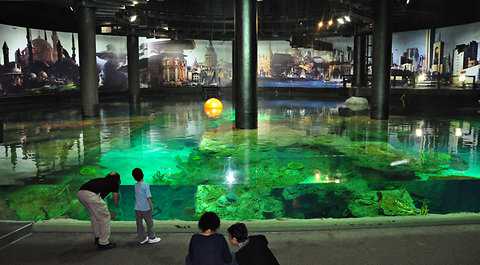
    At the aquarium (Senlikkoy Mahallesi Yesilkoy Halkalı Cad. No: 93; istanbulakvaryum.com), which opened in July, visitors start by following a route lined with tanks of Russian sturgeon from the Black Sea, then walk through a replica of what curators imagine Noah’s Ark to have been like.

    Later comes a selection of species found in the Bosporus Strait, through which dolphins still migrate, dodging some 55,000 ships a year that carry cargo from Russia and the Caspian Sea to global markets. (The display has a strong environmental message about marine life in danger of depletion.)

    Next is a gently rising path that snakes from exhibits on the Sea of Marmara, the Dardanelles, the Aegean and the Suez Canal, through the Red Sea, Antarctica (with a chilly iceberg you can reach out and touch while considering the effects of global warming). Then it’s off to Gibraltar, the Atlantic and the Panama Canal to the Amazon rain forest, which will feel like a steamy Turkish hammam on a wintry day, for a peek at piranhas and frogs in shades of neon green, blue or yellow.

    The facility attempts to recreate the natural habitats for its estimated 15,000 creatures and plants including scary sharks, slithery giant eels and deceptively placid stingrays. It also offers interactive games and, for an extra fee, what the creators call “5-D” movie theaters that mimic effects like fog and wind. The periodic fish-feeding by divers in wet suits is fun to watch.

    Most, but not all, of the displays are accompanied by explanations in English. During a recent visit, the crowd was a blend of Turkish families and European couples with children. Figure on spending about two hours to see the full exhibition, and more if you want to enjoy a drink or lunch at one of the cafes, sitting in the sunshine to enjoy a view of the real Marmara Sea.

    The aquarium is in Florya, a wealthy suburb of western Istanbul, well off the usual tourist track. A taxi cost around 40 lira from the Old City, but a local train leaving Sirkeci Station with a stop about a half-mile from the spot was 2 lira (about $1) each way, aquarium employees said. For more on transport options, go to the aquarium Web site.

    An adult ticket is 29 lira (about $16), discounted to 22 for students. Children under 2 are free. Family and group prices are also available here.

    via New Istanbul Aquarium Offers Views From Under the Sea – NYTimes.com.

  • Welcome To Turkey-Land: First Impressions Of A New Ex-Pat

    Welcome To Turkey-Land: First Impressions Of A New Ex-Pat

    The general consensus is that Istanbul is amazing. “What? Wait. You’re going to Istanbul? OH. MY. GOD. I am so freaking JEAL-OUS!”. You almost just have to whisper the word ”Constantinople” in a room for people to start spontaneously orgasming all over the shop.

    Presumably it is fairly un-PC to say, therefore, that for the moment at least, I’m not the biggest fan. I’m not sure quite what I was expecting, but I think it involved a few more turrets, more old men with no teeth sitting on carpets and rather less being cold.

    There are some gems I’ve seen so far, indeed, and I fully expect — and hope — to look back on this post in a month’s time and shake my head in shame at this naive version of myself. For the moment, however, I have decided to give myself a little bit of space to be a moaning and disillusioned Brit.

    I moved here from London just over a week ago to work for an English-speaking daily newspaper here, based in the ”Media Towers” located about 45 minutes into the city’s boomburb. The publication has a large staff based between here and the capital city, Ankara, with a small number from the U.S. or the U.K. The best thing about the office so far, apart from the stunning view of some large industrial cranes and the airport, is the free gym.

    On first impressions, it looked like a perfectly respectable example of a workplace fitness facility. Upon closer inspection, however, this stuff could have come out of the Ark. As I attempted to rev the treadmill – last used by Noah himself — into some semblance of life, an elderly man materialized behind me, hailing from roughly the same era.

    From his rather frantic gestures, I gathered that he was keen to show me round. This quickly turned into him putting me through one of the most grueling workouts I have ever had. It is remarkable how much pointing and shouting will drive you into pushing yourself to extent that you emerge, an hour-and-a-half later, with your spine partially dislocated, limbs incapable of anything but the most basic of movements and a sense of absolute accomplishment.

    At least if Istanbul doesn’t win my heart I’ll leave with a smashing six pack (and potentially an ancient Armenian body-builder).

    By Hannah Bowman

    via Welcome To Turkey-Land: First Impressions Of A New Ex-Pat | The Expeditioner Online Travel Magazine.