Category: Sci/Tech

  • PM ERDOGAN PUSHES MORE R&D AS WAY OUT OF CRISIS

    PM ERDOGAN PUSHES MORE R&D AS WAY OUT OF CRISIS

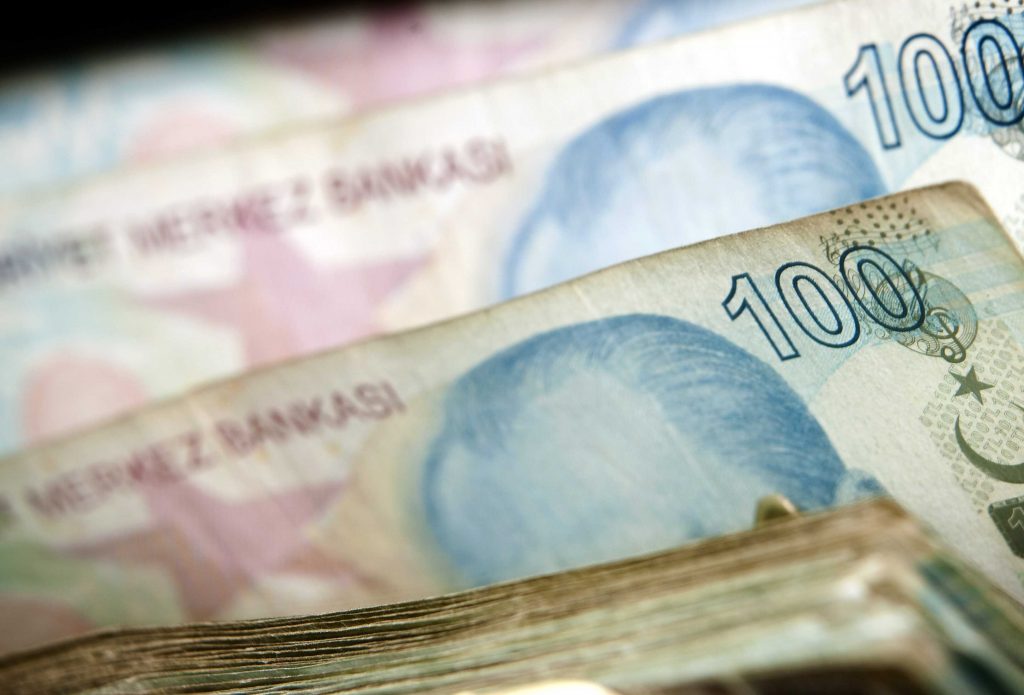
    Chaired by Prime Minister Recep Tayyip Erdogan, the High Council for Science and Technology (BTYK) convened yesterday in Ankara. Sixteen Cabinet ministers, including Deputy Premiers Cemil Cicek and Bulent Arinc, State Minister Mehmet Aydin, and Professor Nüket Yetis, the head of the Turkish Scientific and Technological Research Council (TUBITAK), attended the meeting as well. Addressing the council, Erdogan stressed the importance the government places on research and development. Stating that Turkey is feeling the global economic crisis to a certain extent, Erdogan called the crisis environment an opportunity to restructure the nation’s sustainable development plans. Reiterating his determination to focus on the opportunities presented by the crisis rather than its threats, Erdogan said, “We believe that research and development activities are critical for taking advantage of the chances brought by the crisis. This is scientifically proven, and also supported by the experiences of countries that emerged stronger from past global economic crises.” Erdogan also said that Turkey should attract more foreign researchers from across the world, calling the current number of such researchers employed by Turkish universities inadequate.

    /Sabah-Cumhuriyet/

    Turkish Press Review (18.06.2009)

  • Horizon fuel cell for unmanned plane

    Horizon fuel cell for unmanned plane

    Fuel Cells, June  05  2009 (The Hydrogen Journal)

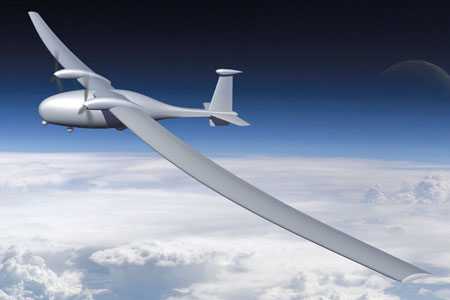
    Horizon Fuel Cell Technologies of Vancouver has announced plans to use its new Aeropak fuel cell system in unmanned aeroplanes, with shipments starting this summer


    Unmanned planes are typically used for security surveillance and intelligence gathering.


    By using fuel cells, the aeroplane will be able to go up to 4 times further than with lithium batteries currently being used for this application, the company says.


    The aeroplanes will carry 900 watt hours of electrical energy, fuelled from a dry fuel cartridge releasing hydrogen, in a fuel cell weighing 2kg.


    Electric powered unmanned planes are much harder to detect than planes powered with combustion engines, because they are quieter and smaller.


    By having more electrical power available, it is easier to add more sensors to the plane, such as infrared cameras and laser designators.


    The plane will be demonstrated at the forthcoming Paris Air Show (June 15-18 2009).


    The company did not announce how the fuel storage technology works, although other companies have announced they use sodium borohydride in their dry fuel cell cartridges.


    Horizon Fuel Cell


     Hydrogen power for shipsHamburg

    Feature Articles, May  15  2009 (The Hydrogen Journal)

    A great deal of research is going on in Hamburg to use hydrogen for ships – with trials on 4 different vessels. We spoke to experts at German energy consultancy Germanischer Lloyd about how it is happening

    With the maritime industry likely to come under pressure to reduce greenhouse gas emissions, experts are looking seriously at the idea of fuelling the ship on hydrogen, so there are no CO2 emissions at all.


    The world’s first hydrogen / fuel cell powered vessel for more than 100 passengers the “Alster Wasser” is already in operation on Hamburg’s Alster Lake. The vessel has been built and is operated within the scope of EC funded ZEMSHIP project.


    Unlike a diesel engine, the fuel cell operates silently. This led to surprising discoveries about how much noise other parts of a vessel make.


    On normal ships, the engine makes so much noise that nobody has worried about the noise which other components (such as pumps) make, says Finn Vogler, project engineer within GL department Risk Assessment and Mechanical Engineering,,


    But on the “Alster Wasser”, people were suddenly aware about how noisy the rest of the ship is – and reducing the overall noise has proved a complex exercise. “As soon as they isolate one noise, they find 3 other noises,” he says.


    The vessel runs on two 48 kW fuel cells and stores hydrogen onboard in 12 x 350 bar (high pressure) hydrogen tanks. The hydrogen is actually supplied to the fuelling station as a liquid, and evaporated and compressed before being pumped onto the vessel.


    Fuel cells are also used in submarines built in Kiel. These submarines are a great commercial success because the fuel cells give the owner the benefit to enhance the duration for diving by a factor of 10. As the first class society GL already published guidelines for using fuel cells on watercraft in 2003 and has certified a number of ships according to these guidelines including the “Alster Wasser”.


    Hydrogen fuel cells are currently not available to power larger ships, but they are close. Development projects have been started and will result in fuel cells for seagoing ships with a power of 500 kW per unit within the next 5 years.


    “GL is contributing to this development by participating in the SchIBZ and Pa-X-ell projects which will start in July 2009” Mr Vogler says.


    The available power of fuel cell systems will be able to cover the auxillary power needs of a large number of vessels. E.g. a typical ROPAX (roll-on, roll-off, passenger carrying) ferry needs from the total installed auxiliary power about 1.5 to 2 MW of constant auxiliary power, which can be provided by 3 or 4 large fuel cells.


    The biggest problem with fuel cells is managing sulphur in the hydrogen supply – it needs to be removed before entering the fuel cell because it can do a lot of damage. There is no sulphur in hydrogen which comes from gas which has been liquefied (because the sulphur is removed in the liquefaction process) and there is no sulphur in hydrogen produced from separating water with electricity (electrolysis).


    Hydrogen might not be the technology for the immediate tomorrow, but the longer term tomorrow. “I think this is on the right track, but it will take some time,” he says.

    “We are getting much more interest in the technology. Every time the oil price rises – people say ‘maybe we need another solution.”


    Hydrogen storage


    It is unlikely that hydrogen will ever be directly stored onboard vessels, due to the amount of storage space required, Mr Vogler says.


    If the hydrogen is made from reformed natural gas, this task could be completed actually onboard the vessel – so the vessel has natural gas storage. Research into the best ways of fuelling vessels with natural gas is already being made (for an anticipated series of vessels which burn the natural gas in a combustion engine).


    If the gas was reformed to hydrogen and then put through a fuel cell to make electricity, it is much easier to reduce emissions of NOx and SOx (nitrous and sulphur oxides), Mr Vogler says, and the overall efficiency will be similar or even better than big diesel generators.


    Another option is to generate the hydrogen onboard from a liquid fuel.


    Demonstration projects


    3 maritime demonstration projects are being planned using hydrogen no ships, funded by the German government.


    The first project, SchIBZ (which stands for ‘ship integration fuel cell’ in German) is to install a fuel cell on a 90m vessel which carries paper from Scandinavia to Germany. The fuel cell will be installed in by Thyssen-Krupp Marine Systems.


    A molten carbonate fuel cell onboard the vessel (a fuel cell which operates at above 600 degrees C). It won’t power the vessel’s propulsion, but it will power everything else – the ‘auxiliaries’ – eg pumps, lights and ramps. The project will start on June 1 2009 and run for up to 4 years. The module will be first tested by German shipbuilder Thyssen-Krupp Marine Systems befor the operation of the system on board.


    The fuelling system will be to use liquid fuels (generated from gas, biomass or coal) which are put through an onboard reformer to make hydrogen, which is then put into the fuel cell to make electricity. The system is called “XTL” – which stands for X to Liquids – where the ‘X’ denotes different substances which might be used to make the liquid (eg gas, biomass or coal).


    A second project, called Pa-X-ell, starting in July 2009, will use a fuel cell on a vessel, running on natural gas – but the reformer is included as part of the fuel cell rather than as a separate piece of equipment. The project will be carried out by the yards Meyer Werft, Friedrich Lürssen Werft and Flensburger Schiffbau Gesellschaft.


    The importance of this project is trying to find ways to include a number of fuel cells and reformer units around the ship – so if one goes out of action, or if there is a fire in one part of the ship, there are others available which can get it to port. This configuration will probably use natural gas cooled down to a liquid.


    The third project, Hy-ferry, realised by Beluga Shipping will be to install a polymer electrolyte membrane (PEM) fuel cell onboard 2 ferries running in coastal waters and the port of Bremen, Germany, using gaseous hydrogen which has been generated from wind power making electricity to electrolyse water.


    All of these projects are funded by the German government, under a mother project called ‘e4ships’. Further information about them (some in English) is available on the website www.now-gmbh.de.

    The German government believes that its financing can get the hydrogen industry started.


    Germanischer Lloyd’s role in these projects is to provide safety analysis and consultancy, covering the fuel cells, reformer technology and overall safety assessment. In other words, it provides usual services which classification societies provide to the maritime industry.


    On the subject of hydrogen safety, Mr Vogler believes that it is no problem with today’s technology. “If you handle it right, it can be safer than gasoline,” he says.


    Germanischer Lloyd recommends double wall pipes, so the hydrogen will be contained if one pipeline fails. It is important to avoid having an explosive mixture of hydrogen and air in the presence of a spark.


    Hamburg has a number of other projects going on, including forklift trucks at Hamburg airport running on hydrogen, and several hydrogen cars and hydrogen buses. “People are very aware of the technology in Hamburg,” he says.


    A further project has been to provide a fuel cell to a whale-watching vessel in Iceland, so it could keep auxiliary power (lights etc) running on the vessel while the engine was switched off during whale-watching, so that it does not disturb them.


    GL Group

    The Hydrogen Journal

  • Turkey, the Jews and the Holocaust

    Turkey, the Jews and the Holocaust

    Interview with Corry Guttstadt

    Turkologist Corry Guttstadt has published a comprehensive study of the behaviour of the Turkish government towards its Jewish citizens during the Holocaust. In doing so, she has investigated a chapter of twentieth-century history that has thus far been all but neglected by international Holocaust research. Sonja Galler spoke to her about her findings

    | Bild:
    Corry Guttstadt: “Over the course of many centuries, the Ottoman Empire was an immigration destination for Jews fleeing the Reconquista in Spain and pogroms in Eastern Europe. Nevertheless, to portray the Ottoman Empire as a ‘multicultural paradise’ is absurd and ahistorical.” | Much is made of the fact that there are approximately 20,000 Jews in Turkey today, a figure that is frequently held up as evidence of the country’s tolerant attitude towards its Jewish minority. It is often claimed that this success story began when persecuted Sephardic Jews found refuge in the Ottoman Empire, the forerunner of the modern Turkish state …

    Corry Guttstadt: Well, there are currently over 20,000 Jews in Iran too. A number alone is not necessarily a reliable indication of whether somewhere is safe or free from anti-Semitism. As far as Turkey is concerned, it is important to emphasise that only 20,000 Jews now live in the country. That’s in stark contrast to the estimated 120,000 to 150,000 that lived in the region at the end of the First World War. Both before and after the Second World War, and most particularly after the establishment of the state of Israel in 1948, the vast majority of Jews left Turkey. This was a reversal of the trend of previous centuries.

    Over the course of many centuries, the Ottoman Empire was an immigration destination for Jews fleeing the Reconquista in Spain and pogroms in Eastern Europe. Nevertheless, to portray the Ottoman Empire as a “multicultural paradise” is absurd and ahistorical. As non-Muslims, the Jews were subject to countless constraints. Like the Christians, they had to pay a poll tax and were obliged to behave in a submissive manner towards Muslims. Moreover, it must be said that there were numerous fluctuations in the fortunes of the Jews in the 600-year history of the Ottoman Empire.

    The period of Jewish persecution on the Iberian peninsula coincided with the expansion of the Empire, whose rulers were keen to increase the urban population. Another reason why they were happy to welcome the Sephardic Jews was because they brought with them important skills and expertise. Jews who had settled in Anatolia and in the Balkans before the Ottoman conquest, on the other hand, were forced to resettle – also for demographic reasons – and were subject to a number of considerable constraints.

    What was life like for the Jews around the time the Turkish state was created?

    Guttstadt: The foundation of the Turkish Republic in 1923 was the final chapter in the protracted disintegration of the Ottoman Empire, which had lost most of its territory in a series of wars against major Christian European powers. The situation for the Jews varied because unlike the Christian populations in the Balkans, they were not pursuing any separatist goals. In response to European protests about the Armenian massacre, Ottoman leaders liked to point to the Jews as a “model minority”.

    | Bild:
    Guttstadt reveals that the dissemination of anti-Semitic tracts in the 1930s heralded the birth of modern Anti-Semitism in Turkey | For their part, the Jews were often the target of anti-Semitic attacks at the hands of Christian minorities around this time and were, for that reason, reliant on the protection of the state. Consequently, most Jews initially regarded themselves as allies of the Kemalist movement and looked to the new Republic with largely positive expectations. These hopes were quickly dashed because despite their attempts to adapt and their declarations of loyalty, the Jews quickly became a target for the rigid nationalism of the young Republic. One of the defining policies of the young republic was the “Turkification” of state, economy, and society.

    In this light, the Kemalist leadership regarded the rights that had been granted to non-Muslim minorities in the Treaty of Lausanne as a continuation of the interference of major imperialist powers. It put non-Muslim religious communities under pressure to renounce these rights “voluntarily”. Jews were also successively driven out of a number of professions and economic sectors. This prompted many Jews to emigrate, particularly to France, but also to the USA, Italy or Germany.

    Once war broke out, how did the Turkish state, which managed to remain “neutral” until the end of the Second World War, behave towards the Jews who lived within its borders?

    Guttstadt: I think we have to differentiate here between anti-Semitism and anti-minority nationalism, which targeted not only the Jews, but other groups too. On the one hand, anti-Semitic tracts like the Protocols of the Learned Elders of Zion reached Turkey and were translated into Turkish in the 1930s. Following a visit to Germany, Cevat Rıfat Atilhan, who could be described as the father of Islamic anti-Semitism in Turkey, started publishing the anti-Semitic newspaper Millî İnkîlâp (National Revolution) in Istanbul, which contained anti-Semitic caricatures that had been lifted directly out of the Nazi newspaper, Der Stürmer. Although this and other magazines were banned for a certain period, they mark the birth of modern anti-Semitism in Turkey.

    Both the Protocols of the Learned Elders of Zion and Mein Kampf have gone through umpteen new editions to this day. Nationalist measures that affected not only Jews, but also Kurds, Armenians, and Greeks, included forced resettlement, the so-called “wealth tax” – which led to the confiscation of assets of those who were not in a position to pay the arbitrarily fixed and frequently astronomical sums they were required to pay – and forced labour in camps in eastern Anatolia. Although these measures are in no way comparable with the persecution of the Jews at the hands of the Nazis, they destroyed the Jews’ faith in the Republic so utterly that the majority of the country’s remaining Jews left the country in 1947/48.

    At this time, Turkish Jews were scattered all over Europe. How did they fare?

    Guttstadt: At the start of the war, approximately 25,000 to 30,000 Jews of Turkish origin lived in Europe, most of them in France. Only about 10,000 of them still held Turkish citizenship, which became a matter of life and death during the Holocaust. There were many people who came to Europe as “Ottoman citizens”, but whose place of birth had been assigned to other states once the Empire was no more. In France, it was relatively easy to obtain French citizenship. From the start of the 1930s, the Kemalist Republic began checking the nationality of citizens living abroad and revoking the citizenship of non-Muslims in particular.

    | Bild:
    Ceremony to mark the opening of the Neve Shalom Synagogue in Istanbul, one of the few remaining synagogues in Turkey: “During World War II, Turkey was not a major country of exile for persecuted Jews,” says Guttstadt | This policy of denaturalisation, which the Turkish state could initially pass off as a normal consequence of the new state order, focussed primarily on the Jews during the Holocaust. In October 1942, Germany delivered an ultimatum to the Turkish government to repatriate its Jewish citizens from the states occupied by the German Reich. Above all, however, the government in Ankara wanted to prevent a mass influx of Turkish Jews and decided to use the instrument of mass denaturalisation as a means of preventing it. What proved particularly fatal in this regard was the fact that according to Turkish law, people who had either voluntarily changed their nationality or had been denaturalised were not allowed to set foot on Turkish soil ever again – even as a tourist or a refugee.

    Moreover, in 1938, Turkey passed a secret decree that forbade “foreign Jews who are subject to restrictions in their native countries, regardless of what religion they currently practice” from entering Turkey. With this decree, Turkey adopted the criteria that characterised anti-Jewish legislation in Germany and its allied countries.

    What did the Turkish government at the time know about what was happening in the countries controlled by Germany and about the fate of Turkish Jews living in those countries?

    Guttstadt: Naturally, the Germans did not tell the Turkish authorities that Jews who were not repatriated would be deported and murdered, but obscured the reality of the situation by saying that they would be “subject to the general measures applied to Jews”. However, in view of the fact that numerous Jewish aid organisations had representatives in Istanbul, Turkey was a one of the places where concrete information about the Holocaust was available. From there, journalists reported about the systematic murder of Jews.

    Jews that had escaped the concentration camps or ghettos and managed to make it to Istanbul, were questioned by aid committees and given the assistance they needed. Their reports were passed from Istanbul to other offices around the world. Both journalists and Jewish activists were undoubtedly under observation by the Turkish secret service. In March 1943, the Turkish government newspaper Ayın Tarihi reported about the mass murder of Jews in Germany. Several Turkish Jews living in Europe turned to the Turkish government for help.

    About 3,000 Turkish Jews were deported to German concentration camps during the Shoah. To what extent can Turkey be held responsible for their fate?

    Guttstadt: The Germans are responsible for depriving these people of their rights and for their persecution and murder. In view of current attempts in Germany to rewrite history again and in view of the German “victim” debate, I refuse to qualify German responsibility in any way. Turkey could have repatriated a much greater number of Jews and opened its borders to refugees. Despite the fact that aid organisations offered to assume the costs that would ensue, the Turkish government generally refused. That being said, Turkey was certainly not the only country to adopt a passive stance.

    However, until such time as the Turkish archives are opened, we can only speculate about domestic discussions and criticism of the official policy towards the Jews. We must remember that the Turkish regime at the time was dictatorial; there was a one-party system; the press toed the regime line and was subject to strict censorship. The Jewish community was also completely intimidated and impoverished by the measures taken in the 1940s.

    The official Turkish line is that Turkey was a safe harbour for Europe’s Jews.

    Guttstadt: Because of its close ties to Germany, Turkey actually had extensive opportunities to save Turkish Jews living abroad. Isolated Turkish diplomats frequently grasped these opportunities. In Paris, for example, Turkish consuls brought about the release of a number of incarcerated Turkish Jews. Turkish consuls in Milan and Vienna also protected individual Jews. Even though these acts were not always performed for purely humanitarian reasons – some consuls may have used their influence to line their pockets – it shows the great latitude they had. In many cases, it was enough to confirm the Turkish citizenship of a Jew to prevent him or her from being deported.

    The hiring of German Jewish academics at Turkish universities is often mentioned as a humanitarian act. What is your view?

    Guttstadt: It is true that from the autumn of 1933 onwards, a considerable number of German Jewish academics and artists found jobs in Turkey, where they played an outstanding role in building up new universities, hospitals, theatres etc. Even though they were not received for humanitarian reasons, but for reasons of utility, the Turkish government gave these people work, in most cases allowed their families to follow them to Turkey, and protected them against persecution by the Nazi regime. Nevertheless, Turkey was never a major country of exile for persecuted Jews. In terms of numbers, the few refugees that were allowed to enter the country do not appear in any pertinent statistics.

    Interview conducted by Sonja Galler

    © Qantara.de 2009

    Corry Guttstadt: Die Türkei, die Juden und der Holocaust (Turkey, the Jews and the Holocaust) Verlag Assoziation A, Berlin-Hamburg 2008. 520 pages, 26 euros.

    Letter to the EditorAdd a comment Qantara.de

    Interview with Ishak Alaton
    “Turkey Needs a Mentality Revolution”
    Ishak Alaton is one of Turkey’s most influential businesspeople of Jewish extraction. Hülya Sancak spoke to him in Istanbul about the current political situation in Turkey and minority rights for Jews, Kurds and Armenians in the country

    German Jews in Exile in Turkey
    “Haymatloz” in Istanbul and Ankara
    When the Nazis took power in 1933, hundreds of thousands of German Jews fled the country. Some of them ended up in Turkey, which was a neutral state and safe haven up until the end of World War II. Ursula Trüper recounts their story and that of the Ruben family

    Jewish Life in Istanbul
    The Guardians of Hope
    Istanbul was once a centre of Jewish life. Now 20,000 Sephardi Jews still live in the city. The writer Mario Levi recreates the spirit of time past in his books, which is also nurtured by a businessman and a linguist. Kai Strittmatter has been exploring Jewish life in Istanbul

    Sixty Years of Turkish-Israeli Relations
    Partnership in the Shadow of a Threat
    Turkey and Israel mark the sixtieth anniversary of their diplomatic relations this year. Theirs has been a fruitful if conflict-ridden relationship. But there has been more than just the desire to make peace between the Israelis and the Arabs. Jan Felix Engelhardt looks back at the start of the relationship Published: 29.05.2009 – Last modified: 30.05.2009
  • Report: Turkish Peace Activists Hack Into US Army Servers

    Report: Turkish Peace Activists Hack Into US Army Servers

    Anti-U.S. Hackers Infiltrate Army Servers

    unhackExclusive: Defense Department investigators subpoena records from Google, Microsoft, and Yahoo in connection with ongoing probe.

    Paul McDougall
    InformationWeek

    A known computer hacking clan with anti-American leanings has successfully broken into at least two sensitive Web servers maintained by the U.S. Army, InformationWeek has learned exclusively.

    Department of Defense and other investigators are currently probing the breaches, which have not been publicly disclosed.

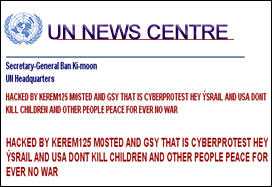
    The hackers, who collectively go by the name “m0sted” and are based in Turkey, penetrated servers at the Army’s McAlester Ammunition Plant in McAlester, Okla., and at the U.S. Army Corps of Engineers’ Transatlantic Center in Winchester, Va.

    The breach at the McAlester munitions plant occurred on Jan. 26, according to records of the investigation obtained by InformationWeek. On that date, Web users attempting to access the plant’s site were redirected to a Web page that featured a protest against climate change.

    On Sept. 19, 2007, the same hackers electronically broke into Army Corps of Engineers’ servers. That hack sent Web users to www.m0sted.net. The page, at the time, contained anti-American and anti-Israeli rhetoric and images, records show. It currently appears to be an Internet landing spot that features airline reservation links.

    Beyond the redirects, it’s not clear whether the group was able to obtain sensitive information from the Army’s servers.

    The hacks are the subject of an ongoing criminal investigation by Defense Department officials and members of the U.S. Army’s Judge Advocate General’s Office and Computer Emergency Response Team. Investigators have executed records search warrants against Microsoft (NSDQ: MSFT), Yahoo (NSDQ: YHOO), Google (NSDQ: GOOG), and other Internet service and e-mail providers as part of their efforts to unmask the hackers’ true identities.

    Investigators believe the hackers used a technique called SQL injection to exploit a security vulnerability in Microsoft’s SQL Server database to gain entry to the Web servers. “m0sted” is known to have carried out similar attacks on a number of other Web sites in the past — including against a site maintained by Internet security company Kaspersky Lab.

    The hacks are troubling in that they appear to have rendered useless supposedly sophisticated Defense Department tools and procedures designed to prevent such breaches. The department and its branches spend millions of dollars each year on pricey security and antivirus software and employ legions of experts to deploy and manage the tools.

    Equally troubling is the fact that the hacks appear to have originated outside the United States. Turkey is known to harbor significant elements of the al-Qaida network. (!) It was not clear if “m0sted” has links to the terrorist group.

    Defense Department officials did not immediately return calls seeking comment on the case.

    InformationWeek Analytics has published an independent analysis on what executives really think about security. Download the report [on the website] (registration required).

    Source: www.informationweek.com,

  • Learn Turkish in Turkey

    Learn Turkish in Turkey

    Dear Madam / Sir,

    DEDAM is the language research and teaching center by Dokuz Eylul University. Its objective is to teach not only Turkish but also other foreign languages in a modern and authentic way in technologically equipped classrooms.

    DEDAM aims to be acknowledged both nationally and internationally as a center at which Turkish and other modern languages are taught and the language studies are conducted. This language institute faces the cultural policy challenges of globalisation and develops innovative concepts for a world made more human through mutual understanding, where cultural diversity is seen as an asset.

    The Turkish courses are made up of six levels: A1, A2 (elementary); B1, B2 (intermediate) and C1, C2 (advanced). The learners enrolled in the program are first given a placement test.

    At DEDAM, the language program involves courses which targets to improve four language skills (i.e. listening, reading, writing and speaking), which contributes to intercultural communication.

    DEDAM also offers extra curricular activities such as daily excursions, film shows and critical reading activities in order to familiarize students with the target culture.

    When the students have completed the course, they will be given a certificate for the successful completion of the level of the course they have attended.  

    For more information, contact: DEDAM.

    Best regards,

    DEDAM
    dedam(at)deu.edu.tr

    Course Period

    29 June – 28 August
    29 June- 31 July
    13 July- 14 August
    17 August-18 September

  • Can Hotmail lose its Domain Name?

    Can Hotmail lose its Domain Name?

    Yes they can, if they do not pay renewal fees. Luckily Turkish registrar does not sell it to anyone else.

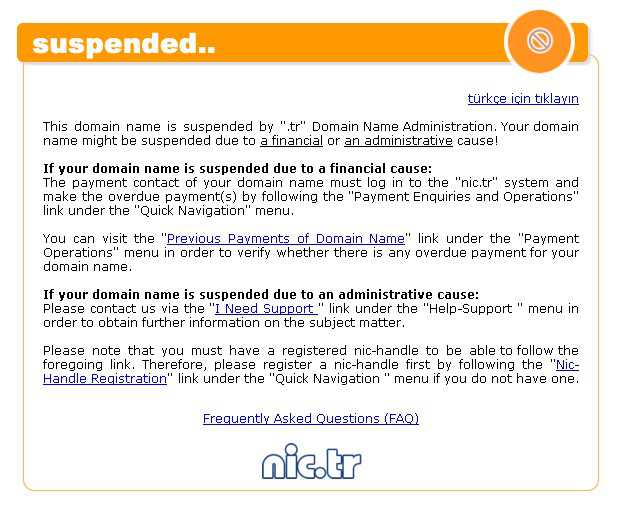
    When you visit  this is what you see.

    türkçe için tıklayın  

    This domain name is suspended by “.tr” Domain Name Administration. Your domain name might be suspended due to a financial or an administrative cause! 

    If your domain name is suspended due to a financial cause: 
    The payment contact of your domain name must log in to the “nic.tr” system and make the overdue payment(s) by following the “Payment Enquiries and Operations” link under the “Quick Navigation” menu.

    You can visit the “Previous Payments of Domain Name” link under the “Payment Operations” menu in order to verify whether there is any overdue payment for your domain name.

    If your domain name is suspended due to an administrative cause: 
    Please contact us via the “I Need Support ” link under the “Help-Support ” menu in order to obtain further information on the subject matter. 

    Please note that you must have a registered nic-handle to be able to follow the foregoing link. Therefore, please register a nic-handle first by following the “Nic-Handle Registration” link under the “Quick Navigation ” menu if you do not have one.

    Frequently Asked Questions (FAQ)