Category: Culture/Art

  • How is it to be Armenian in Turkey?

    How is it to be Armenian in Turkey?

    It’s definitely an interesting experience.

    The Armenian community of today’s Turkey is tight-knit, and the vast majority of us live in a few upper-middle-class neighborhoods in Istanbul. Being in Istanbul certainly helps our community. People here are used to being surrounded by people of wide variety of backgrounds, so we face less bigotry here than if we lived in a city like Konya or Kayseri where there are almost no Armenians and non-Muslims. We tend to have above-average incomes and live comfortable lifestyles.

    Most Turkish-Armenian express their identity through their religion. The Church really is what keeps our community together and our identity alive. I’d say most Armenians are more religious than the average Turk of the same upper-middle-class background that we are. Most Turkish-Armenians can no longer speak Armenian and are pretty much fully switched over to Turkish. Roughly 18% of the community speaks the language, and those are mostly older people. I’m one of the around 8% of Armenian youth in Turkey who can still speak the language fluently. My parents made my siblings and I learn it, and I’m grateful for it. Armenian has been spoken in Turkey for millennia, and I’m doing my part to keep it alive.

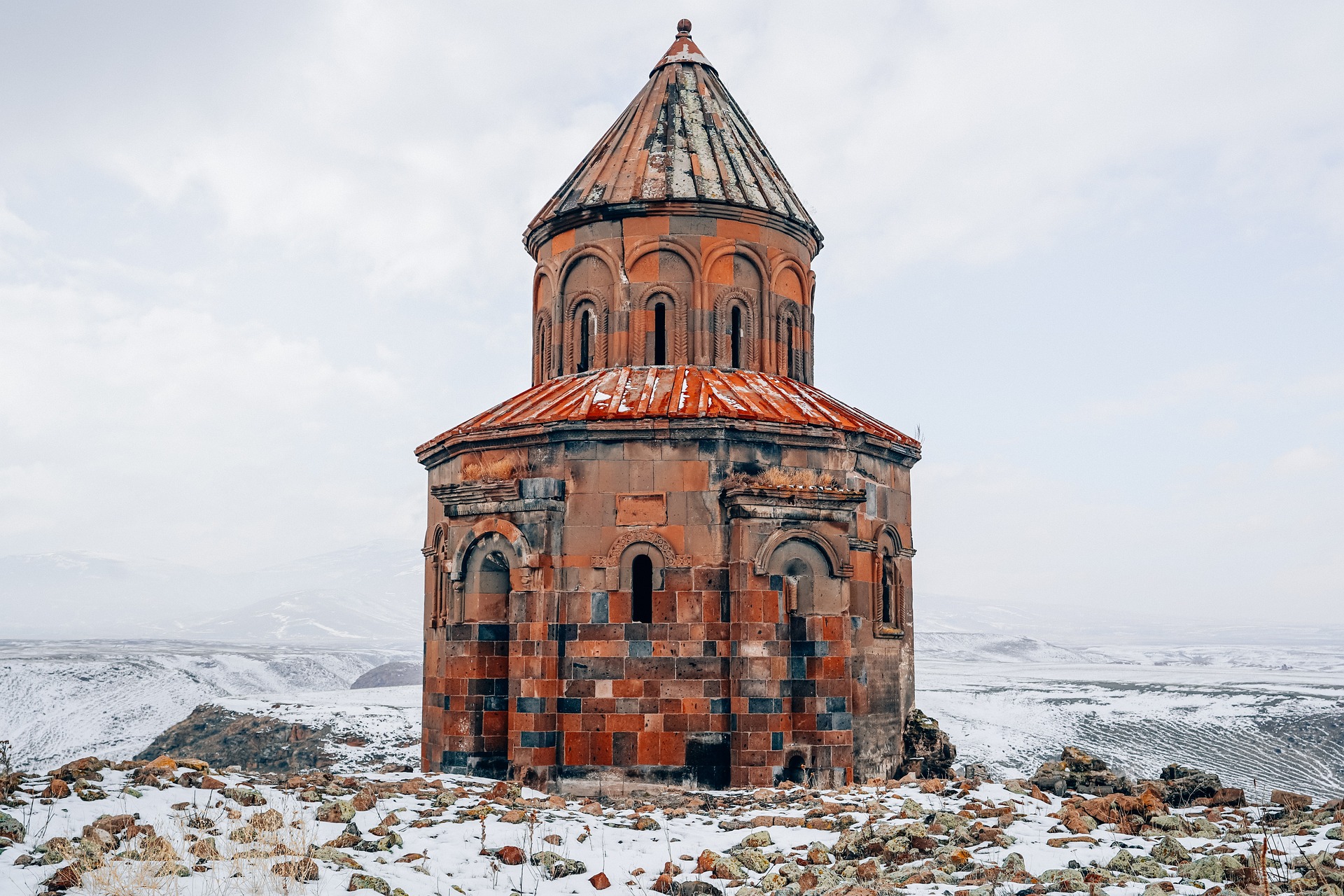
    There is a lot of vitriolic rhetoric against Armenians in Turkey. My church has repeatedly found racist, anti-Armenian graffiti on the church walls. It’s disgusting, and no one ever talks about it. Sometimes I’ll have acquaintances say something very xenophobic about Armenians but they’ll say when they realize that I’m Armenian, “But Ani, you’re not like those other Armenians…” Historically, many Armenians were forced to adopt Turkish surnames including my family, but after that law was repealed, my family reverted back to our traditional family name of Manukyan. My parents are extremely proud of being Armenian, and they wanted their children’s names to go before them, indicating that they are Armenian, so when they had me, they named me Ani, a very common Armenian name that comes from the name of the historic capital of the Armenian Empire. My parents actually took me to Ani over the summer, and I just remember sobbing as I was walking through the ruins of this once grand city. It seemed like the physical embodiment of what happened to the Armenian community of Anatolia, just in ruins, with barely anything left. That’s a potent, emotional symbol for us.

    It’s not all gloom and doom though! There has been more curiosity about Armenian culture and religion from Turks over recent years, and the Armenian community is more than happy to tell them about us. I’ll often get good questions about my faith, language, culture, and traditions, and I just love talking about it. My culture is something I’m proud of. There has also been a greater level of acceptance of us among the Turkish, secular upper-middle-classes. There is no longer as much social isolation for Turkish-Armenians. The Turkish upper-middle-class used to exclude us, and now, we are becoming an accepted part of it, at least in Istanbul. Another good thing about living here is we have a lot more economic opportunity in Turkey than we ever would in Armenia. In Armenia, we would have lower incomes and less available, quality employment.

    It’s really a mixed bag, but I’m optimistic that things will get better for us. The young Armenian people of Turkey are determined to stay here, continue the presence of the Armenian community in Turkey, and do our best with our circumstances.

    Ani Manukyan

  • Origins of Ak & Kara

    Origins of Ak & Kara

    In Turkish, what’s the difference between ak/kara and siyah/beyaz? What is their origin? How can they be used?

    Siyah (black),

    Beyaz (white),

    Mavi (Blue),

    are not original Turkish words.

    Turkish originals were/are:

    Black: Kara

    White: Ak

    Blue: Gök

    Foreign loanwords exclusively used to mean colors, nothing else.

    Turkish words can be used as adjectives, to define color, but also to give meaning other than colors.

    “Black Friday” can be translated only as “Kara Cuma”, but not “Siyah Cuma”.

    Because the “black” in “Black Friday” is not related with color.

    Original Turkish words have deep meanings, probably loanwords also have deep meanings in their respective languages, but they are exclusively used for colors in Turkish.

    Turkish original words have deeper meaning and meaningful connection with other words.

    *

    For example:

    Blue: Gök

    Gök also means Sky, because sky is blue. Gök also means “heavens”, because “skies” are “heavens”.

    (Even I can claim that, in Western and especially in Hollywood film culture it is believed that “dead people goes to heaven as stars” has its roots in Turkic/Hunnic culture. Because in Turkic belief , “uçmak” (to fly away) is used, to say somebody is passed away. You can fly into sky, not into ground. I don’t know if there is not such belief in Semitic/Indian/Aryan/Greek culture. There is “underworld” in these cultures)

    *

    Green: Yeşil

    The word for “Green” in Turkish (YEŞİL) is a miraculous word. If linguists and scientists tried to devise/produce a word, which connects “Green”, “Water”, “Life”, “to Live” “Greenary” “Spring/Summer” and “Age (length of “life”)”, they could not devise a better word.

    Old form of YEŞİL: YAŞIL (Green)

    (Following this pattern: Replacing the original back vowels with front vowels

    Çak-ıç => Çek-iç “hammer”

    Yaş-ıl => Yeş-il “green”)

    Yaş: means “moisturized”/”watered”/”watery”/”wet”.

    Green is YAŞIL/YEŞİL, literal meaning “watery, watered, with water”

    Can we think of a “natural green” without water? Absolutely no.

    Can we think of life, without water? Absolutely no.

    In Turkish, the words for “Water (YAŞ/SU)”, “Green (YEŞİL)” and “Life (YAŞAM)” has same root.

    YAŞA-MAK and YAŞAM: to Live and Life. These words also comes from “water” and therefore related with YEŞİL/green. How meaningful and wonderful connection. Without water, no life can exist. Without water we cannot live, we cannot “stay green/alive”. Any space exploration today looking for life in other planets directly looks for the existence of water. Therefore water-life-green connection in Turkish looks so miraculous.

    And then comes, “age/yaş” (lenght of LIFE). In Turkish, this word also related with “Water (YAŞ/SU)”, “Green (YEŞİL)” and “Life (YAŞAM)” . In Anatolian Turkish, the connection between “Age/yaş” and “green” is forgotten.

    However, age/yaş and green/yeşil is closely related in other Turkish/Turkic languages.

    We ask this question to learn the age of something :

    How old are you” (Kaç yaşındasın) ?

    In some Turkic languages, question is asked this way, the original way:

    How many green (season) have you seen? (Kaç yaş/yaz gördün?)”

    In the ancient Turkic culture the age of something/someone was calculated based on how many times they had seen “green season”, which is “yaz”.

    So we see, colors reveal lots of things in original language.Green (yeşil) in Turkish is not just a color name, but it has deep connection with water (su, yaş, ıslak/sulak), life (yaşam, greenary), age (yaş) and summer (yaz). They have same root in Turkish.

    Think of a desert. When you see an oasis, a “green (yeşil)” area in the desert, you automatically know that there is “water (yaş/su)” in that place, and there is “life (yaşam)” in that place.

    I am not aware of any other language, in which all these words “Water (YAŞ/SU)”, “Green (YEŞİL)” and “to live (YAŞA-MAK), “Life (YAŞAM)”, “Summer (YAZ)”, and “age -length of life (YAŞ)” are all related to each other.

    —-

    Note-1: Turkish proper name “Yaşar”, if written with today’s Anatolian Turkish phonology, would be written as “Yeşer”, because of the vowel shift like in yaşıl to yeşil. Because the name Yaşar was given to scrawny, weak babies as a desire/praying by parents for the baby “to live,to get green”.

    Note-2: Word for summer (yaz) also meant “spring” in old Turkish. “Bahar” is a Persian loanword. Probably Ancient Turkics were living in colder regions of the world and they only had 2 seasons, “yaz/summer/green season and kış/winter/non-green season, not 4 seasons)

    The connection between “yaş” and “yaz”: In Northern Branch of Turkic languages, Kıpçak/Kipchak (Kazakh, Kyrgyz) some sound shifts happened. Therefore some basic pronunciation difference arose with Southern and Western (Chaghatay and Oghuz) Turkish. However, there were not strict lines between these dialects. Words with new meaning/concepts are borrowed from each other along with new pronounciation)

    Western : Kipchak

    Baş: bas

    Yaş: yas/yaz

    Kış: kıs

    Beş: bes

    Yüz: jüz (this one lives in Anatolia only in informal pronounciation of numbers ending in ş/ç letters, beş-jüz:500, üç-cüz:300)

    Saç: saş

    Mehmet Uçar

  • Atatürk and Modern Turkiye

    Atatürk and Modern Turkiye

    Dear Friends,

    Those of you who may be interested in about foundation of Republic of Turkey and her founder, I found this link quite a good one.

    Please clink on the link below.

    Regretfully, the closing part is shadowed with the tall Armenian lie!

    There has never been the number of Armenians claimed to have lost their lives as the very well kept consensus and the Ottoman registry office rules out these lies!

    There are more than enough documentation and publication from the US, GB, French and German archives!

    Mustafa Atac

  • Ruins of Turkey

    Ruins of Turkey

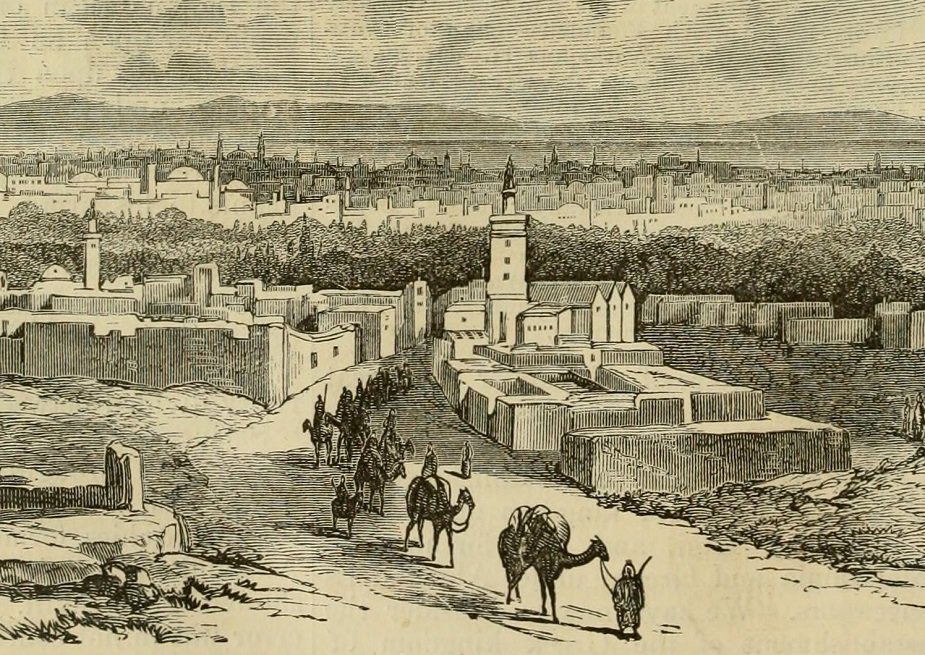
    The British travel writer Mark Sykes (of Sykes-Picot), a great fan of the Turks, spent years travelling through the hinterland of Turkey in Asia. Here is a piece he wrote a century ago on the public works on the road from Diyarbekir to Mardin, in what is now southern Turkey.


    The road is a good example of the impressionist style of engineering, in which the (Turkish Government’s long distance roads) excel. The artistic way in which a bridge is suggested by five stones in the middle of a river, the subtle insinuation of a made road by ten yards of pavement in the centre of a boundless plain, the carefully considered gradients which exist on the gentle slopes and are conspicuous by their absence on the steep hills cannot fail to fill the observer with admiration for the ingeniousness of the designers and workmen.

    (end of sarcasm:) The inhabitants (of Mardin) are among the cleverest masons in Turkey: every house of consequence is not only well built, but nobly designed and delicately ornamented, the architects being common workmen, uneducated and poor… It is strange that an ignorant peasant should be able to conceive original plans, and intuitively to know the exact amount of ornamentation required to beautify without overloading. Yet the artistic masons of Mardin by no means fulfil the Ruskin ideal, for on being questioned they stated that they not only detested the work, but would willingly undertake any other kind of business if they could.

    (in the Jezira:) We passed several ruined villages, and it would be as well here to notice that ruined villages in Turkey in Asia do not necessarily mean a state of things worse than when those villages were inhabited. Murray’s ‘Handbook to Syria’ (1858) says, with a throb in its voice, ‘Syria is a land of ruins, and its ruins are increasing every day.’ Of course they are; but the handbook does not explain that people in Turkey, especially Kurd and Arab, in whom the nomadic instinct still remains, will move off on the very slightest pretext and build another collection of huts two miles farther on… in Syria every stone has an interest, every hill has been trodden into paths, man has left his marks on every rock; the very caverns are inhabited by troglodytes; and every stage of early society is to be seen—the cave-dweller, the villager, the townsman… The road from Damascus to Aleppo has seen nations rise and fall, vanish, revive, and die out; many have trodden its dusty paths, and there are more to come.

  • Do Greeks living in Turkey form a community?

    Do Greeks living in Turkey form a community?

    Yes, mainly in Istanbul, albeit a small one as compared to Ottoman Days. This is sad and we are perhaps the main cause for this. Based on the fact that all the diverse peoples who made up the population of Istanbul, having lived together for 500 years, would be able to conform to the concept of “one nation, one flag, all citizens are equal Turks”. Wishful thinking, obviously. All the old mutual differences were suddenly brought to the surface when the ”one nation” concept was interpreted as “them and us” by all. Were Turks lilywhite in this misunderstanding ? Hardly. Were our Rums lilywhite ? Hardly.

    Today, I believe the population is around the 2,500 mark which is very small indeed compared to my childhood. I grew up in a village on the Bosphorus of about 1300 people, of which roughly 600 were Rum, 200 were Armenian, 100 were Jewish and the rest a mixture of Turks, Albanians, Bulgarians, emigre Russians and so forth. In 1944, in my early teens, my first love was a Rum teen girl called Anula. Nobody saw anything odd in this and frankly, I remember and miss her as if it were yesterday that all of us were swimming off of my boat in the Bosphorus. The sad thing is an old friend who continued to live there died recently and there was not enough Rum people to form a cortege from the church to the grave yard according to Orthodox custom. The old boys telegraph came into play and 3 Rums, one Armenian, and 8 Turks gathered to see Dimitri off with the proper priest, candles, crosses and so forth. I have never felt as sad as I did that day, not even when my parents passed away. I thought our Rum friends should know how I felt and my generation will soon fade and the Z generation will never understand what we had.

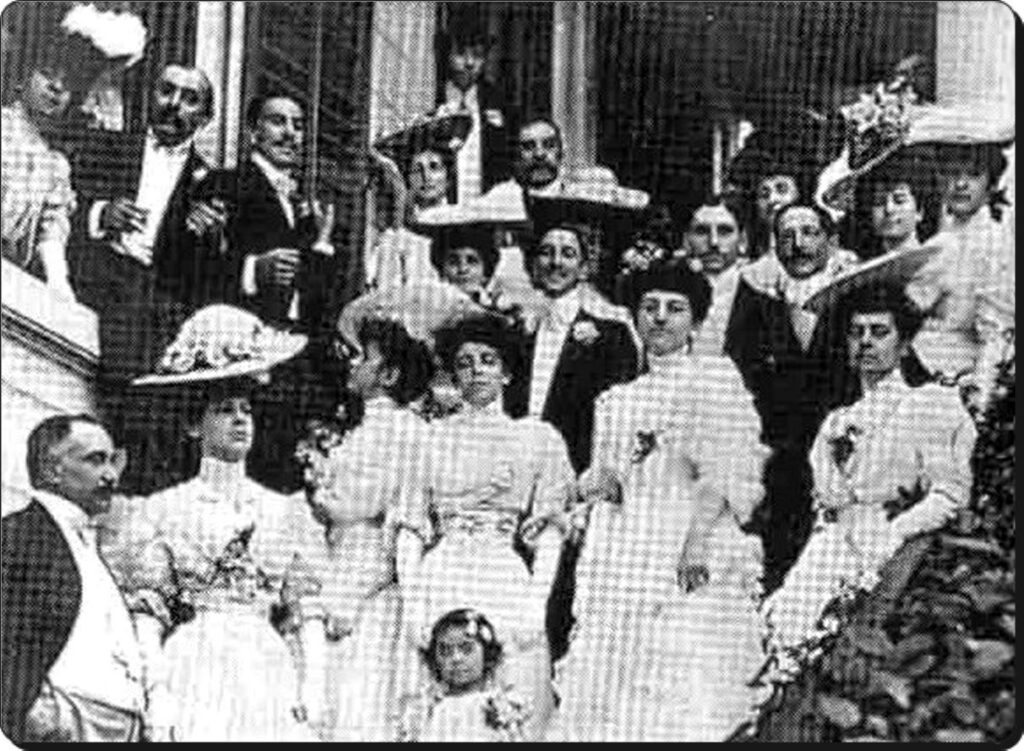
    Wedding Ceremony, Istanbul, 1908

    Salih Atalay

  • Turkification of Anatolia

    Turkification of Anatolia

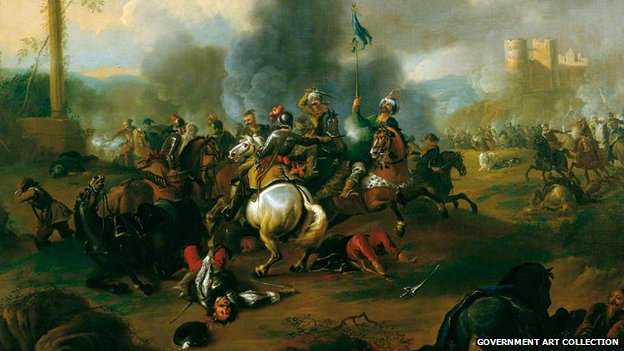
    Kings and Generals’ historical animated documentary series on the history of Ancient Civilizations and Nomadic Cultures continues with a video on the Seljuk Turkification of Anatolia – the period that started in the XI century with the battle of Manzikert and was largely concluded by the XV century when the Ottomans rose to power, as the Seljuks and other Turkic peoples entered Anatolia, slowly pushing the Greeks and other locals to the coastal regions, slowly weakening the Eastern Roman Empire.