Category: Business

  • Istanbul airport climbing rank to join London Heathrow, Paris Charles de Gaulle as Europe’s top air hubs

    Istanbul airport climbing rank to join London Heathrow, Paris Charles de Gaulle as Europe’s top air hubs

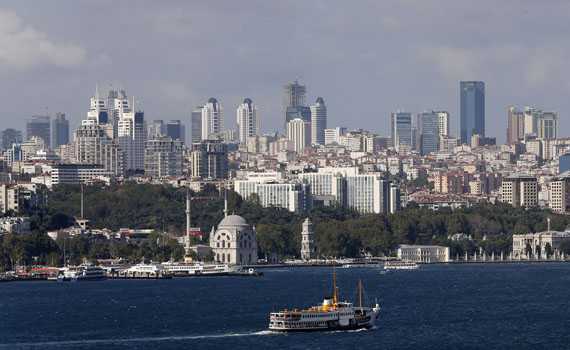
    Istanbul’s Ataturk airport attracted 12.4 million passengers in 2013 making it one of Europe’s busiest air hubs. Photo: Ugurhan Betim/Ataturk airport

    Istanbul’s Ataturk airport lured more travellers than Frankfurt and Amsterdam in the first quarter, setting the Turkish Airlines base on course to establish itself as Europe’s third-busiest air hub this year.

    Ataturk, Europe’s No. 5 airport in 2013, boosted passenger numbers 11 per cent to 12.4 million, edging past Frankfurt, last year’s No. 3, on 12.2 million and the 11.2 million at Amsterdam, the No. 4, according to the latest traffic data.

    The airport, west of Istanbul on the European side of the Bosporus, is benefiting as Turkish Airlines piles on capacity to tap local growth and build a long-haul transfer base. Should Ataturk cement its first-quarter standing, Frankfurt will find itself outside the top three for the first time since the 1960s.

    “Growth has been enormous in Turkey for years but this will mark a changing of the guard,” said Hans-Peter Wodniok, an analyst at Fairesearch GmbH in Kronberg, Germany. “West European airports are losing transit passengers, which are the most lucrative as they spend the most in airport shops, and it’s even worse for airlines, who are losing customers entirely.”

    Istanbul Ataturk, renamed in 1980 after modern Turkey’s first president, boosted passenger numbers almost 14 per cent to 51.2 million in 2013, the biggest gain among the world’s top 30 hubs after Kuala Lumpur, following a 21 per cent jump in 2012.

    Frankfurt posted a 0.9 per cent advance to 58 million and Amsterdam had a 3 per cent gain to 52.6 million, according to March 31 rankings from Airports Council International. Europe’s top hubs are London Heathrow, with 72.4 million passengers last year, and Paris Charles de Gaulle, with 62 million.

    Istanbul also lured 544,000 more passengers than Amsterdam Schiphol in the first quarter of 2013, only for the Dutch hub to retain No. 4 spot for the year after the peak-season surge.

    The three-month gap now stands at almost 1.3 million, based on figures published April 7 and April 15, suggesting the Turkish hub may make its advantage stick through the summer.

    Ataturk’s 200,000-passenger quarterly lead over Frankfurt translates into a swing of almost 700,000 people year-on-year, indicating that the airports may end 2014 neck and neck.

    The German hub expects 2 to 3 per cent growth to about 59.5 million travellers as Deutsche Lufthansa AG, which has its main base there, uses bigger planes. To beat that total Istanbul’s full-year growth rate would need to reach about 16 per cent.

    Sani Sener, chief executive officer of TAV Havalimanlari Holding AS, which operates the airport, anticipates growth of as much as 10 per cent, backed by the city’s status as “a tourist destination and financial hub,” he said in an e-mail.

    Frankfurt’s passenger tally took a battering this month as a pilot strike caused Lufthansa to scrap 3,800 flights. At the same time, a mild winter has pared weather-related disruption.

    Established airports in western Europe are also under pressure from fast-expanding Gulf hubs such as Dubai and Doha -headquarters to Emirates and Qatar Airways – which like Ataturk are exploiting a fortunate geographical location to set themselves up as intercontinental crossroads.

    Like the Arab carriers, Turk Hava Yollari, as Turkish Air is known in full, has built a major wide-body fleet for long – haul operations. With Turkey’s population of 76 million dwarfing the Gulf city-states, the carrier has also established a much bigger narrow-body fleet for domestic and short-haul routes.

    Ataturk, in which Charles de Gaulle-owner Aeroports de Paris has an interest via a 38 per cent stake in TAV, has also been aided as a weakening Turkish lira boosts competitiveness as West European rivals emerge more slowly from the recession.

    With a 12-month rolling passenger count of 52.6 million through March, the main obstacle to Ataturk’s expansion may be its capacity limit of about 60 million. Booming demand there and at Istanbul’s secondary Sabiha Gokcen hub – where the passenger count quadrupled in five years – has prompted Turkey to award construction contracts for an all-new super-airport able to handle as many as 150 million passengers per year.

    “The Turks are thinking big,” said Fairesearch’s Wodniok, who has a reduce rating on Frankfurt airport owner Fraport AG. “It’s a bit of megalomania, but then you do have to have the infrastructure in place before people can use it.”

    Ataturk ranked No. 18 in the 2013 ACI standings, up from No. 30 two years earlier. Frankfurt was ranked 12th, Paris Charles de Gaulle 8th and Heathrow third.

    The order of the world’s top six airports remained unchanged, with Atlanta Hartsfield-Jackson, home to Delta Air Lines Inc., topping the table on 94.4 million passengers, 11 million ahead of Beijing even after a 1.1 per cent annual drop.

    via Istanbul airport climbing rank to join London Heathrow, Paris Charles de Gaulle as Europe’s top air hubs.

  • Istanbul’s stunning new airport

    Istanbul’s stunning new airport

    1891212

    The dramatic new airport proposed for Istanbul. AFP-Relaxnews

    Images for the world’s largest airport terminal under one roof have been released.

    Terminal One of the Istanbul Grand Airport will stretch to almost one million square meters, featuring a vaulted ceiling whose geometric roof and layout design will reinforce passenger flows.

    Skylights provide natural daylight, which is diffused through the ceiling in focused beams, highlighting key areas such as check-in, security, passport control and stores.

    Both modern and functional, the designs include a large plaza and a seamlessly integrated transport forecourt.

    The six-runway project is being led by an international architectural team comprising Grimshaw, the Nordic Office of Architecture and Haptic Architects.

    The terminal, based on the Black Sea coast 35km outside of Istanbul, will be completed in four phases. The first phase will open in 2018 and aims to serve 90 million passengers per year, with that number increasing to over 150 million passengers per annum once the building is fully complete.

    Grimshaw Partner Andrew Thomas said, “We are delighted to have been appointed to this bold and aspirational project. We share the consortium’s ambitions to develop a truly outstanding airport design worthy of the world city of Istanbul.”

    AFP-Relaxnews

    via iafrica.com Istanbul’s stunning new airport.

  • Turkey’s Twitter Problem, and Our Own

    Turkey’s Twitter Problem, and Our Own

    Turkey’s Twitter Problem, and Our Own

    Always castigating the opposition as extremists is no way to run a modern society.

    download

    Erdoğan’s trouble starts with T and stands for Twitter.

    By Alejandro Crawford

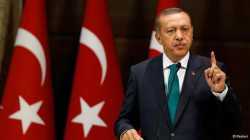
    “If Twitter, YouTube and Facebook will be honest, if they’ll stop being so immoral, stop attacking families, we’ll support them.” So says Turkey’s Prime Minister Recep Tayyip Erdogan. If one were trying to do comedy about the vilification of the Internets and their corrupting influence, it would be hard to come up with something much better (or more suitable for re-tweeting). Mashable has published acraziest quotes list, but the list is in dire need of updating. Since Turkey’s courts impelled him to lift his ban on Twitter (YouTube and tens of thousands of other sites remain blocked), Erdogan has come up with even better lines.

    The joke is an old one, though. When the confidence man in the classic Broadway show “The Music Man” needs a convenient source of trouble, he scapegoats an activity popular with youth in order to stir up concerns about the dangerous liberalizing of social mores. The satire works because the con man is able to pick a relatively arbitrary activity (playing pool) and associate it with the erosion of traditional rules for language, attire and the like. In Erdogan’s version, there is indeed trouble in Turkey; it starts with T, which stands for Twitter, and it must be rooted out.

    [Read more from Alejandro Crawford on the cost of Turkey’s censorship.]

    Never mind the fact that social media platforms are conduits for communication for millions of decentralized users. “All our national moral values are being set aside,” Erdogan has explained. Worse still, Twitter is “the product of an American company.”

    The rhetorical force that guilt by association with the United States carries in many parts of the world can be difficult for us Americans to comprehend. Yet what happens if you switch out the bad guy in Erdogan’s formulations, but keep the conviction that corrupting forces need to be held at bay? Change the name of the scapegoat, and Erdogan’s rhetoric sounds not all that different from what we hear every day here in the good old U.S. of A.

    When it comes to the Muslim world (Turkey is a secular Muslim state), with a straight face we talk about a fundamental clash of civilizations. Has history not demonstrated conclusively enough the productive power that is released when disparate societies expand their commerce with each other? Yet we cast our vital economic partners as the threatening Chinese buying everything up or those illegals from Mexico taking American jobs. What to do but put a fence along the border watched by guys with guns? And if you see someone who might be foreign, ask him for his papers.

    [See a collection of political cartoons on Chinese hacking.]

    Even amongst those to whom we’ve granted the right to participate in our economy without having their identity cards checked, the picture isn’t pretty. Our social and political bugaboos have the look of cartoons – latte-drinking East Coast intellectuals at universities, corrupting young minds; bumpkins in pickup trucks waving the confederate flag while shooting off guns. It’s not that neither type exists. It’s that interpreting the world according to these types shortcircuits our ability to see what the other camp might have figured out (or more importantly, what we might be able to come up with if we put our collective mind to it).

    We possess the innovative capacity, the market mechanisms and the capacity for good government (yeah, that’s a thing, or at least it used to be) required to free us from petroleum’s noose, for example. We have the wherewithal to achieve economic growth and global competitiveness beyond anything we have seen before. But at a time when we need to be applying the best of all our tools, we’re enacting an epic battle between the scissors and the knife. We hear incessantly of evil capitalists, perpetuating a system that by its very nature rapes the planet and exploits the “99 percent.” Meanwhile we are regaled with tales of those dangerous socialists, fundamentally corrupting our free enterprise system with their health care regulations and wild notion that the climate might indeed have changed.

    Business school students learn of the dangers that come with sidelining conflicting viewpoints on a management team. Under the pressures of competing in the marketplace, a manager who surrounds himself with others who gratifyingly confirm his assumptions often veers off course. The cost lies in critical problems unexamined, worthy solutions not derived, smart strategies left unpursued. On the scale of the larger economy, what is the loss when we fail to convene with those who might lead us to question those assumptions and our modes of operation?

    Here in the U.S., we allow our social media chatter to go on without direct interference (our government has distinguished itself more in the monitoring department). Yet even as this chatter continues, our conversation has effectively split into separate streams. It is an everyday matter in the United States to cut short meaningful debate through casting media and other institutions as beholden to those whose viewpoint we want to write off. Americans are regularly treated to folks on the right invoking “the liberal media” to discredit arguments they dislike, while their counterparts on the left decry “corporate media” or “the media industrial complex.” Whatever the biases of the owners and editors of traditional media, at this point the charge has become a reflex. Whoever is ranting at the moment considers himself to be a reasonable thinker exasperated by the bias of what he encounters. Depending on where he sits, the game has been rigged either by unpatriotic moonbats or jingoist wingnuts, by government beholden to trough-feeders and hangers-on, or by corporate interests bent on marginalizing the rest of us.

    [Read more economic analysis from our Economic Intelligence blog.]

    This evidences a fairly severe kind of breakdown. Think of a couple you know, each member of which is convinced that the other is “nuts.” Put such a couple on a roadtrip or make it responsible for the care of a child, and you don’t tend to see a lot of constructive decision-making, much less creative problem-solving and the development of worthwhile ideas.

    We can’t have a problem-solving conversation when we have effectively written off the other half.Name-calling and condemnation of the discourse itself have become standard-issue equipment for today’s great enterprise of digging into one’s own insular viewpoint. This is at a time when our future depends on finding real solutions that release economic energy and keep up with the ever-accelerating demands of the global economy, while enabling us to stop effectively living off the equity in our common building. Can we think the unthinkable? That the left might have to recognize that their own incomes result from someone having hung up a shingle somewhere, or having dirtied her hands through dealing with business (oh dear) – and the right might have to deal with the fact that we’re actually going to have to guzzle less gas and get over it with the guns (the horror)?

    This is not to say the other side is not crazy. The more we fail to participate in a common conversation, the more normal our own crazy becomes – and the more crazy the other crazy sounds. This perpetuates extremes of thinking that really are somewhat nuts, because they have been too long unchecked by contrary frames of reference and modes of living. The irony is that putting two kinds of crazy together can be extraordinarily generative, but only if both crazies manage to stop ranting long enough to understand what’s making the other so nuts.

  • Turkey’s Prime Minister Threatens to Pursue Tax Evasion Case against Twitter

    Turkey’s Prime Minister Threatens to Pursue Tax Evasion Case against Twitter

    Posted by: Jasmin Harper in Technology April 12, 2014

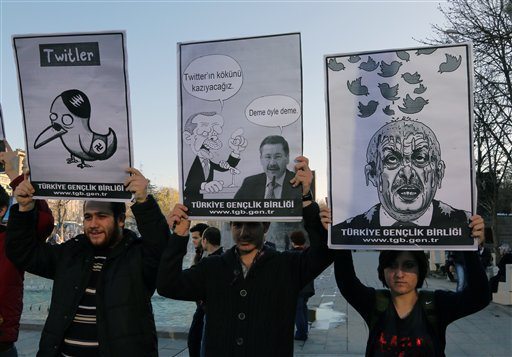
    turkeyTwitter may have been off the hook in Turkey when the Turkish Supreme Court ruled that banning it in the country is unconstitutional. But the microblogging site is set to continue worrying about how the Turkish government would run after it.

    Turkish prime minister Recep Erdogan today launched a new set of tirades against the highest court of his nation, specifically regarding the recent rule on the lifting of a two-week ban against Twitter. He said the court decision simply puts the rights of international businesses above the rights of their country.

    After saying that he still does not respect the ruling of the high court, Erdogan released another bomb that may explode into Twitter’s face soon. He declared that he would ‘go after’ the Website through filing a tax evasion case against it.

    Profit-making foreign firms

    In his speech, Erdogan reiterated that Twitter, along with Facebook and YouTube, is an international company that generates profits. He emphasized that those international companies should abide by the Turkish laws, constitution, and tax rules.

    He criticized the constitutional court’s recent verdict to retain Twitter services in the country by describing the decision as an advocacy to commercial law for foreign companies. He said that decision does not defend Turkish rights, even calling it as ‘interference in politics.’

    Going against national sentiment

    It could be recalled that Erdogan enforced a ban on Twitter in Turkey on March 20. That measure came after the social media site became a portal where leaks pointing to corruption in his government were posted. Those tweets sparked an outrage among the NATO allies of Turkey. Most international human rights groups also viewed the prohibition as a setback for democracy within this EU-hopeful nation.

    But as history has it, Turkey’s high court decided to lift the ban on April 3. That was after the court said it found that the blockade of the online site serves more as a breach of the right to free speech. During the two-week ban, over 12 million Turkish Twitter users were affected. Many of them had discovered ways to circumvent the ban through relying on posting tweets through sending text messages. Some Twitter users even discovered adjusting their Internet settings to continuously access the Website despite the national ban.

    via Turkey’s Prime Minister Threatens to Pursue Tax Evasion Case against Twitter | Morning News USA.

  • Photo Essay: Istanbul’s Islamic Fashion

    Photo Essay: Istanbul’s Islamic Fashion

    monique-jaques_19

    Models dress for a shoot for Ala, the first fashion magazine in Turkey for conservative women. Models get full makeup and are given headscarves, layered for a pop of color. The shoot is at Bretz Home in Kemerburgaz, Istanbul. Monique Jaques

    Twice yearly, Istanbul’s Fashion Week draws a varied crowd—from the religiously conservative to social liberals. Recent trends highlighted versatility, allowing the wearer to tailor designer outfits to conservative tastes. Dresses can be worn over pants, and longer coats make curves less pronounced. Scarves are culled from top designers such as Louis Vuitton and Hermés.

    Filling the need for high-end Islamic fashion is Turkish fashion magazine Ala, which the press calls the “Vogue of the veiled.” The magazine’s spreads feature bright colors and modern cuts while still maintaining modesty and Islamic values.

    via Photo Essay: Istanbul’s Islamic Fashion.

    https://www.newsweek.com/istanbuls-islamic-fashion-232257

  • Turkey Hopes Sikorsky Deal Boosts Local Industry, Exports

    Turkey Hopes Sikorsky Deal Boosts Local Industry, Exports

    By BURAK EGE BEKDIL  

    bilde

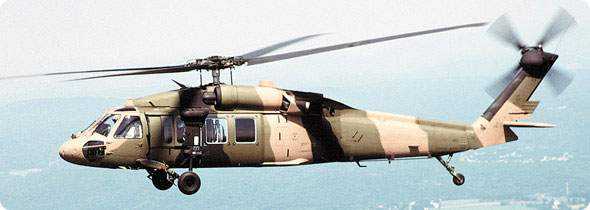
    Rotor Goals: Turkey will co-produce the T-70 helicopter, the Turkish version of Sikorsky’s S-70i Black Hawk. (Sikorsky Aircraft)

    ANKARA — Turkey’s procurement authorities are hoping that a recently signed US $3.5 billion contract with US helicopter maker Sikorsky will not only earn the local industry critical capabilities and support the country’s indigenous helicopter program, but also bring in more than $1 billion in revenue through exports.

    “This is a win-win deal. The contractors’ gains may be financial or corporate, but we hope ours will be financial and strategic,” said one senior procurement official familiar with the program.

    The contract, signed Feb. 21, involves the co-production in Turkey of an initial batch of 109 T-70 Black Hawk utility helicopters, the Turkish version of Sikorsky Aircraft’s S-70 Black Hawk International. Turkey’s procurement agency, the Undersecretariat for Defense Industries (SSM), said the total production figure will eventually reach 300.

    “For every helicopter to be produced in Turkey, another will be exported,” SSM said in a statement. That makes 300 helicopters for Turkey and 300 for other countries.

    “I doubt if there will be such a large international demand for the Turkish-made Black Hawks,” one London-based Turkey specialist said. “But I am sure the Turks are right about the capabilities they are hoping to earn.”

    Under the program, Tusas Turkish Aerospace Industries (TAI) will be the prime contractor, and Sikorsky and Turkish companies Aselsan, Tusas Turkish Engine Industries (TEI) and Alp Havacilik will be subcontractors.

    Military electronics specialist Aselsan is Turkey’s largest defense company, and Alp Havacilik is an aviation concern owned 50 percent by Sikorsky. Alp will produce the landing gear.

    TEI will produce in Turkey the T-700 engine for the Black Hawk, under license from General Electric.

    Aselsan will design, develop and produce glass cockpit avionics for the Turkish utility helicopter. That cockpit will be used in all Black Hawks to be sold to foreign markets, except for the US Army.

    SSM officials said Turkish industry will get 67 percent work share, and earn $1.4 billion over 30 years.

    Turkey in 2011 selected Sikorsky as its partner company to lead production of the country’s next-generation utility helicopter. Sikorsky defeated Italian-British Westland.

    The S-70 Black Hawk International is used by dozens of militaries, including Turkey. AgustaWestland was competing with its TUHP 149, the Turkish version of its newly developed A-149.

    In May, Turkey’s procurement office said Turkey “had come very close to signing a $3.5 billion contract with Sikorsky Aircraft for the co-production of scores of utility helicopters.” But penning the deal had since been delayed as top Turkish procurement managers accused “US corporate and other bureaucracy” for factors that caused delays.

    Most helicopters in the first batch will go to the military, with the Gendarmerie receiving the largest portion, and the Army, Navy, Air Force and the special forces command each getting their share. The remaining machines will go to the Security Directorate, meaning the police forces, and to the government’s Firefighting Department.

    According to the production timetable, the first helicopter will be delivered to the Firefighting Department 55 months after the program takes effect. Two months later, in the 57th month, the Turkish Land Forces will get its first T-70.

    “This program is unprecedented in Sikorsky’s 90-year history,” Sikorsky President Mick Maurer said in a news release March 4. “We have signed contracts that collectively will raise our already strong supplier and customer relationships in Turkey to levels that we expect will endure for decades.

    “We are very pleased that these agreements also will potentially open additional markets for the world’s leading utility military helicopter while strengthening Turkish industry’s position as a world-class aerospace provider,” Maurer said. ■

    via Turkey Hopes Sikorsky Deal Boosts Local Industry, Exports | Defense News | defensenews.com.