Category: Business

  • A PIECE OF CHINA FOR A PIECE OF TURKEY

    A PIECE OF CHINA FOR A PIECE OF TURKEY

    A PIECE OF CHINA FOR A PIECE OF TURKEY

    • Tal Buenos
    A piece of China for a piece of Turkey

    World historiography and politics have yet to catch up with post-colonial times. However, the following discovery may push further toward international recognition of political realities that are strongly linked with a history of Western imperialism: there is documentation to show that the ones who sought to tear up the Ottoman Empire in the late 19th century are the same people who spoke freely of carving up China.

    The crossing paths of Western imperialism in China and Turkey are exposed in a letter that was sent on May 16, 1895 to James Bryce in London from Robert Stein of the U.S. Department of the Interior in Washington.

    At the time of receiving this letter, Bryce held a cabinet position in the British government under the title of President of the Board of Trade. Armenian-centered accounts of World War I that are published in the U.S. typically offer narrow and misleading descriptions of a compassionate and fair Bryce in order to legitimize the citing of his wartime propaganda, the Blue Book, against the Ottoman state as evidence of the Armenian experience from 1915 to 1916. Such accounts do not mention that already in 1876 Bryce began to spearhead a decades-long political campaign for Armenian independence that would pave the way for his personal ascent in British politics as an expert on foreign affairs, advance British imperial interests through moral pretense and tragically mark the eventual long road of suffering for many Armenians. His efforts included declaring that the Ottoman Empire was dead, arguing that Muslims are not fit to rule, stating that Armenians were racially superior to Turks, claiming that an Armenian state on Ottoman ground was the best possible development in eastern Anatolia for Britain’s continued colonization of India, organizing the national Armenian leadership and advocating for an Armenian armed rebellion despite the clear incapability of Armenian communities to protect themselves from violent reprisals.

    Stein wrote to Bryce in his official capacity within the U.S. Geological Survey agency of the U.S. government using official letterhead. Considering the title of his office, Stein’s involvement in international affairs would not appear to be an obvious one, but if one considers that during those days the U.S. claimed to be following a foreign policy of non-interference, as Stein himself mentioned in his letters to Bryce, then it would make sense that the correspondence with Bryce on imperialist matters would be done without openly involving the State Department.

    Furthermore, Stein’s letters reveal an American method to affect the conditions in Ottoman territories by mobilizing Christian organizations, thereby finding non-governmental means of imperialist influence and adding a moralistic spin to justify it. Accordingly, the religious identity of Christian minorities turned into a political identity as these groups were bent on promoting an imperialist agenda and delegitimize the Ottoman government. As a result, they were perceived as hostile political groups by the Ottoman authorities, which then treated them as a fifth column.

    In the spirit of the game of Risk, Stein essentially suggested to Bryce that it would serve Britain well if a piece of China would be exchanged for a piece of Turkey. Identifying the Russian position as the main obstacle standing in the way of appointing a European to govern a big piece of Ottoman land on an Armenian pretext, Stein figured that the Russians would be placated if offered “a piece of China.” Stein wrote that, ideally, he “would have all uncivilized countries placed under the control of England,” but to be practical, “the next best thing” was “to place Manchuria and Mongolia, and perhaps Korea and the Tarim basin [Xinjiang] under Russian control.” While he did not have a favorable view of the Russian government, he claimed that “it is infinitely better than the Chinese.”

    This imperialist plan carried within it an emphatic display of racism and greed: “The division of China would practically place the earth under the control of the white race – a consummation devoutly to be wished, which would fitly close the nineteenth century.” According to this vision, “England will be practically the mistress of Turkey and Persia, which, together with Egypt, will constitute the focus of the world’s commerce in the next two centuries.”

    These are the people who operated from behind the scenes of Anglo-American imperialism, and this is how they achieved their goals by dividing pieces of China, shaping an Armenian national identity in order to take over Asiatic Turkey and by throwing ideas of bartering between such assets.

    This letter is available for view in MS. 196, leaves 113-115, among the James Bryce papers, which are kept by the Department of Special Collections in Bodleian Library at Oxford University.

    The plan that was articulated in the letter for such action in China may have suited the U.S., but Britain had its own agenda. In “English Lessons: The Pedagogy of Imperialism in Nineteenth-Century China” (2003), James Hevia of the University of Chicago noted that the political situation in China was such that Britain, France, Germany, and Russia had actual spheres of influence in Qing dynasty territory, but for the U.S., which had no physical hold there, the main interest was to maintain a European balance of power in China so that it could exploit an open Chinese market. Indeed, Stein stressed in the letter to Bryce: “As regards trade, the condition ought to be inserted in the treaty of partition that all the territory thus divided should be free to the trade of all nations.” Hevia illustrated in his book how Britain’s goal in its dealings with China after the two Opium Wars was not to establish a full colonial rule as in India, but to have a semi-colonial control of it through the imposition of a pedagogical project under the threat of using force, which was “itself a form of colonization” to prepare China for subordination to other empires, meaning the Chinese were force-fed narratives that were convenient to Western imperialism, and these narratives have had a lingering effect.

    Much like China, the Ottoman state was also designated by the British to suffer a form of imperialist domination that was to facilitate the all-important colonization process in India. However, while in China a didactic agenda was implemented, in the Ottoman territories the British looked to weaken the Ottoman government by generating national excitement among imperialist-friendly Christian minorities and thereby destroy the existing internal structures within the Ottoman Empire so that it could be replaced by accommodating states.

    In other words, both the Qing and Ottoman governments, though known as having been empires themselves, were suffering from foreign imperial designs, and yet the long term consequences of this domination have not been consolidated into one shared narrative to offer a coherent explanation of the complex process of recovery and growth that was necessary for these subordinated empires.

    While the recent emergence of scholarly work in the U.S. has led to nuanced interpretations of the colonial discourse in East Asia, the politically driven gravitation to the Armenian tragedy in discussions about the Ottoman decline has stifled a similar progression in describing the Western imperial agenda in the semi-colonization of Ottoman territories. The manipulations applied to the Qing and Ottoman territories were different, but both cases were semi-colonization efforts in the sense that they were of the same British purpose to sustain the full colonization of India.

    Studying this letter and others like it may bring into view a critical juncture through which to bring together historically significant truths that are concealed in their detached and decontextualized condition in the Western historiography that is both the result and remnant of Western imperialism. The perception of an Islamic peril in Western societies has followed the same patterns of production as that of the Yellow Peril.

    At this point there are narratives whose very existence in Anglo-American circles is tantamount to adding insult to the old injuries of imperialism against countries such as China and Turkey. It is a double offense to first intentionally tamper with the ways in which people govern their affairs and then criticize them over a century later for having to negotiate between individual freedoms and the protection of government from a recurrence of foreign interference. Do known burglars dare to rebuke previously burglarized homeowners for locking their doors? This double offense may be addressed through historical facts. Neither China nor Turkey has to stand alone in the efforts to recover from “post-semi-colonial” trauma and rescue historical narratives from the colonial discourse.

    * The author has a Master’s degree in Theological Studies from the Harvard Divinity School and is currently a Ph.D. candidate in Political Science at the University of Utah
  • Germany Fights on Two Fronts to Preserve the Eurozone

    Germany Fights on Two Fronts to Preserve the Eurozone

    Geopolitical Weekly

    Print Text Size

    By Adriano Bosoni and Mark Fleming-Williams

    The European Court of Justice announced Sept. 22 that hearings in the case against the European Central Bank’s (ECB) bond-buying scheme known as Outright Monetary Transactions (OMT) will begin Oct. 14. Though the process is likely to be lengthy, with a judgment not due until mid-2015, the ruling will have serious implications for Germany’s relationship with the rest of the eurozone. The timing could hardly be worse, coming as an anti-euro party has recently been making strides in the German political scene, steadily undermining the government’s room for maneuver.

    The roots of the case go back to late 2011, when Italian and Spanish sovereign bond yields were following their Greek counterparts to sky-high levels as the markets showed that they had lost confidence in the eurozone’s most troubled economies’ ability to turn themselves around. By summer 2012 the situation in Europe was desperate. Bailouts had been undertaken in Greece, Ireland and Portugal, while Italy was getting dangerously close to needing one. But Italy’s economy, and particularly its gargantuan levels of government debt, meant that it would be too big to receive similar treatment. In any event, the previous bailouts were not calming financial markets.

    Click to Enlarge
    As Spain and Italy’s bond yields lurched around the 7 percent mark, considered the point where default becomes inevitable, the new president of the European Central Bank, Mario Draghi, said that the ECB was willing to do whatever it took to save the euro. In concert with the heads of the European governments, the ECB developed a mechanism that enables it to buy unlimited numbers of sovereign bonds to stabilize a member country, a weapon large enough to cow bond traders.

    ECB President Mario Draghi never actually had to step in because the promise of intervention in bond markets convinced investors that eurozone countries would not be allowed to default. But Draghi’s solution was not to everyone’s taste. Notable opponents included Jens Weidmann, president of the German Bundesbank. Along with many Germans, Weidmann felt the ECB was overstepping its jurisdictional boundaries, since EU treaties bar the bank from financing member states. Worse, were OMT ever actually used, it essentially would be spending German money to bail out what many Germans considered profligate Southern Europeans.

    In early 2013, a group of economics and constitutional law professors from German universities collected some 35,000 signatures and brought OMT before the German Constitutional Court. During a hearing in June 2013, Weidmann testified for the prosecution. In February 2014, the court delivered an unexpected verdict, ruling 6-2 that the central bank had in fact overstepped its boundaries, though it also referred the matter to the European Court of Justice. Recognizing the profound importance of this issue, the court acknowledged that a more restrictive interpretation of OMT by the European Court of Justice could make it legal.

    The German judgment suggested that three alterations to OMT would satisfy the Constitutional Court that the mechanism was lawful. Two of the three changes, however, are problematic at best. One alteration would limit the ECB to senior debt, a change that would protect it against the default of the sovereign in question but also risk undermining the confidence of other investors who would not be similarly protected. The second alteration would make bond buying no longer “unlimited,” constraining the bank’s ability to intimidate bond traders by leaving it with a rifle instead of a bazooka.

    A New German Political Party

    The group of academics who organized the petition kept busy while the court deliberated. The Alternative for Germany, a party founded in February 2013 by one of their number, economics professor Bernd Lucke, and frequently known by its German acronym, AfD, has made significant gains in elections across Germany. Founded as an anti-euro party, the party came very close to winning a seat in the Bundestag, the lower house of the German parliament, in the September 2013 general elections, a remarkable feat for a party founded just six months before. It made even larger gains in 2014, winning 7.1 percent of the vote in European Parliament elections in May and between 9.7 and 12.2 percent in three regional elections in August and September.

    Germany is currently ruled by a grand coalition, with German Chancellor Angela Merkel’s center-right Christian Democratic Union party (and its sister party, the Bavaria-based Christian Social Union) sharing power with the center-left Social Democratic Party. This has resulted in the Christian Democratic Union being dragged further to the center than it wanted to be, creating a space to its right that the Alternative for Germany nimbly entered.

    Originally a single-issue party, the Alternative for Germany has begun espousing conservative values and anti-immigration policies, a tactic that worked particularly well in elections held in eastern Germany in the summer. Its rise puts Merkel, a European integrationist, in a quandary that will become particularly acute if the Alternative for Germany proves capable of representing Germans uncomfortable with the idea of the country financially supporting the rest of Europe.

    Since the beginning of the European crisis, Merkel has proved masterful at crafting a message that combines criticism of countries in the European periphery with the defense of bailout programs for those same countries. But while Merkel has become accustomed to criticism from left-wing parties over the harsh austerity measures the European Union demanded in exchange for bailouts, she had not counted on anti-euro forces mounting serious opposition in Germany. Merkel is not alone in this, of course: center-right parties across Europe, from David Cameron’s coalition in the United Kingdom to Mark Rutte’s People’s Party for Freedom and Democracy in the Netherlands, have seen Euroskeptical populism emerge to their right, eating into their traditional voter platforms.

    This anti-ECB sentiment in Germany has swelled during 2014, as Draghi’s attempts to increase the eurozone’s low inflation have departed further and further from economic orthodoxy. German conservatives have greeted each new policy with displeasure. The German media has called negative interest rates “penalty rates,” claiming they redistribute billions of euros from German savers to Southern European spenders. On Sept. 25, German Finance Minister Wolfgang Schauble spoke in the Bundestag of his displeasure with Draghi’s program to buy asset-backed securities. Judging from the German hostility to even “quantitative easing-lite” measures, the ECB’s attempts to rope Germany into further stimulus measures could prove troublesome indeed.

    Institutional and Political Challenges for Berlin

    All of the measures the ECB has announced so far, however, are mere appetizers. Financial markets have been demanding quantitative easing, a broad-based program of buying sovereign bonds in order to inject a large quantity of money into the market. Up to this stage, three major impediments have existed to such a policy: the German government’s ideological aversion to spending taxpayers’ money on peripheral economies; the political conception that quantitative easing would ease the pressure on peripheral economies to reform; and the court case that has been hanging over OMT (the only existing mechanism available to the ECB for undertaking sovereign bond purchases). Notably, the OMT in its original guise and quantitative easing are not precisely the same thing. In the original conception of OMT, the ECB would offset any purchases in full by taking an equivalent amount of money out of circulation, (i.e., not increasing the money supply itself). Nonetheless, any declaration that OMT is illegal would severely inhibit Draghi’s room for maneuver should he wish to undertake full quantitative easing.

    This confluence of events leaves Merkel nervously awaiting the decision of the European Court of Justice. In truth, she is in a no-win situation. If the Luxembourg court holds OMT illegal, Draghi’s promise would be weakened, removing the force that has kept many sovereign bond yields at artificially low levels and permitting the desperate days of 2011-2012 to surge back. If the European Court of Justice takes up the German court’s three suggestions and undercuts OMT to the extent that the market deems it to be of little consequence, the same outcome could occur. And if the European Court of Justice rules that OMT is legal, a sizable inhibitor to quantitative easing will have been removed, and the possibility of a fully fledged bond-buying campaign will loom ever closer, much to the chagrin of the German voter and to the political gain of the Alternative for Germany.

    When analyzing the significance of this case, it is important to bear in mind that Germany is an export-driven power that must find markets for its exports to preserve cohesion and social stability at home. The eurozone helps Germany significantly — 40 percent of German exports go to the eurozone and 60 percent to the full European Union — because it traps its main European customers within the same currency union, depriving them of the possibility of devaluing their currencies to become more competitive.

    Since the beginning of the crisis, Germany has managed to keep the eurozone alive without substantially compromising its national wealth, but the moment will arrive when Germany must decide whether it is willing to sacrifice a larger part of its wealth to save its neighbors. Berlin has thus far been able to keep its own capital relatively free of the hungry mouths of the periphery, but the problem keeps returning. This puts Germany in a dilemma because two of its key imperatives are in contradiction. Will it save the eurozone to protect its exports, writing a big check as part of the deal? Or will it oppose the ECB moves, which if blocked could mean a return to dangerously high bond yields and the return of rumors of Greece, Italy and others leaving the currency union?

    The case will prove key to Europe’s future for even deeper reasons. The European crisis is generating deep frictions in the Franco-German alliance, the main pillar of the union. The contrast between Germany, which has low unemployment and modest economic growth, and France, which has high unemployment and no growth, is becoming increasingly difficult to hide. In the coming months, this division will continue to widen, and Paris will become even more vocal in its demands for more action by the ECB, more EU spending and more measures in Germany to boost domestic investment and public consumption.

    This creates yet another dilemma for Berlin, since many of the demands coming from west of the Rhine are deeply unpopular with German voters. But the German government understands that high unemployment and low economic growth in Europe are leading to a rise in anti-euro and anti-establishment parties. The rise of the National Front in France is the clearest example of this trend. There is a growing consensus among German political elites that unless Berlin makes some concessions to Paris, it could have to deal with a more radicalized French government down the road. The irony is that even if Berlin were inclined to bend to French wishes, it would find itself constrained by institutional forces beyond its control, such as the Constitutional Court.

    Germany has managed to avoid most of these questions so far, but these issues will not got away and in fact will define Europe in 2015; the Alternative for Germany, for example, is here to stay. Meanwhile, the Constitutional Court will keep challenging EU attempts at federalization even if this specific crisis is averted, and the Bundesbank and conservative academic circles will keep criticizing every measure that would reduce German sovereignty to help France or Italy. Though it is impossible to predict the European Court of Justice’s final ruling, either way, the dilemma will continue to plague an increasingly fragile European Union.

    Editor’s NoteWriting in George Friedman’s stead this week are Stratfor Europe Analyst Adriano Bosoni and Economy Analyst Mark Fleming-Williams.

  • The truth behind the “Turkish model”

    The truth behind the “Turkish model”

    The truth behind the “Turkish model”

    783473120Contrary to received wisdom, the “Turkish model” was not based on the entrepreneurial potential of emerging conservative businessmen of Anatolia nurtured by market reforms and the Islamic outlook of the government, but on a regulatory framework changed to allow arbitrary government intervention in support of politically privileged entrepreneurs.

    With former Prime Minister Erdoğan now firmly installed as President and promising a new Turkey, it is time to take a fresh look at the direction in which the country’s political economy is headed. For over a decade, international media and many academic researchers have presented the “Turkish model” under the “moderately Islamic” Justice and Development Party (AKP) as a success story of economic development and political democracy in a Muslim country – made all the more attractive in an international environment dominated by the fear of radical Islam.

    Since 2013, especially after the massive nationwide protests in the summer of that year, this enthusiasm has left its place to more critical appraisals. The media coverage of the country is now dominated by statements of concern about the state of the economy  –  and the increasingly authoritarian character of the regime. The praise, where it still persists, now has a different character. The Hungarian Prime Minister Victor Orban, for example, recently pointed to Turkey (along with Singapore, China, India and Russia) to argue that non-Western countries which are not liberal democracies and “in some cases probably not even democracies” can be highly successful in the global race. However, Orban’s favourable assessment of Turkey’s performance as a global actor was preceded by several alarming accounts of the economy’s weaknesses, such as a huge current account deficit and the very high ratio of short term debt to the GNP.

    How did this economic and political success story end up with a conspicuous democratic deficit and alarming economic vulnerability?

    A critical assessment of conventional wisdoms that formed the widely accepted narrative on Turkey under the AKP could provide some answers.  It was generally accepted that the AKP was committed to a free market economy where private business development could proceed without relying on government support and without being hindered by political intervention. The extension of industrial production to some Anatolian provinces, where local business people have acquired a more prominent position in an economy previously dominated by big enterprises located in a few industrial centres, has received particular attention. The popular press has published enthusiastic accounts of the rise of “Anatolian tigers,” while the academic literature has investigated the political implications of the changes in the business community. The new Anatolian business people have been praised for their competitiveness and non-reliance on state support, while their Islamic outlook became the subject of studies on the rise of political Islam and the compatibility of Islam with capitalist development and liberal democracy.

    These common assumptions have precluded deeper scrutiny of the interfaces between economic and political processes, avoiding several key questions. Has the role of the government in the process of capital accumulation and in business life really become less important after the formation of the first AKP government in 2002? Does the emphasis placed on the emergence of provincial Anatolian capital provide an adequate explanation of the new dynamics of capital accumulation, the changing configuration of business interests, and the new types of alliances and conflicts that characterize the new Turkish business environment?  How do the relationships between politics and business play out in the current political environment?

    Retreat of the state or politically supported capital accumulation?

    The AKP came to power after the devastating economic crisis of 2001 that clearly signalled that economic institutions and government-business relations had to be radically transformed to ensure economic stability. The market reforms that were introduced after the crisis were designed to separate the economy and politics. In the new regulatory framework, the autonomy of the economic bureaucracy was promoted and the scope of discretionary political intervention in the economy was limited.

    Coming to power after the introduction of these reforms, the AKP declared its commitment to the reform process and to the privatisation of the economy. What followed was not, however, the retreat of the state and the affirmation of the self-regulating character of the market economy. Government remained a crucial actor in investments in infrastructure and in the construction sector, which became the engines of growth during the last decade and created immense opportunities for politically supported capital accumulation. Privatisation, particularly in energy and mining, proceeded under public regulation and government-business relations remained a crucial determinant of the profit opportunities that emerged in these areas. The commercialisation of public goods, such as the provision of health services, did not undermine the role of the government in a new system where private provision went together with public funding of the services provided.

    During the last decade, there was a frenzy of legislative activity in all these areas. The legislative changes that expanded the scope of political discretion beyond the boundaries set by the regulatory framework, and against the involvement of the judiciary in policy decisions to protect public interests, were especially significant. For example, the Public Procurement Law, a central component of the economic reform process, was changed 29 times in the period between 2003 and 2013, with over one hundred amendments to its scope and applications, as well as revisions in the clauses determining the exceptions which increased from 8 to 19. One of the outcomes of these changes was the limitation of the authority of the independent Public Procurement Agency whose power to investigate controversial public tenders was significantly curbed with a decision taken in 2008.

    The Public Procurement Agency was just one of the many Independent Regulatory Agencies that lost their autonomous powers through the last decade. Those operating in other areas also shared the same fate, until 2011 when a government decree practically ended their autonomy by placing them under the authority of the ministries in their respective areas of responsibility.

    The expansion of prime ministerial power over the Privatisation Agency was especially important in sustaining the importance of political influence in the process of capital accumulation. Higher courts still tried to intervene to protect public interest in the privatisation process, until their prerogatives in this area were largely eliminated with the constitutional amendment accepted by the referendum held in 2010.

    Since 2002, a politically supported process of capital accumulation has led to the emergence of a new group of big business people who have recently made their fortunes not at the local level, as conventional wisdom would have it, but at the level of the national economy by taking advantage of their privileged relations with government authorities. Big business almost never entered political analysis except with reference to old business groups established in Istanbul, and a few other large metropolises which are represented by TUSIAD (Turkish Industrialists and Business Association), whose relations with the government became increasingly tense in the second half of the 2000s. The extensive media coverage of the “Anatolian tigers” diverted attention from the spectacular rise of the new big business actors which were thrust into the limelight by the corruption scandals that erupted on 17 December 2013. While there was a cabinet reshuffle after the scandal, the investigation process was buried under the massive purges in the police force as the government moved to retaliate against what Erdoğan and his entourage called an “international conspiracy”.

    As praise for the competitive potential of the provincial small and medium enterprises (SMEs) said to be ushered in by the new market economy continued, it was also overlooked that the newly introduced incentives provided by both central and the municipal administrations, had for the first time in Turkey’s republican history, made the government a significant actor in the economic activities of SMEs. Little attention was paid, in other words, to the changing political context of business activity – in big cities as well as in provincial towns – for business enterprises of all sizes.

    The changes in the business environment continued with escalating political polarisation which was reflected in the different trajectories of business associations. TUSIAD, but also the umbrella organisation TURKONFED (Turkish Enterprise and Business Confederation) which represents about 10,000 provincial small and medium enterprises, opted for a model of capitalist development that incorporates a regulatory framework where the scope of political discretion would be minimised, as originally intended by the 2001 reforms. Their strategy for foreign economic relations favoured close relations with developed Western countries in general, and the European Union in particular, requiring the establishment of – and respect for – a legal framework where the exercise of discretionary power by the government would be limited. They also accepted organised interest representation by labour and a formal social policy approach in conformity with the prevailing European practices.

    Another model of capitalist development took shape as the business actors close to the government opted for an economic strategy that allowed broader scope for discretionary political intervention in the economy. While during the early phases of the AKP government they did not explicitly oppose Turkey’s candidacy to the EU, these associations took an active part in a foreign policy orientation diverging from the country’s traditional Western-looking one. Their approach to industrial relations, as well as to questions of inequality and poverty, was significantly shaped by Islamic norms of moral conduct and social equity.

    These choices regarding the institutional framework of the economy, and the strategic orientation of foreign economic relations, are closely related to the economic interests of the actors involved. Rule of law and bureaucratic autonomy are not particularly attractive to business associations that can better pursue their members’ interests in a setting where discretionary political intervention supports some business actors and marginalises others. The competitive potential of the newly emerging business enterprises of different sizes could be better furthered in trade and investment activities geared toward developing, rather than to developed, country markets. On the other hand, the established business enterprises which are at a different stage of capital accumulation and organisational development, are in greater need of institutions that protect private property and well defined rules that enable them to pursue their economic activities and be competitive in economic relations with developed countries. It is this alignment of economic interest and political outlook which explains the formation of the constituency of the AKP and the direction Turkish domestic and foreign policy strategy has taken during the last decade.

    Contrary to received wisdom, the “Turkish model” was not based on the entrepreneurial potential of emerging conservative businessmen of Anatolia unleashed by a market friendly and moderately Islamic government, but on a regulatory framework which has been continuously modified to open more space for arbitrary government intervention in support of politically privileged entrepreneurs. This has, at times, involved the alarming use of tax inspections against the opponents of the regime. Environmental concerns, labour rights and attempts to create “decent work” opportunities do not appear among the government’s policy priorities. Neither does respect for human rights and freedom of expression. The regional pattern of foreign economic relations has changed with the increasing importance of non-OECD countries – countries of the Middle East in particular. With the political instability that now characterizes the new regions of economic interest to Turkey, the implications of this strategic orientation are increasingly dubious. This is the context of the now widely acknowledged vulnerability of the economy to external shocks, and the size of the country’s democratic deficit which is at least as high as the deficit of its current account.

    Nonetheless, the prevailing economic and political relations are widely contested, and among detractors there are business actors who are still very powerful in terms of their competitive potential and the economic resources at their disposal. Ümit Boyner, the president of TÜSİAD between 2010 and 2013, once said that Turkey was faced with the choice of becoming a smaller China or a greater Finland. She obviously had more than economic policy choices in mind.

    Whether Turkey still has these choices after the outcome of the recent presidential elections remains to be seen, especially if business associations once critical of the government decide that acquiescence would be more rational than confrontation. The part of Victor Orban’s statement placing Turkey among non-Western countries without liberal democracies remains valid, but its presentation as a global success story is highly dubious.

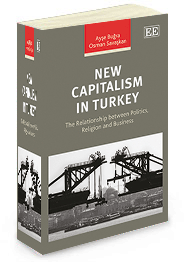
    This article is based on a recently published book Ayşe Buğra and Osman Savaşkan: The New Capitalism in Turkey: The Relationship between Politics, Religion and Business, Edward Elgar Publishing, 2014

  • Why The Worst Is Still Ahead For Turkey’s Bubble Economy

    Why The Worst Is Still Ahead For Turkey’s Bubble Economy

    The explosive rise of Turkey’s economy in the past decade is one of the most fascinating growth stories of all time. Since 2002, Turkey’s economy nearly quadrupled in size on the back of an epic boom in consumption and construction that led to the building of countless malls, skyscrapers, and ambitious infrastructure projects. Like many emerging economies in the past decade, Turkey’s economy continued to grow virtually unabated through the Global Financial Crisis, while most Western economies stagnated.

    Unfortunately, like most emerging market nations, Turkey’s economic boom has devolved into a dangerous bubble that is similar to the bubbles that caused the downfall of Western economies just six years ago. Though Turkey has received significant attention after its currency and financial markets fell sharply in the past year, there is still very little awareness of the country’s economic bubble itself and its frightening implications.

    4959154373_1199842af9_b2

    more : http://www.forbes.com/sites/jessecolombo/2014/03/05/why-the-worst-is-still-ahead-for-turkeys-bubble-economy/

  • Price of Nutella could rise as hazelnut crop devastated by bad weather

    Price of Nutella could rise as hazelnut crop devastated by bad weather

    Chocolate makers and fans of hazelnut-filled products including Nutella spread may need to brace themselves for price rises, after poor weather devastated hazelnut crops.

    Ferrero Rochers and Cadbury’s Whole Nut bars might also be affected

    Around 70 per cent of the world’s hazelnut crop is grown near Turkey’s Black Sea coast, but this year’s harvest is likely to be heavily hit after hail storms and frost in late March devastated hazel flowers at an important time in their growing cycle. The price of the nut has subsequently already skyrocketed by more than 60 per cent.

    Already faced with the rising price of cocoa, chocolatiers must now contend with the cost of the nuts reaching $10,500 (£6,300) per tonne, compared with $6,500 (£3,900) per tonne in February, according to Michael Stevens, a trader at Edinburgh-based Freeworld Trading, the Guardian reported.

    Stevens added that some buyers are living hand to mouth, as contracts pre-dating the frost cannot be fulfilled.

    While the extent of the damage is unclear, the Turkish hazelnut industry predicts it will only manage to harvest 540,000 tonnes of its 800,000 tonnes target.

    The world’s largest confectionary companies are now likely to be nervously watching the market to decide their next move.

    Ferrero, who are behind the moreish Nutella hazelnut spread and Ferrero Rocher chocolates buys 25 per cent of the world’s supply of hazelnuts, making it the world’s biggest buyer, according to the Italian Trade Agency. However, the company may not be affected as it recently purchased Oltan – Turkey’s largest hazelnut producer. The Independent has requested a comment from Ferrero UK and Ireland, but has not received a response.

    Meanwhile, Mondelez, the US owner of Cadbury – whose hazelnut-stuffed Whole Nut bar is a best seller – declined to tell the Guardian whether it would raise the prices of its chocolate bars.

    The potential changes come as manufactures attempt to deal with climbing almond and cocoa prices.

    However, while the weather in Turkey has coincided with a drought in California which has sent almonds prices to a nine-year high, cocoa is more expensive due to a changing market. The product is at a three-year high as customers in China and India appear to have developed a sweet tooth.

    via Price of Nutella could rise as hazelnut crop devastated by bad weather – News – Food + Drink – The Independent.

  • The German-American breakup …  Op-Ed

    The German-American breakup … Op-Ed

    Berlin (Germany)RussiaGermanyBarack ObamaAngela MerkelGeorge W. BushVladimir Putin
    Only 27% of Germans regard the U.S. as trustworthy; a majority view it as an aggressive power

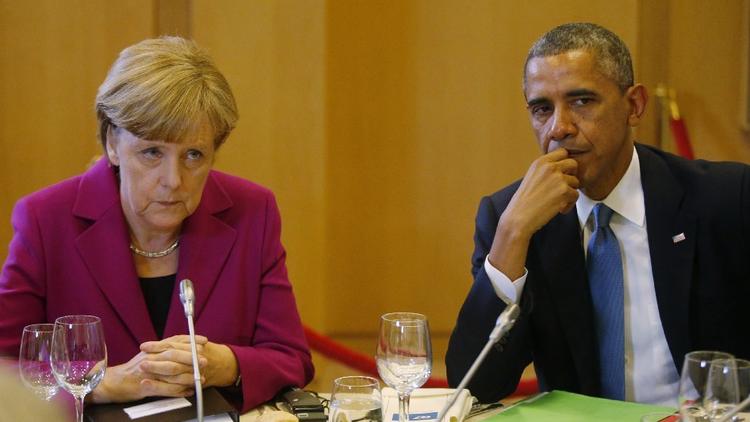
    When candidate Barack Obama spoke in July 2008 in Berlin near the Brandenburg Gate, he told a rapturous German audience that peace and progress “require allies who will listen to each other, learn from each other and, most of all, trust each other.” It was supposed to be the opposite of George W. Bush’s cowboy diplomacy, which alienated the Federal Republic of Germany and much of Europe. Yet six years later, relations between Washington and Berlin are more mistrustful than ever.

    The main problem is that President Obama has been listening all too well to Germans — spying on them from more than 150 National Security Agency sites in Germany, according to secret NSA documents that former contractor Edward Snowden leaked to the weekly Der Spiegel.

    Germans, who acutely remember the totalitarian surveillance of Nazi Germany and East Germany, cherish their strict data protection and limits on state monitoring. The pervasive spying on one of America’s most valuable partners — including the snooping on German Chancellor Angela Merkel’s cellphone from a rooftop listening post at the U.S. Embassy in Berlin — has enraged the German public.

    Now, with the fresh revelation that the CIA recruited an intelligence official as a spy, and the possibility of a second spy in the Defense Ministry, the fury is reaching a tipping point. U.S. Ambassador John B. Emerson was called on the carpet by the German Foreign Office on July 4 about the first incident. On Thursday, Germany ordered the CIA station chief in Berlin to leave.

    And the brouhaha isn’t going away. German President Joachim Gauck, widely revered for his years as a Protestant pastor and human rights activist in the former East Germany, said that if the spying allegations were true, “enough is enough.” Karl-Georg Wellmann, a prominent member of Merkel’s Christian Democratic party, is calling for the expulsion of any and all U.S. agents.

    What’s more, leading German politicians are calling for reassessing negotiations with Washington over a transatlantic free-trade agreement that could be vital to the economic futures of both Europe and the United States. And Interior Minister Thomas de Maiziere announced that Berlin would terminate a no-spy agreement it has enjoyed with the U.S. and Britain since 1945 and begin monitoring them in Germany. As Stephan Mayer, a spokesman for Merkel’s party, put it, “We must focus more strongly on our so-called allies.”

    So-called? Such statements, unthinkable only a few years ago, accurately reflect a broader antipathy toward America among the German public, which largely sees Snowden as a hero, particularly for his revelations about the extent of American surveillance in Germany.

    Ever since the Bush administration launched the Iraq war in 2003 — which then-Chancellor Gerhard Schroeder vehemently opposed — many Germans have come to view America as a militaristic rogue state, more dangerous even than Russia or Iran. Indeed, a recent

    Infratest Dimap poll indicates that a mere 27% of Germans regard the U.S. as trustworthy, and a majority view it as an aggressive power.

    The result is that Germany is undergoing a fundamental transformation. After the Nazi defeat in 1945, the republic’s first chancellor, Konrad Adenauer, emphasized that Germany had to end its tradition of trying to maneuver between East and West as an independent power. Instead, it had to bind itself to the West, economically and militarily. Only Washington could guarantee a free and democratic West Germany. But it is precisely this tradition that is coming to an end as Germany begins to act on what it perceives as its new national interests.

    Already Germany is much more sympathetic to Russia than the United States. Schroeder, the former chancellor, serves on the board of Gazprom and is a buddy of Russian President Vladimir Putin. Another former chancellor, Helmut Schmidt, said that it was “entirely understandable” that Putin would annex Crimea. What’s more, German business interests dictate that Berlin seek to maintain a friendly stance toward Moscow.

    Similarly, Germans are allergic to any military confrontation with China, which has emerged as one of their most important trading partners.

    It shouldn’t be entirely surprising that decades after the fall of the Berlin Wall, a reunified Germany is moving from docile Cold War ally to a sovereign power that feels less inhibited by its Nazi past and less indebted to the United States.

    But there’s no reason for the U.S. to antagonize a longtime ally, either. The two sides need to forge new ties based on mutual respect. They continue to have many common interests in trade, in deterring Russian aggression and in combating terrorism in the Middle East.

    In trampling on German civil liberties, the Obama administration is besmirching America’s image and allowing Germans to feel morally superior to their former conqueror.

    If Obama is unable to rein in spying on Germany, he may discover that he is helping to convert it from an ally into an adversary. For Obama to say auf Wiedersehen to a longtime ally would deliver a blow to American national security that no amount of secret information could possibly justify.

    Jacob Heilbrunn is the editor of the National Interest.

    Follow the Opinion section on Twitter@latimesopinion