THIS
DOCUMENT
IS
THE P R O P E R T Y
OF H I S
BRITANNIC
(MAJESTY S
GOVERNMENT)
Cyprusna
PBOrOSAL
TO
OEDS
CYPRUS
TO
GREECE
Proposal

THIS
DOCUMENT
IS
THE P R O P E R T Y
OF H I S
BRITANNIC
(MAJESTY S
GOVERNMENT)
Cyprusna
PBOrOSAL
TO
OEDS
CYPRUS
TO
GREECE
Proposal
|
By: Tulin Daloglu for Al-Monitor Turkey Pulse. posted on Mon, Jan 7.
|
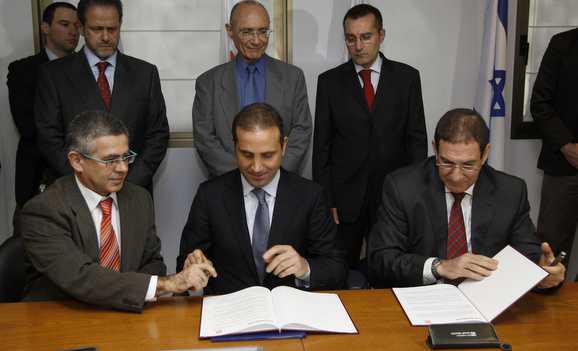
Israel’s Energy Minister Uzi Landau (rear C) watches as Nasos Ktorides (front C), chairman of DEH Quantum Energy, and Israel Electric Corp (IEC) Chairman Yiftach Ron-Tal (front R) sign a memorandum of understanding in Jerusalem March 4, 2012. (photo by REUTERS/Ronen Zvulun)
In November 2007, Israeli President Shimon Peres and Palestinian President Mahmoud Abbas jointly addressed the Turkish parliament, an event that buttressed Turkey’s role in the region as an honest broker for peace. The Peres address was the first ever by an Israeli president before a Muslim parliament.
|
Summary :
Tulin Daloglu writes that Israel’s strategic partnership with the Republic of Cyprus, including over Mediterranean gas fields, is yet another complication in Israeli-Turkish relations.
Author: Tulin Daloglu |
Turkey and Israel at that time were weighing the construction of an “infrastructure corridor” between the port cities of Ceyhan and Haifa, which would have included five separate underwater pipelines for oil, natural gas, electricity, water and communications. There was also speculation that these pipelines could go through Northern Cyprus.
That, however, was a red line for Greek Cypriot Foreign Minister Erato Kazakou-Marcoullis, who feared that Israel would thereby legitimize the Turkish side of the island when Nicosia had overwhelmingly rejected a United Nations proposal for a referendum in May 2004 on reuniting Cyprus, and despite that it had been accepted by the European Union as a full member.
In order to get reassurance from the Israeli side that their strengthening of ties with Ankara would not come at the cost of damaging their stiff position toward the Turkish Cypriot side, Marcoullis visited the Jewish state in December, only a month after Peres and Abbas made their historic appearance before the Turkish Parliament. No action she took scuttled proposals for a Turkish-Israeli “infrastructure corridor,” but developments in the region conspired against it.
The discovery of hydrocarbon fields in the eastern Mediterranean made things even more complicated for the Turkish side. Turkey’s European Union accession talks received mixed blessings. “The Greek Cypriots completely disconnected themselves from the Cyprus issue, but made Turkey’s EU accession directly dependent on this conflict,” Ergin Olgun, an advisor to the President of Turkish Republic of Northern Cyprus (TRNC), told Al-Monitor. “This has to be recognized as a serious diplomatic victory.”
Moreover, in January 2009, Turkish Prime Minister Recep Tayyip Erdogan strongly reacted at the World Economic Forum in Davos to an Israeli air raid on the Hamas-controlled Gaza strip, and stormed offstage after a heated debate with Peres. Tensions between Ankara and Jerusalem peaked following the Mavi Marmara crisis in May 2010, when Israeli soldiers killed nine Turks on a flotilla off the shores of Gaza.
As the Turkish-Israeli relationship deteriorated, Greek Cyprus and Israel started to build a strategic partnership. In February 2012, Benjamin Netanyahu became the first Israeli prime minister to visit Nicosia, where he agreed with President Demetris Christofias to launch a joint natural gas and oil exploration venture in their adjoining territorial waters. Speaking to Al-Monitor, Mehmet Ali Talat, former president of the TRNC, summed up this new close friendship in the region as, “my enemy’s enemy is my friend.”
“Why did Israel not even attempt to have any close ties with the Greek Cypriot side when it was at a good standing with Turkey?” he asked. “Christofias and I joined demonstrations before we both became presidents to condemn Israel for its aggression to the Palestinians, and joined the crowds together marching to the Israeli embassy. When we both became presidents, we released a joint condemnation of Israel’s attack to Lebanon in 2008. To my knowledge, Christofias was a die-hard Israel enemy.”
Nevertheless, the Greek Cypriot side claims it has no desire to act against the interests of the Turkish side. “This should not be perceived as a threat to Turkey,” Nikos Christodoulides, spokesman of the Greek Cyprus Presidency of the EU, told Al-Monitor. “Cyprus is exercising its sovereign rights. We consider this as our legitimate right. We don’t have talks with Turkey because it does not recognize the Republic of Cyprus.”
And that’s the crux of the issue. It really doesn’t matter whether the world only recognizes the Greek side of the island as the legitimate representative of the whole of Cyprus, and that it’s only Turkey that recognizes the TRNC. The United Nations is still attempting negotiations to resolve this conflict.
In fact, there were high hopes when Talat become president following the late Rauf Denktash, who was known as uncompromising and an advocate of dividing the island. Talat dedicated his personal and political life to the reunification of the island and had been boldly outspoken about the mistakes of the Turkish side.
“It’s difficult to comprehend as to how the United States, and the EU could allow the Greek Cypriots claim that this is their sovereign right when we clearly did our share for the unification of the island, but the Greek Cypriots did not want it,” Talat told Al-Monitor. “What I know, if and when the Greek Cypriots start profiting from this natural wealth of the island, I don’t believe they will even allow the Turkish side to get a smell of it. Even the thought of the development of the Turkish side’s economy is against their policies.”
Surely, the Greek Cypriot side believes it has an advantage as the only internationally recognized representative of the island. “The Turks approached many governments, and asked to open diplomatic missions in the north,” said Marcoullis during a visit to Israel in 2007. “But the international community is committed to the resolutions of the UN Security Council and thus no country in the world maintains relations with an illegal entity.”
Dervis Eroglu, president of TRNC, told Al-Monitor that the Greek side heavily benefits from this status quo and desires to assimilate the Turks of the island by way of osmosis. He says there is no incentive out there that would really push the Greek side to even consider a fair solution to this conflict. “However, if the international community opens the UN Security Council resolutions 541 and 550 into a debate, that prevents the countries to recognize the Turkish side as a legitimate country; and if the UN Security Council ends the mandate of the peace force on the island, only then the Greek side can seriously consider getting to the table for reaching a solution,” he said. Seriously though, no one should really expect the UN body to take such a bold step.
“We won’t immediately start profiting from this finding,” said Christodoulides. “It has been agreed that the natural wealth of Cyprus will be shared through the budgets of the constituency when there is a solution.”
Yet Eroglu told Al-Monitor that this issue has to be addressed now to secure the rights of his people. “I proposed to the Greek side through directly engaging the UN secretary general and offered them to establish a committee that would be composed by equal number of Turkish and Greek Cypriots, where they would assess the profit made from these hydrocarbon fields, and put our share to a bank account accordingly,” he said. “I suggested that we use that money to sort out the economic challenges once we decide on the terms of the unification of the island. But the Greek Cypriot president turned it down without a second glance.”
In short, Cyprus still remains as a conflict zone until the parties to this issue reach an agreement as to whether to continue as a united or divided entity, and they need to sort out in a civilized manner how they’re going to share the island’s wealth. The international community should be a facilitator in this direction. Yet Eroglu argues, “I’m not convinced a hundred percent that the US, Great Britain and Israel really want to see a resolution to this issue. Their interests openly clash with the Russians.”
For Russian interests, as Olgun explains, the continuation of the Cyprus issue is a desirable outcome. “As long as this issue remains unresolved, because of Turkey’s standing on Cyprus, it will not be possible to see NATO fully embrace the European security and defense policies.”
Still, Israel shouldn’t get engaged with yet another long communal conflict — as if dealing with the Palestinian issue isn’t enough — until the Turkish side’s share in the natural wealth of the island is assured. Greek Cyprus isn’t like any other sovereign state, and any attempt to violate the rights of the Turkish side is considered a direct rebuke to Turkish sovereignty. While the current political atmosphere between Ankara and Tel-Aviv is at a stalemate, a sealed agreement under today’s conditions between Greek Cyprus and Israel would kill all the possibilities for healing the rift between Israel and Turkey. And if that’s what the Jewish state calculates as in its best interest in the long term, it shouldn’t hesitate to go ahead in its joint venture with the Greek Cypriot side. But common sense might suggest otherwise.
Tulin Daloglu is a columnist for Al-Monitor’s Turkey Pulse. She has written extensively for various Turkish and American publications, including The New York Times, International Herald Tribune, The Middle East Times, Foreign Policy, The Daily Star (Lebanon) and the SAIS Turkey Analyst Report. She also had a regular column at The Washington Times for almost four years.
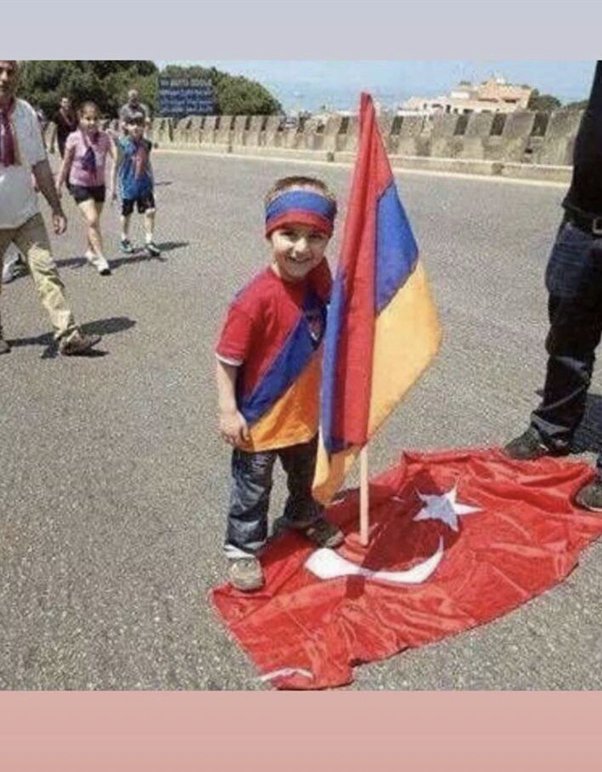
ANKARA, Turkey (A.W.)—The Grand National Assembly of Turkey (TGNA) witnessed an argument between parliamentarians over who killed the Armenians in the Ottoman Empire in 1915, Turkish newspapers reported on Jan. 3.
1×1.trans Turkey Parliamentarians Argue Over Who Killed Armenians
‘Your history is the history of massacres.’
“Your history is a history of massacres. You know very well how the grandparents of those who are struggling today were killed,” said parliamentarian Sirri Sakik (Mush), from the pro-Kurdish Peace and Democracy Party (BDP), according to the Turkish newspaper Radikal.
In the ensuing argument, parliamentarian Yusuf Halacoglu, from the Nationalist Movement Party (MHP), addressed Kurdish members of the National Assembly asking, “Then tell me frankly—and I, in turn, will show you all the documents—who killed the Armenians?”
Halacoglu is the former director of the Turkish Historical Society.
Other members of parliament pointed to massacres committed against Kurds, while parliamentarians from the ruling Justice and Development Party (AKP) argued that it is the Kurdish guerilla group PKK that has committed atrocities in Turkey, and that Turkish history is genocide-free.
Nurettin Canikli, head of AKP parliamentary group said, “There is no massacre, genocide, and assimilation in this nation’s history.”
via Turkey Parliamentarians Argue Over Who Killed Armenians | Armenian Weekly.
12 people, institutions and organizations from 6 countries will be awarded at the end of the May, 2013 in the ceremony held within the context of the Turkish Day in the USA.
Yahya Akengin, the president of Turkish World Writers and Artists Association (TÜRKSAV), told in the press conference in Ankara that one of the most important issues taken into consideration in determining the 17th Turkish World Service Awards was to attract attentions to the measures taken against preparations of some groups to get Turkey into difficult situations in 2015 with the unfounded Armenian claims. With this aim holding the ceremony in USA would be more appropriate, he stated.
Expressing the arrangements to organize a panel on “Turkish World Lobbying” besides participation to Turkish Parade in New York and the award ceremony, Yahya Akengin, from the standpoint of “one nation doesn’t possess two lobbies” as Azerbaijan President Ilham Aliyev signified time to time, underlined the importance of initiatives to inform Turkish world and draw brother countries’ attentions to the issue against malicious Armenian propagandas.
Saying that “Actually, Turkish nation needs to clarify the truths not to defend himself or to make propaganda about unfounded Armenian claims. To express regrettably, it is known that the number of those who don’t really know the background of this issue in Turkey and the Turkish world is not low.”, Chairman Akengin emphasized that they can feel the existence of institutions and non-governmental organizations that have already started to move in the U.S. and Europe with these thoughts and added that issue was considered in determining the owners of the awards. He continued his words as follows: “The groups, alleging Turkey should apologize and producing materials for Armenian diaspora’s propagandas, are supposed to understand that imperialist states of that time should apologize to both Turkish and Armenian people for the humanitarian plight that resulted from their policy of setting at odds. As TÜRKSAV, this is our thesis.”
At the press conference “Balkan Sorrows Poetry Anthology”, prepared and released by TÜRKSAV on the account for 100. Anniversary of the Balkan Wars, was introduced and presented to the press.
Address: Fevzi Çakmak 2 Sokak 36/14 Kızılay-Ankara
Phone Number: 0532 415 76 19 – 229 74 17 – [email protected]
17th TURKISH WORLD SERVICE AWARDS WINNERS
KYRGYZSTAN
-President Almazbek ATAMBAYEV
(his supports and services to Turkish unity and Turkish world ideal)
TURKEY
– Ambassador of the Republic of Turkey to the U.S, Namık TAN
(His supports to Turkish NGOs in the United States, his approach to provide cooperation and service coherence among them, his unifier role in cultural and social activities on Turkish world in USA)
-Artist Rauf TUNCER
(leitmotifs of Turkish history in his works)
-Orhan HAKALMAZ
(His well-qualified efforts and services for Turkish folk music)
AZERBAIJAN
-Ambassador to Washington, Elin SÜLEYMANOV
(His supports and contributions to Turkish world lobbying against Armenian diaspora’s unfounded claims)
USA
-President Ergün KARLIKOVALI on behalf of Assembly of Turkish American Associations
-President Faruk TABAN on behalf of Turkic American Alliance
-President Ali ÇINAR on behalf of Federation of Turkish American Associations
(These three umbrella organizations’ common stands, attitudes and services for the sake of Turkey’s international interests)
-Prof. Edward FOSTER
(His contributions to cooperation studies between universities in Turkey and USA and his prsentations by translation of Turkish literature)
-Prof. Hasan Bülent PAKSOY
(His studies on Turkish epics)
KAZAKHSTAN
-Poet and Writer Muhtar ŞAHANOV
(His services for Kazakhstan’s freedom and independence locally, his contribution to Turkish world culture in general and as a present for his 70th birthday)
Macedonia
-Prof. Numan ARUÇ
(His services for Turkish world culture and art in Macedonia Science and Arts Academia)
Address: Fevzi Çakmak 2 Sokak 36/14 Kızılay Ankara
Phone Number: 0532 415 76 19 – 229 74 17 – [email protected]
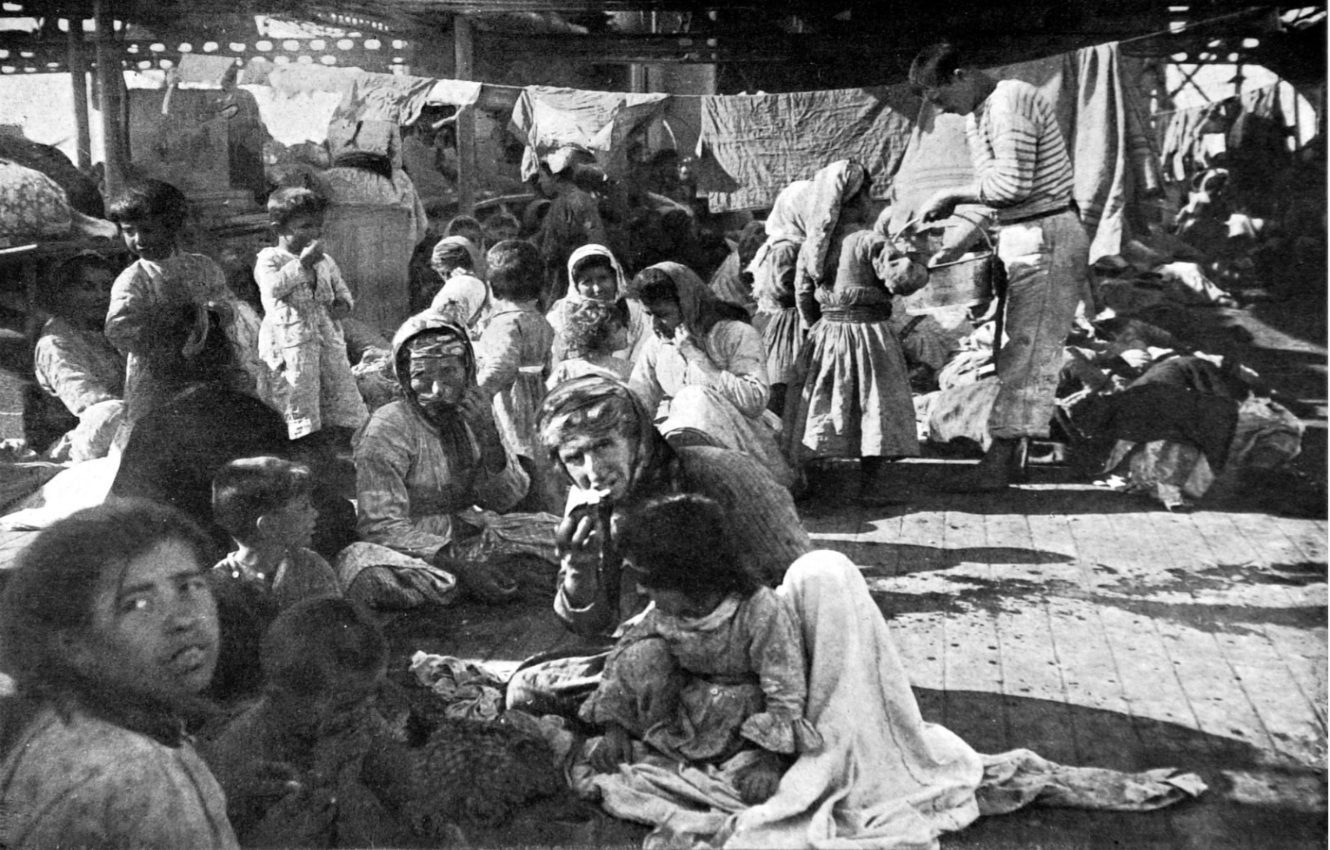
The Armenian Weekly publishes the full text of a talk delivered by Dr. Taner Akcam (Clark University) during a panel on ‘Overcoming Genocide Denial’ organized by Fordham Law School’s Leitner Center for International Law and Justice on Dec. 4. Speakers included Akcam, Gregory Stanton (George Mason University), and Sheri Rosenberg (Cardozo Law School).
“Why do we Turks continue to deny the genocide?”
Or, stated another way, Why do we Turks feel like lightening has struck our bones whenever the topic is brought up?
I’ve been dedicated to researching the subject of the Armenian Genocide since 1990, more than 20 years. This question keeps getting asked over and over again with unerring consistency. The question is a simple one, but as the years have passed my response to it has changed. At first, I tried to explain the denial through the concept of “continuity,” namely, governmental continuity from the Ottoman Empire through the Turkish Republic. Another way of formulating this thesis might be by titling it, “The Dilemma of Making Heroes into Villains.” The argument is very simple: The Turkish Republic was actually established by the Union and Progress Party (Ittihat ve Terakki), the architects of the Armenian Genocide of 1915. The founding cadres of Turkey were essentially Union and Progress members. And so, a significant number of the founding cadres of Turkey were either directly involved in the Armenian Genocide or they enriched themselves by looting Armenian properties. But these individuals were also our national heroes—they are the founding fathers of our nation. If Turkey acknowledges the genocide, we would have to accept that a number of our national heroes and founding fathers were either murderers, thieves, or both. This is the real dilemma.
Those individuals, as we were taught in school, were men who “created our nation and the state out of nothing.” They define who we are. This is true not only for the early generation of the Turkish nation, but also for the opposition movements of the country, including the largest wave of a democratic-progressive movement Turkey had ever seen: the 1968 student protest movement. The representatives of this wave and its political organizations strongly identified themselves with the founding cadres of the republic. They called themselves, in analogy with the founding fathers, the second “Kuvayi–Milliyeciler” or “national front,” a specific term that we use only to define our founding cadres. This strong identification with the founding fathers was not particular to the progressive ‘68 generation. It has been true for any of the groups active in Turkey: nationalist, Islamicist, or other right wing circles.
In other words, in order to accept the genocide, in our present state, we would have to deny our own national identity, as it exists today. That is a very difficult task, an almost impossible one, and very destructive. Instead of dealing with the identity crisis and the emotional and political fallout that will result from accepting the genocide, think about it: Wouldn’t it be so much simpler to just deny it?
I started to modify my response to the question “Why do Turks deny the genocide?” over time. I added one more reason for Turkish denial. It is also a very simple argument. If Turkey accepts that the genocide took place, it will be obligated to pay reparations. The argument has some wider consequences than whether the events of 1915 should be termed “genocide.” Let’s assume that 1915 was not genocide, and imagine that the Union and Progress Party had deported the Armenians from a cold, mountainous, and infertile area to a sunny warm and fertile region; pretend, in other words, that the Armenians had been dispatched to Florida. However, everything that these people owned was confiscated in the process and not a single penny was paid back to them. Even if you refuse to accept the events of 1915 as genocide, you have to accept the fact that the country of Turkey today was formed on the seizure of Armenian assets, and now sits on top of that wealth. As a result, if you accept and acknowledge that something unjust happened in 1915 in Turkey, you have to pay back compensation. Therefore, in order to avoid doing that, denying genocide outright makes a whole lot of sense.
I have continued to add some additional factors to explain Turkish denials, such as the phenomenon that occurs when you repeat a lie. Even in ordinary daily life, how easy is it to reverse yourself once you’ve told a lie? The lie about genocide has a history of decades and has become calcified. A state that’s been lying for 90 years can’t simply reverse course. Even when you know you’re telling untruths, they acquire the veneer of reality after so many years.
But these points are only useful for explaining why the state has continued to deny the genocide. As the years passed, I started to write that the term “Turkish denial” was inadequate for fully explaining the situation. I questioned the validity of the use of the term “Turks” to reflect a homogeneous entity that defines not only the people of Turkey but the state of Turkey, as well. I suggested making a distinction between state policy and the attitude of the people of Turkey towards genocide. I argued that the term “denial” was adequate in explaining state policy, but not that of society. The attitude of society should more accurately be portrayed as one of ignorance, apathy, fatalism, reticence, and silence, rather than denial.
Turkish society is not a monolithic block, and can be considered analogous to a train. It’s made up of lots of different cars, and each car represents a different sub-cultural ethnicity with a different attitude towards what happened in 1915. I’ve stated many times that a large portion of Kurds, Dersimians, and Alewites have accepted the reality of what happened in 1915, and that the real problem is that these different groups have not been able to express their thoughts on it in a way that was forceful, firm, and especially written. I used the terms silence and avoidance not only in the sense of a single attitude that is jointly held by all segments of society, but also to mean not openly taking a stance toward the official state narrative. One has to accept that all of these distinctions are important, and perhaps vital, to understanding the development of civil society in Turkey today, but that they are still not enough to explain why denialism is such a dominant part of the cultural landscape in Turkey.
So, my thinking has begun to change, yet again, recently. I don’t mean to say that my previous explanations were necessarily incorrect. Just the opposite: I still believe that these factors play a major role in the denial of the Armenian Genocide. However, I have now started to think that the matter seems to have roots in something much deeper and almost existentialist, which covers the state as much as the society. The answer to the question seems to lie in a duality between existence and non-existence—or, as Hamlet would say, “to be or not to be.” I believe our existence as a state and a society translates into their—Christians in Anatolia—non-existence, or not-being. To accept what happened in 1915 means you have to accept the existence of them—Christians—on Turkish territory, which is practically like announcing our non-existence, because we owe our being to their non-existence. Let me explain.
In order to provide more clarity, I would like to introduce Habermas to the topic. Habermas points out that within the social tissue and institutions of societies resides a “secret violence,” and this “secret violence” creates a structure of communication that the entire society identifies with.[1] Through this way of “collective communication,” the restrictions and exclusion of certain topics from public discourse are effectively institutionalized and legitimized. What is meaningful to note here is that this structure is not imposed on the society by the rulers, but is accepted and internalized by those who are ruled. There is a silent consensus in the society.
I would like to borrow another term from author Elias Siberski to shed some light on this condition–“communicative reality” (die kommunikative Wirklichkeit). Siberski uses this term to describe a very important characteristic of secretive organizations.2 According to Siberski, secretive organizations create an internal reality through a method of communication that is totally different from the real world. The situation in Turkey today resembles this very closely. As a society, we are like a secret organization. Since the establishment of our republic we have created a “communicative reality,” which sets out our way of thinking and existence over “state and nation.” It gives shape to our emotions and defining belief systems, or, in other words, our entire social-cultural net of relations. In sum, the things that make us who we are or at a minimum who we think we are. What is important to note is the gap between this “communicative reality” and actual reality.
In the end, this “communicative reality” has given us speakable and unspeakable worlds, and has created a collective secret that covers our entire society like a glove. It has created one big gigantic black hole. We are, today, a reality that possesses a “black hole.” This existence of a huge “black hole,” or the possession of a “collective secret,” or creation of a “coalition of silence”—these are the terms that define who we are… We simply eradicated everything Christian from this reality. This is how we teach Ottoman history in our schools, this is how we produce intellectual-cultural works about our society.
My opinion is that the secret behind the denial of the Armenian Genocide, or the unspeakableness of it, lies somewhere in here. What happened in 1915 is Turkish society’s collective secret, and genocide has been relegated to the “black hole” of our societal memory. Since the founding of the Republic of Turkey, all of us, rightists and leftists, Muslim, Alewite, Kurds, and Turks, have created a collective “coalition of silence” around this subject, and we don’t like being reminded of this hidden secret that wraps around us like a warm, fuzzy blanket. The reminders have an annoying irritating quality and we feel confronted by a situation that leaves us unsure of what to do or say.
Because, if we are forced to confront our history, everything—our social institutions, mentalities, belief systems, culture, and even the language we use—will be open to question. The way a society perceives itself is going to be questioned from top to bottom. As a result, we don’t appreciate the “reminders.” We view reminders as “force,” and react quite negatively to them. All of us, rightist and leftist, search for excuses, but we together seem to be crying out, as if in chorus, “Here we are minding our own business, not bothering anyone, when you appeared out of nowhere. Where did you come from?” It is as if we, as a nation, are making this collective statement: “If you think we are going to destroy the social-cultural reality we created with such great care over 95 years, with one swipe of a pen, think again!”
The Armenian Genocide is a part of a more general framework that is directly related to our existence. The republic and the society of Turkey today have been constructed upon the removal of Christians—the destruction of an existence on a territory that we call our homeland. Since we have established our existence upon the non-existence of another, every mention of that existence imparts fear and anxiety in us. The difficulty we have in our country with speaking about the Armenian issue lies within this existence-non-existence duality. If you’re looking for an example that comes close to this, you don’t need to look far: The history of the Native Americans in the U.S. bears similarities.
So, I think we have to reverse the question: The central question is not why Turkey denies the genocide, but whether we the people of Turkey are ready, as a state and as a society, to deny our present state of existence. It seems that the only way we can do that is by repudiating how we came to be and by creating a new history of how we came to exist. Are we capable of doing that? That’s the true question.
Notes
[1] Jurgen Habermas, “Die Ütopie des guten Herrschers,” in: Habermas, Kultur and Kritik (Frankfurt a.M., 1973), p. 386-7.
2 Elias Siberski, Untergrund und Offene Geselschaft, Zur Fragen der strukturellen Deutung des sozialen Phaenomens (Stutgart, 1967), p. 51.
Oppose AJR 2: A racist resolution in California
influenced by Armenian Lobby
Dear Friends,
On December 3, 2012, there was a swearing in ceremony in Sacramento, California for the incoming legislators. As soon as the ceremony was over, State Assemblymen Katcho Achadjian (an ethnic Armenian) and Mike Gatto introduced Assembly Joint Resolution 2, on, you guessed it, the alleged Armenian Genocide, for the millionth time!
To these legislators, real issues like unemployment, healthcare, education, sluggish economy, national debt, fiscal cliff, and others simply do not seem to matter. They have a single issue and that’s that ! It is so important to them that it could not wait the second day of business in Sacramento.
“We should be just as swift and take action against AJR 2 via a PaxTurcica CapWiz” said Ergun Kırlıkovalı, the president of ATAA. He added: “Deceived by Armenian lobby, AJR 2 seeks California Assembly to legislate the Armenian version of history. Based on a long discredited political claim of genocide, without any historical or legal substantiation, AJR 2 deliberately misrepresents World War I era inter-communal atrocities in the Ottoman Empire and calls upon the U.S. Government and Congress to do the same.”
Today, there is something you can do to fight such unprovoked defamation, unjustified demonization, and relentless ethno-religious discrimination embodied in racist and dishonest Armenian resolutions like AJR 2.
Just click on this link and take action via PaxTurcica CapWiz now:
It will only take 5 minutes of your time and you will not have to leave the comfort of your home or office.
Please select five items form the media list at a time; click send.
Then hit “back arrow” to mark another set of five newspapers from the list.
Thus, within five minutes, you can reach many newspapers that will learn your point of view.
Some newspapers may even run your message.
And please, tell a friend!
The ATAA, representing over 60 local chapters and 500,000 Turkish Americans throughout the United States, serves locally and nationwide to develop an informed and empowered Turkish American community, and to support strong U.S.-Turkish relations. The ATAA is a 501(c)(3) non-profit organization formed under the laws of the District of Columbia. To learn more about ATAA, please visit us at www.ataa.org
via Oppose AJR 2: A racist resolution in California influenced by Armenian Lobby