|
|
| ECHR Reverses Criminal Conviction of Turkish Politician Who had Questioned the Genocide Label
On December 17, the European Court of Human Rights (ECHR) reversed the criminal conviction by a Swiss court of Dogu Percinek, a Turkish politician who publicly challenged that Armenians were subject to genocide in the final years of the Ottoman Empire nearly 100 years ago. The ECHR is an international court whose decisions are binding in 47 countries, including all of the European Union and every NATO member state except the U.S. and Iceland. Some 800 million people are subject to its jurisdiction. It has rendered judgment in more than 10,000 cases since its founding in 1959. Perincek had claimed at various academic conferences in Switzerland that the use of the genocide label to describe the fate of the Ottoman Armenians during World War I was incorrect. A criminal complaint was then filed against him by an ethnic advocacy group called “Switzerland-Armenia” in July 2005. In March 2007, a local Swiss court found Perincek guilty of “racial discrimination” under the Swiss Criminal Code. Perincek’s subsequent appeals were denied, which allowed him finally to bring his case to the ECHR. Perincek v. Switzerland (application no. 27510/08, filed June 10, 2008). The essential ground for Perincek’s conviction by the Swiss courts was the supposed existence of a general consensus, particularly within academic circles, concerning the characterization of the Armenian case as one of genocide. However, even the Swiss Federal Court itself admitted that there was no unanimity in the academic community concerning the matter. The ECHR’s analysis demonstrated exactly the same. The ECHR further noted that the notion of ‘genocide’ was a precisely defined legal concept and was, moreover, not easy to substantiate. In conjunction with this, the ECHR also clearly distinguished the Armenian case from the Holocaust. In cases alleging Holocaust denial, the court noted, the applicants had denied concrete historical facts, crimes perpetrated by the Nazi regime that were easily proscribed in clear legal terms, and acts that had been clearly established by an international court. The court diligently contradicted claims by Armenian groups that so-called genocide recognition was globally widespread, indicating that in reality, of the 190 nations of the world only about 20 governments have taken this step, and even then these often were in the form of parliamentary resolutions or a simple vote of a single chamber. The ECHR thus upheld that freedom of expression protected minority viewpoints capable of contributing to debate on issues that were not fully settled. The Court also underlined that the right to openly discuss questions of a sensitive and controversial nature, such as the Ottoman-Armenian tragedy, was fundamental and distinguished a tolerant and pluralistic democratic society from a totalitarian or dictatorial regime. This is important for the United States. First, the ECHR applied a statute, the European Convention on Human Rights and Fundamental Freedoms, whose key provisions mirror the First Amendment to the U.S. Constitution. Second, the ECHR proved the folly of U.S. legislators stating with absolute certainty that they know the historical facts and legal conclusion of the ongoing, hotly debated controversy concerning the Ottoman Armenians. Third, by emphasizing the fundamental right to openly discuss and debate historical controversies, the court took a stand against what is often seen in the U.S. – threats, intimidation and boycotting of any scholar who may research this controversy from any viewpoint other than that acceptable to Armenian pressure groups. |
Category: Main Issues
-
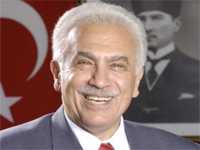
Major International Court Finds the Ottoman Armenian Controversy Not Settled History and Not Like the Holocaust
-
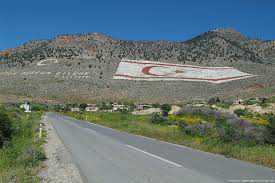
DECLARATION OF THE TURKISH REPUBLIC OF NORTHERN CYPRUS, NOVEMBER 15, 1983
We hereby declare before the world and before history the establishment of the Turkish Republic of Northern Cyprus as an Independent State.
· On this historic day, we extend once again our hand in peace and friendship to the Greek Cypriot People.
· The two Peoples of the island are destined to co-exist, side by side.
· We can, and must, find peaceful, just and durable solutions to all our differences, through negotiations on the basis of equality.
· The proclamation of the new State will not hinder, but facilitate the establishment of a genuine federation.
· The new Republic will not unite with any other State.
· The new State will continue to adhere to the Treaties of Establishment, Guarantee and Alliance.
· The good offices of the UN Secretary-General and negotiations must continue.
· The new state will not allow any hostile activity against any country on its territory.
· It shall attach the greatest importance to the preservation of peace, stability and of the balance of power in the region.
The resolution unanimously passed by the Turkish Cypriot parliament underlined that the Turkish Cypriot side, ‘firmly adhered to the view that the two peoples of Cyprus were destined to co-exist side by side and could and should find a peaceful, just and durable solution through negotiations on the basis of equality’.
It also expressed the firm conviction that the proclamation of the Turkish Republic of Northern Cyprus would not hinder but facilitate the re-establishment of the partnership between the two peoples within the federal framework and also facilitate the settlement of problems between them.
-

Turkey Must Apologize to Armenians before Centennial, Says Hasan Cemal
ISTANBUL (Armenpress)—Turkey must understands the pain felt by Armenians in the aftermath of 1915, Turkish journalist and publicist Hasan Cemal wrote in an article published Wednesday in Turkey’s T24 online newspaper, Armenpress reports.
In his piece, Cemal says Turkey must share that pain and present the tragedy to society at large, ahead of the forthcoming centennial of the genocide.
“Armenians are a people from Anatolia. Their roots and their motherland is in Anatolia. Armenians, like the Kurdish people, had lived in Anatolia before the Turkish appeared there. The truth is that Turkey has not yet accepted the fact that the Armenians were cut off from their historical roots and their motherland in 1915,” writes Hasan Cemal.
“The border between Armenia and Turkey should be opened. Diplomatic relations should be established between the two countries. These two steps should be made without any preconditions. Turkey, as a state, should apologize to the Armenians,” adds Cemal.
Hasan Cemal is a Turkish journalist, writer, and a grandson of Jemal Pasha, one of the leading perpetrators of the Armenian Genocide. He was the editor of Turkish newspapers including Cumhuriyet from 1981 to 1992 and Sabah from 1992 to 1998. In 2013 he resigned from the Milliyet newspaper after Prime Minister Recep Tayyip Erdogan criticized his article supporting Milliyets publication of minutes of a parliamentary visit to Öcalan. Milliyet subsequently suspended him and refused to publish his regular column.
He is best known for acknowledging and apologizing for the Armenian Genocide, a crime in which his grandfather played a leading role. His 2012 book on the subject, written partly in response to the 2007 assassination of his friend Hrant Dink, is titled 1915: Ermeni Soykirimi (1915: The Armenian Genocide).
The book went on to be a bestseller in Turkey. Cemal remarked in his book, “To deny the Genocide would mean to be an accomplice in this crime against humanity.”
The book was written following a visit by Cemal to Armenia. The book highlights Cemal’s “personal transformation” and his experiences in Armenia. While Cemal was in Armenia, he had an opportunity to meet and have lunch with Armen Gevorkyan, the grandson of the man who assassinated his grandfather Jemal Pasha in 1922.
via Turkey Must Apologize to Armenians before Centennial, Says Hasan Cemal | Asbarez Armenian News.
-

Letter to Mr. Sassounian from Kufi Seydali, our Advisory Board Member
Land of the Rising Sun: Fertile Ground for Armenians
https://www.turkishnews.com/en/content/2013/11/07/land-of-the-rising-sun-fertile-ground-for-armenians/
Mr. Sassounian!I must say, you continue to surprise and shock me at the same time!
You are fossil, or better said, a living sample of a rare germ against which no Japanese mask would help. You continue to spread the disease of hate and death.
When I first read the title of your essay and the entering paragraphs, I thought; look here, the old Sassounian is filling a gap in his general knowledge by visiting Japan, instead of constantly attacking the Turks.
However, my joy was short lived as I read about the true purpose of your visit!
I bet, your Japanese hosts were too polite to tell you the truth, but I guess they didn’t believe a word about the bit regarding “peaceful- conflict- resolution”.
You, Sir, who after 100 years, are still looking for more blood and laying the foundations of future conflict and war, have no right to lecture on peaceful resolution of conflicts. How did you justify the illegal occupation of Karabag? How did you explain the continued suffering Armenian forces together with the Russian army have inflicted upon the Azeris? Hundreds of thousands dead and millions displaced!
Indeed I was amused by your claim to have met Japanese CEOs in order to discuss business and investments in Armenia! I am sure the Armenian Ambassador was equally amused.
The only positive lesson to be derived from your report, is that both the Turks of Turkey and Azerbaijan will need to take your damaging activities much more seriously. Thank you Mr. Sassounian for your valuable lesson.
Regards
Kufi Seydali
Kent, UK.
-
A fight over the word ‘genocide’ is no way to end the aboriginal crisis
141 commentsImagine if the Turkish Prime Minister issued this statement: “The Canadian aboriginal people experienced terrible suffering and loss of life. Our parliament has adopted a motion that acknowledges the native Canadian genocide and condemns this act as a crime against humanity. My party and I supported this resolution, and continue to recognize it today. We must never forget the lessons of history.”
Ottawa would reject it, and many Canadians would be outraged to see their country put in the same column as Nazi Germany. Many would point out the hypocrisy of such a statement coming from the Turks.
Some Canadians would cheer it. This past year has, for First Nations, been something like what 1963 was for African-Americans, and as part of that awakening, the word “genocide” has risen in popularity. In this view, the mistreatment and suffering that native and Inuit people suffered must be seen as a deliberate attempt to exterminate an entire people, and should be recognized as such internationally.
This week, when the United Nations Envoy on Aboriginal Affairs paid a study visit to Canada, prominent native and Jewish figures sent him a letter asking that Canada’s treatment of aboriginals be recognized as a genocide, encouraging him to make a statement like the one at the top of this column.
Of course, those words were not uttered by the Turkish Prime Minister. Rather, they come from a statement made last year by Prime Minister Stephen Harper, with “native Canadian” substituted for “Armenian.”
The persecution and mass expulsion of Armenians by Ottoman forces in 1915 involved truly grotesque crimes against humanity, a string of atrocities that deserve condemnation. Many people, especially Armenians, consider it a genocide, although this definition is controversial.
Mr. Harper’s Conservatives have officially applied the “G” word to the Armenian experience at least four times. This has not gone over well in Turkey, even among those who are pressing for an atonement and full apology to Armenians. Because of campaigns like Canada’s, the word “genocide” has become a fixation among both Armenians and Turks – one that many feel has stood in the way of actual reconciliation.
Canada may soon face the same tension. Was our history genocidal?
The UN Genocide Convention, which Canada ratified more than six decades ago and has applied against other countries, defines the crime as including “any of” a list of acts committed against an identifiable group, including not just mass killing and mass physical or mental harm but also “deliberately inflicting on the group conditions of life calculated to bring about its physical destruction in whole or part,” “imposing measures intended to prevent births within the group,” and “forcibly transferring children of the group to another group.” You can find sustained examples of many of these in Canadian history, plus acts of cultural destruction such as forcing thousands of Inuit to replace their names with metal number plates.
Were those acts, as the genocide convention requires, committed with “intent to destroy, in whole or in part” the group’s population? In both the Turkish and Canadian examples, this is an open question. The Beothuk people of Newfoundland were literally exterminated, in part through deliberate acts. Some Ottoman and Canadian officials did appear to want all Armenians and natives gone. You could make a strong case, but not a completely waterproof one: Crimes against humanity, even awful ones, are not all genocidal.
It feels petty and mean to tell people whose family histories have been defined by cruelty and loss that the atrocities they suffered weren’t quite up to the definition of genocide. On the other hand, it’s an injustice to truly unambiguous genocides, such as the near-successful mechanized slaughter of Europe’s entire Jewish population or Rwanda’s mass slaughter of Tutsis, to attempt to apply the term to every mass atrocity.
Nobody wants to be labelled genocidal. Modern Turks live in a state that was created in the 1920s in opposition to the Ottomans who committed the Armenian atrocities. Post-1967 Canadians tend to see indigenous mistreatment as the act of less tolerant Dominion-era Canadians.
And yet Canada’s impoverished, racially segregated aboriginal communities are still a source of shame. Progress won’t happen without full and honest atonement. In both countries, it may be better to avoid a generation-long fight over the “G” word, and instead to speak officially of “crimes against humanity that some consider genocidal.” If we want to end the accusations, that’s the kind of compromise that is needed.
-

Cyprus : It Takes Two to Tango
(Some reflections on the political situation in the
Turkish Republic of Northern Cyprus)
Prof. Dr. Gul Celkan
It has been more than a month since the last elections in the Turkish Republic of Northern Cyprus, and no political party was able to obtain enough seats in the Republic Assembly to form the government. The Constitution mandates that a government has to be formed within fifteen days following the official announcement of election results and the MP’s taking their oath in the Assembly.
In a country where the population is around 330.000 and where there are only 173.000 registered voters, five political parties plus 7 independent candidates ran to obtain seats in the Assembly. The breakdown of the results is as follows: CTP-BG 38.38%, UBP 27.33%, DP-UG 23.16%, BKP 4.15% and TDP 5.41%. The independent candidates received almost no votes at all.
These percentiles clearly indicated that a coalition government was inevitable. Who will be delegated the responsibility of establishing the government? The general understanding is that the leader of the political party who obtains the majority of seats in the Assembly will be assigned this duty by the President of the TRNC. And as such, the leader of CTP-BG was officially delegated the responsibility of forming the new cabinet.
As is the case in all democratically run countries, the newly elected members of the Assembly have to take the oath prior to performing any duty whatsoever as an elected member of the Assembly. Before contemplating on the election results and the new government, it is worthwhile remembering how all the members of the assembly are sworn in. “ I do solemnly swear that I will preserve and protect the existence and independence of the State; the sovereignty, eternal existence and indivisible unity of the people and the nation state, …adhere to the principles and reforms of Ataturk, …that I will comply with provisions of the Constitution.”
Therefore regardless of what political party the members come from, they have to be sworn in, Thus as citizens, it is our natural expectancy that they will be faithful to their oath and work for the welfare of the sovereign Turkish Republic of Northern Cyprus. However, the current political situation in the country is very ironic. On one side, there is the Republican People’s Party (CTP) with a completely different vision compared to the Democrat Party (DP). Since CTP got the majority of the votes in the elections, it is the expectancy of both the Assembly and the people that this party rules the government with a partner, hence a coalition government. Considering the approach the CTP has toward the so-called Cyprus Problem, it is to the best interest of the country that they cannot govern the country on their own. They were the forerunners of the Annan Plan and without thinking of any of the consequences, beguiled a lot of the people by convincing them to vote “yes” in the Referendum, which was an utter mistake because having said “yes” to the Plan, the Turkish side readily admitted to giving up their sovereignty rights, their land and most importantly their Republic. Had it not been for an overwhelming “No” from the Greek Cypriot side, today there would have been no TRNC. Due to the majority of the “yes” votes from the Turkish side, when the two sides sit at the table with the UN Secretary General presiding over the meeting, there is always an excuse on the table that both the UN and the Greeks put forth: “you have already consented to giving up your land and your sovereignty by approving the plan, so you have no right to come up with new titles to reach a compromise on.” Had it not been for the “intransigent” attitude of the late President of the TRNC Rauf Raif Denktas, the country would have been wiped off of the surface of the earth, and the inhabitants would have either lost their true identity for the sake of becoming European Union citizens, or migrated to their Motherland Turkey. The choice would have, most definitely, depended on their outlook and beliefs.
The second partner of the coalition government is DP, lead by Serdar Denktas, who is the son of the late President. As expected, the views this party holds are in line with those of the founding and first President of the TRNC RRDenktas. For the DP, ties with motherland Turkey should never be severed but relations should be kept at a level so as to enable the Turkish Cypriots to stand on their own two feet but also get the support they need from Turkey. Having no major economy but tourism and institutions of higher education as the driving force that brings cash flow into the country, and due to the embargoes imposed on the TRNC, hardly any manufactured goods can be exported unless they are via Turkey.
Based on these facts, there are now two opposite views represented in the government. One of the key ministries which is Foreign Affairs is unfortunately assigned to an MP from CTP. Since the Prime Minister is also from CTP, their representation of the country on all international platforms would be very different from how it was formerly represented: very firmly and with no concessions at all. Though the deputy Prime Minister is the leader of the DP, either the PM or the Minister of Foreign Affairs would participate in all the international talks regarding the future of the island giving the entire international community a completely different perspective on the so-called Cyprus Issue.
Just as the two peoples living on the Northern and Southern parts of the island divided by the Greenline are at loggerheads on most issues due to the stubborn and egotistic attitude of the Greek Cypriots, so will be the two partners of this new coalition government. Will they ever find common grounds? Where as one is pro-Turkey, the other is pro-Greek. Putting into oblivion all the tragic events of the past and start living together with the Greek Cypriots again in a Federal Cyprus Republic is the ultimate goal of the CTP, while the DP, in compliance with the oath they have taken, will work for the indivisible unity of the country.
Now, is it not right to say “it takes two to tango?” Tango requires harmony. Will these two political parties that have completely opposing views form a harmonious partnership? On a personal note, I do not see a long-term partnership.