Category: Authors

  • Poor Richard’s Report

    Poor Richard’s Report

    Geopolitical Diary: The World’s Pivot
    January 30, 2009Turkish Prime Minister Recep Tayyip Erdogan created a stir at the World Economic Forum in Davos, Switzerland, on Thursday with a lengthy condemnation of Israel’s recent actions in the Gaza Strip.

    Erdogan’s speech was clearly prepared beforehand — read directly from papers he was holding — so this was no off-the-cuff comment that could be written off. And sitting right next to the Turkish prime minister the whole time was none other than Israeli President Shimon Peres. After Peres delivered a counterpoint, Erdogan went on what detractors would probably label a rant, which ended with a brief argument with the moderator about time limits before he abruptly walked off the stage, having said, “I do not think I will return to Davos.”

    Back in Turkey, the response was mixed: Some were surprised by their leader’s actions, and some were thrilled to see him lambaste both Israel and the European elites at Davos. Indeed, it is a matter for debate both within and outside Turkey just where Erdogan and his Justice and Development Party are taking Turkish policy in the near future. There are those who see his bold criticisms of Israel as a clear bid to seize a leadership position for Islamic sentiment throughout the Middle East. Others see Turkey asserting itself in order to counter, or perhaps collaborate with, a resurgent Russia. Still others see Turkey pushing to join, or perhaps utterly reject, the European Union. The one thing that is clear is that Turkey is moving more assertively than it has in decades.

    It has been almost 90 years since the world has seen Turkey as a place that projects any power on its own. Since the fall of the Ottoman Empire, the Turks have been extremely insular, dabbling only rarely in events beyond their borders. Granted, Turkey was a key participant in the NATO alliance during the Cold War, given that it shared borders with the Middle East, Iran, the Soviet bloc (Bulgaria) and the Soviet Union itself. It has been a long time, however, since Turkey pursued an activist foreign policy — and most of the world has forgotten just what that means.

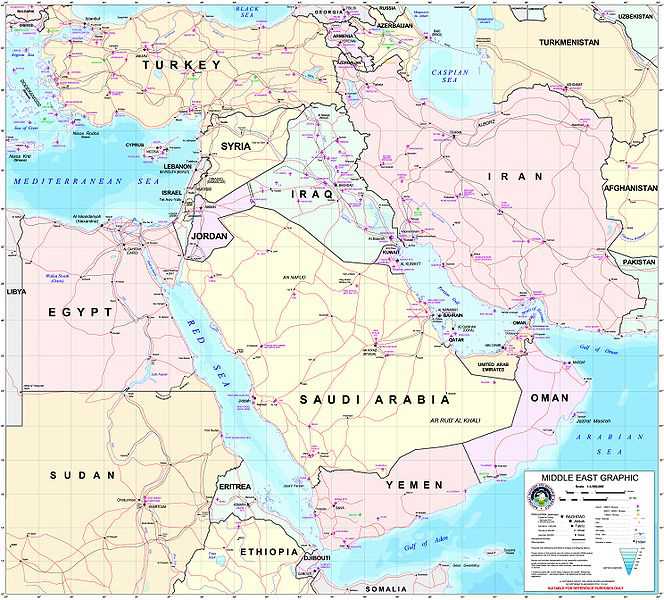
    Turkey occupies on some of the most valuable real estate in the world. The Anatolian plateau is high and easily defensible, and as a peninsula it also supports a thriving maritime culture. Both are excellent assets for growing a successful state. But Turkey’s most important feature is its critical location. It sits astride the land routes connecting Europe, the former Soviet Union and the Middle East — not to mention the straits connecting the Black Sea and the Mediterranean. It is the only country in the world that is positioned to project influence readily into all of these regions.

    A deeper look reveals that the territory that comprises modern-day Turkey has been at or near the center of the human story for thousands of years. It was the home of the Hittite empire some 3,300 years ago, and afterward its Aegean coast was part of Classical Greece. Not only was Anatolia a key component of the Roman Empire, but Byzantium — based in what is now Istanbul — was Rome’s immediate political, cultural, religious and economic successor. That entity in turn was succeeded by the Ottomans, who crafted what was at the time the world’s greatest empire — which almost unilaterally enabled humanity to emerge from the Dark Ages, even at times conquering a good portion of what would eventually become Western civilization. For about half of the past two millennia, Anatolia has commanded the world’s most powerful economic and military forces.

    The bottom line is this: Any time in human history that the Anatolian Peninsula has not been a leading force in geopolitics has been an aberration. The land that links Europe to the Eurasian steppe to the mountains of Asia to the Mediterranean basin and the deserts of Arabia is geographically destined to play a major role on the global stage. If the world has a pivot, it lies in Turkey.

    And although the direction of its movement remains up for debate, Turkey — after more than 90 years of quiescence — is moving again.

    Tell Stratfor What You Think

    Terms of Use | Privacy Policy | Contact Us
    © Copyright 2009 Stratfor. All rights reserved.
  • New Resist of Turkish Outlook

    New Resist of Turkish Outlook

    After the Belfour Declaration Turkey shared a new strong hand on Middle East.

    Turkish Prime Minister R. Tayyip Erdogan told Peres that “you must feel guilty to be so strong in your words,” referring to the president having raised his voice loudly during his address.

    For first time a man told about Israeli realities : “You killed babies and women. God says that “don’t kill” in Torah.”

    It is original access to share Middle Eastern fortune as referring to massacre mind of Shimon Peres, Ariel Sharon and other Israeli person in charge who are originally military base. “You have prime ministers who had said they felt quite happy when they entered in Palestine on tanks.”

    Today Menahem Begin and Ariel Sharon can not see new balances which are made by Muslim Turkey. Israel must understand that Muslim people can create riots if Turkey wants. Also they know Ottoman resist against to Jewish invasion on Middle East. New Hava Nagila sing will appear for Muslims as happiness in region.

    Turkey’s historical feelings will keep situations among Muslim nations.

    In 1901 the Jewish representatives of Ottoman parliament went to Sultan Abdulhamid the II and offered to pay tremendous amount of money to keep the Islamic State for Palestine. Sultan Abdulhamid the II replied:


    I am not going to give one inch of Palestine to the jews as Palestine is not mine give but it belongs to the Ummah and Ummah have shed blood to defend this land but if one day the Islamic State falls apart then you can have Palestine for free but as long as I am alive I would rather have my flesh be cut up then cut out Palestine from the Muslim land I will not allow any carving up while we are alive!

    Turkey says to stop Israeli massacre and invasion today with its empire heritage.

    The premier then walked out saying Peres had spoken for more than twice as long as he was given.Also Turkey understand that western world will not give right to speak for Turkey.  Peres received 25 minutes, Erdogan 12.

    Western world created a cold diplomatical, academical feelings. And their demands are about opposition of other’s interest.

    Today Greeks are defending their Cyprus massacres, but they sued Atilla Olgac because of war actions. But Greek side don’t talk about Israeli slaughter.

    We will see new political attacks by big powers about just and unjust states.

    Mehmet Fatih ÖZTARSU

  • TURKISH–ISRAELI FRIENDSHIP COMMITTEE

    TURKISH–ISRAELI FRIENDSHIP COMMITTEE

    Dear Member,

    We are planning to extend our Turkish Israel Friendship and Grassroots Committee. Besides its previous efforts to develop better realtionships between the two countries, we are now aiming to discuss the latest developments.

    Our existing committee consist of following people :

    Mr. Ibrahim Kurtulus, Chairman
    Mr. Rafael Sadi, Co-Chairman
    Dr. J. E. Botton
    Mr. Vedat Aslay

    Please feel to submit your name to our committee or send us your comments below.

  • The Furious Passage of Tayyip Erdogan

    The Furious Passage of Tayyip Erdogan

    From PoliGazette January 30, 2009. “The furious passage of Tayyip Erdogan,” by Robert Ellis.

    The Furious Passage of Tayyip Erdogan

    By Robert Ellis

    Turkey’s prime minister, Tayyip Erdogan, is not a man who brooks being contradicted and a panel debate on the Gaza war at the World Economic Forum was no exception. What was hoped to be a bridge-building exercise to ameliorate Erdogan’s harsh criticisms of Israel’s incursion into Gaza and support for Hamas has turned out to be a public relations disaster.

    Erdogan delivered his own presentation in a forceful tone, calling for Hamas to be included in the solution and expressing Turkey’s willingness to be included in the process. However, after Israel’s president, Shimon Peres, had made his presentation, Erdogan responded with a tirade against Peres but was reminded by the moderator of a time limit. Erdogan pushed the moderator away, rose to his feet and left the stage, declaring he did not think he would be coming back to Davos, because he had not been allowed to speak.

    The reaction has not been long coming. This morning AJC, the American Jewish Committee, issued a statement calling Tayyip Erdogan’s attack “a public disgrace” and “gasoline on the fire of surging anti-Semitism”. Furthermore, last week AJC and four other American Jewish organizations sent a letter to Erdogan, expressing concern over the current wave of anti-Semitism in Turkey, and Erdogan’s outburst has done nothing to allay these fears.

    Unfortunately the Turkish prime mnister has a track record of shooting himself in the foot, which, if the sport became an Olympic discipline, would guarantee him a number of gold medals. (more…)

  • Poor Richard’s Report

    Poor Richard’s Report

    Annual Forecast 2009: War, Recession and Resurgence
    January 29, 2009 | 1730 GMT Editor’s Note: Below is the introduction to Stratfor’s Annual Forecast for 2009. There also is a printable PDF of the report in its entirety and a report card of our 2008 forecasts highlighting where we were right and where we were wrong. All sections of the forecast are available on our homepage under the 2009 Annual Forecast Special Reports page.

    The year 2009 will be complicated. A new U.S. administration is dealing with a politically and militarily complex war. Russia has stopped merely flexing its muscles and is working to secure its position in the spotlight on the global stage. An economic recession is casting a pall over much of the world. These three trends, which will dominate events in 2009, are related to the three broad forecasts Stratfor made at the beginning of 2008.

    Full Print Version
    Annual Forecast 2009 PDF
    2008 Examined
    2008 Annual Forecast Report Card
    Annual Forecast 2009: Hindsight and Errors
    2009 Annual Forecast Sections
    Annual Forecast 2009: Major Global Trends: Recession, Russia, The Jihadist War
    Annual Forecast 2009: The Middle East
    Annual Forecast 2009: Europe
    Annual Forecast 2009: East Asia
    Annual Forecast 2009: Latin America
    Annual Forecast 2009: Sub-Saharan Africa
    Related Special Topic Page
    2009 Annual Forecast
    In our 2008 Annual Forecast, we predicted that the U.S.-jihadist war would wind down and the groundwork would be laid for a drawdown of American forces from Iraq. As 2009 begins, there is the U.S.-Iraqi Status of Forces Agreement that enables the United States to first reduce its visible presence and ultimately remove most of its forces. Furthermore, the American focus on the jihadist conflict has shifted from Iraq to the Afghan-Pakistani border region, but the conflict itself has become far more diffused.

    Though the war in Iraq is over in a strategic sense, it is still sufficiently unsettled to allow Iran to stir up violence in Iraq. Tehran would do this not merely to twist the lion’s tail, but to reap sizable security concessions from the new American administration; the only way Washington could avoid making such concessions would be to leave more troops in Iraq longer. Part of Iran’s confidence stems from the U.S. focus on the Indo-Pakistani conflict next door. India is convinced, and rightly so, that the Pakistanis have failed to contain their own radical Islamists. Yet the war in Afghanistan requires Pakistani supply lines and cooperation. Which puts the Americans in a quadruple bind: The United States needs the Iranians not to demand more from it in Iraq, the Indians not to seek revenge for the Mumbai attacks and so destroy any hope of Pakistani cooperation, the Russians to help establish an alternative supply route for NATO troo ps in Afghanistan to pressure the Pakistanis, and the Pakistanis to break with 30 years of policy and go after their own. It is a Gordian knot, and in 2009, it is part of a single interconnected conflict.

    Within the Russian element of the jihadist conflict is the second aspect of our forecasts, again both for 2008 and 2009. In 2008, Stratfor predicted that Russia would take advantage of the U.S. preoccupation in Iraq to reassert power throughout its near abroad. It did this in all of Russia’s border regions, using a mix of financial, economic, military, political, social and — above all else — intelligence tools. The event of the year for this prediction was Russia’s August invasion of the former Soviet state — and U.S. ally — Georgia, amply demonstrating Moscow’s resurrected military power.

    As 2009 begins, Russia’s window of opportunity remains fully open, despite the change in American administrations. The Obama administration is not making the U.S. military more capable of resisting Russia’s surges in 2009, but instead is shifting forces from one theater (Iraq) to another (Afghanistan). Russia’s focus for the year is clear: use a variety of less overt measures to consolidate its control of the most valuable piece of the former Soviet empire — Ukraine.

    Finally, against these two building — and in part interlocking — crises, the global backdrop is remarkably different from 2008.

    In 2008, we explained how strong oil prices and Asian exports were creating a new pool of global capital located in the Gulf Arab states and China. This was most certainly the case — China and Saudi Arabia had amassed cash reserves of approximately US$2 trillion each. But as we explained in the 2008 forecast, this generation of wealth was not a transfer of economic power. Rather than go their own way, these states invested nearly all of their money back into the United States, both dollarizing the broader economy and greatly supporting the American financial architecture. All that cash certainly helped mitigate the damage of the global recession that boiled forth in September.

    And boil forth it certainly did. As 2009 begins, the world is experiencing its first truly global recession in a generation, and the coming year will be riddled with its ancillary effects. For example, credit crunches will greatly constrain economic activity the world over, banking collapses will be a key feature in European developments, mass protests due to closing factories could plague East Asia, and weak commodity prices will threaten economic and political stability in a host of resource-exporting countries.

    Underlining all aspects of the recession will be a single, undeniable fact. The dollarization of the global economy that began so torrentially in 2008 will reach a fever pitch in 2009 as a variety of investors — private, government, American and foreign — pour their resources into the American market. They will do this first to escape the volatility that resides elsewhere in the world, and later to ride the U.S. recovery out of the recession.

    Tell Stratfor What You Think

    Terms of Use | Privacy Policy | Contact Us
    © Copyright 2009 Stratfor. All rights reserved.
  • Poor Richard’s Report

    Poor Richard’s Report

    Turkish President Storms Off Stage At Davos
    January 29, 2009Turkish Prime Minister Recep Tayyip Erdogan rushed off the stage at the World Economic Forum in Davos, Switzerland during a debate with Israel President Shimon Peres