Category: Harut Sassounian

Harut Sassounian is the Publisher of The California Courier, founded in 1958. His weekly editorials, translated into several languages, are reprinted in scores of U.S. and overseas publications and posted on countless websites.<p>

He is the author of “The Armenian Genocide: The World Speaks Out, 1915-2005, Documents and Declarations.”

As President of the Armenia Artsakh Fund, he has administered the procurement and delivery of $970 million of humanitarian assistance to Armenia and Artsakh during the past 34 years. As Senior Vice President of Kirk Kerkorian’s Lincy Foundation, he oversaw $240 million of infrastructure projects in Armenia.

From 1978 to 1982, Mr. Sassounian worked as an international marketing executive for Procter & Gamble in Geneva, Switzerland. He was a human rights delegate at the United Nations for 10 years. He played a leading role in the recognition of the Armenian Genocide by the U.N. Sub-Commission on Prevention of Discrimination and Protection of Minorities in 1985.

Mr. Sassounian has a Master’s Degree in International Affairs from Columbia University, and a Master’s in Business Administration from Pepperdine University.

  • Aliyev the Wolf vs. Pashinyan the Lamb: It is Clear Who Will Devour Whom

    Aliyev the Wolf vs. Pashinyan the Lamb: It is Clear Who Will Devour Whom

    There seems to be no end to Prime Minister Nikol Pashinyan’s concessions to Azerbaijan’s demands. The only end will be the end of Armenia.

    Last week, when Pres. Ilham Aliyev once again issued threats against Armenia, Pashinyan responded with further concessions. It feels like Aliyev is ruling Armenia from Baku.

    Aliyev gave a lengthy press conference to the Azeri media on January 7, 2025, during which he made arrogant statements about Armenia using an extremely demeaning tone. Here are excerpts from his remarks:

    — Armenia returned the four villages in the Tavoush region to Azerbaijan “as a result of a monologue rather than a dialogue.” Armenia returned these villages “under coercion.”

    — “Armenia cannot compete with us in the arms race.”

    — “The independent Armenian state is, in fact, a fascist state…. Therefore, fascism must be eradicated. Either the Armenian leadership will destroy it, or we will.”

    — “Armenia must immediately cease arming itself. France and other countries that supply weapons to Armenia must terminate and cancel these contracts. The weapons that have already been delivered to Armenia must be returned.”

    — “The dissolution of the Minsk Group and the amendment of the constitution; without these, a peace treaty is impossible.”

    — “The Zangezur corridor must and will be opened.”

    –“During his [Pres. Trump’s] first term, there was no issue in U.S.-Azerbaijan relations. On the contrary, the relations were very positive, and we were able to make progress in many areas. The main mistake of the Biden administration regarding Azerbaijan was that they sacrificed U.S.-Azerbaijan relations for U.S.-Armenia relations.”

    — “Considering that the current territory of Armenia essentially includes the historical lands that were predominantly inhabited by Azerbaijanis, today we assert that 300,000 Western Azerbaijanis should return to those regions. However, the total number of those who have been displaced from that region, and who are now living in various parts of Azerbaijan, along with their descendants, is several times greater than 300,000.”

    After members of the Armenian media complained about Pashinyan’s eerie silence about Aliyev’s threatening comments, he finally agreed to answer a few questions from Armenpress on January 8:

    Pashinyan said that by making aggressive statements about Armenia, Aliyev expected a similar aggressive response from Armenia “to form the basis for a new escalation in the region. We will not take that path and we will remain committed to the strategy of peace.” Pashinyan keeps begging for peace and ignoring Aliyev’s multiple rejections. Aliyev prefers a piece of Armenia rather than a piece of paper which he will ignore even if he signs it. In this short interview, Pashinyan repeated the word peace 11 times.

    When asked for his reply to Aliyev’s accusation that Armenia is “a fascist state,” Pashinyan sheepishly agreed that there is such a perception about Armenia in Azerbaijan, just as there is a similar perception about Azerbaijan in Armenia.

    Regarding Aliyev’s persistent demands for an Azeri corridor through Armenia, Pashinyan once again failed to demand that, as stated in the 2020 agreement, Azerbaijan allow a reciprocal access for Armenia through Azerbaijan.

    In responding to a question about Aliyev referring to the Republic of Armenia as “Western Azerbaijan,” Pashinyan simply said: Aliyev “has said nothing new about this topic for me to have a new reaction.”

    Regarding Aliyev’s complaints about Armenia acquiring arms, Pashinyan stated: “no one can dispute the right of the Republic of Armenia to have a defensible army.” He then added: “we do not have an objective of militarily returning more than 200 square kilometers of occupied territories of the Republic of Armenia….”

    In response to Azeri accusations of Armenia violating the ceasefire, Pashinyan repeated his proposal “to create a joint mechanism to jointly investigate each report about ceasefire violations, and draw joint conclusions.”

    On January 9, Pashinyan posted on his Facebook page a lengthy statement comprised of 17 points, complying with Aliyev’s demands for concessions.

    He described “Western Azerbaijan” as consisting of several towns located in the Western part of Azerbaijan, including parts of Artsakh. He falsely named cities in the Republic of Armenia as being “Western Armenia,” adding facetiously, “there is no Western Armenia beyond this and cannot be.”

    He then detailed the components of “establishing lasting stability and peace in the region”:

    — “Mutually abandon escalatory narratives.”

    — “Continue the delimitation process.”

    — “Sign a peace treaty which is 90% ready.”

    — “Implement the ‘Crossroads of Peace’ project.”

    — “Introduce a joint mechanism for investigating ceasefire violations.”

    — “Fully resolve the issue of detained persons.”

    — “Work in full intensity to locate and resolve the issue of determining the fate of those considered missing.”

    — “Withdraw the claims against each other, including, but not limited to, claims in international courts.”

    — “Work on the complete and effective implementation of the provisions of the peace treaty.”

    — “Form a mechanism for negotiating around mutual arms control, quota allocation, and implementing restrictions on the use of armaments.”

    — “Discuss in full the issues pertaining to refugees from the two countries by forming a joint professional, expert commission after the establishment of peace.”

    — “Dissolve the OSCE Minsk Group.”

    Some of these points are a rehash of Pashinyan’s previous proposals which Aliyev has not accepted. However, several are against Armenia’s interests, particularly: the withdrawal of mutual lawsuits in international courts and dissolving the OSCE Minsk Group. Both of these demands were dictated by Aliyev.

  • Lladro Produces ‘Karabagh Horse’ Porcelain Figurines as Propaganda for Azerbaijan

    Lladro Produces ‘Karabagh Horse’ Porcelain Figurines as Propaganda for Azerbaijan

    Regrettably, the only things that matter in this world are money and power. All the other issues that naïve people put a value on, such as truth, justice, and human rights, are self-defeating delusions. Rich and powerful people and countries can do almost anything they want. The only ones that can stop them are those who possess greater power. The weak are at the mercy of the powerful wolves.

    These thoughts came to my mind as I received an email from the Lladro Company, which is world famous for the porcelain figurines it produces in Valencia, Spain. A lot of people have valuable collections of Lladro figurines in their homes. They are frequently given as gifts.

    Karabakh horse – Alyetmez, photo 1867

    The email I received from Lladro was a pitch to sell its latest porcelain figurine named: ‘Karabakh Horse.’ Next to the image of a horse, the email stated: “The Karabakh horse is a symbol of Azerbaijan’s cultural legacy and its indomitable spirit. Our artists have portrayed it in porcelain, underscoring the elegance and beauty of this unique breed. Following ancient tradition, the horse is covered with a Karabakh rug with its rightly famous patterns decorated in intense colors and golden lusters. Discover all the details of this specimen, available in a limited edition.”

    In the above short paragraph, Lladro made several factual errors. First of all, the Karabagh horse cannot be a symbol of Azerbaijan since Karabagh (Artsakh) is a part of historic Armenia. To make matters worse, Lladro falsely added that this horse is a symbol of Azerbaijan’s “cultural legacy and its indomitable spirit.” There is no such thing as Azerbaijan’s ‘cultural legacy’ since the country is a little over 100 years old. I also don’t understand Lladro’s reference to Azerbaijan’s ‘indomitable spirit.’ Where did that ‘indomitable spirit’ come from? Azerbaijan, during its short-lived history, has engaged in barbaric beheadings of Armenian prisoners of war, committed massacres, ethnic cleansing, and genocide, destroyed Armenian churches and cultural monuments, distorted history, and committed massive violations of the human rights of its own citizens, including the jailing of journalists and political dissidents on trumped-up charges.

    Since I know very little about horses, I searched about the ‘Karabagh horse’ on the Internet. Here is what I found: “The Karabagh horse breed is influenced by Persian horses and other breeds like the Akhal-Teke, Kabarda, Turkoman, and Arabian horses.” The Akhal-Teke horse originates from Turkmenistan, while the Kabarda from the Kabardino-Balkaria Republic in Russia. I don’t see any reference to Azerbaijan in that sentence.

    In another obvious error, Lladro explained in its email that ‘Karabakh Horse’ means ‘golden horse.’ This is false. The name Karabagh is composed of two words: ‘Kara’ which means black in Turkish and ‘bagh’ which means garden in Farsi. Therefore, Karabagh means Black Garden.

    Lladro is selling the ‘Karabakh Horse’ porcelain figurine for $6,580 each. It is a ‘limited edition’ production with only 750 copies. It weighs 20 lbs. The dimensions are: 17 inches (high), 20 inches (wide), and 8 inches (long).

    To promote the ‘Karabakh Horse’ figurine, Lladro held its unveiling at the Shirvanshah Palace Museum in Baku, where the Azerbaijan National Conservatory provided a live musical concert. The guest speaker was Yashar Quluzade, the owner of the largest number of actual Karabagh horses.

    To represent Karabagh as part of Azerbaijan, and promote the Karabagh horse worldwide, Pres. Aliyev gifted in 2022 a Karabagh horse and two equestrian-themed sculptures to Queen Elizabeth II of England. This is the second time that the Queen has received a Karabagh horse from Azerbaijan. The first one was in 1956.

    Since the only thing Lladro executives care about is profit, Armenians and their supporters should counter the use of the Karabagh horse as a tool for Azeri propaganda by boycotting the purchase of all Lladro products. Complaints should be sent to Ana Rodríguez Nogueiras, the Chief Executive Officer of Lladro. Her email is: [email protected].

    I do not know what kind of business arrangements have been made between Azerbaijan’s leaders and Lladro. Who is getting what percentage of the sales and who is personally benefiting from the resulting income?

    It is surprising that the Karabagh Horse figurines are still not sold out since they were launched several months ago. Since Azeri leaders donate lavish gifts to foreign dignitaries visiting Azerbaijan, why haven’t they purchased all 750 copies of the Karabagh Horse porcelain and given them as souvenirs? I am certain that Pres. Aliyev, who is a billionaire, can easily afford to purchase all 750 copies at $6,580 each for a total cost of $4.9 million.

  • Letters by Armenian Genocide Eyewitnesses Should be Published in Several Languages

    Letters by Armenian Genocide Eyewitnesses Should be Published in Several Languages

    Last month, I wrote an article about the 8,000 letters that the Armenian survivors of the (Ottoman) Hamidian Massacres of the 1890s had written to Catholicos Khrimian Hayrig, describing their tragic experiences and seeking his assistance for their basic necessities of food and shelter.

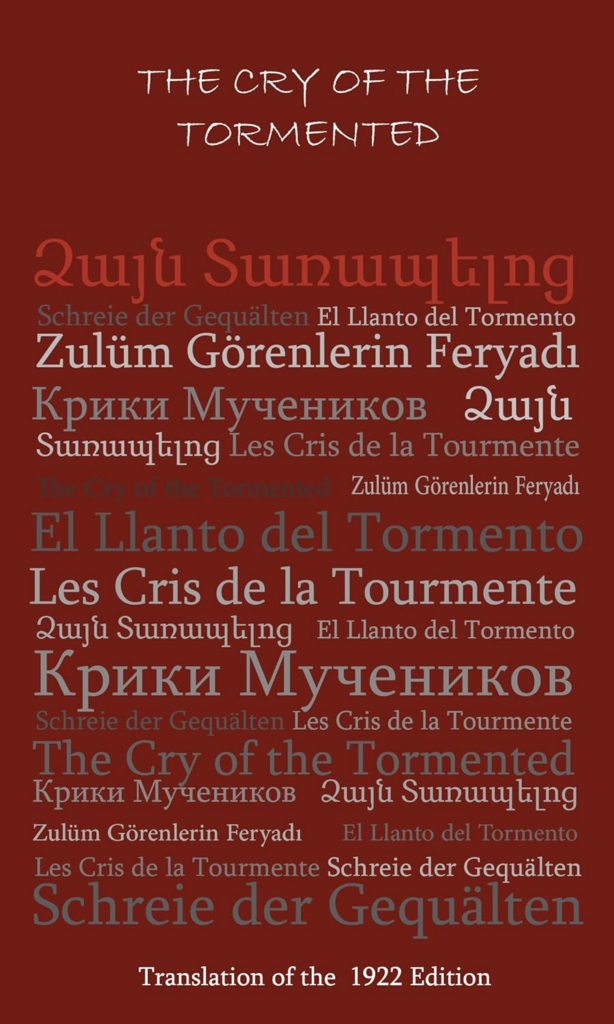
    This week, I came across another extremely valuable book compiled by Bedros Donabedian in 1922, titled, “The Cry of the Tormented” (Tsayn Darabelots), published in Paris in Armenian. Donabedian was an officer of the British High Commission in Constantinople between 1918 and 1922. The book contains over 300 letters written by the survivors of the Armenian Genocide during the years 1915 to 1919 describing their heart-wrenching eyewitness accounts, while the atrocities were taking place. Many of them perished after writing these letters.

    Here are excerpts from some of the letters written in the midst of the Armenian Genocide:

    –From Vartig Dzniguian. Garin. Feb. 6, 1919: “My soul, you ask about my brother. The poor fellow is free from this miserable world. Those who survive the troubling conditions of this evil world and depart to heaven are happier than those who are living in this world.”

    –From Satenig. Der-Zor. No date: “My brother, we started marching through bloody roads, advancing toward Malatya…. Here, over 170 male adults were snatched from our ill-fated caravan and all of them were tortured to death in the presence of their own families by the order of the Kurd Bey. I am the only survivor of my family. I witnessed how one by one they were viciously killed or died from torture and hunger. I will also face the same fate…. Your miserable sister.”

    –From Vartan. Erzerum. March 8, 1917: “Dear, we survived. The rest of the boys were shot; but my daughter-in-law, Khachinga, was Turkified. Should you ask me about your family members, I have no information about them. But, Ohan, Setrag and my Baghdasar were shot. If you ask about your father-in-law’s family members, all the adults were killed, but the children are alive. If you ask about Tato’s family, the adult members are killed, but the children are alive. If you ask about the Oshkers, all the adults were killed. All of Mirak’s family survived and live among the Kurds. Lern’s adult family members were killed. The rest are alive. Sako’s adult family members were killed. The rest are alive. My dear, I can’t put on paper the many tortures and difficulties we went through to survive. We stayed hungry for weeks or collected tasteless grass which we ate without salt so we would not die from hunger. For an entire year, we faced such difficulties. We were almost always hungry. We could not find barley bread to eat, until one day God opened a door for us. We came here, where the Russian authorities provide us daily with a half-ration of bread. So we live hungry and get upset. Many refugees died from hunger and cold, deprived of everything they had. The Turks thoroughly looted us, took all our money, and left us naked.”

    –From Stepan Garabedian. Batum. April 6, 1917: “Brother, we have no one else with us who made it to Russia. I want you to know that I picked up two of my children; and, facing death, I marched through snow and valleys and, putting my trust in God, I survived.”

    –From Sarkis. Perri. February 17, 1917: “Dear cousin, if you ask me about your family members, no one is left except Assadour’s wife who was snatched by the Turks. They shot Assadour along with my uncle…. I lost all my family members. The only survivors are my brother and I. All the rest, including the children, have perished.”

    –From Mother Sofo. Erzerum. January 24, 1917: “My children, the sad news came and will tell us word for word what was witnessed. Darkness has engulfed our world. Having escaped such tortures — hungry, thirsty, barefoot — we arrived at Eriza and Erzerum with fear in our hearts. What is going to happen to the people up in the mountains, in the cold and without a bed to lie on? A black grave! The pain is strangling me. It’s difficult to write the names of the dead. I try to stay strong, but tears fall from my eyes and roll down when I remember the more than 100 young lives who died from fear and torture in front of my eyes.”

    It is extremely important to locate the original copies of these most valuable eyewitness testimonies. Donabedian, in his 1922 book, mentioned two addresses: 1) Printing house: Hagop Turabian, 227 Boulevard Raspail, Paris, France; 2) Donabedian’s own address: 53 Addison Gardens, London, W. 14, UK.

    Individuals or Armenian organizations in Paris or London should try to locate these archives. If the originals are discovered, they should be sent to the Armenian Genocide Museum in Yerevan.

    This book was translated into English in 2015 by Dr. Garo Khachigian and edited by Mary Ellen Hewsen at the request of the Armenian Museum of Fresno. Even though the English translation is not published as a book, its contents can be downloaded from Kindle through Amazon for $9.95.

    This book should be published and distributed worldwide in several languages. Besides the Armenian original and the English version, these letters have been translated into Turkish, Russian, Spanish and partly German, none of which is published.

    All those interested in making a contribution towards the printing costs of this valuable book in English, can send an email to: [email protected].

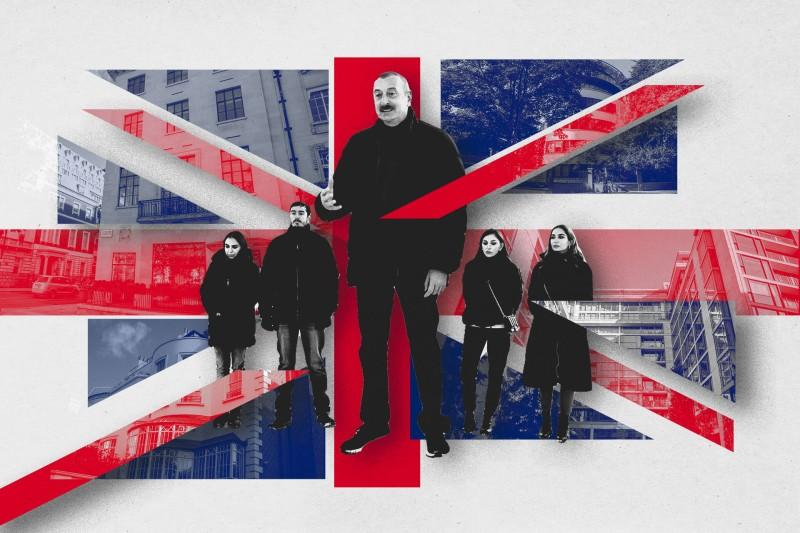
  • Aliyevs Own Many Buildings in London Valued at Hundreds of Millions of Dollars

    Aliyevs Own Many Buildings in London Valued at Hundreds of Millions of Dollars

    The Organized Crime and Corruption Reporting Project (OCCRP) selected Pres. Ilham Aliyev in 2012 for its first “Person of the Year Award [which] recognizes the individual or institution that has done the most to advance organized criminal activity and corruption in the world.”

    OCCRP is a worldwide network of investigative journalists that has been exposing for over a decade the appropriation of state funds by Pres. Aliyev’s family and close associates to purchase real estate overseas.

    While there are numerous groups that report about Azerbaijan’s jailing of journalists, opposition members and human rights activists, OCCRP is one of the rare groups that has documented the secret acquisitions of valuable real estate in the heart of London by the Aliyev clan. Many of these holdings are hidden behind foreign offshore trusts, making the true owners of the properties difficult to identify.

    However, in 2022, the British government adopted new laws that help reveal the owners of some of these properties. In an article titled, “Luxury London Properties Linked to Family of Azerbaijan’s President Are Hidden Behind an Offshore Trust,” OCCRP’s James O’Brien reported this month that the Aliyev family “acquired U.K. real estate worth hundreds of millions of dollars.” The article stated: “newly available data reveals that Aliyev’s daughters own six luxury apartments in London. But the current ownership of 10 [other] properties, acquired by the family for $160 million, remains unknown because they were moved into an offshore trust. Trust structures are currently exempt from public scrutiny.”

    OCCRP reported that the Aliyevs own in London “A hotel building near the British Museum. Penthouse apartments just steps away from Hyde Park. A mansion overlooking the green expanse of Hampstead Heath. And much more. In 2021, OCCRP revealed that a nearly $700-million collection of London real estate had been acquired by the family and close associates of Ilham Aliyev, the longtime authoritarian president of Azerbaijan. Having leveraged two decades of unchallenged political power into vast wealth, this elite group had chosen to spend a fortune in one of the financial centers of the democratic world. The properties they purchased were owned by dozens of secretive offshore companies, hiding their ownership from public scrutiny. It was only thanks to the Pandora Papers, a leak of secret offshore documents obtained by the International Consortium of Investigative Journalists, that reporters were able to link them to the Aliyevs.”

    The OCCRP reported that it “teamed up with researchers from Transparency International UK, an anti-corruption advocacy group, to reexamine the 23 London properties our earlier investigation had linked to the Aliyevs.” They found out that “President Aliyev’s daughters, Leyla and Arzu Aliyeva, personally own six luxury apartments just across the street from Hyde Park. But the Register [of Overseas Entities] fails to establish who ultimately owns 10 properties the Aliyevs and their associates had acquired for $160 million: the Hampstead Heath mansion, two townhouses, multiple flats [apartments] and penthouses, and a six-story building in Central London. It only reveals that they are owned by a trust registered in the Isle of Man.”

    Aliyev’s office “did not respond to [OCCRP’s] requests for comment, but President Aliyev has previously attributed his wealth to success in business.”

    OCCRP reported that on his presidential website in 2021, Pres. Aliyev “acknowledged that he was ‘not a poor man’ when he became president, but said this was due to his business achievements. (The son of Azerbaijan’s first post-independence leader, Aliyev served as a vice-president of Azerbaijan’s state oil company before succeeding his father as president in 2003). ‘Unlike some other people in the West who dedicate all their fortune to their cats and dogs, in Italy and Azerbaijan we value family values,’ he said at the time. ‘Therefore, I transferred all my business to my children.’”

    In 2015, OCCRP reported that “Leyla Aliyeva, the Azerbaijani president’s then 29-year-old elder daughter, was one of the directors of the British company that managed the [five-story luxury] building, worth over $33 million.”

    Although the trust hides the ownership of 10 high-end London properties, for nine of them, “the Register of Overseas Entities lists the same person as having ‘significant influence or control’ over the offshore companies that own them: Mir Pashayev…a cousin of President Ilham Aliyev’s wife. The 54-year-old-banker is closely linked to the Aliyev family’s business interests. He is a board chairman of Pasha Bank, a major lender owned by the president’s daughters Leyla and Arzu, and deputy chairman of the board of directors of their entire Pasha Holding business conglomerate, which spans interests in banking, insurance, and construction.” OCCRP reported that “in October 2014, he [Pashayev] took over from Leyla Aliyeva the directorship of the company that manages her mansion on Speakers’ Corner [in London].”

    Pres. Aliyev’s constant threats to attack Armenia, if Prime Minister Nikol Pashinyan does not agree to make concessions, are meant to distract attention away from Aliyev’s violations of human rights and embezzlement of Azerbaijan’s state funds which deprives his citizens of massive amounts of income from the country’s billions of dollars in oil and gas revenues.

  • Assad Naively Trusted Erdogan Until he Got Stabbed in the Back

    Assad Naively Trusted Erdogan Until he Got Stabbed in the Back

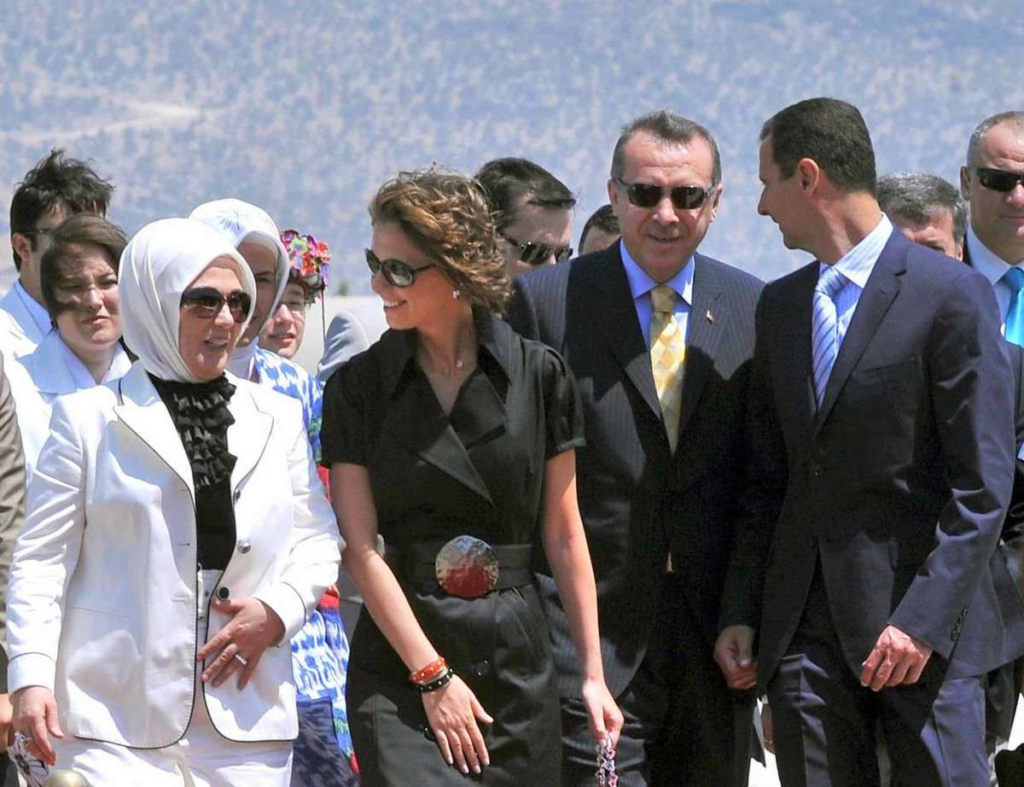
    For many years up until the Syrian civil war of 2011, Syria and Turkey enjoyed very close relations. In a series of reciprocal visits, Pres. Bashar al-Assad made a historic trip to Ankara in 2004, the first Syrian President to do so. Then Prime Minister Recep Tayyip Erdogan visited Damascus to sign a free trade agreement. In 2007, Erdogan and Assad attended the opening ceremony of the Aleppo International Stadium. Trade flourished with visa-free travel. In 2008, Erdogan and his wife hosted the Syrian first couple for a vacation in the Turkish Resort town of Bodrum. In 2009, the two countries held joint military maneuvers along their mutual border. I was told that Pres. Assad, to appease his ‘Turkish ally’, even banned Armenian Genocide books from bookstores in Syria.

    In 2008, during this period of a cozy relationship between the two countries, the Catholicos of Cilicia Aram I met in Damascus with Pres. Assad. The Catholicos informed me later that Pres. Assad told him Armenians were making a big mistake by being anti-Turkey and constantly talking about the Armenian Genocide. Assad said that Armenians should forget the past and establish good relations with Turkey, which he described as a powerful and important country. He suggested that Armenia’s economy would benefit greatly from trading with Turkey.

    As the descendant of the survivors of the Armenian Genocide and a life-long activist for justice to the victims of that mass crime, I was very upset to hear Pres. Assad’s terrible advice to Aram I. Keeping that conversation in mind, when I had a chance to travel to Damascus in early June 2009, I asked a mutual Armenian friend who was close to Pres. Assad to arrange a meeting for me with the President.

    After I arrived in Damascus, my friend called the Presidential Palace to confirm the meeting. The President’s Chief of Staff told my friend to come to the Palace alone in order to talk about the requested appointment. An hour later, my friend returned from the Palace and told me in a dejected voice that the meeting will not take place because the Chief of Staff had checked my name in google search and discovered that I had written hundreds of critical articles about Turkey and the Armenian Genocide. Therefore, he told my friend that it would not be possible for an anti-Turkey man like me to meet with Pres. Assad because of the friendly relations between Syria and Turkey.

    Naturally, I was very disappointed. The reason I wanted to meet with Pres. Assad was to tell him that not only his advice to Armenians was wrong, but he himself was making a big mistake by trusting Pres. Erdogan. I wanted to tell Pres. Assad that Armenians know all too well the deceptive nature of Turkish leaders given the genocide Armenians had suffered. I wanted to warn Pres. Assad that the day would come when his ‘good friend’ Erdogan, will betray him and stab him in the back.

    I could not have known in 2009 that two years later a major civil war would take place in Syria with the full backing of Erdogan. I was not sure that even if I had the chance to meet with Pres. Assad and warned him, he would have listened to me. But regardless, I wanted to give him a piece of my mind.

    I subsequently heard that Pres. Assad had also told other Armenians he had met with that they should be friends with Turks and Turkey. Assad particularly criticized Armenians for burning the Turkish flag on April 24.

    Subsequent to my visit to Damascus, Pres. Assad visited Armenia on June 17-18, 2009 and offered to Pres. Serzh Sargsyan to mediate between Armenia and Turkey, because of Syria’s “close relationships” with both countries. However, Pres. Assad did not pay a protocol visit to the Armenian Genocide Memorial in Yerevan which all foreign leaders do, to lay a wreath. This was yet another example of Pres. Assad’s excessive sensitivity not to upset Turkey. Assad also explained that, in deference to Turkey, Syria cannot recognize the Armenian Genocide.

    In a Facebook post last week, Samvel Farmanyan, a former Member of Parliament and Press Secretary to Pres. Sargsyan in 2009, reported that when Pres. Assad excitedly spoke about his ‘excellent relations’ with Erdogan, Pres. Sargsyan replied: “You don’t know Turks well. The time will come and we will judge by the result.” This is similar to the message I wanted to convey to Pres. Assad in Damascus.

    More interestingly, in March 2014, following several years of attacks on Syria orchestrated by Turkey, when Farmanyan led a parliamentary delegation to Syria and met with Pres. Assad, he asked Farmanyan to transmit to Pres. Sargsyan the following message: “I remember very well our private conversation in Yerevan [with Pres. Sargsyan].” Assad then added: “President Sargsyan was right. We did not know Turks well.”

    Naira Karapetyan, another member of the Parliamentary delegation that went to Syria in 2014, confirmed the accuracy of Farmanyan’s report about Pres. Assad acknowledging that he was wrong to have trusted Erdogan.

    Of course, it was too late by 2014 for Pres. Assad to realize that he should not have trusted Erdogan. That big mistake was one of the key reasons for his eventual downfall.

  • French Ambassador, not Pashinyan, Is Defending Armenia’s Interests

    French Ambassador, not Pashinyan, Is Defending Armenia’s Interests

    Something is terribly wrong when Armenia’s Prime Minister Nikol Pashinyan is making continuous concessions to Azerbaijan, while the French Ambassador to Armenia, Olivier Decottignies, is defending Armenia’s interests. Ironically, a foreign ambassador is more pro-Armenian than the Prime Minister of Armenia.

    When Azerbaijan’s President Ilham Aliyev repeated his lie about the non-existent “Western Azerbaijan” as a replacement for the Republic of Armenia, Pashinyan shamefully equated the fake “Western Azerbaijan” with Armenians’ historical demands for “Western Armenia.” It was the French Ambassador who responded to Aliyev on Nov. 24, 2024, on X: “The one and only: Western Azerbaijan is one of the 31 provinces of Iran whose capital and largest city is Urmia,” quoting from Wikipedia. He attached a map of Iran that indicated the location of the Western Azerbaijan province in Iran. The post was viewed over 93,000 times with 114 comments and 1,100 Likes. An Armenian with the pseudonym “Nemesis Melkonian” praised the French Ambassador on X: “Can you become our next prime minister? The current one is ethnically Turkish.” An Iranian replied: “As an Iranian” adding the OK hand sign. This was a slap in the face of Aliyev, but also a rebuke to Pashinyan, according to some Armenian commentators.

    On the same day, the French Ambassador also posted a photo of the well-known Blue Mosque in Yerevan and wrote: “In the gardens of the Blue Mosque of Yerevan, emblematic of the Persian heritage of Armenia.” This post was viewed 43,000 times with 46 comments and 660 Likes. While Azeri commentators falsely claimed that the Blue Mosque was of Azerbaijani origin, many others thanked the French Ambassador for featuring this historic Persian place of worship. The Iranian Embassy in Armenia expressed its appreciation to the French Ambassador by posting on X: “The Blue Mosque, a symbol of Iranian art, has been active again in the last three decades as the praying and congregation place of Muslims residing in Armenia and a touristic attraction. A great pleasure that its centuries-old Persian epigraphy has been preserved! Who can read them?” The embassy then added several images of Persian calligraphy found on the walls of the Mosque.

    Mordechai Kedar, An Israeli sycophant of Azerbaijan, jumping into the discussion, wrote an article in the Jerusalem Post on December 5, 2024, titled: “France’s ambassador sparks outrage with support for Persian hegemony in Armenia.” This is nothing but pure pro-Azeri propaganda.

    Kedar wrote that “The Azerbaijanis are outraged by these social media posts, as the Blue Mosque in Yerevan was built by Azerbaijanis, and trying to portray the mosque as ‘Persian’ demonstrates France’s support for Persian colonialism in the region. Furthermore, the Azerbaijanis are angered at the French diplomat’s attempt to portray West Azerbaijan as part of Iran.” If the Azeris were outraged by what the French Ambassador wrote, why is it any of Kedar’s business, unless he expects to gain something by volunteering to act as a propagandist for Azerbaijan?

    Kedar claimed that Armenians have described the Blue Mosque as Persian in order “to erase all traces of Azeri heritage from their country [Armenia].” Kedar is ignoring the fact that Azeris have destroyed thousands of Armenian historic monuments and churches in Artsakh and Azerbaijan. Making an even more outrageous claim, Kedar wrote that Persians “used these Armenian acts of delegitimization in order to expand their colonial influence into the South Caucasus.”

    To pile up the attacks on Armenia and France, Elnur Enveroglu wrote on the Azernews website that the French Ambassador’s tweets “revealed Decottirnies’ ignorance of history.” Elnur could not even spell the Ambassador’s last name correctly.

    Naturally, the French Ambassador could not leave unchallenged such nonsense from Kedar whose childish arguments disgraced the Jerusalem Post. The Ambassador replied: “Seriously, Mr. Kedar? The Blue Mosque in Yerevan was built under Persian rule in typically Persian style. Does calling a Roman aqueduct Roman ‘demonstrates support’ for colonialism?”

    Even though there was no reason for Nasimi Aghayev, Azerbaijan’s Ambassador to Germany, to stick his nose in this issue, but being a life-long falsifier of the truth, starting from his days as the Consul General of Azerbaijan in Los Angeles, he wrote: “Beautiful Azerbaijani Blue Mosque in Yerevan. Built in 1766 by Huseyn Ali Khan, Ruler of Azerbaijan Iravan [Yerevan] Khanate. The only surviving mosque in Armenia. All others (at least 269) were destroyed. Regrettably, Armenia continues to deny Blue Mosque’s Azerbaijani identity.” Mary Hogins rightly responded in a tweet to Nasimi: “You mean Persian Mosque, lying khiyar [cucumber]?”

    Nasimi must have forgotten that until 1918 there was no such country as Azerbaijan. Even then, the Secretary General of the League of Nations rejected Azerbaijan’s application to be recognized as a state by writing in an official memorandum in 1920: “This territory, occupying a superficial area of 40,000 square miles, appears to have never formerly constituted a State, but has always been included in larger groups such as the Mongol or Persian and since 1813 the Russian Empire. The name Azerbaijan which has been chosen for the new Republic is also that of the neighboring Persian province.” Case closed.

    In his fanatical zeal, Aliyev doesn’t seem to understand that his constant attacks on France, based on lies, are not going to end well for Azerbaijan. France is a superpower, while Azerbaijan is a banana republic, which does not even have bananas, ruled by a two-bit dictator!