Category: Harut Sassounian

Harut Sassounian is the Publisher of The California Courier, founded in 1958. His weekly editorials, translated into several languages, are reprinted in scores of U.S. and overseas publications and posted on countless websites.<p>

He is the author of “The Armenian Genocide: The World Speaks Out, 1915-2005, Documents and Declarations.”

As President of the Armenia Artsakh Fund, he has administered the procurement and delivery of $970 million of humanitarian assistance to Armenia and Artsakh during the past 34 years. As Senior Vice President of Kirk Kerkorian’s Lincy Foundation, he oversaw $240 million of infrastructure projects in Armenia.

From 1978 to 1982, Mr. Sassounian worked as an international marketing executive for Procter & Gamble in Geneva, Switzerland. He was a human rights delegate at the United Nations for 10 years. He played a leading role in the recognition of the Armenian Genocide by the U.N. Sub-Commission on Prevention of Discrimination and Protection of Minorities in 1985.

Mr. Sassounian has a Master’s Degree in International Affairs from Columbia University, and a Master’s in Business Administration from Pepperdine University.

  • BBC Whitewashes Azerbaijan’s Crimes By Airing Film Backed by BP & Aliyevs

    BBC Whitewashes Azerbaijan’s Crimes By Airing Film Backed by BP & Aliyevs

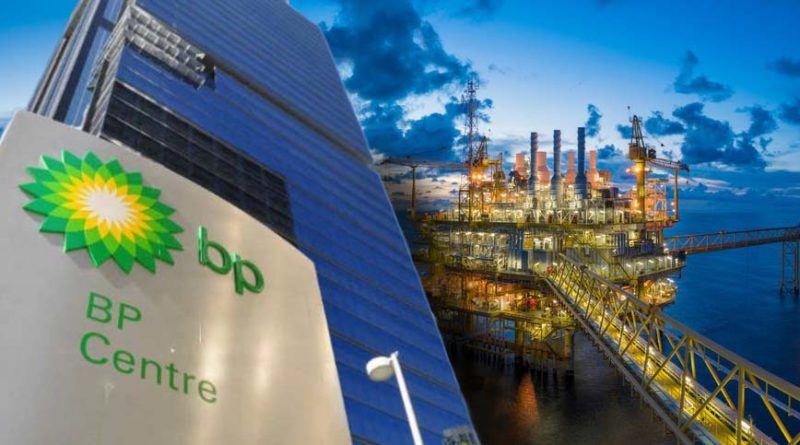
    The openDemocracy.net website published a critical article about BBC’s airing of a two-part propaganda film funded by the UK oil and gas giant British Petroleum (BP) about Azerbaijan. Written by James Dowsett, the article was titled, “BBC accused of ‘whitewashing’ autocratic Azerbaijan in BP-sponsored film.” BP has invested $84 billion in Azerbaijan since 1995 and is the largest foreign corporate investor in Azerbaijan’s oil operations.

    The film was titled; ‘Wonders of Azerbaijan,’ leaving no doubt about its propagandistic purpose. It was produced with the backing of the ruling Aliyev family.

    Azerbaijan is one of the most corrupt countries in the world. BBC is wrong to promote such a kleptocracy. BP “has long faced criticism from human rights and climate activists for its ties to the ruling Aliyev regime, which has been accused of ‘electoral fraud,’ the silencing of dissenting voices and benefiting disproportionately from Azerbaijan’s oil and gas wealth,” openDemocracy reported.

    “BP spent $300,000 on the film, which was made by the UK production company SandStone Global with support from a foundation and a media center run by members of Azerbaijan’s ruling Aliyev family. Broadcaster and historian Bettany Hughes, who co-founded SandStone, presented the film,” openDemocracy wrote.

    “Emin Huseynov, an Azerbaijani journalist who fled political persecution in Azerbaijan in 2015, accused the BBC of ‘whitewashing a dictatorship’ over the film,” wrote openDemocracy. Huseynov said BBC was giving “the floor to one of the bloodiest and most corrupt regimes in the world.”

    Before its airing in August, BBC promoted the film by promising the viewers that they would discover “how Azerbaijan’s oil wealth enabled the capital Baku to flourish” and “gain the reputation of being the ‘Paris of the East.’”

    In the film, Bettany Hughes travelled to Azeri-occupied Shushi, but did not say a single word about the city’s Armenian heritage. “The film also implicitly promoted Azerbaijan’s claims to Shusha [Shushi],” openDemocracy wrote. Azerbaijan has allocated millions of dollars to turn Shushi into its ‘cultural capital.’

    A BBC spokesman tried to justify its objectionable transaction by telling openDemocracy that the revenue from airing the Azeri propaganda film “allows us to invest in the BBC’s world-class journalism, which provides independent and impartial news across all topics.” BBC’s ridiculous excuse is akin to a prostitute claiming that she donates to the church the money she makes from prostitution!

    To generate additional income, BBC ran during the airing of the film travel ads paid by Azerbaijan’s official tourist board. The “Baku Media Center provided logistics support to SandStone, while the Heydar Aliyev Foundation helped the UK company secure filming permits and access to unique heritage sites,” a SandStone representative told openDemocracy. The Baku Media Center is run by Azerbaijani President Ilham Aliyev’s youngest daughter, Arzu Aliyeva. The Center works closely with the family-run Heydar Aliyev Foundation.

    BP admitted that the propaganda film was its “contribution to Azerbaijan’s global promotion” in partnership with the Heydar Aliyev Foundation. The Foundation is chaired by Ilham Aliyev’s wife Mehriban Aliyeva, who is also the country’s vice president.

    OpenDemocracy reported that “the Heydar Aliyev Foundation is tasked with promoting Azerbaijan’s image abroad, including by advancing the government position over Nagorno-Karabakh. But government critics say this work extends to diverting attention from the regime’s relentless crackdown on dissent and its systemic corruption.”

    Arzu Geybullayeva, an Azerbaijani journalist living in exile, told openDemocracy: “The [Heydar Aliyev] Foundation was set up by the ruling family to whitewash Azerbaijan’s image. It can by no means be described as independent of the state.”

    “The Heydar Aliyev Foundation is leading restoration works in Shusha [Shushi]. Some of these works [are] featured in the BBC program,” reported openDemocracy. Meanwhile, BP is planning a solar power plant in the city of Jabrayil, which Azerbaijan occupied in the 2020 war.

    BP’s regional president Gary Jones “took to the stage at the Baku premiere of the film in late September to praise the ‘unwavering support of the [Azerbaijani] government’ for his company and its co-venturers’ operations in the country. Jones also spoke of the ‘joint effort’ that went into creating the documentary. He thanked the Heydar Aliyev Foundation for its support and paid personal homage to the president’s daughter, Arzu Aliyeva, and to the Baku Media Center she heads, ‘for their outstanding technical support’ on the production,” openDemocracy wrote.

    Furthermore, “This isn’t the first time BP has collaborated with the Heydar Aliyev Foundation, or that the Foundation has cropped up on the BBC. Last year, BBC StoryWorks… ran a separate tourism-focused campaign for Azerbaijan to mark the 30th anniversary of the country’s independence from the Soviet Union. The campaign included a paid-for advertorial that invited readers to ‘discover more’ about Azerbaijan by following a link to an external website run by the Heydar Aliyev Foundation. The ‘Azerbaijan’ portal claims (among other things) that Azerbaijan’s current president Ilham Aliyev ‘has always focused on ensuring a fuller provision of human rights and freedoms in the country.’ It also contains information about the so-called ‘Armenian problem.’” However, the weblink was deleted after openDemocracy contacted BBC. The link had included scenes from a ‘war park’ in Baku where figures of Armenian soldiers with distorted faces were featured.

    BP has signed a cooperation agreement with the Heydar Aliyev Foundation to jointly implement some of its social investment projects. “Previous joint projects have included sponsored films, such as ‘The Last Session’, a 2018 documentary commemorating the birth of the Azerbaijan Democratic Republic — the short-lived independent state that was ended by Soviet invasion in 1920. BP spent $320,000 on the project, which was organized by the Baku Media Center. Arzu Aliyeva was credited as the film’s executive producer,” openDemocracy reported.
  • Armenians Need to Assess French Senate’s Positive Resolution Cool-Headedly

    Armenians Need to Assess French Senate’s Positive Resolution Cool-Headedly

    Throughout their long history, Armenians have always expected that some foreign power would rescue them from their enemies. Over the centuries, they hoped for assistance from the Romans, Byzantines, Russians, French, Americans, and now Iranians. But, no one has ever come to save them. One would think that after such a long string of disappointments, Armenians would finally learn the lesson that no one will rescue them. They need to save themselves.

    Given such unrealistic expectations, Armenians keep going from one potential rescuer to another, attempting to find anyone that would assist them. No one helped save the Armenians when Ottoman Turkey was committing genocide against them; no one saved them when the survivors returned to Cilicia only to be attacked and killed by Ataturk’s armies; no one helped them in the late 1980’s and early 1990’s when Azeris were massacring Armenians in Artsakh; and no one helped Armenians when Azeris with the support of Jihadist terrorists, Israel and Turkey conquered most of Artsakh, killing and maiming thousands of Armenian soldiers and civilians.

    After all of these disappointing experiences, Armenians were hoping that Russia would step in and save Artsakh. When that didn’t happen, Armenians loudly complained that Russia had betrayed them. Armenians kept demanding that the CSTO (Collective Security Treaty Organization) protect Armenia from repeated Azeri encroachments on its borders.

    Armenians don’t seem to understand that each nation’s priority is to defend its own national interest, not that of Armenia. No one is obliged to help Armenia, even when a treaty of mutual defense is signed, which is viewed as a mere “a piece of paper.” Rather than abandoning their unrealistic expectations, Armenians have now turned to France and the United States hoping they would come to their rescue!

    It is encouraging that in recent months Armenia signed contracts with India to purchase a large number of missiles and artillery. Finally, the Armenian Government is realizing that it needs to defend the country rather than rely on the mercy of others.

    Last week, Armenians around the world were elated that the French Senate adopted a pro-Armenian resolution. However, Armenians should neither exaggerate nor minimize the significance of this resolution. The French Armenian community has carried out commendable lobbying activities for many years to create such a sympathetic atmosphere about Armenians and Armenia. That is the main reason why this resolution was adopted by the French Senate with the near unanimous vote of 295 in favor and one against.

    The comprehensive French resolution strongly condemned Azerbaijan’s invasion of the sovereign territory of the Republic of Armenia and demanded:

    — The immediate withdrawal of Azeri forces from Armenia;

    — The release of all Armenian prisoners of war held by Baku since the 2020 war;

    — The preservation of Armenian cultural and religious monuments;

    — That the French government with the United Nations Security Council refer Azerbaijan’s aggression to the International Criminal Court;

    — That France sanction Azerbaijan, seize the assets of its leaders, and place an embargo on the importation of Azeri oil and gas;

    — The establishment of a French humanitarian office in Artsakh;

    — The strengthening of the defense capability of Armenia;

    — The deployment of an interposition force under the aegis of the international community;

    — The recognition of the Nagorno Karabagh (Artsakh) Republic;

    — That France ensure Azerbaijan engages in peaceful negotiation with Armenia to establish a lasting peace.

    Azerbaijan reacted harshly and condemned the French Senate for adopting this resolution. By taking counter-measures, Azerbaijan risks disrupting its diplomatic and economic relations with France. However, for this non-binding resolution to have any effect, it must be adopted by the French National Assembly and backed by the President and Government of France.

    Armenians need to have a cool-headed assessment of the French Senate resolution. They should not expect France to save Artsakh or Armenia. They need to continue developing Armenia’s military so they can defend the country’s borders, while welcoming the assistance of any country, without having any unrealistic expectations. Remember that the French Senate and Parliament adopted resolutions after the 2020 war, urging the French government to recognize the Artsakh Republic, which did not materialize. This is not surprising as Armenia itself does not recognize the independence of Artsakh. To avoid further disappointments, Armenians need to view the French Senate resolution as an important moral and diplomatic support, but not a military one.

    Another message of support for Armenia and Artsakh came this week when 120 prominent celebrities and intellectuals issued a joint statement in the French “Le Figaro Magazine,” including Claudia Cardinale, Gerard Chaliand, Costa-Gavras, Alain Delon, Bernard-Henri Levy, Yves Ternon, etc. They wrote: “More than a century after the perpetration of the genocide of Armenians by the Ottoman leaders in 1915, the same people are once again victims of two authoritarian regimes which, in Baku as in Ankara, provoke inter-ethnic hatred to endow their unchallenged power with a bloody new trophy….”

    It is now up to the Armenian Government and Armenians around the world to see to it that the French Senate resolution and the statement of the 120 celebrities are used to provide additional support for Armenians in Armenia and Artsakh.

  • When Will the World Put a Stop To Turkey’s Criminal Behavior?

    When Will the World Put a Stop To Turkey’s Criminal Behavior?

    .

    For many years, dozens of reports have been written about the Turkish government’s large-scale kidnapping of Turkish citizens from around the world for criticizing Pres. Recep Tayyip Erdogan’s regime.

    Exiled investigative Turkish journalist Abdullah Bozkurt has exposed these illegal Turkish activities, providing copies of confidential documents he has received from sources inside the Turkish government. Not surprisingly, Turkey has issued a warrant for his arrest. He publishes the Nordic Monitor in Sweden.

    Bozkurt wrote an article on Nov. 3, 2022, in Nordic Monitor, titled: “Spying by Turkish diplomats continued in 2022 with new targets in Norway, Netherlands, Greece.”

    Bozkurt published a secret Turkish document issued by the Security General Directorate on June 7, 2022. He revealed that Turkish diplomats stationed at embassies and consulates overseas continue “the unlawful practice of intelligence gathering on critics and opponents in Europe.”

    Bozkurt reported that “Two Turkish diplomats, then-Press Attaché Hacı Mehmet Gani and Hakan Kamil Yerge, then-second secretary at the Turkish Embassy in Bern, plotted to drug and kidnap a Swiss-Turkish businessman in 2016. In June 2018, the Office of the Attorney General of Switzerland issued arrest warrants for the two Turkish diplomats.”

    In addition to attempting to seize and return home its opponents, the Turkish government jails their relatives at home and confiscates their assets.

    In a second article published in Nordic Monitor on Nov. 4, 2022, titled: “Turkish intelligence continues to spy on journalists in Sweden,” Bozkurt reported that Levent Kenez, editor of Nordic Monitor in Sweden, “was spied on by Turkey’s intelligence agency, which leaked his private information to the Turkish media. [Sabah], a newspaper run by Turkish President Recep Tayyip Erdogan’s family, published photos of Kenez last Tuesday in front of his apartment in Stockholm, where he lives with his family, and disclosed his address and details of his daily routine,” endangering their lives. It is clear that after silencing his domestic critics, Erdogan is now trying to silence his critics abroad.

    A third article titled, “Turkish diplomats exploited US Homeland Security website to track a dissident in the US,” was published by Bozkurt in Nordic Monitor on Nov. 2, 2022.

    Bozkurt revealed a secret Turkish document which showed that the Turkish intelligence agency used the website of US Customs and Border Protection to track a Turkish doctor in the United States who is critical of the Turkish government. It is a crime to access the personal information of individuals on the U.S. government’s website.

    Bozkurt reported that in the years 2016-17 alone, Turkish embassies and consulates profiled 4,386 critics of Turkey who were residing abroad. In 2021, Turkish Foreign Minister Mevlut Cavusoglu stated that Turkish diplomats assigned to embassies and consulates have officially been instructed by the government to conduct clandestine spying operations on foreign soil. In addition, pro-Erdogan Turkish networks and organizations overseas have acted as the long arm of the Turkish regime.

    In 2019, the U.S. government convicted Kamil Ekim Alptekin, a Turkish government operative, for running surveillance on opponents of Erdogan in the United States. Alptekin remains a fugitive and is currently hiding in Turkey, while his associate Bijan Rafiekian was tried and convicted of acting covertly in 2019 as an agent of the Turkish government in the United States, without disclosing that relationship to the U.S. government, according to Bozkurt.

    Matthew Amlot published in Al Arabiya an article on July 12, 2020, titled: “Turkey signed secret agreements with countries to abduct dissidents from abroad.” According to a joint letter written by four UN rapporteurs, “Turkey signed secret agreements with multiple countries [Azerbaijan, Albania, Cambodia, and Gabon] in order to conduct extraterritorial abductions of suspected state dissidents … Turkey also targeted [its] nationals in Afghanistan, Kosovo, Kazakhstan, Lebanon and Pakistan, according to the letter.”

    The UN letter stated that “The Government of Turkey, in coordination with other States, is reported to have forcibly transferred over 100 Turkish nationals to Turkey, of which 40 individuals have been subjected to enforced disappearance, mostly abducted off the streets or from their homes all over the world, and in multiple instances along with their children.”

    Alice Taylor wrote in “Exit News” that “in November 2018, the Turkish Foreign Minister informed Parliament that 452 extradition requests had been sent to a total of 83 countries.”

    Yasir Gokce wrote an article published on Nov. 25, 2018 in Harvard University’s Kennedy School Review, titled: “Turkey’s Kidnappings Abroad Defy International Law.” These illegal abductions should be brought in front of the U.N. Security Council and the International Court of Justice, Gokce suggested.

    In 2020, Johan Heymans in collaboration with International Observatory of Human Rights published a 128-page report, based partly on a report by the Ankara Bar Association, documenting the specific cases of deportation or abductions of Turkish citizens from 17 countries: Moldova, Azerbaijan, Gabon, Sudan, Kosovo, Myanmar, Saudi Arabia, Bulgaria, Bahrain, Indonesia, Kazakhstan, Pakistan, Ukraine, Lebanon, Malaysia, Switzerland, and Mongolia.

    Finally, OpenDemocracy.net published an article by Serdar San on June 16, 2021, titled: “Turkish spies are abducting Erdogan’s political opponents abroad.”

    Serdar San correctly observed that “emboldened by a lack of repercussions from NATO and the EU, President Erdogan’s regime is kidnapping dissidents” to silence political dissent. This is the fault of Western governments for turning a blind eye to the illegal behavior of successive Turkish governments, encouraging them to continue violating domestic and international laws for decades.

  • Presidents of Turkey and Azerbaijan Split The Loot of the 2020 Artsakh War

    Presidents of Turkey and Azerbaijan Split The Loot of the 2020 Artsakh War

    While Armenia has been licking its wounds of the 2020 Artsakh War, the presidents of Azerbaijan and Turkey wasted no time to get together and split with their families and cronies the loot they acquired after occupying the territories in and around Artsakh.

    Azerbaijani journalist Ulkar Natiqqizi posted on the eurasianet.org website his investigative article on October 24, titled: “‘Brotherly’ Azerbaijan and Turkey build lucrative Karabakh business ties.” It reveals how the two presidents have divided among their family members and close associates what they plundered from Artsakh.

    Natiqqizi wrote that “Companies close to President Recep Tayyip Erdogan have received at least hundreds of millions of dollars in contracts, particularly in the reconstruction of the territories in Karabakh that Azerbaijan retook in the war…. In one large new agricultural complex in the Zangilan region, members of Erdogan’s family are business partners with members of President Ilham Aliyev’s family.”

    In October 2022, Erdogan and Aliyev together toured “Dost [Friend] Agropark, a $100 million project that will eventually employ 500 people raising up to 10,000 head of cattle.” The two presidents placed ‘Made in Karabakh’ labels on the packages of meat products from the cattle brought to the region by Dost Agropark.

    Accompanying Erdogan was “Abdulkadir Karagoz, the owner of Dost Ziraat, the Turkish investor in Dost Agropark.” Karagoz is “a member of Erdogan’s family; he is married to Erdogan’s niece, the daughter of Erdogan’s brother Mustafa Erdogan.” Shortly after his 2016 marriage, when Erdogan’s family members joined his company, “Karagoz began winning conspicuous amounts of government contracts, in many of which his firm was the sole participant.”

    President Aliyev’s official website stated that “office buildings, 5,200 square meters indoor and 113,000 square meters outdoor animal husbandry complexes, social facilities, café, cinema, recreation area, swimming pool, and buildings for service personnel were built in the first phase of the [Agropark] project. A total of 3,500 head of cattle were brought to the complex and production of tillage carried out. Harvesting of wheat and barley planted last year was completed with the participation of both presidents.”

    One of Erdogan’s allies managing Agropark is Mehmet Zeki Tugrul, the company’s CEO, a former board member of the youth wing of Erdogan’s ruling Justice and Development Party.

    “On the Azerbaijani side, the investor [in Agropark] is Pasha Investments, part of the Pasha Holding company that brings together all of the firms owned by the family of Aliyev’s wife who is Azerbaijan’s first vice president, Mehriban Aliyeva,” eurasianet revealed.

    Joining Erdogan’s entourage during his last month’s visit was “Cemal Kalyoncu, chairman of Kalyon Holding; Mehmet Cengiz, chairman of Cengiz Holding; and Yıldırım Demiroren, chairman of Demiroren Holding. All three had also joined Erdogan in his previous Karabakh visit.”

    “Cengiz and Kalyon are two of what has become known as the ‘Gang of Five’ Turkish firms that have close links to Erdogan and the ruling party and which have been awarded most large government tenders during Erdogan’s rule.” The Turkish newspaper Cumhuriyet reported that within one year of his marriage, Erdogan’s cousin “Karagoz obtained a total of ten tenders from Istanbul Metropolitan Municipality companies and certain public companies.”

    Natiqqizi reported that “Both Kalyon and Cengiz have been awarded lucrative contracts for work in Karabakh, …including the construction of roads and operation of three mines, particularly of gold and copper. Kalyon is constructing the Horadiz-Aghband railway line that is envisaged as part of the transport route connecting Azerbaijan’s exclave of Nakhichevan to the mainland via southern Armenia. That project is projected to cost over $180 million and to be completed in 2023.”

    According to a second eurasianet article titled, “Turkish Firms Benefit from Azerbaijan’s Victory,” stated that “another company run by Mehmet Cengiz won a contract from Azerbaijan’s state water management company for the construction of a massive hydroelectric dam, the Organized Crime and Corruption Project reported. Following the award, a company controlled by Cengiz made a payment to an offshore company which in turn bought a luxury apartment in London, in which the son of the then-head of the water company lived.”

    Furthermore, Kolin Insaat, another ‘Gang of Five’ company, “also has gotten a lucrative road construction contract in Karabakh, to build the ‘Victory Road’ to Shusha [Shushi] along with an Azerbaijani firm, Azvirt. Kolin also was involved in the establishment of a market (located on ‘Turkey-Azerbaijan Friendship Street’) in the village of Agali, where the first few Azerbaijanis to resettle in Karabakh have moved.”

    Another major Turkish firm, Demiroren Holding, got in 2021 a 10-year contract to run Azerbaijan’s state lottery, and “signed a memorandum of understanding with Azerbaijan’s Ministry of Economy “to build a $40 million pharmaceutical plant.”

    Natiqqizi reported that “In total, the Azerbaijani government has allocated nearly $2.9 billion for reconstruction and restoration projects in Karabakh. Data have not been published breaking down which countries’ companies get contracts, and other countries perceived to be friendly, including Italy, Israel, and the United Kingdom, also have gotten contracts. But Turkish firms appear to be the biggest winners of the contracts. There are roughly 30 Turkish companies operating in Karabakh, according to the Turkish embassy in Baku. ‘These companies have already invested $1 billion, and these investments will continue to grow,’ said Yakup Sefer, Turkey’s chief trade counsellor in Baku.”

    Natiqqizi wrote that when an Italian journalist asked Pres. Aliyev about the prospects of Italian companies getting a piece of the action in Artsakh, Aliyev said that “Italy would be in second place — behind Turkey. ‘It is our neighbor and they have very prominent construction companies,’ he said of Turkey. ‘Because it is our ally and close friend.’”

  • Global Armenian Summit’ Divides Armenians, while Pretending to Unify Them

    Global Armenian Summit’ Divides Armenians, while Pretending to Unify Them

    In a few days, we will witness once again an unfortunate manifestation of Armenia’s leadership dividing the Armenian nation, while claiming to unify it.

    The High Commissioner for Diaspora Affairs of the Republic of Armenia, Zareh Sinanyan, has organized what he arrogantly calls a ‘Global Armenian Summit,’ to take place in Yerevan, Oct. 28-31.

    This is yet another example of the Armenian government’s inability to properly promote Armenia’s national interests. On the contrary, the Armenian government is undermining Armenian interests through divisive and ill-conceived schemes.

    Ever since Prime Minister Nikol Pashinyan came to power, he has spoken more harshly against his domestic opponents than against Armenia’s enemies — Azerbaijan and Turkey. He has frequently talked about blacks vs. whites — the good guys (his supporters) vs. the bad guys (his political opponents). Shockingly, Pashinyan waved a hammer in the air during his campaign speeches, threatening to bash the heads of his opponents, squash them on the asphalt and slam them to the wall! He has pitted Armenia’s population against Artsakh and alienated Diasporans from Armenia. Yet, those of us who criticize his divisive actions are lectured by his supporters not to divide the nation!

    Prime Minister Pashinyan abolished the Ministry of Diaspora and replaced it in 2019 with Sinanyan, the High Commissioner for Diaspora Affairs. Judging by Pashinyan’s many other appointments, the sole reason he appointed Sinanyan was that he backed the ‘velvet revolution.’ Competence does not seem to be an important criteria for Pashinyan, blind support is!

    In the last three years, Sinanyan toured the world, at Armenia’s taxpayers’ expense, accomplishing very little, but causing more internal dissension in the Diaspora. Rather than trying to unify Armenians, he has played partisan politics siding with Pashinyan’s political party. Sinanyan does not seem to understand that he is getting a salary, not to be the Chief Propagandist for Pashinyan’s political party, but to pursue the best interests of all Diaspora Armenians regardless of their differing persuasions.

    I have described in previous columns my criticisms of Sinanyan’s misguided and false statements. He has announced many plans that have remained unfulfilled, such as his questionable idea to appoint partisan representatives in various Diaspora communities. Another one of Sinanyan’s half-baked ideas is encouraging Arabs to immigrate to Armenia. He is not aware that his duties are to deal exclusively with Diaspora Armenians, not foreign immigrants.

    Sinanyan should not be blamed as much as Prime Minister Pashinyan who appointed him. In any normal country, apparatchiks like Sinanyan would have been fired long ago, but not in Pashinyan’s administration, where incompetence and blind loyalty are prerequisites for appointments.

    Therefore, it is not surprising that Sinanyan, with the blessing of his boss, announced a “Global Armenian Summit,” to be attended by supporters of the regime. Not surprisingly, Sinanyan has not invited some of the major Armenian Diaspora organizations, just because they oppose the regime.

    In an astounding blow, both leaders of the Armenian Apostolic Church, His Holiness Karekin II, Catholicos of All Armenians, and His Holiness Aram I, Catholicos of the Great House of Cilicia, announced that they will boycott Sinanyan’s poorly organized partisan “Summit.’ A spokesman for Karekin II said that the ‘Summit’ “could cause new sensitivities and tensions in our national life and will not be effective.” Given the strained relations between the Church and Armenia’s government, the Primate of the Diocese of Shirak, Archbishop Mikael Ajapahyan, bluntly asked: “why should we [the Church] participate in their [the government’s] PR action?”

    To make matters worse, Hetq, the website of investigative journalists in Armenia, reported that the Armenian government is paying $768,000 to an outfit named Factory Production LLC, to organize the ‘Summit.’ I read the contract which indicates that it was signed on Oct. 21, 2022, just one week before the ‘Summit.’

    The lack of seriousness of the organizers of the ‘Summit’ is indicated by the fact that in four days of meetings only one hour is devoted to Artsakh, with the participation of representatives of the Artsakh government along with Armenia’s Foreign Ministry and Security Council. This does not do justice to a critical issue which is of utmost importance for all Armenians, but sadly, not the government of Armenia.

    Two ‘panel discussions’ are planned for the ‘Summit’: “How Diaspora communities organize for local and national-level representation within their countries” and “Diaspora representation within the Republic of Armenia’s governing structures: Models to consider.” Both of these topics require serious discussions with the participation of major Armenian organizations and knowledgeable individuals who were not invited. I presented to Prime Minister Pashinyan, during my visit to Armenia in 2019, a concrete plan for the formation of a Diaspora Armenian Parliament which Pashinyan enthusiastically welcomed. Regrettably, along with many others, I have not received an invitation to present this important plan to the ‘Summit.’

    There are also three simultaneous ‘Breakout Sessions’: 1) “Appointing Republic of Armenia state representatives in Diaspora communities,” 2) “Models for Diaspora representation in Parliament,” and 3) “Models for Diaspora participation in governance and within the executive.”

    Hopefully, a future Armenian government, which is less inclined to divide the nation, will reconvene a proper “Diaspora-Armenia-Artsakh Conference” with the participation of all Armenian organizations and influential individuals, regardless of their affiliation, to deal with the existential challenges facing Armenia and Artsakh.

    At a time when Armenia and Artsakh stand at the edge of the precipice, there is no need to play self-defeating partisan politics and divide the nation further. Recently, Turkey’s Foreign Minister Mavlut Cavusoglu complained once again about the Diaspora’s anti-Azerbaijan and anti-Turkey activism. The last thing Armenians need is having the Armenian government help Azerbaijan and Turkey to weaken and neutralize the Diaspora. No wonder I did not see on the agenda of the ‘Summit’ the topic: how to counter Azerbaijan’s and Turkey’s anti-Armenian activities.

  • Aliyev vs. Pashinyan: War of Words At CIS Summit in Kazakhstan

    Aliyev vs. Pashinyan: War of Words At CIS Summit in Kazakhstan

    Last week, the nine leaders of the Commonwealth of Independent States (CIS), composed of former Soviet Republics, met in Astana, Kazakhstan. In attendance were the President of Azerbaijan Ilham Aliyev, the Prime Minister of Armenia Nikol Pashinyan and the heads of Belarus, Kazakhstan, Kyrgyzstan, Moldova, Russia, Tajikistan, and Uzbekistan.

    At this meeting, the leaders of Armenia and Azerbaijan confronted each other about the conflict between their countries in front of the other participants, primarily Russian President Vladimir Putin.

    Aliyev’s remarks were full of falsehoods. He alleged that after the 2020 war, Armenia planted “1,400 anti-personnel mines made in Armenia…near the border with Lachin district in 2021. The roads leading from one Azerbaijani military position to another were also mined.” He claimed that “the clashes, their active phase, lasted a maximum of eight hours,” even though Azerbaijan continues violating the ceasefire to this day. He lied, saying that “Azerbaijan had no intention of occupying the territory of Armenia, as some may assume.” He ignored the fact that the Azeri army continues to remain inside Armenia’s borders since its earlier incursion on May 12, 2021.

    Aliyev tried to ingratiate himself to Putin, by claiming that “As a result of the mediation efforts of the Russian side, I would like to emphasize that it was the Russian side that came up with a ceasefire proposal. Some attribute this to other countries which is completely unfounded. As a result of the mediation efforts of the Russian side, the clashes, as I said, were stopped.” Aliyev was thus contradicting reports that the United States brokered the ceasefire. He also acknowledged that Azerbaijan “resolutely rejected” the offer by the European Union to place a civilian mission on the Azerbaijani side of the border. “Therefore, the mission will be located on the territory of Armenia,” he said.

    Aliyev harshly criticized French President Emmanuel Macron who had made sympathetic remarks about Armenia. Aliyev complained that Macron “made insulting, unacceptable, false and provocative statements…. He accused Azerbaijan of engaging in a horrific war….” Once again, Aliyev tried to ingratiate himself to Putin by telling him that Micron made “biased statements…against the Russian Federation, namely, that ‘Russia played the Azerbaijani game.’” As a result, Aliyev said he rejected any future mediating role for France in the Karabagh conflict. He also complained about “anti-Azerbaijan statements” made by the French foreign minister, the French Senate recognizing Karabagh, and a second resolution “being prepared in the French Senate in mid-November.” He blamed these developments on the influence of “the Armenian Diaspora in France.”

    Aliyev accused Armenia of organizing ‘provocations’ against the Embassies of Azerbaijan in France, Lebanon and the United States. He falsely claimed that: “we have no doubts that the acts of terror and vandalism were organized by Armenia. Why am I saying this? Because in the 1990’s, Armenian special services carried out [in Azerbaijan] 32 terrorist acts — explosions in the subway, buses, ferries and trains. As a result of those heinous terrorist acts, more than 2,000 Azerbaijan civilians were killed!”

    Aliyev then tried to turn the Karabagh conflict into a religious war accusing Armenians of “extreme degree of hatred for the Azerbaijani people and the entire Muslim world,” forgetting that Armenia and Armenians enjoy the most cordial relations with many Islamic countries.

    Aliyev lied once again by claiming that Azerbaijan has fulfilled “all the provisions of the November 2020 agreement after the war.” Dozens of Armenian prisoners of war remain in Baku jails, two years after the war. He also lied about Armenia not providing “unhindered access from Azerbaijan to its exclave of Nakhichevan.” However, Armenia repeatedly announced its readiness to provide such a road, while Azerbaijan has not reciprocated.

    Aliyev concluded his speech by stating that his ‘patience’ is ‘not unlimited,’ and threatened that unless he gets what he demands from Armenia, “we will be left with no other option but to act accordingly.”

    Prime Minister Pashinyan spoke next, countering Aliyev’s lies. Calling Azerbaijan’s September attack “an unprovoked military aggression against Armenia,” Pashinyan condemned Azeri soldiers for committing war crimes by executing Armenian prisoners of war in contravention of the Geneva Convention.

    Pashinyan also accused Azerbaijan of intending “to occupy more territories of Armenia.” He blamed “the inadequate response of the regional security organizations [Collective Security Treaty Organization] … which has caused very sharp questions in the Armenian society.” He asked if the CSTO recognized the borders of the former Soviet Republics.

    Pashinyan said that Azerbaijan is only now demanding to know the fate of missing Azeri soldiers in the Karabagh war of 1990’s, revealing that 777 Armenians are missing from that war and 217 from the 2020 war.

    Pashinyan criticized Azerbaijan for falsely describing as ‘corridor’ the agreed upon road between Azerbaijan and Nakhichevan. He said that despite the fact that the 2020 agreement “clearly mentions” Karabagh, Azerbaijan claims that it “does not exist.”

    Pashinyan also responded to Aliyev’s false claim that Armenia had mined Azeri territories after the 2020 war. Pashinyan stated that “such mining has taken place entirely within the sovereign territory of the Republic of Armenia. And it is our right to take some security steps to protect the territorial integrity of our country.”

    Pashinyan also contradicted Aliyev’s false claim that the conflict between Armenia and Azerbaijan was of religious nature. Pashinyan reiterated Armenia’s close relations with many Muslim countries.

    Pashinyan denied that Armenia had organized any attacks on Azerbaijani embassies in foreign countries. Where is the evidence, he asked.

    Concluding his remarks, Pashinyan once again spoke about his baseless expectation of peace with Azerbaijan and Turkey, given their ongoing hostility toward Armenia. Peace cannot be achieved by one side while the other side is trying to kill you.

    An enemy who is constantly attacking you and pointing a gun to your head cannot be considered a reliable partner for peace.