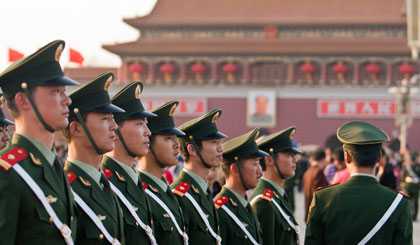
At the beginning of the 21st century, the world appeared to be moving toward a peaceful future fueled by technological advancements, globalization, and hopes for international cooperation. However, in recent years, the emergence of multilayered threats has brought with it developments that may herald the possibility of a new global war. This study examines the prospect of World War III within the framework of historical experiences, international relations theories, and current global dynamics.
The anticipated atmosphere of peace in the post-Cold War era has given way to fragmented security structures, regional conflicts, and strategic rivalries among major powers. China’s global rise, Russia’s revisionist stance, the United States’ efforts to maintain its hegemonic position, and Europe’s geopolitical vulnerabilities have made the international system increasingly complex and unstable. In addition, the rise of technological warfare, security issues triggered by environmental crises, economic wars, and information manipulation have fundamentally transformed the classical notion of war.
In this context, the article aims to present a comprehensive picture of the potential for a third world war by deeply analyzing a range of factors—from balance of power theories to technological warfare, from competition over energy and water resources to media wars, from cybersecurity to climate-induced migration, from the legitimacy crisis of international law to the role of civil society. The study reveals how in the modern age, where war is not only fought by armies but through data, climate, economy, and perceptions, maintaining lasting peace has become an increasingly arduous task.
- The Legacy of the Second World War and the Illusion of Post-War Peace
The Second World War was one of the most devastating conflicts in human history, claiming the lives of over 70 million people, destroying cities, and ushering in a profound transformation of the global order. Following the war, international institutions—chief among them the United Nations—were established with the goal of creating a new global peace order. However, these hopes quickly gave way to ideological polarization and continuous tension during the Cold War.
Although the Cold War ended in 1991 and raised optimistic expectations for a new chapter in international relations, the first quarter of the 21st century has shown that these hopes have largely gone unfulfilled. The United States’ attempts to remain the sole superpower, China’s economic rise, and Russia’s resurgence have intensified power rivalries and made international relations increasingly intricate. Furthermore, the persistence of regional conflicts and the threat of nuclear proliferation have placed global peace on a fragile foundation.
In this context, the potential for a third world war must be assessed not only through the lens of military conflict but also by considering geopolitical rivalries, environmental crises, technological developments, and economic structures. The purpose of this study is to understand the dynamics of a potential global war, identify the factors that increase or reduce this risk through a scientific approach, and develop strategic recommendations that can contribute to international peace.
- Balance of Power and the Evolution of the International System
In international relations theory, the concept of balance of power is considered one of the most important mechanisms for preventing wars. During the bipolar system of the Cold War, nuclear deterrence between the United States and the Soviet Union prevented direct large-scale conflict. Although proxy wars occurred during this period, the avoidance of direct confrontation between major powers helped preserve a certain degree of stability.
In the post-Cold War period, however, the international system has evolved toward multipolarity, with new regional and global actors such as China, Russia, and the European Union rising to challenge U.S. hegemony. This transformation has weakened the global order both normatively and structurally, leading to a period in which international institutions have lost effectiveness and norms are frequently violated. The emergence of power vacuums, especially in the Middle East, Eastern Europe, and the Asia-Pacific, has triggered instability.
Today, the balance of power is shaped not only by military capacity but also by economic, technological, and diplomatic factors. However, these new dynamics often play a role in increasing the risk of conflict rather than establishing peace. Rapidly shifting alliances, the weakening legitimacy of international law, and the absence of global leadership create vulnerabilities that could set the stage for a third world war.
- Regional Conflicts and the Risk of Escalation
Historically, regional conflicts have often been the spark that ignites global wars. Just as the Balkan crises at the beginning of the 20th century triggered World War I, today’s flashpoints may similarly precede a global confrontation. Areas such as the Middle East, the South China Sea, the Korean Peninsula, and Eastern Europe are experiencing developments that could bring major powers into direct or proxy conflict.
The Syrian Civil War, for example, has escalated from a local crisis into a multi-sided conflict involving Russia, the U.S., Turkey, and Iran. Similarly, the war in Ukraine has become a security crisis with the potential to evolve into a direct confrontation between NATO and Russia. These types of conflicts, whether due to miscalculations or provocations, carry the risk of expanding into larger-scale wars.
Regional conflicts also expose the ineffectiveness of international law and institutions. The paralysis of decision-making mechanisms within the United Nations, the inadequacy of peacekeeping missions, and the erosion of impartial mediation have all contributed to the chronic nature of these disputes. In such an environment, the risk that a small spark could ignite a global blaze can no longer be overlooked.
- Nuclear Weapons and the Paradox of Deterrence
The existence of nuclear weapons is seen as a deterrent preventing direct wars between major powers, but at the same time, it has turned into a threat that significantly amplifies the destructiveness of war. The “Mutually Assured Destruction” (MAD) doctrine, developed during the Cold War, formed the basis of nuclear deterrence. However, this balance has become more fragile today due to technological developments and political uncertainties.
The increasing number of actors possessing nuclear weapons and the potential for non-state actors to access these weapons have made the deterrence paradigm more complex. As seen in the cases of Iran and North Korea, efforts to develop nuclear capabilities are threatening both regional and global security, leading other states to enter into an arms race. Such developments bring the risk of escalation, rather than reducing the likelihood of war.
Furthermore, new threats have emerged in the context of technological aggression, such as cyberattacks on nuclear facilities. Such attacks could unintentionally provoke a nuclear retaliation and trigger a chain reaction of disaster. Therefore, nuclear deterrence now depends not only on the presence of weapons but also on the security, controllability, and clarity of communication channels surrounding those weapons.
- International Institutions and the Crisis of Legitimacy
Institutions responsible for establishing and maintaining peace in international relations, particularly the United Nations, have long been questioned in terms of functionality and legitimacy. The veto power granted to the permanent members of the UN Security Council often prevents the resolution of humanitarian crises that require intervention, weakening the enforceability of international law. This situation creates a serious blockage in the maintenance of peace.
The unjust structure of the global governance system has increased distrust toward international institutions, especially in developing countries, and has cast a shadow over their neutrality. When actors responsible for peace act based on political interests, it fosters a perception of double standards in international law. This situation has led to calls for alternative institutional frameworks, particularly in the non-Western world.
The need for reform in international institutions is increasingly being voiced. However, these reform efforts are often thwarted by the self-interest of major powers and remain ineffective. In this context, the risk of global war stems not only from military and economic causes but also from the crisis in the representation and decision-making processes of the international system.
- Geopolitical Fragility Zones: Geographies on the Brink of Explosion
Geopolitical fragility zones are regions that are in a constant state of tension due to historical, ethnic, religious, and strategic reasons. These areas, which are points of intersection for the competing interests of major powers, pose a threat not only on a local level but also on a global scale. Regions such as the Balkans, the Middle East, the South Caucasus, the South China Sea, and the Arctic are critical hotspots that need careful monitoring.
The Balkans and Eastern Europe still bear the scars of historical traumas and ethnic divisions. The conflicts following the breakup of Yugoslavia exposed the region’s fragility, and ethnic tensions remain high in countries such as Kosovo, Bosnia-Herzegovina, and North Macedonia. NATO’s eastward expansion and Russia’s aggressive policies in response have once again turned Eastern Europe into a battleground for influence between major powers.
The Arctic region has gained strategic value due to global warming, which has made energy resources and new sea trade routes accessible. Countries like Russia, Canada, the United States, Norway, and China are entering increasingly fierce competition over Arctic resources and sovereignty claims. The growing military activity in this region and disputes over maritime jurisdiction have brought the Arctic to the forefront as a potential conflict zone. The geopolitical competition in these areas plays a significant role in scenarios of a Third World War.
7. Technological Developments and New Forms of Warfare
Wars of the 21st century, alongside the evolution of technology, have gone beyond the traditional definition of warfare and have become multidimensional. AI-powered decision systems, autonomous weapons, unmanned aerial vehicles (UAVs), and robotic armies are radically changing the realities of the battlefield. These technologies provide greater effectiveness with fewer human casualties, but they also bring ethical and legal concerns.
Cyber warfare stands out as one of the most prominent aspects of this new era. Many critical components, from a country’s electrical infrastructure to banking systems, communication networks, and hospitals, can be incapacitated by cyberattacks. Moreover, these attacks are often carried out by invisible actors and typically lie outside the boundaries of international law. This makes questions like “When does war start?” or “Who is waging it?” increasingly ambiguous.
Another dimension of technological warfare has moved into space. Scenarios such as targeting satellite systems and disabling GPS and communication infrastructure show that the battlefields of the future will not be limited to the Earth. These developments are also enabling non-state actors to acquire warfare capabilities, expanding the scope of conflicts. Warfare is no longer limited to armies; it also takes place among hackers, algorithms, and satellites.
8. Energy Policies and Strategic Resource Struggles
Energy resources have been both the cause and sustainer of wars throughout history, and this reality has not changed today. Strategic resources such as oil, natural gas, and rare earth elements are central to the foreign policy priorities of states and are at the heart of geopolitical competition. Access to energy has become not only an economic issue but also a matter of national security.
Russia’s energy policies over Europe are a current example of this struggle. The economic dependency created through natural gas pipelines is sometimes used as a political tool, deepening crises. Similarly, China’s energy investments in Africa and Southeast Asia are seen as part of a global strategic power struggle.
The energy struggle focuses not only on the resources themselves but also on the routes used to transport these resources. Sea trade routes, pipelines, and straits have become potential conflict zones for energy wars. This competition threatens not only energy supply security but also regional stability and global peace. Therefore, energy policies should be considered one of the triggers and shaping factors of a potential Third World War.
9. Media, Information Warfare, and Public Opinion
In modern warfare, media is no longer just a neutral tool for conveying information; it is also used as a strategic weapon that influences the course of conflicts and shapes public opinion. With the rise of digitalization, the flow of information has accelerated, amplifying the impact of both true and false news. States engage in media campaigns to discredit their enemies, legitimize their own policies, and guide the international community.
Information warfare is not limited to newspapers and television. Social media platforms, through algorithms, determine how the public perceives various issues, which has a significant effect on mass psychology. Disinformation, especially during crises, is frequently used to create societal panic, influence elections, or sabotage diplomatic relations. These attacks, often carried out via fake accounts and bots, can target a country’s internal stability.
In this context, the role of public opinion is becoming increasingly critical. For the health of democracy, it is essential for individuals to develop media literacy to navigate information pollution. At the same time, independent journalism, transparent information flow, and ethical media principles are crucial defense mechanisms in dealing with the psychological effects of warfare. In the age of information warfare, maintaining peace is directly tied to access to accurate and reliable information.
10. Global Economy and the Financing of War
Modern wars have not only a military aspect but also an economic one. The continuation of war heavily relies on economic resources and financial infrastructure. Today, wars are not just fought with tanks but also through sanctions, embargoes, and trade restrictions. These methods aim to collapse the target country’s economy and trigger social unrest.
The trade war between the U.S. and China, sanctions imposed on Russia, and economic pressures on Iran demonstrate how effective and destructive the economic front of war can be. Pressures on sectors such as energy, technology, and finance can lead to the exclusion of countries from the global system. This highlights that economic hegemony wars are now taking precedence over military conflicts.
On the other hand, war has become a market for large international corporations. Defense industry companies, arms manufacturers, private military firms, and tech giants play active roles in financing and executing wars. The global economy is both a cause of wars and one of the fundamental mechanisms ensuring their continuation. This shows that war is no longer just a security issue, but also a major conflict over economic interests.
11. Geopolitical Fragility Regions: Ready-to-explode Geographies
11.1 The Balkans and Eastern Europe
The Balkans have historically been a center for ethnic, religious, and political conflicts. The disintegration of Yugoslavia led to the dissolution of the region’s multinational structure and its replacement by ethnic-based nation-states. Internal wars, ethnic cleansings, and border disputes during this process have deepened the instability in the region. Kosovo’s declaration of independence triggered severe reactions from some states, particularly Serbia, and this move, supported by the West, was perceived by Russia as a geopolitical challenge.
NATO’s expansion into Eastern Europe, especially the membership processes of Montenegro, North Macedonia, and more recently Sweden and Finland, has led Russia to perceive itself as being encircled. This situation has caused Moscow to strengthen its relations with Serbia, increasing Russia’s media, investment, and intelligence activities in the region. Countries with fragile structures, such as Bosnia and Herzegovina in the Balkans, are directly influenced by this power rivalry. The separatist rhetoric of the Republika Srpska and its anti-Western stance raise the potential for new conflicts.
In Eastern Europe, the Ukraine war has completely changed the region’s security architecture. This war is not just between two countries but also a proxy war between the West and Russia; it also has the potential to drag in other regional states such as Moldova, Belarus, and the Baltic countries. For this reason, the Balkans and Eastern Europe are considered fragile areas that could ignite the fuse of a large-scale war due to the great power competition.
11.2 Arctic Competition
The Arctic region, made more accessible by global warming and melting glaciers, has become a strategic area. The opening of new sea routes has made trade between Europe and Asia more advantageous in terms of time and cost. This situation aligns with China’s “Polar Silk Road” vision, while Russia is focused on developing the “Northern Sea Route.”
The Arctic’s rich energy resources make the region not only commercially but also geopolitically attractive. The region is known to have significant reserves of oil, natural gas, and rare earth elements. Sovereignty claims over these resources are creating tension, particularly between Russia and NATO members. Russia’s establishment of military bases in the region, expansion of its icebreaker fleets, and regular military exercises are increasing the risk of armed conflict.
In contrast, countries like the U.S., Canada, Norway, and Denmark are making efforts to protect their rights in the region through the Arctic Council. However, China’s increasing economic presence and the establishment of research stations, despite being an observer member, are drawing attention as a new actor. The Arctic is now considered not only in terms of climate change but also as a front where great powers could potentially clash.
12. Environmental Crises and Eco-Geopolitical Threats
12.1 Water Wars
Water resources have become a strategic element, particularly in regions threatened by drought. In the Middle East, the Tigris and Euphrates rivers have been a source of tension between Turkey, Syria, and Iraq. Turkey’s dams built under the GAP project allow it to control water flow, which downstream countries perceive as a threat. Similarly, the Nile River is at the center of diplomatic crises between Egypt, Sudan, and Ethiopia.
The Ganges-Brahmaputra system is also a source of tension between India, China, and Bangladesh. China’s dam construction on the Tibetan Plateau poses a potential water scarcity threat for downstream countries, raising concerns that water is being used as a tool of pressure. In this context, water is considered not only a vital resource but also a geopolitical weapon.
The lack of a binding and comprehensive mechanism for water sharing in international law complicates the resolution of such disputes. Therefore, the view that future wars may arise over water resources rather than oil is gaining acceptance. Among eco-geopolitical threats, water is one of the most fragile and conflict-prone elements.
12.2 Migration and Environmental Refugees
Climate change-induced droughts, rising sea levels, and natural disasters are forcing millions of people to leave their homes. The effects of this can already be seen in countries like Bangladesh, the Maldives, and some African nations. Increasing areas where agriculture is no longer viable, the depletion of livelihoods, and mass migration waves are all contributing factors.
Migration crises are not only humanitarian but have also become political problems. The European Union prioritized border security following the chaotic situation during the 2015 Syrian refugee crisis. However, environmental refugees are not fully recognized under international law, leaving their rights unclear. This situation increases the potential for lawlessness during crises.
Furthermore, migration can fuel societal polarization and nationalist rhetoric in receiving countries, which may lead to domestic instability. Therefore, the indirect effects of climate change have the potential to cause serious security crises in global politics.
13. Military Doctrines and Strategic Visions of Great Powers
13.1 USA: Multi-Domain Operations
The United States is increasingly shaping its global security strategy around the concept of “Multi-Domain Operations” (MDO). This strategy involves the integrated management of land, sea, air, cyber, and space domains. The U.S. military recognizes that warfare is no longer limited to physical frontlines but is also conducted in the realms of information, cyberspace, and even psychological domains. Therefore, the Pentagon is increasing investments in systems that will coordinate all military commands.
The multi-domain warfare concept also reflects how the U.S. manages its competition with revisionist powers like China and Russia. For instance, China’s moves in the South China Sea or Russia’s influence in Eastern Europe are countered not only with military interventions but also with economic sanctions, information warfare, and cyberattacks. This strategy aims to provide a more flexible response mechanism against asymmetric threats. Additionally, the U.S. is guiding doctrinal changes within NATO in line with this approach.
This approach also leads to higher technological expectations from U.S. allies, particularly in areas like 5G infrastructure, AI-assisted weapon systems, and space-based surveillance systems, all of which are key components of this strategy. However, this situation increases military spending while also fueling international insecurity.
13.2 China: Active Defense
China’s military doctrine is centered around the principle of “active defense,” which emphasizes peaceful intentions but calls for a strong and resolute response to any threat to China’s territory or sovereignty. The Taiwan issue is at the heart of this strategy. Beijing considers Taiwan a “separatist province” and has declared any move towards independence a red line.
In this context, China has developed the A2/AD (Anti-Access/Area Denial) strategy, aiming to limit the effectiveness of the U.S. and its allies in disputed areas such as the South China Sea. Ballistic missile systems, advanced air defense systems, and military bases on artificial islands are tangible manifestations of this strategy.
Furthermore, China is rapidly modernizing its military. The People’s Liberation Army (PLA) has undergone significant transformations in its naval and air forces, with increased investments in hypersonic weapons, cyber capabilities, and space technologies. These developments align with China’s goal of becoming not just a regional but a global military power.
13.3 Russia: Asymmetric and Hybrid Warfare Doctrine
Russia’s modern military strategy relies more on asymmetric and hybrid warfare tactics than on conventional warfare methods. Asymmetric warfare involves causing harm to the enemy in indirect and unexpected ways, while hybrid warfare integrates military, economic, cyber, and psychological operations into a multi-layered approach. Russia’s intervention in Ukraine is an example of this strategy, where cyberattacks, propaganda, proxy forces, and direct military occupation have been used simultaneously.
Russia aims to weaken Western information flows and public opinion manipulation through cyberattacks and disinformation campaigns. Alleged interference in the 2016 U.S. elections or covert support for far-right parties in Europe are seen as reflections of this effort. In this way, Russia seeks to achieve strategic advantage without initiating conventional warfare.
Additionally, Russia’s nuclear deterrence strategy has been updated. Lowering the threshold for the use of tactical nuclear weapons and occasionally suggesting their potential use serve as tools to exert pressure on the West. This situation has raised significant security concerns both in Europe and within NATO, as the possibility of a miscalculation leading to catastrophic consequences is growing.
- The Evolution of War in International Law and the Legitimacy Crisis
14.1 Hybrid and Undefined Wars
Contemporary wars are increasingly being conducted with “gray area” tactics, blurring the boundaries between war and peace. Methods such as cyberattacks, drone assassinations, mercenary groups, and proxy wars are being carried out without a declaration of war, transforming the nature of interstate conflicts. These new forms of warfare challenge the definitional boundaries of international law.
Cyberattacks are particularly used to damage critical infrastructure, cripple economic systems, or manipulate political processes. However, it is difficult to determine the perpetrators of such attacks, making retaliatory mechanisms uncertain. This situation leads to the increase in “who struck first” type conflicts. Similarly, assassinations carried out by unmanned aerial vehicles (UAVs) can violate the fundamental principles of war law, such as proportionality and distinction.
There is no clear definition of these hybrid warfare methods in international law, and since most operations carried out with these methods do not include an official declaration of war, they have become the center of debates on legitimacy. While states exploit these gray areas for their own benefit, the international community has been unable to create a common and binding norm to respond to these threats.
14.2 The Politicization of Law
One of the biggest problems in the functioning of international law is that it has largely been left to the initiative of political actors. The veto power of the permanent members of the United Nations Security Council (UNSC) highlights this issue. These five countries – the United States, Russia, China, France, and the United Kingdom – block any decisions that contradict their interests, effectively blocking the will of the international community.
This situation has led to a significant legitimacy crisis, particularly concerning matters of war and peace. For example, the inability of the UNSC to play an effective role in the Syrian civil war or the crisis in Ukraine has highlighted the dysfunctionality of the international system. This structure has become more of a tool for protecting the geopolitical interests of major powers than serving global peace.
This politicization not only hinders justice in wars but also in areas such as sanctions, human rights violations, and military interventions. As a result, calls for the reform of the international legal system are growing, as it is feared that, without change, the system will only serve the law of the powerful, not justice.
- Civil Society, Activism, and Global Peace Movements
15.1 The Power of Civil Resistance
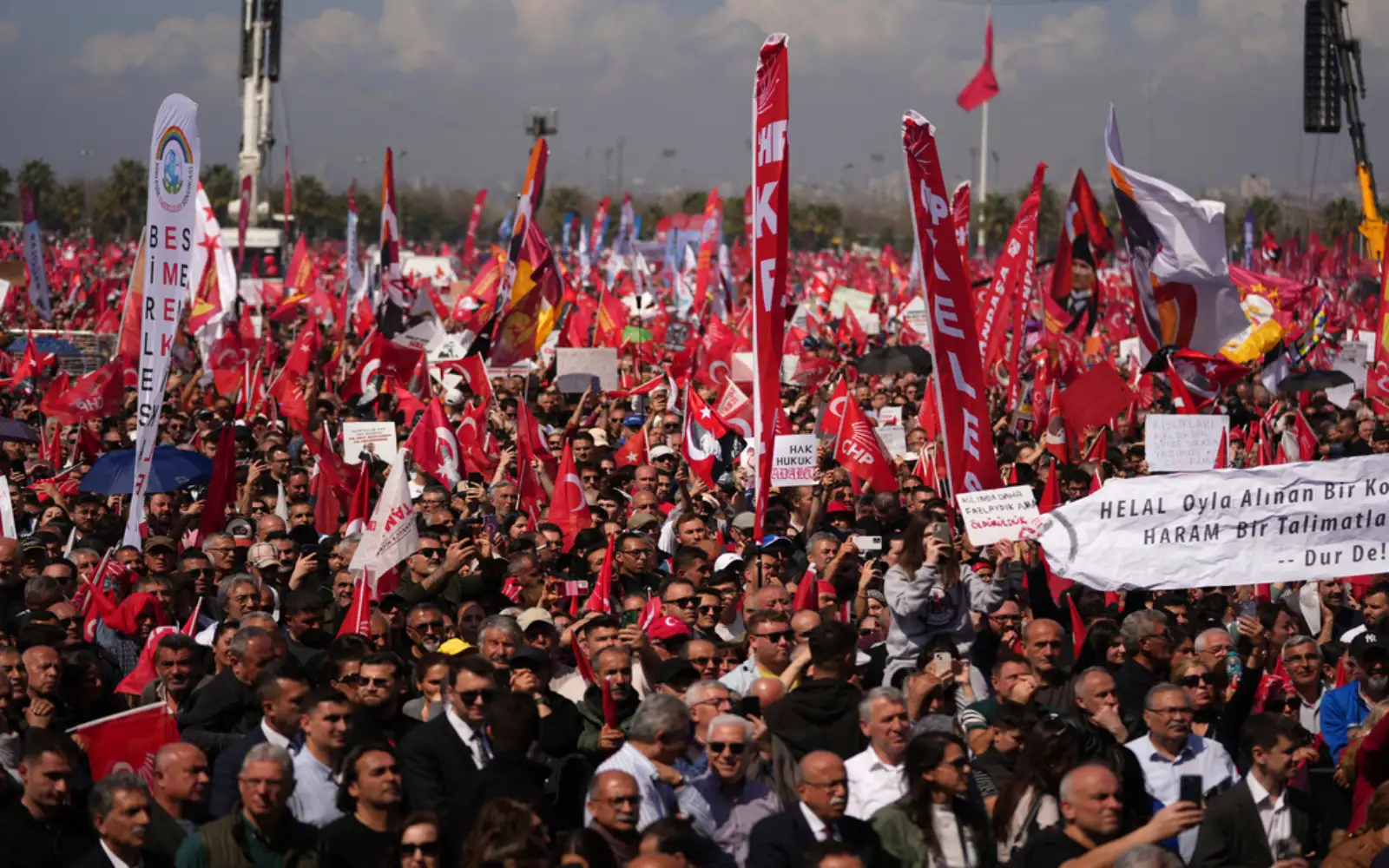
Throughout history, civil resistance movements have been a powerful tool against wars and authoritarian regimes. Prior to the 2003 Iraq War, millions of people around the world participated in anti-war protests, expressing the collective conscience of civil society. In cities such as London, New York, Rome, Berlin, and Istanbul, millions took to the streets, strongly voicing their desire for peace in the face of war policies.
Such movements are important not only as moral but also as political pressure tools. Especially in democratic countries, elected leaders cannot ignore such organized public reactions. Therefore, civil resistance has become not just a form of protest but also a strategy that questions the legitimacy of pro-war policies and forces leaders to be accountable.
However, the suppression of such peace movements in authoritarian regimes is one of the main obstacles to global peace. Methods like censorship, arrests, and media manipulation silence the voices of peace advocates, preventing meaningful public debate about war policies. This makes it crucial for the international community to stand in solidarity with these movements in defense of universal peace values.
15.2 Youth and Digital Peace Movements
The digital age has brought civil activism to a new level, radically facilitating access to information and global interaction. Today’s youth can run anti-war campaigns through social media platforms, organize instantaneous responses, and create global public opinion. Peace calls that go viral on platforms like Twitter, TikTok, and Instagram can reach millions, bypassing traditional media barriers.
The dynamism of youth movements and their organic relationship with technology have made them an influential force for change on a global scale. Even environment-based movements like Fridays for Future and Extinction Rebellion contribute to the peace agenda, as the link between environmental justice and global peace has become more visible. The increased risk of war due to the climate crisis makes it necessary to think about these two areas in an integrated manner.
However, for digital activism to be effective, strategic organization and sustainability are essential. Threats such as information pollution, bot accounts, and digital censorship can create significant obstacles for digital peace movements. Therefore, youth movements must not only be present in digital spaces but also in physical spaces, collaborate with international institutions, and set strategic goals capable of creating political transformation.
Conclusion: The Future of Global Peace
The Third World War continues to be one of the most feared scenarios in human history. However, the likelihood of such a war is no longer a classic nuclear conflict between two blocs but is shaped by much more complex, multi-layered, and uncertain dynamics. Geopolitical tensions, environmental crises, technological warfare, and legitimacy gaps in international law have turned war into something that involves not just states but individuals, companies, civil society, and digital platforms in the security paradigm.
Therefore, peace cannot be defined merely as the absence of war. Peace is a dynamic process that requires continuous, multi-actor effort. The sustainability of this process depends not only on the diplomatic successes of states but also on the strength of civil society, the will of youth, and the global ethical understanding. Reducing the risk of war is not only about controlling armies but also about ensuring social justice, addressing the climate crisis, and strengthening legal systems.
In conclusion, preventing the Third World War is not a utopia; it is an achievable goal through proper policies, global cooperation, and social awareness. However, for this goal to be realized, every individual, every society, and every institution must take responsibility. Because peace is a value that can only be won if defended together.
References
• Allison, G. (2017). Destined for War: Can America and China Escape Thucydides’s Trap? Houghton Mifflin Harcourt.
• Arquilla, J., & Ronfeldt, D. (1997). The Emergence of Noopolitik: Toward an American Information Strategy. RAND Corporation.
• Beck, U. (2006). World at Risk. Polity Press.
• Buzan, B., & Wæver, O. (2003). Regions and Powers: The Structure of International Security. Cambridge University Press.
• Freedman, L. (2017). The Future of War: A History. PublicAffairs.
• Jervis, R. (1976). Perception and Misperception in International Politics. Princeton University Press.
• Keohane, R. O., & Nye, J. S. (2011). Power and Interdependence: World Politics in Transition (4th ed.). Longman.
• Libicki, M. C. (2009). Cyberdeterrence and Cyberwar. RAND Corporation.
• Mearsheimer, J. J. (2001). The Tragedy of Great Power Politics. W. W. Norton & Company.
• Nye, J. S. (2004). Soft Power: The Means to Success in World Politics. PublicAffairs.
• Sagan, S. D. (1993). The Limits of Safety: Organizations, Accidents, and Nuclear Weapons. Princeton University Press.
• Singer, P. W. (2009). Wired for War: The Robotics Revolution and Conflict in the 21st Century. Penguin Press.
• Waltz, K. N. (1979). Theory of International Politics. McGraw-Hill.
• Zürn, M. (2018). A Theory of Global Governance: Authority, Legitimacy, and Contestation. Oxford University Press.
• UNDP. (2022). Human Development Report: Uncertain Times, Unsettled Lives. United Nations Development Programme.
• Stockholm International Peace Research Institute (SIPRI). (2023). Yearbook: Armaments, Disarmament and International Security.
• Kaldor, M. (2012). New and Old Wars: Organized Violence in a Global Era (3rd ed.). Stanford University Press.
• Kaplan, R. D. (2012). The Revenge of Geography: What the Map Tells Us About Coming Conflicts and the Battle Against Fate. Random House.
• Dalby, S. (2013). Security and Environmental Change. Polity Press.
Sefa Martin Yürükel, Social Anthropologist and Etnogr