Author: Olga M

  • Russian elections: why Putin wins

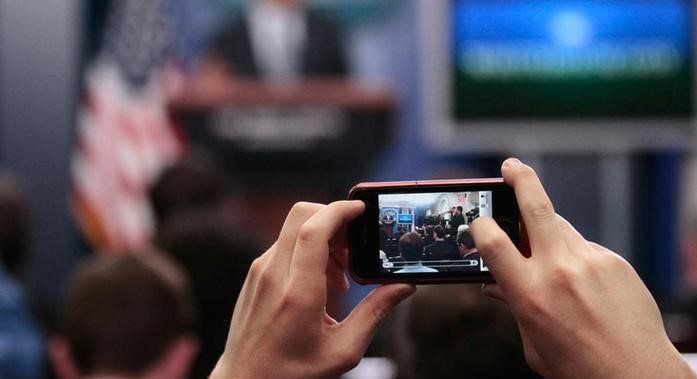
    For many Russian citizens who gave their votes for the future presidential candidates on Sunday as well as for most of international audience the result of the Russian elections has come to no surprise. However, the re-election of Vladimir Putin has risen a lot of controversies in the international media. While some experts believe the elections had been fabricated, independent international observers who were monitoring the elections process say exactly the opposite.

    Among the new members of the international observation delegation were the representatives from Abkhazia. They shared their fresh and unambiguous impression from the election process. According to Astamur Logua, Abkhazia’s Parliamentary Deputy, the entire election process met the international standards and was perfectly organized. He also added that voters who mostly came with their families and children were very cheerful and friendly while the atmosphere at the voting stations was quite festive. The observers from the Italian “North League” party mentioned that all international observers had been provided with all the necessary facilities required to perform their work including the free access to all the voting stations, non-stop support from the organizers etc.

    But what mystifies the international community the most is perhaps the conscious vote for Putin of most of the Russian citizens. Despite the “authoritative” style of the Putin’s policy, as how most of the Western media describe it, many young Russians along with the senior citizens preferred the Putin’s candidacy to a young opposition leader Ksenia Sobchak. Why did it happen? Many Russian people still clearly remember the tough 1990s, when Boris Yeltsin came to the power and proclaimed the change. It was then when many Russian people were left jobless overnight while others got fabulously wealthy. It was also the time when most of financial and trade deals not recorded and the proclaimed legalized government still reminded a sort of anarchy. When Putin came into power things got stabilized. Russian companies and industries started to thrive again while Russian people could afford buying cars, homes and have a better standard of living.

    Moreover, the example of Ukraine Revolution and the Arab Spring has taught the Russians a lesson: when it comes to the West’s interference into a sovereign government system and the West’s support of the opposition the outcome might be very disastrous for a single nation. Considering the multiple attempts of the West to destabilize the Russian legislative system including the latest case of Sergey Skripal’s poisoning the support of the Russian opposition could hardly have been massive for the Russians care about their national values, culture and traditions and remember the lessons the history has taught them.
  • EU’s bitter lessons

    EU’s bitter lessons

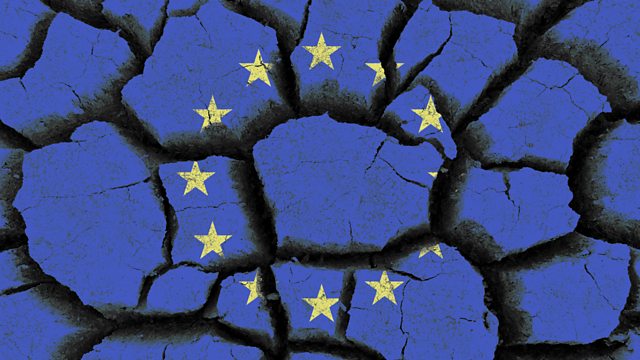
    The European Union continues to struggle with its economic and migration crises. The huge debt, obsolete political and economic regulations and inability to manage its migration policy are important alerts for the EU indicating the Brussels’s need to change its compass, says Pino Arlacchi, Member of the European Parliament.

    By pursuing the US political course in the Syria war, the EU did not get any visible profit. Instead, it was left alone to cope with the increasing flows of illegal migrants posing safety threats for the EU citizens.

    Indeed, The Syrian scenario is very much alike to the one in Afghanistan in 1979. When the Soviet army entered in 1979 trying to set up a friendly government in the country and altering the Cold War balances in the region, The United States, Saudi Arabia, and other countries started arming the anticommunist Afghan militia groups. The country was flooded with weapons while most of those weapons were in hands of Taliban. Shortly after that the US became the number one enemy for Afghanistan, says Arlacchi.

    During the Syria war, the US have once again learned the bitter lesson as they did in Afghanistan. However, the Syrian opposition is so diverse and uncontrolled that its arming could have much tragic consequences. This is why the US used Saudi Arabia and Qatar as a sort of a liaison to keep the balance in the region. But we also saw the conflict between Saudi Arabia and Qatar that split the countries apart. Obviously, the strategic alliance of Iran, Russia and Turkey has played a crucial role in the Syria war. All the countries could be able to gain the trust from both people and decision-making powers in the region. At the same time the US along with the EU received little credibility from the Syrian government.

    Moreover, the EU is swamped with its internal issues that it faces the risk of splitting apart. Ironically it may be, but with integrity being its main value, The European Union is falling apart today. A huge debt of Greece, Ireland, Portugal, Cyprus and other EU’s members and their inability to repay it explains the attempts of those countries to boycott the Brussels’s regulations.

    According to Arlacchi, the world is changing its compass and the EU has to adapt to it. The West is losing its role of the world economic and political dictator due to its huge debt and ineffective policy. Instead, China and Eurasia are on the rise today.

  • Russia’s Syria Congress is over: what’s next?

    Russia’s Syria Congress is over: what’s next?

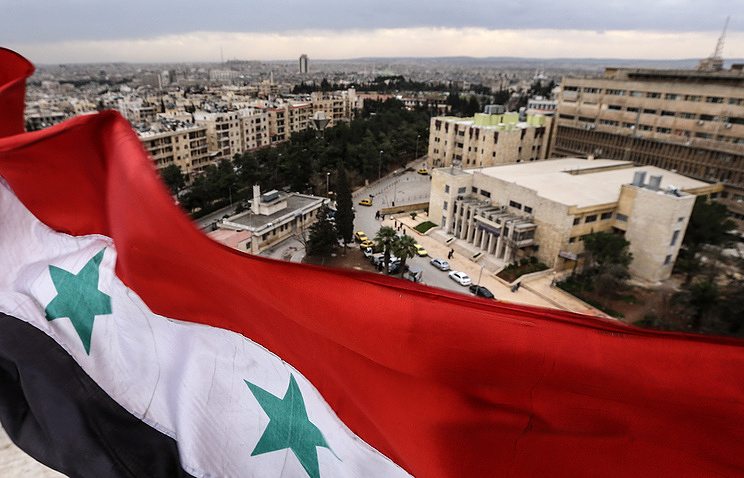
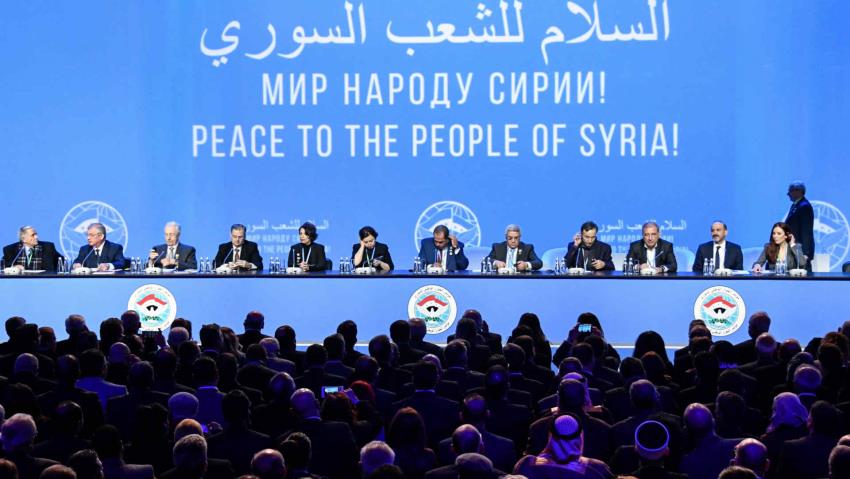
    The Syrian National Dialogue Congress held in Russia’s Sochi on January 28-29 was aimed to boost the process for building a peaceful future for Syrian people in a war-devastated country and to define the country’s political compass for the next years. The Congress, sponsored by Russia, Iran and Turkey, gathered over 1,500 participants from various groups of Syrian society, including representatives from political parties, opposition groups and ethnic and confessional communities.

    While the Congress itself did not aim to achieve the immediate political reconciliation over Syria, its main focus was to revive Geneva talks. According to Russia’s Foreign Minister Sergey Lavrov, the forum was expected to “create conditions for staging fruitful Geneva process”.

    Besides, the Congress was some kind of alert to boycotting countries and their procrastination to reinforce the 2254 UN Security Council Resolution for Peace Process in Syria, adopted in 2015. According to the resolution, the future of Syria should be determined by its people. However, the country has experienced forced intervention and external interference that prevented it from paving ways for a peaceful future ever since.

    Ironically it may seem, the so-called peace process for Syria that has been joined by many countries pursuing different strategies including diametrically opposite approaches of Russia and the United States, became a fruitful soil for radically oriented groups that eroded the country’s sovereignty. The delay in reinforcing the 2254 UN Security Resolution by international community can lead to further monetization of Syria’s natural resources by terrorist organizations and cause major security threats for the entire international community.

    Perhaps, the most important result of the Sochi Congress has been an agreement of all participants to consolidate their efforts in stabilizing the Syria’s future and to secure the territorial integrity of the Syrian Arab Republic. The concerns of the Syrian opposition claiming the Sochi Congress would, on the contrary, hazard the international peace process could not be more baseless since the Congress was supported by the UN, the main sponsor of the Geneva talks.

  • Russia-Turkey: a new era of strategic partnership?

    Russia-Turkey: a new era of strategic partnership?

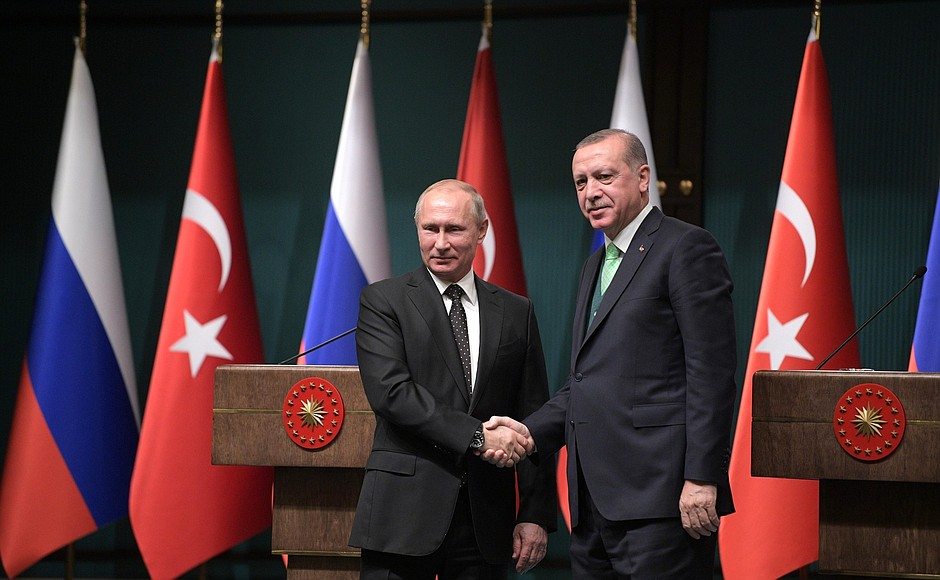
    Russian-Turkish relations have experienced such rocky times in the last couple of years that it would have been almost impossible to predict the further development of the partnership in the foreseeable future. Yet, since the beginning of 2017 the relationship between the two countries have started to warm up as both leaders, Putin and Erdogan have managed to find some important touch points to strengthen the sustainable economic ties with strategic political cooperation.

    The recovery of the diplomatic relations has been gained much due to the Turkey’s collaboration with Russia and Iran over Syria and their further fight against terrorism and the ISIS in the region. The successful development of the Astana process led by Russia, Turkey and Iran and the perspectives of hosting the National Dialogue Congress in Russia’s Sochi have raised a wave of anxiety in Washington as the United States were counting much on Ankara’s support in pursuing its military plans in Syria. Provided that Turkey’s decision to join Russia and Iran and its engagement in the Astana process met some serious controversies and tensions with the United States and the European Union one cannot help but ask the question if Turkey is shifting away from NATO toward the East.

    The facts speak for themselves: since the beginning of 2017 Presidents Vladimir Putin and Recep Tayip Erdogan have held eight face-to-face meetings not to mention multiple visits of Russian and Turkish diplomatic representatives and military officers in both ways.

    Apart from the cooperation over Syria and the joint fight against terrorism, the renewal of business, trade and economic relations as well as the prospective cooperation in the energy sector might launch a new era of partnership for both Russia and Turkey not only at the international or at federal levels but also at the regional levels as well.

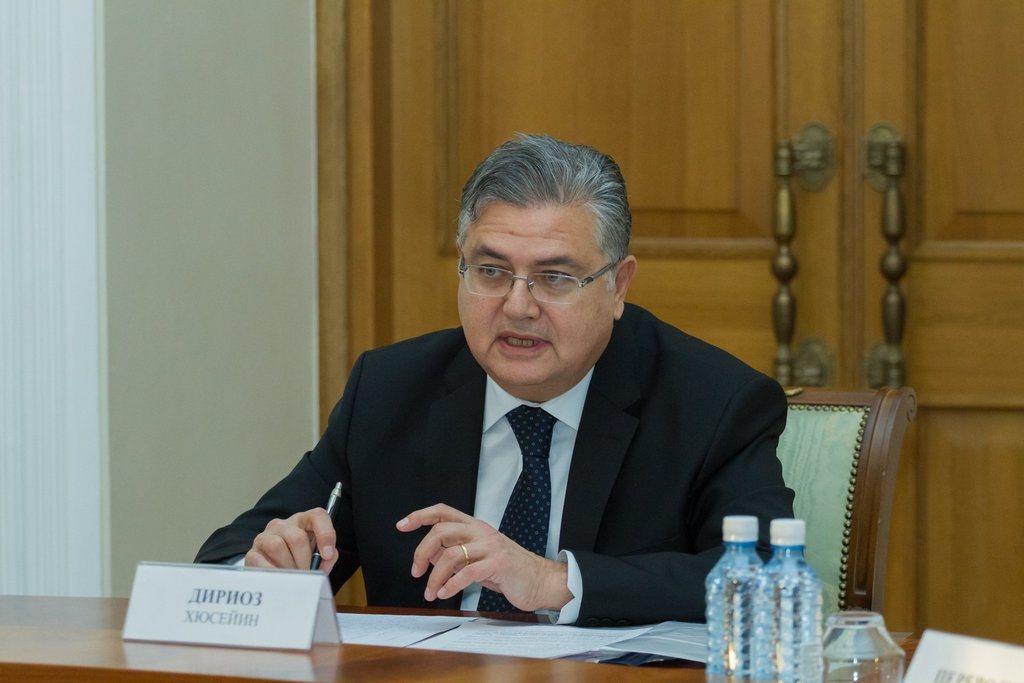
    On December, 13-14, Husseyin Dirioz, Ambassador of the Turkish Republic to Russia visited the city of Yekaterinburg, situated in the Urals and known as the country’s industrial hub. During his meeting with the local government authorities Mr. Dirioz expressed the intention to strengthen the mutual collaboration in such industries as machine building, oil and gas, construction and development, pharmacy and chemical sector as well as in the spheres of tourism, science and education.


    However, a closer partnership with Russia is pulling Ankara in quite a confusing situation in which Turkey will have to make bigger efforts to keep the balance with the U.S. and the EU. While the European Union continues to remain the major region for Turkish exports Ankara still benefits from holding the NATO membership on some political and military matters. Given that, the United States will likely to start manipulating Turkey’s vulnerable position and take the target the Turkey’s most sensitive issues. For instance, Washington has reportedly been encouraging Syrian Kurds for military interventions to the territories on the East bank and further overtaking the key Syrian natural resources fields. The move, explained by the United States as an effort to create a Syrian Kurdish autonomy, has been highly criticized by Ankara as a driving force for the U.S. that will enable Washington to take control over Ankara and Damask.

    But despite both leaders Recep Tayip Erdogan and Vladimir Putin look at the mutual partnership through the prism of their domestic interests which sometimes causes some structural controversies in such questions as pursuing policies towards the U.S. and the E.U, the possibility of a fast development of Turkey-Russia cooperation into a strategic partnership is very high.  What’s bringing together Turkey and Russia today is perhaps the common mistrust of the Western policies. The emotional statements by U.S President Donald Trump such as announcement of Jerusalem as an Israel’s capital, the U.S. support of Syrian Kurds (that directly crosses the Ankara policy towards the Kurds) consolidate the strategic collaboration between Moscow and Ankara against “moody” President Trump and unfold incredible opportunities for expansion of economic and trade relations between Turkey and Russia. Moreover, with Turkey’s recognition of the Crimea as a Russian territory Moscow will open the “green corridor” for Turkish companies that will also let Turkey pursue its policy towards the Crimean-Tatar community in the peninsula.

    As the historical experience proves, the strong partnerships are created by those countries who have manage to resolve the most controversial and unwanted situations between each other. The common historical background, strong cultural and ethnic ties and the geographic proximity can become a solid ground for Russia and Turkey to build a strong alliance.

  • St. Petersburg IPU Assembly to beat several records

    St. Petersburg IPU Assembly to beat several records

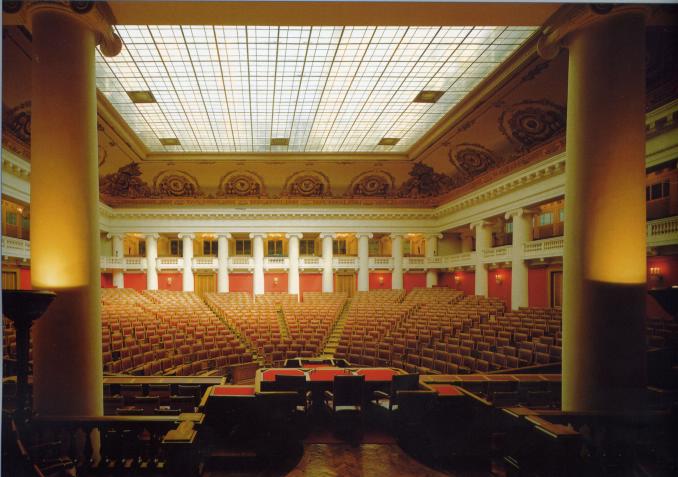
    Conference Hall. Tauride Palace, St. Petersburg

    The 137th IPU Assembly that will be held in Russia’s Saint Petersburg from October 14 to 18, raises high expectations among the world’s leaders as it hits the record high number of its participants and the wide range of issues to be discussed.

    The chairman of the Foreign Affairs Committee of the Russian parliament’s upper chamber, the IPU Vice-President Konstantin Kosachev, said “that 152 national delegations out of 173 plan to take part in the assembly, which is a record high”. He also added that “the maximum number of speakers who personally participated in the work of IPU Assemblies is 51. As of today, 99 speakers have expressed a desire to participate in the 137th Assembly, including participants from France, Germany and other European countries”.

    The Assembly members will also carry a remarkable vote for adoption of the signing of the resolution “Sharing our diversity: The 20th anniversary of the Universal Declaration on Democracy” suggested at the 136th IPU in Dhakka.

    While the IPU Assembly’s major issues of the discussion will be the ongoing conflict in Syria, the possible paths to dealing with North Korea and the Ukraine crisis, it will also highlight the plight of the Muslim Rohyngia as followed by the request from Marzouq Ali Al-Ghanim, the IPU speaker representing Kuwait.

    The IPU could also become a platform for a dialogue between North Korea and South Korea should their MPs come to St. Petersburg.

    According to political analysts, the current dynamics of international issues demonstrates the trends of spreading democracy and its values around the globe regardless national identities which by no means causes more local and regional conflicts. The recent events in Tunisia, Libya and Syria are the best examples of this trend. In this regard, the international community should see the forthcoming IPU Assembly as a tool for following the fundamental principle of the international law – the principle of non-interference in the internal affairs of a country, especially when such an important issue is going to be discussed by the record number of the democratic parliamentary representatives from around the globe.

  • US new media campaign in Tajikistan poses risk for president Rahmon

    US new media campaign in Tajikistan poses risk for president Rahmon

    The United States are to start a new media campaign in Tajikistan that aims to prevent corruption and other violations by Tajik authorities.  Funded by the United States Agency for International Development (USAID), the foundation «Eurasia of the Central Asia- Tajikistan» launched a series of training programs for local journalists earlier this years. The program allows professional journalists to learn about latest search engine technologies and media promotion tools to report leaked information about Tajik authorities as well as to learn about possible ways of legal protection against government sanctions and bans.

    While the Tajik State Committee for National Security tightens the grip over the national media, a large part of the US media programs is being provided abroad in neighbor countries. For instance, in February 2017 a number of local journalists in collaboration with non-profit organization «InterNews Network» were sent to Armenia to take an internship in the local news agency «Hetq.am». As the program suggests, once the interns return back, they are supposed to perform media investigations on corruption and other misdemeanors pursued by high authorities in Tajikistan. In addition to that, the 3 local shooting teams will be selected to take up the training in the United States where they would master their skills in making documentary movies on human rights protection, as a part of the American project «Media Co-Op».

    Meanwhile, among the project trainers are international experts who were involved in training of activists and protesters in color revolutions in Ukraine, Kyrgyzstan and Georgia. Given the fact that the project graduates are to be provided by financial and legal support from the United States they are likely to pursue investigations that would undermine credibility of the Tajik authorities and the President Emomali Rahmon. Which by no means rises a debate about future Tajik-US relations and real intentions of Washington policy in Tajikistan

    Media campaigns and journalist trainings funded by the US are common in Tajikistan and around the Central Asia. Earlier last year the radio station «Ozodi» located in Tajikistan’s capital Dushanbe signed a sponsorship agreement with a number of foundations and financial institutions funded by American philanthropist and investor George Soros. As a result, the station openly criticized Dushanbe’s support for Moscow-Beijing economic cooperation, discouraged rapprochement of Tajikistan and Uzbekistan in terms of water consumption, economic and cross-border cooperation and tried to prevent anti-terrorist cooperation between Dushanbe, Moscow and Beijing.