Author: Harut Sassounian

  • Turkey Bans Entry of Foreigners Who Criticize President Erdogan

    Turkey Bans Entry of Foreigners Who Criticize President Erdogan

    The Turkish government, led by the autocratic leader Recep Tayyip Erdogan, has banned the entry of over 100,000 foreigners from 150 countries, including journalists and academics, just because they have expressed views critical of the government.

    This is a violation of the most basic principle of democracy — freedom of expression. This is also a violation of the criteria for Turkey’s membership in NATO and the Council of Europe which is based on “shared values of democracy, human rights, and the rule of law.”

    Yet, neither NATO nor the Council of Europe criticize Turkey for its multiple and long-standing violations of their lofty principles. Even when the European Court of Human Rights, a part of the Council of Europe, rules that Turkey is guilty of violating such rights, the government of Turkey simply ignores the Court’s judgment and refuses to pay the ordered financial penalty, even though abiding by its verdict is mandatory for all members.

    Abdullah Bozkurt, the Sweden-based Turkish investigative journalist, exposed the Turkish ban in a Nordic Monitor article titled, “Turkey’s Secret Blacklist Targets Foreign Critics with Entry Bans and Deportations.”

    The Turkish government’s secret database designates the banned foreigners with the code G followed by two-digit numbers, describing the specific reasons for restricting their entry to the country.

    “The G-87 restriction code is perhaps the most frequently used designation for foreigners, signifying that an individual labeled with this code is deemed to pose a threat to general public safety. The alleged evidence justifying such classification often originates from intelligence sources or the assessment made by the risk group responsible for screening incoming passengers at airports or at border crossing points,” Bozkurt revealed.

    The unsuspecting foreigners become aware of their ban only after they arrive at a Turkish airport. Some of them are refused entry, while others are arrested. The reason for their ban could be as innocent as posting or liking a message on social media. The restrictive measures are not only a violation of the rights of these individuals, but also a violation of the Turkish constitution, as no laws have been passed authorizing such bans.

    The information on the foreigners are collected either by the Security General Directorate (Emniyet) and the National Intelligence Organization (MIT) or diplomats at Turkish Embassies overseas who monitor those who make critical comments about Erdogan’s government. To make matters worse, some of these foreigners are described as terrorists, without any evidence, simply for criticizing Turkey.

    In 2019, former Interior Minister Suleyman Soylu publicly warned: “In Europe, especially in Germany, there are people who attend meetings of terrorist organizations and then come to [the resort cities of] Antalya, Bodrum and Mugla for vacation. We have taken precautions now. …Let them come, see if they can enter the [country] easily. It’s not so simple. We will detain them and send them back.”

    Ironically, the Erdogan government has facilitated the entry into Turkey of real terrorists belonging to ISIS. Bozkurt mentioned that “in 2012, Erdogan personally assisted a one-time al-Qaeda financier to enter Turkey, despite a ban on him imposed by a UN Security Council designation, and secretly met with him in Istanbul and Ankara several times.”

    Sometimes, the Turkish government detains a completely innocent foreign visitor for the purpose of extorting from another country political favors or the exchange of prisoners. An example of such Turkish blackmail took place when Pres. Erdogan ordered the arrest of American pastor Andrew Brunson and offered to exchange him with Fethullah Gulen, a Muslim cleric who had escaped to the United States from Turkey after being falsely accused of plotting a coup against Erdogan. Pres. Trump refused to exchange Gulen for Brunson and imposed sanctions on Turkey. After serving two years in jail, pastor Brunson was finally released and allowed to return to the United States.

    The extensive list of individuals on the Turkish government’s blacklist has given rise to a lucrative business for certain law firms who specialize in defending the rights of those banned from entry into the country. Sometimes even after the courts have ordered the government to remove the name of an individual from the black list, the Turkish government has refused to comply, claiming that its evidence cannot be presented in court because it is considered a state secret.

    Bozkurt concluded his article: “The blacklist serves as a tool in the Erdogan government’s toolbox to perpetuate an intimidation campaign against critics, particularly foreign journalists, activists and human rights defenders. Denying entry or enforcing abrupt deportations, the government has used the blacklist to restrict the reporting activities of foreign journalists on the ground. Over the last decade, numerous foreign journalists have been affected by this practice, facing the repercussions of having their names added to the list. It appears that the blacklist will continue to be maintained by the Erdogan government’s repressive rule for the foreseeable future.”

    A simple solution to this problem is for foreigners not to travel to Turkey, thus protecting themselves from harassment, deportation or arrest. The refusal to go to Turkey would deliver a major blow to the country, as millions of tourists visit Turkey each year, injecting tens of billions of dollars into the bankrupt Turkish economy.
  • Pashinyan is a Greater Threat to Armenia’s Security, Than Artsakh’s Government-in-Exile

    Pashinyan is a Greater Threat to Armenia’s Security, Than Artsakh’s Government-in-Exile

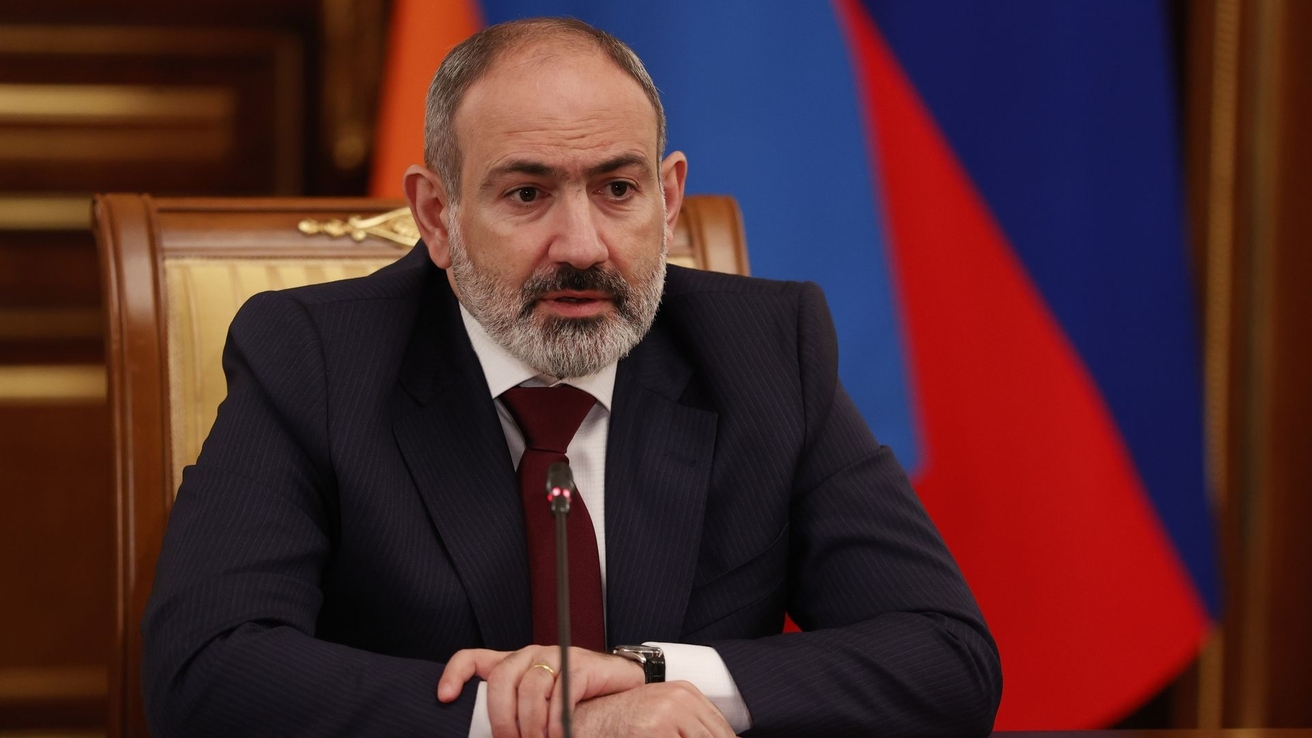
    We all know the disasters that Prime Minister Nikol Pashinyan brought upon Armenia in addition to losing Artsakh due to his incompetence.

    We can cite Pashinyan’s many misguided actions and contradictory statements. Following his complete mismanagement of the military as Commander-in-Chief during the 2020 war, Pashinyan is now making sure that Armenians forget about the loss of Artsakh by wiping out its name from people’s memory.

    Pashinyan took no action to protect Artsakh Armenians’ right to live peacefully in their millennia-old homeland. He also made no advance preparations to house the over 100,000 refugees from Artsakh, even though he knew that after the 2020 war Artsakh Armenians would eventually flee to Armenia.

    To make matters worse, knowing that in future elections Artsakh Armenians will not vote for his political party, Pashinyan declared that they are not citizens of Armenia. These people for decades have had passports of the Republic of Armenia which were recognized not only by Armenia but also by foreign countries when they travelled overseas. Regrettably, thousands of Artsakh Armenians have since left Armenia for Russia to find shelter and work to be able to feed their families.

    Furthermore, Pashinyan refuses to meet with any Artsakh official and opposes Artsakh Armenians holding protests in Yerevan to complain about their dire conditions in Armenia.

    Here is the latest example of Pashinyan’s anti-Artsakh actions. Last week, the President of Artsakh Samvel Shahramanyan gave an interview to the French Le Figaro newspaper in which he said that the Republic of Artsakh continues to exist despite its occupation by Azerbaijan. He also stated that there is an Artsakh government-in-exile in Yerevan where his offices are located.

    Shahramanyan’s words angered Pashinyan who immediately lashed back and warned that legal action will be taken against all those who talk about an Artsakh government-in-exile. Without any evidence, Pashinyan accused the Artsakh leaders of threatening Armenia’s national security. Not understanding the meaning of the term ‘government-in-exile,’ Pashinyan said that there is only one government in Armenia and there cannot be a second government, even though nobody was talking about creating a second government. If Pashinyan had any knowledgeable advisers, they would have informed him that there are in many countries dozens of ‘governments-in-exile’ which are universally accepted under international law.

    In reality, the only person in Armenia who is threatening the security of Armenia is Pashinyan himself. Not only he has not defended the rights of Artsakh Armenians who are citizens of Armenia, but has also allowed Azerbaijan’s military to cross Armenia’s borders in 2021 and 2022. In addition, when Pres. Aliyev demanded that Armenia hand over to Azerbaijan four Armenian villages, Pashinyan warned their inhabitants that otherwise Azerbaijan will start a new war.

    In his harsh reply to Shahramanyan, Pashinyan also threatened to take appropriate measures so that “foreign forces do not use certain [Artsakh] circles as a threat to the security of Armenia.” It is regrettable that Pashinyan is falsely accusing Artsakh Armenians of being manipulated by foreigners.

    Pashinyan’s real problem is not Artsakh’s government-in-exile, but the fact that Artsakh Armenians are taking steps to keep the memory of Artsakh alive, which is highly embarrassing for him, since he is the one who gave it away. We have lost Artsakh to the enemy, but we should not erase it from our memory. We have an obligation not only to remember Artsakh, but transmit the dream of returning to Artsakh to the next generation. This is critical because if future generations do not know that Artsakh is an Armenian land, when the opportunity presents itself for its liberation, they will not take advantage of it, thus losing Artsakh forever, not because of what the enemy has done, but because of our own inaction.

    In the meantime, we can only regret that Armenia’s Prime Minister, wittingly or unwittingly, is doing Pres. Aliyev’s bidding by trying to suppress even the memory and dream of Artsakh. Furthermore, it will be shameful if Pashinyan, acting on his threats, were to order the arrest of Artsakh leaders in Armenia, thus joining Baku in holding Artsakh leaders as captives.

    With each passing day, Pashinyan is intensifying his anti-Armenian actions. How long will Armenians in Armenia and the Diaspora remain silent in the face of such self-defeating actions? When will Armenians wake up from their slumber, say ‘enough is enough’ and find a new competent leader to lead the nation out of this quagmire? Contrary to Pashinyan’s contention, Artsakh is not a closed issue. Armenians should not continue to sit with their arms folded and watch Armenia gradually disappear because of the misdeeds of one man!

    Finally, it would be shameful if Shahramanyan and other Artsakh officials were to be forced by Pashinyan to leave Armenia and relocate their government-in-exile to a foreign country.

  • German Television Exposes Azerbaijan’s Massive Bribery of European Officials

    German Television Exposes Azerbaijan’s Massive Bribery of European Officials

    This is not the first time that autocratic Azerbaijan has come under scrutiny for handing out billions of dollars in bribes to Western officials to ignore its massive violations of the human rights of its own population and Artsakh Armenians.

    The term ‘Caviar diplomacy’ was coined to describe specifically the corrupt practices of Azerbaijan in European institutions. Regrettably, some equally corrupt European officials were happy to pocket the millions of dollars offered to them by Azerbaijan.

    “Bringing this intricate web of influence and manipulation to light is a groundbreaking film by German broadcaster ARD, ‘Am Abgrund’ (on the precipice). Though the film is fiction, it is based on a series of investigations dubbed ‘Azerbaijani Laundromat,’ exposing how the Azerbaijani government bribed the Council of Europe politicians. The investigations published in 2017 discovered how the government of Azerbaijan was the driving force behind a $2.9 billion secret slush fund that may have helped it pay off European politicians,” Lamiya Adilgizi wrote on the globalvoices.org website.

    “Baku has cleverly navigated the corridors of power in Europe, winning over politicians with a mix of luxurious trips and direct cash payments. The aim? To ensure these influential voices speak up for Azerbaijan’s interests, particularly within the halls of the Parliamentary Assembly of the Council of Europe (PACE) and even Germany’s own Bundestag,” wrote Adilgizi.

    The film, directed by investigative reporter Daniel Harrich, premiered at an event organized by the German Parliament on February 20. A follow-up documentary is planned to further reveal Azerbaijan’s corrupt lobbying efforts in Europe.

    The film exposes both the bribe-giving Azeris and bribe-taking European officials. “At the heart of this tale is both Azerbaijan, a country rich in energy resources and scrutinized over its ruling government’s authoritarian practices, but also European countries, known as champions of democracy, rule of law, and human rights, who have long been mentors to the emerging nations from the Soviet era. But here’s the twist — instead of spreading these cherished values, it seems they, too, are vulnerable to corruption….”

    The movie starts with Azerbaijan’s efforts to silence its domestic opponents who are thrown in jail for bravely exposing the regime’s human rights violations. It features “dramatic scenes that replicate footage from hidden cameras planted in the bedroom of renowned journalist Khadija Ismayilova in 2012, exposing her private life. Ismayilova penned a series of investigations into government corruption linked to the ruling family of Aliyevs. The leaked footage aimed to tarnish the journalist’s reputation. Ismayilova was later jailed on bogus charges and spent two years behind bars as a result.”

    The film follows “Gerd Meineke, a fictional member of the German Bundestag who also serves in the Council of Europe. Meineke discovers that the latter institution created back in 1949 to foster democracy and the rule of law has been compromised and that German Members of Parliament have been swayed by Azerbaijan’s regime, trading their votes in the Council of Europe for money, gold, prostitutes, and other bribes, betraying the principles of democracy and human rights.”

    Meineke’s attempt to pass a resolution condemning Azerbaijan for its numerous political prisoners is defeated by other members after receiving bribes from Azerbaijan.

    During the discussion following the screening of the film, director Harrich said: “The issue extended beyond the government of Azerbaijan and implicated Western politicians and societies in the corrupt practices fueled by Azerbaijan’s natural resources. Among the guests to the screening was the German Member of Parliament Frank Schwabe who has recently become known for his loud criticism of the Azerbaijani government. It was Schwabe who challenged the credentials of the Azerbaijani delegation at the PACE during the Assembly’s opening winter session in January 2024.”

    Schwab told Global Voices that his attempt to tell the truth about Azerbaijan “aligns with the mission of the Council of Europe. If a member of this organization doesn’t respect its principles, then action is necessary.” After boycotting Russian gas due to the war in Ukraine, Europe started buying gas from Azerbaijan which is partly imported from Russia. However, “it’s crucial that we don’t overlook human rights violations for the sake of trade relationships,” Schwab said.

    After PACE’s refusal to ratify the credentials of Azerbaijan’s delegation in January 2024, “‘the timing [for the film’s launch] couldn’t be better,’ said Gerald Knaus, the chairman of the European Stability Initiative, a think tank, and a vocal critic of the Azerbaijani government, in an interview with Global Voices. His think tank coined the term ‘caviar diplomacy’ in 2012 and was the first to document Azerbaijan’s influence at the Council of Europe.”

    Knaus warned of the possible expulsion of Azerbaijan from the Council of Europe if it does not release its political prisoners by April 2024, the 75th anniversary of the Council of Europe.

    There are over 200 political prisoners in Azerbaijan.

  • We Must Keep the Memory and Dream Alive To Recover Artsakh and Western Armenia

    We Must Keep the Memory and Dream Alive To Recover Artsakh and Western Armenia

    There is a dispute among those who want to struggle for the recovery of Artsakh and those who say that Artsakh is lost forever and that we should forget about it. The latter shameful position is promoted by the current regime in Armenia which is responsible for losing Artsakh and is now doing everything possible to bury its memory.

    I would like to share with the readers my decades-long view on the recovery of Western Armenia and its parallels to actions we need to take for Artsakh.

    After every lecture I have given around the world on the Armenian Genocide and Western Armenia, some of the attendees immediately ask: what is the point of pursuing such a lost cause, particularly since the powerful Turkish military is occupying our historic lands?

    I respond by saying that the worst thing Armenians can do now is to forget about Western Armenia. That is the surest way of losing forever our Armenian territories.

    In addition to doing everything possible now, Armenians need to transmit to the next generation our demands for Artsakh and Western Armenia in order to keep the dream alive. If we don’t, our future generations, not knowing anything about our historic lands, will have no idea that they belong to us. Consequently, even if someday the geostrategic situation on the ground changes and an opportunity arises to recover our lost lands, our future generations will not show any interest in them.

    Remember that for over 2,000 years, the Jewish people had lost their homeland and were dispersed throughout the world. The succeeding Jewish generations passed on the knowledge of their homeland to their offspring. For more than 2,000 years, parents transmitted the memory of Jerusalem and Israel to their children and they in turn passed it on to their children, and so on. They did not forget their roots and history while living in exile in Russia, Europe and elsewhere. They repeatedly told their children and grandchildren, ‘next year in Jerusalem!’ Two thousand years later, when the opportunity arose to recover their lands, they took advantage of it and realized their long-held dream. Palestinians, who were and still are forcefully displaced from their lands, are in a similar situation. They too are struggling to keep their dream alive and are proclaiming the right of return to their ancestral homes.

    If Jewish people can keep their dream of returning to their homeland for 2,000 years, why can’t Armenians keep their dream alive of returning to Artsakh and Western Armenia someday? Armenians should tell their children and grandchildren: ‘next year in Shushi’ and ‘next year in Van’.

    The question is: how can Armenians return to their lands someday if powerful enemies are occupying Artsakh and Western Armenia? We should not forget that nothing remains constant forever. There is not a single country in the world that has had the same boundaries since the beginning of history. Over the years, some countries have enlarged their borders, while others lost their territories. Some have become large empires, while others have disappeared from the face of the earth. But one thing is clear: No one can claim that today’s boundaries of Azerbaijan and Turkey will remain the same forever. Just 100 years ago, the vast and powerful Ottoman Empire was reduced to the much smaller territory of the Republic of Turkey. Even though it is not possible to predict the exact date when the boundaries of Azerbaijan and Turkey will change, they will certainly not remain the same. How will such changes come about? There are several scenarios, such as regional wars, even world war, civil war, and nuclear or other types of disasters. Such events have happened in the past and will surely happen again in the future.

    When changes on the ground do take place, will future generations of Armenians know and have the memory that Artsakh and Western Armenia are part of their historic homeland or will they be clueless, having never heard of Shushi and Van? If they are deprived of that knowledge, when opportunities arise in the future, even if an unlikely benevolent Azeri or Turkish leader returns those lands to our grandchildren, they will not be interested in them, since they had never heard of them.

    In conclusion, my advice is to keep the dream alive. While we are deprived of our lands due to the actions of our enemies, it is up to us not to lose the memory and dream of someday returning to our lands. Let’s pass on our demands to future generations. The enemy took away our lands, but did not and cannot take away our memory. By forgetting about our historic lands, we ourselves will be helping our enemies put the final stone on the grave of our cause!

  • Despite His Denials, Aliyev is Upset By International Criticism of Azerbaijan

    Despite His Denials, Aliyev is Upset By International Criticism of Azerbaijan

    Pres. Ilham Aliyev of Azerbaijan repeatedly states that he ignores all international criticisms regarding his violations of the human rights of his own citizens, war crimes by his soldiers, and ethnic cleansing of Artsakh Armenians. Aliyev tries to cover up these violations and crimes through ‘Caviar diplomacy,’ by providing billions of dollars in bribes to various European officials.

    Anytime Azerbaijan has a problem with a foreign country, Europeans institutions or international courts, he puts on a brave face and acts like nothing has happened. He repeatedly says, “I don’t care who says what, I will do what I want.”

    I would like to cite a recent example of Aliyev being so bothered by such issues that, rather than ignoring them, has gone to unusual lengths to resolve them.

    This example has to do with France. In recent months, Aliyev has been quite outspoken with his harsh criticism of French President Emmanuel Macron for supporting Armenia. Aliyev has refused to meet with Pres. Macron and Prime Minister Nikol Pashinyan to discuss the Artsakh conflict. Aliyev also complained about France selling a number of armored personnel carriers to Armenia. While spending billions of dollars to arm Azerbaijan with the latest Israeli and Turkish drones and missiles, Aliyev dares to complain about Armenia procuring a limited number of arms to defend itself.

    Late last year, the Azerbaijan-France confrontation got more heated when Azerbaijan expelled two French embassy officials from Baku and in return France expelled two Azeri embassy officials from Paris.

    The Intelligence Online website reported that, according to its confidential sources, Azerbaijan’s intelligence services asked Mossad, Israel’s Institute for Intelligence and Special Operations, to intervene with France to resolve their outstanding conflicts.

    According to confidential Mossad sources, Azerbaijan’s Foreign Intelligence Service (XKX), led by General Orkhan Sultanov, asked his counterpart in Israel to intervene with the General Directorate of External Security (DGSE) of France to deescalate the tension between Baku and Paris. Azerbaijan indicated that it would not want to worsen the existing dispute.

    However, the Azeri effort failed, as Mossad did not transmit the Azeri request to France, according to Intelligence Online sources. This was a delicate issue for Israel as it wanted on one hand to preserve its good relations with Azerbaijan, while on the other hand Israel’s intelligence agency did not want to attempt such mediation at a time when it was preoccupied with the conflict in Gaza and other Middle Eastern hot spots.

    Intelligence Online reported that Mossad enjoys a high degree of influence over Baku, since Israel uses the Azeri territory for its operations in Iran. When Mossad stole Iran’s nuclear documents from Tehran in 2018, Israel’s agents used Azerbaijan’s border to flee from Iran. In return, Mossad greatly facilitated Azerbaijan’s acquisition of sophisticated weapons from Israel, which aided Baku, the second largest buyer of Israeli arms, to score victories in 2020 and 2023 in Artsakh. Just before the attack on Artsakh in September 2023, Azerbaijan’s security services informed the experts of Mossad and Unit 8200 (Aman) of Israel’s Military Intelligence Directorate of their plans and sought their advice.

    According to Intelligence Online, Mossad has in recent years brought its cooperation with the French External Security Directorate to a higher operational level, notably on Iran. The French Agency has also been mobilized over the situation in Gaza.

    The new director of French Intelligence Agency, Nicolas Lerner, met with David Barnea, the director of Mossad when the latter came to Paris in the last week of January. Attending the closed-door meeting on the Israeli-Palestinian issue were Abbas Kamel, head of the Egyptian General Intelligence Directorate (Mukhabarat el-amma); Ronen Bar, head of Shin Bet, Israel’s Internal Security Agency; William Barnes, head of the CIA; and Qatari officials.

    Intelligence Online importantly reported that the CIA let Baku know that it was not pleased with Azerbaijan’s conflict with French Intelligence, while France is trying to hinder Moscow in the Caucasus and needs Azerbaijan’s platform.

    Having exposed Aliyev’s deception about ignoring international pressure on Azerbaijan, my advice to the international community is to continue pressuring Aliyev to stop his unacceptable behavior. Otherwise, he will go on with his multitude of ever-increasing violations and crimes, causing great harm to Azeris and Armenians alike.

    Next week, I will expose another one of Aliyev’s efforts to counter international pressures on Azerbaijan, despite his denials of not paying any attention to them.

  • Hollywood Proposed to Make Propaganda Films on Aliyev and Erdogan for a Price

    Hollywood Proposed to Make Propaganda Films on Aliyev and Erdogan for a Price

    A team of investigative journalists from the Organized Crime and Corruption Reporting Project (OCCRP) revealed that a Hollywood producer planned to make propaganda films that would glorify several authoritarian leaders for a payment of millions of dollars.

    Igor Lopatonok, a native of Ukraine who is now a US citizen, in collaboration with Oscar-winning filmmaker Oliver Stone, initially produced two documentaries on Ukraine which were described as “pro-Kremlin propaganda” and a highly flattering eight-part mini-series on Kazakhstan’s President Nursultan Nazarbayev.

    In addition, Lopatonok planned to make several propaganda documentaries casting a positive light on the autocratic leaders of Azerbaijan and Turkey, among others. However, it is not clear if Stone would have been involved in any of these proposed projects. None of these documentaries were made.

    OCCRP stated that Aliyev, Putin and Lukashenko “have all been accused of horrific crimes against the citizens of the countries they rule…. But where the world sees brutal dictators, Igor Lopatonok sees opportunity [to make money].” Since these authoritarian leaders were to pay for their propaganda documentaries, no mention would have been made of their brutal rule.

    “One of Lopatonok’s glossy pitches, ‘Untitled Oliver Stone Documentary’ or ‘About Ilham Aliyev and Azerbaijan’, promises that Stone would ‘sit face to face’ with the Azerbaijani strongman [Aliyev] and cover not only ‘emerging of leader to the head of state rank, but all questions of colorful and fascinating history of Azerbaijan,’” OCCRP reported.

    “Lopatonok seemed to have hit upon a promising formula. He had assembled a small team of screenwriters and producers who churned out film ideas to pitch to dictators, making an enticing offer: copious screen time with a world-famous director [Oliver Stone]. The key to ‘monetizing’ the process was simple, said an insider who worked on the team, and agreed to speak with reporters on condition of anonymity. Lopatonok had figured out how to offer powerful people something they couldn’t resist: Legitimacy on the world stage,” OCCRP wrote.

    “In his pitch to Aliyev for the ‘Oliver Stone documentary,’ Lopatonok underscores that the planned film would ‘have a unique positive impact on publicity of the president and Azerbaijan.’ Although it’s unclear if Aliyev ever engaged with the pitch, an expert on Eurasia said it would be in line with the strongman’s previous efforts to present his regime as a dynamic, modernizing influence in the region. ‘I do see it as in line with all of these potential vectors of image washing — culture, sports, those are the big ones, and global events, global conferences,’ said Alexander Cooley, a political science professor at New York’s Barnard College and an expert on Eurasian transnational networks.”

    It is obvious that a documentary made by Hollywood filmmakers touting the greatness of Aliyev would have much more credibility than the cheap propaganda produced in Azerbaijan.

    “When authoritarian leaders get a Hollywood glow-up, it often comes at the expense of the people they rule over, said Casey Michel, head of the Human Rights Foundation’s Combating Kleptocracy Program. The foundation has spent years campaigning for Hollywood stars to stop working with dictatorial regimes. ‘I can’t imagine how dispiriting it must be for citizens in places like Kazakhstan … to watch this American director come and turn into a propaganda mouthpiece for their dictators,’ Michel said. These people know how horrific these regimes truly are — and then they watch this American parachute in, and gobble up all of the dictators’ talking points, without even bothering to push back,” OCCRP stated.

    The funding to produce these documentaries is to be provided by the dictators “or people close to them.” In 2019, when Stone and Lopatonok produced the documentary “Qazaq: History of the Golden Man,” about Nursultan Nazarbayev, the President of Kazakhstan, a charitable foundation controlled by him paid the duo at least $5 million,” OCCRP reported.

    Documents obtained by OCCRP reporters revealed that Lopatonok’s “team prepared synopses of potential films about at least six other authoritarian governments, including China, the United Arab Emirates, and the Russian republic of Tatarstan, alongside the pitches to Aliyev and Lukashenko, promising that Stone would interview their leaders and help tell their ‘true story.’”

    Lopatonok’s team proposed that during his interview with Aliyev, Stone discuss “the country’s ‘success’ under the ‘dynastic rule’ of the Aliyev family, and its ongoing conflict with ‘an Armenia that is losing its stability and teetering on the edge of an abyss.’ A summary of the proposed film makes clear the tenor of Lopatonok’s approach: It describes Aliyev as a ‘true successor’ to his father, the previous president, who had taught him to be a ‘wise leader.’” The pitch asked: “Can you really call the existing state system in Azerbaijan a ‘Cult of Personality’? Or is it just a tribute of people’s respect to a leader who was able to turn the country from poverty into one of the developed, prosperous countries?” The film about Aliyev would cost $15 million, according to OCCRP.

    Lopatonok told the Azeri media during his visit to Baku in 2021: “This country [Azerbaijan] has a very rich and colorful culture. When I was here in 2012-2013, I learned to distinguish the Karabakh carpets from all others, identifying [them] by their ornament. I would make a good film about Azerbaijan.”

    There was another synopsis for a film on Turkish President Recep Tayyip Erdogan, “offering him a chance to tout his defense of Turkish interests.” Here is what the synopsis said: “Erdogan is a Turk and hardly needs to be basing his actions on the interests of other countries. But what interests does he have? Can he restore the Great Silk Road? And does he really have expansionist plans? What is Erdogan trying to achieve? He should answer these questions himself. And only himself. We should not try to divine [Erdogan’s plans] from coffee grounds, even if it is magnificent Turkish coffee that they know how to make only in Istanbul.”

    “In a 2018 interview, Ibrahim Kalin, then the spokesman for Turkish President Recep Tayyip Erdogan, confirmed that they had received a pitch for a documentary about Erdogan around the same time Stone was in Turkey. ‘We are looking at it, we are evaluating it,’ he said,” OCCRP reported.