Author: Harut Sassounian

  • Aliyev Asks the Arab League and Turkey To Pressure PACE to Readmit Azerbaijan

    Aliyev Asks the Arab League and Turkey To Pressure PACE to Readmit Azerbaijan

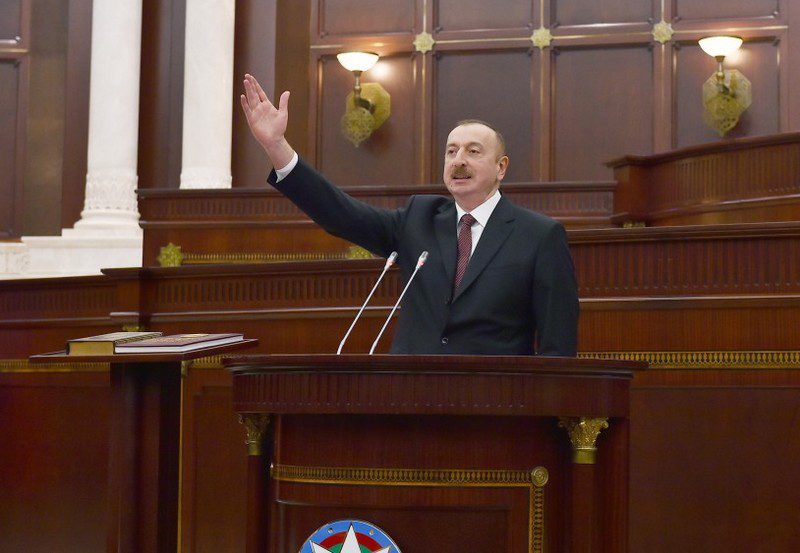
    Azerbaijan’s President Ilham Aliyev repeatedly states: “I doesn’t care who says what about my country, I will continue doing whatever I want.” However, this is a cover up. Regardless of his public tough talk, Azerbaijan is working behind the scenes to manage its conflicts with other countries.

    Last week, I wrote that Azerbaijan asked the Israeli government to intercede with France to improve their relations which have deteriorated in recent years due to the French support of Armenia in the Artsakh conflict. Since Israel turned down Aliyev’s request to mediate with France, Azerbaijan started looking for other channels to resolve its problems with Europe.

    After the Parliamentary Assembly of the Council of Europe (PACE) suspended Azerbaijan’s membership, Aliyev asked the League of Arab States to intervene with Europeans to restore Azerbaijan’s status. On February 13, 2024, at Azerbaijan’s request, Adel bin Abdul Rahman Al-Asoomi, the President of the Arab League’s Parliament, sent a letter to the President of PACE, Theodoros Rousopoulos, complaining about the resolution PACE had adopted refusing to ratify the credentials of the delegation of Azerbaijan.

    The President of the Arab Parliament told PACE: “The Arab Parliament expresses its deep regret over the adoption of this resolution; the Republic of Azerbaijan is a friend and strategic partner of the Arab States and plays a significant and influential role to preserve cultural diversity and to promote dialogue among civilizations. …The Republic of Azerbaijan is a member of the Council of Europe since 2001 and plays a major role in promoting activities of this Organization and achieving its principles and objectives. At the global level, it makes concerted efforts to lower tensions and conflicts….”

    The President of the Arab Parliament then counseled PACE: “Multilateral parliamentary diplomacy must be an instrument to reconcile points of view, and a wall of resistance in front of any divisions, and an added value for the diffusion of the principles of peace and tolerance.”

    The letter ended by urging PACE to reconsider its earlier resolution that had refused to ratify the credentials of Azerbaijan’s parliamentary delegation “which contradict the principles of dialog and cooperation.”

    Naturally, Azerbaijan’s Parliament (Milli Majlis) immediately publicized the Arab Parliament’s letter which was also published by several Azeri newspapers.

    It is very odd that the Arab Parliament would intervene with PACE on a matter that has nothing to do with Arab states. Azerbaijan is neither a member nor an observer of the Arab League. How can the President of the Arab Parliament call Azerbaijan “a friend and strategic partner of Arab States,” when it is an ally of Israel and buys billions of dollars of Israeli weapons? That is the reason Azerbaijan’s request in the past for observer status was rejected by the Arab League. The only possible explanation for the Arab Parliament’s willingness to write a letter to PACE is that Azerbaijan was engaged in its usual practice of ‘Caviar Diplomacy,’ meaning that it made a very generous donation to the Arab League. Therefore, the Arab Parliament’s statement about Azerbaijan seeking dialog and peace has nothing to do with reality.

    Since Armenia has had an Observer status with the League of Arab States since 2005, I am curious to know if Armenia’s representative in the League was aware that the Arab Parliament was considering sending such a letter to PACE in support of Azerbaijan. If yes, what actions, if any, he or she took to object to sending such a letter?

    In addition to the Arab League, Azerbaijan is pursuing its lobbying efforts at PACE through its big brother Erdogan, the President of Turkey. Yasar Yakis, the former Foreign Minister of Turkey and founder of the ruling AK Party, wrote in ARAB NEWS on February 25: “Turkey has strongly opposed the suspension of Azerbaijan [from PACE]…. Even if Azerbaijan’s membership of the Council of Europe is suspended, it could survive without being a member.”

    Earlier in February, when Aliyev visited Erdogan in Ankara, the Turkish President pledged to do everything possible “to get Azerbaijan’s credentials validated at PACE. We will continue our support and efforts for Azerbaijan until the decision [not ratifying its credentials] is overturned.” Erdogan added that Turkey will stress that PACE should be a platform for “parliamentary democracy rather than conflict.” However, Aliyev and Erdogan do not have parliamentary democracy and peace in their own countries.

    If Aliyev truly did not care what actions other countries take against Azerbaijan, he would not have gone to such great lengths to lobby the Arab League and Pres. Erdogan to restore his country’s credentials at PACE. He would have simply ignored PACE’s decision.

    The truth is that Aliyev deeply cares about his image. Most dictators, having violated all sorts of domestic and international laws, do everything possible to whitewash their crimes and try to look like an angel in the eyes of the world.
  • Fake Names on List of Donors to Pashinyan’s Candidate for Yerevan Mayor

    Fake Names on List of Donors to Pashinyan’s Candidate for Yerevan Mayor

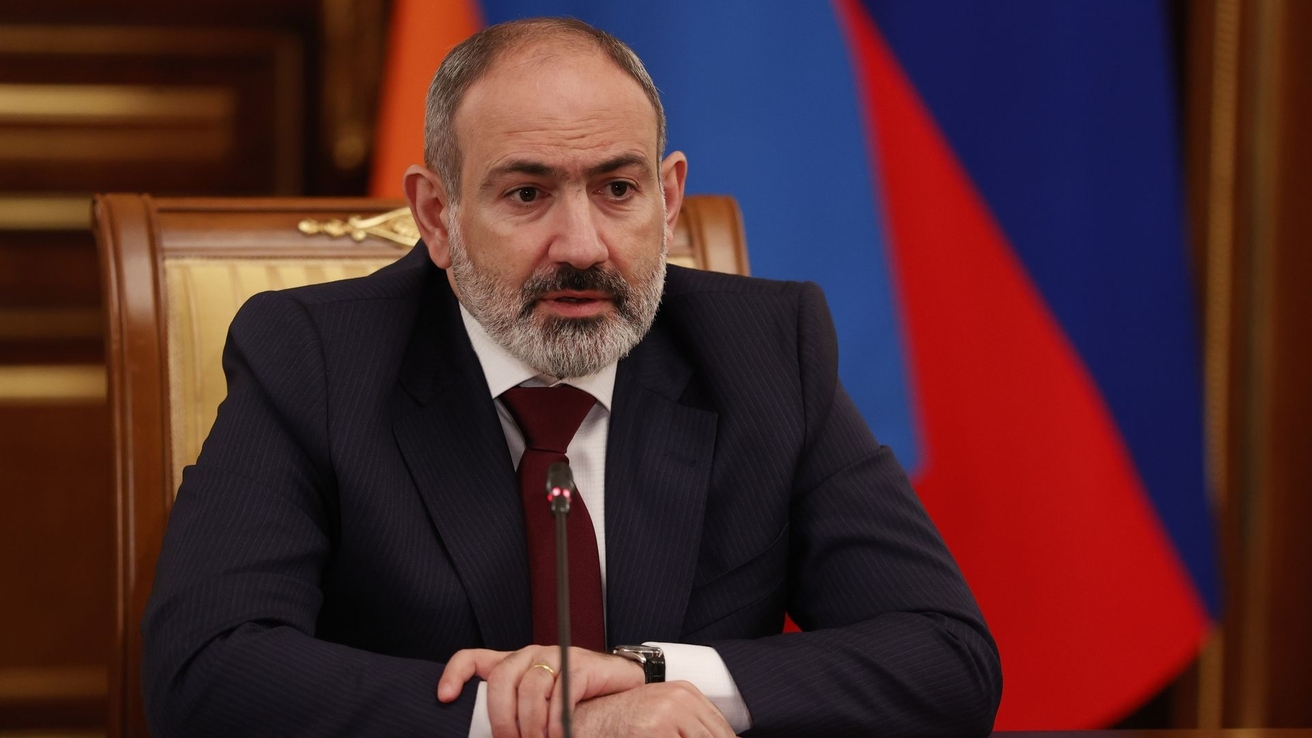
    Prime Minister of Armenia Nikol Pashinyan has boasted for five years about his political party’s fair conduct in elections, blaming the former leaders of carrying out fraudulent elections. As the proverb says, “People who live in glass houses shouldn’t throw stones.”

    Pashinyan has used the considerable resources of his government to gain an unfair advantage over his political opponents during local and parliamentary elections. Nevertheless, some of the opposition candidates, following their election to a public office, are removed after being arrested, tried and jailed by pro-Pashinyan judges.

    A recent example of fraud carried out by Pashinyan’s political party is the September 17, 2023 elections for the City Council of Yerevan. After ousting his own party member Hayk Marutyan from the position of mayor for daring to criticize the ruling party, Pashinyan planned to replace him with former Deputy Prime Minister Tigran Avinyan.

    Pashinyan’s backers resorted to a typical fundraising trick to ensure that Avinyan, who had little public support, becomes the Mayor of Yerevan. To accomplish their objective, they raised over one million dollars in campaign funds from mysterious individuals under fake names, an investigation revealed.

    Infocom.am journalists contacted many of the names on the donors’ list and found out that some of them were fake.

    The scandal starts with a Pashinyan supporter borrowing the ID card of a friend to donate using her name 2.5 million dram ($6,200), the maximum amount allowed by law, to Pashinyan’s political party, Civil Contract. This lady’s ID card was used to hide the real donor’s name. Unbeknownst to her, she was listed as a large donor to Pashinyan’s party. The fraudulent transaction took place on July 31, 2023, hours before a fundraising event held later that evening during which Pashinyan’s party claimed that 987 donors had raised over one million dollars (506 million dram), for the City Council race.

    When asked by the media, Pashinyan’s political party refused to make the donors’ names public. Only after the Freedom of Information Center filed a lawsuit, the party disclosed the list of donors with fake names on January 12, 2024. The list included 996 names who had donated nearly $1.3 million (509 million dram) to the campaign.

    When the lady, who was reported as donating 2.5 million dram, saw her name on the donors’ list, she was very upset. Infocom.am contacted other names on the donors’ list. Many of them were surprised that their names were used as donors to a political campaign. 87% of the donors were listed as donating over a million dram each, 70% of whom (140 individuals) were listed as donating the maximum amount of 2.5 million dram. Among the large donors were 88 candidates for City Council from the ruling Civil Contract party.

    Infocom.am disclosed that the largest donors were the owners of major corporations, their executives and employees. Eight of the large donors worked for a single prominent company. It was confirmed that its employees had not donated from their personal funds, but the business owners had paid in their names. Several other big businessmen were listed as donating the maximum amount. Among the donors on the list were the names of employees of the City Council of Yerevan.

    Infocom.am, after contacting the donors on the list provided by the Civil Contract party, concluded that some of the names on the donors’ list are “at least suspicious. The investigation showed that through organized mechanisms, funds of unknown origin were directed to the Civil Contract party’s fundraising, sometimes under the names of citizens who were generally unaware of the process.” In addition, since the law does not allow fundraising donations in cash, Infocom.am asked Avinyan’s campaign officials how the donations were made during the fundraising event. They answered that employees of ‘Hayeconobank’, who were present, transferred the cash to the account of the party. Among the shareholders of Hayeconobank is the ruling party parliament member and well-known oligarch Khachatur Sukiasyan, known as Grzo.

    Infocom.am told the Deputy Head of the Civil Contract party Vahagn Aleksanyan that the donors it contacted said that they have made no such donations. Aleksanyan asked for the names of these individuals in order to verify them. When told that Infocom.am cannot disclose their names, Aleksanyan replied that perhaps they did not identify the correct individuals.

    According to the law, the government can inspect the fundraising of a campaign only eight months after the election. The law states that by May 31 of the year following an election, political parties have to present their financial reports to the Anti-Corruption Committee.

    When Infocom.am asked the former President of the Central Election Committee Vahagn Hovakimyan, a former Parliament member from the Civil Contract party, about its refusal to disclose the list of donors, Hovakimyan replied: “You are treating the political forces as potential criminals.”

    This is a clear illustration of the fraud committed by Pashinyan’s party during the elections for the City Council of Yerevan. Nevertheless, the election was not as successful as expected for the ruling party. Avinyan was elected mayor only after the opposition parties, which had more City Council members than the ruling party, had failed to combine their votes to elect their own candidate for mayor.

    This is the sad picture of the so-called democracy in Armenia. I seriously doubt that the Anti-Corruption Committee will take any legal action against Pashinyan’s political party for violating election laws.

  • Parliamentary Assembly of Council of Europe Voted 76-10 to Kick Azerbaijan Out

    Parliamentary Assembly of Council of Europe Voted 76-10 to Kick Azerbaijan Out

    With each passing day, the noose is tightening around Pres. Ilham Aliyev’s neck. The European Union’s Chief of Foreign Policy Josep Borrell warned Azerbaijan on January 22 that there would be ‘severe consequences’ if Armenia’s territory were to be violated. The French Senate adopted a resolution by a vote of 336 to 1 on January 17 supporting Armenia’s territorial integrity and calling for sanctions against Azerbaijan. On January 18, Russia’s Foreign Minister Sergey Lavrov publicly contradicted Aliyev’s repeated demands that Armenia provide Azerbaijan a ‘Corridor’ through ‘Zangezur.’ Lavrov said that there is no mention of ‘Zangezur Corridor’ in the Nov. 10, 2020 agreement signed by the leaders of Armenia, Azerbaijan and Russia.

    The latest blow to Azerbaijan was delivered last week by the Parliamentary Assembly of the Council of Europe (PACE) which voted overwhelmingly to reject the credentials of Azerbaijan’s delegates, thus ejecting Baku’s participation in its meetings for at least one year. By a vote of 76 to 10, with four abstentions, PACE delegates decided to expel Azerbaijan on January 24, 2024.

    The resolution adopted by PACE stated: “Very serious concerns remain as to [Azerbaijan’s] ability to conduct free and fair elections, the separation of powers, the weakness of its legislature vis-à-vis the executive, the independence of the judiciary and respect for human rights, as illustrated by numerous judgments of the European Court of Human Rights and opinions of the European Commission for Democracy through Law (Venice Commission).” PACE recalled its previous resolutions which had referred to multiple problems with Azerbaijan, including the functioning of democratic institutions, organized crime, corruption, and money laundering, political prisoners, restrictions on NGO activities, violations of the rights of LGBTI people, non-implementation of judgments of the European Court of Human Rights, transnational repression as a growing threat to the rule of law and human rights, Pegasus and similar spyware and secret state surveillance, and the cases of at least 18 Azeri journalists and media actors who are currently in detention. PACE concluded that “more than 20 years after joining the Council of Europe, Azerbaijan has not fulfilled [its] major commitments.”

    Referring to Artsakh, PACE mentioned its 2023 report which had specified that Azerbaijan “did not acknowledge the very serious humanitarian and human rights consequences stemming from … the absence of free and safe access through the Lachin Corridor … which lasted for nearly 10 months.” PACE also condemned “the Azerbaijan army’s military operations of September 2023, which led to the flight of the entire Armenian population of Nagorno-Karabakh to Armenia and to allegations of ‘ethnic cleansing.’”

    PACE expressed its concern about Azerbaijan’s lack of cooperation with the “rapporteurs of the Monitoring Committee [who] were not allowed to meet with persons detained allegedly on politically motivated charges.” PACE was also not invited “to observe the forthcoming presidential election despite Azerbaijan’s obligation to send such an invitation as the country is under monitoring procedure.” Furthermore, Azerbaijan had refused three times the visit of a PACE rapporteur.

    Ignoring Azerbaijan’s multiple violations of its commitments to the Council of Europe, Azerbaijan’s Foreign Minister Jeyhun Bayramov condemned PACE’s decision. However, he acknowledged that Azerbaijan was ejected because of its invasion of Artsakh, which he described as “restoration by Azerbaijan of its sovereignty.”

    Even though Azerbaijan had dismissed all of its violations of international law, including the numerous judgments of the European Court of Human Rights and rulings of the International Court of Justice, this time around, Baku reacted extremely negatively. The Azeri delegation in PACE announced that their country has decided to “cease its engagement with and presence at PACE until further notice.” Some have compared Azerbaijan’s withdrawal from PACE after its ejection to Nazi Germany leaving the League of Nations in 1933.

    PACE’s vote was overwhelmingly against Azerbaijan because only nine Turkish delegates and one Albanian delegate voted in favor of Azerbaijan. One of the Turkish delegates even voted against Azerbaijan. Meanwhile, 76 delegates from 28 countries, including all four Armenian delegates, voted to eject Azerbaijan.

    Azerbaijan’s loss at PACE is Armenia’s gain:

    1) Azerbaijan’s reputation was further tarnished after its ejection from PACE, exposing its numerous human rights violations and flagrant disregard for European values.

    2) Baku is now deprived of the opportunity to raise its issues in Europe through PACE.

    3) Azerbaijan will no longer be able to criticize Armenia during PACE meetings.

    4) Azerbaijan will be unable to vote in favor of its interests and against those of Armenia at PACE meetings.

    For far too long, Azerbaijan has been spoiled by the international community, particularly Western countries, blinded by Baku’s vast oil and gas supplies. After its ejection from PACE, Azerbaijan should now be expelled from the Council of Europe.

  • During 2.5-Hour-Interview, Pres. Aliyev Made Existential Threats to Armenia

    During 2.5-Hour-Interview, Pres. Aliyev Made Existential Threats to Armenia

    Pres. Ilham Aliyev, the dictator of Baku, gave a 2.5-hour-long press conference to Azeri journalists on January 10, 2024, during which he spewed not only his usual lies, but also made threats to Armenia’s very existence. Here are the highlights of Aliyev’s extremely arrogant and alarming words, emboldened by his military victories in the 2020 and 2023 Artsakh wars.

    To begin with, Aliyev claimed that “Today’s Azerbaijan is among the strongest countries of the world in the truest sense of the word.” This is not true. According to the globalfirepower.com website, as of 2024, Azerbaijan’s military is ranked 59th in the world. This is far from being one of the strongest countries in the world. Had it not been for the direct control of the Azeri military by Turkish Generals and bringing terrorist mercenaries from Syria during the 2020 Artsakh war, Azerbaijan would not have been able to defeat Artsakh. Aliyev admitted during his press conference that Azerbaijan enjoyed the full backing of Turkey during the 2020 war.

    Pres. Aliyev justified Azerbaijan’s serious violations of human rights, even genocide against Artsakh Armenians, by stating: “I have repeatedly said that international law does not work. These mechanisms are deployed only for the weaker countries. Bigger states ignore them. For them, it is as if law is not law, international law is not law. Under such circumstances, countries that demand justice, and rightly so, must secure this justice themselves.”

    Aliyev admitted the difficulties that Azerbaijan’s military faced during the 2020 war: “Had the war continued [after Nov. 10, 2020], it would have been very difficult to liberate the Kalbadjar and Lachin districts, especially in the winter season. However, we would have done that too. But our losses could have been extremely high, even higher than in the 44-day war. We all knew that well, because even now anyone visiting those regions can see how challenging the terrain is. However, if Armenia had not signed the act of capitulation, we would have continued the war until the end.”

    Aliyev’s next lie is that after the 2020 war, Armenia was “illegally transporting weapons, ammunition, mines and manpower to Karabakh.” This never happened. Aliyev used it as a pretext to attack Artsakh.

    The President of Azerbaijan revealed that before the Sept. 19, 2023 Azeri attack on Artsakh, “some of the local Armenians contacted our representatives and made suggestions about contacts, and we did not reject that.” Any Armenian who made secret contacts with the enemy should be considered a traitor.

    Aliyev then made another important admission. He said that, during the Sept. 19, 2023 attack on Artsakh, “had they [Artsakh Armenians] not surrendered, they would have been eliminated. There was no other option.” Aliyev is thus confirming that Artsakh leaders had no choice but to surrender in order to save the lives of 120,000 Artsakh Armenians.

    Aliyev confirmed that he had planned the arrest of Artsakh leaders who are now held in a Baku jail: “our position regarding the leaders of the separatists was unequivocal — their capture. Some of them tried to escape from there through the Lachin road, others were found in Khankendi [Stepanakert], and elsewhere. We knew their whereabouts.” He added that “only two people are missing from that group — they are in Yerevan.” Aliyev meant Robert Kocharyan and Serzh Sargsyan.

    Pres. Aliyev disclosed that he had personally warned Prime Minister Nikol Pashinyan about the impending Azeri attack on Artsakh on Sept. 19, 2023: “I told both the Armenian leadership and international actors that I could press the button and carry out this operation in a minute and they would not be able to do anything.”

    Aliyev also vented his anger at France’s support for Armenia, condemned that country’s colonial past and alleged that Paris had committed genocide against 1.5 million Algerians. He also ridiculed Armenia’s recent purchase of French armored personnel carriers, by calling them “tin cans” which are not “a real threat to us.”

    Aliyev also rejected the latest Pashinyan initiative — ‘Crossroads of Peace’– which is supposed to link Armenia, Azerbaijan, Turkey, Georgia and Iran. Aliyev said that this is just a PR campaign meant to replace his preferred ‘Zangezur Corridor.’ Ignoring Armenia’s sovereignty, Aliyev insisted that Armenia allow Azeri cargo to pass from Azerbaijan to its Nakhichevan exclave through Meghri, Armenia, without any inspection or customs clearance. If not, Aliyev warned, Azerbaijan will continue its blockade of Armenia.

    The President of Azerbaijan bragged that there is no longer any mention of Karabagh in the ‘Peace Treaty’ being negotiated between Armenia and Azerbaijan.

    Aliyev dismissed Pashinyan’s suggestion to demarcate the mutual border between Armenia and Azerbaijan on the basis of the 1975 Soviet maps, preferring older maps which he claimed gave Azerbaijan much more territory. He also mentioned the ridiculous notion that ‘Irevan’ (Yerevan) is an ancient Azeri city. Aliyev also claimed that there are eight Azeri villages which are located within Armenia. Importantly, Aliyev stated that Azerbaijan will not withdraw its military from parts of the territory of the Republic of Armenia it has occupied since May 2021 and September 2022. He suggested that Armenia and Azerbaijan sign a peace treaty now, leaving the demarcation of the border to a future date.

    Facing such an arrogant and warmongering leader as Aliyev, Pashinyan should stop begging for peace which is a sign of weakness, giving Azerbaijan the opportunity to demand more concessions from Armenia. Armenia’s top two priorities should be having a competent leader and a powerful military to fend off threats from its two enemies: Azerbaijan and Turkey.

  • Pres. Aliyev’s Son-in-Law Evacuates An entire village for His Business

    Pres. Aliyev’s Son-in-Law Evacuates An entire village for His Business

    There are endless scandals involving the Aliyev clan in Azerbaijan. President Ilham Aliyev, who has ruled the country with an iron fist since 2003, took over from his father Heydar Aliyev who was the head of state from 1993 to 2003. To make sure that the Aliyevs rule Azerbaijan for several generations, Ilham Aliyev has appointed his wife as his Vice President. I am certain that she will name one of her children to succeed her, thus prolonging the Aliyev dynasty in Azerbaijan.

    The latest scandal in Azerbaijan was exposed by Ardi Pulaj, first published on the Abzas Media and an edited version republished by Globalvoices.org. The article is titled, “In Azerbaijan, an entire village was vacated for the President’s son-in- law.

    The village of Garachayli was initially owned by the Grand Mufti of Azerbaijan, Allahshukur Pashazade — the top Muslim cleric of Azerbaijan, who had leased the land to the villagers. Then, in 2007, the village was leased to Shabran Agrocomplex LLC for 49 years after which the company ordered the villagers to vacate the land. One of the villagers, Tahir Rasulov, sued the company for remuneration. But after two years, he lost his lawsuit. “They tortured and tormented me a lot. They threatened me with the police. They took me out of my ancestral home.” The company surrounded the village with a wire fence. “We now look at our ancestral lands from outside the wires,” said Rasulov.

    The founder of Shabran Agrocomplex is Baku Agropark which belongs to businessman Samad Gurbanov who is married to Arzu Aliyeva, Azerbaijan President Ilham Aliyev’s youngest daughter.

    Gurbanov’s personal investment of $6.9 million in the company was matched with an additional $6 million loan for 10 years at 5% interest by the State Entrepreneurship Development Fund.

    The article reported that “Gurbanov’s company was exempted from paying for the electrical wiring installation during the construction of the greenhouse, which was done by a company named Retro Holding, owned by Arif Pashayev, Ilham Aliyev’s father-in-law. Other investment favors included favorable loans for the irrigation infrastructure of the agrocomplex — all on the state’s dime.”

    Shohrat Gardashaliyev, a former resident of Garachayli village said: “The gas line goes through here to Agropark and does not provide gas to the people. They give manure to the fields. It’s true, they spend millions on manure, but the people don’t have as much value as manure. We can’t plant crops here. We don’t have land, we don’t own property. It’s all the people’s land, but look, they’ve invaded and taken it away…. I am simply told just fall down and die, let me kick you in the throat and die.”

    Tahir Rasulov said: “Names are mentioned here; the name of the president, the name of Mrs. Mehriban Aliyeva (vice-president and wife) is mentioned. As soon as one of our cattle crosses to that field, we are told by the management that this is Mrs. Mehriban’s place. So has Mrs. Mehriban appointed a representative here to kill, beat, torture or threaten a citizen?”

    Since there are no employment opportunities for the villagers, the only possibility is to work for agrocomplex which has either refused to hire them or has offered a monthly salary of only $200. One villager described the deplorable situation as “modern day slavery.”

    Court documents showed that Baku Agropark paid “incredibly cheap rent for the land it leased in the village of Garachayli — an annual rent of $1,500 for 4,300 acres of land.” Rasulov said that he used to pay “a rent of $45 per acre of that land. And yet, Baku Agropark pays less than $2.2 per acre.”

    Samad Gurbanov also owns “the Baku Agropark Trading House, engaged in the wholesale trade of fruits and vegetables; Maxitrading LLC, engaged in the import and distribution of food products; as well as several other companies belonging to Mirlex Group (Mirlex Development and Mirlex Construction LLC), engaged in the sale of fire extinguishers, installation of automatic fire alarms, parking, and video surveillance systems. The offices of many of Samad Gurbanov’s companies are located in Port Baku Towers, an elite business center owned by Pasha Holding [belongs to Mrs. Aliyev’s father].”

    When Abzas Media journalists tried “to speak with the managers of the agrocomplex in Shabran it was proved futile. The film crew was stopped by a security guard and told none of the managers were at the complex.”

    Sadly, “after the residents of the village were forced to flee, they left behind the village graveyard. Ever since the complex was built and their land was taken, they must seek permission from the agrocomplex management even to visit the graves of their late relatives.”

    It is very tragic that a government that earns billions of dollars a year from its vast oil and gas reserves is unwilling to share a small part of that wealth with the poor villagers in Azerbaijan.

  • Court Convicts Pashinyan Critic After His Death…..

    Court Convicts Pashinyan Critic After His Death…..

    This week’s commentary is a lesson for all those who naively believe what they hear or read and then pass on unsubstantiated stories to others. By doing so, they are actually helping to spread fake news. When someone gives you a piece of ‘news’, you should always ask, ‘what is your source’? When the answer is: ‘I heard it from someone else,’ immediately dismiss what was said to you. It is critical to verify what you are told in order not to disseminate baseless rumors to others.

    Those of us who are in the news business have a bigger responsibility to be vigilant because if we do not double-check what is being reported to us, then we become guilty of spreading fake news to thousands of readers or viewers.

    Here is an example of a news item we just heard about. A 57-year-old entertainment producer, Armen Grigoryan, who had died in Armenia, was found guilty by a judge in Armenia last week, a year and five months after his death. Not having heard that a dead man can be tried and convicted, I wondered if such a thing really happened.

    Since I have had long years of experience hearing all sorts of baseless reports, I immediately contacted the late defendant’s lawyer in Armenia, Ruben Melikian, who was kind enough to explain the circumstances of this strange story.

    Armen Grigoryan, during a street protest against the authorities in Armenia in May 2022, shortly before the parliamentary elections, told a reporter that he stood by his earlier statement of April 2021 that half of Prime Minister Nikol Pashinyan’s supporters in certain parts of the country have Turkish blood. Naturally, this was a disparaging remark, but if a country is truly democratic, citizens have the right to use unpleasant, even offensive words. Nevertheless, Grigoryan had not said anything threatening, which would have been against the law.

    In May 2022, Grigoryan, a vocal critic of the regime, was arrested and jailed for the statement he had made a year before his arrest. He was charged with “inciting ethnic hostility.” Those accused of such a charge in the past, had made offensive or degrading comments about other ethnic groups living in Armenia. However, no Armenian had been charged before with incitement after making such remarks about fellow Armenians. For example, Pashinyan supporters, who had made insulting comments against Artsakh Armenian refugees, have not been charged with incitement.

    On July 15, 2022, two months after his arrest, Grigoryan was brought to court from jail to stand trial. Regrettably, in the midst of the trial, he collapsed and died in the courtroom from a brain aneurism or stroke.

    In Armenia, when a defendant dies, his trial is discontinued. However, in this case, according to Armenian law, the defendant’s family has the right to ask that the trial be continued until a verdict is reached. Grigoryan’s lawyer explained that his family wanted to see that he is exonerated, even though, due to the presumption of innocence (innocent until proven guilty), he was merely charged, but not convicted prior to his death. The family insisted that Grigoryan’s name be cleared since they believe that he should have never been arrested, charged and jailed.

    The attorney told me that during the trial, after Gregorian’s death, a government witness testified in court that he had not written the testimony that was submitted in his name to the court. This witness said that a government investigator had written the testimony and had told him to sign it.

    Also, a government expert, who testified in court, admitted that Grigoryan’s words could not be considered an incitement to inter-ethnic hostility, which means targeting members of another ethnic group. Grigoryan had only used offensive words about his fellow Armenians, members of his own ethnic group.

    Nevertheless, last week, a year and five months after Grigoryan’s death, the judge declared him guilty of the charge filed against him. His lawyer told me that after the verdict is received in writing, the family has one month to file an appeal, which they intend to do. If they lose in the court of appeal, they will then appeal to the Court of Cassation which is a Court that hears appeals against decisions of courts of appeal. If they fail there too, they will then go to the European Court of Human Rights.

    Having investigated the circumstances of a court in Armenia holding a trial and finding a dead man guilty, I wanted to know if such trials had also taken place in other countries. Surprisingly, I found several cases in ancient and recent history when other countries held posthumous trials of defendants and found them guilty after their death.