Author: Aylin D. Miller

  • ARMENIAN GENOCIDE MUSEUM OF AMERICA

    ARMENIAN GENOCIDE MUSEUM OF AMERICA

    From: Ilkcan Cokgor

    ARMENIAN GENOCIDE MUSEUM OF AMERICA AND
    NEAR EAST FOUNDATION ENTER INTO
    COOPERATION AGREEMENT

    New York City – The Armenian Genocide Museum of America (AGMA) and theNear East Foundation signed an agreement of cooperation on June 12 atthe Foundation’s international headquarters in New York City.

    Signing the agreement on behalf of the two organizations were Van Z.Krikorian, AGMA Trustee and Building and Operations CommitteeChairman, and Shant Mardirossian, Near East Foundation Board Chairman.Also present at the signing were Near East Foundation PresidentAlexander Papachristou, Dr. Rouben Adalian, Director of the AGMA, andDr. Hayk Demoyan, Director of the Armenian Genocide Museum-Institutein Yerevan, Armenia.

    “This agreement opens a treasure trove of historical Armenian Genocideera documents and artifacts for use in the museum’s exhibits,”Krikorian said. “We are very pleased to be forging a partnership withthe Near East Foundation to educate the public on one of the mostsignificant periods of both Armenian and American history.”  TheArmenian Genocide Museum of America is slated to open in 2010 inWashington, DC.

    “The archives of the Near East Foundation house thousands of documentswhich exemplify the first international humanitarian undertaking ofthis sort by the American people,” Mardirossian said. “Not only dothearchives tell us the stories of countless Armenian orphans, but theydeliver them through the journals, diaries, and writings of the NearEast Relief workers. This museum, in the heart of Washington, DC, willserve as a tribute to their heroic efforts.”

    The Near East Foundation is the successor organization to the AmericanCommittee for Armenian and Syrian Relief, which was founded in 1915and later incorporated as Near East Relief in 1919 by an act ofCongress.  Near East Relief established and operated orphanages,hospitals, and schools throughout the Balkans, Caucasus, and the NearEast to ease the suffering of the Armenian Genocide survivors seekingrefuge from the Ottoman Empire.

    “Near East Relief was at the forefront of America’s efforts to respondto the human suffering that occurred in the wake of the ArmenianGenocide,” Krikorian said. “Armenians in the United States and allover the world benefited directly or indirectly from this monumentalundertaking.”

    According to Near East Foundation records, from 1915 to 1930 the NearEast Relief administered $117 million worth of assistance and iscredited with saving a million lives and providing vocational trainingto 132,000 Armenian orphan children.

    “Millions of dollars were raised through appeals in the media, atpublic rallies, in churches and synagogues, and in schools,”Mardirossian said. “Not only were funds raised, but hundreds of NearEast Relief volunteers were on the ground ministering to the sufferingsurvivors of the Genocide, delivering food, clothing, and materials,but most of all comfort and hope. Many risked their lives and severalgave their lives for this noble cause. Their stories and memoriesshould be preserved as an example of the American spirit.”

    This agreement with the Near East Foundation is the second cooperativeagreement AGMA has forged in recent months. In April, the museumentered into a partnership with the Armenian Genocide Museum-Instituteat the Tsitsernakaberd Memorial Complex in Yerevan, Armenia.

    The resources and expertise from the genocide museum in Armenia andthe valuable archival materials from Near East Relief will complementother artifacts and documents to be incorporated in the AGMA exhibits,which are being designed by the preeminent Washington, DC area firm ofGallagher & Associates.

    The museum will be housed in the historic National Bank Building inWashington, DC, at 14th and G Streets, NW, just blocks from the WhiteHouse.  When completed, it will be the first international classmuseum in the Armenian Diaspora dedicated to preserving and honoringthe memory of the victims and survivors of the Armenian Genocide. From1915-1923 a centrally-planned, government-directed campaign subjectedthe Armenian population in Turkey to deportation, expropriation, abduction, torture, starvation, and outright killings. An estimated1.5 million Armenians perished and tens of thousands became widowed,orphaned and homeless.

    Today, the Near East Foundation operates development projects in sevencountries in the Middle East and Africa and is planning a project inArmenia. In 1930, the organization re-defined itself. It gave theschools, orphanages, hospitals, and other facilities that it hadfounded to the countries where it operated, and it became a pioneer inthe field of economic development. Current projects includeagricultural innovation to combat climate change in Mali and Egypt,reforming primary education to include girls in Morocco, and assistingIraqi refugees to support themselves in new communities in Syria andJordan. The 100-member field staff all work in their own countries, sothe Near East Foundation supports local professionalism while helpingthe region’s poorest people.

    “We are proud to continue the tradition of American assistance tocommunities in peril in the Middle East and Africa,” said NEFPresident Papachristou. “We rely fully on the expertise and dedicationof our colleagues who know best how to organize these communities tosolve their own challenges.”

    The agreement between the AGMA and the Near East Foundation alsoanticipates the promotion of each other’s programs and projects. Thelinks to the Web sites of the two organizations are www.neareast.org and www.armeniangenocidemuseum.org.

    The Armenian Genocide Museum of America is an outgrowth of theArmenian Assembly of America and the Armenian National Institute(ANI), catalyzed by the initial pledge of Anoush Mathevosian towardbuilding such a museum in Washington.

  • Obama ‘First Family’ Photos?

    Obama ‘First Family’ Photos?

    From South African Source

    How come we haven’t seen or known about some of these…?

    We know Hillary but do we know him — the media darling?

    Barack Obama’s grandmother, Sarah Hussein Onyango Obama

    U.S. Presidential hopeful Barack Obama’s Uncle has been a prisoner in his own home, Trapped by post election violence that has left More than 600 Kenyans dead. ‘If Barack Obama

    Were elected, he would improve relations between Africa and America because he had his roots in Africa’, his uncle said.

    Malik Obama, older brother to Barack Obama, holds an undated picture of

    Barak, left, and himself, middle, and an unidentified friend in his shop in eastern Kenya.

    By Karel Prinsloo, AP

    Luo dancers from the Senator Barack Obama Primary School.

    Barack has stated his support for Luo Raila Odinga (Opposition Leader in Kenya who signed a ‘Shariah pact’ With Muslims and claims to be Obama’s Cousin) and is married to Ida Odinga.

    They have four children – two sons and Two daughters. His oldest son, Fidel, is Named after Fidel Castro.

    Barack’s father, Muslim, hard-drinker, Was married three times, attended Harvard and returned to Kenya. Obama claims he was an atheist, But he was raised Muslim and was Given a Muslim burial at Barack’s family’s request.

    With mother Stanley Ann Dunham. In his own Autobiography Obama writes, ‘How and when The marriage occurred remains a bit murky, a Bill of particulars that I have never quite had The courage to explore.’ (His father was still Married to his first wife Kezia in Kenya at The time.)

    His father’s only visit while Obama was in Hawaii

     Mother’s 2nd husband Lolo Soetoro (Indonesian Muslim), Their daughter Maya, and Obama.


    Abandoned by his father and shipped off by his Mother to his white grandparents, Barry Sotero Becomes Barack Hussein Obama. Obama would Describe his grandparents as ‘white folk.’ (Yeah, ‘white folk’ that would NOT abandon You, their grandchild. Shame on you Obama.)

    Barack stands behind Kezia (stepmother) in a Kenyan family shot. (Including brother Abongo ‘Roy’ Obama who is a Luo activist and A ‘Militant Muslim’ who argues that the black man must ‘liberate Himself from the poisoning influences of European culture.’ ) ‘Abongo’s new lifestyle has left him lean and clear-eyed, and at The wedding, he looked so dignified in his black African gown With white trim and matching cap that some of our guests Mistook him for my father,’ Obama wrote in Dreams From My Father.

    Obama’s visit to Africa ’06

    (Where are the transcripts of the speeches He gave here? Campaigning for Odinga? Wouldn’t it be great to be able to read these? Do the people of the state of Illinois know About Obama’s radical background?)

  • Who Is This Wonder Boy?

    Who Is This Wonder Boy?

             Who Is This Wonder Boy? (Barack Obama),

                He was born in Hawaii to an African father (Barack Obama), and a white mother (Anne Dunham), who finally divorce. He is raised by Dunham’s parents in Hawaii.

                Somehow he winds up at Columbia University, works in Chicago, attends Harvard Law. In 1991 he works for a Chicago Law firm, then becomes a professor at the University of Chicago. In 2004 he is elected to the US Senate.

             The Invisible Hand

                If you went into a detailed look you would see the ‘Invisible Hand’ of Judaism as the guiding factor in his career.

                No one just appears, and runs for President!

          From Wikipedia, the free encyclopedia
          (Redirected from Barack Obama.)

          His Jewish racial connection must be a little far back, like Kerry’s. So far the publicity is posting this:Stanley Armour DUNHAM and Madelyn Lee PAYNE were married on 5 May 1940, and had the following children:

          Jump to: navigation, search
          “Obama” redirects here. For the city in Japan, see Obama, Fukui.
          Barack Obama

          —————————————————————————–

          Junior U.S. Senator, Illinois
          Incumbent
          Assumed office
          January 3, 2005–
          Serving with Richard Durbin
          Preceded by Peter Fitzgerald
          Succeeded by Incumbent (2011)

          —————————————————————————–

          Born August 4, 1961 (age 45)
          Honolulu, Hawaii
          Political party Democratic
          Spouse Michelle Obama
          Religion United Church of Christ
          Barack Hussein Obama (born August 4, 1961) is the junior United States Senator from Illinois. According to the U.S. Senate Historical Office, he is the fifth African American Senator in U.S. history and the only African American presently serving in the U.S. Senate.[1]

          After graduating from law school, Obama moved to Illinois, where he was elected to the state senate in 1996 as a Democrat. Four years later, he made an unsuccessful run for the U.S. House of Representatives. After rededicating his efforts to the state senate and winning reelection in 2002, Obama ran for an open seat in the U.S. Senate two years later. Midway through the campaign, Obama delivered the keynote address at the 2004 Democratic National Convention, raising his national stature.

          Obama was elected to the U.S. Senate in November 2004. Though he has not announced that he is running for any higher office, he has been identified in recent opinion polls as the second most popular choice among Democratic voters for their party’s nomination in the 2008 U.S. presidential election, behind New York Senator Hillary Rodham Clinton.[2]

         Early life and career
          See also: Dreams from My Father
          Barack Obama was born in Honolulu, Hawaii to Barack Hussein Obama, Sr. of Alego, a village in Nyanza Province, Kenya, and Ann Dunham of Wichita, Kansas.[3] His parents met while both were attending the East-West Center of the University of Hawaii at Manoa, where his father was enrolled as a foreign student. When Obama was two years old, his parents divorced and his father returned to Kenya. His mother married Lolo Soetoro, an Indonesian foreign student, moving to Jakarta with Obama when he was six years old. Four years later, Obama returned to Hawaii to live with his maternal grandparents.[4] He was enrolled in the fifth grade at Punahou School, where he continued studies through high school and graduated in 1979.[5]

          In his 1995 memoir, Dreams from My Father, Obama describes his experiences growing up in his mother’s white American middle class family. His knowledge about his absent black Kenyan father came mainly through family stories and photographs. Of his early childhood, Obama wrote: “That my father looked nothing like the people around me—that he was black as pitch, my mother white as milk—barely registered in my mind.”[6] As a young adult, he struggled to reconcile social perceptions of his multiracial heritage. Obama writes about smoking marijuana and trying cocaine during his teenage years to “push questions of who I was out of my mind”.[7]

          After high school, Obama studied for two years at Occidental College in California and then transferred to Columbia College in New York City, where he majored in political science with a specialization in international relations. After receiving his Bachelors of Arts degree in 1983, Obama worked for one year at Business International Corporation. In 1985, he moved to Chicago to direct a non-profit project assisting local churches to organize job training programs for residents of poor neighborhoods.[8][9]

          Obama entered Harvard Law School in 1988. In February 1990, he gained national recognition for becoming the first African American to be elected president of the Harvard Law Review.[10][11] He obtained his Juris Doctor degree magna cum laude from Harvard in 1991.[9] On returning to Chicago, Obama directed a voter registration drive, then worked for the civil rights law firm Miner, Barnhill & Galland, and taught constitutional law at the University of Chicago Law School from 1993 until his election to the U.S. Senate in 2004.[9]
         State legislature
          In 1996, Obama was elected to the Illinois State Senate from Chicago’s 13th District in the south-side neighborhood of Hyde Park. In January 2003, when Democrats regained control of the chamber, he was named chairman of the Senate Health and Human Services Committee.[12] Among his legislative initiatives, Obama helped to author an Illinois Earned Income Tax Credit that provided benefits to lower income families, worked for legislation that would support residents who could not afford health insurance, and helped pass bills to increase funding for AIDS prevention and care programs.[13]

          In 2000, Obama made an unsuccessful Democratic primary run for the U.S. House of Representatives seat held by four-term incumbent candidate Bobby Rush. Rush, a former Black Panther and community activist, charged that Obama had not “been around the first congressional district long enough to really see what’s going on”.[14] Rush received 61% of the vote to Obama’s 30%.[15]

          After the loss, Obama focused his efforts on the state Senate, authoring a law requiring police to videotape interrogations for crimes punishable by the death penalty[4] and supporting legislation that required insurance companies to cover routine mammograms.[16][17] He ran unopposed in 2002.

          Reviewing Obama’s career in the Illinois Senate, commentators noted his ability to work effectively with both Democrats and Republicans, and to build coalitions.[18][19] In his subsequent campaign for the U.S. Senate, Obama won the endorsement of the Illinois Fraternal Order of Police, whose officials cited his “longtime support of gun control measures and his willingness to negotiate compromises”, despite his support for some bills that the police union had opposed.[20]
         Keynote address
          See also: 2004 Democratic National Convention
          Midway through his campaign for U.S. Senator, Obama wrote and delivered the keynote address at the 2004 Democratic National Convention in Boston, Massachusetts.[21]

          After describing his maternal grandfather’s experiences as a World War II veteran and a beneficiary of the New Deal’s FHA and GI Bill programs, Obama said:

          No, people don’t expect government to solve all their problems. But they sense, deep in their bones, that with just a slight change in priorities, we can make sure that every child in America has a decent shot at life, and that the doors of opportunity remain open to all. They know we can do better. And they want that choice.

          Questioning the Bush administration’s handling of the Iraq War, Obama spoke of an enlisted Marine, Corporal Seamus Ahern from East Moline, Illinois, asking, “Are we serving Seamus as well as he is serving us?” He continued:

          When we send our young men and women into harm’s way, we have a solemn obligation not to fudge the numbers or shade the truth about why they’re going, to care for their families while they’re gone, to tend to the soldiers upon their return, and to never, ever go to war without enough troops to win the war, secure the peace, and earn the respect of the world.

          Finally he spoke for national unity:

          The pundits like to slice-and-dice our country into Red States and Blue States; Red States for Republicans, Blue States for Democrats. But I’ve got news for them too. We worship an awesome God in the Blue States, and we don’t like federal agents poking around in our libraries in the Red States. We coach Little League in the Blue States and yes, we got some gay friends in the Red States. There are patriots who opposed the war in Iraq and patriots who supported the war in Iraq. We are one people, all of us pledging allegiance to the stars and stripes, all of us defending the United States of America.
         Senate campaign

          A campaign banner used by Obama supporters during his 2004 bid for the Senate.Main article: Illinois United States Senate election, 2004
          In 2004, Obama ran for the U.S. Senate open seat vacated by Peter Fitzgerald. In early opinion polls leading up to the Democratic primary, Obama trailed multimillionaire businessman Blair Hull and Illinois Comptroller Dan Hynes. However, Hull’s popularity declined following allegations of domestic abuse.[22]

          Obama’s candidacy was boosted by an advertising campaign featuring images of the late Chicago Mayor Harold Washington and the late U.S. Senator Paul Simon; the support of Simon’s daughter; and political endorsements by the Chicago Tribune and Chicago Sun-Times.[23][24] From a crowded field of seven candidates, Obama received over 52% of the vote in the March 16, 2004 primary, emerging well ahead of his Democratic rivals.[25]

          Obama was then matched in the general election against Republican primary winner Jack Ryan. However, Ryan withdrew from the race on June 25, 2004 following public disclosure of child custody divorce records containing embarrassing sexual allegations by Ryan’s ex-wife.[26] On August 8, 2004, with less than three months to go before election day, Alan Keyes accepted the Illinois Republican Party’s nomination to replace Ryan.[27] A long-time resident of Maryland, Keyes established legal residency in Illinois with the nomination.[28] Through three televised debates, Obama and Keyes expressed opposing views on stem cell research, abortion, gun control, school vouchers, and tax cuts.[29] In the general election held November 2, 2004, Obama received 70% of the popular vote to Keyes’ 27%.[30]
         Senate career
          Obama was sworn in as a Senator on January 4, 2005. During his first year in office Obama drew praise for his perceived attempts to avoid the limelight.[31] Nonetheless, Obama’s public profile continued to climb through 2005 and 2006. TIME magazine named him one of “the world’s most influential people,” listing him among twenty “Leaders and Revolutionaries” for his high-profile entrance to federal politics and his popularity within the Democratic Party.[32] An October 2005 article in the British journal New Statesman listed Obama as one of “10 people who could change the world.”[33] During his first two years in the Senate, Obama received Honorary Doctorates of Law from Knox College,[34] University of Massachusetts Boston,[35] Northwestern University,[36] and Xavier University of Louisiana.[37] He is a member of the following Senate committees: Foreign Relations; Health, Education, Labor and Pensions; Homeland Security and Governmental Affairs; and Veterans’ Affairs.[38]
         Legislation

          109th Congress

          President Bush signing the Federal Funding Accountability and Transparency Act as bill sponsors Tom Coburn (R-OK) and Obama look on.[39]Obama sponsored 152 bills and resolutions brought before the 109th Congress in 2005 and 2006, and cosponsored another 427.[40][41] His first bill was the “Higher Education Opportunity through Pell Grant Expansion Act”.[42] Entered in fulfillment of a campaign promise, the bill proposed increasing the maximum amount of Pell Grant awards to help needy students pay their college tuitions.[43] The bill did not progress beyond committee and was never voted on by the Senate.

          Obama took an active role in the Senate’s drive for improved border security and immigration reform. Beginning in 2005, he co-sponsored the “Secure America and Orderly Immigration Act” introduced by Sen. John McCain (R-AZ).[44] Obama later added three amendments to S. 2611, the “Comprehensive Immigration Reform Act”, sponsored by Sen. Arlen Specter (R-PA).[45][46] S. 2611 passed the Senate in May 2006, but failed to gain majority support in the U.S. House of Representatives.[47] In September 2006, Obama supported a related bill, the Secure Fence Act, authorizing construction of fencing and other security improvements along the United States–Mexico border.[48] President Bush signed the Secure Fence Act into law in October 2006, calling it “an important step toward immigration reform.”[49]

          Partnering first with Sen. Richard Lugar (R-IN), and then with Sen. Tom Coburn (R-OK), Obama successfully introduced two initiatives bearing his name. “Lugar-Obama” expands the Nunn-Lugar cooperative threat reduction concept to conventional weapons, including shoulder-fired missiles and anti-personnel mines.[50][51][52] The “Coburn-Obama Transparency Act” provides for a website, managed by the Office of Management and Budget, listing all organizations receiving Federal funds from 2007 onward, and providing breakdowns by the agency allocating the funds, the dollar amount given, and the purpose of the grant or contract.[53][54] On December 22, 2006, President Bush signed into law the “Democratic Republic of the Congo Relief, Security, and Democracy Promotion Act”, marking the first federal legislation to be enacted with Obama as its primary sponsor.[55]
          110th Congress
          This section is a stub. You can help by expanding it.

          During the first two weeks of the Democrat-controlled 110th Congress, Obama sponsored six bills and resolutions and cosponsored another 24.[56][57] His legislative activities during the current session’s first days focused primarily on ethics and energy-related bills.[58][59][60][61][62]
         Official travel

          Senate Foreign Relations Committee Chairman Richard Lugar (R-IN) and Committee member Barack Obama at a Russian base where mobile launch missiles are being destroyed by the Nunn-Lugar program.During the August recess of 2005, Obama traveled with Sen. Richard Lugar (R-IN), Chairman of the Senate Foreign Relations Committee, to Russia, Ukraine and Azerbaijan. The trip focused on strategies to control the world’s supply of conventional weapons, biological weapons, and weapons of mass destruction as a strategic first defense against the threat of future terrorist attacks.[63] Lugar and Obama inspected a Nunn-Lugar program-supported nuclear warhead destruction facility at Saratov, in southern European Russia.[64] In Ukraine, they toured a disease control and prevention facility and witnessed the signing of a bilateral pact to secure biological pathogens and combat risks of infectious disease outbreaks from natural causes or bioterrorism.[65]

          In January 2006 Obama joined a Congressional delegation for meetings with U.S. military in Kuwait and Iraq. After the visits, Obama traveled to Jordan, Israel, and the Palestinian territories. While in Israel, Obama met with Israeli Foreign Minister Silvan Shalom.[66] Obama also met with a group of Palestinian students two weeks before Hamas won the January 2006 Palestinian legislative election. ABC News 7 (Chicago) reported Obama telling the students that “the US will never recognize winning Hamas candidates unless the group renounces its fundamental mission to eliminate Israel”, and that he had conveyed the same message in his meeting with Palestinian authority President Mahmoud Abbas.[67]

          Obama left for his third official trip in August 2006, traveling to South Africa and Kenya, and making stops in Djibouti, Ethiopia and Chad. Obama flew his wife and two daughters from Chicago to join him in a visit to his father’s birthplace, a village near Kisumu in Kenya’s rural west.[68] Newspapers reported enthusiastic crowds at Obama’s public appearances.[69] In a public gesture aimed to capitalize on his celebrity and encourage more Kenyans to undergo voluntary HIV testing, Obama and his wife took HIV tests at a Kenyan clinic.[70] In a nationally televised speech at the University of Nairobi, Obama spoke forcefully on the influence of ethnic rivalries in Kenyan politics.[71] The speech touched off a public debate among rival leaders, some formally challenging Obama’s remarks as unfair and improper, others defending his positions.[72][73]
         Political advocacy
          On the role of government in economic affairs, Obama has written: “we should be asking ourselves what mix of policies will lead to a dynamic free market and widespread economic security, entrepreneurial innovation and upward mobility […] we should be guided by what works.”[74] Speaking before the National Press Club in April 2005, Obama defended the New Deal social welfare policies of Franklin D. Roosevelt, associating Republican proposals to establish private accounts for Social Security with Social Darwinism.[75] In a May 2006 letter to President Bush, he joined four other midwest farming state Senators in calling for the preservation of a $0.54 per gallon tariff on imported ethanol.[76] Obama spoke out in June 2006 against making recent, temporary estate tax cuts permanent, calling the cuts a “Paris Hilton” tax break for “billionaire heirs and heiresses”.[77] Speaking in November 2006 to members of Wake Up Wal-Mart, a union-backed campaign group, Obama said: “You gotta pay your workers enough that they can actually not only shop at Wal-Mart, but ultimately send their kids to college and save for retirement.”[78][79]

          Obama is among the first national politicians to engage the public through new Internet communication tools. He began podcasting from his U.S. Senate web site in late 2005. He has responded to and personally participated in online discussions hosted on politically-oriented blogosphere sites.[80] Obama has expressed support for telecommunications legislation to protect network neutrality on the internet: “It is because the Internet is a neutral platform that I can put out this podcast and transmit it over the Internet without having to go through any corporate media middleman. I can say what I want without censorship or without having to pay a special charge. But the big telephone and cable companies want to change the Internet as we know it.”[81]

          He was an early opponent of Bush administration policies on Iraq. In the fall of 2002, Obama stated: “I am not opposed to all wars. I’m opposed to dumb wars. […] You want a fight, President Bush? Let’s finish the fight with Bin Laden and al-Qaeda, through effective, coordinated intelligence, and a shutting down of the financial networks that support terrorism, and a homeland security program that involves more than color-coded warnings.”[82] Speaking before the Chicago Council on Global Affairs in November 2006, he said: “The days of using the war on terror as a political football are over. […] It is time to give Iraqis their country back, and it is time to refocus America’s efforts on the wider struggle yet to be won.” He is calling for a phased withdrawal of American troops to begin in 2007.[83]

          During his first year as a U.S. senator, in a move more typically taken after several years of holding high political office, Obama established a leadership political action committee, Hopefund, for channeling financial support to Democratic candidates. Obama participated in 38 fundraising events in 2005, helping to pull in $6.55 million for candidates he supports and his own 2010 re-election fund.[84] The New York Times described Obama as “the prize catch of the midterm campaign” because of his campaigning for fellow Democratic Party members running for election in the 2006 midterm elections.[85] Hopefund gave $374,000 to federal candidates in the 2006 election cycle, making it one of the top donors to federal candidates for the year.[85]

          Obama has encouraged Democrats to reach out to evangelicals and other church-going people, saying, “if we truly hope to speak to people where they’re at—to communicate our hopes and values in a way that’s relevant to their own—we cannot abandon the field of religious discourse.”[86][87] In December 2006, Obama joined Sen. Sam Brownback (R-KS) at the “Global Summit on AIDS and the Church” organized by church leaders Kay and Rick Warren.[88] Together with Warren and Brownback, Obama took an HIV test, as he had done in Kenya less than four months earlier. Obama encouraged “others in public life to do the same” to show “there is no shame in going for an HIV test”.[89] Before the conference, pro-life groups called on Warren to rescind the invitation, saying: “If Senator Obama cannot defend the most helpless citizens in our country, he has nothing to say to the AIDS crisis.”[90]
         2008 presidential election
          This section documents a current event.
          Information may change rapidly as the event progresses.

          Newsweek magazine cover story, “Is America Ready?”, December 25, 2006 – January 1, 2007[91]Obama’s keynote speech to the 2004 Democratic National Convention sparked expectations that he would eventually run for U.S. President.[92] Speculation on a 2008 presidential run intensified after Obama’s decisive U.S. Senate election win in November 2004, prompting him to tell reporters: “I can unequivocally say I will not be running for national office in four years”.[93] But in an October 2006 interview on the television program Meet the Press, Obama appeared to open the possibility of a 2008 presidential bid.[94] Following Obama’s statement, opinion polling organizations added his name to surveyed lists of Democratic candidates. The first such poll ranked Obama in second place with 17% support among Democrats after Hillary Clinton who placed first with 28% of the responses.[95]

          Sen. Richard Durbin (D-IL) and Illinois State Comptroller Daniel Hynes were early advocates for a 2008 Obama presidential run.[96][97] Celebrity television show host Oprah Winfrey and actors George Clooney, Kristin Chenoweth, and Matt Damon have also expressed support for Obama entering the 2008 presidential race.[98][99][100][101]

          Commentators have suggested that Obama’s chances to be elected president would be better in 2008 than in 2012 or later. In an October 2006 editorial published in the Chicago Tribune, Newton Minow compared prospects for a 2008 Obama presidential bid to John F. Kennedy’s successful 1960 presidential campaign.[102] A December 2006 op-ed by conservative columnist George Will detailed four reasons why he thinks now is a good time for Obama to run for president.[103]

          Recent speaking engagements and other actions by Obama suggest he is preparing for a presidential run. In September 2006, Obama was the featured speaker at Iowa Senator Tom Harkin’s annual steak fry, a political event traditionally attended by presidential hopefuls in the lead-up to the Iowa caucus.[104] In December 2006, Obama spoke at a New Hampshire event celebrating Democratic Party midterm election victories in the first-in-the-nation U.S. presidential primary state.[105][106] On January 14, 2007, the Chicago Tribune reported that Obama has begun assembling his team for a 2008 presidential campaign to be headquartered in Chicago [107] and will be announcing a Presidential Exploratory Committee within a week. [108]
         Controversy
          On November 1, 2006 the Chicago Tribune reported that on the same day that Obama’s home in a South Side neighborhood of Chicago was purchased an adjoining vacant lot was bought by the wife of Antoin Rezko, an Illinois businessman charged with political influence peddling. Obama later bought a ten-foot-wide strip of lawn from Rezko.[109] Two days after the report, the same newspaper ran an editorial calling on Obama to explain why he would “allow himself any connection” to a developer who “notoriously attaches himself to political figures, often parlaying friendships into business dealings that have attracted official suspicions for several years.”[110] The following day the Chicago Tribune reported Obama’s statement that it was a mistake to have engaged “in this or any other personal business dealing that would allow [Rezko], or anyone else, to believe that he had done me a favor. For that reason, I consider this a mistake on my part and I regret it.”[111] On December 24, Obama’s spokesman confirmed that one of Obama’s 2005 summer interns also had ties to Rezko, although he denied any favoritism. The Obama office had nearly 100 interns that summer.[112]

          The Tribune’s report does not accuse the Senator of any wrongdoing or unethical conduct and no evidence to the contrary has been uncovered. A December 2006 article posted to The New Republic online site criticized follow-up reporting in the Chicago Tribune, Slate, and Washington Post for failing to add value to the story: “The role of the press in all this should be to put perceptions in line with the facts as they stand, not inflate the perceptions and raise the distant possibility that the facts might line up behind them.”[113]
         Personal life
          While working at the corporate law firm Sidley Austin LLP in the summer of 1989, Obama met Michelle Robinson, then an associate attorney at the firm. They married in 1992, and have two daughters, Malia (born 1999) and Sasha (born 2001). The Obamas are members of Chicago’s Trinity United Church of Christ.[114][115] Of his religious affiliation, Obama has written:

          I was drawn to the power of the African American religious tradition to spur social change. […] In the history of these struggles, I was able to see faith as more than just a comfort to the weary or a hedge against death; rather, it was an active, palpable agent in the world. […] It was because of these newfound understandings–that religious commitment did not require me to suspend critical thinking, disengage from the battle for economic and social justice, or otherwise retreat from the world that I knew and loved–that I was finally able to walk down the aisle of Trinity United Church of Christ one day and be baptized. It came about as a choice and not an epiphany; the questions I had did not magically disappear. But kneeling beneath that cross on the South Side of Chicago, I felt God’s spirit beckoning me. I submitted myself to His will, and dedicated myself to discovering His truth.[116]
         Works
          Before entering politics, Obama wrote Dreams from My Father, a memoir of his youth and early career. The book was published in 1995, then reprinted in 2004 with a new preface and an annex containing the text of his 2004 Democratic Convention keynote speech. The audio book edition earned Obama the 2006 Grammy Award for Best Spoken Word Album.[117]

          In December 2004, Obama made a $1.9 million deal for three books.[118] The first, The Audacity of Hope, was published in October 2006, and discusses Obama’s political convictions.[119] The book has remained at or near the top of the New York Times Best Seller list since its publication.[120] The second book covered under the publishing contract is a children’s book to be co-written with his wife Michelle and their two young daughters, with profits going to charity. The content of the third book has yet to be announced.[118]
         Popular culture
          Supporters describe Obama’s broad appeal as a cultural rorschach test, an ink spot on which his fans can project their personal histories and aspirations.[121][122] Obama’s self-narrative helps encourage diverse multiethnic affinities. In Dreams from My Father, he links his maternal family history to possible Native American ancestors and distant relatives of Jefferson Davis, president of the southern Confederacy during the American Civil War.[123] Speaking before an elderly Jewish audience during his 2004 campaign for U.S. Senate, Obama likened the linguistic roots of his East African first name Barack to the Hebrew word baruch, meaning blessed.[124]

          Media sources have mirrored and amplified his everyman image. An October 2006 interview on The Oprah Winfrey Show highlighted the ethnic diversity of Obama’s extended family. Noting that his half-Indonesian half-sister is married to a Chinese-Canadian, the program cited descriptions by Obama’s African American wife of family holiday gatherings as a “mini-United Nations.”[125] A headline in The Nation magazine invited comparisons between Obama’s first year as U.S. Senator and the popular 1939 movie Mr. Smith Goes to Washington, where actor James Stewart stars as an underdog small-town hero standing up to political corruption in the U.S. Congress.[126] Another article in The Nation analyzed Obama’s ability to “transcend race” with predominantly white audiences.[127] Conversely, New York Daily News syndicated columnist Stanley Crouch has questioned perceptions from within the African American community of Obama as “one of us”.[128]

          TIME magazine cover story, October 23, 2006[129]A New York Times op-ed by David Brooks, published during Obama’s promotion of his bestselling book The Audacity of Hope and campaigns for Democratic candidates before the 2006 midterm election, was noted by an article in the online magazine Slate as evidence of Obama’s potential popularity among moderate Republicans and independents.[130] Both folk rock musician Neil Young and urban hip hop artist Common have referenced Obama’s presidential prospects in popular song lyrics.[131][132]

          In his October 2006 Time magazine cover story, Primary Colors author Joe Klein compared the cultural sources of Obama’s rapid rise and crossover appeal to those of U.S. celebrity icons Tiger Woods, Oprah Winfrey and Michael Jordan. Asked to comment, Obama said: “Figures like Oprah, Tiger, Michael Jordan give people a shortcut to express their better instincts […] I think it’s healthy, a good instinct. I just don’t want it to stop with Oprah. I’d rather say, If you feel good about me, there’s a whole lot of young men out there who could be me if given the chance.”[129]

          In December 2006, Obama taped a television commercial for ESPN’s Monday Night Football game between his hometown Chicago Bears and the St. Louis Rams. The commercial mocked the political frenzy surrounding him and his possible presidential candidacy. “So tonight I’d like to put all the doubts to rest,” he said. “And tonight, after a lot of thought and a good deal of soul-searching, I would like to announce to my hometown of Chicago and all of America that I’m ready…for the Bears to go all the way, baby!”[133]
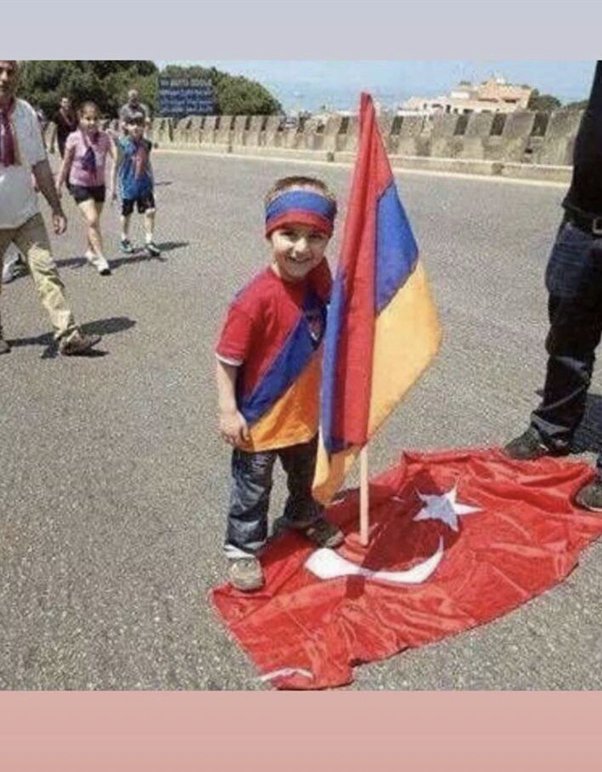
  • Katliamların resimleri – Pictures from Massacre

    Katliamların resimleri – Pictures from Massacre

    Balta ile Katliam: İzmit’in Kollar köyünden Ermeniler tarafından balta ile katledilen müslümanlardan bir kısmının olaydan sonra çekilen fotoğrafı;
    KILLINGS WITH AXES: The picture of muslim’s of Kollar village of Izmit, killed with AXES by Armenians; picture taken right after the even has occurred.
    1-Boşnak Malik 2- Abdulmecid oğlu Ali 3- Ali oğlu Seyid (14 yaşında) 4- Ömer oğlu Abdulgani 5- Abdulgani oğlu Mecid 6- Abdullah oğlu Hüseyin 7- Bekir  oğlu Yusuf 8- Osman oğlu ısmail
    Kaynak : Ermeni Ayaklanmaları ve ihtilal Hareketleri

    Erzincan’da Ermeniler tarafından ırzına geçilerek öldürülen Pakize adlı bir Türk kadını.  Kaynak :Massacre Exerted By The Armenian On The Turks During  World War l
    RAPED & KILLED: Turkish Muslim woman named Pakize from Erzincan; she was killed as she was being raped by Armenians

    25 Nisan 1918’de, Subatan’da (KARS) Ermeniler tarafından öldürülen Türk çocuklar,  kadınlar ve karınları deşilerek bebekleri çıkarılan anneler.
    KILLED CHILDREN, CARVED TOOKOUT BABIES FROM PREGNANT WOMAN: Turkish Muslim children killed and women killed by carving out their bellies and their babies ripped out by Armenians, in Subatan of Kars in April 25, 1918.
    Kaynak:Massacre Exerted By The Armenian On The Turks During World War I 


    Erzincan’ın Odabaşı bölgesinde, Ermeniler tarafından oyularak katledilen Türk Muslumanlar.
    KILLING BY CARVING OUT FACE AND BODY PARTS: In the Odabasi region of Erzincan, Turk Muslim man killed by carving out their body parts by Armenians.
    Kaynak :Massacre Exerted By The Armenian On The Turks During World War I


    Sivas’ta Ermeni çeteleri tarafından yapılan katliamda boğazı kesilerek  öldürülen jandarma Mustafa.Kaynak Ermeni Ayaklanmaları ve ıhtilal Hareketleri.
    CUTTING THROATS: Gendarme Mustafa Kaynak killed by cutting his throat by the Armenian gangs during their massacres in Sivas

    Ordudan hava değişikliği için terhis edilen ve 23 Temmuz 1915 de Diyarbakır’ın Lice kazasına bağlı Kum ve Çom köyleri  civarında elleri ayakları bağlanarak Ermeni komitecileri tarafından şehid edilen askerler.
    TYING UP AND KILLING SOLDIERS: The Turkish soldiers killed after tying up their hands and legs by Armenian gangs around Lice District of Diyarbakir; they were returning from the front for rehabilitation.
    Kaynak : Ermeni Ayaklanmaları ve ihtilal Hareketleri.


    Diyarbakır’ın şark nahiyesine bağlı  Hızır ılyas köyü Mersani deresi (23  Temmuz 1915). Hono ismindeki ermeninin başında bulunduğu çete tarafından hançer ve kurşunla şehit edilen erkek, kadın ve çocuklar.
    WOMEN, MAN, CHILDREN PILED AND KILLED WITH GUNS AND SWORDS: Men, women, and children killed with guns and swords by a gang headed by an Armenia named Hono, near Mersani stream of Hizir Ilyas Village of Park District of Diyarbakir (July 23, 1915).
    Kaynak : Ermeni Ayaklanmaları ve ihtilal Hareketleri.

     
    29 Ağustos 1914 tarihinde Ermeni çeteleri tarafından Siverek-Urfa  Yüksekyol ve Karacadağ civarında türbe ziyareti sırasında esir edilip  canlı hedef yapılarak şehit edilen müslüman  Türkler.
    KILLING PRAYING TURKS AT TOMBS OF MUSLIM SAINTS: Muslim Turks who were lined up and shot while they were visiting a Saints Tomb by Armenian gangs around Yuksekyol and Karacadag of Siverek district of Urfa.
    Kaynak : Ermeni Ayaklanmaları ve ihtilal Hareketleri.

    Silvan civarında, Beşnik ermeni köyüne Van ve Tolorya’dan gelip, Doryan  Dano ve kardeşlerinin başında bulunduğu Ermeni çeteleri tarafından 11 Haziran 1915 tarihinde şeytankaya mevkiinde şehit edilen milis subayı Hamid Efendi komutasında bulunan erzak kafilesi, jandarması ve subayları.
    KILLING WORKERS, GENDARMES AND LIEUTENANTS BRINGING FOOD SUPPLIES TO ARMENIAN VILLAGES: the Lieutenants, supply workers and gendarmes under the leadership of Hamid effendi killed by the Armenian gangs lead by Doryan and Dano brothers, as the supply troop was coming from Van And Tolorya  to reach the Armenian village Besni around Silvan
    Kaynak : Ermeni Ayaklanmaları ve ihtilal Hareketleri. 

    Erzincan Odabaşı bölgesinde, birbirlerine bağlanmış halde öldürülmüş kadın ve çocukların cansız bedenleri.
    TYING MOTHERS TOGETHER WITH CHILDREN AND KILLING: Dead bodies of women and children killed after women were tied together with children, in the Odabasi region of Erzincan.
    Kaynak :Massacre Exerted By The Armenian On The Turks During World War I


    16 şubat 1918’de, Erzincan’ın Vagarir köyünde, Ermeniler tarafından şehit edilen ve bir evin arkasında bulunan şehit edilmiş Musluman Türkler.
    KILLED AND HIDDEN: Muslim Turks killed by Armenians on February 4, 1918, found hidden behind a house in Vagari village of Erzincan.
    Kaynak :Massacre Exerted By The Armenian On The Turks During World War I

    Hasankale’de, Ermeniler tarafından şehit edilen kadın ve çocuklar.
    WOMEN AND CHILDREN KILLED BY ARMENIANS IN HASANKALE.
    Kaynak: Massacre Exerted By The Armenian On The Turks During World War I

  • THE OBJECTION TO ALLEGED ARMENIAN GENOCIDE

    THE OBJECTION TO ALLEGED ARMENIAN GENOCIDE

    ARCHIVE

    OBJECTION TO ALLEGED ARMANIAN GENOCIDE BEING IN THE HISTORY CLASS CURRICULUM OF THE STATE SCHOOLS IN WISCONSIN

    Dear Ladies, Dear Gentlemen, Dear Representatives:

    I am writing to register my deep objection to any mandating by the Wisconsin legislature of the alleged “Armenian genocide” as required study material of the history of the world curriculum in
    State’s school.

    The allegation has been hotly disputed among reputable American and other scholars, and has never been proven in a court of law or other impartial tribunal. World War I and its aftermath inflicted
    terrible suffering on hundreds of thousands of both Muslims and Armeniansin a virutal civil war within an international conflict. All the victims deserve equal official mourning and respect. Further, to single out Armenians for remembrance and Ottoman Muslims for demonization will only encourage hate crimes and other forms of intimidation on United States soil as corroborated by last month’s terrorist indictment of Armenian leader Mourad Topalian whose purported motivation was revenge for
    the alleged genocide. The state of Wisconsin should not lend its credibility to an unproven charge against an entire nation nor add incitement to would-be Armenian terrorists. But an official Remembrance Day would do just that. I remain,

    Sincerely yours’
    Capt. Onur Y. Uranli

    “Genocide Lies”:

    Once again Armenian lobby is pushing for their point of views in one of our state capitols. Once again they are doing so by using their well established lobbying organization throughout the nation. And once again they are presenting their version of the distorted history. It is absolutely crucial for our politicians to be able to discriminate between truth and fiction before they declare April 24th as the so-called “genocide Remembrance Day” for the Armenians.

    Turkish Americans and friends of Turkey do not agree with this fabricated history. The word “genocide” is absolutely a wrong term to describe what has transpired in eastern Anatolia. But we acknowledge that Ottoman Armenians have suffered heavy losses during World War I. The events
    that took place are very complex and cannot be solved in state capitols. It can only serve ill-minded politics and can cause harm to the objectivity of history.

    It was a war where Ottoman Empire was fighting Western allied powers in the West but also with Czarist Russia in the East. During the Russian campaigns the revolutionary Dashnak and Hunchak Armenian organizations have led inhumane campaigns against their long time neighbors Turks
    and Kurds and as a result slaughtered innumerable innocent people all under the protection of occupying Czarist armies. However, when the Russians were forced to pull back Armenian villagers were left behind unprotected. Hence, Turkish and Kurdish citizens of the empire who were literally raped by the brutalities of the Armenian anarchists striked back in vengeance. This led to
    the horrors of “blood feud”.

    There are in fact official documents created by the Ottoman government which explain that the state ordered and organized an involuntary exodus of Armenians to prevent further bloodshed between the involved groups. At the time it was thought that it would be easier to relocate the minority population of the region, the Armenians. No matter how honorable intentions the Ottomans intended to have this decision actually led to further losses by the Armenians. But again, it was not planned extermination of a nation.

    There are absolutely no written documents proven a well calculated so-called genocide of the Ottoman Armenians. The only documents that the Armenian lobby is basing their claim on, the well known Andonian documents are nothing but fabricated documents by French Armenians as
    demonstrated by the British Foreign Office. The proponents of the “genocide” are yet to produce irrefutable proof that Turks actually committed genocide.

    All the prominent historians well known to Armenian lobbyists unanimously agree that there was no genocide against the Armenian nation. But as usual once these people of conscious make their statement publicly they are being threatened to submission to their silence. These tactics are
    not new to the extremists.

    The Dashnaks have terrorized Turks and Kurds in the early part of this century. Then more recently they helped to rape and slaughter the Azerbaijanis in the famous Karabagh conflict.

    It was only couple of weeks ago when FBI has arrested Mr. Mourad Topalian for his alleged terrorist activities against the Turkish nation. As you know he is a well known Dashnak member and recent president of the major Armenian American lobby, namely ANCA. Again recent news have
    illustrated the same Dashnak terrorists have raided the Armenian parliament and killed many elected officials including the prime minister and the speaker of the house to stop the Armenian government from making a concession on the Karabagh issue with the Azerbaijanis.

    In short one needs to understand there were massacres that took place on both sides. It was never one-sided tragedy. Thus, the alleged history cannot be claimed as a history of a genocide. Certainly it cannot be even compared to the horrors experienced by the Jewish nation in the first half of this century.

    Again, to accept the so-called Armenian genocide will serve only the ill-minded politicians and the aspirations of the terrorist Dashnak organization. While it is absurd to even blame Turkey for the
    alleged events (1915) that took place before its birth (1923) it is equally absurd to claim genocide when Turks even have suffered heavier losses than Armenians did as history proves.

    You should know that Turkish Americans sympathize with the Armenian survivors of the horrors of eastern Anatolia. But Armenians should do the same for the Turkish and Kurdish survivors, whose voices cannot be heard in this great land of ours.

  • The Problem With Europe

    The Problem With Europe

    June 17, 2008
    By George Friedman

    Related Special Topic Page

    • Europe

    The creation of a European state was severely wounded if not killed last week. The Irish voted against a proposed European Union treaty that included creation of a full-time president, increased power to pursue a European foreign policy and increased power for Europe’s parliament. Since the European constitutional process depends on unanimous consent by all 27 members, the Irish vote effectively sinks this version of the new constitution, much as Dutch and French voters sank the previous version in 2005.

    The Irish vote was not a landslide. Only 54 percent of the voters cast their ballots against the constitution. But that misses the point. Whether it had been 54 percent for or against the constitution, the point was that the Irish were deeply divided. In every country, there is at least a substantial minority that opposes the constitution. Given that all 27 EU countries must approve the constitution, the odds against some country not sinking it are pretty long. The Europeans are not going to get a strengthened constitution this way.

    But the deeper point is that you can’t create a constitution without a deep consensus about needing it. Even when there is — as the United States showed during its Civil War — critical details not settled by consensus can lead to conflict. In the case of the United States, the issues of the relative power of states and the federal government, along with the question of slavery, ripped the country apart. They could only be settled by war and a series of amendments to the U.S. Constitution forced through by the winning side after the war.

    The Constitutional Challenge

    Creating a constitution is not like passing a law — and this treaty was, in all practical terms, a constitution. Constitutions do not represent public policy, but a shared vision of the regime and the purpose of the nation. The U.S. Constitution was born in battle. It emerged from a long war of independence and from the lessons learned in that war about the need for a strong executive to wage war, a strong congress to allocate funds and raise revenue, and a judiciary to interpret the constitution. War, along with the teachings of John Locke, framed the discussions in Philadelphia, because the founders’ experience in a war where there was only a congress and no president convinced them of the need for a strong executive. And even that was not enough to prevent civil war over the issue of state sovereignty versus federal sovereignty. Making a constitution is hard.

    The European constitution was also born in battle, but in a different way. For centuries, the Europeans had engaged in increasingly savage wars. The question they wanted to address was how to banish war from Europe. In truth, that decision was not in their hands, but in the hands of Americans and Soviets. But the core issue remained: how to restrain European savagery. The core idea was relatively simple.

    European wars arose from European divisions; and, for centuries, those divisions ran along national lines. If a United States of Europe could be created on the order of the United States of America, then the endless battling of France, Germany and England would be eliminated.
    In the exhaustion of the postwar world — really lasting through the lives of the generation that endured World War II — the concept was deeply seductive. Europe after World War II was exhausted in every sense. It allowed its empires to slip away with a combination of indifference and relief. What Europeans wanted postwar was to make a living and be left alone by ideology and nationalism; they had experienced quite enough of those two. Even France under the influence of Charles de Gaulle, the champion of the idea of the nation-state and its interests, could not arouse a spirit of nationalism anywhere close to what had been.

    There is a saying that some people are exhausted and confuse their state with virtue. If that is true, then it is surely true of Europe in the last couple of generations. The European Union reflected these origins. It began as a pact — the European Community — of nations looking to reduce tariff barriers. It evolved into a nearly Europe-wide grouping of countries bound together in a trade bloc, with many of those countries sharing a common currency. Its goal was not the creation of a more perfect union, or, as the Americans put it, a “novus ordo seclorum.” It was not to be the city on the hill. Its commitment was to a more prosperous life, without genocide. Though not exactly inspiring, given the brutality of European history, it was not a trivial goal.
    The problem was that when push came to shove, the European Community evolved into the European Union, which consisted of four things:

    1. A free trade zone with somewhat synchronized economic polices, not infrequently overridden by the sovereign power of member states.
    2. A complex bureaucracy designed to oversee the harmonization of European economies. This was seen as impenetrable and engaged in intensive and intrusive work from the trivial to the extremely significant, charged with defining everything from when a salami may be called a salami and whether Microsoft was a monopoly.
    3. A single currency and central bank to which 15 of the 27 EU members subscribed.
    4. Had Ireland voted differently, a set of proto-institutions would have been created — complete with a presidency and foreign policy chief — which would have given the European Union the trappings of statehood. The president, who would rotate out of office after a short time, would have been the head of one of the EU member states.

    Rejecting a European Regime

    The Irish referendum was all about transforming the fourth category into a regime. The Irish rejected it not because they objected to the first three sets of solutions — they have become the second-wealthiest country in Europe per capita under their aegis. They objected to it because they did not want to create a European regime. As French and Dutch voters have said before, the Irish said they want a free trade zone. They will put up with the Brussels bureaucracy even though its intrusiveness and lack of accountability troubles them. They can live with a single currency so long as it does not simply become a prisoner of German and French economic policy. But they do not want to create a European state.

    The French and German governments do want to create such a state. As with the creation of the United States, the reasons have to do with war, past and future. Franco-German animosity helped created the two world wars of the 20th century. Those two powers now want a framework for preventing war within Europe. They also — particularly the French — want a vehicle for influencing the course of world events. In their view, the European Union, as a whole, has a gross domestic product comparable to that of the United States. It should be the equal of the United States in shaping the world. This isn’t simply a moral position, but a practical one. The United States throws its weight around because it can, frequently harming Europe’s interests. The French and Germans want to control the United States.

    To do this, they need to move beyond having an economic union. They need to have a European foreign and defense policy. But before they can have that, they need a European government that can carry out this policy. And before they can have a European government they must have a European regime, before which they must have a European constitution that enumerates the powers of the European president, parliament and courts. They also need to specify how these officials will be chosen.

    The French and Germans would welcome all this if they could get it. They know, given population, economic power and so on, that they would dominate the foreign policy created by a European state. Not so the Irish and Danes; they understand they would have little influence on the course of European foreign policy. They already feel the pain of having little influence on European economic policy, particularly the policies of the European Central Bank (ECB). Even the French public has expressed itself in the 2006 election about fears of Brussels and the ECB. But for countries like Ireland and Denmark, each of which fought very hard to create and retain their national sovereignty, merging into a Europe in which they would lose their veto power to a European parliamentary and presidential system is an appalling prospect.

    Economists always have trouble understanding nationalism. To an economist, all human beings are concerned with maximizing their own private wealth. Economists can never deal with the empirical fact that this simply isn’t true. Many Irish fought against being cogs in a multinational British Empire. The Danes fought against being absorbed by Germany. The prospect of abandoning the struggle for national sovereignty to Europe is not particularly pleasing, even if it means economic advantage.

    Europe is not going to become a nation-state in the way the United States is. It is increasingly clear that Europeans are not going to reach a consensus on a European constitution. They are not in agreement on what European institutions should look like, how elections should be held and, above all, about the relation between individual nations and a central government. The Europeans have achieved all they are going to achieve. They have achieved a free trade zone with a regulatory body managing it. They have created a currency that is optional to EU members, and from which we expect some members to withdraw from at times while others join in. There will be no collective European foreign or defense policy simply because the Europeans do not have a common interest in foreign and defense policy.

    Paris Reads the Writing on the Wall

    The French have realized this most clearly. Once the strongest advocates of a federated Europe, the French under President Nicolas Sarkozy have started moving toward new strategies. Certainly, they remain committed to the European Union in its current structure, but they no longer expect it to have a single integrated foreign and defense policy. Instead, the French are pursuing initiatives by themselves. One aspect of this involves drawing closer to the United States on some foreign policy issues. Rather than trying to construct a single Europe that might resist the United States — former President Jacques Chirac’s vision — the French are moving to align themselves to some degree with American policies. Iran is an example.

    The most intriguing initiative from France is the idea of a Mediterranean union drawing together the countries of the Mediterranean basin, from Algeria to Israel to Turkey. Apart from whether these nations could coexist in such a union, the idea raises the question of whether France (or Italy or Greece) can simultaneously belong to the European Union and another economic union. While questions — such as whether North African access to the French market would provide access to the rest of the European Union — remain to be answered, the Germans have strongly rejected this French vision.

    The vision derives directly from French geopolitical reality. To this point, the French focus has been on France as a European country whose primary commitment is to Europe. But France also is a Mediterranean country, with historical ties and interests in the Mediterranean basin. France’s geographical position gives it options, and it has begun examining those options independent of its European partners.

    The single most important consequence of the Irish vote is that it makes clear that European political union is not likely to happen. It therefore forces EU members to consider their own foreign and defense policies — and, therefore, their own geopolitical positions. Whether an economic union can survive in a region of political diversity really depends on whether the diversity evolves into rivalry. While that has been European history, it is not clear that Europe has the inclination to resurrect national rivalries.

    At the same time, if France does pursue interests independent of the Germans, the question will be this: Will the mutual interest in economic unity override the tendency toward political conflict? The idea was that Europe would moot the question by creating a federation. That isn’t going to happen, so the question is on the table. And that question can be framed simply: When speaking of political and military matters, is it reasonable any longer to use the term Europe to denote a single entity? Europe, as it once was envisioned, appears to have disappeared in Ireland.

    Tell Stratfor What You Think

    This report may be forwarded or republished on your website with attribution to www.stratfor.com
    This analysis was just a fraction of what our Members enjoy, Click Here to start your Free Membership Trial Today!
    If a friend forwarded this email to you, click here to join our mailing list for FREE intelligence and other special offers.
    Please feel free to distribute this Intelligence Report to friends or repost to your Web site linking to www.stratfor.com.