Author: Aylin D. Miller

  • Presentation of the Turkish Version of  the book ‘’Genocide of Truth’’

    Presentation of the Turkish Version of the book ‘’Genocide of Truth’’

    Presentation of the Turkish Version of the book ‘’Genocide of Truth’’

    Soykırım Tacirleri ve Gercekleri – Turk Aleytari ve Tarafsiz Yabanci Belgelerle Diaspora Yalanlarinin Icyuzu. By Turkish Businesman  and Turkish Forum Advisory Board Member Sukru Server Aya

    Istanbul Ticaret Universitesi, 19 Ocak 2009, Monday

    The program was on the presentation of a book in Turkish and the language of the program and the speakers were also in Turkish. This commentary on the book and the presentation is in English for the benefit of readers in America and other countries.

    The primary purpose of Sukru Aya in publishing his book in English was to inform the foreigners (students, media members, businessmen, legislators, the public, etc.) on a subject which has been told to the world through fabrications, distortions and out right lies. An example of this was a poster displayed at the university’s reception area was a manipulated photograph of Mustafa Kemal.

    Tomorrow Senator Barack Obama will be sworn in as the 44th President of the United States and judging from his campaign speeches, he will state that the Ottoman Turks committed genocide against Armenians, which is a lie as shown in Sukru Aya’s book.

    The program started around 11:00 AM in the Conference Room of the Istanbul Commerce University where there were over 80 participants, including the Honorary Chairman of Koc Holding Rahmi Koc, Miss Europe of 1952, Gunseli Basar, Sami Kohen from Milliyet, Tufan Gunes from Huriyet, Ruhat mengi from Vatan and other media members and many dignitaries. There were also three Tarsus American High School graduates, Nabi Eren and Yucel. There were very few students and most of the participants were over the age of 50, an observation also noted by Commerce University Rector Ates Vuran during his opening remarks.

    Opening Speeches

    The first speaker was Lawyer Elif Derbeder representing the brave publisher of the book, Derin Yayinlari. She said that her company strives to publish books in different subjects.

    The second speaker was Lawyer Kegam Karabetyan who also wrote the Preface to the book. He made a passionate speech, first stating that he is an Armenian Turk originally from Kastamonu and now lives in Istanbul, practicing law and getting involved in community projects. Referring to the sad events in the 19th and the beginning of the 20th century, Karabetyan stated that some Armenians were used by the Western powers for their own purposes, specifically the Russians, the French and the British, and that he was here to tell the truth. He said that he met Sukru Aya at a conference where the former head of the Turkish Historical Society Yusuf Halacoglu was a speaker. He ended his remarks with Ataturk’s famous saying, ‘’Ne Mutlu Turkum Diyene.’’

    The Rector of Commerce Universty, Ates Vuran, began his remarks with a reminiscence of an experience at the VIP Lounge at the JFK Airport, in fact in the WC, where he noticed Rahmi Koc. After saying hello to Rahmi Koc, Vuran told him how much he appreciated the service at his newly opened stored in the US and wanted to share this with him. After he arrived to Istanbul, he received a letter from Rahmi Koc with a copy of the note that he sent to the store owner, thanking for his remarks. Than the Rector told about his experince and the difficulties that he encountered in publish ‘’Genocide of Truth’’ which he sent to University libaries in Turkey, Europe and the US.

    Rector Vuran stated that he read the book himself and also had it reviewed by the Turkish Historical Society. Finding the book to be very useful, he had the university sponsor the first printing of 3,000 and distributed to University libraries, media members and sent 500 copies to various universities and media gropus in the US.

    The next speaker listed on the program was Bulent Akarcali who has been instrumental in convincing Sukru Aya to publish the book. Unfortunatley he was not in attendance, probably working on his staregy to win the race for the Mayor of Cankaya as a canditate from AKP.. In his place, Prof. Dr. Orhan Cekic made an excellent presentation, including a summary of the decision of the European Council of Justice (Avrupa Adalet Divani) on the lawsuit brought against the EU by an Armenian organisation in France on the Armenian issue, denying their requst that Turkey admit genocide as a condition for EU membership, asking them to bring forth a Court decision on the Genocide, which of course does not exist. Prof. Cekic also mentioed that bad things are taking place such as the murder of Hrant Dink on Jan 19, 2007 and the mourder of Turkish diplmat Bahadir demir in California on Jan 27, 1973.

    Sukru Aya’s Presentation

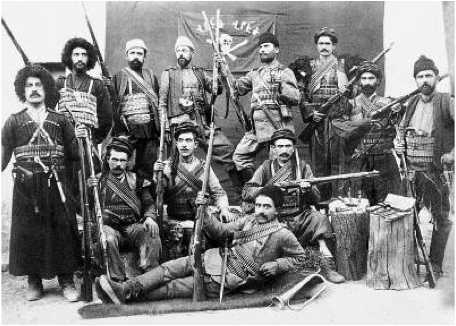
    Sukru Aya also made a very passionate speech, first stating that participants from Cyprus, Bursa, Adapazari and othet cities had come for the program. He presented backround information on the publication of the english version of his book, which he said had not received the proper attention from the media or the public, stating that since April 14, 2008, only 4 review of his book has been published. Sukru Aya made reference to the Armenian revolts starting with the Zeytoon uprising in 1859, followed by many others including the revolt in Maras in 1895.

    Question and Answer Session

    Before the question and answer session, a short documentary was shown on the atrocities committed by Armenian rebels and the events that led to the re-location in 915. Afterwards, Ruhat Mengi from Vatan took to the podium and objected to Sukru Aya’s statement that the media has not shown enough involvement in the Armenian issue, giving her own struggle as an example, even having to defend her writings in court, especially in a case started by Halil Berktay. She referred to the efforts of Yusuf Halacoglu, wondering why he was dismissed as the head of the Turkish Historical Society who has invited Armenian historians for meetings but were ignored. Than Ruhat Mengi made reference to the ‘’Apology campaign’’, stating that those who started it had close connections with the Armenian diaspora.

    After Ruhat Mengi finished her comments, I looked around to see if anyone from AGOS newspaper was in the room, the largest circulating Armenian weekly in Istanbul. Quite by coincidence, today was the 2nd anniversary of the murder of Hrant Dink, the founder and the publisher of the Armenian newspaper. There were commemoration services at his grave and other places and almost all newspapers covered the story, including Birgun with a full front page photograph of Hrant Dink and the funeral procession in the full back page, which I had also participated in. In an open letter to Turkish readers published in AGOS (9 Jan 2009), Jean Kehayan wrote that those who were signing the apology statement were ‘’Turkey’s Pride.’’

    It will be interesting to see if Birgun and other newspapers will cover this very meaningful and important book presentation. I am sure Ruhat Mengi and others who came to the presentationwill. I wonder if the Turkish Daily News (now known as the Hurriyet Daily News) will write about this as they had covered a conference at Bilgi University last year where Sarafian was the star attraction and was given a copy of ‘’Genocide of Truth’’ by Sukru Aya but never mentioned it in any of his endless papers.

    The first question was by Rahmi Koc.. ‘’What do you think Barack Obama will do on the Armenian issue.’’ I missed the answer but yesterday, ANCA sent a letter to Senator Obama which should answer Rahmi Koc’s question. (copy of the letter si given below which shows how the Armenian diaspora works closely. I am afraid Senator Obama will support the Armenian Genocide Resolution when he is the 44th President of the USA.

    Unfortunatly I could not stay until the end of the programdue to other committments but took the box of borek and baklava with me which I enjoyed while driving to Esenyurt. Thank you Sukru Bey and his assistant Serpil Hanim for her contributions.

    Yuksel Oktay
  • Obama becomes president -DOW’s Industrial Average fell 14 percent – the biggest decline ever since 1933

    Obama becomes president -DOW’s Industrial Average fell 14 percent – the biggest decline ever since 1933

    Worst Dow Drop Since Election Meant Rally in ’33 (Update1)

    Email | Print | A A A

    By Jeff KearnsBloomberg.com: Worldwide

    blocked::https://bba.bloomberg.net/ Bloomberg Anywhere blocked::https://software.bloomberg.com/bb/service Bloomberg Professional blocked::http://about.bloomberg.com/ About Bloomberg

    Jan. 20 (Bloomberg) — The Dow Jones Industrial Average fell 14 percent between Barack Obama’s election and Inauguration Day, the biggest decline ever. The second-biggest drop gave way to a 75 percent rally in 1933.

    The CHART OF THE DAY compares the Dow’s retreat since Nov. 4 with the 13 percent slide between Franklin D. Roosevelt’s election and his inauguration on March 4, 1933. The red line goes on to show the Dow’s surge during FDR’s first 100 days. No other new president since the beginning of the last century produced gains or losses of 10 percent or more in the analogous periods.

    “Obama is realizing the historic parallels,” said Richard Sylla, an economic and financial historian at New York University’s Leonard N. Stern School of Business in New York. “The situation isn’t quite as serious as the 1930s but it’s serious enough that I expect Obama to take a page from FDR’s book to restore some of the confidence that’s been shattered.”

    Obama becomes president today during the most severe economic crisis since Roosevelt was sworn in 76 years ago. Like his fellow Democrat, Obama plans to create jobs and boost the economy by investing in roads, bridges and public buildings and increasing oversight of the securities industry.

    Stock exchanges closed for more than a week when FDR declared a bank holiday and enacted reform days after becoming president. The Dow jumped 15 percent on the day markets re- opened.

    The Dow average declined 187.25 points, or 2.2 percent, to 8,093.97 as of 1:12 p.m. in New York.

    To contact the reporter on this story: Jeff Kearns in New York at [email protected].

    Last Updated: January 20, 2009 07:09 EST

  • European Energy Security and Nabucco Occupy a Central Place in Erdogan’s Brussels Trip

    European Energy Security and Nabucco Occupy a Central Place in Erdogan’s Brussels Trip

    European Energy Security and Nabucco Occupy a Central Place in Erdogan’s Brussels Trip

    Publication: Eurasia Daily Monitor Volume: 6 Issue: 12
    January 20, 2009
    By: Saban Kardas

    Prime Minister Recep Tayyip Erdogan visited Brussels on January 18 and 19 to discuss Turkish-European relations. The trip, the first of its kind since 2004, comes against the background of criticism that the Justice and Development Party (AKP) government has abandoned its commitment to EU membership. Critics point to the government’s reluctance to take steps to break the deadlock in negotiations since the talks started in 2005. The AKP, in contrast, highlights the EU’s own mishandling of the accession process with Turkey and the EU’s internal problems following the 2004 enlargement. As some observers have called 2009 the “make or break year,” Erdogan recently began a new bid to revitalize Turkey’s stalled membership process by appointing a new state minister to lead the negotiations (EDM, January 12). His trip provided an important forum to reaffirm the parties’ willingness to mend fences and renew trust.

    Erdogan held meetings with Enlargement Commissioner Olli Rehn, European Commission President Jose Manuel Barroso, High Representative of Common Foreign and Security Policy Javier Solana, and President of the European Parliament Hans Gert Pottering. He also spoke with representatives of the Turkish community, gave a talk at the European Policy Center, and delivered the keynote address at a dinner organized by Friends of Europe.

    Throughout his trip, Erdogan emphasized that his government would make 2009 a “leap year.” Rebuffing criticism that the government lacked determination, Erdogan argued “the EU is our top priority, and we don’t have any alternatives to it.” Showing his self-confidence in Turkey’s future contribution to the EU, Erdogan also said that Turkey would not be a burden on the EU but was ready to share its burdens. He emphasized the compatibility of both sides’ interests, including energy security. On their part, EU officials pressed for more reforms on trade unions and minority rights and underlined the need to convince the European public about Turkey’s accession. Yet, they welcomed Ankara’s efforts to deliver some reforms to comply with the EU’s expectations and stressed the common areas of strategic interest (www.cnnturk.com, January 19, Zaman, January 20).

    Overall, Erdogan appeared to be unwavering from his previous positions. First, he repeated the AKP’s claim that “Turkey did its homework.” Although the EU institutions and domestic pro-reform groups continuously criticize the government for failing to deliver on the reforms required by the EU, Erdogan highlighted his government’s “achievements,” which in his view were sufficient to fulfill Turkey’s part of the agreement. He referred to the recently opened Kurdish-language channel on the state-owned TV network and the legislative reforms on laws regulating foundations and freedom of opinion. With regard to Turkey’s shortcomings in meeting the EU’s demands, he put the blame on the Turkish opposition parties, arguing that they had failed to support the government’s reform efforts in parliament (www.cnnturk.com, January 19).

    Second, Erdogan also repeated his previous criticism of the EU’s unfair attitude in the accession process. Unsatisfied with the slow pace of accession negotiations, Erdogan has been calling on the EU to accelerate the process by opening more than two chapters per presidency (every six months). He asked the future presidencies to break with this “routine.” He also complained about the EU’s delay in approving the end-of-screening reports on nine chapters since 2006. Turkey started talks on 10 of the 35 chapters, and it has completed negotiations on only one. The EU has put several chapters on hold, due to the objections of the Greek Cypriot administration and France (Today’s Zaman, January 20).

    Calling on the EU to revitalize the process, Erdogan said, “We are not requesting privileged treatment; we ask for equal and fair treatment.” He was echoing Euro-skeptic sentiments among the Turkish public, which increasingly feels that the EU is applying double standards against Turkey by treating it differently from other candidates. In that regard, he also maintained that the declining support for EU membership in the opinion polls was caused by negative remarks of some European leaders about Turkey (Hurriyet Daily News, January 20).

    As part of his complains that internal EU politicking posed obstacles to Turkey, Erdogan did not hesitate to name the Greek Cypriots. He lambasted the EU’s decision in 2004 to admit the Republic of Cyprus without resolving the divided status of the island (Anadolu Ajansi, January 19). Since its accession to the EU, according to Ankara, the Greek Cypriots have blocked the start of negotiations with Turkey on crucial chapters, most significantly energy.

    Given the growing importance of energy security on the EU agenda in the wake of the Russian-Georgian war and the Russian-Ukrainian standoff, the implications of the energy issue for Turkey’s membership process occupied an important part of Erdogan’s portfolio. As the Budapest Summit on Nabucco approaches, the EU is to support the Nabucco project, which would transport Caspian gas to European markets through Turkish territory (EDM, January 16).

    Erdogan stated at the European Policy Center on Monday that if Turkey were confronted with a deadlock in the energy chapter, it might have to revise its position on Nabucco. This raised concerns that Turkey might be threatening to use its position in energy security as a bargaining chip for Turkish-EU talks. Erdogan also said that although some countries didn’t want Turkey to cooperate with Iran in energy transportation, “cutting ties with Iran is out of question. Nobody can dictate our [energy] policies” (ANKA, January 19).

    Nonetheless, following his meeting with Commission President Barroso on the second day, Erdogan ruled out a threat, saying that Turkey would not “use energy as a weapon.” Barroso emphasized areas of mutual cooperation and highlighted Turkey’s strategic position in particular. He pointed to the need for a good partnership in energy security between Turkey and the EU and praised Turkey’s constructive role in Middle Eastern diplomacy (Anadolu Ajansi, www.ntvmsnbc.com.tr, January 19).

    European officials constantly remind Turkey that its strategic position alone will not suffice to bring it full membership. Nonetheless, at a time when the EU is pressed hard in energy security, Turkey’s geography apparently does pay some dividends. Responding to Erdogan’s call for help against the EU members blocking negotiations, Barroso promised his full support to start talks on the frozen chapters moving again.

    If both Erdogan and Barroso can keep their promises, the former delivering on postponed reforms and the latter removing internal EU obstacles, Turkish-EU relations may experience a new phase of dynamism, similar to that from 2002 to 2005.

    https://jamestown.org/program/european-energy-security-and-nabucco-occupy-a-central-place-in-erdogans-brussels-trip/

  • Where Will Turkish-Israeli Relations Go After Gaza?

    Where Will Turkish-Israeli Relations Go After Gaza?

    Where Will Turkish-Israeli Relations Go After Gaza?

    Publication: Eurasia Daily Monitor Volume: 6 Issue: 11
    January 19, 2009
    By: Saban Kardas

    As Israel’s only ally in the region, increasingly vocal criticism from Ankara and the streets of Turkey about the operations in Gaza raises questions about the future of Turkish-Israeli relations. Prime Minister Recep Tayyip Erdogan had refused to talk to Israeli leaders before a ceasefire was reached. Nonetheless, in response to growing calls from across the political spectrum for breaking off ties with Israel or imposing sanctions, Erdogan said that this was out of question, stressing that Turkey could not afford the political consequences of such a decision (Anadolu Ajansi, January 17).

    Likewise, on a live TV show Turkish Foreign Minister Ali Babacan ruled out severing diplomatic relations with Israel, because such a populist move would not serve regional stability and would undermine Turkey’s mediation attempts by closing channels of communication. Nonetheless, Babacan confirmed earlier press reports that he had refused to meet Israeli Foreign Minister “Tzipi” Livni, who wanted to visit Ankara. Babacan told Livni on the phone that unless she wanted to discuss conditions for a ceasefire, “it did not make sense to pay a good-intentions visit” (www.ntvmsnbc.com, January 16). Earlier, Babacan had indirectly criticized American support for Israel, by saying, “Israel will continue its operations as long as it gets a green light from some countries” (www.kanaldhaner.com, January 15).

    Erdogan uses every opportunity to express his criticism of Israel’s occupation of Gaza and the silence of the international community. He has addressed large public gatherings, such as party meetings preceding municipal elections, which have been important forums for airing his views on Gaza. During a party congress, for instance, he questioned the silence of the international community over Israel’s disregard of numerous UN Security Council resolutions (www.cnnturk.com, January 16). Similarly, when UN Secretary-General Ban Ki-moon visited Ankara on Friday, Erdogan told him that Turkey had expected the UN to be more proactive (Star, January 17).

    Before his departure to Brussels on Sunday, Erdogan called on the Western leaders to demonstrate a resolute attitude toward Israel. Criticizing international efforts to reach a settlement by excluding Hamas from the negotiation table, Erdogan maintained that “Hamas is a party that won elections. The West, which has failed to respect Hamas’s democratic openings, is responsible for the current situation” (Cihan Haber Ajansi, January 18).

    When addressing the representatives of the Turkish community in Brussels, the developments in Gaza and Turkish diplomatic efforts again occupied a central place. Although he found Israel’s unilateral declaration of a ceasefire important, he said that the continuing presence of Israeli forces in Gaza was an issue of concern and asked Israel to give assurances that it would allow uninterrupted humanitarian aid. Referring to Hamas’s decision to halt its military activities, Erdogan maintained that the new situation approximated what he had sought to achieve through his earlier diplomatic initiatives (www.ntvmsnbc.com, January 18).

    Erdogan’s claim of credit for Turkey’s contributions to regional diplomacy is not baseless. Despite its critical tone toward Israel, Ankara has maintained ties with both parties to the conflict, hoping to find a peaceful solution. In addition to its own diplomatic efforts (EDM, January 5), Turkey has supported the Egyptian plan of January 6, which was also backed by France and called for an end to violence first, followed by talks on allowing access into Gaza and ensuring the security of Gaza’s borders.

    In the run up to Sunday’s Sharm el-Sheikh summit, co-hosted by Egypt and France, a Turkish delegation led by Ahmet Davutoglu shuttled between Cairo and Damascus meeting with Hamas leaders in Syria in an effort to mediate between the parties. On Friday, Turkey had offered the parties its own draft agreement for a ceasefire, which Babacan called a “solid offer.” On Saturday the Turkish delegation told reporters that parties were close to a mutual understanding on the terms of a ceasefire. On Sunday Israel and then Hamas declared a ceasefire (Anadolu Ajansi, January 17).

    President Abdullah Gul represented Turkey at the Sharm el-Sheikh summit, which was also attended by leaders of Egypt, Jordan, Germany, Spain, Britain, Italy, and the Czech Republic, as well as Palestinian President Mahmoud Abbas and the Secretaries General of the UN and Arab League. Gul welcomed the conclusions of the summit but asked Israel to pull out from Gaza entirely and to lift the embargo. He also emphasized the need to reach reconciliation between Palestinian factions for a sustainable peace in the region, which Turkey had advocated since the beginning of the crisis (Hurriyet, January 19).

    Although following the summit the European leaders went to Israel to a dinner hosted by Israeli Prime Minister Ehud Olmert, Gul returned to Ankara. Turkish reporters speculated that Gul had not been on the invitation list and interpreted this as Israel’s grave disrespect toward Turkey (www.stargundem.com, January 18). Gul, however, dismissed these claims and maintained that the European leaders went to Israel to discuss the details of an earlier deal between Israel and the United States, which would regulate American involvement in monitoring the border crossings between Gaza and Egypt (www.ntvmsnbc.com.tr, January 18).

    Since the beginning of the crisis, Turkey has said that it was ready to send troops to the region as part of an international force to monitor either a ceasefire or patrol the border between Gaza and Egypt in order to allay Israel’s concerns about weapons smuggling. Gul told reporters that there had been no decision to for such an international force in Sharm el-Sheikh. As a matter of fact, specific arrangements for monitoring weapons traffic remained unresolved at the summit, with French President Nicolas Sarkozy pledging that the European leaders would provide Egypt and Israel with the necessary technical, military, and naval assistance.

    Gul also emphasized that Turkish-Israeli relations would continue, although Turkey would not hesitate to criticize Israel’s blatant human rights violations, which outraged the entire Turkish population. He maintained that such misguided policies were the greatest threat to Israel’s own security and noted that the Palestinian problem was the source of many problems throughout the world. He asked the incoming Obama administration to contribute to the peace process, noting that “the just and determined involvement of the United States will go a long way toward a long-term resolution of the problem” (ANKA, January 18).

    Turkey’s policy toward the Israeli invasion of Gaza continues to reverberate in its external relations. Whereas Erdogan is praised by people in Muslim countries (EDM, January 15), Ankara is criticized by Western observers who view the recent developments as potentially damaging to Turkey’s relations with the West. According to Dr. Ian Lesser, Senior Transatlantic Fellow at the German Marshall Fund, although Turkey’s initiatives are worthy of praise, by departing from “the transatlantic consensus on how to deal with Hamas,” Turkey “loses credibility as an interlocutor” (Hurriyet Daily News, January 18).

    https://jamestown.org/program/where-will-turkish-israeli-relations-go-after-gaza/

  • Today is anniversary of 20 January tragedy committed by soviet troops in Azerbaijan

    Today is anniversary of 20 January tragedy committed by soviet troops in Azerbaijan


    Baku–APA. Today is 19th anniversary of the 20 January tragedy. Soviet troops entered into Baku without warning and committed terrible massacre over the night from January 19th to 20th, 1990, APA reports.

    Helplessness of the government to prevent the separatist movement in Nagorno Karabakh caused fair protest among the people and hundreds of thousands of people took to the streets demanding the government to resign. It was decided to send troops to Azerbaijan to protect local pro-Moscow government and crack down the protest actions. USSR defense and interior ministries, as well as KGB, state security committee, conducted joint operation in Baku where they used 66 000 troops. The soviet army opened fire on peaceful people, killing 134 and wounding 700. There were more than 20 women and children among the victims of the 20 January tragedy. Despite that long years have passed this boldly event has not received its legal assessment yet.
    Every year Azerbaijan and its Diaspora organizations abroad commemorate memory of martyrs on the day of anniversary of the 20 January tragedy.

  • THE MILITARY BALANCE IN NAGORNO-KARABAKH

    THE MILITARY BALANCE IN NAGORNO-KARABAKH

    Caucasus Update No. 18, Jan. 19, 2009, published by Caucasian Review of International Affairs (www.cria-online.org)


    In early January, a number of Azerbaijani news outlets reported that Russia had, throughout 2008, transferred an estimated $800 million worth of military hardware to Azerbaijan’s rival Armenia. The story is murky, but an Azeri media organisation received a list of equipment allegedly supplied, including tanks and armoured personnel carriers, grenade launchers, ammunition, and rockets. At the time of writing, the Russian response had been mixed: some carefully worded denials from the Foreign Ministry, promises of clarification from the Russian embassy in Baku, and stonewalling from the Defence Ministry. Russia’s overall approach has been moving towards denial, but the lack of an outright, immediate statement has inevitably fanned the flames of rumour. The Azerbaijani armed forces allegedly put their forces on high alert in response.

    If the story is true, the implications could be significant. The peace process over Nagorno-Karabakh is in an extremely delicate phase, and Russia has recently gone to great lengths to depict itself as an impartial mediator. Any truth in the arms transfer rumours would destroy Moscow’s reputation as an honest broker and undo much of the tentative progress that has been recently achieved.

    The military implications are also significant, since the size of the transfer would go some way towards redressing the huge growth in Azerbaijan’s armed forces in recent years. Precise, up-to-date figures are very difficult to come by, given the opaque nature of both countries’ defence sectors, the difficulties of gathering information on Armenian forces in Karabakh, and the rapid expansion of armed forces. But most independent estimates give Azerbaijan the quantitative edge over Armenia, particularly in terms of heavy equipment.

    A far more significant factor, and arguably a key reason for the lack of major combat since 1994, is the topography of the Karabakh region. The ceasefire line currently runs through rugged, mountainous terrain topped with multiple defensive lines which would favour the Armenian side in any war launched by Baku. Azerbaijan’s purchase of 25 Su-25 ground attack aircraft from Georgia and unmanned aerial vehicles from Israel should be seen in this context: as an attempt to maintain air superiority and therefore compensate for the difficulties of ground artillery in such terrain. Turkey has also offered to upgrade the Azerbaijani air force, alongside its other assistance in the fields of education and technical support.

    The Russian 102nd Army base in Armenia has played a huge role in assisting and upgrading Armenia’s military so far. The base’s inventory of hardware was boosted in 2005 when Russia closed its bases in Georgia and transferred 370 pieces of equipment to the 102nd base. The forces at the base are militarily very significant: 74 tanks, 224 armoured combat vehicles, 60 towed artillery systems, 14 aircraft and the advanced S-300 missile system. Although the limited number of Russian personnel there would prohibit a large-scale deployment of this equipment, it is possible that the 102nd would, in the event of war, ‘lend’ the equipment to Armenia’s armed forces under the terms of the Russo-Armenian military alliance. There are also estimated to be huge – relative to the territory’s size – number of tanks and other pieces of hardware within Nagorno-Karabakh and the surrounding regions. This allows Armenia to circumvent its restrictions on such equipment under the Treaty on Conventional Armed Forces in Europe, although it has accused Azerbaijan of doing the same.

    Georgia has a critical and often under-realised role in any potential conflict for a number of reasons. Firstly, in the aftermath of the August war it suspended most Russian flights over Georgian territory to the 102nd base, preventing the base from receiving critical military supplies: therefore the figures given for the Russian base should be taken with a pinch of salt. More broadly, as military analyst Roger McDermott notes, the transfer of any equipment from northern states such as Ukraine to Armenia could be blocked by Georgia, since they would have to be shipped through Georgian territory from a Black Sea port, although such a deal was confirmed in November.

    Secondly, and related to this, Tbilisi will have to make a clear and difficult choice in any renewed war between Baku and Yerevan. Georgia has no interest in spoiling its ties with Yerevan, and has expressed interest in defence co-operation (for instance, on upgrading Armenian tanks in a Georgian plant). But these links cause friction with Azerbaijan, with whom Georgia has a close economic and political relationship. Georgia relies on Azerbaijan for its own gas supplies and for the transit of Azeri gas and oil through the BTC and BTE pipelines, which bring in vital transit fees for Georgia’s struggling economy. Supporting Armenia could lead Baku (in the name of ‘energy security’) to re-route its gas and oil flows through Russia. It therefore seems likely that Georgia would support Azerbaijan, perhaps closing its border with Armenia and leaving the country almost entirely isolated from the outside world.

    Even if the rumours of the $800 million arms transfers are false, the Karabakh conflict is incredibly volatile. The military balance between the two sides remains difficult to assess, but its uncertain nature, along with the peace process, has managed to prevent either side from reigniting a major conflict. If Russia really has shipped such a quantity of equipment to Armenia, the prospects for peace are grim. This would raise tensions on the ground and give further weight to hawks in the Azeri defence forces who argue that Azerbaijan’s military is sufficient, and that Baku should strike now to liberate the occupied territories before Armenia can reinforce itself any further. Perhaps even more disastrously, the transfer would fatally damage Moscow’s reputation as an honest broker and would remove the constraining brake of the peace process from a highly dangerous arms race. Nobody – Azerbaijan, Russia, or Armenia – would benefit.