ARMENIAN VIEWS
Hacking history I: Museum of Anatolian Civilizations, Ankara
by Ara Sarafian
Published: Saturday November 22, 2008.
Ankara, Turkey – Armenians have become a common topic of discussion in Turkey for some years now and this trend has picked up since Prime Minister Recep Tayyib Erdogan came to office in March 2003. In this new climate of more openness, liberal intellectuals have led a discussion of the Armenian Taboo of Turkey.
Their discussions have led to a new awareness of Armenians and a gradual reinvention of Turkey’s Armenian heritage, which was destroyed in large measure in 1915 and its aftermath. The new positive discussions have touched on such issues as Armenian history, art, architecture, music, and cuisine in different publications, exhibitions, and public discussions.
Fethiye Çetin’s book Anne Annem (My Grandmother: A Memoir ) has been reprinted in several editions. Osman Köker’s exhibitions and publications have reached thousands. Orhan Pamuk’s comments about the persecution of Kurds and Armenians are reported by the world media. All this suggests some tangible breaks with Turkey’s more ominous past.
However, the more sympathetic treatment of Armenians has continued to take place alongside longstanding conservative, belligerent, and negative attitudes toward Armenians. These circles continue to slight, marginalise, and vilify Armenians as a matter of course.
Their attitudes, supported by stock arguments, are the product of decades of Turkish nationalist indoctrination and its underlying ideology. Even in the last week we have heard Turkey’s Defense Minister Vecdhi Gönül applaud the “departure” of the native Armenian and Greek communities of Turkey, and Minister of Justice Mehmet Ali Sahin defend the utility of the infamous Article 301. He explicitly defended the prosecution of Temel Demirer under Article 301 because the latter had called Turkey a state that murdered its own citizens (with reference to Armenians and Kurds).
Within the academic domain, the Turkish Historical Association and the Turkish military continue to prepare and publish overtly anti-Armenian books and DVDs – invariably denigrating Armenians and denying the Armenian Genocide of 1915. Various “think tanks,” such as the Ermeni Arastirmalar Merkezi (Armenian Studies Center) in Ankara remain actively anti-Armenian. Many small publishing houses still print the conventional Turkish nationalist position regarding Armenians.
Attempts to reinvent Turkish Armenians in a more positive light are still undermined by significant sectors of Turkish society, including government ministries. The relative strength of the opposing conservative circles has still not been gauged, especially given their positions of power and influence in Turkey. While one cannot expect the Turkish conservative- nationalist position to change overnight, one does expect it to take some note of new discussions and revelations.
Two weeks ago I decided to examine several museums in Turkey, all but one in historic Western Armenia, with one question in mind: “How are Armenia and Armenians represented in Turkish museums today?”
The museums I picked were the Museum of Anatolian Civilizations (Ankara), Erzurum Archaeological Museum, Van Archaeological Museum, and Kars Archaeological Museum. All four are under the control of the Ministry of Tourism and Culture.
Had the new debates on Armenians shaped representations of Armenians in Turkey? How did these state institutions acknowledge and contextualize Armenian history in their everyday endeavors, and what can we say about Turkey and its Armenian heritage based on these museums.
First stop: Ankara
My first stop was the Museum of Anatolian Civilizations in Ankara.
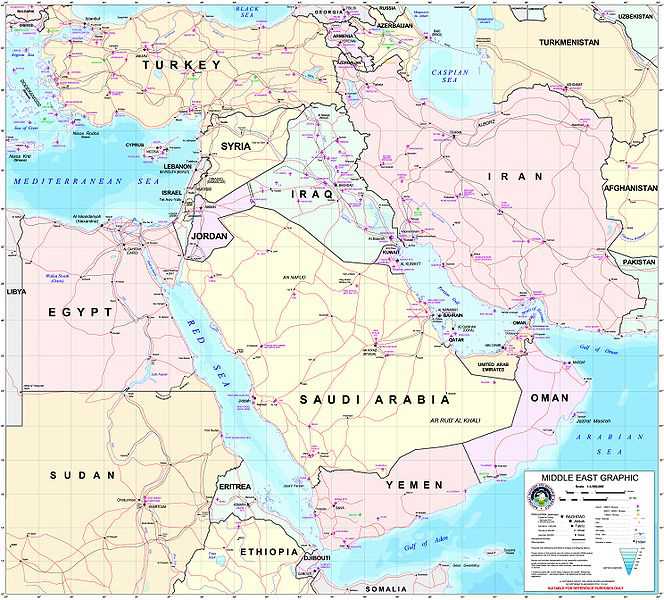
This museum uses the term Anatolia as coterminous with the territory of Turkey-in-Asia. Of course, Turkey is not a single landmass, but formed of several distinct geographical regions, such as the Aegean littoral, the Konya plain, the Pontic mountains on the Black Sea, the Taurus Mountains of the Mediterranean, the anti-Taurus further east, and of course the Armenian highlands.
This museum is reputed to be one of the most important museums in Turkey today. It won the European Museum of the Year Award in 1997, and many tourists, schoolchildren, and academics visit it every day.
The museum exhibition extends over two floors. It is well constructed and maintained, with excellent lighting and good human resources. Starting from the prehistoric era, the visitor is led through collections of Paleolithic, Neolithic, Chalcolithic, Early Bronze Age, Assyrian, Hittite, Phrygian, Urartian and Lydian, Greek, Roman, Seljuk, and Ottoman artifacts.
The displays at the museum include statues, pottery, jewelry, and metalwork, and various panels discuss the collections in their broader historical contexts, with references to other civilizations such as the Medes, Scythians, Egyptians, and Persians.
However, there are no artifacts, discussions, or references to Armenians in the museum.
The obvious question is, therefore, why is there no mention of Armenia as a geographical entity or Armenians as a culture and civilization? After all, there was the empire of Tigran the Great in the first century B.C.E., the Armenian Kingdom of Vasbouragan on Lake Van in the 10th-11th centuries, and the Armenian Kingdom of Cilicia in the Middle Ages. Armenia was a distinct part of the Roman and Byzantine Empires, and Armenians were one of the important pillars of the Ottoman Empire. Armenians played a major role in arts, crafts, and trade throughout the ages, and they developed their own distinct identity with their own alphabet from the 5th century in this area. Armenian literature, philosophy, art, and architecture are worthy of much comment, yet they do not appear in a museum dedicated to Anatolian civilizations.
For the article click on:
http://reporter. am/go/article/ 2008-11-22- hacking-history- i-museum- of-anatolian- civilizations- ankara
= = = = = = = = = = = = = = = = = = = = = = = = = = = = = = = = = = = = = = = = = = =
Erzurum, Turkey – Following my trip to the Museum of Anatolian Civilizations in Ankara, I was curious to see how Armenians would be represented at Erzurum Archeological Museum, in eastern Turkey. I expected to see at least something, as Erzurum was the location of the ancient city of Garin (Karin) in historic Armenia.
I flew into Erzurum early in the morning and went straight to the museum. In stark contrast with the Museum of Anatolian Civilizations, this provincial museum was a modest one-floor establishment. The staff at the museum seemed surprised to see a visitor as soon as they opened. They were very polite and got on with their job.
The museum has several sections, starting from the Paleolithic. The other sections are built around artifacts found at a number of excavations in the region, as well as some “emergency digs,” which were forced by the building of the Baku-Ceyhan pipeline across Erzurum province recently. The museum also boasts a donation of Urartian artifacts from Igdir. The excavations forming the core of the museum have yielded Roman, Byzantine, Seljuk, and some Ottoman artifacts that are displayed in the museum, but nothing Armenian is on display. There is also no mention of Armenians in the historical explanations printed on large panels around the various exhibits, except for a special display related to Armenians. This display occupies almost a third of the museum.
Ungrateful Armenians relocated
The special display starts by stating, “Anatolia was under the sovereignty of Umayyads from the end of the 7th century, who were followed by the Abbasids till the end of the 10th century.” Then, we are told, “Byzantium dominated the whole of Anatolia starting from the end of the 10th century.” The suggestion is that this region was called Anatolia at that time and not Armenia. The Byzantines, we are told, mistreated Armenians until the Seljuk Turks conquered this region. “Seljuk Turks showed tolerance to Armenians and other non-Muslim minorities.” This is the first mention of Armenians in the museum.
The museum’s narrative continues by stating that Armenians prospered in the Ottoman Empire until the 19th century, when they began rising against the state. It says that Armenians formed revolutionary committees, provoked the 1895 and 1908 incidents [massacres], and finally organized an Armenian uprising against the Ottoman government during World War I. Because of these revolts, we are told, Ottoman authorities deported Armenians and settled them in safer places in the empire.
(According to creditable sources, most Erzurum-Armenians were killed on their way to exile in June 1915. Some caravans were killed in Erzinjan, while others were wasted away on forced marches southward. The American consul in Harput gives harrowing descriptions of the Erzurum exiles as they passed by Harput, before at least some of them were killed near Lake Goljuk. He identified such victims because their identity papers could be found among their corpses.)
Then the main point of this special section is made: During World War I Armenians committed atrocities against Turks in eastern Turkey. There are discussions of massacres at such locations as at Chavushoglu Samanligi village in Ercis (near Lake Van) or Subatan village near Kars. These sites were excavated in the 1980s and 90s. We are told that in Chavushoglu Samanligi, the victims could be identified as Turks because of forensic examinations, written data, or artifacts found with the bodies. “It is possible to identify [the] race [of victims] by measurement, index, and morphological observation of the skulls…. We calculate that the cephalic index which is the most prominent criteria in race studies. We took the measurements of the eight skulls. The indexes varied between 76 and 89. The results showed that four are mesocaphalic and the others are brachycephalic. .. all skeletons belonged to [the] Alpine group to which Anatolian Turks belong.”
April 24, 1918
In the case of Subatan village, we are told that a massacre took place there on April 24 1918, when Armenians were evacuating the area. This assertion is made on the basis of contemporary written records, plus an examination of the mass graves at the village. Subatan was a mixed village of Turks, Armenians, and Greeks. According to the museum, 570 people were killed there. Interestingly, the Subatan village massacre in 1918 is considered to be “one of the excavations of the mass-graves which aim shedding light onto the events happened in Eastern Anatolia between 1915 and 1918.” The inference is that the 1918 massacre of Turks in this village somehow explains what happened to Ottoman Armenians in 1915.
(Kars was not part of the Ottoman Empire when World War I broke out. After the Russian revolution Armenians controlled the city. In April 1918 Turkish armies advanced against Armenians in Kars and there was intercommunal violence in the surrounding villages. It is possible that there was a massacre at the village of Subatan around April 24, 1918, though there has not been an independent assessment of either evidence or circumstances. )
The museum also claims, more problematically, a massacre at Zeve (in Van province). We are told that this massacre took place in 1915 (no month is given), when 2,500-3,000 Turks-Muslims were brought to Zeve from eight other surrounding villages. These people were tortured and shot. “The most important findings of the excavations were daggers, cartridges, pieces of silk clothes, necklaces with beads displaying Sultan Reshad’s monogram, amulets covered with wax, copper coins and glass buttons.” Information about this claimed incident comes from an oral source (Ibrahim Sargin), but there is little further evidence offered about the claimed massacre, such as a more precise date of the incident and how the number and ethnicity of the victims was established. It is also not clear who the informant was, where the oral testimony might be found today, or who excavated the mass grave. If such a massacre took place after Russian occupation of this region (Spring 1915), we could investigate what Russian military units (with various Armenian, Muslim, and other soldiers) operated in this region.
For the article click on:
http://reporter. am/go/article/ 2008-12-01- hacking-history- ii-erzurum- archaeological- museum
= = = = = = = = = = = = = = = = = = = = = = = = = = = = = = = = = = = = = = = = = = =
Hacking history II: Erzurum Archaeological Museum
by Ara Sarafian
Published: Monday December 01, 2008.
Erzurum, Turkey – Following my trip to the Museum of Anatolian Civilizations in Ankara, I was curious to see how Armenians would be represented at Erzurum Archeological Museum, in eastern Turkey. I expected to see at least something, as Erzurum was the location of the ancient city of Garin (Karin) in historic Armenia.
I flew into Erzurum early in the morning and went straight to the museum. In stark contrast with the Museum of Anatolian Civilizations, this provincial museum was a modest one-floor establishment. The staff at the museum seemed surprised to see a visitor as soon as they opened. They were very polite and got on with their job.
The museum has several sections, starting from the Paleolithic. The other sections are built around artifacts found at a number of excavations in the region, as well as some “emergency digs,” which were forced by the building of the Baku-Ceyhan pipeline across Erzurum province recently. The museum also boasts a donation of Urartian artifacts from Igdir. The excavations forming the core of the museum have yielded Roman, Byzantine, Seljuk, and some Ottoman artifacts that are displayed in the museum, but nothing Armenian is on display. There is also no mention of Armenians in the historical explanations printed on large panels around the various exhibits, except for a special display related to Armenians. This display occupies almost a third of the museum.
Ungrateful Armenians relocated
The special display starts by stating, “Anatolia was under the sovereignty of Umayyads from the end of the 7th century, who were followed by the Abbasids till the end of the 10th century.” Then, we are told, “Byzantium dominated the whole of Anatolia starting from the end of the 10th century.” The suggestion is that this region was called Anatolia at that time and not Armenia. The Byzantines, we are told, mistreated Armenians until the Seljuk Turks conquered this region. “Seljuk Turks showed tolerance to Armenians and other non-Muslim minorities.” This is the first mention of Armenians in the museum.
The museum’s narrative continues by stating that Armenians prospered in the Ottoman Empire until the 19th century, when they began rising against the state. It says that Armenians formed revolutionary committees, provoked the 1895 and 1908 incidents [massacres], and finally organized an Armenian uprising against the Ottoman government during World War I. Because of these revolts, we are told, Ottoman authorities deported Armenians and settled them in safer places in the empire.
(According to creditable sources, most Erzurum-Armenians were killed on their way to exile in June 1915. Some caravans were killed in Erzinjan, while others were wasted away on forced marches southward. The American consul in Harput gives harrowing descriptions of the Erzurum exiles as they passed by Harput, before at least some of them were killed near Lake Goljuk. He identified such victims because their identity papers could be found among their corpses.)
Then the main point of this special section is made: During World War I Armenians committed atrocities against Turks in eastern Turkey. There are discussions of massacres at such locations as at Chavushoglu Samanligi village in Ercis (near Lake Van) or Subatan village near Kars. These sites were excavated in the 1980s and 90s. We are told that in Chavushoglu Samanligi, the victims could be identified as Turks because of forensic examinations, written data, or artifacts found with the bodies. “It is possible to identify [the] race [of victims] by measurement, index, and morphological observation of the skulls…. We calculate that the cephalic index which is the most prominent criteria in race studies. We took the measurements of the eight skulls. The indexes varied between 76 and 89. The results showed that four are mesocaphalic and the others are brachycephalic. .. all skeletons belonged to [the] Alpine group to which Anatolian Turks belong.”
April 24, 1918
In the case of Subatan village, we are told that a massacre took place there on April 24 1918, when Armenians were evacuating the area. This assertion is made on the basis of contemporary written records, plus an examination of the mass graves at the village. Subatan was a mixed village of Turks, Armenians, and Greeks. According to the museum, 570 people were killed there. Interestingly, the Subatan village massacre in 1918 is considered to be “one of the excavations of the mass-graves which aim shedding light onto the events happened in Eastern Anatolia between 1915 and 1918.” The inference is that the 1918 massacre of Turks in this village somehow explains what happened to Ottoman Armenians in 1915.
(Kars was not part of the Ottoman Empire when World War I broke out. After the Russian revolution Armenians controlled the city. In April 1918 Turkish armies advanced against Armenians in Kars and there was intercommunal violence in the surrounding villages. It is possible that there was a massacre at the village of Subatan around April 24, 1918, though there has not been an independent assessment of either evidence or circumstances. )
The museum also claims, more problematically, a massacre at Zeve (in Van province). We are told that this massacre took place in 1915 (no month is given), when 2,500-3,000 Turks-Muslims were brought to Zeve from eight other surrounding villages. These people were tortured and shot. “The most important findings of the excavations were daggers, cartridges, pieces of silk clothes, necklaces with beads displaying Sultan Reshad’s monogram, amulets covered with wax, copper coins and glass buttons.” Information about this claimed incident comes from an oral source (Ibrahim Sargin), but there is little further evidence offered about the claimed massacre, such as a more precise date of the incident and how the number and ethnicity of the victims was established. It is also not clear who the informant was, where the oral testimony might be found today, or who excavated the mass grave. If such a massacre took place after Russian occupation of this region (Spring 1915), we could investigate what Russian military units (with various Armenian, Muslim, and other soldiers) operated in this region.
For the article click on:
http://reporter. am/go/article/ 2008-12-01- hacking-history- ii-erzurum- archaeological- museum
= = = = = = = = = = = = = = = = = = = = = = = = = = = = = = = = = = = = = = = = =
Hacking History III: The Archaeological Museum of Van
Hacking History III
by Ara Sarafian
Published: Thursday December 11, 2008
Van, Turkey – The Archaeological Museum of Van is a small, two-story provincial museum. It became notorious in the 1980s when its upper floor housed an overtly anti-Armenian exhibition of human remains, bullets, and spent cartridges, all of which, the museum explained, was evidence of a genocide committed by Armenians against Turks during the First World War.
This exhibition was the only reference to Armenians in the entire museum. As far as the museum was concerned, Armenians had no other presence in this area and there certainly was no genocide of Armenians in 1915.
Many local Kurds mocked the museum, and some guidebooks to Turkey even ridiculed it for its anti-Armenian exhibition.
When the Turkish government announced the renovation of Holy Cross Cathedral on Aghtamar Island near Van in 2005, I was interested to see how Turkish authorities were going to explain the presence of the 10th-century Armenian church without making any reference to Armenia or Armenian history in the museum of Van. This renovation was a high-profile event and was packaged as a peace offering for better relations with Armenians at a time when Turkey was making renewed efforts to join the European Union.
If hundreds of foreign dignitaries and journalists were going to come to the opening ceremonies in 2007, how would the Turkish authorities avoid the embarrassment of this museum?
When I visited Van in June 2006, the museum was closed. The word on the street was that the government objected to the anti-Armenian exhibit and wanted to remove it, while the military insisted that it stay. Given this impasse, the government simply closed down the museum “for renovations” until earlier this year.
The museum thus remained closed when Holy Cross Cathedral was officially opened as a museum in 2007. Turkish and foreign dignitaries were thus saved the embarrassment of observing the discrepancy between the denial of Armenian history in the museum of Van and the praise Turkish authorities elicited from commentators for their work at Aghtamar Island.
After the renovation
Now that the museum is open, we can make our own assessment of the renovation it underwent between 2006 and 2008.
The ground floor remains very much the same, with wonderful Urartian artifacts that include pottery, metalwork, jewelry, and furniture. There isn’t a great deal, but what one can see is both fascinating and beautiful.
The “Armenian atrocities” section on the upper floor is removed. It is replaced with more Urartian artifacts, as well as ethnographic materials, such as kilims, period costumes, Ottoman swords, rifles, and revolvers, as well as household items and Korans.
Considering all the effort that has gone into the removal of the “Armenian atrocities” section of the museum, and all the thought that must have gone into the content of the newly designed upper floor, one is disappointed to see that Armenians have been made invisible in this new museum: there is nothing that refers to Armenia or Armenians anywhere. Although there is a map of the region showing a number of churches and monasteries, they are not identified as Armenian churches or monasteries, nor is there any explanation anywhere in the museum that mentions either Armenia or Armenians in a historical context.
The state has the power
How might one interpret these apparent contradictions about the official Turkish attitude to Armenians? While Turkish authorities maintain their wish for better Turkish-Armenian relations and insist on their positive sentiments behind the renovation of Holy Cross Cathedral, the museum of Van reflects a more sinister attitude that is not lost on Armenian visitors: the Turkish state has the power to do whatever it wants, including writing people in or out of history. This sinister message is in evidence even within 20 miles of Aghtamar, where more than a dozen Armenian churches and monasteries have been devastated.
After my visit, I introduced myself to some museum officials. Once again they were courteous, even pleasant. They were also quite knowledgeable and perhaps a little embarrassed. They were quite cognizant of Armenian history. When talking about Armenian artifacts, they made reference to beautiful Armenian khachkars in the province and the need to preserve them “in situ,” in their natural environment. “One should not drag them to museums” was a comment, though they were aware that these khachkars were almost always smashed or desecrated.
“Some of this damage is done by Armenians, from Armenia” I was told.
“You have to understand that we can not protect everything. There is so much of it” was another comment. “Even mosques are damaged by people.” Indeed, I have personally seen some abandoned mosques in the old city of Van, surrounded by beer bottles and covered with graffiti (in Turkish). I have also seen the example of the Seljuk cemetery in Gevash, on the way to Aghtamar, which is well protected and preserved behind walls. It has a beautiful kumbet-mausoleum that has been renovated. But no such care has been taken of anything Armenian, except for the recent renovation of Holy Cross Cathedral on Aghtamar Island. The fact remains that everything Armenian has been damaged, and most of it completely destroyed.
Buried gold
“Part of the problem is that people are ignorant and think Armenians buried gold everywhere, so it is quite common to go grave-robbing. ” Indeed, grave robbing is a major problem, but the government has allowed it to continue for decades. It complements the destruction of the churches and monasteries in the province, such as the monasteries around Gevash (within minutes of the Seljuk cemetery), or the complete demolition of the entire monastic complex at Nareg.
“Is there nothing else Armenian that could be placed in the museum?” I asked. The answer was no, nothing that we’re aware of. Did they not find other artifacts related to Armenians? The answer was no.
For the article click on:
http://reporter. am/go/article/ 2008-12-11- the-archaeologic al-museum- of-van
== = == = = = = = = = = = = = = = = = = = = = = = = = = = = = = = = = = = = = =
Hacking History IV: The Museum of Kars
by Ara Sarafian
Published: Friday January 09, 2009.
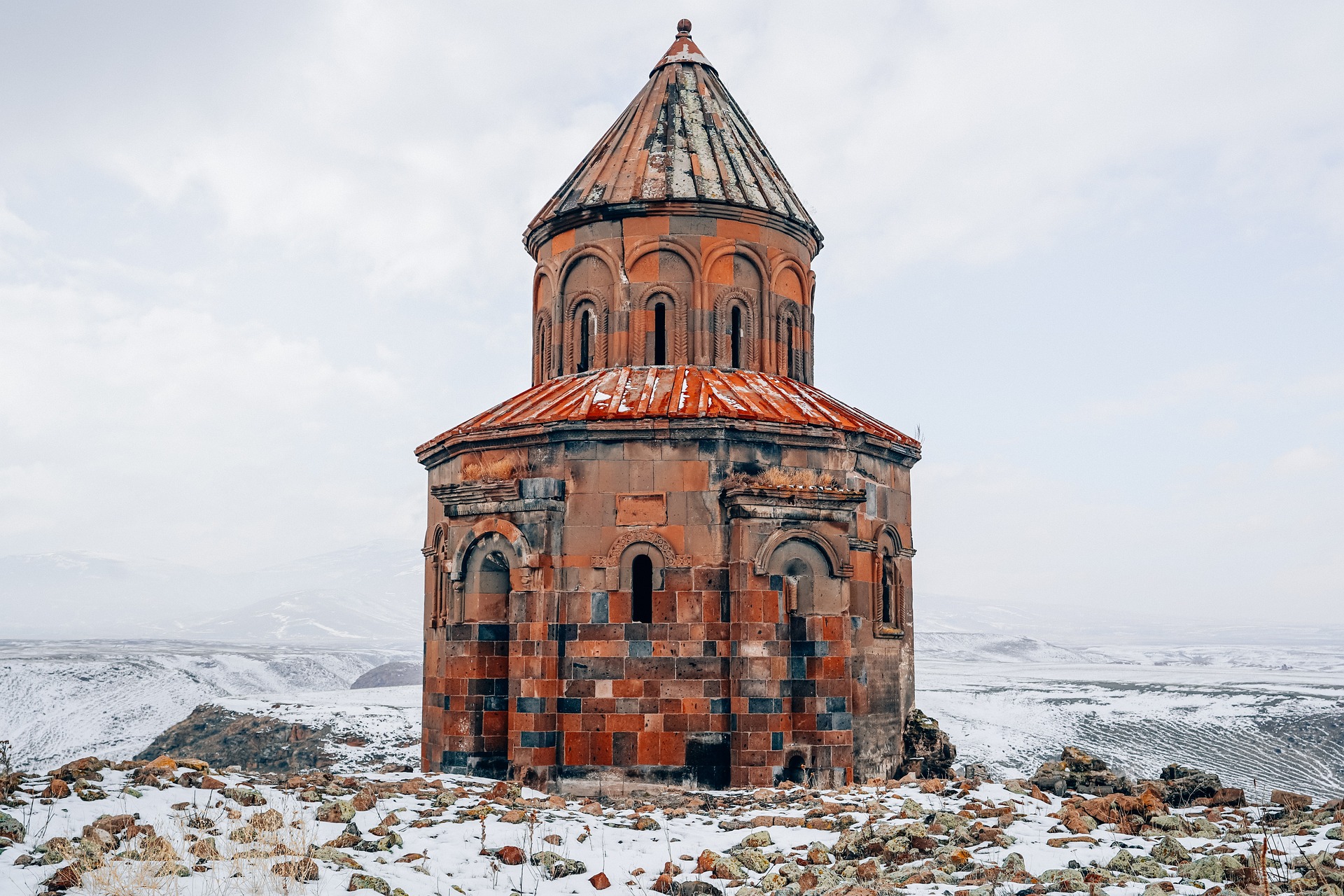
Kars – I am always amazed when I see the desolation of Kars plain with its vast expanses of emptiness dotted by a few villages here and there. And then, there is the city of Kars, built at the base of a height, shadowed by a citadel on top. Like other parts of eastern Turkey, this area nurtured Armenian civilization, along the great trade routes between east and west, with the ancient city of Ani nearby.
Today Kars is being groomed as the future gateway to Armenia, with a border crossing nearby, as well as an old railway line to Gyumri, Armenia. There is every expectation that the opening of the border will bring prosperity to this poor backwater of Turkey. Now there are shops crammed with cheap goods: plastic pails, fishing rods, bars of soap, children’s toys, plates, piles of clothes, all made in China or western Turkey.
As one enters the city of Kars, one cannot avoid seeing a new monument that is being built opposite the old fortress above the city. This is supposed to be a peace monument, symbolizing friendship among the people of this region, notably Turks and Armenians. At the base of the monument is a pool, in the shape of an eye, with a teardrop breaking away. Is this a tear of joy or sorrow? I ask myself. Perhaps it is both.
The Museum of Kars is within the city limits. It looks like a modest building from the outside, but inside it is quite something else: well lit, spacious, built of marble, covering two floors, I am impressed at first sight. It is not huge, but big enough and welcoming.
In the grounds of the museum, there are some 16th-century Turkish steles; so they have been marked, but I could not miss the tombstones with Armenian writing on them. They are probably from the turn of the 20th century, and they are also inscribed in modern Armenian.
A bullying message
Inside, once more, as in Erzurum and Van, there are exhibitions from the Urartian, Greek, and Roman periods to the Byzantine, Seljuk, Ottoman, and Turkish. There is the familiar absence of Armenians as well, though there are references to the Bagratids in Kars and Ani – without mentioning Armenians except twice, in passing, in Turkish. Yet Ani was the jewel of medieval Armenian art, architecture, and culture.
There is an exhibit that identifies 10-12 century “Christian coins” and a glass cage of crosses from the “Christian era”. It is not clear what period that is. Some of these crosses are clearly Russian, and some are clearly Armenian, though no mention is made of either. Armenians remain invisible.
Then there is a rather bizarre exhibit, towering over onlookers. These are two huge church doors, with unmistakable Armenian crosses carved on them, plus a dedication in Armenian. The exhibit is simply identified as a church door from Kars. There is no additional explanation, such as the name or denomination of the church. Why would museum officials bother to put these doors on display, and purposefully say nothing of any substance about them? Surely the museum is aware of the message this display conveys. It is a bullying message to Armenians: your absence in this museum is on purpose.
Some of the walls also include pictures of nearby ruined churches, but there is no additional explanation, except their names in Turkish.
The upper floor of the museum has an ethnographic section, with the standard Turkish nationalist narrative of an Islamic-Turkish past, and no mention of other cultures, such as Armenians, Russians, Kurds, or Georgians – all distinct in their own right.
A paradox
As one leaves the museum, one is left with the paradox of reconciling the monument of peace towering above the town, and the silent, hostile message of the Museum of Kars. Should one simply accept Turkey as a land of contradictions that is going through a period of adjustment? Should one hope that these contradictions will be resolved for the better one day? Or are the contradictions more permanent? Perhaps they are not contradictions at all: perhaps the combined message of the museum and monument are complimentary, that the Turkish peace offered to Armenians today is contingent on Armenians accepting the dictates of Turkish power. Those dictates include accepting a Turkish narrative of history that denigrates or denies the existence of Armenians.
So, how should I summarize my visit to Turkish museums? When I planned my proposed trip to Turkish museums in October 2008, I expected an “Armenian-friendly” experience. After all, I knew that the Museum of Van had been closed down for a long time and I expected it to reopen without the “Armenian Genocide of Turks” section. I also knew that Aghtamar had been renovated. I even had an idea that a Turkish artist was building a peace monument in Kars. Because of these indicators, I expected to see complimentary changes in the content of the museums I planned to visit. Obviously I was being too optimistic. By no means has Turkey turned the corner as the museums, among many other examples, still represent some of the worst aspects of “old Turkey” in terms of intolerance, prejudice, and aggression.
Before I left Kars, I visited the construction workers at the peace monument. They were a jovial bunch of people, from different parts of Turkey. They asked me why I came to visit Kars. I told them I was Armenian and that I came to visit the museum as well as the old mosque that used to be an Armenian church (Holy Apostles Cathedral).
One of the workers, a simple man, interjected and raised his voice. “I am a Muslim! I am a Muslim! And I say as a Muslim that they should turn that mosque back into a church. It is shameful to keep it as a mosque!” As he spoke up, his fellow workers listened. I was surprised and moved by the sincerity of his words.
For the article click on:
http://reporter. am/go/article/ 2009-01-09- hacking-history- iv-the-museum- of-kars