Author: Aylin D. Miller

  • Fethullah Gülen’s Grand Ambition

    Fethullah Gülen’s Grand Ambition

    Turkey’s Islamist Danger
    by Rachel Sharon-Krespin
    Middle East Quarterly
    Winter 2009, pp. 55-66

    As Turkey’s ruling Justice and Development Party (Adalet ve Kalkınma Partisi, AKP) begins its seventh year in leadership, Turkey is no longer the secular and democratic country that it was when the party took over. The AKP has conquered the bureaucracy and changed Turkey’s fundamental identity. Prior to the AKP’s rise, Ankara oriented itself toward the United States and Europe. Today, despite the rhetoric of European Union accession, Prime Minister Recep Tayyip Erdoğan has turned Turkey away from Europe and toward Russia and Iran and reoriented Turkish policy in the Middle East away from sympathy toward Israel and much more toward friendship with Hamas, Hezbollah, and Syria. Anti-American, anti-Christian, and anti-Semitic sentiments have increased. Behind Turkey’s transformation has been not only the impressive AKP political machine but also a shadowy Islamist sect led by the mysterious hocaefendi (master lord) Fethullah Gülen; the sect often bills itself as a proponent of tolerance and dialogue but works toward purposes quite the opposite. Today, Gülen and his backers (Fethullahcılar, Fethullahists) not only seek to influence government but also to become the government.

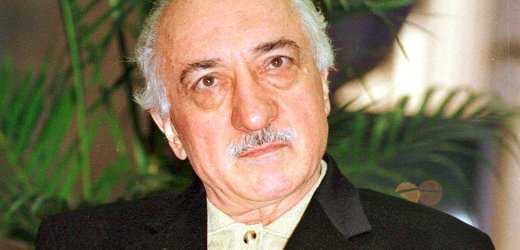
    In 1998, Fethullah Gülen left Turkey for the United States, reportedly to receive medical treatment for diabetes. Since his voluntary exile, Gülen has resided on a large, rural estate in eastern Pennsylvania, together with about 100 followers, who guard him and tend to his needs. It is from his U.S. base that Gülen has built his fame and his transnational empire.

    Today, Turkey has over 85,000 active mosques, one for every 350 citizens-compared to one hospital for every 60,000 citizens-the highest number per capita in the world and, with 90,000 imams, more imams than doctors or teachers. It has thousands of madrasa-like Imam-Hatip schools and about four thousand more official state-run Qur’an courses, not counting the unofficial Qur’an schools, which may expand the total number tenfold. Spending by the governmental Directorate of Religious Affairs (Diyanet Işleri Başkanlığı) has grown five fold, from 553 trillion Turkish lira in 2002 (approximately US$325 million) to 2.7 quadrillion lira during the first four-and-a-half years of the AKP government; it has a larger budget than eight other ministries combined.[1] The Friday prayer attendance rate in Turkey’s mosques exceeds that of Iran’s, and religion classes teaching Sunni Islam are compulsory in public schools despite rulings against the practice by the European Court of Human Rights (ECHR) and the Turkish high court (Danıştay).[2] Both Prime Minister Erdoğan and the Diyanet head Ali Bardakoğlu criticized the rulings for failing to consult Islamic scholars.

    Gülen now helps set the political agenda in Turkey using his followers in the AKP as well as the movement’s vast media empire, financial institutions and banks, business organizations, an international network of thousands of schools, universities, student residences (ışıkevis), and many associations and foundations. He is a financial heavyweight, controlling an unregulated and opaque budget estimated at $25 billion.[3] It is not clear whether the Fethullahist cemaat (community) supports the AKP or is the ruling force behind AKP. Either way, however, the effect is the same.

    Gülen’s Background

    Born in Erzurum, Turkey, in 1942, Fethullah Gülen is an imam who considers himself a prophet.[4] An enigmatic figure, many in the West applaud him as a reformist and advocate for tolerance,[5] a catalyst of “moderate Islam” for Turkey and beyond. He is praised in the West, especially in the United States, as an intellectual, scholar, and educator[6] even though his formal education is limited to five years of elementary school. After receiving an imam-preacher certificate, he served as an imam, first in Erdirne and later in Izmir. In 1971, the Turkish security service arrested him for clandestine religious activities, such as running illegal summer camps to indoctrinate youths, and was, from that time on, occasionally harassed by the staunchly secular military.[7] In 1981, he formally retired from his post as a local preacher.

    To build an image as a proponent of interfaith dialogue, Gülen met Pope John Paul II, other Christian clergy, and Jewish rabbis[8] and emphasizes the commonalities unifying Abrahamic religions. He presents himself and his movement as the modern-day version of tolerant, liberal Anatolian Sufism and has used the literature of great Sufi thinkers such as Jalal ad-Din Rumi and Yunus Emre, pretending to share their moderate teachings.[9] Quotes from their teachings adorn Fethullah’s Gülen’s propaganda material. The movement, its proxy organizations, and universities-including Georgetown, to which it donates money-hold conferences in the United States and Europe to discuss Gülen. In October 2007, the British House of Lords feted Gülen with a conference in his honor.
    Gülen was a student and follower of Sheikh Sa’id-i Kurdi (1878-1960), also known as Sa’id-i Nursi, the founder of the Islamist Nur (light) movement.[10] After Turkey’s war of independence, Kurdi demanded, in an address to the new parliament, that the new republic be based on Islamic principles. He turned against Atatürk and his reforms and against the new modern, secular, Western republic.

    In 1998, Gülen departed for the United States, reportedly to receive medical treatment for diabetes. However, his absence also enabled Gülen to escape questioning on his indictment in 2000 for allegedly promoting insurrection in Turkey in a series of secretly-recorded sermons. Since his voluntary exile, Gülen has resided on a large, rural estate in eastern Pennsylvania, together with about 100 followers, who guard him and tend to his needs. These servants are educated men who wear suits and ties and do not look like traditional Islamists in cloaks and turbans. They follow their hocaefendi’s orders and even refrain from marrying until age fifty per his instructions. When they do marry, their spouses are expected to dress in the Islamic manner, as dictated by Gülen himself.[11] It is from his U.S. base that Gülen has built his fame and his transnational empire.

    Gülen’s Education Network

    The core of Gülen’s network is his educational institutions. His school network is impressive. Nurettin Veren, Gülen’s right-hand man for thirty-five years, estimated that some 75 percent of Turkey’s two million preparatory school students are enrolled in Gülen institutions.[12] He controls thousands of top-tier secondary schools, colleges, and student dormitories throughout Turkey, as well as private universities, the largest being Fatih University in Istanbul. Outside Turkey, his movement runs hundreds of secondary schools and dozens of universities in 110 countries worldwide. Gülen’s aim is not altruistic: His followers target youth in the eighth through twelfth grades, mentor and indoctrinate them in the ışıkevi, educate them in the Fethullah schools, and prepare them for future careers in legal, political, and educational professions in order to create the ruling classes of the future Islamist, Turkish state. Taking their orders from Fethullah Gülen, wealthy followers continue to open schools and ışıkevi in what Sabah columnist Emre Aköz called “the education jihad.”[13]

    The overt network of schools is only one part of a larger strategy. In a 2006 interview, Veren said, “These schools are like shop windows. Recruitment and Islamization activities are carried out through night classes … Children whom we educated in Turkey are now in the highest positions. There are governors, judges, military officers. There are ministers in the government. They consult Gülen before doing anything.”[14]

    The AKP’s controversial education policies, coupled with the Islamist indoctrination in Fethullahist schools, have accelerated the Islamization of Turkish society. During AKP’s first term in government, the Erdoğan government has changed textbooks, emphasized religion courses, and transferred thousands of certified imams from their positions in the Directorate of Religious Affairs to positions as teachers and administrators in Turkey’s public schools.[15] Abdullah Gül, Turkey’s first Islamist president and a Gülen sympathizer, appointed a Gülen-affiliated professor, Yusuf Ziya Özcan, to head Turkey’s Council of Higher Education (Yükseköğretim Kurulu, YÖK). He has also used his presidential prerogative to appoint Gülen sympathizers to university presidencies.

    Beyond Turkey, the Fethullahist schools also serve as fertile recruiting grounds. In his Institut d’Etudes Politiques doctoral thesis on Gülen schools in Central Asia, Bayram Balcı, a French scholar of Turkish origin, wrote, “Fethullah’s aim is the Islamization of Turkish nationality and the Turcification of Islam in foreign countries. Dozens of Fethullah’s ‘Turkish schools’ abroad-most of which are for boys-are used to covertly ‘convert,’ not so much ‘in school,’ but through direct proselytism ‘outside school.’” Balcı explained, “He wants to revive the link between state, religion, and society.”[16] The schools of Gülen’s Nur movement in Central Asia have worked to reestablish Islam in a region largely secularized by decades of Soviet control. Balcı explained, “The aim of the cemaat is to educate and influence future national elites, who will speak English and Turkish and who will one day prove their good intentions towards Fethullahists and towards Turkey.” Several countries in the region have taken steps against Gülen’s educational institutions because of such suspicions. Uzbekistan has banned the schools for encouraging Islamic law,[17] and the Russian government, weary of the movement’s activities in majority Muslim regions of the federation, has banned not only the Gülen schools but all activities of the entire Nur sect in the country.[18]

    Neither Uzbekistan nor Russia are known for their pluralism, but suspicion about Gülen indoctrination has spread even to more permissive societies such as that of the Netherlands. In 2008, members of the Netherland’s Christian Democrat, Labor, and Conservative parties agreed to cut several million euros in government funding for organizations affiliated with “the Turkish imam Fethullah Gülen” and to thoroughly investigate the activities of the Gülen group after Erik Jan Zürcher, director of the Amsterdam-based International Institute for Social History, and five former Gülen followers who had worked in Gülen’s ışıkevi told Dutch television that the Gülen community was moving step-by-step to topple the secular order.[19] While the organizations in question denied any ties to the Gülen movement, Zürcher said that taqiya, religiously-sanctioned dissimulation, was typical in the movement’s interactions with the West. An unnamed former Gülen follower who also once worked in Gülen schools and ışıkevi reported that Fethullahists called the Dutch “filthy, blasphemous infidels” and that they said “the best Dutchman is one who has converted to Islam. All the Dutch must be made Muslims.”[20] Indeed, of the thousands of Fethullahist schools in more than one hundred countries that allegedly teach moderation, none are located in countries such as Saudi Arabia or Iran that exist under domineering strains of official Islam, and most appear instead geared to radicalize students in secular Muslim and non-Muslim societies.

    Eviscerating Checks and Balances

    Fethullahists have also made inroads into Turkey’s 200,000-strong police force. Their infiltration has had a compounding effect, as Fethullahist officials have purged officials more loyal to the republic than the hocaefendi. According to Veren, “There are imam security directors; imams wearing police uniforms. Many police commissioners get their orders from imams.”[21] Adil Serdar Saçan, former director of the organized crimes unit within the Istanbul Directorate of Security, confirmed these statements in reports he prepared on the Fethullahist organization within the security apparatus. In a 2006 interview, he said,
    Fethullahists began organizing inside the security apparatus in the 1970s. In police academies, students were being taken to ışıkevi by class commissioners. One of those commissioners is now the director of intelligence at the Turkish Directorate of Security. During my time at the [police] academy, those in the directorate who did not have ties to the [Gülen] organization were all pensioned off or fired in 2002 when the AKP came to power. … I was at the top of my class when I graduated from the police academy, and throughout the twenty-four years of my career, I maintained and was honored for my stellar record. After 2002, the AKP blocked my promotions. They promoted only those officers whose files were tainted with allegations that they were engaged in reactionary Islamist activities. … Belonging to a certain cemaat has become a prerequisite for advancement in the force. At present, over 80 percent of the officers at supervisory level in the general security organization are members of the [Gülen] cemaat.[22]
    Such statements, however, may have consequences.[23] In October 2008, Turkish police arrested Saçan on suspicion of involvement in the so-called Ergenekon plot to overthrow the Turkish state.[24] Most Turkish analysts believe that the Ergenekon conspiracy, short of any evidence of unconstitutional activities, is more a mechanism by which the Turkish government can harass critics.[25]
    Writer and journalist Merdan Yanardağ provided statistics to illuminate the Islamist penetration of the Ankara Directorate of Security. He explained,
    Prior to Ramadan, personnel at the Directorate of Security in Ankara were asked whether they would be fasting during Ramadan, in order to establish the number of meals that would be needed during that period. Of the 4,200 employees, only seventeen indicated that they would not be fasting. Considering that some of the seventeen might have been sick or taking medications, the numbers speak for themselves. [26]

    Wiretapping scandals in spring 2008 also highlighted Gülenist penetration of the security service’s most important units. After the Turkish Security Directorate obtained a blanket court permit in April 2007 to monitor and record all the communications in Turkey including mobile and land-line telephones, SMS text messaging, e-mail, fax, and Internet communications,[27] Turks have grown uneasy about having telephone conversations fearing intrusion into their privacy. Recent leaks to pro-AKP media of recordings of military personnel meetings, lectures, top secret military documents, strategic antiterrorism plans, private medical files of commanders, and contents of personal conversations between state prosecutors have shocked the nation as has the appearance on the Internet video site YouTube of some of those recordings.

    The alleged network of Fethullah followers in the security system has an impact on domestic affairs as they use restricted technology or privileged information to further their political agenda. In February 2008, for example, several websites posted the voice recording of a secret speech delivered by Brig. Gen. Münir Erten announcing the timing of an upcoming Turkish military operation into Iraqi Kurdistan, details of a private discussion with the chief of the General Staff, and private information concerning Gen. Ergin Saygun’s health.[28] The following month, several websites including YouTube posted a secretly recorded conversation between prosecutor Salim Demirci and a colleague regarding Erdoğan and Efkan Ala, then governor of Diyarbakir and subsequently a counselor of Erdoğan’s office. Erdoğan responded by ordering a criminal investigation against Demirci.[29] In June 2008, the Islamist Vakit published Saygun’s entire medical file, disclosing information about his diabetes as well as the treatments and medications he had received in the Gülhane military hospital.[30] Others whose tapped conversations appeared on Islamist websites and in Gülen’s newspaper network included Erdoğan Teziç, the former head of Turkey’s Higher Education Council, and prominent members of the center-left opposition Republican People’s Party (Cumhuriyet Halk Partisi, CHP). Many Turkish journalists believe that Fethullahist-dominated police tap their communications, and according to reports, the head of the wiretapping unit, who was appointed by Erdoğan in August 2005, is a Fethullah follower.[31] Islamist newspapers including Vakit, Yeni Şafak, Zaman, and the pro-AKP Taraf published leaks from private conversations held inside government offices and military headquarters. The Islamist, pro-AKP media has reported alleged confidential evidence relating to the police investigation of the so-called Ergenekon plot that posits a secularist cabal of military officers, journalists, and professors sought to overthrow the AKP government.[32] The net effect of such leaks is to tar the reputations of or intimidate AKP’s political opponents and the Turkish military.
    Islamization within police ranks also contributes to police brutality against anti-AKP demonstrators. On May 1, 2008, the police used gas bombs, pepper gas, water cannons, and clubs against workers who wanted to celebrate May Day peacefully in Istanbul’s Taksim Square, the traditional site of demonstrations in Turkey’s largest city; scores were injured.[33] Labor unions and opposition parties condemned the police brutality and accused Erdoğan of using police to silence opposition voices.[34] Police also suppressed labor protests in Tuzla (Istanbul) shipyards.[35] Similarly, police have harassed individual citizens after they criticized Erdoğan’s policies. Erdoğan’s own security guards abducted a 46-year-old man from Antalya for speaking out in public against his social security policies, taking the man to a deserted location where the guards beat and threatened him. The victim alleged that his attackers said they could easily plant guns or drugs on him and kill him.[36]

    While Turkey’s military is guarantor of the constitution, Veren alleged that Fethullahists had also entrenched themselves within the military, police, and other professions:
    The Fethullahist military officers were once our students, who we financially supported, educated, and assisted. When these grateful children graduated and reached influential positions, they put themselves and their positions at the service of Fethullah Gülen … [Gülen] directs and instructs, and, through them, maintains power within the state … When Gülen’s students graduate from the police or military academies-as do the new doctors and lawyers-they present their first salaries to Fethullah Gülen as a gesture of their gratitude. Newly graduated officers even bring him the swords that they receive during the graduation ceremony.[37]

    According to Veren, Gülen has argued that the military expels no more than one in forty Islamist officers; the rest remain in undercover cells. While such allegations may seem the stuff of conspiracy theory, recent leaks to pro-AKP media suggest a number of Islamist sources within the military ranks, creating speculation that followers of Gülen now populate the senior infrastructure of the Turkish General Staff. Such speculation gained additional credence after the August 2008 Supreme Military Council (Yüksek Askeri Şura, YAŞ), which, for the first time, declined to expel suspected Islamists from military ranks.

    The AKP government has also aided the Gülen movement with its reorientation of the judiciary. Over the first five years of his rule, Erdoğan replaced thousands of judges and prosecutors with AKP appointees. Now that the president is Islamist, it is unlikely that he would veto the appointment of Islamists to the bench, as did his predecessor Ahmet Necdet Sezer. Indeed, it now appears that the government intends to appoint thousands more to judicial positions.[38] The AKP has also enacted a law that would require applicants for judgeships to first interview with AKP bureaucrats in order better to gauge and adjudicate applicants’ adherence to Islam. The results of the AKP’s targeting of the judicial system are already apparent as anti-secular, pro-AKP officials have been at the forefront of some controversial trials, such as the case against Van University president Yücel Aşkın,[39] the Şemdinli investigation in which the prosecutor tried to implicate Gen. Yaşar Büyükanıt before he became chief of the General Staff, and, most recently, the Ergenekon probe.

    Indeed, it is such overtly political and vindictive prosecutions that have led some former Gülen sympathizers, such as University of Utah political scientist Hakan Yavuz, to a change of heart. In one interview, Yavuz told odatv.com that four important legal cases had changed his thinking: the case against Aşkın; the Semdinli case; the Atabeyler operation, uncovered in 2005, involving an organized crime group with alleged plans to assassinate Prime Minister Erdoğan;[40] and the Ergenekon probe. Yavuz explained, “The cemaat has attempted to steer all four cases. Look at the slanderous reports in archives of the cemaat’s newspapers, how they defamed Yucel Aşkın. And now it’s Ergenekon. Keeping [prominent] personalities in jail for over a year without indictment is inexplicable.” Yavuz also suggested Gülen’s cemaat spoke differently to its members than to outsiders and that it was pursuing a political agenda that conflicted with the founding philosophy of the modern Turkish republic. He accused Fethullahists of “co-optation” and said that they were recruiting people and paying them money-without any formal receipts or records-to write and speak favorably about the movement while criticizing the secular Turkish state.[41]

    The Fifth Estate

    If the police, military, and courts might normally protect rule-of-law from within official Turkish government structures, there might still be an external check to abuse of power in the Turkish media. The Turkish media has traditionally been relentless in its reporting of abuses of power and corruption. Soon after assuming office, however, Erdoğan proved intolerant of the concept of a free press. The AKP government has systematically sought to create a media monopoly to speak with one voice and on behalf of the government. Erdoğan lashes out at media organs that he does not control. In his first term, Erdoğan brought more than a hundred lawsuits against sixty-three journalists in sixteen publications, against many writers, as well as the leaders and members of parliament of all opposition parties. The number of lawsuits may be far greater. In 2008, Erdoğan declined to answer a parliamentary inquiry by a Democratic Left Party deputy demanding information on how many lawsuits Erdoğan had initiated against journalists-claiming that such information was in the realm of his private life.”[42] Most of Erdoğan’s lawsuits against journalists involve criticism that any other democracy would consider legitimate. In 2005, for example, he sued Cumhuriyet cartoonist Musa Kart for depicting him as a cat entangled in a ball of string. Last year, he sued the LeMan weekly humor magazine for ridiculing him in its January 30, 2008 cover.[43]

    Erdoğan lost some of his lawsuits, and courts threw out others, but the effect has nonetheless been chilling. Journalists know that not only does the prime minister seek to make them financially liable for any criticism, but that the AKP might even seek to assume control of their publications. During AKP’s 6-year rule, the government has seized control of several media outlets and subsequently sold them to pro-AKP holdings affiliated with the Gülen community. In April 2007, for example, the governmental Saving Deposit Insurance Fund (Tasarruf Mevduatı Sigorta Fonu, TMSF) seized Sabah-ATV, Turkey’s second largest media group in a predawn raid. The TMSF, staffed by Erdoğan appointees, then sold the group to Çalık Holding, the CEO of which is Erdoğan’s son-in-law. Çalık financed the purchase with public funds taken as loans from two state-owned banks and by partnering with a newly-founded, Qatar-based media company that bought 25 percent of Sabah shares. It was Abdullah Gül who introduced Ahmet Çalık to Qatari Emir Hamad bin Khalifa during his January 2008 visit in Syria; Çalık also accompanied Gül in February and Erdoğan in April when they visited Qatar. Media reports indicated that other consortiums that had initially shown interest in purchasing Sabah-ATV with their own money pulled out of the tender shortly before the bid after Erdoğan contacted them, leaving Çalik the sole bidder.[44] Sabah has since become a strong advocate of the AKP government. In September 2008, Erdoğan demanded all party members and aides boycott newspapers owned by the Doğan Media Group after it reported on laundering of money to Islamist charities.[45]

    Excluding the Islamist television and radio stations, newspapers such as Zaman, Sabah, Yeni Şafak, Türkiye, Star, Bugün, Vakit, and Taraf all have AKP and/or Gülen-affiliated ownership. By circulation, such papers represent at least 40 percent of all newspaper sales in Turkey.[46]

    What Are Gülen’s Intentions?

    Conglomerates have long had a dominant position in Turkish society. Secular businessmen such as Aydın Doğan and Mehmet Emin Karamehmet have interests not only in industry but also in media, the banking sector, and even education. Never before, though, has a single individual started a movement that seeks to transform Turkish society so fundamentally. Gülen now wields a vocal partisan media; a vast network of loyal bureaucrats; partisan universities and academia; partisan prosecutors and judges; partisan security and intelligence agencies; partisan capitalists, business associations, NGOs, and labor unions; and partisan teachers, doctors, and hospitals. What makes Gülen so dangerous? Gülen’s own teaching and sermons provide the best answers.

    In 1999, Turkish television aired footage of Gülen delivering sermons to a crowd of followers in which he revealed his aspirations for an Islamist Turkey ruled by Shari‘a (Islamic law) as well as the methods that should be used to attain that goal. In the sermons, he said:
    You must move in the arteries of the system without anyone noticing your existence until you reach all the power centers … until the conditions are ripe, they [the followers] must continue like this. If they do something prematurely, the world will crush our heads, and Muslims will suffer everywhere, like in the tragedies in Algeria, like in 1982 [in] Syria … like in the yearly disasters and tragedies in Egypt. The time is not yet right. You must wait for the time when you are complete and conditions are ripe, until we can shoulder the entire world and carry it … You must wait until such time as you have gotten all the state power, until you have brought to your side all the power of the constitutional institutions in Turkey … Until that time, any step taken would be too early-like breaking an egg without waiting the full forty days for it to hatch. It would be like killing the chick inside. The work to be done is [in] confronting the world. Now, I have expressed my feelings and thoughts to you all-in confidence … trusting your loyalty and secrecy. I know that when you leave here-[just] as you discard your empty juice boxes, you must discard the thoughts and the feelings that I expressed here.

    He continued,
    When everything was closed and all doors were locked, our houses of isik [light] assumed a mission greater than that of older times. In the past, some of the duties of these houses were carried out by madrasas [Islamic schools], some by schools, some by tekkes [Islamist lodges] … These isik homes had to be the schools, had to be madrasas, [had to be] tekkes all at the same time. The permission did not come from the state, or the state’s laws, or the people who govern us. The permission was given by God … who wanted His name learned and talked about, studied, and discussed in those houses, as it used to be in the mosques.[47]

    In another sermon, Gülen said,
    Now it is a painful spring that we live in. A nation is being born again. A nation of millions [is] being born-one that will live for long centuries, God willing … It is being born with its own culture, its own civilization. If giving birth to one person is so painful, the birth of millions cannot be pain-free. Naturally we will suffer pain. It won’t be easy for a nation that has accepted atheism, has accepted materialism, a nation accustomed to running away from itself, to come back riding on its horse. It will not be easy, but it is worth all our suffering and the sacrifices.[48]
    And, in yet another sermon, he declared,
    The philosophy of our service is that we open a house somewhere and, with the patience of a spider, we lay our web to wait for people to get caught in the web; and we teach those who do. We don’t lay the web to eat or consume them but to show them the way to their resurrection, to blow life into their dead bodies and souls, to give them a life.[49]
    Many Gülen supporters and members of the Islamist media affiliated with the cemaat suggested the sermons were somehow forged[50] but the denials are unconvincing given the video footage and reports by Gülen movement defectors.

    U.S. Government Support for Gülen?

    Many Turkish analysts believe that, prior to Erdoğan’s election, Gülen and his supporters in the U.S. government helped obtain an invitation to the White House for him at a time when Erdoğan was banned from politics in Turkey due to his Islamist activities-an event viewed as a U.S. endorsement ahead of the 2002 Turkish elections. That the U.S. government and, specifically, the Central Intelligence Agency support the Gülen movement is conventional wisdom among Turkey’s secular elite even though no hard evidence exists to support such allegations.

    When Turkish secularists are asked to defend the view that Gülen enjoys U.S. support, they often point to his almost 20-year residence in eastern Pennsylvania. After the Supreme Court of Appeals in Turkey (Yargıtay) confirmed on June 24, 2008, a lower court’s ruling to acquit Gülen on charges that he organized an illegal terrorist organization to overthrow the secular government in Turkey, Gülen won another legal battle, this time in the United States. A federal court reversed U.S. Department of Homeland Security and U.S. Citizenship and Immigration Service decisions that would have denied Gülen’s application for permanent residency in the United States on the basis that Gülen did not fit the criteria as someone with “extraordinary ability in the field of education.” The Department of Homeland Security characterized Gülen as neither an expert in the field of education nor an educator but rather as “the leader of a large and influential religious and political movement with immense commercial holdings.”[51]
    While the court ruling that allowed Gülen to remain in the United States may provide fodder for Turkish analysts who suggest U.S. support for Gülen, the process is actually more revealing. Indeed, the U.S. government noted that much of the acclaim Gülen touts is sponsored or financed by his own movement. Gülen attached twenty-nine letters of reference to his June 18, 2008 motion, mostly from theologians or Turkish political figures close to or affiliated with his organization. John Esposito, founding director of the Saudi-financed Prince Alwaleed Bin Talal Center for Muslim-Christian Understanding, who, after receiving donations from the Gülen movement sponsored a conference in his honor, also supplied a reference. Two former CIA officials, George Fidas and Graham Fuller, and former U.S. ambassador to Turkey Morton Abramowitz also supplied references.

    The letters may have worked. On July 16, 2008, U.S. district judge Stewart Dalzell issued a memorandum and order granting Gülen’s motion for partial summary judgment and ordering the U.S. Citizenship and Immigration Service to approve his petition for alien worker status as an alien of extraordinary ability by August 1, 2008. The court found that the immigration examiner improperly concluded that the field of education was the only statutory category in which Gülen’s accomplishments could fit and that Gülen’s accomplishments in such fields as theology, political science, and Islamic studies should also be considered. The court further determined that the U.S. Citizenship and Immigration Service Administrative Appeals Office erred in concluding that Gülen’s work was not “scholarly” by applying an unduly narrow definition of the term. Finally, with regard to the statutory requirement that the applicant show that his or her entry into the United States would substantially benefit the United States, the court found that Gülen had met the requirement.[52]

    Regardless of the legal rationale behind his current stay, the U.S. decision to grant Gülen residency will enable his movement to continue to imply Washington’s endorsement as the AKP and its Fethullahist supporters seek to push Turkey further away from the secularism upon which it was built.

    Conclusions

    Gülen enjoys the support of many friends, ideological fellow-travelers, and co-opted journalists and academics. Too often, concern over Gülen’s activities is dismissed in the Turkish, U.S., and European media as mere paranoia. When Turkey’s chief prosecutor indicted the AKP for attempting to undermine the secular constitution, the pro-Islamist media in Turkey along with Western diplomats and journalists dismissed the case as an “undemocratic judicial coup.”[53] Yet at the same time, many of the same outlets and officials have hailed the Ergenekon indictment, assuming a dichotomy between Islamism and democracy on one hand, and secularism and fascism on the other.[54] The repeated branding in Islamist outlets of Turkey’s Islamists as “reformist democrats” and of modern, secular Turks as “fundamentalists” has to be one of the most offensive but sadly effective lies in modern politics.
    Indeed, Turkey has never seen a single incident of attacks on pious Muslims for fasting during Ramadan, whereas in recent years there have been many incidents of attacks on less-observant Turks for drinking alcohol or not fasting.[55] While women who cover their heads in the Islamic manner can move freely in any area of the country, uncovered women are increasingly unwelcome in certain regions and are often attacked.[56]

    Contrary to the impression prevalent in the West-that the conflict is between religious Muslims and “anti-religion, secular Kemalists”-the fact remains that the majority of Turks, secular included, are traditional and observant Muslims many of whom define themselves primarily as “Muslims first.”[57] While the Turkish constitution recognizes all Turkish citizens as “Turks,” the dominant sentiment in the country has always been that in order to be considered a Turk, one must be Muslim. The complete absence of any non-Muslim governor, ambassador, or military or police officer attests to the prevalence of Islam’s dominance in the Turkish establishment. Therefore, it appears Gülen is not fighting for more individual freedoms but to free Islam from the confines of the mosque and the private domain of individuals and to bring it to the public arena, to govern every aspect of life in the country.[58] AKP leaders, including Gül and Erdoğan, have repeatedly expressed their opposition to the “imprisonment of Islam in the mosque,” demanding that it be present everywhere as a lifestyle. Most Turks vividly remember statements by AKP leaders not long ago rejecting the definition of secularism as “separation of mosque and state.” Gül has slammed “secularism” on many occasions, including during a November 27, 1995 interview with The Guardian. What Turkey’s Islamists really want is to remove the founding principles of the Turkish Republic. So long as U.S. and Western officials fail to recognize that Gülen’s rhetoric of tolerance is only skin-deep, they may be setting the stage for a dialogue, albeit not of religious tolerance, but rather to find an answer to the question, “Who lost Turkey?”

    Rachel Sharon-Krespin is the director of the Turkish Media Project at the Middle East Media Research Institute (MEMRI), Washington D.C.

    [1] Can Dündar, Milliyet (Istanbul), June 21, 2007; Reha Muhtar, Vatan (Istanbul), June 22, 2007.
    [2] Milliyet, Mar. 10, 2008; Hürriyet (Istanbul), Mar. 10, 2008.
    [3] Helen Rose Ebaugh and Dogan Koc, “Funding Gülen-Inspired Good Works: Demonstrating and Generating Commitment to the Movement,” fgulen.com, Oct. 27, 2007.
    [4] Merdan Yanardağ, Fethullah Gülen Hareketinin Perde Arkasi, Turkiye Nasil Kusatildi? (Istanbul: yah Beyaz Yayın, 2006), based on interviews with Nurettin Veren on Kanaltürk television, June 26, July 3, 2006.
    [5] “Fethullah Gülen Is an Islamic Scholar and Peace Activist,” International Conference on Fethullah Gülen, Erasmus University, Rotterdam, The Netherlands, Nov. 2007; J. J. Rogers, “Giants of Light: Fethullah Gülen and Meister Eckhart in Dialogue,” The University of Texas, San Antonio, Tex., Nov. 3, 2007.
    [6] See for example, Rogers, “Giants of Light”; USA Today, July 18, 2008.
    [7] Bülent Aras, “Turkish Islam’s Moderate Face,” Middle East Quarterly, Sept. 1998, pp. 23-9.
    [8] Anadolu Ajansı (Ankara), Feb. 10, 1998.
    [9] Booklets on Anatolian Sufism with citations from Mevlana Celleddin Rumi distributed at the “Muslim World in Transition: Contributions of the Gulen Movement” conference, London, Oct. 25 – 27, 2007.
    [10] Aland Mizell, “Clash of Civilizations versus Interfaith Dialogue: The Theories of Huntington and Gulen,” KurdishMedia.com, Dec. 31, 2007; idem, “Are Islam and Kemalism Compatible? How Two Systems Have Impacted the Kurdish Question?” Iraq Updates, Nov. 28, 2007.
    [11] Interview with Nurettin Veren, Kanaltürk television, June 26, 2006.
    [12] Ibid.
    [13] Sabah (Istanbul), Dec. 30, 2004.
    [14] Veren interview, Kanaltürk, June 26, 2006.
    [15] Cumhuriyet (Istanbul), Dec. 23, 2007.
    [16] Bayram Balcı, “Central Asia: Fethullah Gulen’s Missionary Schools,” Oct. 2001.
    [17] Interview with Merdan Yanardağ, Gerçek Gündem (Istanbul), Nov. 20, 2006.
    [18] Hürriyet, Apr. 11, 2008.
    [19] Erik-Jan Zürcher, “Kamermeerderheid Eist Onderzoek Naar Turkse Beweging,” NOVA documentary, July 4, 2008.
    [20] Cumhuriyet, July 9, 2008; Netherlands Information Services, July 11, 2008.
    [21] Yanardağ, Fethullah Gülen Hareketinin Perde Arkasi, Turkiye Nasil Kusatildi?
    [22] Adil Serdar Saçan, interview, Kanaltürk, July 3, 2006.
    [23] Ibid.
    [24] Samanyolu television, Oct. 13, 2008.
    [25] See, for example, Michael Rubin, “Erdogan, Ergenekon, and the Struggle for Turkey,” Mideast Monitor, Aug. 2008.
    [26] Yanardağ interview, Gerçek Gündem, Nov. 20, 2006.
    [27] Vatan, June 2, 2008; Hürriyet, June 2, 2008.
    [28] “SOK! Tuggeneral Munir Erten den SOK aciklamalar!” accessed Oct. 27, 2008.
    [29] “Sok Video! Cumhuriyet Savcisi Salim Demirci,” accessed Oct. 27, 2008.
    [30] Vakit (Istanbul), June 14, 2008.
    [31] Vatan, June 2, 2008; Hürriyet, June 2, 2008.
    [32] BBC News, Feb. 4, 2008; Frank Hyland, “Investigation of Turkey’s ‘Deep State’ Ergenekon Plot Spreads to Military,” Global Terrorism Analysis, Jamestown Foundation, July 16, 2008.
    [33] Reuters, May 1, 2008; Sendika.org, Labornet Turkey, May 1, 2008; Vatan, May 1, 2, 2008; Milliyet, May 1, 2, 2008; Hürriyet, May 1, 2, 2008
    [34] Vatan, May 2, 2008; Milliyet, May 2, 2008; Hürriyet, May 2, 8, 2008.
    [35] Hürriyet, Feb. 28, 2008.
    [36] Milliyet, May 14, 2008.
    [37] Yanardağ, Fethullah Gülen Hareketinin Perde Arkasi, Turkiye Nasil Kusatildi?
    [38] “Turkish Judiciary at War with AKP Government to Defend Its Independence,” MEMRI Special Dispatch No. 1520, Mar. 27, 2007.
    [39] “The AKP Government’s Attempt to Move Turkey from Secularism to Islamism (Part I): The Clash with Turkey’s Universities,” MEMRI Special Dispatch No. 1014, Nov. 1, 2005; “Professor from Van University in Turkey Commits Suicide after Five Months in Jail without Trial,” MEMRI Special Dispatch No. 1025, Nov. 18, 2005.
    [40] Zaman (Istanbul), Apr. 18, 2008.
    [41] Odatv.com, May 30, 2008; Hürriyet, June 13, 2008; Akşam (Istanbul), June 16, 2008.
    [42] Radikal (Istanbul), Apr. 7, 2008.
    [43] Hürriyet, Oct. 21, 2008.
    [44] Hürriyet, May 14, 2008.
    [45] Hürriyet, Sept. 7, 8, 9, 10, 11, 12, 2008.
    [46] Milliyet, July 14, 2008; Cumhuriyet, July 15, 2008
    [47] Turkish channel ATV, June 18, 1999.
    [48] Ibid.
    [49] Ibid.; “The Upcoming Elections in Turkey (2): The AKP’s Political Power Base,” MEMRI Inquiry and Analysis No. 375, July 19, 2007.
    [50] Sabah, Jan. 2, 3, 2005.
    [51] “Fethullah Gulen v. Michael Chertoff, Secretary, U.S. Dept. of Homeland Security, et al,” Case 2:07-cv-02148-SD, U.S. District Court for the Eastern District of Pennsylvania.
    [52] Ibid.
    [53] Turkish Daily News (Ankara), Mar. 16, 2008; Vakit, June 7, 9, 2008; Yeni Şafak (Istanbul), June 9, 2008.
    [54] Mustafa Akyol, “The Threat Is Secular Fundamentalism,” International Herald Tribune, May 4, 2007; “Islam Will Modernize-If Secular Fundamentalists Allow,” Turkish Daily News, May 15, 2007; “Mr. Logoglu Is Wrong, Considerably Wrong about Turkey,” Turkish Daily News, May 24, 2007.
    [55] Vatan, Aug. 21, 2008; Turkish Daily News, Sept. 23, 2008.
    [56] Hürriyet, Feb. 14, 2008; Milliyet, Feb. 14, 2008; Vatan, Feb. 14, 2008, Cumhuriyet, Feb. 14, 2008.
    [57] Yeni Şafak, July 7, 2006.
    [58] “Turkish PM Erdogan in Speech during Term as Istanbul Mayor Attacks Turkey’s Constitution, Describing It as ‘A Huge Lie’: ‘Sovereignty Belongs Unconditionally and Always To Allah’; ‘One Cannot Be a Muslim and Secular,’” MEMRI Special Dispatch No. 1596, May 23, 2007.
  • A TANER AKÇAM STORY

    A TANER AKÇAM STORY

    A TANER AKÇAM STORY: Turkish Scholar Exposes Ankara’s Vain Attempt to Split Armenia from Diaspora


    By Harut Sassounian
    Publisher, The California Courier
    Senior Contributor, USA Armenian Life Magazine

    In their persistent efforts to distort the facts of the Armenian Genocide, Turkish denialists resort to all sorts of tricks. Their latest scheme is trying to drive a wedge between Armenia and the Diaspora by claiming that authorities in Yerevan are all too willing to forget about the Genocide and reconcile with Turks, were it not for the “sinister influence” of Diaspora Armenians who constantly undermine all attempts at reconciliation between Armenia and Turkey.
    Prime Minister Recep Erdogan, during a press conference in Ankara last week, claimed that “the Armenian Diaspora is plotting. We can see very clearly and sharply that their efforts are aimed at utilizing [the Armenian Genocide issue]. This is so obvious. But I also see that the current administration in Armenia doesn’t take part in this.”
    Significantly, it was Turkish scholar Taner Akcam who exposed the false arguments of all those who share Prime Minister Erdogan’s false notion that Armenia and the Diaspora are split on the issue of recognition of the Armenian Genocide. In a recent issue of the Turkish newspaper Taraf, Prof. Akcam wrote a lengthy analysis of Turkish misperceptions and misrepresentations on this issue. He argued against the view that “good neighbor” Armenia and the “bad” Diaspora have opposing views on the Armenian Genocide. Prof. Akcam correctly stated that Armenians everywhere agree that what occurred in 1915 was genocide and feel that it needs to be acknowledged by Turkey. He noted, however, that there are differences among Armenians (regardless of where they live) about the consequences of such an acknowledgement.
    Prof. Akcam dismissed the Turkish claim that “the Armenian state has not been very insistent on the subject of ‘recognition of the Genocide.’” Most Turkish analysts wrongly allege, according to Akcam, that Armenia is a very “good” neighbor to Turkey and that it reflects its “goodness” by “refraining from use of the word ‘Genocide’ and by not demanding ‘recognition’” during the course of Pres. Gul’s visit to Armenia last September. Turkish analysts further claim that “the Armenian state is seriously in the grip of and under the influence of the ‘bad’ diaspora.” They conclude that “in order to relieve Turkish-Armenian tension, ‘our good neighbor Armenia’ must be saved from the ‘bad’ diaspora.” 

    According to Prof. Akcam, Turkish analysts falsely claim that “the biggest reason why Armenia has fallen under the influence of the ‘bad’ diaspora” is “poorly conceived Turkish policies. As a result, in order to save Armenia from the diaspora, Turkey must relinquish its bad policies and foster ‘good’ relations with Armenia. Consequently, Armenia will be able to distance itself from the bad policies of the diaspora, policies like ‘insisting on recognition of genocide.’”

    Prof. Akcam categorically refuted those allegations by stating that “when it comes to acknowledging the genocide, Armenia and the diaspora are on the same page. It is improper to draw a distinction between the sides on an axis of ‘those who insist on recognition and those who do not.’ It needs to be emphasized right here, right now, that Armenians everywhere agree that what occurred in 1915 was genocide and they feel that it needs to be acknowledged by Turkey.”
    Prof. Akcam then acknowledged that there may be legitimate differences among Armenians, regardless of whether they live in Armenia or the Diaspora, on such complex subjects as “what does it mean to recognize the genocide?” and “on the issue of addressing an historical injustice, what steps Turkey might take that will be considered sufficient?”
    Prof. Akcam then wondered which option Turkey should pursue — the Japanese or German model — in confronting its history? The Japanese model, he explained, would entail a “half-hearted expression” of apology. The German model, on the other hand, constitutes “acceptance of all consequences that arise from that acknowledgement, including providing reparations if necessary, would be required. To follow in Germany’s footsteps, Turkey would have to identify the events of 1915 as genocide and make serious effort to compensate all who were injured by those events both emotionally and materially.” He thus raised the serious issue of bringing “restorative justice” to the victims of the Armenian Genocide.
    It is high time that Turkish denialists face squarely the brutal history of their nation and focus their attention on making amends to heal the wounds of the past rather than seeking to blame the descendants of the victims of the Armenian Genocide, be they in Armenia or the Diaspora!
  • Georgia’s reaction

    Georgia’s reaction

    Georgia Overreacts to Defeat in War Against South Ossetia by Resorting to Harassment, Political Repression Against Javakheti Armenians

    By Appo Jabarian
    Executive Publisher / Managing Editor
    USA Armenian Life Magazine
    Friday,  February 6, 2009 

    On January 27, the Virk Party in Samtskhe-Javakheti released a statement concerning recent developments in the region referring to arrests of prominent Georgian Armenians, saying: “It is not the first time such incidents have occurred in Javakhk,” and that “they clearly have an anti-Armenian subtext.” Virk urged the Georgian authorities to release Grigor Minasian and Sarkis Hakobjanian immediately. They are a youth club director and local representative of Aznavour pour l’Arménie, respectively, in the town of Akhaltsikhe. 

    These two Armenian leaders’ arrests were preceded by:
    – The March 9, 2006 murder of an ethnic Armenian, Gevorg Gevorgyan in Tsalka region; and
    – The July 21, 2008 illegal arrest of the leader of the United Javakhk Democratic Alliance Vahagn Chakhalian. Chakhalian is credited for having led the protest rallies condemning the brutal murder of Gevorgyan in Tsalka.
    Chakhalian, the leader of the United Javakhk Democratic Alliance said in a statement issued on 28 January: “The Georgian authorities undertake successive actions to encourage the immigration of the Javakheti Armenians and to change the ethnic picture of the region. Thus … attempts to georgianize the Armenian churches are made… In Javakheti there is no alternative to using the Georgian language, which is imposed at all levels of social life. The Javakheti Armenians are refused the right to establish an Armenian language based university.”
    He continued: “After the murder of the ethnic Armenian – Gevorg Gevorgyan in Tsalka region on March 9, 2006, his relatives and friends organized a protest action which was forcefully broken up by the police. This caused a well-grounded discontent of the Javakheti Armenians. The ‘United Javakhk Democratic Alliance’ placed itself at the head of this wave of protests.”
    He added: “After each protest action I, as a leader of the ‘United Javakhk Democratic Alliance,’ had a meeting with the Georgian authorities. The latter kept on promising to solve the problems regarding the Javakheti Armenians, however, the promises remained unfulfilled. The authorities advised us to refrain from mass protest actions and to pursue our objectives through participation in elections and other democratic processes. The ‘United Javakhk Democratic Alliance’ followed this advice. In October 2006 we took part in the elections to the local self-administration bodies, however blatant falsifications of the voting results by the authorities deprived the ‘United Javakhk Democratic Alliance’ of the opportunity to have any visible participation in the local self-administration bodies. The protest action organized by the ‘United Javakhk Democratic Alliance’ was put down by police by means of provocation and use of force. Throughout the year 2007 the Georgian authorities had been undertaking successive actions to liquidate the ‘United Javakhk Democratic Alliance’ and to ensure my political isolation and neutralization. The culmination of these actions became the events that took place in July 17-21, 2008.”
    Chakhalian concluded: “Today, 6 months after my imprisonment, the Georgian authorities charge me with organizing protest actions in Akhalkalaki in 2006, – the actions by means of which the Javakheti Armenians voiced the problems and issues they were concerned about and requested the Georgian authorities to solve them; -the protest actions during which the Javakheti Armenians voiced their discontent about the blatant falsifications made by the authorities during the elections to the local self-administration bodies, claiming to declare the election results invalid. Thus, in this courtroom I am stating the following: this lawsuit is a farce, and the reason for continuously delaying the trial lies in the fact that the Georgian authorities are afraid of me, as a political activist, who is a mouthpiece for the rights of the Javakheti Armenians. By charging me you charge the Armenian minority of your country. The arrests of Akhaltsikha Armenian activists Grigor Minasyan, and Sargis Hakobjanyan are also the result of this fear. This is a new provocation, which aims to impel the Javakheti Armenians to extremist actions and by this to discredit the peaceful struggle of Javakheti Armenians for their language, educational and religious rights.”
    This writer along with other peace- and freedom-loving activists worldwide, joins Mr. Chakhalian in urging the Georgian authorities to:
    – Stop all the fabricated criminal cases brought against the members of the “United Javakhk Democratic Alliance;”
    – Stop all illegal political and economic persecutions. Release all political prisoners who were arrested for their activities aimed at protection of the rights of the Armenian minority, including those arrested in Akhaltsikhe;
    – Cease all the undemocratic programs aimed at the artificial change of the demographic picture of the Samtskhe-Javakheti and Tsalka regions;
    – Solve all the linguistic-educational, socio-economic and cultural problems the Armenian minority of Georgia is concerned about;
    Register the Armenian Apostolic Church and return to its jurisdiction all the churches that have been confiscated during the Soviet era;
    – Legally authorize the use of the Armenian language in the work of the local self-administration bodies and in general office work in Samtskhe-Javakheti and Tsalka regions;
    – Respect the right of the Georgian-Armenian community to establishing an Armenian university in Akhalkalaki.
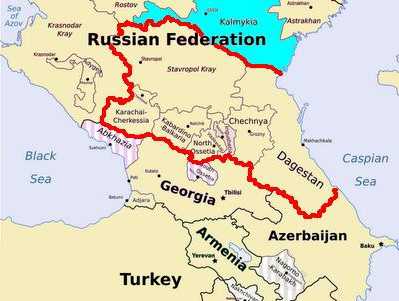
    Armenians are the largest ethnic minority in Georgia at about 10% of the population. The Armenian community is mostly concentrated in the capital Tbilisi and the Samtskhe-Javakheti region, which borders Armenia to the south. Armenians form the clear majority (over 58%) in this region. Javakhk is the historic name of the region in the southwest of Georgia, where 3 regions out of 6 are mainly Armenian populated, with some 100,000 Armenians living there. Another 100,000 or more Armenians live in Tbilisi and elsewhere in Georgia.
    Armenians living in Georgia demand respect for their rights as a national minority which they claim are being violated by the Georgian authorities.
    Minasian and Hakobjanian remain in detention in Tbilisi on fabricated and politically motivated charges of “espionage” among others. So far, the Georgian authorities have given no information about what country they had “spied for” and what kind of “armed group they had formed.”
    Yerevan-based Doctor of Philology Haykazun Alvrtsyan said the accusations of the Georgian authorities were nonsense. The Georgian authorities “want to give a criminal implication to a political problem,” in order to justify a witch-hunt.
    According to Alvrtsyan, the Georgian officials are trying to destabilize the situation and to ultimately cleanse Javakhk from Armenians, thus allowing Turkey to surround Armenia. He said: “Let’s not forget that Javakhk is the only link connecting Armenia” with the outside world and Europe.
    Spokesperson for the Interior Ministry Shota Khizanishvili told Civil.ge on January 23 “further statements on the matter will be made later.” According to Armenian Public Radio, those statements were expected on January 26. No statements were made as of press time on Monday Feb. 2.
    Following the separation of Abkhazia and South Ossetia, many Georgians have suspected the country’s other ethnic minorities – currently comprising about 22 percent of the population and living outside the Georgian mainstream – of harboring separatist intentions.
    Shirak Torosian is a parliament member from the governing Republican Party and leader of the Javakhk Compatriotic Union. He visited Akhhaltsikhe in late January.
    Torosian, a proponent of Georgian-Armenian cooperation, reportedly warned that “Javakhk would not become another Nakhichevan,” referring to the Azerbaijani-controlled region from which all ethnic Armenians were expelled in the 19th century.
    He said that either Javakheti’s issues are addressed through Armenian-Georgian cooperation, or the current tensions could lead to an outright war. He urged immediate involvement of the Armenian government.
    The arrests were intended to “cement” Tbilisi’s control in Armenian-populated territories in the aftermath of Georgian reversals in South Ossetia and Abkhazia last August, Vahe Sargsian of the Yerevan-based Mitq analytical center suggested on January 26.
    On Aug 29, 2008 F. William Engdahl, the author of A Century of War: Anglo-American Oil Politics and the New World Order (Pluto Press), and Seeds of Destruction: The Hidden Agenda of Genetic Manipulation (www.globalresearch.ca), and a contributing writer of Online Journal wrote: “An examination shows 41-year-old Mikheil Saakashvili to be a ruthless and corrupt totalitarian who is tied to not only the US- NATO establishment, but also to the Israeli military and intelligence establishment. The famous ‘Rose Revolution’ of November 2003 that forced the aging Edouard Shevardnadze from power and swept the then 36-year-old US university graduate into power was run and financed by the US State Department, the Soros Foundations, and agencies tied to the Pentagon and US intelligence community.”
    Further bringing the controversial Georgian Pres. Saakashvili’s real persona to light, Engdahl reported: “Since coming to power in 2004 with US aid, Saakashvili has led a policy of large-scale arrests, imprisonment, torture and deepened corruption. Saakashvili has presided over the creation of a de facto one-party state, with a dummy opposition occupying a tiny portion of seats in the parliament, and this public servant is building a Ceausescu-style palace for himself on the outskirts of Tbilisi. According to the magazine, Civil Georgia (Mar. 22, 2004), until 2005, the salaries of Saakashvili and many of his ministers were reportedly paid by the NGO network of New York-based currency speculator Soros — along with the United Nations Development Program.” 

    Engdahl ominously noted that “With Russia openly backing and training the indigenous military in South Ossetia and Abkhazia to maintain Russian presence in the region, especially since the US-backed pro-NATO Saakashvili regime took power in 2004, the Caucasus is rapidly coming to resemble Spain in the Civil War from 1936-1939, where the Soviet Union, Nazi Germany and others poured money and weapons and volunteers into Spain in a devastating war that was a precursor to the Second World War.”

    Back in August 2008, by his misguided military move against Russia/South Ossetia, Saakashvili has triggered Russia’s trashing of Georgia’s army. One hopes that he does not commit a new set of political mistakes that can cause Georgia’s international isolation and further dismemberment.

    Saakashvili’s mishandling of the Georgian-Armenians’ case is among other problems faced by his embattled presidency. The leaders of around a dozen opposition parties, in a rare show of unity, issued a joint declaration on Thursday (29 January), calling on Saakashvili to quit and hold free and fair elections for president and parliament.  “Mikheil Saakashvili and his team, in their five years in power, have led the country to catastrophe,” it read.

    The Georgian authorities can ill afford to cause the West yet a new political embarrassment with another poorly devised decision igniting yet another losing war which could threaten its very existence. Obviously Georgia is over-reacting to its defeat in its war against Russia/South Ossetia by resorting to increasing judicial harassment and intensifying political repression against the Javakheti Armenians.
    The politically-driven Georgian abuse of power against its own ethnic Armenian citizens will surely augment the level of discontent not only in Georgia but also around the world and will enable the Javakheti Armenians to earn worldwide empathetic understanding for their political struggle for cultural survival.
    If Georgia continues its reprehensible policies, it will re-enforce its critics’ assertions that contrary to the Washington neo-cons’ propaganda, Georgia is not a beacon of democracy. And as such it shall pay the price by way of reduced foreign aid flowing from the United States and Europe.
    Additionally, Georgia’s membership to world bodies, including Council of Europe Parliamentary Assembly, should be suspended for the mistreatment of its ethnic minorities, and especially the Georgian Armenians. 

    In a Feb 3 commentary in The Daily Star of Lebanon, Joseph S. Nye, a professor at Harvard and author of “The Powers to Lead,” wrote: “”In situations where groups have difficulties living together, it may be possible to allow a degree of autonomy in the determination of internal affairs. Internal self-determination could allow degrees of cultural, economic, and political autonomy similar to that which exists in countries like Switzerland or Belgium. Where such loosening of the bonds is still not enough, it may be possible in some cases to arrange an amicable divorce, as happened when Czechoslovakia peacefully divided into two sovereign countries in 1993.”

    But will Georgia learn from Czech Republic’s and Slovakia’s wise handling of their political problem?
    Not Saakashvili’s Georgia.
    Change is needed in Tbilisi.
  • Poor Richard’s Report

    Poor Richard’s Report

    Poor Richard’s Report
    Over 300,000 readers
    My Mission: God has uniquely designed me to seek, write, and speak the truth as I see it. Preservation of one’s wealth while continuing to provide needed income is my primary goal for these unsettled times. I have been given the desire to study and observe global money progressions and trends for the last 50 years. I evaluate possible future trends in order to provide positive concepts for you to form your own conclusions. The main purpose of this letter is to warn you of possible financial sinkholes.
    Good Bye Stocks – Hello Bonds

    We are leaving the golden era of free enterprise due to unmitigated greed and chicanery. We can easily adjust if we accept the true meaning of what awaits us. If we fight to retain our old dreams and fantasies we will see ourselves being spoon fed by fat socialist bureaucrats for the “common good”.
    In this letter I will present some facts for your perusal and then you can make up your own mind in regards to your financial decisions. Those willing to change their offensive strategy can become winners in life’s never ending battles.
    The result of these recent price disturbances (all the bubbles bursting) is the falling value of the property that has been borrowed against. The value of the property’s income also falls. We have come from extreme over indebtedness and now find ourselves in a hole – we should stop digging.
    This is a hard lesson that our grandparents learned in the 1930’s, but sadly has been forgotten as satanic greed took over our souls. We now find ourselves caught between a recession and a depression. I call it a MESSYSESSION.
    All the corporations whose bubbles have burst must work down their inventories; since many are in the financial sector this will take time. Individuals must use their earnings to pay down debts to save their homes instead of spending money on frivolous purchases. The Rule of 72 has the deck stacked against them, unless the Usury Law is resumed. The lack of the Usury Law is quicksand for our economic recovery.
    The working down of inventories alone can be deflationary, however, the Federal Reserve has been pumping money into our supply pipeline at super speed. When an entity goes bankrupt, those debts do not go back into circulation, they go to money heaven. This is why the Fed has to keep the supply pool full and why this action should keep us out of a depression.
    Having to pay down all this debt slows down our economy and hurts our suppliers worldwide. This is why we have a world wide Messysession.
    Corporations that have borrowed from the Government will have a hard time maintaining their common stock dividends because their first priority is bond interest. Their second priority is preferred dividends. What is left over will then be distributed to common stock holders or used for debt reduction. Debt reduction means job security.
    Sooner or later the US Government will have to go on a massive borrowing campaign. This could weaken the dollar and send interest rates soaring along with the price of Gold – for a while.
    Some recessions are “V” shaped, which means stocks fall down hard and come back up quickly. Stocks tumble, but recover because there are people looking across the valley. If the recovery is like an elongated “U” or “L” one needs binoculars to see across the valley to a recovery. This could cause price to earnings ratios to shrivel, since analyst’s earnings estimates will be suspect at best. The economy can take a year or two to recover based upon how responsible Congress is. It will be years before our economy fully recovers from all the bubble bursting. What we need is a cheap new energy invention.
    The only period, since 1872, where stocks substantially outperformed bonds on a prolonged basis was the 1950s to 1960s. This was a golden era for stocks and it has taken many abuses to wind down.
    These are some of the many issues that President Obama faces on the home front. Now we shall look at some of his international problems.
    Europe is changing. It used to be that France and Germany were the major players, with Great Britain looking on. The United States has encouraged the expansion of the European Community to diminish the power of the two largest countries. Poland is emerging as an economic power and if Turkey is admitted, as they should be, they will bring new found political clout for the first time since the demise of the Ottoman Empire 90 years ago. Their inclusion could bring stabilization to the chaotic Middle East situation. Turkey has freedom of religion, a vigorous economy (17th largest), and a solid government. Their influence is growing. They also have a strategic location to insure peace long term.
    Then, there is Russia, who can throw all kinds of money around, but when it comes to signing on the dotted line – they cannot be trusted. Turning off gas supplies in mid-winter and canceling major contracts with world-renowned companies are actions that are hard to forget. Obama has pledged to focus US military power on the war in Afghanistan. The bulk of supplies must come from the north. Russia does not want a ballistic missile defense system in central Europe. It wants a halt to NATO expansion and reduced American influence in the Caucus and central Asia. They also want a broad renegotiation on non-trivial treaties that are terrible for Russia in 2009. (Anyone want to be President?)
    We must come up with a way to renew confidence for the consumer. First and foremost is the renewal of our Usury laws that were dropped because disintermediation was wrecking the banking system in the 1970s. Creating lasting jobs will not happen by just building roads. These programs must be done so that they promote or improve future growth. It is difficult to do this on a national level because there are too many fingers in the pie. Programs done on a state level are easier to control. It is more realistic to meet regional needs.
    Lowering corporate taxes when a corporation moves into intercity areas would mean better roads, and businesses to support them. Raising taxes invites tax avoidance schemes that only benefit the issuer. It also removes money from the private sector. Today, pricing power has evaporated.
    There must be global reorganization of the securities laws, most importantly the Uptick rule. Countries that do not participate should be banned from trading within the member countries. Today hedge funds and institutions have spent millions of dollars on sophisticated trading programs. This makes for an uneven playing field and has driven the small investor to the sidelines, as witnessed by declining volume on the exchanges. The large institutional investor becomes the ultimate bag-holder at the bottom of markets when they have no one to sell to.
    If a country’s Gross Domestic Product (GDP) is declining that means the average on corporate earnings will be declining also. This means fewer companies will be showing an increase in earnings and therefore there will be fewer securities that have an investment grade value. Since there are already too many mutual funds and they all cannot buy the same stocks, that game is over. I would sell your mutual funds while you can if you are over 55 years old. If they get too many orders for liquidation they have the option of delivering stock of the same value to you. That is an easy way to get rid of their losers. If you are under 55 and own a balanced fund where the income can be reinvested on a periodic basis you are in the catbird seat. Lower prices will mean more shares and 10 to 15 years from now when the market recovers you could be a wealthy person. Other low income on non paying funds should be sold. It could be 20 to 25 years just to breakeven and that is only if it is a survivor.
    First quarter earnings are going to be a disaster. I suspect this is when many will throw in the towel and give up.
    Gold should be considered a hedge – possible short term.
    Here are some moneymaking ideas. A successful portfolio can be 20% equities 50% fixed income and 30% cash.
    By equities I mean income-producing securities yielding over 5%. There are a few out there that are “stupid” cheap versus dirt-cheap. Then there are preferred stocks, many of which are 85% tax-free. Many are selling below their call price. This means if a company wants to improve its balance sheet, they can do that by calling your preferred from you by paying the call price. If they fail to pay a preferred dividend it becomes cumulative. To resume payments they must make up the back dividends first. One that falls into this category is: AMERCO Pfd A (NYSE) 20 (2-6-09) pays $2.125 which yields 9.41%. gives you a tax free yield of 8%. If they call the stock at $25 you will have a $5 gain which amounts to a 25% gain. You won’t be able to have this return with common stocks over the next several years.
    Tax free bonds were good when income tax rates were 55%-92%. The low tax rates today are beaten by preferred stock’s rates, such as the one I mentioned above. You have a ready market and real value. What you see is what you get. There was an issue on Long Island that defaulted in the depression. A default like that today would wreck havoc in the entire sector. For safety reasons, please avoid tax-free bonds.
    Since the US has to borrow around a trillion dollars or more, Government bonds could be an instant loss. For now, I would avoid these also. That leaves us with corporate bonds. Many corporate bonds have a better balance sheet than the United States. Buying bonds in the five year range is the safest place to be. As the bond gets closer to maturity the price fluctuations are at a minimum and easily salable. You are better off buying an individual bond than a fund. The fund will charge a yearly management fee as well as anything else they can get away with. Also, some funds simply dump bonds into a portfolio and walk away. There was a case where a fund dumped their holdings of an issue right at the very bottom, only to have the bonds called a few months later. Please remember that corporate bond holders have first lien on a corporation’s asset.
    I suspect that in a few months you will see a stampede out of many mutual funds and a proliferation of all types of bond funds trying to cash in on the new trend. Keep it simple- buy your own.
    I know I have thrown many ideas your way in this letter and I apologize, but I feel the times warrant such thinking. I will be available, free of charge, to anyone who would want to discuss any of these ideas at the addresses below.
    CHEERIO!!!!
    Richard C De Graff 2/10/2009
    256 Ashford Road
    RER Eastford Ct 06242
    860-522-7171 Main Office
    800-821-6665 Watts
    860-315-7413 Home/Office
    [email protected]

    This report has been prepared from original sources and data which we believe reliable but we make no representation to its accuracy or completeness. Coburn & Meredith Inc. its subsidiaries and or officers may from time to time acquire, hold, sell a position discussed in this publications, and we may act as principal for our own account or as agent for both the buyer and seller.

  • Ankara Monitors French Plans

    Ankara Monitors French Plans

    Ankara Carefully Monitors French Plans to Rejoin NATO’s Military Command

    Publication: Eurasia Daily Monitor Volume: 6 Issue: 26
    February 9, 2009
    By: Saban Kardas

    Determined to bring Paris into NATO’s military command after four decades of opting out, French President Nicholas Sarkozy is expected to announce France’s return to NATO’s military structures by April, when a NATO summit will mark the 60th anniversary of the Western alliance. Recent reports indicate that Paris secured U.S. support for the transfer of two senior command positions to the French. Nonetheless, discussions on the timing and modalities of France’s rejoining the alliance’s military structures will increase in the following weeks. Speaking at the annual Munich Security Conference, Sarkozy said that while pursuing this goal, he would not do anything that might jeopardize his country’s independence (www.euobserver.com, February 5; Reuters, February 6).

    Recent discussions on France’s return to NATO’s military structures have highlighted the intricate links between Turkish-French relations on the one hand and their implications for Turkey’s relationships with NATO and the European Union, on the other. Turkey is a full member of NATO and is negotiating accession terms for EU membership. Turkey’s EU membership process has been stalled recently, and Ankara puts a large portion of the blame on obstacles created by EU-members France and Greek Cyprus. In particular, Ankara is irked by the French and Cypriot objections to the EU’s efforts to open new negotiation chapters with Turkey (EDM, January 20).

    Turkey’s problematic relations with the EU may have negative repercussions for NATO-EU security cooperation. Paris has been pushing for strengthening the EU’s military capabilities without undermining NATO’s role in European security. For France, a greater European role in security and defense affairs would complement NATO’s collective security responsibilities. Despite the EU’s progress toward acquiring autonomous military capabilities, however, it still depends on NATO assets to carry out military missions.

    Turkey supports greater European autonomy in principle, but Ankara is troubled by its exclusion from the decision-making mechanisms of the European Security and Defense Policy (ESDP), the EU’s security arm. Being the largest non-EU contributor to the ESDP, Turkey demands greater participation of non-EU NATO allies in the European defense initiatives. Ankara supports NATO’s primacy in managing European security and objects to the development of EU-only capabilities that might undermine NATO.

    In an effort to retaliate for the Greek Cypriots’ objections to Turkish-EU cooperation, Turkey uses its position in NATO to prevent Greek Cypriot participation in EU operations utilizing NATO assets. Ankara maintains that since Cyprus does not have a security agreement with the alliance, it cannot have access to sensitive information. Sources argue that this situation “makes it difficult to work out detailed tactical arrangements between NATO and the EU. It is a potential burden on operation settings” (Hurriyet Daily News, February 2).

    Since decisions in NATO are taken unanimously, it has been suggested from time to time that Ankara could also use its position in NATO as leverage to remove obstacles in Turkish-EU negotiations, but Turkey has refrained from resorting to that option. Although Turkish diplomats carefully avoid giving the impression that Turkey might veto France’s reintegration when this issue comes on the agenda, some Turkish experts and academics call on the government to consider this option to counteract French policies against Turkish interests. Following the 2008 NATO summit, where Sarkozy announced his plans for reintegrating France into NATO’s military structures, a Turkish academic labeled a veto as a “low-risk” card and argued that “Ankara must ensure that Paris understands that rejoining France to the military wing of NATO will be possible only if France meets some of the Turkish demands. Negotiations on this issue must begin” (www.asam.org.tr, May 2).

    Given Turkey’s recent frustration with French policies, it has been speculated that Turkey might threaten a veto in NATO to bargain for a lifting of French obstacles in Turkish-EU negotiations. Some see this occasion as a new litmus test for Turkish diplomacy, because, following the Davos incident, the government is under pressure to play hard ball to protect its national interests. Opposition parties expect the government to use the veto trump effectively (Milliyet, February 7).

    Noting the eagerness of Paris to rejoin NATO, analysts argue that Prime Minister Recep Tayyip Erdogan will be caught in a dilemma as the April summit approaches. If Erdogan lets France have its way after having presented so many obstacles to Turkey, he might lose popularity at home. If Turkey uses its veto power as a bargaining chip, it might well backfire, because at a time when there is consensus on bringing France back into the organization, this move might isolate Turkey from its allies (Milliyet, February 6; www.cnnturk.com, February 6).

    The feasibility of a veto hinges, however, on whether a formal vote is needed for a French return. French diplomats and alliance officials believe that a unanimous decision is not required (Turkish Daily News, July 24; Reuters, February 6). Indeed, France is already active within NATO, and French troops serve in continuing NATO operations. A French return would largely concern French representation in the command structure.

    Before departing for the Munich Conference, Turkish Foreign Minister Ali Babacan told reporters that Turkey was still evaluating a French return to NATO. Babacan noted that Turkey would await clarification of whether a unanimous vote was necessary. Describing the situation of France as a unique case, Babacan added “the matter is more political than legal… The key concern here is for NATO to continue operating as a strong international organization. But, we will see how the French decision will be implemented… Here, the modalities of French participation are important, and we expect the French to present their modalities in the coming days” (ANKA, February 6).

    Though maintaining Turkey’s policy of ambiguity, Babacan avoided confrontational language. He gave indications that Turkey would prioritize alliance interests and go along with its NATO allies.

    Nonetheless, even if a unanimous decision might not be required, political bargaining would be needed for the distribution of command posts. Given the high premium NATO attaches to political consensus among its members, France and the United States will have to work hard to bring Turkey on board.

    https://jamestown.org/program/ankara-carefully-monitors-french-plans-to-rejoin-natos-military-command/

  • Jews and Armenian stand on alleged Genocide

    Jews and Armenian stand on alleged Genocide

    after Davos Turkey Appears to lost its longt standing ally , the Jewish-American lobby

    Watertown TAB & Press on ADL’s Armenian Genocide Denial

    USA Armenian Life Magazine   ..Friday,  January 30, 2009.

    Letters
    Armenian Americans must wake up and fight
    I’m upset to read that the American Jewish Committee has, like the national ADL, been trying to prevent recognition of the Armenian genocide (“Denial of the Armenian Genocide does more harm than synagogue vandals,” December 26).

    We read that Barry Jacobs of the AJC says his group will “champion to the best of our ability Turkish interests in the U.S. Congress.”  So the AJC is not just a Jewish lobby group but a Turkish one too?  Have AJC’s leaders told its members about its new client?

    The AJC and ADL insist that we all remember the Holocaust.  Fine. More than 63 years after the Holocaust reparations are being paid, and these groups are still demanding that Congress pass various kinds of Holocaust legislation.  Fine.

    But then the AJC and ADL turn around and lobby against the recognition of another people’s genocide?  This is hypocrisy of the worst kind and morally unacceptable.

    However, Armenian Americans are partly responsible. The Armenian National Committee of America, Armenian Assembly of America, and other organizations should be taking the battle against the ADL and  No Place for Hate nationwide.  They have let everyone down.  What happened in Massachusetts – a dozen cities and the MMA stopped their No Place for Hate programs – should be happening in other states.  Armenian Americans need to wake up and fight.

    Lily Ordoubeigian
    Concord Road
    ***
    ADL should not get involved in Armenian matters
    Larry Epstein in his letter of Jan. 16 [Watertown Tab] asks Mr. Boyajian to “direct his wrath, instead at the professional historians who disagree with him.”
    Mr. Boyajian is able, I am sure, to speak for himself, but permit me to explain the difficulty that Mr. Boyajian will have with Mr. Epstein’s suggestion.
    The professional historians agree with Mr. Boyajian. The professional historians who are associated with the International Association of Genocide Scholars agree with Mr. Boyajian. The professional historians associated with the International Commission for Transitional Justice agree with Mr. Boyajian. The 152 professional historians who placed an ad in the Washington Post calling on Turkey to accept the historical fact of the Armenian Genocide agree with Mr. Boyajian. The 56 professional Israeli and Jewish historians who issued a statement in 2001 calling on Turkey to accept the historical fact of the Armenian Genocide agree with Mr. Boyajian.

    Perhaps, Mr. Epstein has in mind the handful of so-called scholars who are now or who have been in the pay directly or indirectly of the Turkish Government who, dancing to the piper’s tune, deny the historical fact of the Armenian Genocide.

    The fact that the ADL — which has never been accused of being composed of historians — sides with Turkey and is lamentable perhaps, as I think Mr. Boyajian is suggesting, it should concern itself with the very real problem of anti-Semitism and not get involved in matters concerning the Armenians. I cannot speak for Mr. Boyajian, but I am sure that were it any ethnically related organization that steps away from concerning itself with its constituents and denies the historical fact of the Armenian Genocide, Mr. Boyajian would be just as concerned.

    Anti-Semitism, like beauty, is in the eye of the beholder and, perhaps, Mr. Epstein should change his eyeglasses.

    I hope Mr. Boyajian doesn’t mind my taking off my jacket and jumping into the dispute.

    Andrew Kevorkian
    Philadelphia, PA
    ***

    Boyajian is no anti-Semite

    Concerning Mr. Larry Epstein’s recent letters to both the Watertown and Newton papers, I feel he is way out of line suggesting that David Boyajian is an anti-Semite.

    Mr. Boyajian is not complaining about different views among historians regarding the question of the Armenian Genocide. His beef is with the ADL that lobbys Congress to suppress public information about this atrocity and for not labeling it for what it was — a genocide.

    How does this make Boyajian an anti-Semite, especially when there are many Jewish people and groups that agree with him?

    Or is Mr. Epstein’s real gripe the fact that a Jewish group (ADL) is being publicly spanked and when that happens it is anti-Semitic for Epstein because nothing Jewish should ever be criticized?

    Ralph Filicchia
    Bellevue Road

    **

    Note:

    Mr. Epstein’s letter:

    Mr. Boyajian’s article in the Newton Tab:

    Related material:
    www.NoPlaceForDenial.com