Month: March 2015

  • Let’s Kick Genocide Denialist Bill Shuster out of Congress

    Let’s Kick Genocide Denialist Bill Shuster out of Congress

    SASSUN-4

    I reported last week on the Armenian-American community success in securing cancellation of Los Angeles City’s $845,000 contract with the Gephardt Group, for lobbying on behalf of Turkey against adoption of the Armenian Genocide resolution by Congress.

    I expressed the hope that Armenians would continue their efforts to have the remaining 200 clients of the Gephardt Group terminate their contracts so that Mr. Gephardt would pay a steep price for his denialist lobbying.

    Energized by their major victory in Los Angeles, Armenian-Americans should now expand their political activism to make an example of Cong. Bill Shuster (Republican-Pennsylvania) who has written an outrageous letter to members of Congress asking them not to support the pending Armenian Genocide resolution.

    In a “Dear Colleague” letter sent by Cong. Shuster to all 435 House Members last month, he shamelessly urged them “to refrain from cosponsoring a resolution taking sides in a historical dispute concerning events which occurred a hundred years ago on the other side of the world.” I wonder how the Congressman feels about the Holocaust that also took place “on the other side of the world” more than 60 years ago!

    In his brazen letter, Cong. Shuster casts doubt on the veracity of the Armenian Genocide, by alleging that there are “two competing narratives about what happened during the First World War to Armenians living in the Ottoman Empire.” In his twisted logic, the Congressman claims that “the events of 1915…did not constitute genocide,” because “over two million Ottoman Kurds, Arabs, and Muslims…also suffered in this conflict.” His reference to the suffering of “over two million Ottoman Kurds” during World War I is the latest lie scripted by one of the many lobbying firms working for the Turkish government.

    The Pennsylvania Congressman also falsely claims that the Armenian Genocide resolution “would alienate one of our last allies in the region [Turkey] who is working hand in hand with US soldiers and our allies to combat ISIS.” Cong. Shuster must have been hiding in a cave for the last couple of years not to have known that this “important NATO ally” has orchestrated the infiltration of thousands of ISIS terrorists into Syria and supplied them with arms, ammunition and logistics. The Congressman ridiculously alleges that “adopting this [Armenian] resolution would be cataclysmic and undermine US interests.” If Turkey is such a good U.S. ally, why would it want to undermine America’s interests? Would passing a resolution condemning the Holocaust result in Germany — our other NATO ally — undermining US interests in Europe?

    Cong. Shuster ends his letter by calling the mass murder of 1.5 million Armenians a mere “incident,” urging his colleagues “not [to] take sides in a battle to reinterpret history” and “to think twice before signing on to legislation that could cause significant damage to our relations in the region.” No wonder, the incongruously named ‘Turkish Institute for Progress’ immediately issued a statement applauding the Congressman’s letter denying the Armenian Genocide.

    The Turkish Sabah newspaper reported on February 27 that two House members from New York, Democrat Yvette Clarke and Republican Lee Zeldin, have also announced their opposition to the Armenian Genocide resolution. It is noteworthy that the Armenian National Committee of America gave an F- grade to Cong. Shuster, and C- to Cong. Clark. Cong. Zeldin has not yet been graded by the ANCA as this is his first term in office.

    Armenian-Americans have a year and a half until the next congressional elections to develop an effective plan to make an example of one or more of these three genocide deniers in Congress. If at least one of them is defeated, other members would think twice before playing the immoral game of genocide denialism.

    Not surprisingly, Shuster, Clarke and Zeldin are three of the 130 members of the Congressional Turkey Caucus. In addition, Shuster is the Co-Chair of the Congressional Azerbaijan Caucus. After one of these three unprincipled politicians is kicked out of Congress, the Armenian community should then devise a strategy to go after all 130 members of the Turkey Caucus, down from its peak of 157 members in 2012. Applying such pressure would cause more of them to leave the Turkey Caucus, and make others reluctant to join, once they realize that they too would be targeted for defeat.

    Zero tolerance for genocide denialists in Congress!
  • Turkish exercise notice over Aegean Sea fuels tension with Greece

    Turkish exercise notice over Aegean Sea fuels tension with Greece

    An aviation notice issued by Turkey for a 10-month military drill in the Aegean Sea has sparked reaction from the Greek government, which reportedly complained about the move to international organizations over a “violation of Greek integrity and flight safety.”

    Turkey issued A Notice to Airmen (NOTAM) on Feb. 27, reserving extensive airspace over the Aegean Sea for military use between March 2 and Dec. 31.

    Athens became infuriated over the move, claiming that it would be against both Greeksovereignty rights and international laws, as the area cited by the Turkish army includes the airspace between the Greek islands of Skiros and Lemnos.

    Greek media reported the government sent compliant letters to NATO, the European Union, the International Civil Aviation Organization (ICAO) and the United Nations over the weekend, denouncing the Turkish military’s plans.

    The Greek Foreign Ministry also sent a cancellation NOTAM to the Turkish Foreign Ministry on the night of March 1, stating Ankara would be responsible for any accident that may occur in the region, local media also claimed.

    The Aegean region has begun to face increasing tension between its neighbors, which have particularly escalated after the election of the new Syriza government in Greece in January.

    Immediately after assuming the post, new Greek Defense Minister Panos Kammenos visited the disputed Aegean islets of Imia/Kardak with a military helicopter on Jan. 30.

    Around 20 days after the move, the commander of the Turkish Air Force, Gen. Akın Öztürk, personally took part in a training mission, piloting an F-16 in a low-altitude flight over international waters near Greek islands in the Aegean Sea.

    Dogfights occasionally occur between Turkish and Greek aircraft over the Aegean Sea, as the two countries are at odds over the boundaries of their airspace in the area due to a long-standing territorial dispute.

    The number of such dogfights has increased recently, after a relative decline amid talks between Turkey and Greece to resolve their disagreements on the continental shelf over the Aegean.

    March/02/2015


  • Press Release: FCTA & TAC Condemns the Khojaly Massacre on Feb 26 1992, by Armenian and Soviet Union Forces

    Press Release: FCTA & TAC Condemns the Khojaly Massacre on Feb 26 1992, by Armenian and Soviet Union Forces

    KarabagPress Release: The Khojaly Massacre in Feb 1992

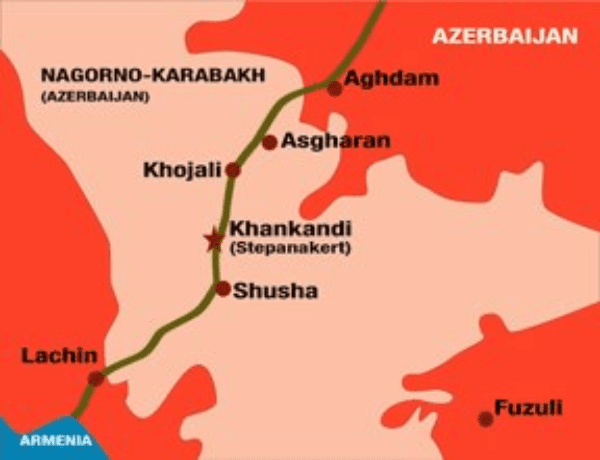
    Khojaly, situated in the Nagorno Karabakh region of the Republic of Azerbaijan, had a population of just 6,300 people before the Armenian army seized control of the southern roads and effectively isolated Khojaly from greater Azerbaijan. Power lines were cut, water was turned off, and many goods were prevented from reaching the embattled civilian population.  Those who were able fled the fighting; the rest were forced to wait anxiously as the Armenian army drew ever closer.

    On the night of February 25, 1992, the town was surrounded by Armenian armed forces, with the support of the Soviet Union on three sides and only one path of escape was left OPEN for the remaining civilians to flee their doomed town in the middle of the night. After trekking for hours through the bitterly cold woods, the group emerged near the Armenian town of Nakhichevanik.  Almost immediately, the densely packed group was struck by a hail of bullets fired by Armenian fighters encamped on the hillside above.  The next day, journalists were greeted by a gruesome scene: a field littered with bodies, many of which bore marks of excessive cruelty.  One observer noticed powder around gunshot wounds and realized that many of the victims had been shot at point-blank range.  Other foreign journalists documented extensive evidence of torture [Le Monde,Paris, 14 March 1992].  In all, 613 civilians were killed, including 106 women, 63 children and 70 elderly people.

    “…Before Khojaly, the Azerbaijanis thought that they were joking with us, they thought that the Armenians were people who could not raise their hand against the civilian population. We were able to break that [stereotype]. And that’s what happened…”, then-general Serzh Azati Sargsyan, the current President of Armenia, boasted [Black garden: Armenia and Azerbaijan through Peace and War, Thomas De Waal].

    Each year, on February 26, the world unites in remembering those lost on that tragic day.  However, more than one million refugees created by the war, which are leaving in tent camps so far, is another ongoing moral injustice caused by the Massacre and the Nagorno Karabakh War, despite three UN resolutions demanding Armenia to return these occupied 20% lands, including  Nagorno Karabakh, to legitimate owner Azerbaijan for allowing the refugees to return their homes.

    The Federation of Canadian Turkish Associations condemns any crime against humanity, including The Khojaly Massacre, and demands returning of a million Azerbaijani refugee Turks to return their homes as soon as possible, in the interests of peace and justice in the Caucasus region.

    Best Regards

    The Federation of Canadian Turkish Associations (FCTA)
    Turkic Assembly of Canada (TAC) 

  • CYPRUS: Russia trip highlighted Anastasiades’ failings

    CYPRUS: Russia trip highlighted Anastasiades’ failings

    CYPRUS MAIL

    Anastasiades and Russian President Putin at their joint press conference

    ALL THE SHORTCOMINGS of President Anastasiades as a politician and head of state were displayed during his heralded official visit to Russia. His failure to exercise restraint when speaking publicly, his inclination to allow his emotions to rule his head, his poor judgement and inadequate diplomatic skills, his obsession with his domestic popularity ratings and his inability to see any difference between speaking at a Sunday memorial service in a Cyprus village and in front of an international audience were all evident on his Russia trip.

    The more he spoke – and he was given plenty of opportunities to do so – the more he showed himself up, oblivious to the harm he was causing himself and more importantly the country. Anastasiades went out of his way to cause offence to his EU partners whose policies towards Russia he openly criticised while absolving President Putin of any responsibility for the crisis in the Ukraine. Even if he believed that to be true there was no good reason for repeating it in public – worse still, on a visit to the country that has been behind the dispute – as it would not win him any friends in Brussels.

    Anastasiades appeared to be on a mission to antagonise the EU and the US during this badly-timed visit. He boasted that he was the first leader of an EU member-state to visit the Russian Federation during “this critical period”, informing journalists the two countries supported each other on all issues, but primarily, on the Cyprus problem, the economy and the Ukraine crisis. He did not openly say whether his government supported the invasion and annexation of Crimea as the matter was not raised, but he felt the EU was wrong to impose sanctions on Russia “on the suspicion Russia encouraged the separatists”.

    The Europeans had shown their double standards in this case he said because Russia had not invaded the eastern Ukraine whereas Turkey invaded Cyprus’ EEZ and the EU did not impose sanctions. This simplistic argument may have earned him applause back home – this is the audience he was targeting – but it was insensitive and foolish considering some 5,000 people have been killed and the separatists, using heavy weapons provided by Putin, have reduced eastern Ukraine to rubble forcing more than a million people to flee their homes.

    Believing Russian involvement in the Ukraine crisis was just a figment of the imagination of EU leaders, Anastasiades took a stand, with some other countries, against tough sanctions being imposed by the EU. If he had not, sanctions would have been tougher he claimed. “Cyprus is the most trustworthy voice for Russia within the EU,” he declared in a joint news conference with Putin. Again, it seems rather unwise to advertise such a dubious role, even if it sounds good to your hosts. In effect Anastasiades was warning his EU partners and Brussels not to trust him because he was promoting Russia’s interests in the Union.

    All these utterances went down very well in Cyprus where the anti-Western demagogues welcomed the supposed restoration of good relations with Moscow and hoped they would be strengthened. But apart from winning the plaudits of his fellow politicians in Cyprus, Anastasiades gained nothing meaningful or practical from his visit to Russia that would benefit Cyprus. Putin, despite his allegedly principled stand on international matters, did not even mention Turkey’s invasion of Cypriot EEZ, let alone issue a mild rebuke of the Turks; he would continue offering support on the Cyprus problem – it was reported – but this would be conditional on not upsetting Turkey.

    There was one big negative to the theatre staged in Russia by Putin and in which Anastasiades took a starring role. He will now be regarded a Putin pawn, with ample justification, that none of his fellow-leaders in the EU would trust or take seriously. He paid an official visit at a time when the EU was supposedly united against the Russian role in the Ukraine crisis, giving Putin the opportunity to embarrass Brussels, at least publicity-wise. And worse still, he openly sided with Russia against the EU over the Ukraine when there was no need to do so.

    All this, from a president, whose supposed foreign policy objective until a few months ago was to place Cyprus in the Western sphere of influence and try to join NATO. It is now clear that Anastasiades has no long-term goals and foreign policy is shaped by his whims and whatever he believes might improve his popularity rating.


     Küfi Seydali