Turkeyresearch: “Natural Gas and the Cyprus Question”
Date: Mar 19, 2015
Abstract
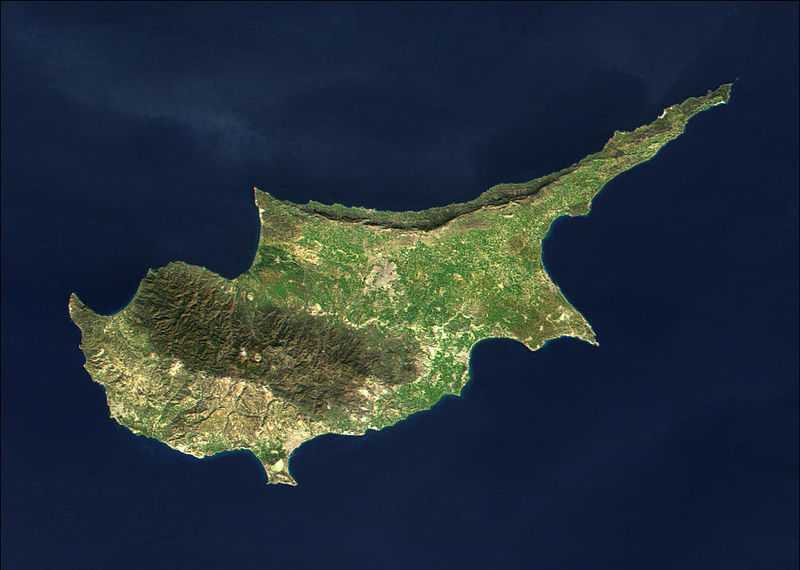
Can the natural gas reserves off the coast of Cyprus be a panacea to finally bring the enduring conflict on the island to a peaceful conclusion? Or will energy be yet another factor further widening the rift between the Turkish and Greek Cypriot communities? Evidence indicates that energy resources have so far aggravated rather than placated the tensions in Cyprus. The discovery of natural gas in the Aphrodite field, and the ongoing drilling efforts in adjacent blocks, have not only re-animated existing disputes like the demarcation of maritime borders but also spawned new issues including the distribution of future gas revenues between the two communities. The Turkish and Greek communities are currently caught in a deadlock, where neither party has sufficient incentives to coordinate. This article describes two scenarios in which the gas-powered conflict in Cyprus can unfold: 1) a grand consensusscenario, under which the disputing parties would insist on the resolution of all political disputes as a precondition for energy cooperation, 2) alimited bargaining scenario, where actors would choose to prioritise resource development over the settlement of political conflicts, with the expectation that the resulting energy interdependence would generate robust incentives for political settlement. While the latter scenario is achievable in principle, it would nonetheless face serious constraints in practice, including the domestic political costs of energy cooperation, volatile market conditions (discovery of additional gas reserves and the declining global energy prices), the availability of alternative markets and suppliers, as well as potentially disruptive regional geopolitical dynamics .
Introduction
When significant gas reserves were finally confirmed in the Eastern Mediterranean, some analysts spotted in them a glimmer of hope for peace and prosperity in the region, particularly in Cyprus (Bryza, 2013; Grigoriadis, 2014; Gürel and Le Cornu, 2014; International Crisis Group, 2012; Khadduri, 2012; Pericleous, 2012; Van Rompuy, 2012; Wilson, 2014). The assumption underlying the proposition that energy could be a facilitator of peace in Cyprus is straightforward: the discovery of natural gas and the prospect of additional riches raise the opportunity costs of the present stalemate between the Turkish and Greek Cypriot administrations, providing “dollars-and-cents reasons for easing the estrangement or bringing it to an end” (Wilson, 2014: 105). Assuming that actors sufficiently value the absolute gains to be obtained from the monetization of natural resources, they would thus be extra-incentivised to resolve any outstanding political conflicts that stand in the way of profits.
Natural resources, however, could be a ‘curse’ as well as a blessing, as history has revealed repeatedly. Contrary to the widespread expectations that potential energy wealth would facilitate cooperation, the prospect of natural gas bounty so far deepened and complicated the disagreements in Cyprus.
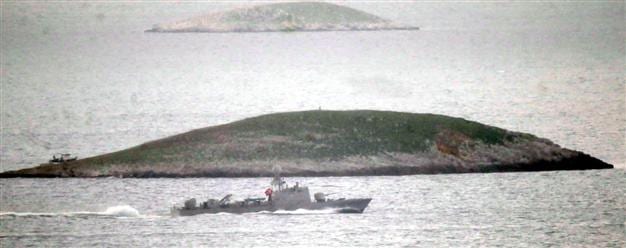
The gradual escalation of energy-fueled tensions between the Turkish and Greek Cypriot communities over the past few years reached a critical juncture on October 7, 2014 when President Anastasiades unilaterally suspended UN-mediated peace talks. The official reason for the suspension was Turkey’s plans to search for oil and gas in waters where the Greek Cypriot-administered Republic of Cyprus (RoC) had declared its Exclusive Economic Zone (EEZ), a decision that has been disputed by both Turkey and the Turkish Republic of Northern Cyprus (TRNC). Following the collapse of talks, the National Council of Cyprus announced a series of measures against Turkey, including blocking Turkey’s bid for EU membership. The RoC took the matter to the European Council meeting on October 23-24, upon which the Council officially urged Turkey “to respect Cyprus’ sovereignty over its territorial sea and Cyprus’ sovereign rights in its EEZ” (European Council, 2014). Ankara did not budge from its firm stance. In the National Security Council meeting on October 30, Turkey re-affirmed that it would take any measures necessary to defend TRNC and its sovereign rights. On November 9, Bülent Bostanoğlu, the Commander of Turkish Naval Forces, announced that Turkey continued to monitor the activities of Cypriot and Israeli elements and, if needed, the Turkish Navy would act in accordance with the rules of engagement.
As of February 2015, there is no indication of when, if ever, the reunification talks would resume.
How We Arrived at the Current Deadlock
The energy landscape of the Eastern Mediterranean changed dramatically over the past five years. Following the major gas discoveries offshore Israel (Tamar field in 2009 and Leviathan field in 2010), in December 2011 another deep water reserve was confirmed off the coast of Cyprus. The so-called Aphrodite field was initially appraised to contain more than 200 billion cubic meters (bcm) of gas, while later studies revised it down to 140 bcm. Despite the smaller than expected size of the reserves, Cyprus will have almost all of its gas available for exportation, given its limited domestic energy consumption.
Besides the neighborhood countries like Egypt and Jordan, the two most important export destinations for the Eastern Mediterranean gas are Turkey and the European Union (EU), both of which are seeking to diversify their energy imports. Several alternative methods for gas exports are on the table, although parties are yet to agree on a solution that is both commercially and politically feasible. One option would be to construct an undersea pipeline from Israel and Cyprus to Greece. The so-called Eastern Mediterranean Gas Pipeline, however, presents a number of technical difficulties due to its length and construction depth, raising its costs considerably.[1] The other alternative that is particularly favored by the RoC is to construct a Liquefied Natural Gas (LNG) plant in Vasilikos in Southern Cyprus. The cost of the Vasilikos plant is estimated at US$10 billion but the Aphrodite gas alone will not be enough to make the plant financially viable. Unless additional reserves are discovered over the next two years, the only option for Cyprus would be to supply gas from Israel.[2] Given the high costs of Eastern Mediterranean Gas Pipeline and the Vasilikos plant, most industry experts agree that the best option to export Leviathan and Aphrodite gas would be a pipeline from Israel via Cyprus to Turkey. This route would be considerably cheaper, at approximately US$ 2.5 billion (Bryza, 2013: 39). The pipeline to Turkey would also provide Israel and Cyprus direct access to both Turkish and European markets. Once the gas reaches the port of Ceyhan in Southern Turkey, it would directly enter Turkey’s extensive pipeline system for domestic consumption as well as re-export via the planned the Trans-Anatolian Pipeline (TANAP) across Turkey and the Trans-Adriatic Pipeline (TAP) to Europe.
Given the export options on the table, there is some validity in the proposition that the Cypriot gas offers mutual benefits to all parties involved, including the TRNC, the RoC and Turkey. The RoC and TRNC could share the revenue to be generated by the monetization of Cyprus’ gas. Turkey would not only diversify its natural gas imports but also can potentially be a part of the Eastern Mediterranean Gas Corridor to Europe, which would in turn strengthen Ankara’s claim to be a critical asset for the EU’s energy security. Despite the considerable expected benefits from cooperation, however, energy resources have only further divided the parties.
One major source of the divide between Turkey/TRNC and the RoC is the demarcation of maritime borders and the EEZs. In preparation for oil and gas exploration, the RoC has signed the EEZ delimitation agreements with Egypt (2003) and Lebanon (2007) and then passed a law in February 2007, defining 13 offshore drilling areas. Turkey and the TRNC protested fervently, claiming that the demarcation of maritime jurisdiction areas should be managed through arrangements among all concerned parties (Eissler and Arasıl, 2014; Stocker, 2012). After the RoC signed a critical EEZ agreement with Israel in 2010, Turkey reciprocated this by completing a maritime delimitation agreement with the TRNC in September 2011. In response to what was perceived as the RoC’s unilateralism, the TRNC issued a license to Turkish state-owned Türkiye Petrolleri Anonim Ortaklığı (Turkish Petroleum Corporation) TPAO for drilling in several offshore blocks, some overlapping with those of the RoC. Turkey also threatened to blacklist energy companies that are partaking in RoC’s drilling tenders but this tactic failed to stop Italy’s Ente Nazionale Idrocarburi (Integrated Energy Company) (ENI) and South Korea’s Korea Gas Corporation (KOGAS) from obtaining new licenses for adjacent blocks in 2013.
Turkey/TRNC and the RoC not only disagree on who can explore gas and where but also how the future revenues from gas exports will be shared by the Turkish and Greek Cypriots. Being in charge of the internationally recognised RoC, the Greek Cypriots claim that they have the sole sovereign right to develop the natural resources of the island. The RoC does not necessarily dispute that the island’s natural resources belong to both communities but maintains that revenues will be shared with the Turkish Cypriots only within the federal framework of a unified Cyprus. In contrast, Turkey and the TRNC object that the Greek Cypriots alone cannot represent the island, which they claim is against the 1960 Cyprus Accords and Constitution (Gürel and Le Cornu, 2014: 18). Turkey and the TRNC hold that the Greek Cypriots should not exploit resources before reaching a comprehensive political settlement.
From Grand Consensus to Limited Bargaining
The situation in Cyprus is thus currently deadlocked primarily because both Turkey/TRNC and the RoC insist on the settlement of all political and legal disputes before either party can legitimately explore for and export any natural gas. Part of the problem here stems from the fact both parties expect that the other side will make some political concessions. The underlying rationale most likely is that “each side assumes that the other has a greater need for the resolution of tensions than they do” (Gürel and Mullen, 2014). Turkey/TRNC assume that given the state of the RoC’s economy, the Greek Cypriots are in dire need of the revenue that natural gas exports would bring in. The assumption underlying Turkey’s position is that since the most feasible export routes necessitate Turkey’s cooperation, the RoC will have little choice but to eventually give in. Similarly, Greek Cypriots likely calculate that their Turkish counterparts will be inclined to compromise, if they want to receive any share of the energy bounty at all. The RoC is also aware that there are limits to Turkey’s aggressive posture. Despite all the military muscle flexing by Ankara, an open military confrontation between Turkey and the RoC would indeed be all but inconceivable, assuming Turkey prefers to retain its bid for EU membership. This strategic predicament reinforces the current deadlock by reducing the incentives for either side to assume a more cooperative stance.
Is there a way to break the deadlock? The short answer is a qualified ‘yes.’ A pathway out of this situation can be drawn if the disputing parties manage to provisionally delink the settlement of political issues from the prospect of energy cooperation.
Theoretically speaking, there are two alternative approaches to developing natural resources under conditions of political conflict: grand consensus and limited bargaining.[3] The grand consensus scenario postulates that parties must settle all political conflicts before they can move onto the development of natural resources (O’Sullivan, 2012). This scenario is based on the premise that political stability is a requirement for economic cooperation. In the absence of political stability it would be difficult to attract sufficient investment into the major energy projects or guarantee the security of critical energy infrastructure. Grand consensus thus requires that the actors settle their legal and political disputes before they can realistically consider an energy partnership.
This is indeed the very scenario that has so far been played out in Cyprus, albeit with no success. The RoC insists that gas revenues are to be shared by the two communities only within the framework of a federal government, i.e. after a grand political consensus is achieved. The position of Turkey and the TRNC, while it differs from that of the RoC, also requires a political settlement before the resources can be developed. In the absence of an initial political consensus in Cyprus, this scenario has collapsed into a tug-of-war between Turkish and Greek Cypriot administrations. The RoC pushes for unilateral resource development while arguing the revenue sharing will be contingent on a final political settlement, whereas Turkey/TRNC keeps the tensions high through diplomatic pressure and military muscle flexing in order to force the RoC’s hand to accept more amenable terms of resolution.
An alternative scenario would involve striking a limited bargain where disputing parties jointly undertake resource development instead of requiring that complex legal and political disputes be settled first. As O’Sullivan puts it, actors would “agree to disagree” (O’Sullivan, 2012) in this scenario. This does not mean that they renounce any of their legal claims or completely drop their political agenda. Rather, they temporarily set aside or freeze any outstanding issues and set up a basic regulatory framework for limited, targeted cooperation. Such a framework would contain the necessary guidelines and guarantees under which resource exploration, development and monetization as well as revenue sharing would take place. Under the limited bargaining scenario, the final resolution of political issues remains pending until economic cooperation generates stronger incentives for the disputing parties to switch to more cooperative political strategies.
The argument that the disputing parties should prioritise resource development over the settlement of political issues may appear infeasible at first glance. There are, however, some historical precedents where parties with outstanding political conflicts managed to cooperate. In 1979, Thailand and Malaysia struck an agreement to exploit the natural resources of the Gulf of Thailand by postponing the settlement of their outstanding disputes over the delimitation of maritime borders (O’Sullivan, 2012; Thao, 1999). In the 1970s, Germany and the Soviet Union decided to set aside their various disputes including unresolved border issues, to establish a long-lasting gas partnership (Stern, 2005). Even in Cyprus, there have been elementary forms of ad hoc energy cooperation. Following the major explosion in the Vasilikos power station in 2011, which supplied electricity to half of the Greek Cypriot population, the Turkish Cypriot administration decided to supply electricity to the south, even in the absence of recognition (Çalık, 2014).
Domestic Politics, Global Markets and Regional Geopolitics
The limited bargaining scenario is eminently more preferable than the grand consensus model but one must nonetheless carefully consider the obstacles to implementing a limited bargaining strategy in Cyprus. First, the limited bargaining scenario will require a minimum level of mutual trust. In the aftermath of the collapse of the peace talks in October 2014, the basic requirements of a productive dialogue are lacking in Cyprus. Both sides will need to undertake significant confidence-building measures, if they are to start working on the terms of a limited cooperation scheme. Turkish Prime Minister Ahmet Davutoğlu’s visit to Greece in early December 2014 amidst the gas-dispute could be construed as an encouraging step in this direction but the lack of progress since then indicates that resetting the dialogue will require substantial political capital. In this regard, one obstacle to peace would be the political actors in both camps who may be risk-averse, unwilling to shoulder the political risks that a strategy of setting aside –even if temporarily– the deep-seated political divides could bring about. For instance, given the upcoming elections in Turkey, decision-makers will likely be risk averse and unwilling to appear as if they are making concessions on the Cyprus issue. Similarly, to some Greek Cypriot politicians the expected economic benefits from an energy partnership may be dwarfed by the potential political costs of cooperation with Turkey.
Second, discovery of any new gas reserves in Cyprus –exploration continues in blocks adjacent to Aphrodite– would possibly impact the strategic calculations in both camps, albeit in complex ways. If Cyprus had more gas to sell to Turkey than it is currently estimated, this would likely incentivise Turkish policy makers to place a higher premium on absolute economic gains from cooperation, which would in turn reinforce the feasibility of the limited bargaining scenario. However, larger gas reserves would also strengthen the RoC’s hand. In this case the RoC would find it easier to finance costlier export options that do not require Turkey’s cooperation, which would in turn allow Nicosia to insist more strongly on political preconditions.
Third, the availability of alternative markets and suppliers will shape the decision making of both Turkey and Cyprus. Ankara recently struck and agreement with Moscow to build the so-called ‘Turkish Stream,’ which will carry up to 63 bcm of Russian gas, 13 bcm of which will be retained for Turkey for domestic consumption. As part of the deal to build the Turkish Stream, Ankara is renegotiating gas prices with Moscow. The availability of larger Russian gas at a lower cost will likely dampen Turkey’s interest in Eastern Mediterranean gas for domestic consumption –even though Turkey will likely remain interested in transit opportunities. RoC, too, seems to be in search for regional alternatives to divert its gas to. On February 16th 2015 RoC signed a Memorandum of Understanding with Egypt. Egypt not only has a growing demand for natural gas but also the necessary LNG infrastructure that the RoC can use to export its gas.
Fourth, the structural and cyclical changes in global energy markets will have critical regional repercussions. If oil prices continue to fall, then the feasibility of expensive energy projects like the East Mediterranean Gas Pipeline and the Vasilikos LNG plant will likely decline, incentivising the RoC to reconsider the pipeline to Turkey option. On the other hand, as oil remains relatively cheap, the attractiveness of the Eastern Mediterranean gas reserves could decline for investors as well as customers.
Lastly, the geopolitical dynamics of the Eastern Mediterranean region will directly shape how the Cyprus conflict will unfold. On the one hand, new regional alliances are in the making, including the much-debated rapprochement among the RoC, Greece and Israel, where energy provides a bonding agent. How Turkey perceives of and responds to the realignment of regional interests will shape Ankara’s regional energy strategy. On the other hand, the preferences and strategies of major outside powers will be decisive for the Cyprus issue. The growing military and economic presence of Russia in the Eastern Mediterranean,[4] and the Kremlin’s unwavering support for the RoC’s right to develop the island’s natural resources, is a critical factor. The US, which is already involved in both regional energy projects and the Cyprus peace talks, can shape the strategic thinking of both Turkey/TRNC and the RoC by offering selective benefits for cooperation. The EU, which has so far been the least effective actor in the Eastern Mediterranean even though it has the largest stakes in the region, appears unlikely to play a larger role as a mediator.
Conclusion
After decades of constant conflict, punctuated by a few failed attempts at reconciliation, the peoples of Cyprus certainly deserve peace and prosperity. Following a mostly stagnant peace process since the failure of the Annan Plan in 2004, the discovery of natural resources had revitalised the hopes for peace in Cyprus. Indeed, the Aphrodite field, and the prospect for more energy wealth to be harvested from the region, could have very well been the push that the Cyprus peace process needed. The past few years, however, have shown that it is not a foregone conclusion that the prospect of energy wealth would inevitably incentivise the feuding parties to transcend their long-standing political quarrels in search for profits. Even the most optimistic observers would agree that energy has so far brought more conflict to Cyprus, not less.
Yet all is not lost. While insisting on a grand political consensus as a precondition for energy cooperation has contributed to the collapse of the peace talks in Cyprus, a less ambitious but more practicable strategy of limited bargaining could help reset the peace process. If the Turkish and Greek communities find a way to provisionally and conditionally set aside their political and legal disputes for the sake of establishing a targeted, limited cooperation to develop the natural resources of the island, then it might be conceivable for the resulting economic interdependence to produce positive political externalities.
The success of the limited bargaining strategy however depends on a number of factors, including the establishment of a minimum level of mutual trust and the political will on both parties to assume any domestic political costs associated with a more accommodating policy towards the other. In addition, market conditions like the discovery of additional reserves in the region, the fluctuation of global energy prices as well as the availability of new regional markets and suppliers will change the costs and benefits of alternative export options. Lastly, geopolitical factors like the new regional alliances and the involvement of major extra-regional powers are among the key factors that will determine how the Cyprus peace process will unfold.
Assistant Professor Tolga Demiryol, İstanbul Kemerburgaz University

 Police condemned for using stop and search powers on 300 children aged under five
 Nearly 300 children under the age of five have been stopped and searched by police over the last five years, it has emerged.