Year: 2010

  • Schools reporting 40,000 racism cases a year

    Schools reporting 40,000 racism cases a year

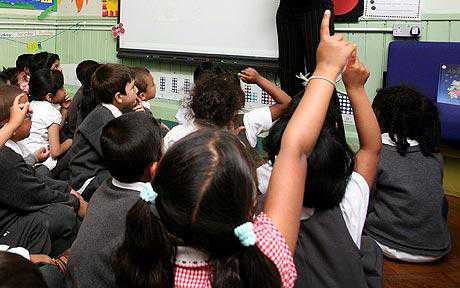
    Schools are reporting 40,000 incidents of racism a year involving children as young as five after everyday playground squabbles, a report warns.
    29 Oct 2009

    Primary schoolchildren and toddlers in nurseries are being punished for making racist insults, it claims, even if they do not understand the terms they use.

    The report also says teachers are being treated like counter staff in police stations, having to fill in forms detailing name-calling and jokes.

    At the same time, diversity “missionaries” sent into schools to teach pupils about bigotry are said to be increasing the divide between white and black children by forcing them to see everything in terms of race.

    Schools were placed under a duty by the Government in 2002 to monitor and report all racist incidents to their local authority.

    Adrian Hart, the author of the report which is published by the Manifesto Club, a civil liberties group, said: “The obligation on schools to report these incidents wastes teachers’ time, interferes in children’s space in the playground, and undermines teachers’ ability to deal with problems in their classrooms.

    “Worse, such anti-racist policies can create divisions where none had existed, by turning everyday playground spats into ‘race issues’. There are a small number of cases of sustained targeted bullying, and schools certainly need to deal with those.

    ”But most of these ‘racist incidents’ are just kids falling out. They don’t need re-educating out of their prejudice – they and their teachers need to be left alone.”

    The report gives an example of a Racist Incident Referral Form which records the case of a girl who called a boy “white trash” during a primary school football game. She was “severely spoken to” and suffered “loss of lunchtime play”.

    A five-year-old girl was told off and her parents were contacted when she refused to let a black girl join in a game, the report says.

    On another occasion, a primary school pupil was “spoken to severely” and warned he could be reported to the head teacher and his parents after calling two classmates “a chocolate bar”.

    Martin Ward, the deputy general secretary of the Association of School and College Leaders, said: “Certainly any racist incident in schools should be dealt with swiftly but the definition of racism can be taken too far, especially with young children who clearly don’t understand the connotation behind the words.’’

    After the introduction of the Race Relations (Amendment) Act 2000, which put public bodies under a duty to eliminate discrimination, schools were told they had to monitor the impact of their policies on the educational attainment of pupils of different races.

    In 2002, racist incident forms were created that required teachers to name the alleged perpetrator and victim, and spell out what they did and how they were punished. Schools can keep these details on file.

    Today’s report – The Myth of Racist Kids – calculates that some 280,000 such incidents have been reported in England since full records began.

    An earlier investigation, using Freedom of Information requests, found 95,022 incidents between 2002-03 and 2005-06.

    Birmingham City Council alone has seen numbers rise from 943 incidents in 2002-03 to 1,606 in 2008-09, while 1,248 were logged by Leeds City Council last year.

    Essex County Council figures show that most of the children involved in reported racist incidents were aged between nine and 11.

    Schools that send in “nil” returns are criticised for “under-reporting”, and are sent letters telling them to put up posters raising awareness.

    Mr Hart recommends that the compulsory reporting of alleged racism is scrapped, and that schools are allowed to develop their own policies on diversity and playground disputes.

    Diana Johnson, the Schools Minister, said: “Bullying in all forms, including those motivated by prejudice, is totally unacceptable and should not be tolerated.’’

    The Telegraph
  • Revealing institutional racism in the workplace

    Revealing institutional racism in the workplace

    TWO reports published by the TUC’s Stephen Lawrence Task Group in December and January reveal how institutional racism in the workplace excludes black and Asian people from job opportunities, and prevents them from gaining promotion when they do get jobs.

    The report “Black and excluded” revealed that racism is rife in the jobs market and has got worse during the1990s, despite growing employment opportunities.

    At 13 per cent, unemployment is two per cent higher among black and Asian workers than it was at thebeginning of the 1990s. For their white counterparts unemployment has returned to its 1990 low point of six per cent. The report also shows that three out of four unemployed black and Asian workers live in just three majorurban areas – London, the West Midlands and Greater Manchester. Apart from Outer London unemployment for Black and Asian workers in these areas is running close to 20 per cent.

    In Inner London the unemployment rate dropped over the past year for white employees, while it grew for black and Asian workers despite some 75,000 new jobs being created in the capital.

    Dealing with pay, the report shows that while black and Asian workers have had greater proportional increases than white workers, this is because they are largely in low paid jobs and gained exceptionally from the introduction of the national minimum wage.

    In one of Britain’s notoriously low paid sectors, hotels and restaurants, there are nearly twice as many black and Asian workers as white.Ethnic monitoring should be mandatory on employers to end the discrimination against growing numbers of highly qualified black and Asian workers whose opportunitiesfor career advancement are in decline, said the Task Group report “Qualifying for racism”. The report revealed that that 21per cent of black and Asian employees are educated to degree level, compared to just 16 per cent of their white counterparts. But despite receiving higher level qualifications black and Asian employees are facing declining opportunities for career advancement. A growing “management and supervisory gap” has grown during the 1990s between black and whiteworkers.

    The report, which uses data from the Government’s Labour Force Survey, also shows that proportionallytwice as many black and Asian male workers are trapped in part time jobs because they cannot get full time work than white workers – and that over half of all black males over the age of 25 in part time jobs are in this position. Being stuck in part time work further limits their chances of career advancement. Commenting on the reports John Monks, TUC General Secretary, said: “Racism is blighting the working lives of many thousands of well qualified young black and Asian people. The TUC is seeking to work in partnership with employers and the Government to curb racist attitudes in the workplace”.

    TUC

  • “Oh, what a tangled web we weave,

    “Oh, what a tangled web we weave,

    When first we practice to deceive!”

    [[email protected]]

    Publisher, The California Courier

    The title of this article, taken from Walter Scott’s epic poem, the Marmion, aptly describes the web of deceit weaved by Turkey’s leaders in seeking to create the false impression of wanting to normalize relations with Armenia.

    Under the guise of opening the border and establishing diplomatic relations with Armenia, Turkish officials actually intended to: 1) extract concessions from Armenia – returning Karabagh (Artsakh) to Azerbaijan, forming a historical commission to review the facts of the Genocide, and blocking territorial demands from Turkey; 2) prevent the acknowledgment of the Armenian Genocide by third countries, particularly the United States; and 3) generate a positive image in order to facilitate Turkey’s entry into the European Union.

    If Turkey was sincere in its expressed desire to open the border with Armenia, it could have done so just as easily and quickly as it did when closing it in 1993. There was no need for lengthy negotiations, convoluted protocols, and parliamentary ratification. Furthermore, rather than demanding concessions, Turks should have offered inducements to Armenia for agreeing to open the border, because with closed borders, Turkey cannot join the EU.

    Ever since April 22, 2009, when the first concrete step was taken by the Foreign Ministers of Armenia and Turkey by issuing a roadmap for normalizing their relations, Turkish leaders continued to state that they won’t open the border with Armenia without first resolving the Artsakh conflict. Even after signing the Protocols on October 10, 2009 and submitting them to Parliament eleven days later, the Turkish government still insisted that the border would remain closed until Artsakh was returned to Azerbaijan.

    Since none of the major powers supported the precondition on Artsakh, Turkey’s leaders used the January 12, 2010 verdict of Armenia’s Constitutional Court as a new excuse for not ratifying the Protocols in the last four months. Even though the Court ruled that the obligations stipulated by the Protocols complied with the constitution, the Ankara leadership expressed dissatisfaction in order to cover up its intent not to ratify the Protocols. Turkey demanded that the Court “correct” its decision, just because it had blocked the unwarranted interpretations and preconditions of the Turkish side.

    Unable to convince Armenia to meet their demands, Turkish officials approached Russia, the United States, and Switzerland (the mediator on the Protocols) to apply pressure on Armenia “to correct” the Constitutional Court’s decision. Once again, the Turks were rebuffed.

    Last week, Turkey stumbled on a new excuse not to ratify the Protocols — the announcement by Cong. Howard Berman (Dem.-CA), Chairman of the House Foreign Affairs Committee, that his panel would take up the Armenian Genocide resolution on March 4.

    Even though the genocide resolution is unrelated to the Protocols, a few days before Cong. Berman’s announcement, Turkey’s new Ambassador to Washington, Namik Tan, warned the U.S. Congress against such a move and boldly predicted that such a resolution would not come up for a vote “this year or anytime in the future.” Amb. Tan’s warning clearly exposed Turkey’s hidden agenda to bury the acknowledgment of the Armenian Genocide at every opportunity.

    Now that the genocide resolution is scheduled for a vote, what would the Turks do? They are caught in their own web of deceit! If they rush to ratify the Protocols in order to prevent the adoption of the resolution, they would antagonize their Azeri ally and create internal political turmoil. On the other hand, If they does not ratify the Protocols very soon, there is a high probability that the genocide resolution would receive congressional approval this year.

    Meanwhile, Washington is losing patience with Turkey’s repeated excuses for dragging its feet on the Protocols. In retaliation, the Obama administration could use the genocide resolution as a stick to prod Turkey into ratifying the Protocols. Moreover, Turkey cannot count on much political support from Israel or American-Jewish organizations in order to block the genocide resolution, due to the incessant insults hurled by Prime Minister Erdogan at Israeli leaders over the past year.

    By refusing to ratify the Protocols, Turkey has taken away from the Obama administration its excuse for not acknowledging the Armenian Genocide. Despite his repeated campaign promises, Pres. Obama refrained from using the term Armenian Genocide in his April 24, 2009 statement. He had unwisely adopted the duplicitous Turkish line that third countries should not acknowledge the Armenian Genocide, while Armenia and Turkey were trying to normalize their relations.

    It is noteworthy that when Philip Gordon, Assistant Secretary of State, was asked last week to comment on the likely impact of the Armenian Genocide resolution on the Protocols, he insisted that they be ratified without preconditions. Significantly, he did not use the occasion to express any opposition to the resolution.

    Any attempt by the administration to block the congressional resolution would be highly embarrassing for Pres. Obama, Vice President Joe Biden and Secretary of State Hillary Clinton, since all three as Senators and presidential candidates had issued strong statements in support of acknowledging the Armenian Genocide.

    Since Obama administration officials have repeatedly stated that the Protocols have no preconditions, then there should be no reason for them to object to the adoption of the genocide resolution.

    It should be stated that in normal circumstances there would be no need for further action by the President or Congress on recognition of the Armenian Genocide which is already an acknowledged fact. In 1975 and 1984, the U.S. House of Representatives adopted resolutions recognizing the Genocide and Pres. Reagan acknowledged it in his Presidential Proclamation of 1981. However, in view of Turkey’s devious designs to roll back the international recognition of the Armenian Genocide, it is imperative that the United States government reaffirm its acknowledgment. This would also be an appropriate response to the deceptive Turkish tactics of using the Protocols to extract concessions, under the false pretense of opening the border with Armenia.

  • Early History of First Oil Activities

    Early History of First Oil Activities

    Contemporary international political situation is influenced by some special necessities which are sources that states need them. This reality comes from ancient times as states have vital arguments to be powerful than others in everywhere. State mechanism needs any special material to live for a long time or be strong always like blood function for human body. There is a main argument as a vital interest; oil which effects political situations of states with its useful benefits for all areas of the state mechanism. It had been transformed to a new style like blood as an alternative to other energy and trade materials since 19. century.

    As historically oil was discovered in different special regions of  the world and understood for some special features such as advantage to prevent some diseases, to attack material which burns under sea in wars by Byzantine Empire, to illuminate and to use for machineries. So it had been transformed from energy event to main subject of trade activities. In 19. century oil was formed to be functional style as kerosene with chemical tests by George Bissell and Benjamin Silliman. They developed industrial function of this material and some search methods were created such as different drilling system. George Bissell who was called as father of oil industry, used oil as kerosene and he developed a system to find oil with drilling system instead of mining. Oil drilling and marketing had a new face after chemical contributions and industrial processes. It will be main theme for producting and economic interaction. Oil was realized internationally as an alternative for candeel and coal with searching activations in Pennsylvania-Titusville by E. L. Drake. Drake entered to this market with other men, but his self initiatives kept him specially.

    “Drake tried the usual method, digging trenches — and failed. He studied the land and speculated about oil deposits. His intuition told him he should drill into the ground, just as salt mining was done. From July 1858 to May 1859, he struggled to find a borer to do the work, spending the New Haven money to buy a steam engine and build an engine house in the meantime. Through a long, cold winter, the merchants of Titusville extended credit to their poor, misguided new friend and his family. Folks started to call him Crazy Drake.”[1]

    This step opened a new period of oil for the world’s destiny. New source overspread to far geographies of the world in a short time. Also intercontinental transportation activities started, first oil was transferred to London in 1861 and to St. Petersburg in 1862.

    After that time the largest company Standard Oil which will effect the oil market as a monopol was founded by J. D. Rockefeller in the USA, 1870. Manhattan was headquarter which called as Old House. Investors were creating some combine companies to establish common power about this market, but some of them left here to keep their sovereignty at this period. Main function of Standard Oil was that integrated company characteristic that has some steps like producing, rafinery, transportation, distribution and wholeseller-retailer system. Other successfull new companies took an example from this useful system. Oil companies were founded by initiators who finds oil in California and Texas. Also new technical method rotary drilling system was invented and useful oil production started. On the other hand new technical searching systems are developed from time to time at starting point of 20. century and they effected oil industry competition from local to international.[2] Standard Oil had been stronger than others and the company created its basic system in all areas of industry. In that rivalry circumstances other companies tried to establish alternative systems for transportation for preventing Standard’s main activity in trade. Standard Oil established a pipeline system to transport and other companies created barrel system for quickly transportation. At this situation Standard Oil discounted oil prices against them for balance interactions to all of them, namely everybody uses effective tools to protect their self interests via whatever ways as knowingly internal economic or oil crisis. In 1890, regional integrated company Unocal was founded, in 1893 oil production started in Texas. Guffey and Geley created their company in Kansas.[3] Also Gulf, Sun, Texoco oil companies was founded as against to Standard Oil. Strong competition started in the USA and it will jump other continents in a short time. Additionally we should say that %25 of world oil transportation was provided in the USA at this time. Of course Standard Oil was the first bigger than other untill a just law decision.

    On the other face of the world there were some exploration activities in Caspian region in that time and it influenced oil market with its rich oil sources. Robert and Ludwig Nobel brothers founded oil rafineries in Baku and they discovered new ways to export oil from Caspian region. There was a period to complete its integrated company situation. First Caspian oil was transferred to St. Petersburg via ship which called as Zoroaster in 1876. Nobels were pioneer about tanker ship system. They ordered new tankers with new designs; Buddha, Tatarin, Mohammed, Socrates, Darwin, Koran, Talmud and Calmuck.[4] New transportation ways were necessities for Caspian oil to send other states via land and sea ways. So they planned to establish a rail road system from Baku to Batumi. It was started by Palashkovski but an economic disability prevented this project. But Rothschilds helped them and project completed successfully. Rothschilds entered this market system and founded Black Sea Petroleum Company at this region. Old House didn’t want to miss new conditions at this continent and founded Anglo-American Oil Company as an European foot of Standard Oil. Marcus Samuel who was owner of Shell Transportation Company and seller of seashells, visited Baku and started to work for oil market with his conditions and he created a new way from Baku to East Asia via Bosphorus and Suez channel to Bangkok and Singapore. First Baku oil was transferred to East Asia by M. Samuel via his ship which is called as Mirex. We can say that there were two global oil companies at this time; Standard Oil and Nobel-Rothschild Oil Company.

    Third big oil production was in East Indian Islands. There is a company here, Royal Dutch Oil Company which origins from Netherlands. Henry Deterding headed this company after old patron Kessler’s death. Marcus Samuel explored here and demanded to amalgamation of Shell and Royal Dutch to create a common power and use advantages of this strategic and oil-rich region.[5] Systematically Shell has effectual technical supports for Royal Dutch. After the amalgamation Deterding shared new points as restriction of production and quota system, so oil had a new value in the world oil market because of new artificial scarcity against to other competitors. Before the amalgamation Standard Oil was bigger than others, but new situation is militate in favor of Royal Dutch-Shell. Also law effect created a new period for oil market. In 1906 Federal Court in the USA decided to divide Standard Oil because of unfair rivalry in the state. Company was divided to 7 sectors, new companies; Exxon, Mobil, Chevron, Amoco, Sun, Conoco and Standart Oil of Ohio. After this condition new period started for oil market and oil industry, they had new modifications and innovations which are changeable to international political situations also they changed all balances of powers of the world.

    Mehmet Fatih ÖZTARSU – Turkish Forum


    [1] Oil Drilling, E. Drake, http://www.pbs.org/wgbh/theymadeamerica/whomade/drake_lo.html.

    [2] Rovshan Ibrahimov, Oil and Policy Lecture in Baku Qafqaz University, November 2009.

    [3] Daniel Yergin, The Prize, Epic Quest for Oil, Money and Power.

    [4] Robert W. Tolf, The World’s First Oil Tankers, 1976.

    [5] Shell International History, official web site of Shell, .

  • Aidat ve Bağış Ödeme Yöntemleri

    Aidat ve Bağış Ödeme Yöntemleri

    PAYPAL SİSTEMİNİ KULLANARAK  ÜCRETSIZ OLARAK BANKANIZDAN TURKISH FORUMA TRANSFER YAPABİLİRSİNİZ VEYA KREDİ KARTINIZI AYNI GAYE İLE KULLANABİLİRSİNİZ.

    1. Türkiye de banka transferi :Hesap sahibi: Turkish Forum Inc.
      TC ZIRAAT BANKASI Istanbul/Taksim Subesi (Sube No:843)
      Hesap sahibi: Turkish Forum Inc.
      SWIFT# TC2BTR2A

      USD Hesap
      No
      : 5761628-5001
      IBAN = TR09 0001 0008 4305 7616 2850 01
      ********
      TL Hesap No: 5761628-5002
      IBAN = TR79 0001 0008 4305 7616 2850 02
      ********
      EURO Hesap No: 5761628-5003

      IBAN = TR52 0001 0008 4305 7616 2850 03

      ***

    2. Çek ile : TurkishForum , PO Box: 1104 Marblehead, MA 01945 USA
    3. PayPal ve Kredi Kartı  ile : Dünyanın pek çok ülkesinde banka hesabınızdan veya kredi kartınızdan aşağıdaki tuşa basarak güvenli ödeme yapabilirsiniz.

    KURUCU ÜYE STATÜSÜNÜ VE CERTİFİKASINI KAZANMAK İÇİN BAĞIŞ YAPACAGINIZ ÖZEL  MİKTARINIZI LÜTFEN GİRİNİZ. Kitap satın alışlarınız içinde bu kısmı kullanabilirsiniz. KURUCU ÜYE STATÜSÜNÜ KAZANMAK 30  ARALIK 2010 TARİHİNDE KADAR YÖNETİM KURULUMUZCA UZATILMIŞDIR. KURUCU ÜYE STATUSU 2010 YENİDEN DOĞUŞ SENESİ İÇİN ÖZELDİR VE BU SENDEN SONRA BİR DAHA GÜNDEME GELMİYECEKDİR.

    1. ÜYE AİDATLARI VEYA ÖZEL BAĞIŞLARINIZ  İÇİN AŞAĞIDAKİ LİNKLERİDE KULLANABİLİRSİNİZ  (KURUCU ÜYE STATÜSÜ DAHİLDİR)
    Kredi Kartı (Paypal) Regular Donor – 75 USD(2010 Üye Aidatı)
    Seçme ve Seçilme Hakkı


    Çırağan Club Sponsor – 250 USD
    Seçme ve Seçilme Hakkına ek olarak
    Sponsor üye sertifikası
    Turkish Forum tarafından satışı yapılan kitap gibi ürünlerde %10 indirim

    Dolmabahçe Club Sponsor – 500 USD
    Seçme ve Seçilme Hakkına ek olarak
    Sponsor üye sertifikası
    Turkish Forum tarafından satışı yapılan kitap gibi ürünlerde %20 indirim

    Topkapı Club Sponsor – 1.000 USD
    Seçme ve Seçilme Hakkına ek olarak
    Sponsor üye sertifikası
    Turkish Forum tarafından satışı yapılan kitap gibi ürünlerde %20 indirim
    Ve Danışma Kurulu üyeliği

    Corporate Donor – 2.500 USD
    Topkapı Club avantajlarına ek olarak, kurumsal üye statüsünde sponsorlar arasında yer almak

    LifeTime Donor – 5.000 USD
    Yaşam Boyu üye sertifikası

    Bağışlarınızı ABD ve Türkiye içinde vergi matrahınızdan düşmek mümkündür. Kuruluşumuzun Türkiye  vergi numarasi 8710506391’dir. ABD’de ise 501-3-C numara ile vergiden muaf kar amacı gütmeyen kuruluşuz.

    HEP BERABER, DAHA NİCE ORTAK BAŞARILARA İMZA ATMAK DİLEĞİ VE ÜMİDİYLE�

    DR. KAYAALP BÜYÜKATAMAN , BAŞKAN
    TURKISH FORUM – DÜNYA TÜRKLERİ BİRLİGİ

    © 1993-2010 TurkishForum

  • U.S. House Panel To Take Up Armenian Genocide Bill

    U.S. House Panel To Take Up Armenian Genocide Bill

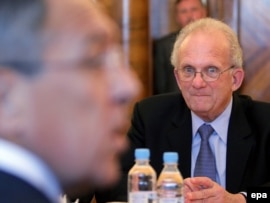
    Congressman Howard Berman (right)

    February 06, 2010
    WASHINGTON (Reuters) — A U.S. congressional panel will vote next month on a resolution to label the World War I-era massacre of Armenians by Turkish forces as “genocide,” a move that could infuriate Turkey.

    Howard Berman, the Democratic chairman of the House Foreign Affairs Committee, said he intended to call a committee vote on the nonbinding resolution on March 4.

    The resolution would call on President Barack Obama to ensure that U.S. policy formally refers to the massacre as “genocide” and to use that term when he delivers his annual message on the issue in April — something Obama avoided doing last year.

    The panel approved a similar bill in 2007, but it was never put to a full House vote amid fears among both Democrats and Republicans that it would alienate Turkey.

    The Obama administration sees Turkey as a key ally whose help it needs to solve confrontations from Iran to Afghanistan.

    Obama, who as a candidate referred to the killings as genocide, in April used the term “atrocities” in his first presidential address on the issue — spurring criticism from Armenian-American groups.

    Turkey and Armenia last year signed accords to normalize ties after a century of hostility that traces its roots to the 1915 mass killing and deportation of Armenians.

    But the deal has wobbled after an Armenian court last month reaffirmed the government’s obligation to seek recognition of the killings as genocide, something Turkey strongly opposes.

    Turkey accepts that many Christian Armenians were killed by Ottoman Turks but denies that up to 1.5 million died and that it amounts to genocide. Turkish officials have warned that any new attempt in the U.S. Congress to brand the killings a genocide could damage U.S.-Turkish ties.