Year: 2010

  • WHO WOULD INSIST ON TEACHING ONLY ONE SIDE OF A CONTROVERSY?

    WHO WOULD INSIST ON TEACHING ONLY ONE SIDE OF A CONTROVERSY?

    Re: “In appeal, lawyer asserts genocide teaching skewed”, By Jonathan Saltzman, Globe Staff / March 3, 2010,

    To: Jonathan Saltzman, Globe Staff, [email protected] .

    Dear Mr. Saltzman,

    Please take a good look at the photos here: www.ethocide.com . Do these people look like “poor, starving Armenians” to you?

    Do they, in your honest opinion, substantiate, in any way, shape, or form, that “unarmed, non-combatant, helpless Armenian cut down by the Turk” myth?

    You’ve been duped!

    We all have been duped by the Armenian falsifiers and Turk-haters (AFATH).

    WHO WOULD INSIST ON TEACHING ONLY ONE SIDE OF A CONTROVERSY?

    These photos of Armenian revolutionaries, armed-to-the-teeth, and their Turkish victims, censored in Boston and went untold for a hundred years, their suffering unacknowledged and un-commemorated, and un-grieved, explain why Turkish Americans strenuously object the racist and dishonest teachings forced on the education system by Armenian extremists of Massachusetts.

    First, let us all agree that it is a controversy. After all, if the debate still continues after a hundred years, what would you call it?

    Next, let us all agree that an issue is controversial because there are those who disagree with one side’s claims and produce their own facts, figures, and arguments. After all, if all agree on a given issue, would there be “the other side of the story”? And if there is no dispute, would there be controversy?

    Now that we all agree, without taking sides, that the Turkish-Armenian conflict is controversial, then the question begs to be asked is: “Why on earth would anyone want to teach our children only one side of it?

    Would you agree if only one side (the side that you oppose) of a controversy–like abortion, gun control, Iraq war, Afghanistan war, financial meltdown, poorly performing economy, health care, gay marriage, stimulus package, social security, unemployment, any one of million other issues–is forced down the throats of your children at school?

    That is where we are with this issue. The arrogant Armenian lobby mobilized the Armenian community in 1998 to force the legislature to force the education department to teach our children Armenian version of history only, based on distortions, hearsay, forgeries, hate and vengeance.

    When the responsible opposing views were also included, as they should in any civilized society, the Armenian intolerance and politicians’ weaknesses weighed in again to censor the other side of the story. This is nothing less than a frontal attack on free speech by Armenian hate groups.

    The question is, will you stomach it?

    A FRONTAL ATTACK ON FREE SPEECH BY ARMENIAN HATE GROUPS

    Selection of obviously biased contents, clearly provocative symbols, incredibly misrepresented people, locations, dates, causalities, all converging in a dishonest and racist version of history by Armenian pressure is hardly the civilized way of teaching history to our children. Schools are not meant for propaganda waged by the loudest or dominant political groups. That would change this country to Nazi Germany, Soviet Union, or Taliban’s Afghanistan. This is America where we, the people, can courageously take sides in controversies, freely present our opinion, and teach our children universal facts in a non-partisan, non-sectarian ways . Our freedom of speech is enshrined in the U.S. Constitution, not to be stumped every time Armenian extremists make a racist demand.

    Most of the true scholars, researchers, and historians publicly rejected on 19 May 1985, in New York Times & Washington Post, the Armenian characterization of WWI events as genocide, instead called it “…inter communal warfare fought by Christian and Muslim irregulars…”. The signatories included world renown names like Prof. Bernard Lewis of Princeton, Prof. Stanford Shaw of UCLA, Prof. Justin McCarthy of Louisville, and many others.

    In fact, so many of the true scholars were refuting the Armenian claims that the Armenian lobby was forced to create new avenues to buy credibility: genocide scholars. These are mostly retired professionals, psychiatrists, lecturers on US Government, English teachers, writers, authors, and others, all posing as authorities in history although most are not even historians, and all organized through the Armenian lobby, financed in part by the Cafesjian Foundation and organized by the notoriously anti-Turkish Zoryan Institute (like Taner Akcam of formerly U. of Minnesota, now Clark U.)

    EVEN THE U.S. CONGRESS’ OWN RECORDS REFUTE ARMENIAN CLAIMS

    Even the U.S. Congress’ own records from those times and dates clearly corroborate the Turkish position on the conflict—though perhaps in an unintended way:

    a- “American Military Mission to Armenia” (General Harbord) Report 1920 and the Annex Report Nat. Archives 184.021/175 –which does not mention any “race extermination” but, on the contrary, refers to “…refinements of cruelty by Armenians to Muslims…”

    b- Joint U.S. CONGRESS RESOLUTION NO. 192, APRIL 22, 1922 relative to the activities of Near East Relief ending 31 December 1921 which has unanimously resolved that a total of 1,414,000 Armenians were alive (which makes killing of 1.5 million Armenians an impossibility, since the total Armenian population was around 1.5 million at the time.)

    c- George Montgomery, a member of the U.S. delegation at the Paris Conference, had presented a detailed tabulation in 1919, showing a total of 1,104,000 Armenians alive, apart from those who had already immigrated to other countries.

    NUMBERS DON’T LIE, ARMENIANS LOBBYISTS DO

    29 March 1919 report to the Paris Peace Conference by the subcommittee on atrocities, chaired by the U.S. secretary of State Lansing, lists Armenian losses as “…more than 200,000…” Even this number is exaggerated as they got their information from the Armenian church, not exactly an impartial source.

    After meticulous research through the archives, the Turkish Historical Society documented the deaths of 54,000 Armenians using Ottoman police reports filed on site, of which number only about 8,400 are reported as victims of massacres. The paragraphs a, b, and c jointly clearly point to the THS number being closer to reality.

    Who, then may have jacked this number of Armenian casualties from the original 54,000 first to 200,000 in 29 March 1919 (Paris Peace Conference;) then to 600,000 in May 1919 (in a poster created by Armenians soliciting money in U.S. churches;) and finally to the current 1.5 million?

    Take a guess!

    ARMENIAN FALSIFIACTIONS CONTINUE

    Armenians did not suffer alone, millions of Turks, Azeris, Kurds, Jews, Circassians, Persians also lost their lives during the same period from similar causes, including massacres by Armenian rebel bands. Take a look at the photos of Armenian revolutionaries, armed-to-the-teeth, here: www.ethocide.com . Do they look like the “poor, starving, unarmed, helpless Armenians” myth promoted deceptively and incessantly?

    The mound said to contain Armenian skulls was that Vereshagin painting of 1871 protesting the brutalities of the Prussian war, still hanging in a museum in Moscow today, with which the Armenians duped the world into thinking that those were the skulls of Armenians killed by Turks. When the Armenian lies were finally exposed by Prof. Turkkaya Ataov in 1983, no apology was issued by the Armenian lobbies.

    Same falsification with the alleged Hitler quote: it is also a shameless hoax. Even the most cursory search in the internet will readily reveal many sources showing Princeton historian Heath Lowry’s extensive work exposing the Armenian falsifications.

    That the frequently used infamous Hitler quote is a hoax is beyond suspicion. It suffices to read a few lines from the article “Historian of Armenian Descent Says Frequently Used Hitler Quote Is Nothing But a Forgery”, that appeared in The Armenian Reporter Vol. XVII, NO. 40, on August 2, 1984, where an Armenian historian advises his fellow Armenians not to use this fake quote again. “…Dr. Robert John, a historian of Armenian heritage from New York City stated, according the news article, that a commonly used quotation of an alleged statement by Adolf Hitler about the Armenian massacres was a forgery and should, therefore, not be used…” The complete article available at :

    Many other such fabrications, meticulously documented in recent a book by Ataov, are the reasons why we would be careful, if we were Massachusetts educators or Supreme Court judges, not to take any Armenian claims, let alone who lies in the alleged mass grave, at face value. (Would you buy a used car from someone who claims a bogus genocide with fabricated evidence?)

    OTTOMAN TOLERANCE AND THE “MILLET SYSTEM”

    It is a matter of historical record that the Ottomans had established one of the most tolerant administrations in history, with its “millet” system where the faith-based groups were organized in self-ruling, autonomous “millets”. When the Jews of Iberia were persecuted during the 1492 Spanish inquisitions and were told to convert to Catholicism, or leave, or get killed, no country in Europe would offer sanctuary to Jews for fear of retaliation by Catholic Rome. No country, except the Ottoman Empire, that is. Since than many other persecuted peoples have freely come to the Ottoman lands and prospered there in the centuries since.

    Turkey continued this fine tradition when German Jews in 1930, secular Iranians in 1980s, Iraqi Kurds in 1990s, and many others have also been saved. Armenians’ passionately deliberate misrepresentations, embrace of intimidation, harassment, and even terrorism directed at dissenters, and willingness to teach their children hate for all things Turkish speak volumes about the Armenian psyche and character, don’t they?

    Then there the forced comparison between the court-proven (Nuremberg, 1945) uniquely Jewish tragedy of Holocaust versus the long discredited, political, and unsubstantiated claim of genocide. Deportation is a misnomer, because the treasonous elements were moved from one part of the country to another temporarily, until the end of the war, hence the term TERESET, temporary resettlement. Therefore, mentioning the factual Jewish Holocaust in the same breath with the bogus Armenian genocide is an insult to the silent memory of six million Jews who were killed just for being Jews. Jews did not take up arms against their own government. They did not demand German territories to establish a Jewish state on them. They did not terrorize the German countryside. They did not kill their German neighbors to the tune of 524,000 German victims. They did not join the invading enemy armies during WWII. Armenian, on the other hand, committed all of those heinous crimes during WWI and got away with them. Judging by the Armenians’ ethocidal treatment of the conflict to this day, the Armenians are still getting away with murder.

    CURRENT ARMENIAN MATERIAL TEACHES OUR CHILDREN HOW TO HATE

    Current material fails to remind the impressionable students that Armenians actually resorted to a very bloody, very massive revolt in April 1915; killed more than 40,000 Muslims in cold blood; wrestled the city out of the Ottoman government forces , and turned it over to the invading enemy armies (Russians.) That was the equivalent of 9/11 for the Ottoman Empire. Why is it acceptable for the U.S. to cross the oceans to start a global war on terrorists in Afghanistan in 21st Century but not acceptable for the Ottoman Empire to move its terrorists from one corner of its land to another in the 20th Century?

    And the 24 April 1915, billed by the Armenian falsifiers as the start of a genocide is actually the equivalent of Guantanamo for the Ottoman Empire when known Armenian terrorists and their suspected accomplices were arrested and incarcerated for questioning. If it is good for the goose now, it should be good for the gander, shouldn’t it? Please, no more blatant double standards.

    Loaded terms like “death march”, “concentration camps” and claims like the Nazis learned from Turks, included in Armenian teachings, are more recent inventions and after thoughts by the Armenian lobby, not unlike the genocide scholars, genocide curriculums, genocide lectures at Holocaust museums and Jewish synagogues. All new, all cunning steps in a master propaganda scheme, all designed to establish “credibility by association”, all funded by the Armenian lobby.

    Morgenthau, the career diplomat , historian, writer, quoted in the documentary, was actually none of those. He was a real estate agent and a developer from upstate new York who raised the most funds for Wilson in 1912 presidential campaign and was rewarded for his services by an ambassadorial post. He was a rabid anti-Turks and a Muslim hater. His book, published in 1918, was actually ghost –written by a Pulitzer Prize winner for him. Morgenthau never left Istanbul (except once for Jerusalem) but never set foot in Anatolia from where he reported. He could speak none of the languages of the era and area (Turkish, Persian, Arabic, Ottoman) so he relied on the translations and reports of his two male Armenian secretaries, Schmavonian and Andonian, hardly impartial sources of information.

    Morgenthau simply relayed the embellished and exaggerated reports filed by Armenian revolutionaries, American missionaries and other biased parties who could not care less about Muslims’ suffering, either directly or through American consuls in the area. As any fair-minded, honest, truth-seeker can easily see, the deck was shuffled with a pro-Armenians and anti-Turkish bias from the start.

    Turkish-Armenian journalist Hrant Dink’s assassination of 2007 is also mentioned in Armenian teachings, but not surprisingly, no word about the thousands of Turks who took to the streets condemning it. No mention, either, of the murder of Turkish Consul General Kemal Arikan in 1982 in Los Angeles or the fact that Armenians took to the streets to “celebrate it”! This is important, because both men were the same age when assassinated under similar circumstances by brain-washed youths, both married, and both had kids, both victimized by a similar hate crime. Yet, the Armenian victim (Dink) is glorified while Turkish victim is forgotten, dismissed, or ignored. Also ignored are more than 70 victims of Armenian terrorism and hate crimes since 1973. What is even more incredible that four of those victims were murdered in cold blood on American soil! No word on any of this in Armenian version of history, because most Armenians seem to think that Turks, being of the wrong ethnicity and religion, are certainly expendable sub-humans who deserve death.

    BIAS & BIGOTRY IN THE TERM “ARMENIAN GENOCIDE”

    If one cherishes values like fairness, objectivity, truth, and honesty, then one should really use the term “Turkish-Armenian conflict”. Asking one “Do you accept or deny Armenian Genocide” shows anti-Turkish bias. The question should be re-phrased “What is your stand on the Turkish-Armenian conflict?”

    Turks believe it was an inter communal warfare mostly fought by Turkish and Armenian irregulars, a civil war which is engineered, provoked, and waged by the Armenian revolutionaries, with active support from Russia, England, France, and others, all eyeing the vast territories of the collapsing Ottoman Empire, against a backdrop of a raging world war.

    Armenians, on the other hand, totally ignoring Armenian agitation, raids, rebellions, treason, territorial demands, and Turkish victims killed by Armenians, unfairly claim that it was a one way genocide.

    GENOCIDE ALLEGATIONS IGNORE “THE SIX T’S OF THE TURKISH-ARMENIAN CONFLICT”

    While some in unsuspecting public may be forgiven for taking the blatant and ceaseless Armenian propaganda at face value and believing Armenian falsifications merely because they are repeated so often, it is difficult and painful for someone like me, the son of Turkish survivors on both maternal and paternal sides.

    Those seemingly endless “War years” of 1912-1922 brought wide-spread death and destruction on to all Ottoman citizens. No Turkish family was left touched, mine included. Those nameless, faceless Turkish victims are killed for a second time today with politically motivated and baseless charges of Armenian genocide.

    ALLEGATIONS OF ARMENIAN GENOCIDE ARE RACIST AND DISHONEST HISTORY

    They are racist because they ignore the Turkish dead: about 3 million during WWI; more than half a million of them at the hands of Armenian nationalists. And the allegations of Armenian genocide are dishonest because they simply dismiss the six T’s of the Turkish-Armenian conflict:

    THE SIX T’S OF THE TURKISH-ARMENIAN CONFLICT:

    1) TUMULT (as in numerous Armenian armed uprisings between 1877 and 1920)

    2) TERRORISM (by well-armed Armenian nationalists and militias victimizing Ottoman-Muslims between 1882-1920)

    3) TREASON (Armenians joining the invading enemy armies as early as 1914 and lasting until 1921)

    4) TERRITORIAL DEMANDS (where Armenians were a minority, not a majority, attempting to establish Greater Armenia, the would-be first apartheid of the 20th Century with a Christian minority ruling over a Muslim majority )

    5) TURKISH SUFFERING AND LOSSES (i.e. those caused by the Armenian nationalists: 524,000 Muslims, mostly Turks, met their tragic end at the hands of Armenian revolutionaries during WWI, per Turkish Historical Society. This figure is not to be confused with about 2.5 million Muslim dead who lost their lives due to non-Armenian causes during WWI. Grand total: more than 3 million, according to Prof. Justin McCarthy.)

    6) TERESET (temporary resettlement) triggered by the first five T’s above and amply documented as such; not to be equated to the Armenian misrepresentations as genocide.)

    VERDICT WITHOUT DUE PROCESS AMOUNTS TO LYNCHING

    Those who take the Armenian “allegations” of genocide at face value seem to also ignore the following:

    1- Genocide is a legal, technical term precisely defined by the U.N. 1948 convention (Like all proper laws, it is not retroactive to 1915.)

    2- Genocide verdict can only be given by a “competent court” after “due process” where both sides are properly represented and evidence mutually cross examined.

    3- For a genocide verdict, the accusers must prove “intent” at a competent court and after due process. This could never be done by the Armenians whose evidence mostly fall into five major categories: hearsay, mis-representations, exaggerations, forgeries, and “other”.

    4- Such a “competent court” was never convened in the case of Turkish-Armenian conflict and a genocide verdict does not exist (save a Kangaroo court in occupied Istanbul in 1920 where partisanship, vendettas, and revenge motives left no room for due process.)

    5- Genocide claim is political, not historical or factual. It reflects bias against Turks. Therefore, the term genocide must be used with the qualifier “alleged”, for scholarly objectivity and truth.

    HISTORY IS A MATTER OF SCHOLARSHIP, NOT CONVICTION, CONSENSUS, POLITICAL CORRECTNESS

    History is not a matter of “conviction, consensus, political resolutions, political correctness, or propaganda.” History is a matter of research, peer review, thoughtful debate, and honest scholarship. Even historians, by definition, cannot decide on a genocide verdict, which is reserved for a “competent court” with its legal expertise and due process.

    POLITICAL LYNCHING OF THE TURKS BY ARMENIANS TODAY

    What we witness today amounts to lynching of the Turks by Armenians to satisfy the age old Armenian hate, bias, and bigotry. Values like fairness, presumption of innocence until proven guilty, objectivity, balance, honesty, and freedom of speech are stumped under the fanatic Armenian feet. Unprovoked , unjustified, and unfair defamation of Turkey, one of America’s closest allies in the troubled Middle East, in order to appease some nagging Armenian activists runs counter to American interests.

    Those who claim genocide verdict today, based on the much discredited Armenian evidence, are actually engaging in “conviction and execution without due process”. Last time I looked in the dictionary, that was the definition of “lynching”.

    Isn’t it time to stop fighting the First World War and give peace a chance?
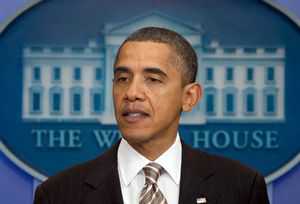
  • BEYAZ SARAY VE SOZDE SOYKIRIM OYLAMASI

    BEYAZ SARAY VE SOZDE SOYKIRIM OYLAMASI

    Kritik oylama öncesi şok
    ‘Ermeni  iddialarına ilişkin tasarı, yarın ABD Temsilciler Meclisi Dışişleri Komitesi’nde görüşülmeden önce Beyaz Saray’dan yapılan son açıklama moralleri bozdu.

    Türkiye, ABD Temsilciler Meclisi Dışişleri Komitesi’nde yarın görüşülüp oylanacak 1915 yılı olaylarına ilişkin Ermeni iddialarına karşı çalışmalarını sürdürüyor.Ermeni tasarısının Dış İlişkiler Komitesi’nde oylanması öncesinde Beyaz Saray’dan ilk açıklama geldi.Vatan gazetesinin haberine göre; Beyaz Saray Ulusal Güvenlik Konseyi Basın Sözcüsü Mike Hammer, “Başkan Obama 24 Nisan 2009’da yayınlanan mesajında 1915’te yaşanan olaylar karşısındaki sürekli duruşunu vurgulamış ve bu konudaki görüşü de değişmemiştir. Gerçeklerin dürüst ve adilce kabulünden yanayız. Bu hedefe ulaşmanın en iyi yolunun Ermeni ve Türk halkının ilişkilerini normalleştirme çabaları dâhilinde geçmişte yaşananları da ele almaları olduğu yönündeki inancımız sürüyor. Bu çabaları gayretle desteklemeye devam edeceğiz” dedi.

    Türkiye bu açıklamaya rağmen Washington’da yoğun bir lobi faaliyeti sürdürüyor. Bir yandan iktidar ve muhalefet milletvekillerinden oluşan heyetler yoğun bir diplomasi sürdürüyor. Diğer yandan Türkiye’nin yeni Washington elçisi Namık Tan, kolları sıvadı. Tan, tasarıya karşı Türk tezlerini desteklemeleri için Yahudi lobisi ve derneklerine baskı yapmaya başladı.

    Tan’ın temaslarının ilk Yahudi kurumundan tasarıya karşı bir çıkış geldi. Merkezi Washington’da bulunan düşünce kuruluşu Ulusal Güvenlik İşleri Yahudi Enstitüsü (JINSA), Ermeni tasarısına karşı çıkılması ve tasarının kabul edilmemesi gerektiğini belirtti. JINSA’dan yapılan açıklamada “ABD Kongresi, başka zamanlarda başka halkların tarihinin tartışılacağı bir yer değildir. Türkiye ve Ermenistan bağımsız ülkeler. Kongre’nin işe karışması katkı sağlamayacaktır” ifadesi kullanıldı.

    Başbakan Erdoğan, Ankara’da yaptığı açıklamada “Her yıl bu sürecin tekrar tekrar yaşanmasını son derece anlamsız buluyoruz” dedi. Tarihçilere bırakılması gereken böyle bir mesele karşısında Temsilciler Meclisi’nin duyarlı davranmasını isteyen Erdoğan, “Türkiye-ABD işbirliği, tarihinin en başarılı dönemini yaşıyor. Bu işbirliğinin, bu tür girişimlerle zedelenmeyeceğini umuyorum. Başkan Obama’nın liderliğine ve sağduyusuna güveniyorum. Dışişleri Bakanı Clinton’la da aksi bir neticenin nelere mal olacağını görüştük. Herkesi, aklıselimle hareket etmeye çağırıyorum” dedi.

    SON DURUM: 25-21 KABUL

    Dış İlişkiler Komitesi’nde 46 milletvekili bulunuyor. 26’sı Obama’nın Demokrat Partisi’nden. 20’si ise Cumhuriyetçi. Ermeni seçmenine çok yakın olan Demokratların 18’inin tasarıya ’evet’oyu kullanması kesin gibi. Cumhuriyetçilerde ise evetçilerin sayısı 7. Tasarının 21’e karşı 25 oyla kabul edilerek genel kurula sevk edilmesi bekleniyor.Ancak genel kurul gündemine alınıp alınmaması kararı Meclis Başkanı Nancy Pelosi’ye ait. Ermeniler’in çok yoğun olarak yaşadığı California eyaletinden seçilen Pelosi, soykırım iddialarını güçlü bir şekilde destekliyor. Ancak son anda Başkan Obama’dan gelecek bir telefonun kararını değiştirebileceği belirtiliyor

  • 14 MART-USA- DOCTORS’ BALL –

    14 MART-USA- DOCTORS’ BALL –

    FLORIDA TURKISH AMERICAN ASSOCIATION

    DOCTORS’ BALL

    Please join us to show our appreciation to all doctors who serve us selflessly.

    This is a celebration of all doctors around the world,

    as well as the establishment of the Turkish Medical School in Turkey.

    You do not have to be a doctor to join us in this celebration.

    Music by

    Mehmet Khan

    Sunday – March 14, 2010

    Cocktail Hour

    6:00 p.m. – 7:00 p.m.

    Shrimp Cocktail, Chicken tenders, Cheese Platter, Spinach Puffs

    Dinner

    7:00 p.m. – 10:30 p.m.

    Appetizers

    Caesar Salad / Bread
    Entrees
    Roasted Prime Rib

    Salmon Filet

    Penne with Broccoli Rabi, Grilled Vegetables
    Desserts
    Strawberry Cheesecake

    Assorted Fruit Platters
    Drinks

    Wine and Beer

    Freshly Ground Columbian Coffee and Assorted Gourmet and Herbal Teas

    Cost: $50 per person

    ADDRESS: FLORIDA TURKISH CENTER

    3020 32ND AVE. SUITE 123

    Ft. Lauderdale, FL 33308

    FOR RESERVATIONS:

    Dr. and Mrs. Colak – (954) 922-9862

    Dr. and Mrs. Uluer  –  (954) 568-6934

    Drs. Manizade –  (954) 563- 4383

    Dr. and Mrs. Durudogan  – (561) 417-0227

  • Iran’s Growing Role In The South Caucasus

    Iran’s Growing Role In The South Caucasus

    source


    Gulnara Inandzh
    Director
    International Online Information Analytic Center Ethnoglobus

    [email protected]

    [email protected]

    In the aftermath of the Russian-Georgian war, Iran has assumed a greater role in the calculations of all the states of the South Caucasus as well as in the thinking of the Russian Federation, on the one hand, and the United States and Israel, on the other.  Its location alone makes it a key player, especially given the disruptions in trade routes that the war has caused.  And its growing power – including its moves toward the acquisition of a nuclear capability if not nuclear weapons – means that it can no longer be ignored.

    But precisely what role Iran will be able to play depends not only on its own resources but also on the attitudes of other players, and they are much divided.  On the one hand, Russia and Armenia would like to see Tehran brought into discussions about the resolution of the Nagorno-Karabakh conflict and about the formation of the Ankara-proposed Platform for regional security.  On the other, the United States and Israel hope to continue to isolate Iran and to use Turkey as their agent in the region, although it appears that the two have dropped any immediate plans to use force against it lest such actions further destabilize the entire region.

    Whether Turkey will be willing to be used in this way, of course, is far from clear.  It has its own economic interests in the region which are better served by a cooperative relationship with countries nearby rather than by following the lead of its traditional partners further away.  And its government is now committed to a more independent foreign policy, one that means it may sometimes support Washington and Jerusalem and sometimes Moscow and Tehran.

    But in addition to questions about Turkey’s role in this situation, there is another factor at work.  Many outside powers, and the United States in particular, have tended to ignore Iranian moves other than in the nuclear area.  And consequently, Tehran has been able to expand its influence under the radar screen not only among Shiite groups across the Middle East but with other governments there that it has long been at odds with.  And that is reinforcing its own view of itself as a major regional power.

    These new realities appear likely to lead to a correction in the policies of the United States after Barak Obama assumes office.  His personal background is generating great hopes for the resolution of Middle Eastern and Iranian problems, including in Tehran.  President Ahmadinejad welcomed Obama’s victory as a possible turning point in relations between Washington and Iran.

    And there may be changes in the year ahead from within Iran.  That country faces a presidential election, and at least some of the key leaders in the country are unhappy with the aggressive approach Ahmadinejad has adopted toward Israel and the United States.  Consequently, Iran may prove more open to a new approach, especially if its leaders believe that an end to their diplomatic isolation in the West will pay dividends in the region, such as an invitation to be a participant in discussions about the resolution of local conflicts.

    One of the wild cards in this situation is the possibility that the United States and Israel will try to play the Azerbaijani card against Tehran.  Nearly a third of Iran’s population consists of ethnic Azerbaijanis.  Most of them are well integrated into Iranian life: indeed, the supreme ruler Ayatollah Khamenei is an Azerbaijani.  Baku has been reluctant to cooperate with any Western projects in this regard, but the danger exists that efforts by the US (broadcasting) or Israel (agricultural cooperation) could lead the Iranian government to revise its approach to the Caucasus.

    And Israel’s interest in developing contacts with the 20,000 Jews of Iran, combined with its close relations to Baku could also play a role in changing Iran’s approach, possibly in quite unpredictable ways in the coming months.  Interestingly, the Jewish community in Azerbaijan is also keen to make its contribution to the further developments in the region.  In this context, the following appeal of the chairman of the religious community The Jews of Azerbaijan, Director General of the Jewish educational complex Habad or-Avner, and the chief rabbi of the Ashkenazim Jews of Azerbaijan Meier Bruk to Iran’s ambassador in Baku, Nasiri Hamidi Zare, is a logical extension of the actions of the other Jewish organizations in the broader region:

    “The development of relations between the two countries has always been based on mutually profitable and vitally necessary conditions and as a rule the principles of public diplomacy have provided the foundation of these ties…  In the Islamic Republic of Iran are living a sufficiently large Jewish community, and according to reports by its members, all the conditions for fruitful activity exist….”  Also, the Jewish educational complex Habad or-Avner whose construction began in 2007 in Azerbaijan is envisaged to have an intake of Jewish students from the entire region, including Iran.

    In this situation, because it enjoys good relations with both, Azerbaijan has the chance to serve as an intermediary between the West and Israel, on the one hand, and Iran and other Muslim countries, on the other; or it might be expected to in one quarter or another, expectations that could drive policies as well.

  • Turkey And Russia Jockey For Position In The Region

    Turkey And Russia Jockey For Position In The Region


    source

    Gulnara Inandzh
    Director
    International Online Information Analytic Center Ethnoglobus

    [email protected]

    [email protected]

    The military conflict between Russia and Georgia has opened the way for Turkey to increase its role in the South Caucasus, not only because of its own skillful policies but also because both Moscow and Washington want it to, albeit for different reasons.  And what is most remarkable is that this transformation of the roles of the various players in the South Caucasus has been most visible in the evolution of the relationship between Turkey and Armenia, two countries long at odds that many felt could never reach an accord.

    The failure of the OSCE Minsk Group to move toward a resolution of the Karabakh problem has, in the wake of the Georgian war, led both Moscow and Washington to welcome Turkey’s offer to play a role on this question, the first lest it lose even more influence in the region and the second lest a reignited Karabakh war threaten its access to Caspian basin oil and gas.

    Armenia appears to welcome Turkey’s intervention in this regard not only because it promises to move the talks ahead but also because it would open the Turkish border for Armenian goods.  But Yerevan is constrained by the Armenian diaspora which insists that every country, including Turkey, must recognize the events of 1915 as genocide.  Only if the diaspora shifts its position on this will real progress be possible, and consequently, it is not surprising that the United States is seeking dialogue with various parts of the Armenian diaspora abroad about the utility for Armenia of a Turkish role in resolving the Karabakh dispute.

    But however that may be, the negotiations behind the scenes between Ankara and Yerevan began in July 2008 in Switzerland, well before the Georgian events.  And it is important to note that Yerevan did not make the recognition of the events of 1915 as genocide a precondition to these talks.

    For not Turkey but Armenia is subject to a blockade and in difficult economic circumstances, Turkish move to engage in talks with Armenia have been most likely prompted by the influence of the United States, the final goal being the opening of the border between Armenia and Turkey.

    The opening of that border and the establishment of diplomatic ties between the two countries would give “a green light” for American and Western expansion into Armenia.  That is something opposition leader Levon Ter-Petrosyan has been waiting for.  His last declarations of a desire for constructive relations with the authorities and his refusal to call for their ouster are maneuvers with an eye to the Turkish-Armenian talks.

    The United States would like to see Ter-Petrosyan as president of Armenia but to make that happen will require more than just talks with Turkey.  It will require massive economic assistance to get Armenia out of its current slump.  And that in turn will require the inclusion of Armenia in regional economic projects like the one that Turkey has proposed.

    With the opening of the border with Turkey, Yerevan will be able to reach out to the world directly and thus free itself from its forced dependence on Russia.  But before Armenia can expect that to happen, it will have to withdraw its forces from the seven regions of Azerbaijan that it has occupied beyond the borders of Karabakh.  From the point of view of the Kremlin, this needs to take place with the participation of Russia and under the pro-Russian presidency of Serzh Sargsyan lest Moscow’s position in Armenia weaken.

    How this will play out depends not only on how each of these players sees the other but on others besides.  And consequently, what would appear to be a simple vector in the relations of the countries of the South Caucasus this time as so often in the past may go in entirely unexpected directions and undercut the policies of one or more of the governments that are trying to arrange things to their liking.

  • Did Moscow Prevent a US Attack On Iran By Its Moves In Georgia?

    Did Moscow Prevent a US Attack On Iran By Its Moves In Georgia?

    soursce –

    Gulnara Inandzh

    Director International Online Information Analytic Center Ethnoglobus

    [email protected]

    [email protected]

    While it is still too early to speak in detail about the results of the behind the scenes talks between Moscow and Washington about the resolution of the Georgian-Russian conflict, it is clear that these discussions, like the calculations of all those involved in this conflict, reflected not just the immediate situation in Georgia and its two breakaway republics, Abkhazia and South Ossetia.  Some of these larger or more distant goals have been mentioned by various officials and analysts, but some of the most interesting, even if they remain in the realm of speculation, say a great deal about just how consequential this conflict is.

    Many, especially in the Russian capital, saw Georgia’s moves as part of a larger U.S.-sponsored effort to push Russia out of the Caucasus and to place American bases there in order to protect American energy interests.  Others, especially in Washington, viewed what happened as a Russian effort to bring a former Soviet republic to heel and thus to demonstrate not only that it is a world power that can take actions independently of what others think but also that other former Soviet republics must consider Moscow’s views first and foremost.

    There is more than a little truth in each of these perceptions.  Obviously, the Georgian conflict has had a serious impact on the energy situation throughout the Caspian region and thus on the dynamics of prices in the world market, and equally obviously, both the United States and Russia want to be able to protect their interests in the region, interests that are sufficiently at odds that it is difficult to imagine just what a negotiated settlement in this area will look like.

    Indeed, by provoking a war with Georgia, the Kremlin was able to create obstacles to the transportation of energy resources via routes bypassing Russia.  As a result, it created the conditions for the realization of Iran’s Neka-Jask project, which envisages the transportation of the Caspian oil and thus allows for Moscow to preserve its control over the transportation of energy resources from the region.  The statement made by the deputy executive director of the Iranian National Oil Company for investment issues Hojatollah Ghanimifard that the Iranian Neja-Jask pipeline will be a serious competitor to and eventual replacement of the Baku-Ceyhan pipeline [4] attests to this line of thinking.  In the meantime, the problems arising with pipelines in Georgia have forced Azerbaijan for the first time to send its oil into Iran. [5]

    But as large an issue as the control of the flow of hydrocarbons out of the Caspian basin is, there are clearly still greater equities involved.  When Russia launched its drive against Georgia, the international community did not devote much attention to the ways in which this may have been a move by a great power in the complicated politics in the Middle East.  It is important to note that almost at the same time as the events in Tskhvinvali began, there were major American, British and French naval exercises in the Persian Gulf, an action that dramatically increased the number of ships and hence firepower in that region.  The exercises were explicitly intended to prevent Iran from taking any action in the Straits of Hormus which might impede the flow of oil, but at least some analysts, pointing to statements in Washington and Jerusalem, have suggested that these forces might have been assembled to launch an attack on Iran. [1] And hence it could well be that in the complex play of forces which always affect international relations, the Russian move into Georgia may have prevented an American-led move against Iran.  Some evidence points in that direction.

    Most notably, as the events in Tskhinvali and the international reaction to it were unfolding, Turkish prime-minister Erdogan visited Russia with his new “Caucasus Stability and Cooperation Platform” – an initiative Moscow wholeheartedly embraced.  Shortly afterwards Iran’s President Mahmoud Ahmadinejad paid a “working visit” to Turkey – his first visit to a NATO country which Israel harshly objected. [2] These developments attest to the fact that Ankara and Russia combined their efforts to prevent the United States and Israel from an attack against Iran.

    One additional report that lends credence to this reading was the statement of Haled Mashal, the head of Hamas which won the Palestinian elections.  He too was received both in Moscow and in Ankara.  And by this maneuver, Turkish and Russian officials demonstrated their willingness to use the Palestinian lever of influence in the event of the use of force against Iran, something that neither saw as being in its economic or geopolitical interests.

    Of course, the place Azerbaijan with its rapidly developing economy has in the calculations about the Georgian-Russian military conflict should not and cannot be ignored.  Some in Azerbaijan were extremely critical of the government for failing to react sharply against Russian aggression, given Azerbaijan’s membership in GUAM and its strategic partnership with Tbilisi.  But President Ilham Aliyev continued to pursue his step by step balanced diplomacy and spoke only about the importance of maintaining the territorial integrity of states, something Azerbaijan itself is very much interested in.

    That was striking given the role Baku had always played in maintaining friendly ties with Georgia, in supplying its neighbor with oil and gas and thereby mitigating its energy, and hence political as well, dependence on Russia.

    But of course there is yet another implicit negotiation going on here.  That concerns the competition between Moscow and Washington for influence in the former Soviet republics.  Moscow’s actions in Georgia sent a clear message to Ukraine, Moldova and Azerbaijan, who also have frozen conflicts on their territories that Russia can intervene if it chooses to, a new element in the foreign policy calculations of all these states.  Indeed, it may be that Moscow was especially interested in sending this message to Azerbaijan given the upcoming electoral campaign in which some candidates will push for greater integration with the West.

    In that connection, it is worth noting that at the time of the crisis, David Harris, the executive director of the Jewish Committee of America, was in Baku.  Considering the role of the Jewish lobby in the US and the well-known sympathy of that lobby for Azerbaijan, it is entirely possible that Harris made clear that Baku would be defended from aggression from its northern neighbor. [3] Whether that message was received, however, is unclear, given that the United States has not yet taken any dramatic actions as opposed to tougher rhetoric in response to Russian moves in Georgia.

    In short, Baku appears likely to become a place des armes not for military action but rather political discussions not only about its own status but about the status of Iran in the world and the influence of Moscow and Washington in the post-Soviet states.

    Notes

    [1] See http://www.ethnoglobus.com/?page=full&id=344 (last accessed August 21, 2008).

    [2] “Iranian President Makes First Visit to Turkey”, VOA News, August 14, 2008, available at (last accessed August 21, 2008).

    [3] (last accessed August 21, 2008).

    [4] “Иран планирует составить конкуренцию экспортному нефтепроводу Баку-Джейхан”, Iran News, August 12, 2008, available at https://iran.ru/news/politics/52773/Iran_planiruet_sostavit_konkurenciyu_eksportnomu_nefteprovodu_Baku_Dzheyhan (last accessed August 30, 2008).

    [5] “Азербайджан впервые отправил через Иран партию нефти на Запад”, Iran News, August 27, 2008, available at https://iran.ru/news/economics/53024/Azerbaydzhan_vpervye_otpravil_cherez_Iran_partiyu_nefti_na_Zapad (last accessed August 30, 2008).