Kurds in northern Iraq are reaching out to a group of people with whom they believe share a historic ethnic connection, and many common enemies. You guessed it, it’s us.
It’s early morning in Irbil, capital of Iraqi Kurdista (sic.). A few men gather around a small kiosk where dozens of newspapers and magazines in Arabic and Kurdish are carefully arranged on a piece of cloth on the ground.
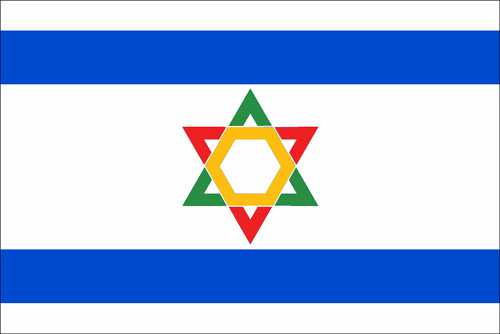
The camera zooms in and concentrates on one of the men, who holds a glossy magazine with a large Magen David on the cover. This is not another illustration to an article about Israeli policies in Gaza and West Bank. The title is “Israel-Kurd” and the whole edition is dedicated to relations between the Kurdish nation and the State of Israel.
The anchor of American-funded Al- Hurra TV, who reads the introduction to the Israel-Kurd item, seems just as astonished as the customers at the newspaper stand in Irbil – it’s not every day that you see Israel’s name mentioned in a context other than the Arab-Israeli conflict.
In Iraq, publishing a magazine with the word Israel on its cover is a risky business, considering the generally negative attitude toward Israel and those in the Arab world who seek rapprochement with the Jewish state.
“During last year we were often intimidated and threatened by different elements who didn’t like what we do, but this year it seems that people are more understanding and interested in our product,” says Hawar Bazian, managing editor of the magazine. Bazian was born in Iran and fled the country with his family, finding refuge in Irbil. Although he has lived there for many years and completed his BA in English literature at Irbil University, he doesn’t have Iraqi citizenship and is not able to further pursue his education.
Bazian believes there are many similarities between Kurds and Israelisand says that his publication, which was established two years ago, is meant to build a cultural bridge between the two nations.
Obviously, not everybody in Irbil and beyond agrees with him and Mawlood Afand, the editor-in-chief and founder of the magazine. In addition to threats and intimidation, the Web site of the magazine has twice been hacked by Turkish users and the authorities have not given it a work permit.
“There are two approaches to Israel in Iraqi Kurdistan,” Bazian says. “There are those who are very interested in relations with Israel and eager to learn more about it, and those who hold quite a negative view of this country, being influenced by radical Islamic ideology.
They think that Israel is the enemy,” Bazian told The Jerusalem Post.
SINCE THE Israel-Kurd association hasn’t received a permit from the Iraqi authorities, there are no offices, computers or faxes – the association exists on-line and publishes a monthly magazine in Kurdish. The Web site is also available in Arabic, English and Turkish.
Some articles are also available in Hebrew. The banner, “Let’s know Israel as itself,” promises an insight into Israeli society and history.
The Web site mainly offers news from the Kurdish world and Israel and op-eds and analysis on different developments in the Middle East by Kurdish, Israeli and American contributors.
“We are the result of the historical suffering done by the Persian, Arab and Turkish nations against the Kurds, who lost their national, religious and cultural rights. These enemies try to destroy our future as well as our past. The Israel-Kurd Institute tries to mention a historical relationship between Kurds and Jews and review this relation without any religious or ideological concerns.
So we have a clear message which talks about an honorable and great historic stage of the Kurdish nation that belongs to Kurdish-Jewish relations. We will use this for the Kurds’ sake and for the sake of their national question,” the “About Us” sections of the on-line magazine states.
“Not only do Israel and the Kurds have mutual interests and historical ties between their peoples, but also many common enemies,” says Bazian and starts to count: Iran, Syria, Turkey, the Arabs – almost everyone in the Middle East. That is exactly why, he believes, the Kurds and the Jews, two ancient nations who endured enormous suffering and were stripped time and again of their natural rights, should join forces and cooperate.
Some Kurdish contributors go even further and suggest that Jews should come to Kurdistan and help build the national Kurdish home.“Kurdistan will be the second home for Jews after Israel,” believes Hamma Mirwaisi, author of Return of the Medes. “Kurds always have treated Jews as equal partners in Kurdistan since the Median Empire. It may be because Abraham, the forefather of the Jewish nation, was an Indo-European Kurd (!) instead of an African Semite like the Jewish scholars have been claiming after Moses came back from Egypt. Or a large segment of the Kurdish populations are the descendants of the lost 10 Jewish tribes after they were exiled by the Assyrian Empire to Kurdistan. Whatever the reasons, the Kurds are treating Jews equally, even if Islamic clerics are encouraging them otherwise.
“Kurdistan can absorb millions of Jews, because it is a large territory and in need of the Jews’ knowledge. Jews and Kurds can be a blessing for one another and live in peace and prosperity for generations to come.”
Other articles and op-eds printed in the magazine discuss the recent deterioration in relations between Israel and Turkey. “Turkish Prime Minister Recep Tayyip Erdogan describes Israeli soldiers as ‘murderers’ or the Israelis as ‘barbarians,’” notes one writer. “I believe it’s the other way around; the Turkish soldiers are the true murderers, not the Israeli soldiers. Israelis are defending their ancient Holy Land of Israel, but Turkey occupied the Kurdish holy land of the Medes. They are occupiers and murderers.”
“Turkey should be held liable for all the damage that was caused to Israel during the Hamas-supported events, also for damage caused to the Kurds.
Turkey, with all the support that they get from the Israeli Government and Unites States, still cannot face the Kurdish Freedom Fighters. I wish that the Israeli Government from now on will be able to support the PKK Freedom Fighters (read terrorists) against the Turkish Government in order to support human rights and stop the violence against innocent Kurdish people.”
BAZIAN SHARES THIS point of view and believes the way Israel dealt with the Turkish flotilla was appropriate and understandable. “We were watching carefully the developments around the Turkish flotilla, and we were amazed by the international reactions.
After all, Israel has every right to defend its borders. We would understand if some other state, such as Iran, which is known for its provocations, would do something like this, but Israel is a very normal country. So I think that it was legitimate what happened there.”
Bazian says he would love to visit Israel some day, but now it still seems a far off dream as there are no diplomatic relations between Iraq and Israel. But Kurds are used to being patient, he says, and good things come to those who wait, as the proverb has it. “Any diplomatic relations have their stages. In the beginning there is communication and establishing of cultural bridges, which is exactly what we are doing.
It might take time until things change, but Israel has to know it has a good friend in the Middle East, perhaps its only friend,” he concludes.
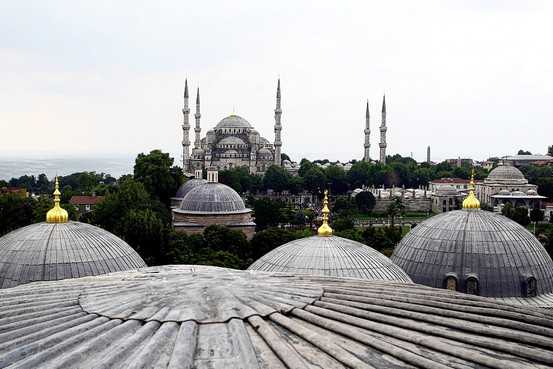
The Ottoman-era Sultan Ahmed or Blue Mosque in Istanbul.
The controversy over a proposed mosque in lower Manhattan has spurred a wider debate about the nature of Islam. We asked six leading thinkers—Anwar Ibrahim, Bernard Lewis, Ed Husain, Reuel Marc Gerecht, Tawfik Hamid and Akbar Ahmed—to weigh in.
Editor’s Note: The controversy over a proposed mosque in lower Manhattan has spurred a wider debate about the nature of Islam. We asked six leading thinkers to answer the question: What is moderate Islam?
•Anwar Ibrahim: The Ball Is in Our Court
•Bernard Lewis: A History of Tolerance
•Ed Husain: Don’t Call Me Moderate, Call Me Normal
•Reuel Marc Gerecht: Putting Up With Infidels Like Me
•Tawfik Hamid: Don’t Gloss Over The Violent Texts
•Akbar Ahmed: Mystics, Modernists and Literalists
The Ball Is in Our Court
By Anwar Ibrahim
Skeptics and cynics alike have said that the quest for the moderate Muslim in the 21st century is akin to the search for the Holy Grail. It’s not hard to understand why. Terrorist attacks, suicide bombings and the jihadist call for Muslims “to rise up against the oppression of the West” are widespread.
The radical fringe carrying out such actions has sought to dominate the discourse between Islam and the West. In order to do so, they’ve set out to foment anti-Americanism and anti-Semitism. They’ve also advocated indiscriminate violence as a political strategy. To cap their victory, this abysmal lot uses the cataclysm of 9/11 as a lesson for the so-called enemies of Islam.
These dastardly acts have not only been tragedies of untold proportions for those who have suffered or perished. They have also delivered a calamitous blow to followers of the Muslim faith.
These are the Muslims who go about their lives like ordinary people—earning their livings, raising their families, celebrating reunions and praying for security and peace. These are the Muslims who have never carried a pocketknife, let alone explosives intended to destroy buildings. These Muslims are there for us to see, if only we can lift the veil cast on them by the shadowy figures in bomb-laden jackets hell-bent on destruction.
These are mainstream Muslims—no different from the moderate Christians, Jews and those of other faiths—whose identities have been drowned by events beyond their control. The upshot is a composite picture of Muslims as inherently intolerant, antidemocratic, inward-looking and simply unable to coexist with other communities in the modern world. Some say there is only one solution: Discard your beliefs and your tradition, and embrace pluralism and modernity.
This prescription is deeply flawed. The vast majority of Muslims already see themselves as part of a civilization that is heir to a noble tradition of science, philosophy and spirituality that places paramount importance on the sanctity of human life. Holding fast to the principles of democracy, freedom and human rights, these hundreds of millions of Muslims fervently reject fanaticism in all its varied guises.
Yet Muslims must do more than just talk about their great intellectual and cultural heritage. We must be at the forefront of those who reject violence and terrorism. And our activism must not end there. The tyrants and oppressive regimes that have been the real impediment to peace and progress in the Muslim world must hear our unanimous condemnation. The ball is in our court.
Mr. Ibrahim is Malaysia’s opposition leader.
A History of Tolerance
By Bernard Lewis
A form of moderation has been a central part of Islam from the very beginning. True, Muslims are nowhere commanded to love their neighbors, as in the Old Testament, still less their enemies, as in the New Testament. But they are commanded to accept diversity, and this commandment was usually obeyed. The Prophet Muhammad’s statement that “difference within my community is part of God’s mercy” expressed one of Islam’s central ideas, and it is enshrined both in law and usage from the earliest times.
This principle created a level of tolerance among Muslims and coexistence between Muslims and others that was unknown in Christendom until after the triumph of secularism. Diversity was legitimate and accepted. Different juristic schools coexisted, often with significant divergences.
Sectarian differences arose, and sometimes led to conflicts, but these were minor compared with the ferocious wars and persecutions of Christendom. Some events that were commonplace in medieval Europe— like the massacre and expulsion of Jews—were almost unknown in the Muslim world. That is, until modern times.
Occasionally more radical, more violent versions of Islam arose, but their impact was mostly limited. They did not become really important until the modern period when, thanks to a combination of circumstances, such versions of Islamic teachings obtained a massive following among both governments and peoples.
From the start, Muslims have always had a strong sense of their identity and history. Thanks to modern communication, they have become painfully aware of their present state. Some speak of defeat, some of failure. It is the latter who offer the best hope for change.
For the moment, there does not seem to be much prospect of a moderate Islam in the Muslim world. This is partly because in the prevailing atmosphere the expression of moderate ideas can be dangerous—even life-threatening. Radical groups like al Qaeda and the Taliban, the likes of which in earlier times were at most minor and marginal, have acquired a powerful and even a dominant position.
But for Muslims who seek it, the roots are there, both in the theory and practice of their faith and in their early sacred history.
Mr. Lewis, professor emeritus at Princeton, is the author of “From Babel to Dragomans: Interpreting the Middle East” (Oxford University Press, 2004).
Don’t Call Me Moderate, Call Me Normal
By Ed Husain
I am a moderate Muslim, yet I don’t like being termed a “moderate”—it somehow implies that I am less of a Muslim.
We use the designation “moderate Islam” to differentiate it from “radical Islam.” But in so doing, we insinuate that while Islam in moderation is tolerable, real Islam—often perceived as radical Islam—is intolerable. This simplistic, flawed thinking hands our extremist enemies a propaganda victory: They are genuine Muslims. In this rubric, the majority, non-radical Muslim populace has somehow compromised Islam to become moderate.
What is moderate Christianity? Or moderate Judaism? Is Pastor Terry Jones’s commitment to burning the Quran authentic Christianity, by virtue of the fanaticism of his action? Or, is Rabbi Ovadia Yosef, the spiritual head of the Shas Party in Israel, more Jewish because he calls on Jews to rain missiles on the Arabs and “annihilate them”?
The pastor and the rabbi can, no doubt, find abstruse scriptural justifications for their angry actions. And so it is with Islam’s fringe: Our radicals find religious excuses for their political anger. But Muslim fanatics cannot be allowed to define Islam.
The Prophet Muhammad warned us against ghuluw, or extremism, in religion. The Quran reinforces the need for qist, or balance. For me, Islam at its essence is the middle way in all matters. This is normative Islam, adhered to by a billion normal Muslims across the globe.
Normative Islam is inherently pluralist. It is supported by 1,000 years of Muslim history in which religious freedom was cherished. The claim, made today by the governments of Iran and Saudi Arabia, that they represent God’s will expressed through their version of oppressive Shariah law is a modern innovation.
The classical thinking within Islam was to let a thousand flowers bloom. Ours is not a centralized tradition, and Islam’s rich diversity is a legacy of our pluralist past.
Normative Islam, from its early history to the present, is defined by its commitment to protecting religion, life, progeny, wealth and the human mind. In the religious language of Muslim scholars, this is known as maqasid, or aims. This is the heart of Islam.
I am fully Muslim and fully Western. Don’t call me moderate—call me a normal Muslim.
Mr. Husain is author of “The Islamist” (Penguin, 2007) and co-founder of the Quilliam Foundation, a counterextremist think tank.
Putting Up With Infidels Like Me
By Reuel Marc Gerecht
Moderate Islam is the faith practiced by the parents of my Pakistani British roommate at the University of Edinburgh—and, no doubt, by the great majority of Muslim immigrants to Europe and the United States.
Khalid’s mother and father were devout Muslims. His dad prayed five times a day and his mom, who hadn’t yet learned decent English after almost 20 years in the industrial towns of West Yorkshire, gladly gave me the impression that the only book she’d ever read was the Quran.
I was always welcome in their home. Khalid’s mother regularly stuffed me with curry, peppering me with questions about how a non-Muslim who’d crossed the Atlantic to study Islam could resist the pull of the one true faith.
Determined to keep their children Muslim in a sea of aggressive, alcohol-laden, sex-soaked disbelief, they happily practiced and preached peaceful coexistence—even with an infidel who was obviously leading their son down an unrighteous path.
That is the essence of moderation in any faith: the willingness to exist peacefully, if not exuberantly, alongside nonbelievers who hold repellant views on many sacred subjects.
It is a dispensation that comes fairly easily to ordinary Muslims who have left their homelands to live among nonbelievers in Western democracies. It is harder for Muslims surrounded by their own kind, unaccustomed by politics and culture to giving up too much ground.
Tolerance among traditional Muslims is defined as Christian Europe first defined the idea: A superior creed agrees not to harass an inferior creed, so long as the practitioners of the latter don’t become too uppity. Tolerance emphatically does not mean equality of belief, as it now does in the West.
Even in Turkey, where authoritarian secularism has changed the Muslim identity more profoundly than anywhere else in the Old World, a totally secularized Muslim would never call a non-Muslim citizen of the state a Turk. There is a certain pride of place that cannot be shared with a nonbeliever. Wounded pride also does the Devil’s work on ecumenicalism. Adjusting to modernity, with its intellectually open borders and inevitable moral chaos, is brutally hard for monotheisms, especially for those accustomed to rule. But it happens.
When I told Khalid’s father that his children—especially his daughters—would not worship the faith as he and his wife had done, he told me: “They are living a better life than we have lived. That is enough.”
Mr. Gerecht, a former CIA operative, is a senior fellow at the Foundation for Defense of Democracies.
Don’t Gloss Over The Violent Texts
By Tawfik Hamid
In regards to Islam, the words “moderate’” and “radical” are relative terms. Without defining them it is virtually impossible to defeat the latter or support the former.
Radical Islam is not limited to the act of terrorism; it also includes the embrace of teachings within the religion that promote hatred and ultimately breed terrorism. Those who limit the definition of radical Islam to terrorism are ignoring—and indirectly approving of—the Shariah teachings that permit killing apostates, violence against women and gays, and anti-Semitism.
Moderate Islam should be defined as a form of Islam that rejects these violent and discriminatory edicts. Furthermore, it must provide a strong theological refutation for the mainstream Islamic teaching that the Muslim umma (nation) must declare wars against non-Muslim nations, spreading the religion and giving non-Muslims the following options: convert, pay a humiliating tax, or be killed. This violent concept fuels jihadists, who take the teaching literally and accept responsibility for applying it to the modern world.
Moderate Islam must not be passive. It needs to actively reinterpret the violent parts of the religious text rather than simply cherry-picking the peaceful ones. Ignoring, rather than confronting or contextualizing, the violent texts leaves young Muslims vulnerable to such teachings at a later stage in their lives.
Finally, moderate Islam must powerfully reject the barbaric practices of jihadists. Ideally, this would mean Muslims demonstrating en masse all over the world against the violence carried out in the name of their religion.
Moderate Islam must be honest enough to admit that Islam has been used in a violent manner at several stages in history to seek domination over others. Insisting that all acts in Islamic history and all current Shariah teachings are peaceful is a form of deception that makes things worse by failing to acknowledge the existence of the problem.
Mr. Hamid, a former member of the Islamic radical group Jamma Islamiya, is an Islamic reformer and a senior fellow at the Potomac Institute for Policy Studies.
Mystics, Modernists and Literalists
By Akbar Ahmed
In the intense discussion about Muslims today, non-Muslims often say to me: “You are a moderate, but are there others like you?”
Clearly, the use of the term moderate here is meant as a compliment. But the application of the term creates more problems than it solves. The term is heavy with value judgment, smacking of “good guy” versus “bad guy” categories. And it implies that while a minority of Muslims are moderate, the rest are not.
Having studied the practices of Muslims around the world today, I’ve come up with three broad categories: mystic, modernist and literalist. Of course, I must add the caveat that these are analytic models and aren’t watertight.
Muslims in the mystic category reflect universal humanism, believing in “peace with all.” The 13th-century Sufi poet Rumi exemplifies this category. In his verses, he glorifies worshipping the same God in the synagogue, the church and the mosque.
The second category is the modernist Muslim who believes in trying to balance tradition and modernity. The modernist is proud of Islam and yet able to live comfortably in, and contribute to, Western society.
Most Muslim leaders who led nationalist movements in the first half of the 20th century were modernists—from Sultan Mohammed V, the first king of independent Morocco, to M.A. Jinnah, who founded Pakistan in 1947. But as modernists failed over time, becoming increasingly incompetent and corrupt, the literalists stepped into the breach.
The literalists believe that Muslim behavior must approximate that of the Prophet in seventh-century Arabia. Their belief that Islam is under attack forces many of them to adopt a defensive posture. And while not all literalists advocate violence, many do. Movements like the Muslim Brotherhood, Hamas, and the Taliban belong to this category.
In the Muslim world the divisions between the three categories I have delineated are real. The outcome of their struggle will define Islam’s fate.
The West can help by understanding Muslim society in a more nuanced and sophisticated way in order to interact with it wisely and for mutual benefit. The first step is to categorize Muslims accurately.
Mr. Ahmed, the former Pakistani ambassador to Britain, is the chair of Islamic studies at American University and author of “Journey into America: The Challenge of Islam” (Brookings, 2010).
https://www.wsj.com/articles/SB10001424052748703369704575461503431290986, SEPTEMBER 1, 2010
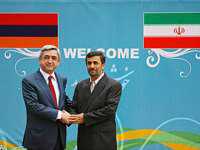
Iranian Vice President Hamid Baghaei’s remarks last week that the deportation of Armenians in 1915 amounted to genocide have understandably drawn ire in Turkey.
The Iranian Embassy in Ankara soon after released a statement claiming that Baghaei’s position on the matter had not been accurately reflected by media outlets. Turkey, nevertheless, was obviously not satisfied with this explanation. Foreign Minister Ahmet Davutoğlu was reported to have told his Iranian counterpart Manouchehr Mottaki that Turkey was awaiting a correction from Baghaei himself.
I humbly think that the timing of this statement, which has the appearances of someone shooting themselves in the foot, is indeed quite interesting. But in order to understand the factors that might have motivated Baghaei, one should embrace the issue in question from a broader perspective and rather focus on Iran’s respective relations with both Azerbaijan and Armenia.
An Islamic republic favoring an avowedly Christian state in a conflict with its predominantly Muslim neighbor would normally seem unlikely, but this is exactly what Tehran did during the war between Armenia and Azerbaijan in the early 1990s. Since then, Iran has indeed been predisposed toward supporting Yerevan over Baku on regional issues, but first and foremost the Karabakh dispute.
There are a great variety of reasons behind this support, but I will list here only the three most crucial: At present, the number of ethnic Armenians living in Iran is estimated to be about only 100,000, constituting the country’s largest Christian minority. On the other hand, the number of ethnic Azeris (sic.) living in Iran is at least 20 million (sic.), though there is some dispute about this figure, which is affected by the differing perspectives and motivations that the issue is approached with. These people have been integrated into Iranian society and hold important positions in the higher echelons of the state like Seyyed Ali Khamanei, the supreme leader who succeeded Ayatollah Khomeni. Nonetheless, the Iranian establishment sees these people as a potential secessionist threat, actually one to be provoked by Azerbaijan should it regain its territories still under Armenian occupation. It is precisely for this reason that Tehran attempts to strategically balance Azerbaijan with its arch-enemy Armenia.
What also disturbs Tehran is Azerbaijan’s close relations with Western countries, first and foremost the U.S. and Israel. Given its deeply antagonistic relationship with these two countries, Iran has in the past strongly opposed Western proposals for the deployment of international peacekeeping forces in Karabakh, fearing it might eventually result in its further encirclement by the U.S. (and thus Israel).
This Iranian concern has also been underlined by circles close to the Turkish government and seems evident in what a figure in the entourage of Prime Minister Recep T. Erdoğan relates about nearly every occasion that the Iranians have been requested to use their leverage over Armenia to resolve the deadlock. “Yet each time we raise this issue,” says this official, “the Iranians respond by pointing out Baku’s strengthening relations with Israel.”
The third reason is related to Iran’s economic considerations. Indeed, Iran is one of Armenia’s major trade partners. Not only do Iranian goods flood the Armenian market. More importantly, Tehran supplies Yerevan with significant volumes of natural gas. Recently, it has also helped to construct hydroelectric dams on the Araz River. Actually, the bilateral economic relations are so intense that Iranian businessmen, as well as local authorities of those regions bordering Armenia, are rumored to nowadays be occupying the streets of Yerevan as part of Iran’s preparations against the sanctions imposed by the United Nations.
In comparison to the state of Tehran’s economic relations with Yerevan, however, those with Baku are highly problematic. This is well illustrated in the serious competition between Tehran and Baku over disputed Caspian oil and gas reserves.
In such a milieu, the Turks hope that the addressee of the unambiguous message sent by Mr. Baghaei was not Turkey. Mr. Baghaei might be intent on making a gesture to Armenia, but he would do well to heed a Turkish proverb that I believe has relevance: While trying to pluck one’s eyebrows, one should not pluck out one’s eyes.
The Turkish people indeed expect Mr. Bahgaei to provide a sincere correction!
The body of one of Russia’s top spies has washed up on the Turkish coast after he disappeared close to a sensitive Russian naval facility in neighbouring Syria.
By Andrew Osborn, Moscow
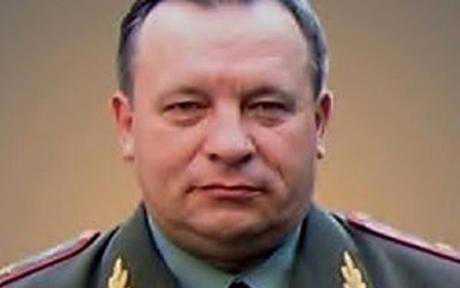
Gen. Yuri Ivanov, 52, deputy head of GRU, the Russian military's overseas intelligence arm of Russian military, was found dead in mysterious circumstances
Major-General Yuri Ivanov, 52, was the deputy head of Russia’s foreign military intelligence arm known as GRU which is thought to operate the biggest network of foreign spies out of all of Russia’s clandestine intelligence services.
His badly decomposed body was found washed up on the Turkish coast by local fishermen earlier this month after he disappeared in the Syrian coastal resort of Latakia further south. The Russian army’s in-house newspaper, Red Star, did not report his death until last Saturday when he was quietly buried in Moscow.
The circumstances of his death are reminiscent of a John Le Carre novel and have therefore fuelled theories that he may have been murdered in Syria and his body then thrown into the Mediterranean where it drifted for days.
According to the Kremlin, he was on holiday in Syria and died in a tragic swimming accident. However, other reports have suggested he was on official business and the location where he is reported to have disappeared was only about fifty miles from a strategically vital Russian naval facility in the Syrian port of Tartuswhich is being expanded and upgraded to service and refuel ships from Russia’s Black Sea Fleet.
The facility is Russia’s only foothold in the Mediterranean Sea, and Mossad, Israel’s national intelligence agency, is known to be concerned that Moscow will use the upgraded facility as a base for spy ships and electronic espionage directed at the Middle East. The port is also close to the Turkish port of Ceyhan, a terminal for the Baku-Tbilisi-Ceyhan oil pipeline which is seen as a lifeline for Georgia, against whom Russia fought a short war in 2008.
https://www.telegraph.co.uk/news/worldnews/europe/russia/7973346/Top-Russian-spys-body-washes-up-after-swimming-accident.html, 31 Aug 2010
The State Department has acted negligently and possibly in contempt of Congress by withholding assistance that it had expressly allocated to Nagorno Karabagh (Artsakh) during the past 12 years.
The Armenian National Committee of America (ANCA) revealed last week that the State Department only spent about half of the amount allocated by Congress to Artsakh. From 1998 to 2010, Congress appropriated to Artsakh $61 million, not including an additional amount estimated at $10 million, allocated during 2000-2002. U.S. government documents obtained by ANCA reveal that the State Dept. spent only $36 million on humanitarian aid to Artsakh in those dozen years.
Successive Democratic and Republican administrations have attempted to block congressional efforts to provide aid to Artsakh, in order to appease Azerbaijan. Failing to prevent approval of such allocations, the State Dept. devised a clever ploy to obstruct the will of Congress — it spent only a portion of the funds intended for Artsakh. Azerbaijan had been insisting that any U.S. assistance to Artsakh be channeled through Baku. Despite objections from the administration and Azerbaijan, Congress has continued to allocate aid to Artsakh, and made it less restrictive; its 2010 allocation of $8 million is earmarked for “programs and activities in Nagorno Karabagh,” not exclusively for humanitarian projects.
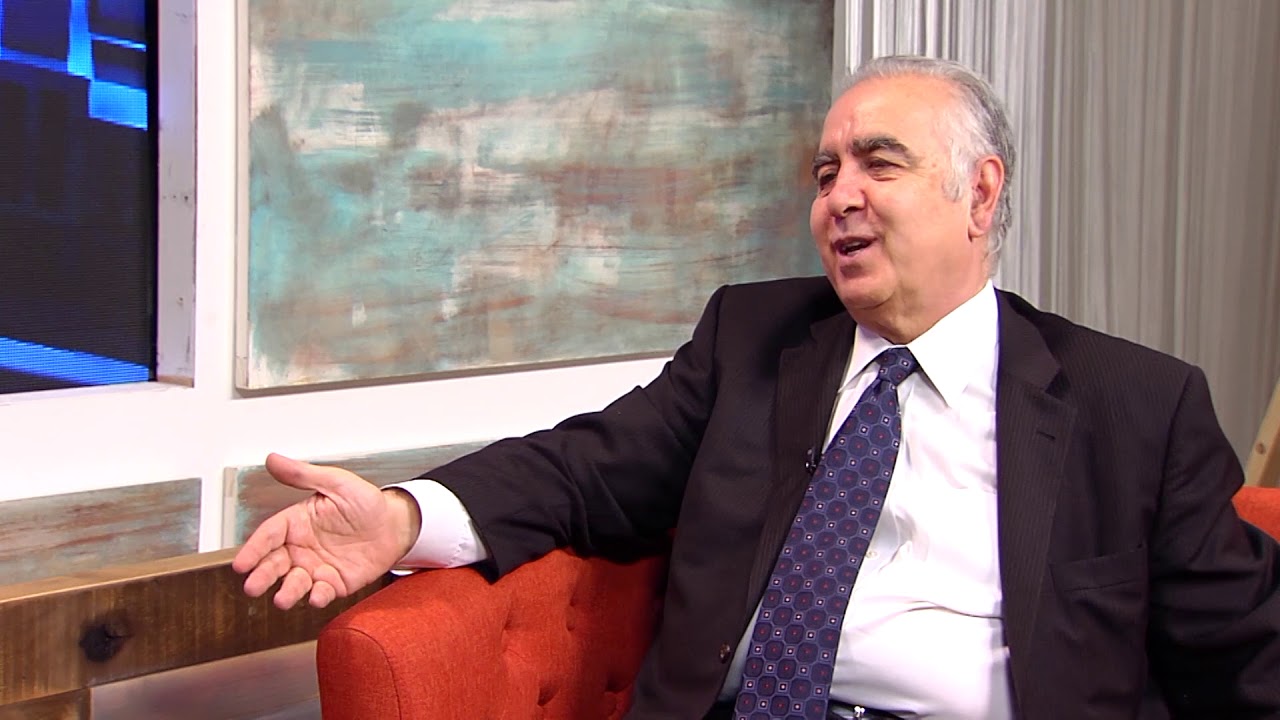
Throughout these dozen years, neither Armenia nor Artsakh, and apparently no one from the Armenian American community has complained to Congress about the State Dept.’s refusal to spend fully the allocated funds. Amazingly, after this shortfall was revealed by ANCA, a senior Artsakh official downplayed the failure to deliver the allocated aid. According to Radio Free Europe, Vahram Atanesian, Chairman of the Artsakh parliament’s foreign relations committee, excused the withholding of the aid by attributing it to Artsakh’s robust economic growth!
While Armenians remained surprisingly quiet, Congress, starting in 2001, repeatedly urged the administration “to release, without further delay, the remainder of the $20 million in humanitarian assistance initially provided in the fiscal year 1998 Act.” Furthermore, the House of Representatives asked the Secretary of State to report back the amount of assistance provided by the United States to Artsakh within 15 days of the enactment of the aid bill. In 2004 and 2005, the Senate demanded that USAID present its plans for the disbursement of the allocated funds within 60 days after the enactment of the aid bill. Unfortunately, the Obama administration bears the lion’s share of the blame. During its first two years in office, it has held back $12 million or one-third of the funds not spent on Artsakh since 1998.
Sen. Barbara Boxer had the opportunity to pursue this issue with Matthew Bryza, nominee for U.S. Ambassador to Azerbaijan, during his confirmation hearing before the Foreign Relations Committee on July 22. She wanted to know why only $4 million was spent out of the $16 million allocated for Artsakh in the past two years. In response to Bryza’s evasive answer, Sen. Boxer asked him to provide in writing “a detailed accounting on the disbursement of all U.S. assistance to Nagorno Karabagh for the past five years.” She pointedly inquired: “Why weren’t the full amounts allocated by Congress for Nagorno Karabagh in 2009 and 2010 spent?” Bryza, once again, did not provide an adequate response to the Senator’s questions.
Consequently, Sen. Boxer asked the Foreign Relations Committee to postpone voting on Bryza’s confirmation, until the Senate returns from recess around mid-September. This would hopefully give Bryza the opportunity to prepare an honest accounting of why the aid from Washington did not fully reach Artsakh. The delay in his confirmation would also allow the Senate to check more thoroughly the issues raised regarding his background.
Clearly, Bryza and his predecessors at the State Department had resorted to various tricks to frustrate the intent of Congress. They attempted to appease Azerbaijan by limiting and delaying the aid desperately needed in Artsakh.
Armenian-Americans should now ask Congress to investigate the State Department’s failure to comply with the legislature’s mandate, by under-spending $35 million of the allocation to Artsakh, during the past 12 years.
Should the investigation uncover misconduct by State Dept. officials, Armenian-Americans should then ask Congress to make a one-time allocation of $35 million to Artsakh, in compensation for the amount the U.S. government failed to spend, as required by law.
The uproar caused by such a congressional investigation would hopefully make State Dept. officials more cautious in the future when handling the disbursement of funds intended for Artsakh!
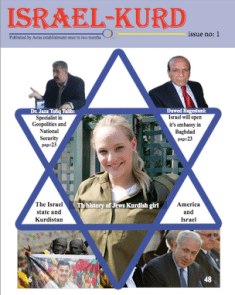 The anchor of American-funded Al- Hurra TV, who reads the introduction to the Israel-Kurd item, seems just as astonished as the customers at the newspaper stand in Irbil – it’s not every day that you see Israel’s name mentioned in a context other than the Arab-Israeli conflict.