Month: April 2010

  • Turkish and Azerbaijani Diasporas against Armenians in Australia

    Turkish and Azerbaijani Diasporas against Armenians in Australia

    19 Apr 2010 13:58

    Baku – APA. Armenian Youth Federation of Australia attempted to hold protest action outside the Turkey’s Consulate in Sydney for so-called “Armenian genocide” anniversary. According to APA, Turkish and Azerbaijani Diaspora representatives gathered outside the Turkey’s Consulate General waving the flags of Turkey, Azerbaijan and Australia and chanting slogans to support Turkey.

    They hanged Turkish flags on the Consulate’s iron fence. Some of the Armenians gathered outside the building attempted to create confrontation and to resist to police cavalry. Representatives of the Turkish and Azerbaijani societies told Armenians that they claim 1915 events falsely and real genocide was committed by Armenians in Khojaly town of Azerbaijan in 1992. “Your dirty policy can not force the people to forget Aghdam, Kelbajar and Lachin. Sooner or later you will shame yourself with your false claims in the world”, they told Armenians.

  • Azeri-U.S. Military Drills Cancelled Amid Row

    Azeri-U.S. Military Drills Cancelled Amid Row

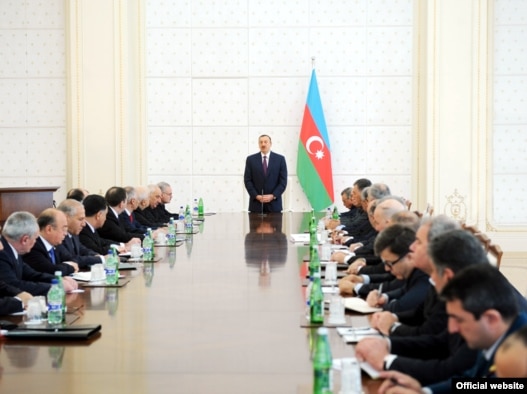
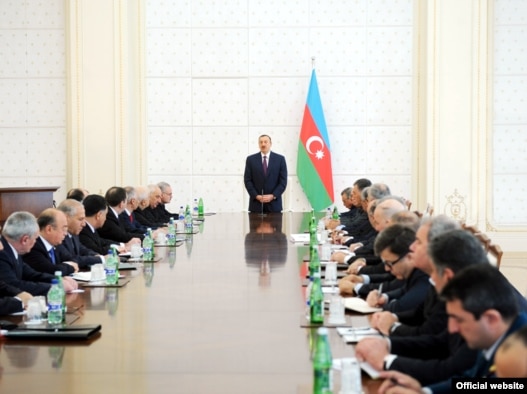
    Azerbaijan -- President Ilham Aliyev chairs cabinet meeting on first quarter 2010 socio-economic results, Baku, 14Apr2010Azerbaijan — President Ilham Aliyev chairs cabinet meeting on first quarter 2010 socio-economic results, Baku, 14Apr2010

    19.04.2010
    (Reuters) – Planned joint military exercises by Azerbaijan and the United States were cancelled on Monday against a backdrop of strained ties between Washington and the oil-producing former Soviet republic.

    The announcement by Azerbaijan followed its sharp criticism of Washington’s role in its festering conflict with Armenia over the breakaway mountain region of Nagorno-Karabakh.

    Diplomats say the criticism reflects Azeri anger over U.S. support for a deal between Armenia and Azerbaijan’s close Muslim ally Turkey to mend ties and reopen their border. Azerbaijan, a supplier oil and gas to the West, fears the deal will weaken its hand in talks over the rebel territory.

    Azerbaijan did not specify who cancelled the exercises planned for May, or why, but the U.S. embassy said it suggested “that the question be posed to the government of Azerbaijan”.

    An Azeri Defense Ministry spokesman told Reuters: “The exercises are cancelled, but the reason is not known.”

    In an interview with Reuters on Friday, a senior aide to Azeri President Ilham Aliyev accused the United States of siding with Armenia in the Nagorno-Karabakh conflict and warned that Baku could “reconsider” its relations with Washington.

    The United States is co-mediator with Russia and France in talks over the rebel region, where ethnic Armenians backed by Armenia threw off Azeri rule in the early 1990s in a war that killed 30,000 people. A peace deal has never been signed. Turkey closed its frontier with Armenia in 1993 in solidarity with Azerbaijan during the war, and Azerbaijan says it should stay closed until ethnic Armenian forces pull back.

    Despite misgivings over human rights under Aliyev, the United States has traditionally had good relations with Azerbaijan, which hosts oil majors including BP, ExxonMobil and Chevron.

    Stung by the Azeri backlash, Turkey now says it will only ratify the deal with Armenia if Yerevan makes concessions on Nagorno-Karabakh. Diplomats say the issue is weighing on negotiations between Turkey and Azerbaijan on gas supplies and transit, complicating plans for the U.S. and European-backed Nabucco pipeline.

  • Turkey Insists On Karabakh Linkage For Armenia Ties

    Turkey Insists On Karabakh Linkage For Armenia Ties

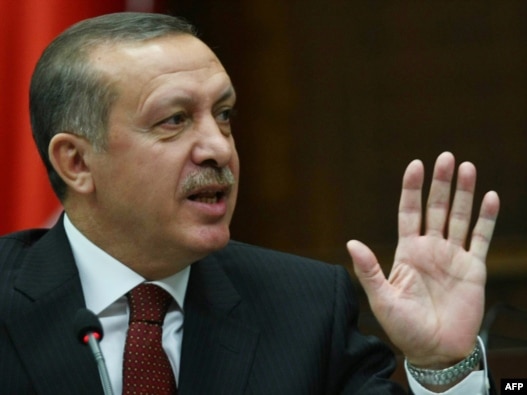
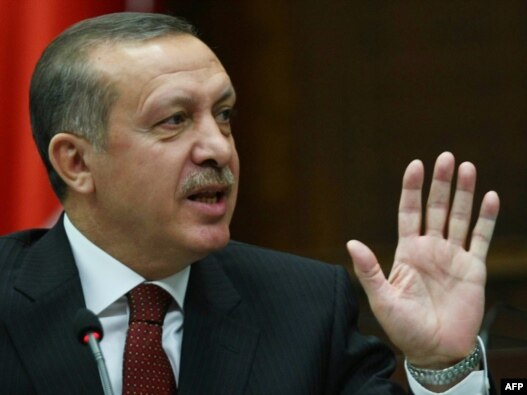
    Turkey -- Prime Minister Recep Tayyip Erdogan addresses members of parliament from his ruling AK Party in Ankara, 19Apr2010Turkey — Prime Minister Recep Tayyip Erdogan addresses members of parliament from his ruling AK Party in Ankara, 19Apr2010

    19.04.2010

    Turkey has again reiterated its long-standing linkage between the ratification of its fence-mending agreements with Armenia and a resolution of the Nagorno-Karabakh conflict acceptable to Azerbaijan.

    “We shut the [Turkish-Armenian] border because of the occupation of Azeri soil,” Turkish Prime Recep Tayyip Erdogan was quoted as saying by the Anatolia news agency on Sunday in a report cited by Agence France Presse.

    “The occupation should end so that Turkey can easily open its [border] gates. But if the occupation continues, we will not take such a step,” he said.

    Turkish Foreign Minister Ahmet Davutoglu on Monday dismissed some Armenian pro-government politicians’ suggestions that Ankara might open the frontier without ratifying the Turkish-Armenian protocols. “It is out of question for Turkey to open its border gate without the ratification of the protocols,” he said, according to Anatolia.

    Davutoglu was speaking at a news conference in Ankara ahead of his visit to Azerbaijan, Turkey’s closest regional ally strongly opposed to the unconditional normalization of Turkish-Armenian relations.

    The remarks by Erdogan are a further indication that he and Armenian President Serzh Sarkisian failed to make further progress in the normalization process at their talks held in Washington last week. The lack of such progress made a unilateral Armenian pullout from the agreements more likely.

    Still, Davutoglu insisted that the dramatic Turkish-Armenian rapprochement, which began two years ago, is not over. “We are positive on the process and we have full confidence that in the end it will lead us to a point,” he said.

  • New Turkish Cypriot president poses ‘serious problems’ for reunification

    New Turkish Cypriot president poses ‘serious problems’ for reunification

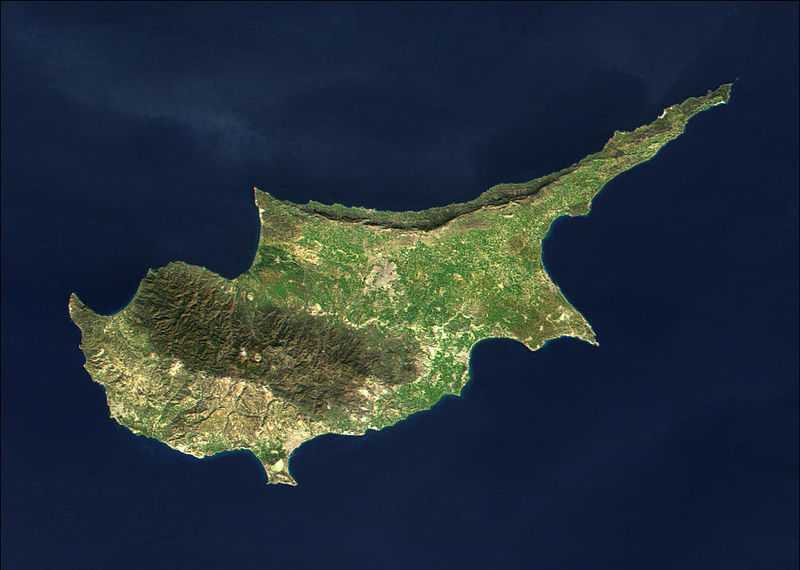
    Turkish Cypriots elected a hardliner for president on Sunday, in a result that could have a major impact on efforts towards reuniting the island and on Turkey’s bid to join the European Union.


    Hardliner Dervis Eroglu has won the election for president in the breakaway republic of Northern Cyprus, in an outcome that could stall talks aimed at bringing the Turkish and Greek sides of the island together.

    A spokesman for the Greek Cypriot government, Stefanos Stefabou, called Eroglu’s election a “negative development.”

    “Taking into account the declared positions of Mr Eroglu against a federation, and for the establishment of two independent states in Cyprus, this could cause very serious problems for the (peace) negotiations,” Stefanou told reporters in Nicosia.

    Eroglu, leader of the National Unity Party (UBP), has said he favors a two-state confederation. However, he has also said he would not abandon the reunification talks.

    “Talks will continue because I want peace more than those who say that I don’t,” Eroglu told supporters after declaring victory. “I seek a solution based on the realities of the island and a solution that all of us can live with.”

    Around 164,000 people out of the 250,000 population of the island were eligible to vote. Turnout was reported to be about 75 percent.


    Bildunterschrift: Turkey is the only country to recognize the Turkish Cypriot government


    Reunification ‘a steep and uphill push’

    Analysts have said the election results would likely delay reunification efforts, and that leaders may have to lower their expectations if they want to find a solution that can be agreed on by both sides.

    “Nobody is going to walk away from the table, but this makes reunification a steep and uphill push,” said Hugh Pope, Turkey-Cyprus director for the International Crisis Group. “Everybody will have to think again and find a way forward.”

    Cypriot voters on both the Greek and Turkish sides would have to approve any deal between their leaders in a referendum.

    Peace talks on hold

    With 95 percent of Sunday’s vote counted, Eroglu won slightly more than the 50 percent needed to avoid a runoff against incumbent President Mehmet Ali Talat. Talat received 42.8 percent of the vote.

    Talat, leader of the left-leaning Republican Turkish Party (CTP), supports reunification of the island, which has been divided into the Greek south and Turkish north since 1974.

    Turkey is the only country that recognizes the government of the self-declared Turkish Cypriot state, which it has occupied since 1974. Ankara still keeps some 35,000 troops on the Mediterranean island.

    The Greek Cypriot government represents the island in the European Union, and says it will continue to block Turkey’s attempt to join the EU as long as the island remains divided.

    The United Nations-led peace talks on the Mediterranean island were on hold during the election campaign.

    cb/acb/svs/AFP/AP/Reuters/dpa
    Editor: Chuck Penfold

    https://www.dw.com/en/new-turkish-cypriot-president-poses-serious-problems-for-reunification/a-5479392

  • FIRST RESPONCE TO TURKISH FORUM FROM FETULLAH’S REPORTERS

    FIRST RESPONCE TO TURKISH FORUM FROM FETULLAH’S REPORTERS

    Is Fethullah Gulen a dangerous Islamist or a moderate visionary?

    His critics perceive Gülen’s benign face as a mask — one disguising an Islamist wolf in a moderate sheep’s clothing. But who is Fethullah Gulen, really?

    For more than a decade, one of the world’s most influential and controversial Muslim leaders has been convalescing on 26 acres in the Pocono Mountains.

    In Ross Township — not far from the Blue Ridge flea market, a giant corn maze dubbed Mazezilla and a go-kart speedway — you will find a small metal sign bearing the name of the Golden Generation Worship and Retreat Center.

    It is here that Fethullah Gülen, 68, lives.

    Gülen is an ailing Turkish cleric whose vision of an Islam that embraces science, education and interfaith dialogue has earned him millions of followers — and the suspicion of many in Turkey’s secular establishment.

    To his supporters, Gülen is the face of a more contemporary and tolerant Islam.

    But his critics perceive Gülen’s benign face as a mask — one disguising an Islamist wolf in a moderate sheep’s clothing.

    “To his detractors,” wrote Piotr Zalewski, a journalist who lives in Turkey, “he is the second coming of Ayatollah Khomeini, his avowedly peaceful movement hiding a nefarious secret agenda to transform secular Turkey into another Iran.”

    But does Gülen truly pose a threat to national security? And what is so prominent a figure — he was named one of the most influential Muslims alive by the Royal Islamic Strategic Studies Center and the world’s leading public intellectual by the readers of Foreign Policy magazine — doing in northeastern Pennsylvania?

    ‘Most Dangerous Islamist?’

    Gülen’s idyll in the obscurity of the Poconos was shaken by a recent online broadside.

    Bearing the headline, “Exclusive: World’s ‘Most Dangerous Islamist’ Alive, Well, and Living in Pennsylvania,” the article alleged several incendiary details about Gülen.

    Gülen, warned the writer, Paul Williams, lived in an “Islamic armed fortress” in Saylorsburg, had amassed billions of dollars to foment dissent and topple governments and founded madrasahs worldwide to lay the groundwork for “the Islamization of the world.”

    The article, on the website Family Security Matters and on Williams’ blog, The Last Crusade, flew around the Internet, alternately baffling and shocking the center’s neighbors and local officials.

    Though it recycled several longstanding controversies about Gülen, many of its fresher claims are false.

    For example, the article described visits from the FBI. The bureau had been there, but several residents of the center said it was many years ago, during Gülen’s immigration dispute (after a lawsuit, a federal judge granted Gülen status as an “alien of exceptional ability”). The FBI has not been there in years, according to Special Agent J.J. Klaver.

    Williams also quoted unnamed neighbors and business owners complaining of “the incessant sounds of gunfire — including the rat-tat-tat of fully automatic weapons — coming from the compound and the low flying helicopter that circles the area in search of all intruders.”

    None of the neighbors with whom the Pocono Record spoke said they had ever heard or seen what Williams described.

    Instead, they said they’d shared picnics with the center’s residents, and had received visits from them after the terrorist attacks of Sept. 11, 2001.

    The Gülenists had knocked on their doors to apologize for what had been inflicted on innocents in the name of Islam.

    “You couldn’t meet a nicer bunch of people,” said Howard Beers Jr., a Ross Township supervisor who lives next door and enters the property six or seven days a week, often unannounced and not through the front gate, to do construction work.

    “If anyone would walk in on something, it would be me,” Beers said. “As long as I have ever been there, I have never, ever, seen a gun or heard a shot. All this stuff is totally, totally unfounded.”

    Efforts to reach Williams through the Web site and his blog were unsuccessful.

    A recent visit to Golden Generation revealed tranquil surroundings — a retreat, not a compound — landscaped with old-growth trees, a pond, basketball court, soccer field and several residences under construction.

    Middle-aged, mild-mannered, mustached men in modern dress strolled on the grounds, apart from groups of children and hijab-wearing women.

    They bore no weapons — just ornately designed plates and boxes of Turkish desserts, which they offered to American visitors.

    “We are the very opposite of what that man says,” said Bekir Aksoy, president of the center.

    And yet, Gülen is still seen by some as a threat to the established order of the Muslim world. But it is not quite for the reasons Williams described.

    To understand why, the reclusive cleric must be placed in the context of the world’s 1 billion Muslims.

    A threat to orthodoxy

    “The West looks at Islam and says it’s a monolith,” said Akbar Ahmed, a professor at American University’s School of International Service and author of the book, “Journey into America: The Challenge of Islam,” who is supportive of Gülenism.

    But like all large groups of people, Muslims can hold disparate beliefs, observe their faith to different degrees, and embody varying cross-currents and complexities.

    In broad terms, a large number of Muslims belong to the literalist camp. It is typified by the Wahhabi sect of the religion and hard-core Islamic governments like Saudi Arabia’s, which recoil from the influence of the West and see the Koran, the Muslim holy book, as the literal truth.

    At the other end of the spectrum are secular Muslims, such as the Turkish government, who are suspicious of Islam, and see it as a force to be subordinated to the state or kept to the confines of one’s home.

    Between these two poles are other groups, including a small cluster called Sufis, out of whose mystical tradition Gülen arises.

    The Gülenist interpretation of Islam publicly preaches the virtues of being outward looking, peaceful and respectful of religious diversity. If Gülenists are known for anything, it is for their abiding faith in inter-religious dialogue.

    “The Gülen Institute rigorously and, I think very rightly, advocates prayer and interfaith dialogue and the role that they can play in helping ease tensions between peoples in our very complicated world,” James Baker, the former secretary of state, said to a Houston gathering of the institute in 2008.

    They also promote engagement in science and education. While their work has a political aspect — in the sense that many Gülenists are concerned with social justice and communal responsibility — they profess to remain divorced from the hurly-burly of partisan politics.

    “Power’s dominance is transitory; while the dominance of truth and justice is eternal,” Gülen wrote. “Sincere politicians should align themselves and their policies with truth and justice.”

    Gülenism disturbs both poles of the Islamic spectrum — the secular and the fundamentalist.

    “Modern Turkey is self-consciously secular,” said Ahmed. “To them, anyone talking about religion, like Gülen, and appearing to be an attractive and alternative paradigm would be a threat. He would seem to undermine secularism.”

    Ahmed put this threat in starker terms when describing Gülen’s effect on the literalist wing of Islam.

    “If the Taliban had Gülen and George W. Bush in the same room, they’d go for Gülen first,” said Ahmed. “He’d change their society.”

    David Cuthell, executive director of the Institute of Turkish Studies at Georgetown University, went further, saying Gülen was trying to reconcile both poles of thought.

    “If there’s going to be a Reformation in Islam,” Cuthell said, “this is where it’s going to be coming from.”

    The road to Saylorsburg

    Gülen’s popularity in Turkey grew over several decades, through the 1990s. He harnessed the tools of mass communication — television, radio, and now, the Internet — to spread his message of education and engagement, often to well-educated elites, said Muhammed Çetin, a Gülenist, author and sociologist who lives in Wind Gap.

    “He was sending people to learn,” Çetin said, “not to be trapped by terrorists and limited views.”

    Though his influence grew — he is thought to have more than 5 million followers — television proved to be his undoing. Gülen was quoted as urging his followers to weave themselves into the fabric of the power structure.

    “Every method and path is acceptable (including) lying to people,” he allegedly said. Gülen critics have cited these words as evidence that he is orchestrating a shadow conspiracy to seize control and elevate religion.

    Gülen has said the footage was manipulated and that he has no political aspirations.

    Turkey accused Gülen of attempting to undermine the secular regime. His supporters described it as a trumped-up effort to discredit him. The case has never been proven or disproven.

    Tensions mounted. The Welfare Party, which, like Gülen, was pro-religious, held power. But it clashed with Turkey’s military and was dissolved in 1998.

    “Gülen felt like if he stuck around he’d end up in jail,” said Cuthell of the Institute of Turkish Studies.

    At around the same time, Gülen was in Minnesota being treated for ill health. He suffers from diabetes, heart disease and high blood pressure, said Aksoy, president of Golden Generation. Recently, Gülen’s lungs have begun to fill with fluid.

    Golden Generation had already been established in Saylorsburg on the grounds of a former summer camp. Kemal Ozgur, a microbiologist and Gülenist, met Gülen in Minnesota and invited him to stay in Pennsylvania. The cleric has remained there ever since.

    Gülen seldom speaks publicly or appears outside his room. He will leave only to visit a group room in a chalet in the center, where he leads prayers five times daily.

    “He doesn’t want to be in the limelight, and Pennsylvania works for him quite well,” said Cuthell.

    But Gülen’s continued influence is reflected in a decentralized global network of schools, newspapers and think tanks that are supportive of his views.

    Those who run the center refer to Gülen as their guest, and say the entrance is monitored to keep Gülen from being flooded by visiting Turks.

    “He liked it so much, he never left,” Aksoy said. “It was an accident of history that he came here.”

    By Dan Berrett, Pocono Record Writer
  • To achieve Mideast peace, Obama must make a bold Mideast trip

    To achieve Mideast peace, Obama must make a bold Mideast trip

    By Zbigniew Brzezinski and Stephen Solarz

    More than three decades ago, Israeli statesman Moshe Dayan, speaking about an Egyptian town that controlled Israel’s only outlet to the Red Sea, declared that he would rather have Sharm el-Sheikh without peace than peace without Sharm el-Sheikh. Had his views prevailed, Israel and Egypt would still be in a state of war. Today, Prime Minister Binyamin Netanyahu, with his pronouncements about the eternal and undivided capital of Israel, is conveying an updated version of Dayan’s credo — that he would rather have all of Jerusalem without peace than peace without all of Jerusalem.

    This is unfortunate, because a comprehensive peace agreement is in the interest of all parties. It is in the U.S. national interest because the occupation of the West Bank and the enforced isolation of the Gaza Strip increases Muslim resentment toward the United States, making it harder for the Obama administration to pursue its diplomatic and military objectives in the region. Peace is in the interest of Israel; its own defense minister, Ehud Barak, recently said that the absence of a two-state solution is the greatest threat to Israel’s future, greater even than an Iranian bomb. And an agreement is in the interest of the Palestinians, who deserve to live in peace and with the dignity of statehood.

    However, a routine unveiling of a U.S. peace proposal, as is reportedly under consideration, will not suffice. Only a bold and dramatic gesture in a historically significant setting can generate the political and psychological momentum needed for a major breakthrough. Anwar Sadat’s courageous journey to Jerusalem three decades ago accomplished just that, paving the way for the Camp David accords between Israel and Egypt.

    Similarly, President Obama should travel to the Knesset in Jerusalem and the Palestinian Legislative Council in Ramallah to call upon both sides to negotiate a final status agreement based on a specific framework for peace. He should do so in the company of Arab leaders and members of the Quartet, the diplomatic grouping of the United States, Russia, the European Union and the United Nations that is involved in the peace process. A subsequent speech by Obama in Jerusalem’s Old City, addressed to all the people in the region and evocative of his Cairo speech to the Muslim world in June 2009, could be the culminating event in this journey for peace.

    Such an effort would play to Obama’s strengths: He personalizes politics and seeks to exploit rhetoric and dramatic settings to shatter impasses, project a compelling vision of the future and infuse confidence in his audience.

    The basic outlines of a durable and comprehensive peace plan that Obama could propose are known to all:

    First, a solution to the refugee problem involving compensation and resettlement in the Palestinian state but not in Israel. This is a bitter pill for the Palestinians, but Israel cannot be expected to commit political suicide for the sake of peace.

    Second, genuine sharing of Jerusalem as the capital of each state, and some international arrangement for the Old City. This is a bitter pill for the Israelis, for it means accepting that the Arab neighborhoods of East Jerusalem will become the capital of Palestine.

    Third, a territorial settlement based on the 1967 borders, with mutual and equal adjustments to allow the incorporation of the largest West Bank settlements into Israel.

    And fourth, a demilitarized Palestinian state with U.S. or NATO troops along the Jordan River to provide Israel greater security.

    Most of these parameters have been endorsed in the Arab peace plan of 2002 and by the Quartet. And the essential elements have also been embraced by Barak and another former Israeli prime minister, Ehud Olmert.

    For the Israelis, who are skeptical about the willingness of the Palestinians and Arabs to make peace with them, such a bold initiative by Obama would provide a dramatic demonstration of the prospects for real peace, making it easier for Israel’s political leadership to make the necessary compromises.

    For the Palestinians, it would provide political cover to accept a resolution precluding the return of any appreciable number of refugees to Israel. Palestinian leaders surely know that no peace agreement will be possible without forgoing what many of their people have come to regard as a sacred principle: the right of return. The leadership can only make such a shift in the context of an overall pact that creates a viable Palestinian state with East Jerusalem as its capital — and that is supported by other Arab countries.

    For the Arabs, it would legitimize their own diplomatic initiative, embodied in the peace plan put forward by the Arab League eight years ago. Moreover, their support for Obama in the effort would be a vital contribution to the resolution of the conflict.

    Finally, for Obama himself, such a move would be a diplomatic and political triumph. Bringing Arab leaders and the Quartet with him to Jerusalem and Ramallah to endorse his plan would be seen as a powerful example of leadership in coping with the protracted conflict. Since it is inconceivable that the Israeli government would refuse Obama’s offer to bring Arab leaders and the Quartet to its capital, most of the American friends of Israel could be expected to welcome the move as well.

    Of course, the proposal could be rejected out of hand. If the Israelis or the Palestinians refuse to accept this basic formula as the point of departure for negotiations, the Obama administration must be prepared to pursue its initiative by different means — it cannot be caught flat-footed, as it was when Netanyahu rejected Obama’s demands for a settlement freeze and the Arabs evaded his proposals for confidence-building initiatives.

    Accordingly, the administration must convey to the parties that if the offer is rejected by either or both, the United States will seek the U.N. Security Council’s endorsement of this framework for peace, thus generating worldwide pressure on the recalcitrant party.

    Fortunately, public opinion polls in Israel have indicated that while most Israelis would like to keep a united Jerusalem, they would rather have peace without all of Jerusalem than a united Jerusalem without peace. Similarly, although the Palestinians are divided and the extremists of Hamas control the Gaza Strip, the majority of Palestinians favor a two-state solution, and their leadership in Ramallah is publicly committed to such an outcome.

    It is time, though almost too late, for all parties — Israelis, Palestinians, Americans — to make a historic decision to turn the two-state solution into a two-state reality. But for that to happen, Obama must pursue a far-sighted strategy with historic audacity.

    Zbigniew Brzezinski served as national security adviser for President Jimmy Carter and is a trustee at the Center for Strategic and International Studies. Stephen Solarz, a former U.S. congressman from New York, is a member of the board of the International Crisis Group.

    https://www.washingtonpost.com/wp-dyn/content/article/2010/04/09/AR2010040903263_pf.html, April 11, 2010