Month: April 2010

  • BEGINNING OF THE END FOR ARMENIAN PROPAGANDA AND “HYE”STERIA  ?

    BEGINNING OF THE END FOR ARMENIAN PROPAGANDA AND “HYE”STERIA ?

    THIS CITY HAS RESCINDED THE ARMENIAN GENOCIDE RECOGNITION
    DECLARING THE RESOLUTION NULL AND VOID

    According to the news article below that appeared on April 2, 2010, in the largest daily in Turkiye, Hurriyet, this Ukranian city of Izyum, population 60,000 and about 80 miles from the capitol of Harkov province, Ukraine, has rescinded on March 26, 2010 the genocide resolution that it passed in December 2009, thus no longer recognizing the Armenian claims at face value. Citing a report by the Crimean News Agency, the article heralds the first decision of its kind anywhere, which may indeed, be a turning point, a beginning of the end, for the diaspora Armenian propaganda efforts.

    Rehim Hümbetov, president of the Crimean-Azerbaijani Association, they worked hard to get the Armenian propaganda annulled, by suing the resolution on grounds that it violated Ukranian law, that it should be reviewed and rescinded, and won after intensive efforts.

    Rehim Hümbetov stated that the time has come to wage an international effort to overturn all such resolutions misrepresenting Armenian propaganda as settled history.

    ***

    Wow! I wonder if the days of “hye”nas feeding on Turkish corpses of WWI may be over…

    Who knows?

    Anyway, Here is the original article:

    ***

    BU KENT TANIDIĞI ‘SOYKIRIMI’ IPTAL ETTI

    A.A. / hurriyet.com.tr , 2 Nisan 2010

    Ukrayna’nın Harkov bölgesindeki bir yerel belediye meclisi, 1915 olaylarına ilişkin Ermeni iddialarıyla ilgili daha önce kabul ettiği kararını iptal etti.

    Kırım Haber Ajansı’nın haberine göre, İzyum Şehir Belediye Meclisi, Aralık 2009’da kabul ettiği Ermeni iddialarıyla ilgili kararı, 26 Mart’ta yapılan toplantıda iptal etti.

    Haberde, Ukrayna’da alınan bu iptal kararının, dünyada 1915 olaylarıyla ilgili ilk iptal örneği olduğu belirtildi.

    Karara ilişkin açıklama yapan ve iptal kararının alınması için çok çalıştıklarını belirten Kırım Azerbaycanlılar Derneği Başkanı Rehim Hümbetov, “Artık Ermeni iddialarına ilişkin kabul edilen kararların iptali için uluslararası düzeyde mücadele etme vaktinin geldiğini” söyledi.

    Hümbetov, belediye meclisinin daha önce aldığı kararın, Ukrayna kanunlarına aykırı olduğunu belirterek, incelenmesi ve iptali için İzyum savcılığına da başvurduklarını ve yoğun çabalar sonucunda kararın iptal edilmesini sağladıklarını belirtti.

    Yaklaşık 60 bin nüfuslu şehir, Harkov’un merkezinden 120 kilometre uzaklıkta bulunuyor.
  • International right-wingers gather for EU-wide minaret ban

    International right-wingers gather for EU-wide minaret ban

    By IRR European News Team

    31 March 2010, 2:00pm

    Extreme Right parties are hoping to use the citizens’ initiative of the Lisbon Treaty to ban the construction of minarets across the EU.

    IN February, Liz Fekete warned in a briefing paper from the European Race Audit that the extreme Right in Europe could well use the direct democracy provision of the Lisbon Treaty to pursue racist aims. Unfortunately she has been proved right. Last Saturday, at an anti-minaret conference hosted by a German right-wing group called Pro-NRW, delegates from the Belgian Vlaams Belang, Geert Wilders’ Dutch Party for Freedom, Pia Kjaersgaard’s Danish People’s Party, the Front National and other extreme Right parties across Europe discussed how to begin collecting the one million signatures required to push through a Europe-wide ban on minarets.

    Filip Dewinter, leader of the Vlaams Belang in the Flemish parliament has told der Spiegel Online that ‘minarets are not part of our heritage’. Despite the fact that the European Parliament has yet to complete the legal framework for citizens’ initiatives, Dewinter appears to relish the idea of the threat. ‘Brussels is afraid of such a referendum’, he said ‘and they know it will be a very powerful weapon in the hands of right-wing conservative parties … the collection of signatures will be a political campaign in itself.’

    The Pro-NRW, organisers of the conference, is seeking to establish a political foothold in Germany ahead of state elections and is apparently testing the waters to see whether populist Islamophobia (as used in the Netherlands, Austria, Belgium and elsewhere) can be exploited in Germany to effect.

    The Institute of Race Relations is precluded from expressing a corporate view: any opinions expressed are therefore those of the authors.
    RELATED LINKS
    Download a copy of ERA Briefing Paper no. 1: The Swiss referendum on minarets: background and aftermath (pdf file, 152kb)

    Download a copy of ERA Briefing Paper no. 2: Direct democracy, racism and the extreme Right (pdf file, 200kb)

    Read an IRR News story: ‘How the extreme Right hijacks direct democracy’

    Read an IRR News story: ‘Swiss poll crushes minarets’

    , 31 March 2010
  • European Cold War defence alliance dissolved

    European Cold War defence alliance dissolved

    (BRUSSELS) – The Cold War-era Western European Union defence alliance, set up in the wake of World War II, has been dissolved, the organisation’s presidency said in a statement Wednesday.

    The WEU was formed by Belgium, Britain, France, Luxembourg and the Netherlands in 1948 and expanded to include Germany, Italy, Spain and others, but its role disappeared with NATO and the EU providing security in Europe.

    “The WEU has therefore fulfilled its historic role. That is why we, the states party to the modified Treaty of Brussels, have collectively decided to end the treaty and thereby close the organisation,” the statement said.

    The 10 member states have requested the presidency to wind up the organisation’s operations in their entirety by the end of June 2011.

    In a separate statement, Belgian Foreign Minister Steven Vanackere said: “From a budgetary point of view, maintaining the WEU became difficult to defend.”

    Vanackere added that he hoped the defence dialogue carried out by the WEU would continue in some form or another.

    A week ago, the head of the assembly Robert Walter said “the WEU as an organisation will be wound down within a year or so.”

    The WEU’s founding principles were “to afford assistance to each other in resisting any policy of aggression”, and “to promote unity and to encourage the progressive integration of Europe”.

    The very year after it was formed the eclipse of the western European body began with the formation of NATO, with the key inclusion of the United States.

    But it became outdated as the Cold War ended, with the 27-nation European Union and NATO presiding over a largely peaceful Europe.

    According to a European diplomat, British Foreign Secretary David Miliband wrote this month to the WEU’s British delegation informing it of Britain’s intention to renounce the body’s founding treaty within the coming days.

    Including associate and observer nations, the WEU is made up of 28 countries including most of the EU members along with Iceland, Norway and Turkey.

    It currently has a budget of 13 million euros (17 million dollars) and a staff of 60.

    The body’s inter-parliamentary assembly is based in Paris while the official headquarters moved to Brussels a decade ago.

    Walter said he expected official notification of the decision to wind the body down to be made by the end of the month.

    The WEU’s functions have been diminishing for years.

    A decision was taken in 2000 to scrap ministerial meetings, since when all decisions have been taken by written procedure.

    Britain, less attached to the idea of European integration than France, Spain and others, had remained more interested in the WEU due to its nature as an intergovernmental institution.

    The last nail in its coffin was the passage in December of the EU’s reforming Lisbon Treaty, which includes an assistance clause and permits the creation of ad hoc inter-parliamentary groups.

    Nonetheless Walter said he hoped, with London’s support, that the WEU could be succeeded by a “permanent conference” of representatives of national parliaments in Europe.

    , 31 March 2010

  • Is time running out for a reunification deal in Cyprus?

    Is time running out for a reunification deal in Cyprus?

    Is time running out for a deal in Cyprus?
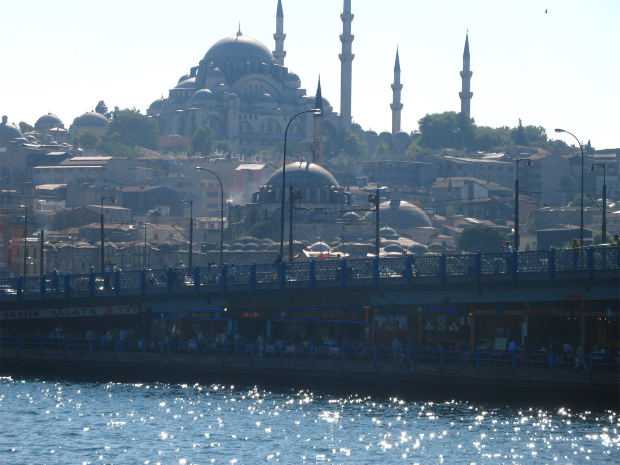
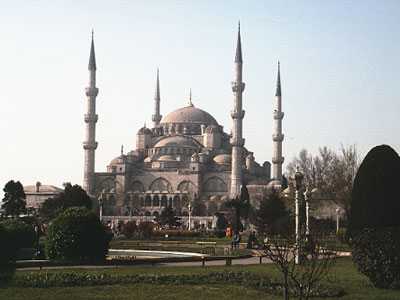
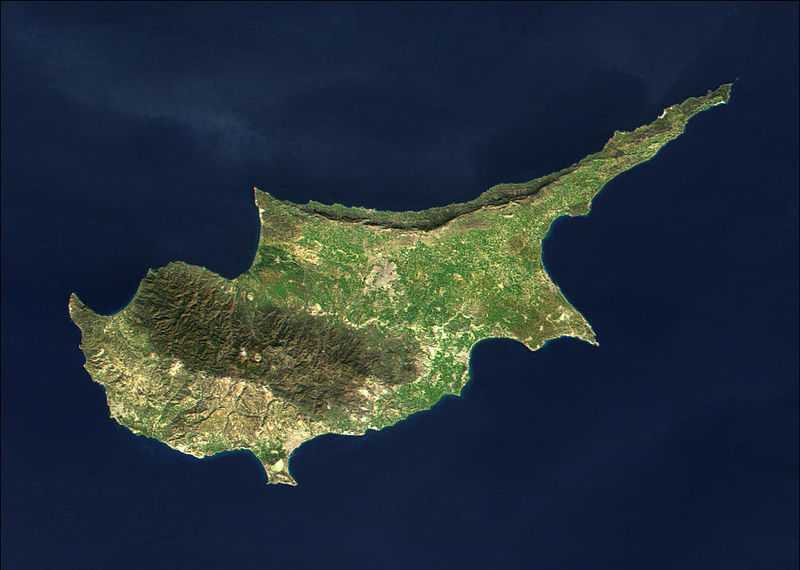
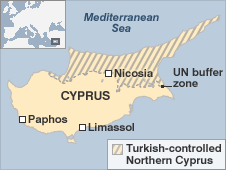
    Later this month elections in the Turkish-occupied north of Cyprus could see President Mehmet Ali Talat being ousted in favour of a hardliner, Dervis Eroglu.

    Cyprus has been divided since 1974 when Turkey invaded following a coup by Greek Cypriot extremists, bent on union with Greece.

    Mr Talat was elected in 2005, having promised to deliver a reunification deal with the Greek Cypriots but, despite being locked in talks with his opposite number, Demetris Christofias, for the past 18 months he has been unable to announce a deal.

    Both Greece and Turkey say they want the issue resolved and the UN Secretary General Ban Ki-Moon visited Cyprus in February and urged both sides to show “courage”.

    In 2004 a previous deal, the so-called Annan Plan, was approved by Turkish Cypriots in a referendum but rejected by Greek Cypriots.

    Do you live in Cyprus or were you born there? Do you think the two communities will ever be able to live together? What do you blame for the failure to reach a deal? What do you think the main sticking points are? You can tell us your experiences using the form below. If you are happy to be contacted by the BBC, please include your phone number.

    , 2 April 2010

  • Constitutional change in Turkey

    Constitutional change in Turkey

    Reform or die

    The government girds itself for a battle over constitutional reforms

    Mar 25th 2010 | ISTANBUL | From The Economist print edition A FRESH burst of reformist zeal, or a final assault on the secular establishment? Whichever is right, the constitutional changes proposed this week by Turkey’s mildly Islamist Justice and Development (AK) government have raised tensions with its critics in the secular elite. The measures would further curb the powers of Turkey’s once omnipotent generals (who wrote the present constitution after a military coup in 1980) and their allies in the judiciary. They include a law to allow civilian prosecutors to try would-be coup plotters. Just such a measure was recently quashed by the constitutional court at the behest of the opposition Republican People’s Party (CHP). A bastion of Turkey’s secular establishment, the court (like the CHP) has the reflex instinct of opposing any moves to assert the authority of elected officials over generals. This may explain why many of the changes suggested by AK would overhaul the way in which judges are selected. If the package is approved, the Turkish president would choose most members of the constitutional court. The government would also gain some sway over the supreme board of judges and prosecutors, another secular stronghold that picks most court officials. Critics say that this would allow Islamists to infiltrate Turkey’s court system. Such claims would carry more weight if AK were dealing with one of its supporters’ main grievances: the ban on Islamic-style headscarves in state universities and government offices. When AK tried to change this after being elected for a second term in 2007, the chief prosecutor, Abdurrahman Yalcinkaya, began proceedings to close the party on the ground that it wanted to introduce sharia law. In 2008 the constitutional court threw the case out, albeit by a single vote. Mr Yalcinkaya is said to be building a new case against AK. Not surprisingly, AK’s constitutional reforms include a provision to require parliamentary blessing for the banning of any political party. The AK prime minister, Recep Tayyip Erdogan, insists that the constitutional changes have no purpose other than to promote Turkish membership of the European Union. He is lobbying opposition parties, because constitutional reforms need a two-thirds majority in parliament, which AK lacks on its own. But all the opposition leaders have rejected his overtures. That may force Mr Erdogan to put the measures to a referendum instead. But this carries risks of its own: should voters say no, this would be cast as a vote against the AK government itself. No matter, say AK insiders. Polls put Mr Erdogan way ahead of his opponents, with AK still on 40% support. So long as the opposition blindly resists all constitutional and other reforms, they will remain in opposition.

  • Turkey and Africa

    Turkey and Africa

    Ottoman dreaming

    The Turks have new ambitions for trade and influence in Africa

    Mar 25th 2010 | KINSHASA AND YAOUNDE | From The Economist print edition

    Flying the Turkish flag in Africa

    MBOMBO IBRAHIM MOUBARAK, an Islamic cleric who runs Cameroon’s Islamic humanitarian-assistance programme, has a dream. “Turkey must reclaim its mantle as leader of the Islamic world,” he said on March 17th, as Abdullah Gul became the first Turkish president to visit Cameroon and Congo. Mr Moubarak believes that Turkey’s brand of moderate Islam, which embraces Western-style democracy and the free market, offers a model for Africa’s Muslims. He sees nothing sinister about the mosques, madrassas and schools built, restored or run by Sunni Turks across the continent.

    Mr Gul’s African expedition was more about finding new markets than new converts, which helps to explain the presence of some 140 Turkish businessmen in his entourage. The economic crisis has hit Turkey’s trade with the rest of Europe. So the “Anatolian tigers”—small-and medium-sized entrepreneurs from Turkey’s conservative heartland—are eyeing opportunities in Africa. And Africans are responding with enthusiasm. In Yaoundé your correspondent was approached in the loo of a five-star hotel by a Cameroonian lady saying “I want to sell timber to Turkey.”

    The Turks in turn want to sell Africans a range of finished goods, from washing powder to jeans. Turkish contractors are angling to build airports, housing and dams. Turkish Airlines now has regular flights to Addis Ababa, Dakar, Johannesburg, Lagos and Nairobi. Mehmet Buyukeksi, president of Turkey’s exporters’ association, says that Turkish exports to Africa have leapt from $1.5 billion in 2001 to over $10 billion in 2009. “We believe in the future of Africa,” he declares.

    Turkey cannot hope to match up to the likes of China or India. Yet Mr Gul believes it has a competitive edge. “We have come here with a clean slate, with a humanist approach,” he says. In fact Egypt, Libya, Algeria and Sudan were all once part of the Ottoman empire. But farther south Turkey is on virgin turf. Locals often have bitter memories of rapacious Western colonialists and Arab slave traders. This is another reason why Turkish Islam has such appeal—and can be so good for business.

    Ebubekir Keskin, a 37-year-old Turkish businessman who settled in Douala, Cameroon, three years ago, swaps Turkish-made pasta for local timber. He says his business model is based on alliances with local Muslims. “Being Muslim helps big time, soon we will overtake the Italians,” he boasts. His ambitions are bolstered by members of Turkey’s largest Islamic fraternity, led by a moderate Muslim cleric, Fetullah Gulen, who lives in America. Gulenists now run 60 schools in 30 African countries. Staffed by locals and Turks alike, the schools are patronised by the offspring of elites lured by Western standards of education (if not mandatory Turkish-language classes).

    One day Turkey would like political clout in Africa as well. Its decision to declare 2005 “the year of Africa” was linked to its ambitions for a seat on the UN Security Council. It duly got one, with all but one African country voting in its favour. It has opened or plans 12 new embassies in Africa. Young African diplomats are being trained in Ankara. Scholarships to Turkish universities were doled out during Mr Gul’s latest trip.

    Turkey’s desire to join the European Union can sometimes complicate its African ambitions. Faced with EU howls, it had to withdraw a recent invitation to Sudan’s president, Omar al-Bashir, who has been indicted by the International Criminal Court for war crimes in Darfur. Widespread abuses in other African countries that Turkey is wooing could yet cause further headaches.

    Mr Gul is undaunted. “There are many people like us here, the Lebanese for example,” he notes. He might have added Armenians and Greeks too. But many of these are descendants of Christians who were killed or deported as the Ottoman empire collapsed, and went on to be big traders in provincial African towns. Unlike their fellow Africans, their feelings for Turkey may not be warm.