Month: December 2009

  • Erdogan resists US calls for Iran sanctions

    Erdogan resists US calls for Iran sanctions

    Erdogan15

    By DESMOND BUTLER, Associated Press Writer Desmond Butler, Associated Press Writer 1 hr 43 mins ago

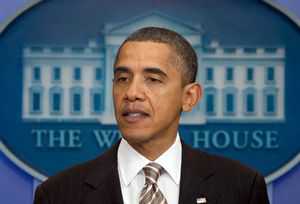
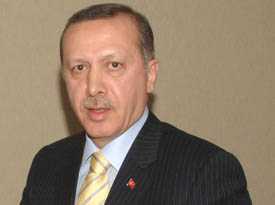
    WASHINGTON – President Barack Obama has failed to persuade the prime minister of Turkey of the need for sanctions against Iran.

    Turkish Prime Minister Recep Tayyip Erdogan (REH’-jehp TY’-ihp UR’-doh-wahn) stressed at a press conference following his White House meeting, that persuading Iran to give up its nuclear ambitions should be left to diplomacy.

    He said that he expressed Turkey’s willingness to mediate negotiations between Iran and the West. But he also criticized current sanctions against Iran as being ineffective because of loopholes for Western goods to reach the Iranian market.

    The Obama administration may seek new sanctions against Iran in the United Nations Security Council, where Turkey currently votes as a non-permanent member.

    THIS IS A BREAKING NEWS UPDATE. Check back soon for further information. AP’s earlier story is below.

    WASHINGTON (AP) — Seeking more help in the war in Afghanistan, President Barack Obama praised Turkey for its “outstanding” contributions there.

    Speaking in the Oval Office after a private meeting with Turkish Prime Minister Recep Tayyip Erdogan, Obama said Turkey’s commitments have helped bring stability to Afghanistan. Turkey took over the rotating command of the NATO peacekeeping operation in Kabul last month and doubled its number of troops to around 1,750. However, it has resisted repeated U.S. requests to send its troops on combat operations.

    Last week, Obama ordered 30,000 more U.S. troops be sent to Afghanistan. The administration expects its allies to provide up to 10,000 reinforcements.

    Obama also expressed his condolences for a recent terrorist attack in Turkey, and said the two leaders reaffirmed their commitment to defeat terrorism “regardless of where it occurs.”

    At least five Turkish soldiers were killed and several others wounded in an ambush Monday in central Turkey. Authorities have not identified the attackers but Kurdish and leftist militants are active in the area.

    Monday’s meeting between the two leaders comes at a time of rising Turkish influence in the Middle East and Central Europe. Before leaving for Washington, Erdogan said Turkey has already contributed the “necessary number” of troops in Afghanistan, and that Turkish military and police will train their Afghan counterparts and press ahead with health, education and infrastructure projects there.

    Turkey’s participation in the Afghan mission carries enormous symbolic importance because it is the only Muslim country working with U.S. troops to beat back the resurgent Taliban and deny al-Qaida a sanctuary.

    More broadly, however, the United States would like Turkey to use its sway as a regional power and Muslim majority ally to help solve some of America’s trickiest foreign policy problems. But the two sides disagree on many of the important issues.

    Turkey has sought to become a mediator for the United States with Iran and Arab countries, but it is unclear whether the Obama administration is eager for Ankara to play that role. The two sides disagree on sanctions against Iran and the Obama administration is uneasy about recent Turkish disputes with Israel.

    Greater friction is looming as the Obama administration intensifies pressure on Iran to end its nuclear ambitions. A U.S. push for sanctions at the U.N. Security Council, where Turkey currently sits as a nonpermanent member, will force Ankara to choose between a NATO ally and an important neighbor.

    The two allies also will need to navigate the perennial issue of an annual U.S. statement on the World War I-era massacre of up to 1.5. million Armenians by Ottoman Turks. Breaking a campaign pledge, Obama has refrained from referring to the killings as genocide, a term widely viewed by genocide scholars as an accurate description.

    The Obama administration has said it is wary that the sensitive issue could upset talks that could lead to reconciliation and a reopening of the border between Armenia and Turkey. It remains unclear how the administration will handle the issue in the future, especially if talks between Turkey and Armenia falter.

    Tensions have eased over cooperation in Northern Iraq. Turkish complaints about a lack of U.S. help in rooting out Kurdish militants launching attacks on Turkey from Iraq loomed over Erdogan’s White House visit with former President George W. Bush in 2007.

    Since then Turkey has boosted trade in the region and improved ties with members of the Kurdish minorities living on both sides of its border with Iraq.
  • When Islamist foreign policies hurt Muslims

    When Islamist foreign policies hurt Muslims

    Turkey’s government and leader bash the West for transgressions while absolving anti-Western regimes of their sins. This hurts ordinary Muslims from Darfur to Chechnya to Iran.

    By Soner Cagaptay

    December 7, 2009

    What is an Islamist foreign policy, exactly? Is it identifying with Muslims and their suffering, or is it identifying with anti-Western regimes even at the cost of Muslims’ best interests? Turkey’s foreign policy under the Justice and Development Party, or AKP, government demonstrates that far from protecting Muslims and their interests, it is the promotion of a la carte morals — bashing the West and supporting anti-Western regimes, even when the latter hurts Muslims.

    AKP leader and Turkish Prime Minister Recep Tayyip Erdogan is scheduled to meet today with President Obama in Washington. This is a chance for Obama, who visited Ankara in April in a charm offensive to win Turkish hearts, to have a discussion with Erdogan about Turkey’s ill-conceived foreign policy, which is bad for the West and for Muslims.

    Since coming to power in 2002, the AKP has dramatically changed Turkey’s foreign policy. The party has let Ankara’s ties with pro-Western Azerbaijan, Georgia and Israel deteriorate and has started to ignore Europe. Meanwhile, the AKP has built ties with anti-Western states such as Sudan while making friends with Ankara’s erstwhile adversaries, including Russia, Iran and Syria, and positioning itself as Hamas’ patron.

    It wasn’t always this way. After casting its lot with the United States in 1946, Ankara collaborated with the West against the communist Soviet Union, Baathist Syria and Islamist Iran. When communism ended, Ankara worked to spread Western values, including free markets and democracy, in the former Soviet Union, becoming close with pro-Western Azerbaijan and Georgia. Turkey also developed a close relationship with Israel, based on shared values and security interests.

    The AKP has now turned Turkish foreign policy on its head — bashing the West for transgressions and absolving anti-Western regimes of their sins.

    A comparison of the AKP’s Israel and Sudan policies helps define Turkey’s Islamist foreign policy. Since coming to power, the AKP has not only built a close political and economic relationship with Khartoum but also defended Sudanese leader Omar Hassan Bashir’s atrocities in Darfur.

    Last month, Erdogan said: “I know that Bashir is not committing genocide in Darfur, because Bashir is a Muslim and a Muslim can never commit genocide.” What? The International Criminal Court indicted Bashir and has called for his arrest for war crimes in the Darfur conflict, in which 300,000 Sudanese — mostly Muslims — have died.

    The AKP’s Sudan policy stands in stark contrast to its Israel policy. At a World Economic Forum meeting in Davos, Switzerland, in January, Erdogan chided Israeli President Shimon Peres, Jews and Israelis about the Gaza war, for “knowing well how to kill people.” Erdogan then walked off the panel. Days later, he hosted the Sudanese vice president in Ankara.

    This is an ideological view of the world, guided not by religion but by a distorted premise that Islamist and anti-Western regimes are always right even when they are criminal, such as when they are killing Muslims. And in this view, Western states and non-Muslims are always wrong, even when they act in self-defense against Islamist regimes.

    Such an a la carte morality in foreign policy is also apparent in the AKP’s approach to Russia. Russian violence in Chechnya continues, yet the AKP seems not to be bothered by the Chechen Muslims’ suffering. Despite Russia’s northern Caucasus policies, the rapport between Russian leader Vladimir Putin and Erdogan and commercial ties have cemented Turkish-Russian ties. Russia has become Turkey’s No. 1 trading partner, replacing Germany.

    The ties between Ankara and Moscow come at a cost to the West and its allies. During Russia’s 2008 invasion of Georgia, the AKP did not stand with Tbilisi, sacrificing traditional Turkish support for Georgia in favor of commercial relations with Russia. The party is also working with Russia in building South Stream, a pipeline that undermines the Nabucco pipeline that would have connected Azerbaijan to the West, abandoning both Azerbaijan and Europe.

    Another example of this harmful foreign policy is the government’s stance on Iran’s nuclearization, a crucial issue for the West. In October, Erdogan defended Iran’s nuclear program, saying that the problem in the Middle East is Israel’s nuclear capacity rather than Iran’s program. Earlier that month, he called Iranian leader Mahmoud Ahmadinejad his friend and dismissed the leaders of France and Germany.

    Far from helping the West, the AKP’s foreign policy is challenging its regional interests, and this is also bad for Muslims. When Iranian demonstrators took to the streets in June to contest the election outcome, the AKP rushed to the defense of Ahmadinejad’s regime, congratulating him on his “electoral success” while pro-Ahmadinejad forces were beating peaceful protesters.

    Instead of supporting Western values, the AKP and its Islamist foreign policy undermine such values and the West, which in turn hurts ordinary Muslims from Darfur to Chechnya to Iran.

    Soner Cagaptay, a senior fellow at the Washington Institute for Near East Policy, is the author of “Islam, Secularism and Nationalism in Modern Turkey: Who Is a Turk?”

    Copyright © 2009, The Los Angeles Times
  • 3 Survivors Recall Pearl Harbor Attack

    3 Survivors Recall Pearl Harbor Attack

    December 7, 2009 04:37 PM

    By Andrew Ryan, BOSTON Globe Staff The biting wind and dreary gray sky seemed appropriate this afternoon at the Charlestown Navy Yard for a simple and somber ceremony marking the 68th anniversary of the Japanese attack on Pearl Harbor. VIDEO ; In the shadow of a .38-caliber antiaircraft gun on the deck of the USS Cassin Young, a few dozen veterans and National Park Service rangers sang the National Anthem, listened to brief remarks about sacrifice, tossed a wreath into the cold water, and saluted the American flag as it flapped in a steady breeze.

    "Once again we are gathered together in remembrance of that day 68 years ago that the then President Roosevelt called a date that will live in infamy, said Donald Tabbut, 86, the former commander of the Freedom Trail Chapter of Pearl Harbor Survivors & Friends, which disbanded in April when the number of local survivors dropped to 12. The ceremony at the Boston National Historical Park once drew dozens of veterans who lived through the attack on Dec. 7, 1941. But most have died and only three survivors attended the rite today, walking onto the decommissioned naval destroyer with the aid of a cane or the steady arm of a younger relative. All three men showed the symptoms of age, with hunched backs and slight trembles in their hands. But memories of that day remain fresh. Bernard J. Murphy, 87, leaned on his cane, let out an exasperated sigh, and recounted an image that has stayed with him for the last 68 years. Murphy was a second-class gunner's mate aboard the USS Maryland, and he can still recall reaching out an arm to light a cigarette for an officer when there was an explosion. "He got killed. I was that close to him. And he died right on the spot," said Murphy of Worcester. "It was a traumatic morning, I'll tell you that much. They took us by surprise." -------------------------------------------------------------------------------------
    Pearl Harbor On Sunday, December 7th, 1941 the Japanese launched a surprise attack against the U.S. Forces stationed at Pearl Harbor , Hawaii By planning this attack on a Sunday, the Japanese commander Admiral Nagumo, hoped to catch the entire fleet in port. As luck would have it, the Aircraft Carriers and one of the Battleships were not in port. (The USS Enterprise was returning from Wake Island , where it had just delivered some aircraft. The USS Lexington was ferrying aircraft to Midway, and the USS Saratoga and USS Colorado were undergoing repairs in the United States .) In spite of the latest intelligence reports about the missing aircraft carriers (his most important targets), Admiral Nagumo decided to continue the attack with his force of six carriers and 423 aircraft. At a range of 230 miles north of Oahu , he launched the first wave of a two-wave attack. Beginning at 0600 hours his first wave consisted of 183 fighters and torpedo bombers which struck at the fleet in Pearl Harbor and the airfields in Hickam, Kaneohe and Ewa. The second strike, launched at 0715 hours, consisted of 167 aircraft, which again struck at the same targets. At 0753 hours the first wave consisting of 40 Nakajima B5N2 'Kate' torpedo bombers, 51 Aichi D3A1 'Val' dive bombers, 50 high altitude bombers and 43 Zeros struck airfields and Pearl Harbor Within the next hour, the second wave arrived and continued the attack. When it was over, the U.S. Losses were: Casualties US Army: 218 KIA, 364 WIA. US Navy: 2,008 KIA, 710 WIA. US MarineCorp: 109 KIA, 69 WIA. Civilians: 68 KIA, 35 WIA. TOTAL: 2,403 KIA, 1,178 WIA. ------------------------------------------------- Battleships USS Arizona (BB-39) - total loss when a bomb hit her magazine. USS Oklahoma (BB-37) - Total loss when she capsized and sunk in the harbor. USS California (BB-4 4) - Sunk at her berth. Later raised and repaired. USS West Virginia (BB-48) - Sunk at her berth. Later raised and repaired. USS Nevada - (BB-36) Beached to prevent sinking. Later repaired. USS Pennsylvania (BB-38) - Light damage. USS Maryland (BB-46) - Light damage. USS Tennessee (BB-43) Light damage. USS Utah (AG-16) - (former battleship used as a target) - Sunk. -------------------------------------------------------------------------------------------------------------------------- Cruisers USS New Orleans (CA-32) - Light Damage.. USS San Francisco (CA-38) - Light Damage. USS Detroit (CL-8) - Light Damage. USS Raleigh (CL-7) - Heavily damaged but repaired. USS Helena (CL-50) - Light Damage. USS Honolulu (CL-48) - Light Damage.. -------------------------- -- ---------------------------- --------------------------------------------------------------- Destroyers USS Downes (DD-375) - Destroyed. Parts salvaged. USS Cassin - (DD -3 7 2) Destroyed. Parts salvaged. USS Shaw (DD-373) - Very heavy damage. USS Helm (DD-388) - Light Damage. ---------------------------------------------------------------------------------------------------------------------- Minelayer USS Ogala (CM-4) - Sunk but later raised and repaired. ---------------------------------------------------------------------------------- Seaplane Tender USS Curtiss (AV-4) - Severely damaged but later repaired. ------------------------------------------------------------------------------------ Repair Ship USS Vestal (AR-4) - Severely damaged but later repaired. ------------------------------------------------------------------------------------ Harbor Tug USS Sotoyomo (YT-9) - Sunk but later raised and repaired. -------------------------------------------------------------------------------------------- Aircraft 188 Aircraft destroyed (92 USN and 92 U.S. Army Air Corps.)

  • In Search of a Russian Atatürk

    In Search of a Russian Atatürk

    07 December 2009
    By Alexei Bayer

    Russia has found a great way to be complacent about its deficiencies. No matter how extraordinary or hair-raising events are in Russia, parallels can be found with events and trends in the West.

    If election fraud is alleged, the recount in Florida during the 2000 presidential vote is mentioned in response. The war in Chechnya can be compared to the invasion of Iraq, while the recent attack on the Nevsky Express fits in with international terrorism.

    In the West, these examples represent isolated defects of functioning societies. In Russia, however, they paint a picture of national decay.

    Take demographics. While Italy and Spain have a low birth rate, in Russia it goes hand-in-hand with high mortality and low life expectancy. Despite an influx of immigrants, the Russian population is falling rapidly, and the countryside is dotted with ghost villages.

    Corruption is also a breed apart. Even in the most corrupt Western countries, officials still work for the state. In Russia, the state seems to exist for the benefit of bureaucrats, and most laws passed by the State Duma make it easier to take bribes, pillage government funds and stifle economic and social development.

    Between 1914 and 1953, Russia and the Soviet Union suffered bloodletting on an unprecedented scale. World War I, the Civil War, relentless state terror and World War II, in which Stalin and Hitler combined their efforts to murder tens of millions of Russians, damaged the social fabric, destroyed the best and the brightest, and turned survivors into a quivering herd. It might have been too much for any people to bear. We may now be witnessing the death throes of a once-great nation.

    Indeed, Russia’s recent history looks like a steady downtrend. The 1979 invasion of Afghanistan marked the peak of its geographic expansion, after which the Soviet empire began to crumble. First came the loss of Eastern Europe and, soon thereafter, the dissolution of the old Russian Empire. Then it was the superpower status and global influence that disappeared. Now, Chinese migrants are encroaching on depopulated Eastern Siberia, while Beijing wins concessions to explore Russian natural resources that Moscow can’t do on its own. What commodities Russia is still able to produce independently are wasted. While record oil prices brought wealth to oligarchs and state officials, for the average Russian they meant only high inflation. Moreover, the police, the military, health care, education and social services have become degraded.

    The Ottoman Empire, which Tsar Nicholas I once called “the sick man of Europe,” decayed in a similar fashion in the 19th century. Wars erupted across Europe as a result, but Turkey was saved from a national catastrophe by liberal reforms enacted by Mustafa Kemal Atatürk, a military officer and an admirer of the Enlightenment.

    Unfortunately, Prime Minister Vladimir Putin didn’t become such a modernizer. He rose to power suddenly and had to rely on his former siloviki colleagues. Russia’s decay only accelerated on his watch. Yet, he can still become a Russian Atatürk. Putin is still Russia’s most powerful man. He is both admired and feared. Although Medvedev is a political lightweight and relies on Putin’s protection, he has started to make tough decisions like firing incompetent bureaucrats.

    Whether Putin planned it this way or it happened by accident, Russia’s ruling tandem may yet bring about a national revival. But they will have to ram it down the throat of the boggy system over which they preside.

    Alexei Bayer, a native Muscovite, is a New York-based economist.

  • When Church Bells sound in Saudi Arabia, then Minarets can rise in Europe

    When Church Bells sound in Saudi Arabia, then Minarets can rise in Europe

    Muslims should learn how to build bridges before
    demanding any more minarets in Switzerland


    MINARE
    December 6, 2009

    When Church Bells sound in Saudi Arabia, then Minarets can rise in Europe

    Raheel Raza
    AverroesPress.com

    TORONTO – Voters in Switzerland approved a referendum last week to ban the building of new minarets on mosques. Nearly 58% of voters, and all but four of the country’s 26 regions, supported the initiative, with support for the ban reaching 70% in some regions.

    Today, throughout the Muslim world, leaders have condemned this move and are of course in the usual way, calling for their own ban on the Swiss. Are we are going to stop eating Swiss cheese and chocolate or are we going to ban Swiss precision?

    Perhaps there is no better time than today for Muslims to understand the deeper, more profound implication of the Swiss move, and use it as a red flag to bring about internal change.

    Swiss charmer and speaker Tariq Ramadan who was recently in Canada, flowed eloquent about the beauty of Islam, but failed to mention the self-inflicted problems besieging Muslim communities of the West, especially Europe, which are swept under the rug for benefit of mass audiences.

    And herein lies the problem. Yes, Islam is a beautiful message for me and many fellow Muslims. But it may not be so for the person on the street and this is what we must accept and learn to live with. The beauty of Islam has to be shown in our daily interactions with diverse groups of people, not in our overt in-your-face religiosity or the cloth coverings on our face.

    We have become a people who carry our “Muslim-ness” to the extreme, and the only community I know who insist on using religious terminology in our daily rhetoric with non-Muslims who have no idea what this means. In doing so, we demonstrate a lack of vision and continue to be intolerant of “the other”, while making unreasonable demands of our own.

    In Canada we have a saying that what goes round, comes around. Well, in Europe the tides are changing so fast that unless Muslims wake up and smell the Nescafe, they’ll be swept away into an abyss of their own making.

    The solution is not rocket science.

    How hard is it for Muslims to understand and accept that Islam is not a stand-alone faith and neither is the message exclusive. Islam is the youngest of the three Abrahamic faiths, yet Muslims are the most spoilt and ill behaved of the three. Unless Muslims learn to extend their hand to other faiths in total unison, they can’t progress.

    Muslims must also understand that every criticism of their acts is not Islamophobia (a term too widely and easily used for my comfort). First they should understand that the term Islamophobia means “fear of Islam” and yes there is fear of Islam and Muslims and we don’t seem to be doing much to eliminate it. Our knee jerk reactions and instinct to defend Muslims, no matter what they do, is back firing. We are not the keepers of our faith. Our only duty is to learn to live in peace and harmony with other human beings, which we are not doing very well.

    For example, rarely do Muslims take time to discuss and debate how non-Muslims are treated in Muslims lands. If Muslims in the West were restricted in their worship and treated like third-class citizens, then perhaps they would understand what discrimination and harassment really means. We love to shout “racism” at the drop of a scarf, yet remain quiet when others are mistreated.

    So in Switzerland, there is a ban on building new minarets. Does this impact or harm Islam? No. Minarets were not even part of the first mosque of Islam and were incorporated into Islamic architecture, much after the death of the Prophet when Islam was becoming a political dynasty. More importantly, from a spiritual perspective, the creator does not reside inside domes or minarets, but in our hearts.

    Actually, before we start to build minarets, first we have to learn to build bridges of understanding between Muslims and non-Muslims.
    ————–
    This article is dedicated to our Swiss friend, the late Joseph Egger who taught family and friends, the meaning of giving without prejudice and beyond barriers.

  • Switzerland’s Invisible Minaret

    Switzerland’s Invisible Minaret

    By PETER STAMM
    Published: December 4, 2009
    Winterthur, Switzerland

    Related Times Topics: Islam

    THREE years ago I was invited to the Tehran International Book Fair; afterward I traveled around the country. The mosques I visited were so empty as to give the impression that Iran was as secular as Western Europe. It wasn’t until I took a trip to a place of pilgrimage in the mountains that I saw large numbers of the faithful. The traffic started piling up even before my group reached the town of Imamzadeh Davood. A few of the pilgrims were making the trek on foot, together with the sheep they intended to sacrifice. The narrow streets were bustling just as at Christian places of pilgrimage: booths crammed with junk, groups of teenagers taking pictures of each other, every nook and cranny packed with candles lighted by believers in the hope their wishes would be fulfilled. I was received by the mayor and invited to dinner — the first Swiss he had ever met. He showed me the mosque and led me to the tomb of the saint. I, the unbeliever, was allowed into places where even pilgrims were not permitted. During my three weeks in Iran, my faith, or rather the lack thereof, was never an issue. However bellicose the political face of Islam often appears, in everyday practice what I experienced was a religion of hospitality and tolerance. Switzerland, on the other hand, appeared alarmingly intolerant last weekend, when 58 percent of our voters approved a ban on the building of new minarets. When the minaret referendum was proposed by the rightist Swiss People’s Party, no one really took it seriously. Some consideration was given to having it declared invalid on the grounds that it was unconstitutional as well as a violation of the European Convention on Human Rights, but in the end the government agreed to allow the referendum to go forward, probably in the hope that it would be roundly defeated and thereby become a symbol of Swiss open-mindedness. So certain were the politicians of prevailing that hardly any publicity was fielded against the initiative. As a result, the streets were dominated by the proponents’ posters, which showed a veiled woman in front of a forest of minarets that looked like missiles. Minarets have never been a problem in Switzerland. There are four in the entire country, some of which have been standing for decades. (One of them is in my city but I’ve never seen it.) And only two other minarets were being planned. Most mosques are in faceless industrial districts where no one notices them. But perhaps that is exactly the problem. Islamic immigrants don’t live with us but beside us, just as French, German, Italian and Romansch-speaking Swiss live alongside each other without a great deal of animosity — or interaction. The average Swiss citizen has no real contact with Islam. Headscarves are seldom seen on the street, and chadors are practically nonexistent. Moreover, when young proponents of the ban talk about problems with Muslims, they almost exclusively mean young men from the Balkans, who come across as male chauvinists but are almost never active members of Muslim communities. Most people encounter Islam only through the news media, which don’t report on the Muslims in our country but focus on terrorist attacks in Afghanistan, Iranian plans for an atomic bomb and Muammar el-Qaddafi’s absurd proposal to abolish Switzerland. It’s hard to find one overarching explanation for why the Swiss voted as they did. Similar referendums have brought surprises: 35 percent of voters wanting to do away with the army, for instance, or 58 percent approving of same-sex partnerships. The prevailing Swiss attitude is both conservative and liberal: on the one hand everything should stay the way it is, on the other everyone should be able to do what he or she wants. What’s most conspicuous in these referendums is that we are a nation of pragmatists, inclined to our dour obstinacy, and we owe our success not to grand ideas but to problem-solving. So focused are we on getting things done, it almost doesn’t matter if the problem isn’t a problem, or if the solution risks sullying the country’s reputation. We Swiss sacrificed our good standing as a multicultural and open-minded society to ban the construction of minarets that no one intends to build in order to defend ourselves against an Islam that has never existed in Switzerland. Perhaps Muslims here are more Swiss than the rest of us might think. They too will solve the problem we’ve made for them: they are likely to swallow the results of this referendum, do without their minarets and continue to assemble for prayer, unnoticed and unperturbed.
    Peter Stamm is the author of the novel “On a Day Like This.” This essay was translated by Philip Boehm from the German.