Month: December 2009

  • Obama Vows ‘Vigorous Support’ For Turkish-Armenian Normalization

    Obama Vows ‘Vigorous Support’ For Turkish-Armenian Normalization

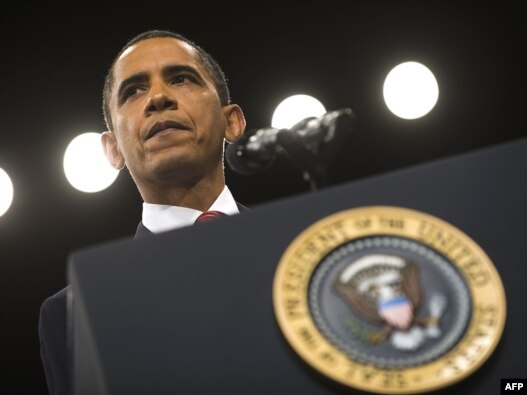
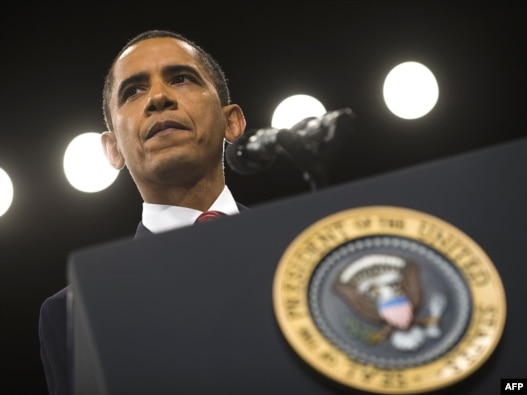
    U.S. – US President Barack Obama addresses the nation on Afghanistan at the United States Military Academy, West Point, NY, 01Dec2009

    04.12.2009

    U.S. President Barack Obama has pledged to continue to press for an unconditional normalization of Turkish-Armenian relations which he believes should be completed within a “reasonable timeframe.”


    Obama hailed the U.S.-backed dialogue between the two nations as “historic,” in a letter to Hirair Hovnanian, chairman of the Armenian Assembly of America, that was publicized by the influential advocacy group late on Thursday.


    “I agree that normalization between Armenia and Turkey should move forward without preconditions and within a reasonable timeframe,” he said, echoing statements by Secretary of State Hillary Clinton and other U.S. officials.


    “We will continue to vigorously support the normalization effort in the months ahead,” added Obama.


    The letter dated November 20 came in response to a September 9 joint appeal to Obama from Hovnanian and the leaders of the Armenian General Benevolent Union and two U.S dioceses of the Armenian Apostolic Church. The signatories voiced support for the fence-mending Turkish-Armenian agreements and said Washington should get Ankara to stop linking their implementation with a resolution of the Nagorno-Karabakh conflict favored by Azerbaijan.


    The Armenian-American leaders also urged Obama to honor his campaign pledges to recognize the 1915 massacres of Armenians in the Ottoman Empire as genocide once in office. “If this normalization process is used as a smokescreen for not reaffirming the Armenian Genocide and the U.S. record, it will be a blow to the rapprochement process and the expectations of people of goodwill everywhere,” they said, highlighting concerns among many Armenians in the United States and elsewhere in the world.


    In his reply, Obama again stopped short using the word “genocide” with respect to “one of the great atrocities of the 20th century,” even if he made clear that he stands by his past pronouncements on the subject. “My interest remains the achievement of a full, frank and just acknowledgement of the facts,” he wrote. “I believe that the best way to advance that goal is for the Armenian and Turkish people to address the facts of the past as part of their efforts to move forward.”

    https://www.azatutyun.am/a/1894711.html

  • Uyghur Pressed to Spy

    Uyghur Pressed to Spy

    2009-12-02

    An exiled Uyghur returns home and finds himself in Chinese custody.


    Kamirdin.jpg

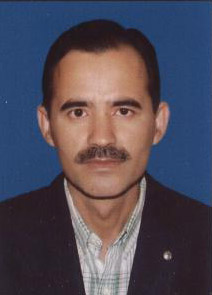
    Undated photo of Kamirdin Abdurahman. Photo: RFA

    HONG KONG—Authorities in China’s troubled northwestern region of Xinjiang detained a Pakistani national and member of the Muslim Uyghur ethnic minority for “harming public order” before asking him to infiltrate Uyghur groups back in Pakistan, the man said in a recent interview.

    Kamirdin Abdurahman, 41, a second-generation Uyghur Pakistani, had returned to Xinjiang for the first time since the regional capital Urumqi was rocked by ethnic violence in July.

    “I have traveled to my homeland many times since the 1980s, but this time I was surprised, shocked, and scared by what I encountered,” he said.

    He said he was traveling with a group of 30 people, only some of whom were Uyghurs, who entered China via the Khonjrap border crossing on Oct. 18.

    “We [Uyghurs] were isolated from the others, and waited two more hours outside. The weather was so cold,” Abdurahman said.

    “Then we were checked by immigration police with a special attention that we had never met before.”

    Detained 15 days

    Later, police in the former Silk Road city of Kashgar, still a major center of Uyghur history and culture, confiscated his passport and blindfolded, handcuffed, and interrogated him before detaining him for 15 days, he said.

    “Police said that I had spoken in negative ways, which had harmed public order,” Abdurahman said.

    “I was held in detention for 15 days and fined 5,000 yuan (U.S. $732).”

    After his detention, Abdurahman, who had come to visit family in the oasis town of Yarkand, near Kashgar, said he was asked by a Uyghur police officer to go back to Pakistan and spy on exiled Uyghur groups for the Chinese government.

    “The day I completed my detention, three police officers, two Han Chinese and one Uyghur came to visit me,” he said.

    Spying request

    Abdurahman’s allegations come after Swedish security police charged a 61-year-old ethnic Uyghur man with spying for China in June, and expelled a Chinese diplomat from Stockholm, which is home to a large ethnic Uyghur community.

    Exiled Uyghur groups say that China prefers to employ Uyghurs to spy on other Uyghurs because Han Chinese with a strong understanding of Uyghur language and culture are rare.

    Abdurahman said the Uyghur police officer who approached him said he had paid the 5,000 yuan fine on his behalf.

    “He asked me to be their friend and cooperate with them,” he said. “If I did, I would be allowed to travel freely throughout China, and my business and family visits would go more smoothly.”

    Adburahman said he had agreed to cooperate in order to get out of his immediate situation, but that he had since refused to accept two subsequent phone calls.

    “One of my duties was to join the Omer Uyghur Trust and report their activities, and the second duty was to watch the Uyghur community in Pakistan and submit a list of people who had attended or who might attend anti-Chinese activities,” he said.

    Repeated bids to close

    The Omer Uyghur Trust is a cultural organization based in Pakistan, set up with the aim of educating exiled Uyghur youth about their own culture.

    The organizers say that Beijing has made repeated attempts to have the group shut down, mostly through the use of diplomatic pressure on Pakistan.

    “The attempt was supported by government officials, but the courts rejected it, so we are continuing to walk towards our goal,” the group’s founder, Omer, said.

    Pakistani-based Uyghurs said Abdurahman wasn’t the first to be harassed by police on visits to China.

    “We have a list of Uyghurs who have been targets of threats and attempts at coercion into spying [for China],” said Akber, who is currently head of the Uyghur Trust.

    “There are females and older persons among them,” he said.

    “One guy, Imin Niyaz, was tortured badly. He didn’t feel safe after his return to Pakistan, so he moved to Afghanistan and is living there now,” he said.

    “Abdurahman…is the only one who has revealed to the media what he encountered [in China],” Akber added.

    Deadly clashes

    Fierce clashes in the Xinjiang region in July between the local Muslim Uyghur community and China’s majority Han ethnic group left 197 people dead and more than 1,600 injured, according to an official toll.

    China said Nov. 10 it had executed nine people over the unrest.

    According to statements by the Xinjiang government, those executed included eight Uyghurs and one Han Chinese. A total of 21 people were convicted in October.

    Uyghurs declared a short-lived East Turkestan Republic in Xinjiang in the late 1930s and 40s but have been ruled by Beijing, which many bitterly oppose, since 1949.

    Beijing blames Uyghur separatists for sporadic bombings and other violence in the Xinjiang region.

    But international rights groups have accused Beijing of using the U.S. “war on terror” as a pretext to crack down on nonviolent supporters of Uyghur independence.

    Original reporting and translation by Shohret Hoshur for RFA’s Uyghur service. Director: Dolkun Kamberi. Written for the Web in English by Luisetta Mudie. Edited by Sarah Jackson-Han.

    Copyright © 1998-2009 Radio Free Asia. All rights reserved.

    https://www.rfa.org/english/news/uyghur/spy-for-china-12022009093045.html
  • Hugh Pope on the Armenia-Turkey Rapprochment

    Hugh Pope on the Armenia-Turkey Rapprochment

    Wednesday, December 2, 2009

    In October, Armenia and Turkey signed protocols that — if ratified by their respective parliaments — will open their shared border and in multiple ways normalize relations between the two traditional antagonists. Given the region’s numerous nationalist rivalries, the move has triggered much thinking on what it means, and what else is possible. Hugh Pope, a friend and former colleague at The Wall Street Journal and now director of the Turkish project for the International Crisis Group, is one of the best authorities on the greater Turkic world. Hugh has a new book coming out — Dining With al-Qaeda — that sounds like a keeper. In exchange for dinner at my home last week, he kindly agreed to address some of the burning questions on the Armenia-Turkey accord.

    O&G: Will the Turkish and Armenian parliaments ratify the agreement?


    Pope: The parliaments will ratify the agreement on the protocols (normalization of diplomatic relations and opening the border) if Turkish Prime Minister Erdogan and Armenian President Sargsyan recommend them to. The most interesting aspect of the protocols is in fact how little dispute there is between the two governments about the actual contents. The main problem is domestic, mainly from political opposition (on both sides to different extents), the diaspora reaction (for Armenia) and the Azerbaijani factor (for Turkey, which has a shared ethnic relationship with Azeris and cheap gas from Baku). All these three problems can be overcome if the two leaders can demonstrate the same firm political will that they have done in the past.


    Turkey must also look to its own needs, delinking its policy from full association with Azerbaijan’s own perception of its short-term interests. In fact, the protocols are a good way to help spread stability in the region, which will be in Azerbaijan’s long term interest, and Turkey’s keeping the border closed since 1993 has done nothing to solve Nagorno-Karabakh. Similarly, Armenia must distance itself from the nostalgic desires of members of the diaspora and some of its own population, who seek to keep alive territorial claims on Turkey by not recognizing the international border. Outside support is also vital, and continues, and this is also a source of hope that ratification will go ahead.


    Q: Step back, Hugh. What is the significance of the agreement regionally, historically and so on, whether or not it is ratified? Are you surprised?


    A: The protocols represent the best chance for two traumatized peoples to achieve closure on the politicized debate whether to recognize as genocide the destruction of much of the Ottoman Armenian population and the trauma of the collapse of the Ottoman Empire and its accompanying displacement and massacres. Both sides have tried the all-out nationalist narrative, and it has not healed the wounds of history.


    The second significance is the positive example being set by the Turkish government since 2002 to grapple with subjects that until recently were completely taboo and to overcome historical problems. They’ve gone a long way to fixing their problems with Syria, Iraq and the Iraqi Kurds, and are also working on an opening to Turkey’s own Kurds and on finding a settlement for the divided island of Cyprus.


    The dynamics supporting Turkey-Armenia convergence are strong, I believe. The agreement on the protocols is the latest and broadest indication of a process that started in 2000 with the first meeting of Turkish and Armenian academics in the US. This was followed by meetings by retired officials and senior academics in the Turkish-Armenian Reconciliation Commission, and then in years of secret talks between Turkish and Armenian diplomats.


    In Turkey, this bilateral process has been accompanied and even led by the great 2005 meeting of Turkish academics rejecting the old denialist narrative about the Ottoman-era massacres of Armenians in the First World War, and the wave of regret and awareness in Turkey that followed the murder of Turkish-Armenian journalist Hrant Dink in 2007. In Armenia and the diaspora, there has been some reaching out to Turkey too, as increasingly more people believe that dialogue can bring greater Turkish appreciation of the pain suffered by Ottoman Armenians during the World War I, an apology, and perhaps some compensation.


    Opening the issues of the pre-1923 period is a Pandora’s box for Turkey, however. A significant portion of the population of modern Turkey is descended from Muslims driven bloodily out of the Balkans, the Caucasus and the Middle East as the Ottoman Empire collapsed, resulting in family dramas that up to now have rarely been discussed. Although often only tangentially related to the Armenian question, it make some Turks ask, what about our own traumas?


    Q: Does the agreement say anything about the times in which we live? For instance, could we expect other stubborn animosities to cool for the sake of pragmatism?


    A: The agreement on the protocols do show unfortunately that it takes a long time to heal the wounds of conflict and massacre, especially when one side is much weaker, when territory is contested and when the two sides have no joint project with which to help the healing process (impossible between Turkey and Armenia as states during the Soviet period, of course).


    Perhaps the most interesting aspect of the agreement was the beneficial effect of Russia, France and the U.S. working together. Of course, Moscow and Washington have different objectives, but they both support Turkey-Armenian normalization, and if their foreign ministers hadn’t been in Zurich on Aug. 30, the signing of the protocols may never have happened.


    Q: What type of reaction do you expect from Azerbaijan? If a military one, would its performance on the battlefield be better than in the early 1990s? And whatever the case, wouldn’t such an Azeri reaction scuttle the deal?


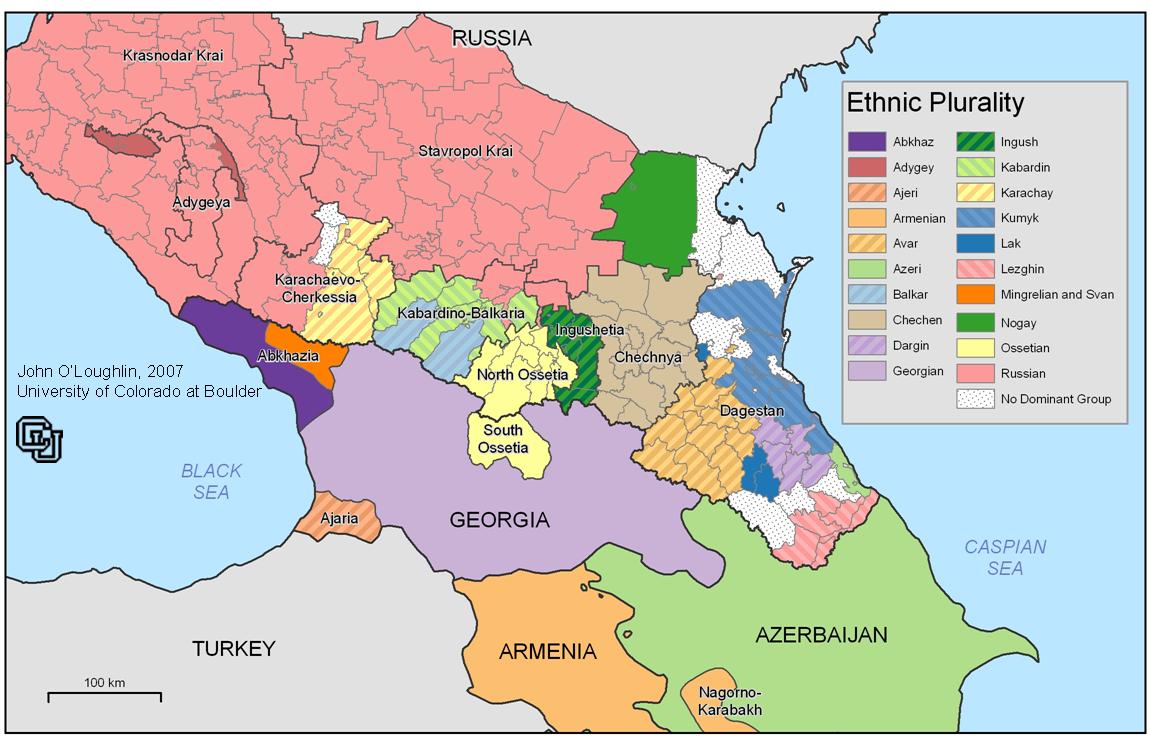
    A: Great powers must make it very clear to all sides that any renewal of hostilities to try to derail the ratification of the protocols is unacceptable. Azerbaijan is currently working hard to legitimize its right to territorial integrity, while its president is frequently talking about the use of force to regain lost territories. Clearly, the Azerbaijani army is better armed and better trained than in the early 1990s, when it only had barely-coordinated militias. But Armenian and Karabakh Armenian forces control the high ground, they have had nearly two decades to dig in, and have everything to lose.


    Any military offensive would be risky for the Azerbaijani government. Firstly, it might not succeed, and any reversal would be politically disastrous. Any attempt to reclaim territory by force is likely to be met by a massive military response and lead to a rapid extension of the conflict throughout the region. Secondly, the world would identify Azerbaijan as the initiator of hostilities, whereas it currently has some sympathy as the loser from the 1992-1994 Nagorno-Karabakh conflict — that is, defending its territory integrity according to international law.


    The worst problem is that a military flare-up could happen without anyone actually deliberately choosing the time. Some 3,000 people have been killed in and around Nagorno-Karabakh since the 1994 ceasefire. Bored, armed young men are within 20 meters of each other in places, snipers are active, and the international observer mission is tiny and weak. Bellicose rhetoric influences people’s minds, and raises the risk of a renewed outbreak of violence.


    Q: Do you expect a deal settling Nagorno-Karabakh, and if so what will it look like? If not, why not?


    A: The Madrid principles laid down by the Organization of Security and Cooperation in Europe (OSCE) Minsk Group, co-chaired by the U.S., Russia and France, are still the best roadmap anyone has for settling the Nagorno-Karabakh conflict. These foresee the return of occupied territories around Nagorno-Karabakh; interim status for Nagorno-Karabakh itself; a mechanism to decide the final status of Nagorno-Karabakh; a secure corridor between Armenia and Nagorno-Karabakh; the return of displaced persons; and international peacekeepers and security guarantees.


    The Turkish activism of this year has energized the Minsk process somewhat, and at times it seemed as though a deal might be possible. Unfortunately, the core issue – the future status of Nagorno-Karabakh, the procedure leading up to that final status, and whether it will have the right to secede from Azerbaijan even in a distant future – has proved just too raw and political a subject for either government to make compromises on.

    http://oilandglory.com/

  • Support Jill – Vote for her Turkish Project

    Support Jill – Vote for her Turkish Project

    One Minute!    Jill Only Needs Your Vote to WinBridge to Turkiye [[email protected]]

    If you are unable to view this mail please click here:

    please also see above link for clear pictures

    n14950_9783

    Support Jill – Vote for her Turkish Project to Win


    BigaBanner

    One Minute!    Jill Only Needs Your Vote

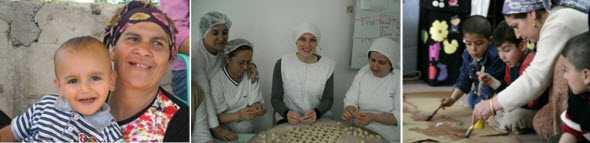
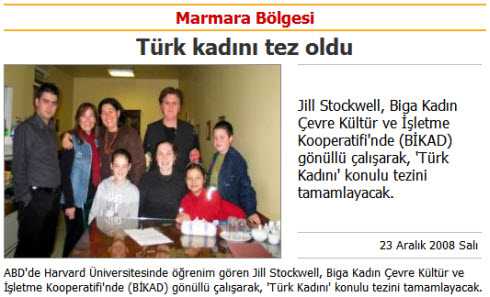
    Jill Stockwell, wrapping Manti in the center picture above, took a gap-year off from her studies at Harvard to volunteer at Biga/Canakkale BIKAD Women’s Vocational Cooperative.  She is now back in the US, determined to build the women of Biga a new Women’s and Children’s Center with US funds.  Jilll has already raised $10,000 in funds and has entered her project in a Facebook Challenge to win $25,000 from the Chase Bank Community Giving.

    In her below request, Jill is not asking for money.  She only needs your Vote and it takes just one minute.  Won’t you vote for her? Here is her message…


    Dear Turkish and American Friends,

    First, let me thank you from the heart  for your continued support for the Biga Women and Children’s Center.

    Our theme for our newest and biggest fundraising opportunity is….WE DON’T NEED YOUR MONEY WE JUST NEED YOUR VOTE!

    As you have doubtlessly heard, Chase Community Giving is holding a contest from now til December 11th. Top 100 projects with most votes will each receive $25,000!!!  This would complete our fundraising goal and we could begin building in the spring….AND IT’S WELL WITHIN OUR REACH!

    TO REVIEW…

    JillStockwell
    WHO will this benefit: Low-income families in Biga/Canakkale. Children who would not have been able to go to kindergarden otherwise. Women who want to work.
    WHAT will make these dreams come true: a women and children’s center, designed by grassroots women’s initiatives and aimed at helping women go to work and children go to kindergarden.
    HOW am I related to this cause? I spent last year as a Harvard Rockefeller Fellow in a small town in Turkey working with a fabulous group of women and now want to “pay it forward” and get them a much-needed women and children’s center.
    How can you help? VOTE TODAY! Take 30 seconds to vote on the facebook application.  – allow the application to download, then vote!

    …And one more thing 🙂 Please forward this along to your friends and see if we can’t win this thing for Biga women! Such a worthy cause deserves as many votes as we can wrangle up…

    Many thanks and all my best,
    Jill


  • Turkey’s Response to Swiss Minaret Ban

    Turkey’s Response to Swiss Minaret Ban

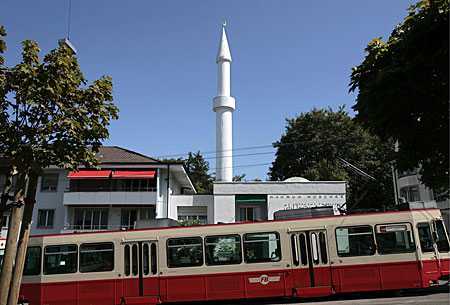
    The only minaret in Zurich (Keystone/Eddy Risch)
    The only minaret in Zurich (Keystone/Eddy Risch)

    The result of the referendum held in Switzerland on 29 November 2009 as regards the initiative to ban the construction of minarets has created disappointment.

    This decision is an unfortunate development which is contrary to fundamental human values and freedoms. Values such as multi-culturalism, tolerance and respect for human-rights are needed for social harmony and peace.

    As one of the co-sponsors of the Alliance of Civilizations Initiative of the UN, Turkey endeavors to strengthen the atmosphere of mutual understanding and tolerance among different cultures and faiths. Therefore, the decision of the Swiss people has caused great dismay in Turkey.

    On the other hand, we understand the concern that this decision has caused for more than 100 thousand Turkish citizens who have chosen Switzerland as their second homeland.

    Not only Turkey but the international community as well expect from Switzerland, a country which earned a well-deserved place in the international community with its respect for diversity and culture of conciliation, to take the necessary steps to amend this situation which is against its own traditions.

    Source:  www.mfa.gov.tr

  • Dutch MPs cancel trip to Turkey

    Dutch MPs cancel trip to Turkey

    The planned visit of a parliamentary delegation to Turkey has been cancelled.

    Photo: Freedom Party leader Geert Wilders (ANP)
    Photo: Freedom Party leader Geert Wilders (ANP)

    The MPs have unanimously decided to cancel the visit after the Turkish government said it would not meet with any of the delegates because of the presence of Freedom Party leader Geert Wilders among them.

    Labour Party MP and delegation leader Harm Evert Waalkens expressed regret that the trip to Turkey was cancelled, but said parliament’s Foreign Affairs Committee had acted on the principle of support for a fellow MP’s freedom of speech.

    Geert Wilders is highly controversial in Turkey because of his inflammatory statements on Islam. He said he had wanted to travel to Turkey to explain in person why he believes the country cannot join the European Union.
    The Turkish government has expressed surprise and regret at the news of the cancelled visit. Ankara says it never said Mr Wilders was not welcome, just simply that it would not roll out the red carpet for him.

    Source:  www.rnw.nl, 2 December 2009