| Thursday, 30 April 2009 | |
 [ Ergun KIRLIKOVALI’s note: The following message was read into the Congressional records by Congressman Joe Baca, D, [CA-43] on April 22, 2009, honoring Mr. Ali Cayir. It is a huge honor and I, on behalf of tens of thousands of Turkish-Americans Southern California, congratulate my good friend Ali Cayir for this unique achievement. I believe such success helps break the bias against the Turkish-Americans and bigotry on issues related to Turkey. ]# # # [ Ergun KIRLIKOVALI’s note: The following message was read into the Congressional records by Congressman Joe Baca, D, [CA-43] on April 22, 2009, honoring Mr. Ali Cayir. It is a huge honor and I, on behalf of tens of thousands of Turkish-Americans Southern California, congratulate my good friend Ali Cayir for this unique achievement. I believe such success helps break the bias against the Turkish-Americans and bigotry on issues related to Turkey. ]# # #
ALLEN CAYIR, ELLIS ISLAND MEDAL OF HONOR — (Extensions of Remarks – April 22, 2009) SPEECH OF HON. JOE BACA OF CALIFORNIA IN THE HOUSE OF REPRESENTATIVES WEDNESDAY, APRIL 22, 2009 Mr. BACCA. Madam Speaker, I rise today to recognize Allen Cayir, President of Transech Engineers, Inc., who will receive the prestigious Ellis Island Medal of Honor. Established in 1986 by the National Ethnic Coalition of Organizations, the Ellis Island Medal of Honor pays tribute to our nation’s immigrant heritage by recognizing those individuals whose achievements have helped to foster respect and understanding for America’s ethnic diversity. Since the award began, recipients have included United States Senators, Congressman, Nobel Laureates, military leaders, outstanding athletes, and clergy. A native of Turkey, Mr. Cayir, or ”Ali” as he is known to his friends, arrived in the United States after earning an engineering degree from Istanbul Technical University. In 1989, he founded Transtech Engineers, Inc, which provides professional and technical expertise to governmental agencies, educational institutions and the private development sector. Through his dedication and hard work, he was able to grow the business to a multi-million dollar enterprise. Notable projects over the years have included the Alhambra Civic Center Public Library and the Renovation of the Historic Santa Fe Depot Train Station in San Bernardino, California. In addition to his professional accomplishments, Ali is also known for his philanthropic contributions. He has participated in fundraising activities for the Tools for Education organization at California State University San Bernardino, as well as helped with the restoration work at Mission San Juan Capistrano. In 2005, Ali started a matching fund drive for local businesses for Hurricane Katrina victims, and personally matched other funds collected. Ali is a volunteer teacher at California State University, where he sits on the board of the College of Education and the Tools for Education Project. He was instrumental in raising $3 million for a new education building at the University. He is also very active in the Southern California Hispanic community, engaging in many community organizations that provide support services to the Latino population. In 2006, the Embracing Latino Leadership Alliance honored Ali with the ”Honorary Latino Citizen” award. Finally, Ali is a founding Board Member of American Friends of Israel and Turkey, an organization dedicated to improve cooperation and understanding between American, Turkish, and Israeli citizens by supporting cultural, ethnic, and community events. Throughout his extraordinary career as an engineer and community servant, Ali has always remained a dedicated family man. For the past 31 years, he has been married to his wife Sybil. Together, they have a daughter, who is currently following in her father’s footsteps, pursuing a degree in civil engineering. On behalf of myself, my wife, and my family, I congratulate Mr. Cayir for this tremendous honor. His contributions to his family and his community provide a wonderful example of service for all Americans to follow. END |
Month: May 2009
-
A MOVING TRIBUTE IN THE U.S. CONGRESS TO A TURKISH-AMERICAN: ALI CAYIR
-
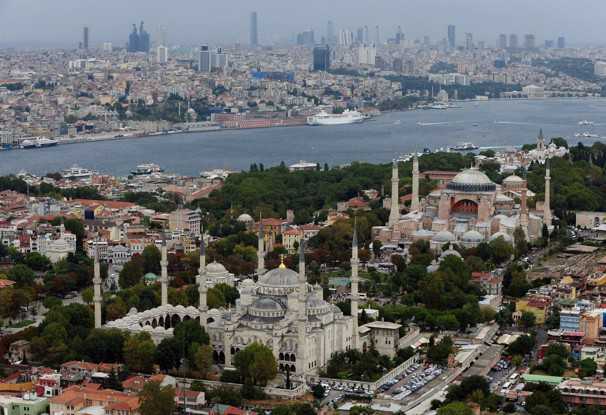
DEBKAfile’s Exclusives in the week ending April 30, 2009
Untitled Document
Summary of DEBKAfile’s Exclusives in the week ending April 30, 2009 Iran canceled air show upon Russian warning of Israeli plan to destroy all 140 warplanes 24 April: DEBKAfile’s Iranian and intelligence sources disclose that Moscow warned Tehran Friday April 17 that Israel was planning to destroy all of its 140 fighter-bombers concentrated at the Mehr-Abad Air Force base for an air show over Tehran on Iran’s Army Day the following day. The entire fleet was accordingly removed to remote bases and the display cancelled. In the first week of April, Tehran announced it would stage its biggest air show ever to dramatize a ceremonial military parade in the capital on April 18. Iran would show the world that it is capable of fighting off an Israeli attack on its nuclear facilities. Instead, only four aircraft flew over the saluting stand. Iranian media explained that the big show was cancelled due to “bad weather and poor visibility,” when in fact Tehran basked in warm and sunny weather.
Moscow had informed the Iranians that its spy satellites and intelligence sources had picked up preparations at Israeli Air Force bases to destroy the 140 warplanes, the bulk of the Iranian air force, on the ground the night before the display, leaving its nuclear sites without aerial defense. A similar operation wiped out the entire Egyptian air fleet in the early hours of the 1967 war.
Al Qaeda’s roars back in Iraq against double target: US and Iranians 25 April: Hillary Clinton said in Baghdad Saturday, April 25, that the wave of suicide killings which accounted for more than 250 lives this month were “a tragic signal that Iraq was on the right path.” She said there would be no delay in the pullout of US troops from Iraq’s main cities.
Many of the victims were Iranian pilgrims visiting Shiite shrines.
Friday, US Middle East commander Gen. David Petraeus told a House panel in Washington that attacks in Iraq will continue for some time and they may be the work of a network of foreign fighters from Tunisia.
According to DEBKAfile’s counter-terror sources, Al Qaeda is attempting a comeback in Iraq moving reinforcements in long-distance from its Maghreb (North African) branch.
By targeting Shiites and Iranian pilgrims, Osama bin Laden is warning Tehran and Washington that their unfolding bid to bracket their resources together for ending the Afghanistan and Pakistan conflicts will precipitate fresh trouble not only in those arenas, but also in Iraq.
Al Qaeda’s recovery in Iraq has been boosted by the 100,000 commanders and fighters of the Awakening Councils, the strong arm of the US surge strategy for crushing al Qaeda and Iraqi insurgents, having dropped out of the war. They are protesting mass detentions of their members on the orders of
Shiite prime minister Nouri al-Maliki as US forces prepare to leave Iraq’s main cities.
Unknown vessel destroys another Iranian arms ship bound for Gaza 26 April: An Iranian ship transporting arms to the Gaza Strip was destroyed off the Sudanese coast in the Red Sea last week, the Egyptian newspaper Al-Usbu (The Week) reported on Sunday. An unidentified warship launched missiles at the ship, sinking it with its crew and cargo. Quoting anonymous sources, the newspaper suspected Israeli or American forces were responsible for the attack.
The same sources said the ship was on course to dock in Sudan, where the weapons would be unloaded and eventually shipped to Gaza through Egypt.
Neither Iran, Israel, or the United States has commented.
NATO member Turkey and Syria hold first joint military exercise
DEBKAfile Special Report26 April: The joint Turkish-Syrian land exercise backed begins on their border Monday, April 27, and lasts three days. DEBKAfile’s military sources stress that it is the first joint military maneuver any NATO member, including Turkey, has ever carried out with Syria. Washington’s approval underscores its new policy of boosting the strength of the Syrian army as partner in a strong a three-way military coalition with Turkey and Lebanon.
It comes only four days after the Obama administration approved a large Turkish arms sale to the Lebanese army assigning Turkish military instructors to train Lebanese army units (half of whose personnel are Shiites sympathetic to Hizballah.)
The Obama administration’s actions took place without informing Israel or taking into account its vital security interests. Israel’s top security echelons are concerned and criticize the new Netanyahu government for taking too long to respond to the dire security setbacks piling up around its borders. They cannot wait until the prime minister meets Obama in the coming month. By then, he will be confronted with some unpalatable accomplished facts.
April 26 Brief: – Palestinian captured for axe-murder of an Israeli boy, and wounding a second, at Bat-Ayin near Hebron on April 2. He confessed to a religious urge to become a shahid by murdering Israeli youths.
Turkish-Syria exercise prompts Israeli review of sophisticated arms sales to Ankara
DEBKAfile Exclusive Report 27 April: Israeli defense minister Ehud Barak commented Monday, April 27, that Turkey’s decision to hold three days of military maneuvers with Syria was “disturbing.”And that is not all. Monday or Tuesday the Turkish and Syrian defense ministers signed a protocol for cooperation in the defense industry. The two events were major landmarks in the continuing shrinkage of the old military and trading ties between Turkey and Israel. In 2009, Ankara cut those ties to $2.2 billion and expanded its trade with Syria to $2.6 billion.
Israel is hastening to slash its military exchanges with Turkey to prevent he leakage of military secrets to an avowed Arab enemy. Construction is discontinued on an Israeli Mark 3 Chariot plant in Turkey after Ankara began defaulting on payments for military purchases and other contracts. The sale of Israel’s world class unmanned aerial vehicles (drones) has been stopped and its military ties with Turkey dating from the 1960s cut down sharply.
Israel flags at half mast on Memorial Day 27 April: Israel marked Memorial Day to honor 22,570 soldiers who gave their lives in defense of the country since 1860. The defense ministry reports that 133 soldiers and civilians died in the past year in military services or as civilian casualties of hostile attacks. According to figures published each year by the national statistics bureau, the Israeli population increased in its 61st year to 7,411,000.
The breakdown remained at a steady 75.5 percent Jews, 20.2 percent Arabs, 4.3 percent others –
US envoy arrives in Middle East to allay fears of Arab rulers
DEBKAfile Exclusive 28 April: Tuesday, April 28, US envoy Dennis Ross set out on an extensive tour for pouring oil on troubled waters in Egypt, Saudi Arabia, UAE, Oman, Bahrain and Qatar. He is accompanied by the deputy commander of U.S. Central Command, Lt. Gen. John R. Allen, and National Security Council official Puneet Talwar.Like secretary of state Hillary Clinton, who promised in Beirut this week that the US was not selling Lebanon out by dealing with Syria, Ross will try and reassure America’s Arab friends that Washington’s new ties of friendship and strategic cooperation with Tehran will not be at their expense.
DEBKAfile’s sources ask how much leverage against Iran’s drive for a nuclear bomb will be left to Washington when the US becomes dependent on Tehran for its war supplies to Afghanistan.
April 28 Briefs: – Pakistan reports its jets bombing Taliban bases in Buner district near capital in apparently widening counter-offensive.
– British jury acquits three men charged with conspiracy in 7/7 London suicide attacks.
The three Muslims from Leeds were the only bombing accomplices ever brought to trial.
– The sole surviving Mumbai bomber is proved over 20 and eligible for trial.
If convicted he faces death for 170 murders.
– Two Christian women have throats slit in Kirkuk, N. Iraq.
– Mexico protests ultra-religious Israeli health minister’s proposal to rename swine flu Mexican flu.
International Hariri tribunal self-destructs, frees 4 key Lebanese suspects. Assad wins after all
29 April: DEBKAfile’s counter-terror sources report that, by setting the key witnesses, four pro-Syrian Lebanese generals, free, the pre-trial judge Daniel Fransen Wednesday, April 29, effectively scrapped the international tribunal’s mission to prosecute the murderers of former Lebanese prime minister Rafiq Hariri.
The four pro-Syrian Lebanese generals, now under “under strict security for their own safety,” were held in custody for four years on suspicion of complicity in the 2005 Hariri murder in close alignment with Syrian military intelligence, which then ruled Beirut, and with figures close to Syrian president Bashar Assad.
Their release “for lack of sufficient evidence”, according to Fransen, rewarded Assad for the extraordinary efforts he made to quash the international legal proceedings for fear of compromising his close circle in one of the most outrageous political crimes in recent Middle East history.
The tribunal was also briefed to prosecute a series of high-profile political assassinations in Lebanon after the Hariri murder, for which Damascus was also blamed.
Our counter-terror sources note that the chance of ever bringing any of these assassins to justice has just been reduced to zero by the international judge’s action. He has cut the main sources of evidence leading to the culprits in Damascus.
A major barrier to Bashar Assad’s international rehabilitation has been removed.
Second Turkish affront to Israel in a week
29 April: Turkey’s army chief Gen. Ilker Basburg brushed off the Israeli defense minister Ehud Barak’s comment that the joint Turkish-Syrian military exercise was “disturbing.”
Barak referred to the first exercise Turkey, Israel’s longstanding military ally and NATO member, had ever staged with an Arab nation, Israel’s avowed foe Syria. Gen. Basbug said it was only a border exercise, small-scale and “none of anybody’s business.”
“Why would it concern Israel? We will not ask for permission from anybody else [to conduct such exercises], he said.”
DEBKAfile’s military sources, who first broke the story about the maneuver earlier this week, noted that the Turkish general made a point of mentioning his “extensive talks with the visiting US Chief of General Staff” and their four-hour long “exchange of views on a range of issues.”
This confirmed DEBKAfile’s earlier report that the Turkish-Syrian exercise had received Washington’s nod.
Arab Israeli gang plotted kidnaps, attacks during Gaza operation 30 April: Seven Israeli Arabs and two juveniles were arraigned at Haifa district court Thursday, April 30, on charges of plotting terrorist attacks and kidnapping Israeli soldiers during Israel’s Gaza operation four months ago. They all hailed from Bertaa in the Wadi Ara district of central Israel, except for one who lived in Maghar in Galilee. The juveniles’ names were not released.
Nine bombs ready for detonation were found in their homes and manuals on bomb-making and abduction techniques. The suspects had been practicing those tactics and were apprehended shortly before they went into action. The defendants were charged with aiding the enemy in time of war, communicating with foreign agents, namely Palestinian West Bank terrorist organizations, possession of means of war and producing weapons.
April 30 Briefs: – Dutch royals were targets of the car which zoomed into spectators at a royal event, killing 4 and injuring 12 people.
The car narrowly missed Queen Beatrix and family in an open-top bus.
– French gang leader Youssouf Fofana on trial in Paris for torturing, killing 23-year old Jewish Ilan Halimi in 2006.
He shouted “God is Great” in Arabic in courtroom.
Jerusalem court sentences two Israeli border guards to eight-and-a-half and five-and-a-half years in prison for unlawful killing of Palestinian in Hebron 7 years ago.
– Georgian gunmen kill 13, injure 10 in raid of Azerbaijan state oil academy in Baku.
– Last British troops quit Basra, S. Iraq.
– Two confirmed swine flu case in Israel where health authorities raise alert level to 5. -
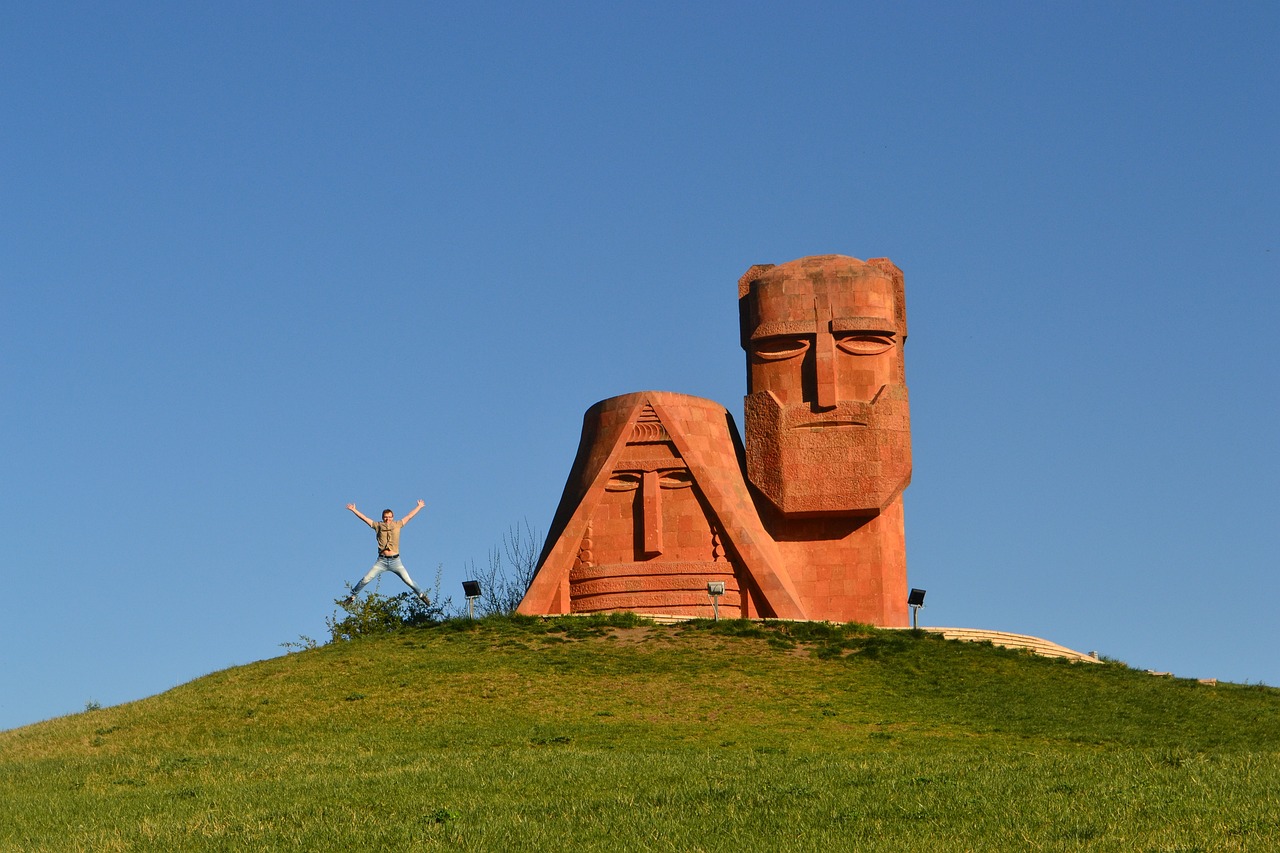
Bryza on Armenia, Turkey and Azerbaijan
[ 02 May 2009 12:35 ]
“We have a fair and balanced proposal on the table”Washington. Zaur Hasanov – APA. Adviser to US Secretary of State on European and Euarsian Affairs, OSCE Minsk Group US Co-Chair Matthew Bryza’s interview to APA.
– In the first days of the next week, the MFA of Azerbaijan and Armenia will be in Washington. Is it coincidence or you are setting up a meeting with the ministers?
– Of course, it is not a coincidence. Secretary of State Clinton as well as the President have both said they want to help bring about significant breakthrough in Naqorno-Karabakh peace process. So we have both foreign ministers here having separate meetings with our Secretary of State and we, the Co-Chairs are preparing for the meetings of the presidents of Azerbaijan and Armenia on May 7 in Prague.
– Many think thanks in Washington are raising a concern about the Turkish-Russian rapprochement. They think that Russia helps Turks to find a deal with Armenia but instead may ask Turks to halt any future energy pipeline projects which are planned to bypass Russia. Do you have the same concern?
– The experts have a right to tell their opinions. As a person who is responsible for our foreign policy toward this region, I can say that Turkey is a key ally and one of our closest friends in the world and is reliable. Turkey should have decent, normal relations with Russia. And we all know that for years there have been very deep business relationships between Turkey and Russia. For example, projects like Blue Stream which aimed to strengthen Russia’s monopoly over gas transit to Europe. But Turkey has been a very active and reliable partner and helped Europe to diversify its energy supplies, both oil and gas, through pipelines linked primarily to Azerbaijan, but also, perhaps, eventually to Turkmenistan and Iraq. So whatever Russia’s ambitions may be, the U.S.-Turkey strategic partnership is strong and will stay strong. Finally, when it comes to Nagorno-Karabakh, all of the Minsk Group Co-Chair countries are one team and are working together to deliver a breakthrough. Russia will no be able to do it alone. In fact, none of the Co-Chair countries will be able to do it alone; we all have to work together.
– Is there any remark about the Nagorno-Karabakh conflict in the roadmap announced between Turkey and Armenia recently?
– I am not going to comment on the content of the bilateral agreement between two countries. But what I can say is that there are two processes: Nagorno-Karabakh, or Azerbaijani-Armenian relations, and a separate one for Turkey-Armenian relations. They are two separate processes. In fact, we anticipate they both will move forward simultaneously but at different speeds. We may have more progress on one at one time, and it may slow down at another time. They are separate processes moving forward in parallel, but at different speeds. So I would anticipate that the roadmap focuses on Turkey-Armenian relations. But the last point I am making is that the diplomatic and psychological climate in the region will improve due to Turkey-Armenian normalization. And this will also improve the climate for the Nagorno-Karabakh process.
– Are you confident that the border opening will change the climate and help foster the negotiations between Armenia and Azerbaijan?
– In diplomacy there is no guarantee except on international legal issues when there are legal guarantees. What we have is a strong opinion by the U.S. in this case, if Turkey-Armenian normalization moves forward, by the way I am not talking about the opening of border, border opening will happen later in the normalization process, but as this normalization process between Turkey and Armenia begins and goes forward, we believe we will see that the prospect for a solution to Nagorny Karabakh conflict will improve. But you don’t have to trust me now. All we can ask is to give us Co-Chairs some times, several months, to work with the parties to achieve a breakthrough. And if we reach the breakthrough maybe next week in Prague or later on in Saint Petersburg, you will know that we are right. Then, every side will be able to move forward together in confidence. If we don’t achieve a breakthrough, if we are wrong, then we know that Azerbaijan will react. So, our job is to focus all our efforts on achieving the breakthrough so everything can move forward smoothly.
– Do you have any document on table which presidents can sign and reach the breakthrough in Prague?
– I don’t want to suggest that any document may be signed at that particular meeting. The breakthrough, I am hoping for, does not necessarily require the signing of any documents. We need presidents to agree on a few remaining concepts of our Basic Principals, which will constitute the breakthrough. I don’t think that there is any need to anticipate any document to be signed at this point. The breakthrough, when negotiating the peace agreement, can come in all kind of forms. You can’t get anything on paper unless you worked it out intellectually. The Madrid documents are the last version of the Basic Principals is proposed by the Co-Chairs and they reflect several years of negotiations. From our perspective, our suggestions, in the form of Madrid Documents, remain on the table. We have been working with the presidents and foreign ministers to improve that document and its recommendations, and bring sides closer together. The foundation of our work is the Madrid Document.
– Ho do you charcaterize the US-Azerbaijan relations?
– The relationship between Azerbaijan and the USA is a friendship and strategic partnership, and we want to deepen it. We’ve got a whole range of areas where we need to work. Our strategic partnership has been based on security, energy, (where Azerbaijan is one of the important countries anywhere in helping Europe to diversify it supplies of natural gas and oil. Of course, the expansion of the political and economic freedom within Azerbaijan is also important. All those issues are of great importance and are interrelated, and we need to see progress in all three areas at the same time. Right now we are making a major push at the highest level to help to Azerbaijan to address the most important problem, which is the settlement of Nagorno-Karabakh conflict. We have a fair and balanced proposal on the table, which, when implemented will led to return of territories, to return of IDP’s and refugees, and which will bring a sense of security to Armenian and other residents of NK and surrounding territories, and will have a positive impact on stimulating economic growth and prosperity, and lay a foundation for long-term peace.
-
BORDER TURKS WANT DOOR TO ARMENIA KEPT SHUT
IWPR’S CAUCASUS REPORTING SERVICE, No. 491, May 1, 2009
Plan to reopen frontier between Armenia and Turkey wins few friends in towns and villages on Turkish side.
By Sabuhi Mammadli in Igdir, Turkey
Talk of the possible reopening of the Turkish-Armenian border has left residents in nearby Turkish towns divided on whether such a development is what they need.
Many say that even if it means certain economic benefits for them, they are not ready to make friends with their Armenian neighbours.
Igdir is a small town in Turkey. For all its provinciality, it lies in an area of great strategic importance for Turkey, located at an intersection of the country’s borders with Azerbaijan, Armenia and Iran.
Most of the local people in Igdir are Azeris who moved here from territories in or adjacent to Nagorny Karabakh.
Turkey closed its border with Armenia in 1993 in sympathy with Azerbaijan, following a series of defeats that the latter had suffered in its war over Nagorny Karabakh.
There are still no diplomatic relations between the two countries due to the still unresolved Karabakh conflict and Armenia’s demands that Turkey recognise the following: the 1915 mass killings of Armenians in the Ottoman Empire as a genocide; and the territorial claims of some Armenian political parties to six provinces in Turkey’s north-east.
But the fact that the opening of the frontier is one of the 35 requirements Turkey needs to meet to be admitted to the European Union has put pressure on Ankara to find a solution.
Armenia and Turkey, with Switzerland as mediator, have been negotiating behind closed doors on the issue since 2002.
The unblocking of the border was the top item on the agenda in talks between Turkish prime minister Recep Tayyip Erdogan and United States president Barack Obama during the latter’s recent visit to Ankara.
The issue was also discussed during the Turkish president Abdullah Gul’s short visit to Armenia last September.
It also featured in the Turkish-Armenian talks being conducted in Switzerland, which resulted in the recent joint declaration of a so-called road map, leading towards hoped-for normalisation of relations.
Signs that Turkey and Armenia might be moving toward a rapprochement have displeased the Azerbaijan president, Ilham Aliev, however.
He showed his annoyance by refusing to attend a recent international conference in Ankara, thus sacrificing an opportunity to meet Obama, who attended the event among other high-ranking guests.
Despite Azerbaijan’s demarches, the Turkish-Armenian road map already envisions reopening two checkpoints on the frontier between the two countries.
One is located near the village of Alijan in Igdir; the other is in the Kars village of Akyaka.
Cahid Erol, head of the Igdir department of the National Movement Party, known in Turkey as the MHP, is worried by the momentum leading towards reopening of the border.
He fears the recent election of a Kurdish mayor in Igdir may have advanced an undesirable, process.
Erol recently lost the local elections to the candidate of the Kurdish Democratic Society Party, Mehmet Gunesh, whom Erol insists is a sympathiser with the Kurdish Workers’ Party, PKK, deemed a terrorist organisation in Turkey.
“Now, unfortunately, they’ve appointed a member of the PKK to lead the municipality,” Erol complained.
He worries that the new Kurdish municipal chief will act on his pledges to open the frontier with Armenia.
Soon after being elected, Gunesh told a local newspaper he would “open the gates of Alijan”, the village near one of the proposed checkpoints.
“This will boost the region’s economic development,” he told the same newspaper.
The idea of trading away Turkey’s alliance with Azerbaijan in exchange for “development” does not appeal to Erol.
“Our respected [party] chairman, Devlet Bahceli, says, ‘We won’t back off on Karabakh, even if Azerbaijan does,’” he retorted.
“We would be glad if Azerbaijan took a tough stance on the Turkey-Armenia border reopening issue, and if [President] Aliev upset the plans of Obama and Erdogan.
“Our party has made its position clear. The border will never be opened, or they will have to step over our dead bodies first.”
Opinions vary among ordinary residents of Igdir, though many seem as hostile to the reopening of the frontier as Erol.
Nuri, an employee in the Hotel Barbarossa, in the heart of Igdir, said such a development would stain Turkey’s reputation.
“I just can’t imagine Armenians traveling freely to Turkey,” he said. “How can it be possible?”
A local businessman, Ekrem Yesil, struck a similar line. He said the sociology department of the University of Arzrum had recently conducted a survey of 10,000 people, showing the overwhelming majority against reconciliation.
“Ninety-seven per cent of the respondents said they did not want the border reopened,” Yesil said.
“Most of the remaining three per cent were members of the pro-government Justice and Development Party.”
Murat Karademir, of the opposition Popular Republican Party, also adamantly opposes a rapprochement, describing Igdir as “the door to the Caucasus” – a door, he says, that needed to remain firmly shut in Armenia’s face.
“For Armenians, the town represents a path to Europe via Turkey; in a word, it’s a strategic territory,” he said.
“Opening this door to Armenians now would mean a catastrophe for Turkey, a threat to its security.
“Besides, the PKK is very active in this region; it’s not a secret for anyone that many PKK members are trained in Armenia and the occupied Karabakh.
“It is there that terrorists get their wounds treated. Already it’s very difficult to [prevent them going] crossing into Armenia. Unsealing the border would make it still easier for them to move.”
Mehmet Aydin, who comes from Alijan and now lives in Igdir, said Ankara had recently made a point of sending envoys to the village to argue for reopening the frontier.
“They have been saying, ‘You see how Igdir has evolved from a small village into a town after the border with Azerbaijan was opened. That’s what will happen to Alijan, [if the border with Armenia is unsealed]’.
“Some believe in this propaganda and want [it] to be reopened, but most don’t.”
But not everyone in Igdir wants the frontier with Armenia to remain shut forever.
Ahmet Sahin, a local activist of the Democratic Society Party, believes many businesses in Igdir now idling because of economic difficulties could get back on track if the border was opened.
“I’m an entrepreneur myself,“ he said. “The chemical goods produced at my factory have been collecting dust in storage facilities.
“What would be wrong if I took my produce to the Armenian market?”
“The border should be opened, because there are no jobs in Turkey,” agreed Mehmet Broi, a local teacher. “Trade has shrunk too. Armenia is a profitable territory for us.”
The governor of the area, Mehmet Karahisarli, also sounded a note of optimism about the possible reopening of the border. “[This] would stimulate business activity in both Igdir and the entire district,” he told IWPR.
But Turkish nationalists continue to reiterate that they will only tolerate seeing the frontier unsealed if Armenia meets a series of conditions.
These start with Nagorny Karabakh.
“First of all, Armenia has to un-occupy the territories of Karabakh,” Erol said.
“Secondly, they should get the genocide demand out of their heads. Thirdly, they should stop asking Turkey for compensation. Fourthly, they should give up their territorial claims regarding Turkey. Fifthly, they should admit to the [February 1992] massacre [of Azeris] in Khojali.
“Once the Armenians have met all these conditions, Erdogan and Gul can even become related to [Armenian president Serzh] Sargsian for all we care.
“Until they do, we have nothing to talk about.”
Sabuhi Mammadli is a freelance journalist.
-
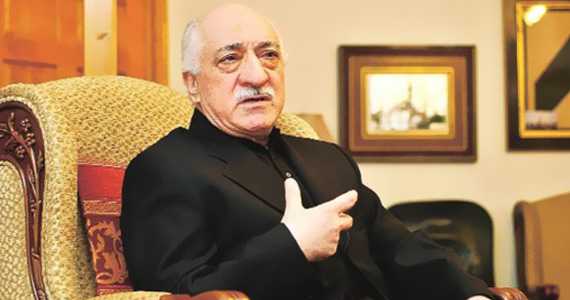
UZBEK AUTHORITIES FIND NEW “ISLAMIST ENEMY”
IWPR’S REPORTING CENTRAL ASIA, No. 574, April 24, 2009
Government mounts campaign to weed out associates of Nur movement, although its motives remain unclear.
By IWPR staff in Central Asia Bishkek
A Turkish Muslim movement has become the latest target in the Uzbek government’s long and bitter on war on anything it regards as radical Islam.
In a trial that opened in the western city of Bukhara on April 21, nine men are accused of offences under article 244 of Uzbekistan’s criminal code covering religious extremism, separatism, and forming or belonging to an extremist group.
Yet little evidence has been brought to show they were members of an organised group, and none that demonstrates they held extremist views.
The defendants include Ikrom Meryaev, 37, who is deputy head of physics and mathematics at Bukhara University. He and the eight other defendants were arrested in December while meeting at his house.
They are accused of being part of a movement associated with the Turkish Islamic thinker Fethullah Gülen, which is best known in Central Asia for its involvement in running private lycees.
Gülen’s movement is also referred to as Nur (Light), derived from the movement inspired by Said Nursi, an Islamic thinker in Turkey who died in 1960.
In the early Nineties, Turkish lycees sprang up all over the region, attracting the children of the elite.
Uzbekistan encouraged these schools as a way of fostering political relations with the Turks, who had become interested in their ethnic kin in Central Asia after the fall of the Soviet Union.
When a series of bombs went off in the Uzbek capital Tashkent in 1999, the authorities blamed two groups – the armed insurgents of the Islamic Movement of Uzbekistan, IMU, and the covert party Hizb ut-Tahrir.
Soon afterwards, in 2000, the government closed the Turkish schools, apparently out of a fear that they were secretly encouraging Muslim irredentism.
Although the lycees with Gülen supporters on staff did not teach an openly religious agenda, and the Nur movement’s published ideas have nothing in common with the revolutionary fundamentalism of the IMU and Hizb ut-Tahrir, the Uzbek authorities appear to have tarred them all with the same brush.
Recent months have seen a series of arrests of alleged “Nurchilar”, as members of the Gülen group are called in Uzbek.
The latest court case comes shortly after another trial ended in long jail terms for three alleged Nur members accused under the same criminal code article on religious extremism.
Shavkat Ismoilov, who ran a newspaper called Yetti Iklim (“The Seven Zones”), and Davron Tojibaev, who was chief editor of a magazine called Irmoq (“Wellspring”), got eight years each when sentence was passed on April 9. Mamadali Shahabiddinov, the imam or prayer leader at the Makhtub Eshon mosque in Namangan, received a 12-year term.
Yetti Iklim and Irmoq made no secret about publicising Said Nursi’s ideas. Yet in 2007, both publications went through the onerous registration process which screens out anything the Uzbek authorities regard as politically controversial or undesirable – there are no opposition media in the country.
Both the paper and the magazine have now been closed down.
On February 26, five other members of staff at Irmoq were sentenced to between eight and 12 years, on charges of distributing information that presented a threat to public security, and involvement in the Nur organisation.
The court heard evidence from prosecutors that the defendants were graduates of Turkish-run lycees.
At this trial, the accused did not deny spreading Said Nursi’s ideas, but rejected claims that this equated to Islamic extremism.
“I am against any kind of extremism and I fully support the policies of the Uzbek government,” said one of the defendants, Bahrom Ibrahimov, who got 12 years.
Anvar Mamedov, the lawyer who defended the men, said little hard evidence was produced that his clients had published dangerous material.
“The [court’s] findings stated that the general context of the articles might constitute a threat to public security, yet they failed to cite specific sentences or phrases that count as extremist,” he said.
One human rights group in Uzbekistan, Ezgulik, reports that a total of 50 suspected Nur sympathisers have been arrested around the country. According to Ezgulik activist According to Abdurahmon Tashanov, police are rounding up people who attended Turkish lycees in the past.
One of these former pupils told told IWPR how he was summoned for questioning by the National Security Service, SNB.
“They won’t leave us in peace,” he said. “I’ve got nothing to say to them, as I have nothing to do with the Nur people.”
As is common in a country where state media are used to relay messages from government, the multiple prosecutions have been accompanied by the repeated airing of a TV documentary claiming to show the true face of the Nur movement.
Entitled, “The light that brings darkness”, the TV programmes used information from Uzbekistan’s National Security Service to underpin its argument that education was merely a tool to secretly train Nur activists for the ultimate goal of creating Islamic states from Turkey to Central Asia.
“The so-called educational and charitable assistance provided by the Nursi sect is a threat to the national values of the Uzbek state,” the narrator said at one point.
Analysts question whether the Gülen movement poses even a remote danger to a police state like Uzbekistan, or whether the security services have simply got into the way of identifying Islamic groups as enemies that need to be rooted out.
“They are looking for enemies where there are none, “said Tashpulat Yoldashev, an Uzbek political analyst now living abroad.
“What religious organisation could function under the nose of the Uzbek SNB? That’s impossible, given the way the current regime operates.”
Uzbekistan’s president, Islami Karimov, harassed secular opposition groups out of existence by the early Nineties, and then turned his attention to Islamic groups, clearly fearing that any form of religious expression not controlled by the state might provide a channel for expressions of popular dissent.
He began by eliminating those Islamic clerics who did not share his vision of religion as an instrument of state policy. This clampdown led to the emergence of the IMU, which conducted armed guerrilla raids in 1999 and 2000 – resulting in mass arrests.
The radical Hizb-ut-Tahrir was dealt with by similarly indiscriminate waves of arrests, although it continues to operate covertly.
The government continues to see anything that looks like an uncontrolled expressions of Muslim faith. Gülen’s published views are apolitical and he calls for interfaith dialogue and tolerance. For Uzbekistan’s leaders, it seems to be enough that his followers talk about Islam, and that their inspiration is foreign.
-
Karabakh Eyes Armenia-Turkey Thaw With Suspicion
The recent warming in the relations of the two estranged neighbours provokes ambiguous reactions in Nagorny Karabakh.
By Karine Ohanian in Stepanakert (CRS No. 491, 1-May-09)
In the Armenian enclave of Nagorny Karabakh, there is only one topic of discussion right now: the possible restoration of the ties between Armenia and Turkey, opening of the borders, and what it all means for people here.
With the Swiss playing the role of mediators, Armenia and Turkey on April 23 announced they had agreed on a so-called road map leading towards normalisation of relations, broken off by Turkey in 1993.
Political parties, NGOs and local authorities in Nagorny Karabakh have reacted by maintaining that the problem of Armenian-Turkish relations cannot be resolved aside from the Karabakh conflict.
They say the border issue, acknowledgement of the 1915 Armenian genocide and the problem of Nagorny Karabakh’s status must be solved in one package.
The unrecognised republic, which has a population of about 140,000, has been demanding independence from Azerbaijan since 1988.
At the beginning of the Karabakh conflict, Turkey – which hotly disputes the scale of the killings of 1915, as well as use of the term genocide – proclaimed itself Azerbaijan’s “elder brother” and in 1993 imposed a blockade on Armenia.
Many Armenians continue to regard Turks and Azerbaijanis as members of the same nation, associating both with the terrible events of 1915.
Therefore, political experts in Nagorny Karabakh view the problem of Armenia-Turkey relations and the Karabakh issue as elements of a single national issue.
“It’s a very tricky situation for Karabakh, since we place Armenia-Turkey and Armenia-Azerbaijan relations in one bracket,” Hrachia Arzumanian, a local expert on security issues, told IWPR.
Arzumanian says local people were surprised to hear that Armenia and Turkey had agreed on a road map towards better relations just before April 24, when Armenians traditionally commemorate the events of 1915.
They had been expecting to hear the word genocide in a speech by United States president Barack Obama that day. He had promised to use the term during his presidential campaign. In the event, Obama used the Armenian phrase mets yeghern instead, which means great massacre.
“Now this trump card gives them [the Americans] a good excuse to draw back from recognition of the genocide,” Arzumanian continued.
“Another strange thing here is whether Turkey has made this step forward towards warming relations without preconditions and whether Karabakh will pay the price for this.”
David Babaian, head of information for the Nagorny Karabakh president, Bako Sakahian, doubts the entity will be sacrificed on the altar of Turkish-Armenian reconciliation.
On the contrary, “the thaw in Armenia-Turkey relations simply rules out the rhetoric of one-sided concessions to Azerbaijan”, he said.
“It’s in Turkey’s interests to emerge as the main geopolitical actor in the South Caucasus; but it must do so without setting any preconditions, because this undermines that whole process,” he went on.
The information chief noted that in the Azerbaijan-Karabakh conflict, if the balance of power tilted too far against the entity, “this threatens not only us, but Armenia too. The Armenian authorities know this, so I think the [peace] process is for the sake of all Armenians and for Karabakh’s sovereignty as well”.
Not everyone is convinced that Nagorny Karabakh stands to benefit from a rapprochement between Yerevan and Ankara, however.
“I am against the border reopening right now, on the eve of anniversary of the genocide, and I’m afraid that in taking this step Armenian diplomacy is losing its advantage,” David Ishkhanian, a representative of Armenian Revolutionary Federation, ARF, in Artsakh (the Armenian name for Nagorny Karabakh), said.
Ishkhanian said Azerbaijan and Turkey remained united in pursuit of their anti-Armenian policy.
“It’s time to reopen a ‘Karabakh front’ in diplomacy and unite the efforts of the diaspora, Armenia and Karabakh towards reaching our common goals,” Ishkhanian said.
Meanwhile, April 24, the 94th anniversary of Armenian holocaust, was marked by extraordinarily active and crowded rallies in Nagorny Karabakh.
People lit candles all night long while youth organisations arranged a torch-lit procession, which ended with burning of the Turkish flag – notwithstanding the protests of law-enforcement agencies.
A large number of Nagorny Karabakh residents gathered at the memorial to the genocide victims in the capital Stepanakert in spite of rainy weather.
“This year, especially with regard to recent political developments, I was particularly eager to take part in the commemoration of the genocide and tell the whole world about the necessity of its recognition,” Anush Gavarian, of the Club of Young Political Analysts, said.
“It wasn’t Armenia that closed its borders with Turkey but vice-versa. Turkey acted against Armenia and still tries to speak set preconditions.”
No fan of the current reconciliation process, Gavarian said she feared a repeat of events in the 1920s, when Russia and Turkey “decided to sacrifice Armenians and possibly the whole of Karabakh for the sake of their own interests”.
Gavarian was referring to Stalin’s decision to place overwhelmingly Armenian populated Nagorny Karabakh within the borders of Azerbaijan.
Karen Ohanjanian, leader of the Social Justice Party, told IWPR that local people felt uninvolved and marginalised by much of the recent diplomatic activity.
“The public has no knowledge of the context of the road map or about the talks between Armenian and Russian presidents on the principles of Karabakh conflict resolution,” Ohanjanian said.
Russian president Dmitry Medvedev recently met his Armenian counterpart Serzh Sargsian near Moscow to discuss energy cooperation and the Karabakh conflict.
“I hope no preconditions are set at our expense or, as leader of one of the most powerful parties in Nagorny Karabakh, I will take steps to mobilise the masses to prevent any alteration of the Karabakh security system,” Ohanjanian said.
“Karabakh can’t cede any territories to the detriment of national and physical security of its residents.”
All political parties in Nagorny Karabakh have released a common statement, urging the international community to acknowledge the genocide of 1915 and recognise the independence of the entity.
According to Vahram Atanesian, head of the Democracy faction in parliament, “recent processes show Russia and Turkey are trying to solve the problems in the South Caucasus in accordance with their own interests”.
He urged politicians from Nagorny Karabakh to “remind the international community and the mediators that a resolution of the Karabakh conflict in line with the concept of dividing the South Caucasus into spheres of influence is unacceptable.
“Any solution that doesn’t envisage our independence within fixed borders is inadmissible for us.”
But Masis Mailian, chair of Nagorny Karabakh’s Foreign Policy and Security Council, sounds a more cautious note.
He describes the joint statement of the foreign ministries of Armenia, Turkey and Switzerland on the road map as convenient for Turkey but not as necessarily detrimental to Armenians.
“If Turkey really claims a regional leadership role, it must no longer remain captive to the senseless ambitions of Azerbaijan,” he said.
Mailian said he hoped Ankara’s more “pragmatic attitude” towards Armenia might lead to the restoration of diplomatic ties and reopening of the borders.
“These moves might [then] prompt Azerbaijan to soften its position, leading to more constructive view of the resolution of the Karabakh conflict,” he added.
Ashot Gulian, speaker of the Nagorny Karabakh parliament, also supports Yerevan’s drive to heal relations with Turkey.
“The Armenian side is apparently more interested in reopening of the borders [than is Turkey],” he noted.
But the speaker still describes the thaw in relations as mutually beneficial, adding that it need not undermine moves to gain world recognition of the 1915 genocide.
“The opening of the Armenian-Turkish border is necessary for both sides,” he said.
“But since it was stated before that the reconciliation process must lack any preconditions, the efforts to achieve recognition of the Armenian genocide can’t have any influence on the normalisation of Armenia-Turkey relations.”
Meanwhile, the numerous traders who have been enjoying the more open border regime between Armenia and Turkey for some time – and who sell products brought from Turkey in Nagorny Karabakh – follow events with interest.
“I have been traveling to Turkey to buy goods for seven years, and frankly, I have never had any problems there,” Marta Arzumanian, a shopkeeper, told IWPR.
An acknowledged fan of the road map , Arzumanian added, “Personally, I think reopening the border will make our work much easier and will reduce taxes.”
Karine Ohanian is a freelance journalist in Stepanakert.