Month: February 2009

  • Possible scenarios discussed

    Possible scenarios discussed

    Investigators are trying to determine the cause of the Turkish Airlines plane’s crash-landing in Amsterdam as the local media and experts discuss possible scenarios.
     At least nine people were killed and 84 injured after a Boeing 737-800 operated by the Turkish Airlines crash-landed Wednesday in a field near Amsterdam’s main airport, splitting into three parts.

    The flight data and voice recorders, recovered late on Wednesday, will be the key to determine the crash of an airplane with a good safety record, flown by a well-respected airline, at one of the world’s most modern airports.

    This is the fourth serious accident since August 2008, when a Spanair MD-80 crashed on take off at Madrid; the others being the Hudson River crash and the fatal Continental Airlines crash at Buffalo, New York on Feb. 12.

    The fact that the plane did not catch fire has persuaded some commentators to question how much fuel was onboard the aircraft.

    Here are the major scenarios and possibilites circulated in Turkey:

    1) VORTEX: A Boeing 777, operated by KLM, was landed just ahead of the crashed Turkish Airlines. Experts say the vortex, Boeing 777 created, may have jeopordized the landing of the Turkish Airlines plane. There was 54 accidents so far caused by vortex.

    2) ENGINE FAILURE: Some passengers said they saw smoke rising from the left engine of the plane. Although it is not confirmed, media reports suggest the plane asked for an emergency landing. Photos from the crash scene showed one of the engines lying on the ground far from the plane. But it is unclear whether the engine fell before or after the crash.

    3) STALL: The plane might have unexpectedly lost flying speed as it was descending. The possible causes are numerous. They include a loss of engine power because of such things as fuel starvation, ice, a bird strike or a control problem, the experts believe.

    4) WINDSHEAR: This could be a possible cause for the crash. Windshear is a difference in wind speed and direction over a relatively short distance in the atmosphere.


    Hurriyet Daily News

  • Deadly Turkish plane crash probed

    Deadly Turkish plane crash probed

    Investigations are continuing into what caused a Turkish Airlines plane to crash at Amsterdam’s Schiphol airport, killing nine people and injuring 84.

    The plane, en route from Istanbul with 127 passengers and seven crew, crashed short of the runway on Wednesday.

    Three of those killed were members of the crew. Dutch officials said most of the passengers on board were Turkish.

    Relatives of some of those killed have arrived in Amsterdam on a special Turkish Airlines flight from Turkey.

    Officials told reporters on Wednesday that they did not yet know what had caused the plane to crash on landing.

    The flight data and voice recorders from the aircraft have been found and are being sent for expert analysis.

    The Boeing 737-800 aircraft came down at 1031 local time (0931 GMT), several hundred yards (metres) short of the runway, about three hours after it left Istanbul’s Ataturk Airport.

    It broke into three pieces on impact but most of those on board survived, although many were hurt.

    In a news conference on Wednesday, a Dutch health official said six of those injured were in a critical condition.

    She said another 25 passengers were severely wounded and 24 more had suffered light injuries. They were being treated at 11 hospitals in the area.

    The Turkish transport ministry said the flight carried 78 Turkish nationals and 56 people of other nationalities.

    Candan Karlitekin, head of Turkish Airlines’ board of directors, told reporters in Turkey that records showed the plane had been properly maintained.

    Turkish Transport Minister Binali Yildirim said it had been “a miracle” that there were not more casualties, AP reports.

    “The fact that the plane landed on a soft surface and that there was no fire helped keep the number of fatalities low,” he said.

    ‘Suddenly descended’

    One passenger aboard the plane, Kerem Uzel, told Turkish news channel NTV that the plane’s landing had been announced when they were at an altitude of 600m (2,000ft).

    “We suddenly descended a great distance as if the plane fell into turbulence.

    The plane’s tail hit the ground… It slid from the side of the motorway into the field.”

    Witnesses on the ground described seeing the plane appear to glide through the air, having lost all propulsion, before hitting the ground and breaking into three pieces.

    Some passengers were able to begin climbing out of the plane before rescue workers arrived on the scene.

    All flights were suspended for a time, but the airport re-opened later in the day.

    The last crash involving a Turkish Airlines plane was in 2003, when at least 65 people died in an accident in eastern Turkey.

    Schiphol airport has six runways and one major passenger terminal. In 2007, it handled 47 million passengers, ranking fifth in Europe.

    SCHIPHOL ACCIDENTS
    27 October 2005: A fire at the airport’s detention centre killed 11 people and injured 15
    4 April 1994: Three people were killed and 13 seriously injured when a KLM flight carrying 24 people crashed on landing
    4 October 1992: An El Al Boeing 747 cargo plane crashed into an apartment block after takeoff, killing 43 people
    BBC 26 February 2009
  • 17th ANNIVERSARY OF KHOJALY MASSACRE

    17th ANNIVERSARY OF KHOJALY MASSACRE

    Azerbaijani-American Council (AAC)
    P.O.Box 50370
    Irvine, California 92619
    [email protected]
    Azerbaijan Society of America (ASA)
    103 Elwood Avenue
    Newark, New Jersey 07104
    [email protected]
    Press Release PR-200902#01

    February 25, 2009

    AZERBAIJANI-, TURKIC-AMERICANS COMMEMORATE THE 17th ANNIVERSARY OF KHOJALY MASSACRE, CALL FOR JUSTICE

    SAN FRANCISCO, LOS ANGELES, HOUSTON, WASHINGTON, NEW YORK – Azerbaijani-American Council (AAC) and Azerbaijan Society of America (ASA) join Azerbaijani-American community in commemorating the massacre which took place during the night of February 25-26, 1992 near the town of Khojaly in Nagorno-Karabakh region of Azerbaijan. On this frosty night, Armenian forces surrounded and attacked the Azerbaijani-populated town, brutally massacring its fleeing residents. As the Newsweek magazine reported about Khojaly on March 16, 1992: “Many were killed at close range while trying to flee; some had their faces mutilated, others were scalped”. 613 people, including 106 women and 63 children, were tortured and maimed to their deaths in freezing temperatures, with hundreds more missing. Over 1,000 people received permanent health damage, 1,275 people were taken hostage, 8 families were fully destroyed. A total of 25 children lost both of their parents and 130 children lost one of them. According to the Human Rights Watch, Khojaly Massacre was “the largest massacre to date in the conflict” over Nagorno-Karabakh (Human Rights Watch / Helsinki. Azerbaijan: Seven Years of Conflict in Nagorno-Karabakh. New York. 1994)
    Despite some adverse attempts to deny the fact of Khojaly Massacre, Monte Melkonian, the graduate of UC Berkeley, ASALA member, Armenian National Hero and a field commander during the Nagorno-Karabakh war, provided the following account of the aftermath of an Armenian assault on Khojaly:“By the morning of February 26, the refugees had made it to the eastern cusp of Mountainous Karabagh and had begun working their way downhill, toward safety in the Azeri city of Agdam, about six miles away. There, in the hillocks and within sight of safety, Mountainous Karabagh soldiers had chased them down… fighters had then unsheathed the knives they had carried on their hips for so long, and began stabbing..” (Markar Melkonian. My Brother’s Road: An American’s Fateful Journey to Armenia. New York: I.B. Tauris, 2005, p. 213).   For 17 years since this massacre, no proper legal evaluation was given to the event. The facts and evidence of Khojaly Massacre, an act of war crime which preceded Srebrenica Massacre, were never completely pursued by the relevant international bodies. Many of those suspected of perpetrating the massacre still remain inside Armenia and the occupied regions of Azerbaijan. The ongoing occupation of Azerbaijani territories despite 4 UN Security Council resolutions (#822, 853, 874, 884) seriously impedes the efforts of international community to bring lasting peace to the region. According to the incumbent president of Armenia, Serzh Sarkissian, a participant of Nagorno-Karabakh war: “before Khojali, the Azerbaijanis thought that they were joking with us, they thought that the Armenians were people who could not raise their hand against the civilian population. We were able to break that [stereotype].” (Thomas De Waal. Black Garden: Armenia and Azerbaijan through Peace and War, NYU Press, 2004).
    This year, several Azerbaijani- and Turkic-American organizations initiated the “Justice for Khojaly remembrance week in the United States, as part of a global campaign of justice for Khojaly victims led by international youth organizations.  As emphasized by the AAC Board member, Professor Thomas Goltz of Montana State University, who also witnessed the aftermath of Khojaly Massacre and documented it in his “Azerbaijan Diary”, many more facts of this war crime are still unknown to international community. Therefore, within the scope of U.S. campaign, discussion panels and public remembrance ceremonies are held in San Francisco (UC Berkeley), Los Angeles, Houston, Washington and New York. While we are concerned by some defensive attempts to prevent even the remembrance of Khojaly Massacre, we would like to remind that the psychological damage inflicted by this massacre and lack of justice over it remain to be one of the major obstacles for reconciliation between Armenians and Azerbaijanis. Public awareness and debates held in a civil discourse about the facts of Nagorno-Karabakh war will only help to open the way for healing between the two nations and bring about a just settlement of the conflict.

    AAC and ASA call for all relevant U.S. and international bodies to properly investigate the facts of Khojaly Massacre and to help bring those responsible to justice. May the souls of all victims of Khojaly and Karabakh conflict rest in peace.

    Copyright 2009 Azerbaijani American Council and Azerbaijan Society of America
     
  • Lots of blame to go around for ‘losing’ Turkey

    Lots of blame to go around for ‘losing’ Turkey

    Wednesday, Feb. 25, 2009

    By DOMINIQUE MOISI

    Dominique Moisi is a visiting professor at Harvard University and the
    author of “The Geopolitics of Emotions.” © 2009 Project Syndicate

    CAMBRIDGE, Mass.  “Who lost Turkey?” That question, often raised in
    the past, has been heating up in the aftermath of Prime Minister Recep
    Tayyip Erdogan’s emotional outburst during the recent World Economic
    Forum 2009 in Davos, when he abruptly left a panel he was sharing with
    Israeli President Shimon Peres.

    And the Turkish question matters greatly, because it touches on some
    of the most unstable and unsettling of the world’s diplomatic disputes.

    If Turkey has indeed been “lost,” those responsible include the
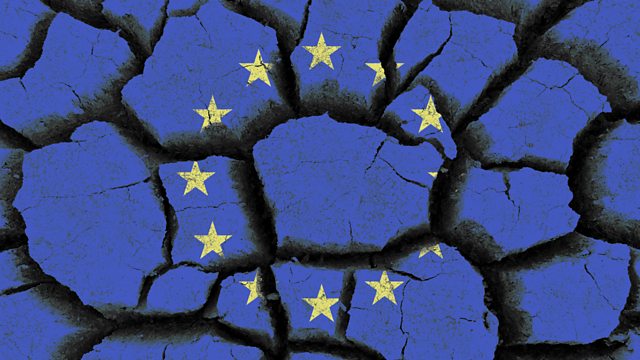
    European Union, the United States, Israel and Turkey itself. The EU’s
    growing reservations about Turkey’s membership have been expressed
    unambiguously by French President Nicolas Sarkozy. In the U.S., former
    President George W. Bush gets some of the blame because of the war in
    Iraq. Israel, too, has played its part in Turkey’s alienation from the
    West, as a result of the Lebanon war of 2006 and its recent military
    operations in Gaza.

    All of these events have disturbed and disoriented Turkey, and are
    magnified by the domestic impact of worst global economic crisis since
    the 1930s.

    Of course, Turkey’s secular, pro-Western elites may still consider the
    EU and the U.S. important, if not indispensable, allies and partners,
    and they may consider Islamic fundamentalism, Hamas, Hezbollah and
    Iran real or at least potential threats. Yet they are also convinced
    that Europe has behaved improperly toward Turkey, through a
    combination of short-term populist reflexes and the absence of a
    long-term strategic vision.

    The Turkish question is, of course, complex. Turkey’s geography is
    predominantly Asian, Turkey’s emotions are increasingly Middle
    Eastern, i.e., Muslim on the Israeli-Palestinian conflict, and yet
    Turkey’s elites remain resolutely pro-Western and pro-European. But
    for how long?

    At the beginning of the 21st century, when dialogue with the Islamic
    world is one of the Western world’s key challenges, Europe would
    commit a historic strategic blunder if it were to close its doors to
    Turkey. To do so would push back the inheritors of the Ottoman Empire
    back onto an Asian, Muslim and Middle Eastern historical trajectory.

    In the question of Turkish accession to the EU, the journey matters
    more than the destination. The reforms that Turkey has already
    implemented in a very short period of time, thanks to its EU candidate
    status, are impressive. Should we in Europe really put at risk that
    progress by expressing an all-too-audible “no”?

    The EU desperately needs a strategic and diplomatic partner that can
    significantly reinforce its clout in the Middle East. Europe also
    needs the dynamism of a youthful Turkey. Above all, it needs the
    message of reconciliation sent to Islam that Turkey’s entrance into
    the union would represent.

    Of course, to want Turkey “in” is an act of will, if not an act of
    faith that is in many ways counterintuitive. Most Europeans do not
    perceive Turkey as a “European Other” but as a “non-European Other.”
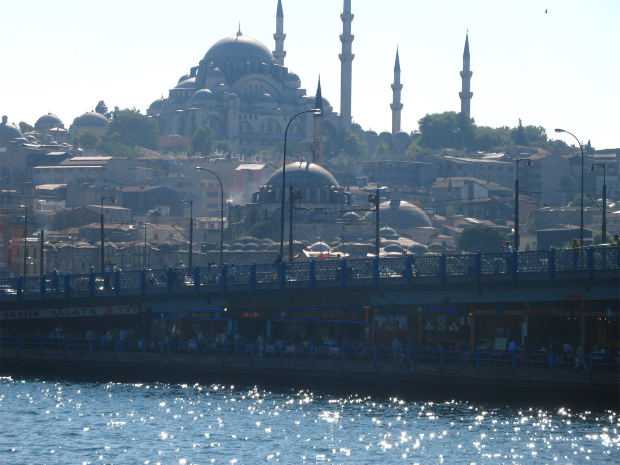
    Even in Istanbul, the most Westernized of Turkish cities, as soon as
    one leaves the main arteries, one seems to be immersed in a Middle
    Eastern or Asian culture.

    Israel is not in the European Union, but it, too, is in great danger
    of losing Turkey. Far from reinforcing Israel’s security, its last two
    military adventures, in Lebanon and now in Gaza, have caused further
    self-isolation and loss of world sympathy. Nowhere has this phenomenon
    been stronger than in Turkey, where those military escapades have
    strained the two countries’ strategic alliance almost to the breaking
    point.

    It is too early to speak of Obama’s policy toward Turkey; suffice it
    to say that in his willingness to open a respectful dialogue with
    Islam, he is the only Western leader to move in the right direction.
    But can positive American gestures toward Turkey, a key NATO member,
    be sufficient to offset Israel’s insensitive, if not reckless,
    policies? The answer is unclear.

    Turkey, too shares some of the responsibility for this mounting
    process of estrangement. Erdogan’s behavior in Davos was, at the very
    least, irresponsible. He may have gained popularity back home, but in
    today’s difficult economic times, the temptations of cheap populism
    are more dangerous than ever. One does not play lightly with matches
    next to a pile of dry wood.
  • Turkish plane crash in Amsterdam

    Turkish plane crash in Amsterdam

    http://news.bbc.co.uk/2/hi/europe/7909887.stm

    Editor’s Choice

    Nine dead in Turkish plane crash

    A Turkish Airlines plane has crashed on landing at Amsterdam’s Schiphol international airport, killing nine people.

    The plane, with at least 135 passengers on board, crashed short of the runway near the A9 motorway and suffered significant damage.

    Aviation expert Chris Yates gives his reaction to the accident.

    SEE ALSO

    • Airport authorities on crash(01.18)
    • Hudson plane pilot recording(00.53)
    • Ditched helicopter inquiry begins(03.14)
    • Eyewitness describes plane crash(05.19)
  • STATE ASSEMBLY MEMBER OFFERS CONDOLENCE

    STATE ASSEMBLY MEMBER OFFERS CONDOLENCE

    Azerbaijan, Baku, 24 February 2009
    Trend News, E. Rustamov

    California State Assembly member Felipe Fuentes offered his condolences to the Azerbaijani people on the occasion of the 17th anniversary of the Khojali Genocide.

    Armenian troops committed genocide in the Khojali settlement in Nagorno-Karabakh on Feb. 26, 1992.

    Within hours after the troops entered Khojali, over 600 unarmed Azerbaijani citizens were killed. Among them were 106 women and 83 children. About 1,000 people were disabled by shots; 8 families were fully destroyed. A total of 25 children lost both of their parents and 130 children lost one of them. About 1,275 people were taken prisoner. Around 150 people went missing.

    Fuentes sent a letter to Azerbaijani President Ilham Aliyev offering his condolences on the tragic events, Azerbaijani Consul in Los Angeles Elin Suleymanov told Trend News in a telephone conversation on Feb. 24.

    “This is a very important event. Because there are many pro-Armenian officials in California. People around the world are gradually coming to understand that Armenians provide false information about the Armenian-Azerbaijani conflict,” Suleymanov said.

    The conflict between the two South Caucasus countries began in 1988 when Armenia made territorial claims against Azerbaijan. Armenian armed forces have occupied 20 percent of Azerbaijan since 1992, including the Nagorno-Karabakh region and 7 surrounding districts. Azerbaijan and Armenia signed a ceasefire agreement in 1994. The co-chairs of the OSCE Minsk Group – Russia, France, and the U.S. – are currently holding the peace negotiations.

    JOIN AZERBAIJANI-AMERICAN COMMUNITY TO COMMEMORATE THE KHOJALY TRAGEDY!

    A grave crime was committed against innocent Azerbaijani civilians by the Armenian army, on February 26, 1992, which became and remains the largest massacre of modern times in the region of South Caucasus and Caspian Basin. On that day, the military units of Armenia, seized the town of Khojaly, in the Nagorno-Karabakh region of Azerbaijan, and committed a massacre, which was the culmination of the Armenian aggression and occupation of Azerbaijan. On that day, the Armenian government’s efforts to rid Nagorno-Karabakh of its ethnically Azerbaijani population, resulted in almost 2,000 of innocent civilians, mostly women, children, and elderly, being killed, wounded, or taken hostage by the Armenian military forces.

    The crime against peaceful residents of Khojaly was condemned worldwide, including by the U.S. government, and broadly covered by national newspapers and magazines. Some of the American and Western journalists and groups who eye-witnessed or extensively covered the Khojaly massacre, were: Hugh Pope, Thomas Goltz, Tom DeWaal, and Human Rights Watch. Congressman Dan Burton (R-IN), a Ranking Member of the House Foreign Affairs Subcommittee on the Western Hemisphere, had the following appeal: “This is not the ringing condemnation that the survivors of Khojaly deserve, but it is an important first step by an international community that has too long been silent on this issue. Congress should take the next step and I hope my colleagues will join me in standing with Azerbaijanis as they commemorate the tragedy of Khojaly. The world should know and remember.”

    February 26, 2009, is a Memorial Day for the people of Azerbaijan. All Azerbaijani people will forever remember where they were on February 26, 1992, like all Americans will forever remember where they were on the tragic morning of September 11, 2001. Having experienced terror firsthand, Azerbaijan has become a staunch ally of the United States in the War on Terror and a member of the Coalition, with Azerbaijani battle-ready peacekeepers serving side-by-side with Americans in Kosovo, Afghanistan and Iraq.

    In the wake of the 17th year anniversary of Khojali massacre, all Azerbaijani-Americans join in calling upon Congress to properly recognize and commemorate this tragedy (on the floor of the Congress, in the Congressional Record, and by attending a vigil), and to pressure the Armenian government to accept its responsibility for this massacre and withdraw its troops from the occupied regions of Azerbaijan.

    Click here for more on the Khojaly Massacre.