Month: February 2009

  • Tsunami of political misfortunes

    Tsunami of political misfortunes

    By Appo Jabarian
    Executive Publisher / Managing Editor
    USA Armenian Life Magazine
    Friday,  January 30, 2009

    At one time during the early stages of the “I Apologize” Turkish campaign in Dec. 2008, Turkey threatened to prosecute its authors and signatories. Then, in late January, it back-peddled.
    According to various news reports, Turkish “prosecutors have decided not to take action against the organizers of an online apology campaign for the World War I massacres of Armenians in Turkey, a prosecutor’s office official said Monday, suggesting an easing of attitude toward free expression,” reported the Associated Press on Jan. 26.
    Why this change of politically driven judicial policy? Is this the beginning of the end of the infamous anti-freedom of expression criminal code’s article 301? Or are the political fortunes of Turkey fast-evaporating?

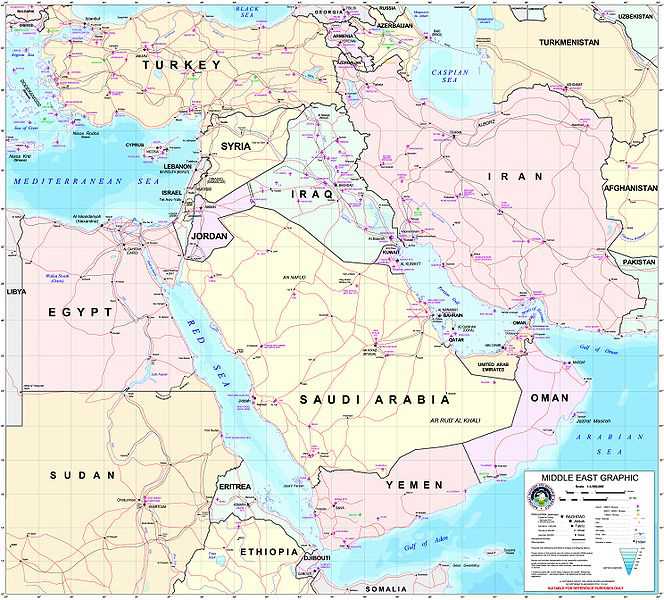
    In recent years, Turkey, facing the imminent possibility of being permanently isolated, has desperately embarked on a series of high level political maneuvers in the Middle East and Caucasus in order to successfully reflect the image of a regional important state.

    Failed Attempts to Broker Peace Between Syria and Israel:
    Turkish Prime Minister Recep Tayyip Erdogan initiated a shuttle diplomacy between Damascus and Tel Aviv. Soon after its launching, the Turkish shuttle lost its course and crashed somewhere between the Arabian and Negev deserts.
    Turkey’s embarrassing failure to broker a peace deal between Syria and Israel caused loss of Turkish prestige in the Middle East and Europe.
    Stability and Cooperation Platform on Caucasus: A Bridge to Nowhere:
    Having lost face both among the Syrians and Israelis for its obvious inability to enhance the negotiations, Turkey looked elsewhere to boost its international image.
    In the aftermath of the 2008 South Ossetia-Georgia war, Ankara initiated the Caucasian platform diplomacy adding that the Russian Federation, along with Armenia, Azerbaijan and Georgia should be part of it. Turkey’s Pres. Abdullah Gül boasted that the idea of establishing a Caucasus Stability Forum would bring economic development and welfare to the people in the region.
    Despite the initial conference on the Stability and Cooperation Platform on Caucasus in Istanbul in late January, many political observers believe that this latest Turkish posturing aims to make all talk and no action. The future will tell how long will this Turkish platform last vis-à-vis the shifting political plates in the Black Sea region and the Caucasus.
    During Gaza War, Attempts to Gain Favor With Arabs Backfires in Israel:

    Turkey has long been frowned upon by Arab nations for its close cooperation with Israel. Its strategic military and economic alliance with the Jewish state has caused anti-Turkish feelings and even animosity among Arabs.
    With the advent of the Israel-Gaza war, and subsequent Israeli bombardment of Gaza Strip ruled by Palestinians, Turkish officials saw an opportunity to viciously condemn Israel in order to gain favor with Arab states and to calm Turkish public’s fury at home.
    Harut Sassounian, the Publisher of The California Courier wrote this week: “The dispute between the two strategic allies began with Turkish Prime Minister Recep Erdogan harshly denouncing Israel’s incursion into Gaza and accusing the Jewish state of committing crimes against humanity. He suggested that Israel be barred from the United Nations as mass demonstrations were held throughout Turkey with banners that read: ‘Gaza will be a grave for Israel’ and ‘Put Israel on trial for war crimes.’ Israel’s Consul General in Istanbul, Mordehai Amihai, told Milliyet that the consulate received hundreds of anti-Semitic e-mails every day during the fighting in Gaza.”
    Sassounian continued: “Initially, Israeli officials expressed their displeasure through diplomatic channels. But as the anti-Israel rhetoric intensified, Israel’s Deputy Foreign Minister publicly warned Turkey that Tel Aviv might retaliate by acknowledging the Armenian Genocide. Last week, Israel’s Prime Minister Olmert invited the leaders of France, Britain, Germany, Italy, Spain and the Czech Republic to dinner in Jerusalem after their summit meeting in nearby Egypt. Significantly, Turkey’s President Abdullah Gul, who also had attended the summit, was excluded from the dinner.”
    As Turkey’s international political misfortunes increase, Ankara needs to stop running away from its domestic duties and begin focusing:
    – On establish genuine freedom of expression by abolishing the infamous article 301;
    – On publicly supporting not only the “I Apologize” Turkish campaign, but also on coming to terms with its history by expressing readiness to make amends to the victims of the Armenian Genocide through Restorative Justice in the form of reparations, and return of Turkish-occupied Western Armenia to its rightful owners, the Armenians;
    – On making amends to the Greeks of Pontus and Smyrna; The Arabs and the nearly 16 million Alevis; The Assyrians and the nearly 25 million Kurds.
    If Turkey continues to ignore its obligations, it will continue to undergo both internal and external political pressures, which may ultimately lead to its implosion. It is not a question of “if.” It’s a question of “when!”
    Does Turkey desire to avert an uncontrolled economic and political disintegration? Ankara must realize that a fair settlement of the Armenian Genocide along with cases concerning Turkey’s other minorities will usher in a period of genuine stability and cooperation that it desperately needs and seeks.
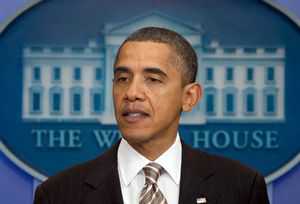
  • BARRACK OBAMA AND ARMENIAN ALLEGATIONS

    BARRACK OBAMA AND ARMENIAN ALLEGATIONS

    Barack Obama on the Importance of US-Armenia Relations

    | January 19, 2008

    I am proud of my strong record on issues of concern to the one and a half million Americans of Armenian heritage in the United States. I warmly welcome the support of this vibrant and politically active community as we change how our government works here at home, and restore American leadership abroad.

    I am a strong supporter of a U.S.-Armenian relationship that advances our common security and strengthens Armenian democracy. As President, I will maintain our assistance to Armenia, which has been a reliable partner in the fight against terrorism and extremism. I will promote Armenian security by seeking an end to the Turkish and Azerbaijani blockades, and by working for a lasting and durable settlement of the Nagorno Karabagh conflict that is agreeable to all parties, and based upon America’s founding commitment to the principles of democracy and self determination. And my Administration will help foster Armenia’s growth and development through expanded trade and targeted aid, and by strengthening the commercial, political, military, developmental, and cultural relationships between the U.S. and Armenian governments.

    I also share with Armenian Americans – so many of whom are descended from genocide survivors – a principled commitment to commemorating and ending genocide. That starts with acknowledging the tragic instances of genocide in world history. As a U.S. Senator, I have stood with the Armenian American community in calling for Turkey’s acknowledgement of the Armenian Genocide. Two years ago, I criticized the Secretary of State for the firing of U.S. Ambassador to Armenia, John Evans, after he properly used the term “genocide” to describe Turkey’s slaughter of thousands of Armenians starting in 1915. I shared with Secretary Rice my firmly held conviction that the Armenian Genocide is not an allegation, a personal opinion, or a point of view, but rather a widely documented fact supported by an overwhelming body of historical evidence. The facts are undeniable. An official policy that calls on diplomats to distort the historical facts is an untenable policy. As a senator, I strongly support passage of the Armenian Genocide Resolution (H.Res.106 and S.Res.106), and as President I will recognize the Armenian Genocide.

    Genocide, sadly, persists to this day, and threatens our common security and common humanity. Tragically, we are witnessing in Sudan many of the same brutal tactics – displacement, starvation, and mass slaughter – that were used by the Ottoman authorities against defenseless Armenians back in 1915. I have visited Darfurian refugee camps, pushed for the deployment of a robust multinational force for Darfur, and urged divestment from companies doing business in Sudan. America deserves a leader who speaks truthfully about the Armenian Genocide and responds forcefully to all genocides. I intend to be that President.

    I look forward, as President, to continuing my active engagement with Armenian American leaders on the full range of issues of concern to the Armenian American community. Together, we will build, in new and exciting ways, upon the enduring ties and shared values that have bound together the American and Armenian peoples for more than a century.

  • Official: Aliya from Turkey to double

    Official: Aliya from Turkey to double


    The number of Jews expected to immigrate to
    Israel from Turkey this year is likely to double compared to last year,
    but the level remains extremely low despite surging anti-Israel and
    anti-Semitic incidents in the predominantly Muslim country, a Jewish
    Agency for Israel official said Sunday.

    A
    Turkish demonstrator displays a shoe on a banner during a protest
    against Israel at the Kocatepe mosque in Ankara, Turkey, Saturday.
    Photo: AP

    Separately,
    the Ashkenazi chief rabbi of Venezuela said Sunday that he doubted
    whether the South American country held any future for the Jewish
    community, following the Friday night vandalism of the oldest synagogue
    in the country.

    About 250 Turkish Jews are expected to immigrate to Israel this
    year, more than double the 112 who did so last year, said Eli Cohen,
    director-general of the Jewish Agency’s Immigration and Absorption
    Department in Jerusalem.

    The number of expected immigrants from Turkey this year makes
    up only 1 percent of the 25,000-strong Jewish community that traces its
    roots in the nation back more than five centuries, dating to the
    Spanish Inquisition.

    RELATED
    • Turkey: The longer view (Editorial)
    • A climate of fear

    “We
    would prefer that the main reason for aliya today [be] the ideology of
    those immigrants who come from Western countries, but we see that the
    anti-Semitic incidents, as well as the global economic crisis, are what
    is furthering aliya today,” Cohen said.

    He noted that many of the Turkish Jews seeking to make aliya
    were students or young couples wanting to study at Israeli universities
    or to live in Israel.

    Relations
    between Israel and Turkey hit a nadir last week after Turkish Prime
    Minister Recep Tayyip Erdogan, who has been a leading and vitriolic
    critic of Israel’s recent military operation against Hamas in Gaza,
    stormed out of a panel discussion with President Shimon Peres at the
    World Economic Forum in Davos.

    At the same time, the Jewish Agency official said Sunday that
    there was “a large interest” in immigration to Israel among Jews living
    in Venezuela. About 14,500 Jews live there, and only 60 immigrated to
    Israel last year.

    All Israeli representatives were kicked out of the country last
    month during Operation Cast Lead, but the agency is in daily contact
    with Jewish groups there, Cohen said.

    Meanwhile, Rabbi Pynchas Brener of Venezuela said Sunday that
    he was doubtful that there was any future for the Jewish community
    there.

    “There is a psychological mechanism which makes people within
    the country think things are not as bad as they seem,” Brener told The Jerusalem Post
    in a telephone interview from Caracas. “For psychological reasons,
    people who live in the country tend to justify actions taken against
    them.”

    His comments came after the main Sephardi synagogue in Caracas was vandalized by a group of attackers.

    Two security guards were overpowered by about 15 people who
    ransacked the synagogue’s sanctuary and offices late Friday, shattering
    religious objects and leaving graffiti such as, “We don’t want
    murderers,” and “Jews, get out.”

    The incident forced the synagogue to cancel Saturday services.

    “Reason makes us believe that this was done with the consent –
    if not the instigation – of some central power in Venezuela,” he said.

    He noted that Israel and Jews were viewed as synonymous in the
    South American country, adding that an upcoming vote on whether the
    president could be reelected indefinitely could prove to be a harbinger
    of things to come.

    “I do not know if in this environment there will be a future for the Jewish community here,” he said.

    The New York-based Anti-Defamation League called the synagogue incident “a modern day Kristallnacht.”

    “This violent attack, occurring on the Jewish Sabbath, is
    reminiscent of the darkest days leading to the Shoah, when Jews were
    attacked and synagogues and Torahs vandalized and destroyed under the
    guard of the Nazi regime,” said ADL National Director Abraham H.
    Foxman.

    Foxman said the heinous anti-Jewish hate crime was not random,
    but was “directly related to the atmosphere of anti-Jewish intimidation
    promoted by President Hugo Chavez and his government apparatus.”

    The organization called for Chavez to “abandon the official
    government rhetoric of demonization of Israel and the Jews and to
    publicly denounce this wanton act of anti-Semitic violence.”

    Separately, the Los Angeles-based Simon Wiesenthal Center said
    Sunday that Chavez’s attacks on Israel and the Jewish community had
    “set the stage” for the incident.

    “This was no mere hate crime from the margins of society, but a
    reflection of President Chavez’s campaign to demonize Israel and her
    supporters,” the organization said. “For this dangerous escalation of
    hate against a minority to stop, President Chav


    From: Haluk Demirbag,

    Subject: Official: Aliya from Turkey to double

    Israil senelerdir sayıları az bile olsa değerleri çok olan Turkiyeli Musevi

    kardeşlerimizi İsraile göçe itmek için çok yol denedi. Tayyip ve Simon

    amcaların danışıklı döğüş yapabileceğini neden kimse düşünemiyor?

    Bir taşla iki kuş vuruluyor:

    1. Tayyip secimler için müthiş bir hamle yapıyor
    2. Simon amca da, senelerdir danışmanlarının Israil’e çekebilmek için akla
    karayı seçtiği Türk milletinden ayrılmak istemeyen Türkiye Musevilerine,
    bilet kesiyor…

    Yakın zamanda Gürcistan’ı hatırlayalım…

    Siyonizmin güçlenmesi için sahte ve kontrollü anti-semitizm ispatlı ve iyi
    yazılmış çizilmiş bir yoldur.


    Eski tüfek Simon amca da Tayyip de ne yaptığını biliyor kendi hedefleri açısından…

    Türkiye’de olabilecek herhangi bir anti-semitizim çıkışına karşı
    herkesin duyarlı ve uyanık olması lazım. Biz asırlardır bağrımızda
    sakladığımız, koruyup kolladığımız sevgili Musevi dostlarımızı ve
    peygamberlerin torunlarını kimseye vermek istemiyoruz, Israil dahil,  onlar
    bize Osmanlı atalarımızın emaneti!!!

    Official: Aliya from Turkey
    to double

    ez’s hate campaign must be denounced by all leaders in the Americas and beyond.”

    —————–

  • Monthly bulletin about Turks in Iran

    Monthly bulletin about Turks in Iran

    Iranian authorities have increased the repression of Azerbaijani activists who hope to end discrimination against minorities in Iran. These activists organize ceremonies of that are of cultural significance to Azerbaijani Iranians. People participating in these ceremonies are arbitrarily detained without being tried or even informed of the reason for the detention. They are usually denied access to a lawyer and are generally tortured or subjected to other ill-treatments.

    Three Azerbaijani activists detained over two months without trial

    Abdullah Abbasi Javan, an architect and lecturer at Tehran’s University of Shahid Rajai and his nephew Huseyn Huseyni (Hossein Hosseini), the former president of the students union at the University of Razi, Ardebil were arrested on November 13, 2008 while participating in the anniversary of Settar Khan celebrations. (Settar Khan is a national hero for Azerbaijani Iranians, who lead the constitutional movements in 1906-14.) The two were taken to the notorious section 209 of Evin Prison, which is run by the Iranian Intelligence Service. Recent efforts by family members of the two prisoners to establish their whereabouts have been in vain. They were intimidated by security agents and asked to stop referring to courts of justice. The only communication between the victims and their families since the men were imprisoned over two months ago has been a less than one-minute telephone call by Javan to his brother on the tenth day of the detention, November 23.

    Two Azerbaijani prisoners of conscience recently released from section 209 of Evin Prison said in a statement that Javan had informed them he will start a hunger strike on the December 13 to protest his illegal detention and the deprivation of his basic human rights as a prisoner.

    Azerbaijani journalist and women’s rights defender Shanaz Gholami, who was detained on November 9, 2008 in Tabriz, has resorted to a hunger strike since November 20 to protest the length and degrading conditions of her detention. She is reportedly in poor health and needs medical attention. She is being held in the women’s section of the Tabriz prison. She has had no trial and is reportedly undergoing intense interrogation.


    Gholami is the moderator of a blog for Azerbaijani-Iranian women, azarwomen. She was sentenced to six months imprisonment on charges of “propaganda against the regime.” She was released on bail and is now waiting for a hearing by an appeal court. Last year, she was detained for a month for writing articles objecting to the use of force by the government during peaceful Azerbaijani-Iranian protests. Gholami was also in prison for five years in the late 1980s as a result of her political activities.

    New Detentions

    Seveal Azerbaijani activists were arrested on December 11, 2008 during the 21 Azer ceremonies, which mark the anniversary of the establishment of the autonomous government of Azerbaijan in 1945-1946. Navid Soltani, Said Mahmudi, Hojjat Mahmudi, Setare Ghasemi (ulduz), and Rahman Ghasemi were released on bail of 300 million rials ($30,000) on January 5, 2009.

    These activists were arrested on December 10 and 11 at their homes in Urmiye, the second-largest Azerbaijani in Iran. Security forces searched their houses and took their personal computers, books, CDs and documents. All five activists were released on bail after three weeks in detention. They were held in Urmiye Intelligence Service custody, interrogated continuously, tortured and subjected to other ill-treatments. The detainees were not allowed access to a lawyer and their families were not permitted to visit them.

    Azerbaijani ethnic rights activist Tohid Hasanpur was arrested on December 6, 2008 for publicizing the anniversary of the 21 Azer ceremonies in Urimye. He was been released on bail of 100 million rials ($10,000) on December 14. He was detained by the Urmiye Intelligence Service.

    Vahid SheykhBaghlu, a graduate student in economics at Azad University in Tabriz and a former member of Arman Student Organization, was arrested on December 24, 2008 in Tabriz and was taken to Tabriz Intelligence Service heaquarters. He has been transferred to Tabriz Prison after 10 days in detention in Tabriz Intelligence Service custody. Since the day of detention he only been able to call his family once and there is no information about why he has been detained.


    Vahid had been arrested before in Tabriz while participating in a ceremony celebrating the release of nine student activists after months of detention. He was released after hours of interrogation. He was also detained for 50 days in 2006 during the Azerbaijani-Iranian demonstrations of a cartoon in Iran (a state-run newspaper) which compared Azerbaijani-Iranians to cockroaches. He was released on bail and was sentenced to 91 days of suspended imprisonment.

    Served Sentences

    Asghar Akbarzade, an Azerbaijani student activist in Ardebil, has been sentenced to five years imprisonment and exiled to Zahdedan, a city in southeast of Iran far from Azerbaijani provinces. He is charged with participating in a “movement against state security” and Akbarzade says he was not given any opportunity to defend himself, even though there has been no investigation to confirm the claims of Iranian Intelligence Service. The judge asked only two questions during the trial, which was over in about 10 minutes.


    The judge gave the sentence based on the following accusations: being part of an Azerbaijani national movement, participating in the funeral of Moham Ali Farzane a Pan-Turkist activist, participating in student meetings, participating in Azerbaijani dance classes, making a wolf symbol (the symbol of Turks) with his hand, sending incorrect news to foreign organizations, groups, media and websites, providing CDs and distributing separatist propaganda.

    He was not allowed access to a lawyer and his trial was held in private.

    Asghar Akbarzade, a chemistry student at Ardebil Payame Noor University, was arrested on June 20, 2008 by security forces in front of the university and released after 28 days on bail of 300 million rials ($30,000). During the detention his family was not informed of his place of detention or the reason for the detention. Akbarzade said he endured both physical and psychological torture while in detention. Several days later after his release he was charged with spreading propaganda for groups that are against the regime and sentenced to six months of suspended imprisonment which was postponed for two years. His verdict has been distributed on the Internet.

    Akbarzade has been detained several times in the past for participating in demonstrations of Azerbaijanis against the offensive cartoon in 2006. He was charged with “moving against the regime,” “propaganda against the regime” and was fined. Amnesty International released two urgent actions about Asgharzade in 2006 and 2007 stating their concern for his health.

    Ali Sadighi, Vahid Hamid Rezayiniya, and Albar Huseynzade, three Azerbaijani ethnic rights defenders were charged “propaganda activities against regime” and “moving against national security” for distributing a CD including invitations of people for the second anniversary of the cockroach cartoon targeting ethnic Azerbaijanis in Iran newspaper in May 2006. They were sentenced to one year’s imprisonment. A CD found in their homes was used as evidence against them.

    They were tried in private and without a lawyer in the Tabriz Revolutionary Court. They were also detained for two months on May 15, 2008 and released on bail.

    Salman Iragi, a former president of the Azerbaijan Promotion Union at Khoy Payame Noor University and a member of the NGO Evrin, Salar Iragi a mechanical engineering student at Urmiye University, Hojjat Iragi, a mechanics student at Urmiye Technical Education Centre, Payam Elm Gholilu, a graduate student in management at Ghazvin Azad University and Ali Akbar Abdullahi, a mechanics student at Urmiye Technical Education Centre, all Azerbaijani student activists in Khoy, were arrested on May 15, 2008 by security forces and released after seven days on bail of 500 million rials ($50,000). They were charged with participating in activities against the regime and sentenced to one year of suspended imprisonment, all of which are postponed for two years.


    Ebrahim Abdullahnejad, Ali Helmi, Ali Huseynnejad Asl, Mohsen Huseynzade, Saber Beytollahi and Bahman Nasirzade, all Azerbaijani activists based in Maku have been sentenced to 10 months to a year’s imprisonment related to demonstrations against the cockroach cartoon in 2006.

    Abdullahnejad has been sentenced to one year in prison; Ali Helmi to one year suspended imprisonment. Asl and Husyinzade were each ordered to pay a 5 million rials ($5,000) cash fine and are charged with “propaganda against regime”.

    Saber Beytollahi, and Bahman Nasirzade, a teacher and poet, respectively, were sentenced to a year’s imprisonment, but objected to the fact that they were unable to defend themselves before the verdict. Their trail was repeated on November 30, 2008. They are waiting for the verdict.

    They were detained for 27 days on June 17, 2006 by security forces and were released on bail of 500 million rials ($50,000).

    Situation of Other Azerbaijani Cultural Activists

    Mohammad Reza Levayi, an Azerbaijani poet, writer and journalist, was arrested on November 21, 2008 by security forces in Khoja (a town near Ahar in East Azerbaijan) and transferred to Tabriz. He was released after 23 days of imprisonment on December 14. He suffers from heart problems and on the eleventh day of detention he was transferred to the hospital, where he received treatment for 12 days, and was then released. His family was not informed of his place of detention and the reason for the detention. According to Levayi, he was detained because of writing a paper about “Cultural Dictatorship and Culture of Dictatorship” and he will be called to court in the near future.

    Rahim Hajizade, a cultural activist from Ardebil, was arrested on September 25, 2008. He was released after 61 days’ of detention on bail of 800 million rials ($80,000). Hajizade said he was charged with propaganda against regime for distributing the second volume of his book, Iliyatiha (a book about Azerbaijani folks).

    Amir Ali Zebihi, an Azerbaijani student activist in Tabriz, has been taken to Tabriz Prison to serve his eight-month sentence. He is a civil engineering graduate from Azad University in Tabriz. He was detained for 45 days after the 2006 demonstrations against the cartoon assaulting Azerbaijanis and was released on bail.

    Azerbaijani Student Journal Closed Down

    The cultural council of Azad University in Mahabad decided to close down the Azerbaijani Turkish-Persian student journal Bulud in December 2008. The former director editor of the journal has graduated and the application of the new candidate for the director has not been accepted by the council. The council asked the candidate for director to fill in some forms at the Intelligence Service of Mahabad. The new director and writers at the journal refused, and the council decided to close down the journal.


    Many Azerbaijani student journals have been closed down by the government over the last year. Some of them include: Ulus, Nasim, Araz, Ozluk, Oyanish, Sattar Khan, Kimlik, Yoldash, Yagish, Aydin Gelecel, Gunesh, Yarpaq, Telenger, Yashil, Yol, Anayurdu, Achiq Soz and Sayan.

  • Good Bye Stocks – Hello Bonds

    Good Bye Stocks – Hello Bonds

    Poor Richard’s Report
    Over 300,000 readers

    My Mission: God has uniquely designed me to seek, write, and speak the truth as I see it. Preservation of one’s wealth while continuing to provide needed income is my primary goal for these unsettled times. I have been given the desire to study and observe global money progressions and trends for the last 50 years. I evaluate possible future trends in order to provide positive concepts for you to form your own conclusions. The main purpose of this letter is to warn you of possible financial sinkholes.

    Good Bye Stocks – Hello Bonds

    We are leaving the golden era of free enterprise due to unmitigated greed and chicanery. We can easily adjust if we accept the true meaning of what awaits us. If we fight to retain our old dreams and fantasies we will see ourselves being spoon fed by fat socialist bureaucrats for the “common good”.

    In this letter I will present some facts for your perusal and then you can make up your own mind in regards to your financial decisions. Those willing to change their offensive strategy can become winners in life’s never ending battles.

    The result of these recent price disturbances (all the bubbles bursting) is the falling value of the property that has been borrowed against. The value of the property’s income also falls. We have come from extreme over indebtedness and now find ourselves in a hole – we should stop digging.

    This is a hard lesson that our grandparents learned in the 1930’s, but sadly has been forgotten as satanic greed took over our souls. We now find ourselves caught between a recession and a depression. I call it a MESSYSESSION.

    All the corporations whose bubbles have burst must work down their inventories; since many are in the financial sector this will take time. Individuals must use their earnings to pay down debts to save their homes instead of spending money on frivolous purchases. The Rule of 72 has the deck stacked against them, unless the Usury Law is resumed. The lack of the Usury Law is quicksand for our economic recovery.

    The working down of inventories alone can be deflationary, however, the Federal Reserve has been pumping money into our supply pipeline at super speed. When an entity goes bankrupt, those debts do not go back into circulation, they go to money heaven. This is why the Fed has to keep the supply pool full and why this action should keep us out of a depression.

    Having to pay down all this debt slows down our economy and hurts our suppliers worldwide. This is why we have a world wide Messysession.

    Corporations that have borrowed from the Government will have a hard time maintaining their common stock dividends because their first priority is bond interest. Their second priority is preferred dividends. What is left over will then be distributed to common stock holders or used for debt reduction. Debt reduction means job security.

    Sooner or later the US Government will have to go on a massive borrowing campaign. This could weaken the dollar and send interest rates soaring along with the price of Gold – for a while.

    Some recessions are “V” shaped, which means stocks fall down hard and come back up quickly. Stocks tumble, but recover because there are people looking across the valley. If the recovery is like an elongated “U” or “L” one needs binoculars to see across the valley to a recovery. This could cause price to earnings ratios to shrivel, since analyst’s earnings estimates will be suspect at best. The economy can take a year or two to recover based upon how responsible Congress is. It will be years before our economy fully recovers from all the bubble bursting. What we need is a cheap new energy invention.

    The only period, since 1872, where stocks substantially outperformed bonds on a prolonged basis was the 1950s to 1960s. This was a golden era for stocks and it has taken many abuses to wind down.

    These are some of the many issues that President Obama faces on the home front. Now we shall look at some of his international problems.

    Europe is changing. It used to be that France and Germany were the major players, with Great Britain looking on. The United States has encouraged the expansion of the European Community to diminish the power of the two largest countries. Poland is emerging as an economic power and if Turkey is admitted, as they should be, they will bring new found political clout for the first time since the demise of the Ottoman Empire 90 years ago. Their inclusion could bring stabilization to the chaotic Middle East situation. Turkey has freedom of religion, a vigorous economy (17th largest), and a solid government. Their influence is growing. They also have a strategic location to insure peace long term.

    Then, there is Russia, who can throw all kinds of money around, but when it comes to signing on the dotted line – they cannot be trusted. Turning off gas supplies in mid-winter and canceling major contracts with world-renowned companies are actions that are hard to forget. Obama has pledged to focus US military power on the war in Afghanistan. The bulk of supplies must come from the north. Russia does not want a ballistic missile defense system in central Europe. It wants a halt to NATO expansion and reduced American influence in the Caucus and central Asia. They also want a broad renegotiation on non-trivial treaties that are terrible for Russia in 2009. (Anyone want to be President?)

    We must come up with a way to renew confidence for the consumer. First and foremost is the renewal of our Usury laws that were dropped because disintermediation was wrecking the banking system in the 1970s. Creating lasting jobs will not happen by just building roads. These programs must be done so that they promote or improve future growth. It is difficult to do this on a national level because there are too many fingers in the pie. Programs done on a state level are easier to control. It is more realistic to meet regional needs.
    Lowering corporate taxes when a corporation moves into intercity areas would mean better roads, and businesses to support them. Raising taxes invites tax avoidance schemes that only benefit the issuer. It also removes money from the private sector. Today, pricing power has evaporated.

    There must be global reorganization of the securities laws, most importantly the Uptick rule. Countries that do not participate should be banned from trading within the member countries. Today hedge funds and institutions have spent millions of dollars on sophisticated trading programs. This makes for an uneven playing field and has driven the small investor to the sidelines, as witnessed by declining volume on the exchanges. The small investor becomes the ultimate bag-holder at the bottom of markets when they have no one to sell to.

    If a country’s Gross Domestic Product (GDP) is declining that means the average on corporate earnings will be declining also. This means fewer companies will be showing an increase in earnings and therefore there will be fewer securities that have an investment grade value. Since there are already too many mutual funds and they all cannot buy the same stocks, that game is over. I would sell your mutual funds while you can if you are over 55 years old. If they get too many orders for liquidation they have the option of delivering stock of the same value to you. That is an easy way to get rid of their losers. If you are under 55 and own a balanced fund where the income can be reinvested on a periodic basis you are in the catbird seat. Lower prices will mean more shares and 10 to 15 years from now when the market recovers you could be a wealthy person. Other low income on non paying funds should be sold. It could be 20 to 25 years just to breakeven and that is only if it is a survivor.

    First quarter earnings are going to be a disaster. I suspect this is when many will throw in the towel and give up.
    Gold should be considered a hedge – possible short term.

    Here are some moneymaking ideas. A successful portfolio can be 20% equities 50% fixed income and 30% cash.
    By equities I mean income-producing securities yielding over 5%. There are a few out there that are “stupid” cheap versus dirt-cheap. Then there are preferred stocks, many of which are 85% tax-free. Many are selling below their call price. This means if a company wants to improve its balance sheet, they can do that by calling your preferred from you by paying the call price. If they fail to pay a preferred dividend it becomes cumulative. To resume payments they must make up the back dividends first. One that falls into this category is: AMERCO Pfd A (NYSE) 20 (2-6-09) pays $2.125 which yields 9.41%. gives you a tax free yield of 8%. If they call the stock at $25 you will have a $5 gain which amounts to a 25% gain. You won’t be able to have this return with common stocks over the next several years.

    Tax free bonds were good when income tax rates were 55%-92%. The low tax rates today are beaten by preferred stock’s rates, such as the one I mentioned above. You have a ready market and real value. What you see is what you get. There was an issue on Long Island that defaulted in the depression. A default like that today would wreck havoc in the entire sector. For safety reasons, please avoid tax-free bonds.

    Since the US has to borrow around a trillion dollars or more, Government bonds could be an instant loss. For now, I would avoid these also. That leaves us with corporate bonds. Many corporate bonds have a better balance sheet than the United States. Buying bonds in the five year range is the safest place to be. As the bond gets closer to maturity the price fluctuations are at a minimum and easily salable. You are better off buying an individual bond than a fund. The fund will charge a yearly management fee as well as anything else they can get away with. Also, some funds simply dump bonds into a portfolio and walk away. There was a case where a fund dumped their holdings of an issue right at the very bottom, only to have the bonds called a few months later. Please remember that corporate bond holders have first lien on a corporation’s asset.

    I suspect that in a few months you will see a stampede out of many mutual funds and a proliferation of all types of bond funds trying to cash in on the new trend. Keep it simple- buy your own.

    I know I have thrown many ideas your way in this letter and I apologize, but I feel the times warrant such thinking. I will be available, free of charge, to anyone who would want to discuss any of these ideas at the addresses below.

    CHEERIO!!!!
    Richard C De Graff
    256 Ashford Road
    RER Eastford Ct 06242
    860-522-7171 Main Office
    800-821-6665 Watts
    860-315-7413 Home/Office
    [email protected]

    This report has been prepared from original sources and data which we believe reliable but we make no representation to its accuracy or completeness. Coburn & Meredith Inc. its subsidiaries and or officers may from time to time acquire, hold, sell a position discussed in this publications, and we may act as principal for our own account or as agent for both the buyer and seller.

  • Pontic Greeks

    Pontic Greeks

    As a consequence of unveiling of a plaque, on 20th December 2008, located at the Migration Museum in Adelaide, South Australia, commemorating the Genocide of the Pontic Greeks, it appears to be fairly essential that the following statement be issued by the Rector of Giresun University, which is a university located on the Black Sea Coast.

    “It is very well known by everyone approaching to recent history objectively that after the Treaty of Mondros, signed in 1918, armed activities of the Greek gangs threw Anatolia into disorder, severely threatened the security of life and property , and precautions were taken accordingly.

    Pontic Greek problem and genocide allegations are not based on a historical and scientific basis. This is an issue, which the governments, having designs on Anatolia, want to take advantage of so as to fulfil their aims by distorting the historical truths and misusing the scientists. The said issue and allegations bare no relation to reality.

    The best example to this is the following declaration published in Trabzon in the issue of “İstikbal Gazetesi” dated 18th February 1921 by Trabzon Orthodox Community.
    “It is, not only for today but also for tomorrow, our forever principle to be allies of the Turks forever, whom we considered to be asserting our law as well while asserting their rights.”

    Turkey and the Turks are a country and a nation, at peace with their history. As a country and a nation we do not have a history that we cannot give account of and feel shame for. Turkish history is full of noble, humanistic and meritorious behaviours, displayed in the presence of badness and injustice towards themselves. The most well-known example to this is the Battle of Gallipoli. The Turks did not ask the Anzacs, coming from thousands of miles away and attempting to invade Gallipoli and Anatolia, “Why are you here?”. Instead, in the post-war era, the Turks embraced the Anzacs and treated them friendly.

    It is necessary that everyone see that the creators of badness, the exaggerators of badness and the illuminators of badness will not be able to be the creators of goodness and beauty. As long as we desire a more peaceful and liveable world, we are supposed to seek after good and beautiful things.

    Giresun University, located on the most beautiful shores of the Black Sea, is inviting you to bring a world of peace to light, to bring you, the humans together, to illuminate the good and the beautiful.

    Respectfully submitted for your information.”
    Prof. Dr. Osman Metin ÖZTÜRK
    Rector of Giresun University

    www.giresun.edu.tr

    [email protected]
    0090 454 310 10 03
    0090 506 531 28 88”