Month: December 2008

  • I DO NOT APOLOGIZE

    I DO NOT APOLOGIZE

    Some scholars in Turkey, the usual suspects long known for their anti-Turkish government and anti-Turkish state positions, are circulating a petition apologizing from Armenians. It is a free country; everyone can apologize to anyone, so there is no issue there. The issue arises when these people, and/or their supporters in the media, attempt to misrepresent the situation as if Turkey apologizes.

    I do not apologize because, frankly, I am still waiting, like Turkey does since the conclusion of WWI, for the six apologies due from the following to the Turkish nation: 

    The first, from Britain: for the wartime propaganda in the “Blue Book” on which today’s genocide claims are built; for the naval blockade of the food shipments to Anatolia which exacerbated the starvation conditions there; and for raining death and destruction on our grandparents’ in Anatolia; 

    The second, from France: for the wartime propaganda in the “Yellow Books” and for raining death and destruction on our grandparents’ in Anatolia; 

    The third, from the Tsarist Russia: for destroying a millennium of relatively harmonious Turkish-Armenian co-habitation in Anatolia with her expansionist policies and brutal invasion of Anatolia using Armenians; 

    The fourth, from the U.S. Protestant Missionaries sent from Boston: for dividing and polarizing teachings that destroyed a millennium of relatively harmonious Turkish-Armenian co-habitation in Anatolia and caused mutual killings and for doing this inhumanity in the name of God; 

    The fifth, from the New York Times: for biased and inflammatory coverage of Turkish-Armenians conflict in 1915; for not checking sources; for taking partisan reports filed by Armenian revolutionaries via missionaries and diplomats at face value; and for publishing 145 prejudiced reports demonizing Turks while allowing zero rebuttals to Turks; 

    This sixth, from the Ottoman-Armenians: for destroying a millennium of relatively harmonious Turkish-Armenian co-habitation in Anatolia where Armenians prospered in peace by resorting to propaganda, agitation, terror, rebellions, and treason, in that order, between 1877-1920; 

    When I get my apologies from the UK, France, Russia, US missionaries, the New York Times, and the Ottoman-Armenians, then I will offer my apology for the human suffering that was experienced by all Ottoman citizens, not Armenians alone, from 1911 to 1922. 

    WHAT THE WORLD NEEDS NOW IS TRUTH AND HONESTY, NOT SELECTIVE MORALITY

    BIAS IN THE PHRASE “ARMENIAN GENOCIDE” 

    If one cherishes values like objectivity, truth, and honesty, then one should use the phrase “Turkish-Armenian conflict”. Asking someone “Do you accept or deny Armenian Genocide” shows anti-Turkish bias. The question, in all fairness, should be re-phrased: “What is your stand on the Turkish-Armenian conflict?” 

    Turks believe it was a civil war within a world war, engineered, provoked, and waged by the Armenians with active support from Russia, England, and France, and passive support from the U.S. diplomats, missionaries, media, and others with anti-Turkish agendas, all eyeing the vast territories of the collapsing Ottoman Empire. [1]

    Most Armenians claim it is a one way genocide, totally ignoring the Armenian complicity in war crimes ranging from raids, rebellions, and terrorism to treason, causing many casualties in the Muslim, mostly Turkish, community. 

    GENOCIDE ALLEGATIONS IGNORE “THE SIX T’S OF THE TURKISH-ARMENIAN CONFLICT”

    While some amongst us may be forgiven for taking the ceaseless Armenian propaganda at face value and believing blatant Armenian falsifications [2] merely because they are repeated so often, it is difficult and painful for people like us, sons and daughters of the Turkish survivors most of whose signatures you see below. [3]

    Those seemingly endless “War years” of 1912-1922 (seferberlik yillari) brought wide-spread death and destruction on to all Ottoman citizens. No Turkish family was left untouched, those of most of the signatories’ below included. Those nameless, faceless, selfless Turkish victims are killed for a second time today with politically motivated and baseless charges of Armenian genocide. 

    Allegations of Armenian genocide are racist and dishonest history. 

    They are racist because they imply only Armenian (or Christian) dead count, the Turkish (or Muslim) dead do not. [4] The former must be remembered and grieved; the latter must be ignored and forgotten. Do you know how many Muslims, mostly Turks, were killed during World War One? Answer: About 3 million, including half a million of them at the hands of well-armed, well-motivated, and ruthless Armenian revolutionaries and para-military thugs. [3,5] Compare that with less than 300,000 Armenian casualties [8] which number is gradually magnified to 1.5 million over the years through Armenian propaganda. 

    And the allegations of Armenian genocide are dishonest because they simply dismiss

    “THE SIX T’S OF THE TURKISH-ARMENIAN CONFLICT”: 

    1) TUMULT (as in numerous Armenian armed uprisings between 1890 and 1920) [6,7] 

    2) TERRORISM (by Armenian nationalists and militias victimizing Ottoman-Muslims between 1882-1920) [8,9] 

    3) TREASON (Armenians joining the invading enemy armies as early as 1914 and lasting until 1921) [6,7,8,9,10] 

    4) TERRITORIAL DEMANDS (from 1877 to present, where Armenians were a minority, not a majority, attempting to establish Greater Armenia. Ironically, if the Armenians succeeded, it would be one of the first apartheids of the 20th Century, with a Christian minority ruling over a Muslim majority ) [1-11] 

    5) TURKISH SUFFERING AND LOSSES (i.e. those caused by the Armenian nationalists: 524,000 Muslims, mostly Turks, met their tragic end at the hands of Armenian revolutionaries during WWI, per Turkish Historical Society. This figure is not to be confused with 2.5 million Muslim dead who lost their lives due to non-Armenian causes during WWI. Grand total: more than 3 million, according to Justin McCarthy) [7-10] 

    6) TERESET (temporary resettlement) triggered by the first five T’s above and amply documented as such; not to be equated to the Armenian misrepresentations as genocide.) [12] 

    Armenians, thus, effectively put an end to their millennium of relatively peaceful and co-habitation in Anatolia with Turks, Kurds, Circassians, and other Muslims by killing their Muslim neighbors and openly joining the invading enemy. Muslims were only defending their home like any citizen anywhere would do. 

    VERDICT WITHOUT DUE PROCESS AMOUNTS TO LYNCHING

    Those who take the Armenian “allegations” of genocide at face value seem to also ignore the following facts concerning international law: 

    1- Genocide is a legal, technical term precisely defined by the U.N. 1948 convention (Like all proper laws, it is not retroactive to 1915.) [13] 

    2- Genocide verdict can only be given by a “competent court” after “due process” where both sides are properly represented and evidence mutually cross examined. [14] 

    3- For a genocide verdict, the accusers must prove “intent” and “motive” at a competent court and by allowing due process to run its natural course. This was not, perhaps cannot ever be, done by the Armenians, whose evidence mostly fall into five major categories: hearsay, mis-representations, exaggerations, forgeries, and “other”. [15]

    4- Such a “competent court” was never convened in the case of Turkish-Armenian conflict and a genocide verdict does not exist (save a Kangaroo court in occupied Istanbul in 1920 where partisanship, vendettas, and revenge motives left no room for due process.) [8] 

    5- Genocide claim is political, not historical or factual. It reflects bias against Turks. Therefore, the term genocide must be used with the qualifier “alleged”, for scholarly objectivity and truth. [1-15] 

    6- Recognizing Armenian claim as genocide will deeply insult Turkish-Americans as well as Turkish-Europeans, and Turks around the globe. Such a conduct would negatively influence the excellent relations currently enjoyed between the U.S. and Turkey, if not the West and Turkey. It will, no doubt, please Armenian lobbies in the U.S. Europe and Turkey but disappoint, insult, and outrage Turkey, one of America’s closest allies since the Korean War of 1950-53. Turks stood shoulder to shoulder with Americans in Gulf War, Somalia, Bosnia, Kosovo, Afghanistan, and more. Armenian lobbies will have been allowed to poison the U.S.-Turkey relations. American gratitude and thanks will appear to come in the form of the worst insult that can be dished out to an entire nation. 

    7- History is not a matter of “conviction, consensus, political resolutions, propaganda, or public relations.” History is a matter of research, peer review, thoughtful debate, and honest scholarship. Even historians, by definition, cannot decide on a genocide verdict, which is reserved only for a “competent tribunal” with its legal expertise and due process. 

    8- What we witness today, therefore, amounts to lynching [14] of the Turks by Armenians and their supporters to satisfy the age old Armenian hate, bias, and bigotry. American values like fairness, presumption of innocence until proven guilty, objectivity, balance, honesty, and freedom of speech are stumped under the fanatic Armenian feet. Unprovoked , unjustified, and unfair defamation of Turkey, one of America’s closest allies in the troubled Middle East, the Balkans, and the Caucasus, in order to appease some nagging Armenian activists runs counter to American interests. 

    9- Hate-based, divisive, polarizing, and historically biased proclamations, such as Schiff’s HR 106, have never been an American way to do business. Why start now? 

    10- Those who claim genocide verdict [14] today, based on the much discredited Armenian evidence, are actually engaging in “conviction and execution without due process”, which is the dictionary definition of “lynch mobs”. 

    APOLOGY ? 

    Those who claim Turks need to apologize or show sensitivity to victims of WWI and/or their descendants-without remembering or respecting the Muslim, mostly Turkish, victims of the same WWI due to same wartime conditions-are insulting the silent memory of millions of Muslim, mostly Turkish, victims of WWI tragedy. They are also engaging in Ethocide [16], 

    A new term coined by a Turkish-American in 2003, Ethocide means “systematic extermination of ethics via malicious mass deception for political, economical, religious, social, and other gain.” Ethocide comes with a new Turkish companion term: “AHLAKKIRIM” [17] 

    If an apology is needed today, then the entire humanity should apologize for the mistakes and excesses of the past generations, without resorting to “selective morality” and discrimination on the basis of ethnicity, race, or religion. And if more sensitivity is required, then it should be provided by all for all, without resorting to division, polarization, hostility, bias, or bigotry. Our accounst of WWI are replete with expressions of sadness and sympathy for all the victims of WWI, Turk, Kurd, Laz, Circassian, Armenian, Arab, Greek, Jew, and all others. We do not feel we should segregate the Armenians or others from this lot and grieve only for them. 

    If an apology is needed today, we should all start apologizing for the world hunger, global warming, aids epidemics, endless wars, inequity in income distribution, plundering human and natural resources, violation of civil rights of women, children, and some cases all humans, global lack of education and health care, and more. 

    ISN’T IT TIME TO STOP FIGHTING THE FIRST WORLD WAR AND GIVE PEACE A CHANCE? 

    We would like to conclude with a heartfelt message of peace: 

    We wish the entire world just and lasting peace, good health, balanced and thriving nature, sufficient prosperity and unlimited happiness in the coming years. 

    As Ataturk so ably put it for all of us: “Peace at home, Peace in the World.” 

    ………………………..

    References: 

    [1] History of the Ottoman Empire and Modern Turkey, Vol I & II, Stanford Shaw (Cambridge University Press, London, New York, Melbourne, 1976) 

    [2] The Story Behind Ambassador Morgenthau’s Story, Heath W. Lowry ( The Isis Press, Istanbul, Turkey, 1990) 

    [3] The Ottoman Peoples and the End of Empire, Justin McCarthy (Arnold, London, U.K., 2001

    [4] Declaration Signed by 69 Prominent North American Academicians, New York Times and Washington Post, may 19, 1985 (for a copy:

    [5] Ermeniler: Sürgün ve Göç, Türk Tarih Kurumu (Ankara, Turkey, 2004) 

    [6] Houshamatyan of the Armenian Revolutionary Federation, Centennial, Album-Atlas, Volume I, Epic Battles, 1890-1914 (The Next Day Color Printing, Inc., Glendale, CA, U.S.A., 2006)

    [7] The Armenian Rebellion at Van, Justin McCarthy, Esat Arslan, Cemaletting Taskiran, Omer Turan (The University of Utah Press, Salt lake City, USA, 2006)

    [8] The Armenian File, Kamuran Gurun (Rustem Bookshop, Mersin, Turkey, 1985)

    [9] The Armenians in History and the Armenian Question, Esat Uras (Documentary Publications, Istanbul, Turkey, 1988) 

    [10] Free E-Book : “Genocide Of Truth” by Sukru Server Aya, Based On Neutral or Anti-Turkish Sources ( Istanbul Commerce University, Turkey, 2008) For a copy: https://armenians-1915.blogspot.com/2008/04/2429-new-e-book-genocide-of-truth-based.html

    [11] “Pursuing the Just Cause of Their People”, Michael M. Gunter (Greenwood Press, New York, USA, 1986) 


    [12] “Ermenilerin Zorunlu Göçü, 1915-1917, Kemal Cicek (Turk tarih Kurumu, Ankara, Turkey, 2005) 

    [13] Convention on the Prevention and Punishment of the Crime of Genocide, Adopted by Resolution 260 (III) A of the United Nations General Assembly on 9 December 1948: http://www.hrweb.org/legal/genocide.html

    [14] Article 6, Convention on the Prevention and Punishment of the Crime of Genocide, Adopted by Resolution 260 (III) A of the United Nations General Assembly on 9 December 1948: http://www.hrweb.org/legal/genocide.html

    [15] Article 2, Convention on the Prevention and Punishment of the Crime of Genocide, Adopted by Resolution 260 (III) A of the United Nations General Assembly on 9 December 1948: http://www.hrweb.org/legal/genocide.html

    [16] Ergun KIRLIKOVALI, 2003, “It Was Not ‘Genocide’; It was – and still is – ‘Ethocide’ “, ; 

    [17] Ergun KIRLIKOVALI, 2003, “SOYKIRIM DEGIL, AHLAKKIRIM ”
    ( )
  • Poor Richard’s Report

    Poor Richard’s Report

    Turkey: Air Force Bombs Suspected Kurdish Militant Camps In Iraq
    December 16, 2008Turkish air force jets on Dec. 16 bombed suspected Kurdish insurgent hideouts in the Qandil mountains in northern Iraq, The Associated Press reported, citing the Turkish military. No report has come out on whether there were casualties in the attack.

    Terms of Use | Privacy Policy | Contact Us
    © Copyright 2008 Stratfor. All rights reserved.

  • Foreign Currency Mechanism in Azerbaijan

    Foreign Currency Mechanism in Azerbaijan

    Trade banks started to work by permission of Russian Gosbank in 1991. They had been founded by state organs. As field of activity, giving credits to industry, special sector and small enterprises. In this area Azakbank and Ilkbank were famous. Important point is that these banks had a speciality as authority to foreign currency regulations.

    Azerbaijan declared Manat as national monetary in 1994 and founded Baku Interbanks Foreign Currency Market to regulate foreign currency activities in country. Azerbaijan decided to increase flow of Manat activities. Early time government used ruble as minor rate by giving them from Russian Central Bank. But this function as 4 billiard Ruble was inefficient to pay salaries and fees. So government decided to create a mechanism for regulating Manat and foreign currency. Firstly Manat had been published as 1, 10 and 250 Manat banknotes and gave to common market with ruble.

    In that time official foreign currency values was determined accordingly values of Moscow Interbank. But market foreign currency values was determined by Azerbaijan International Bank. So there are two value lines in market.

    Additionally, trade firms decided values according to their agreements.

    On the other hand, fourth value borned in foreign exchange in free market.

    National Bank of Azerbaijan defined rates of authoritative banks to declare Manat and ruble exchange rate. So 16 monetary values of other countries had been agreed as convertible by International Bank. (Turkish Lira, American Dolar, German Mark, Norway Cron…)

    According to decides of Baku Interbanks Foreign Currency, International Bank and other banks which have a right to determine foreign currency are in common market. Law regulated that any external body can not decide and activite in foreign currency. So illegal and other mix functions came to an end.

    Since 1995 these banks can determine rate of foreign currency. Main actor National Bank declares buy and sell of foreign currency on second day of every week. Also National Bank keeps stability every year according to situations of state.

    National Bank have an obligation as save and administration of foreign currency reserves of state. In a time, functions of National Bank and International Bank united to stabilize Manat. But after law declared a point as all corporations should give % 30 profits which are gaining foreign currency to Interbanks Foreign Currency. So National Bank is a unique unit to save and stabilize foreign currency reserves.

    National Bank can give a right to some special banks for foreign currency transaction. These banks can activite in transfer of foreign currency.

    Mehmet Fatih ÖZTARSU

    Qafqaz University – Interes Club

  • Ankara, Baghdad, and Erbil Reportedly Near a Deal to Deter the PKK in Northern Iraq

    Ankara, Baghdad, and Erbil Reportedly Near a Deal to Deter the PKK in Northern Iraq

    Publication: Eurasia Daily Monitor Volume: 5 Issue: 238
    December 15, 2008
    By: Saban Kardas

    The attempts to resolve Turkey’s Kurdish problem have focused increasingly on Iraq. Turkey has stepped up its diplomatic contacts with both the Iraqi central government and the Kurdistan Regional Government (KRG) to boost its fight against the Kurdistan Workers Party (PKK), based in Northern Iraq.

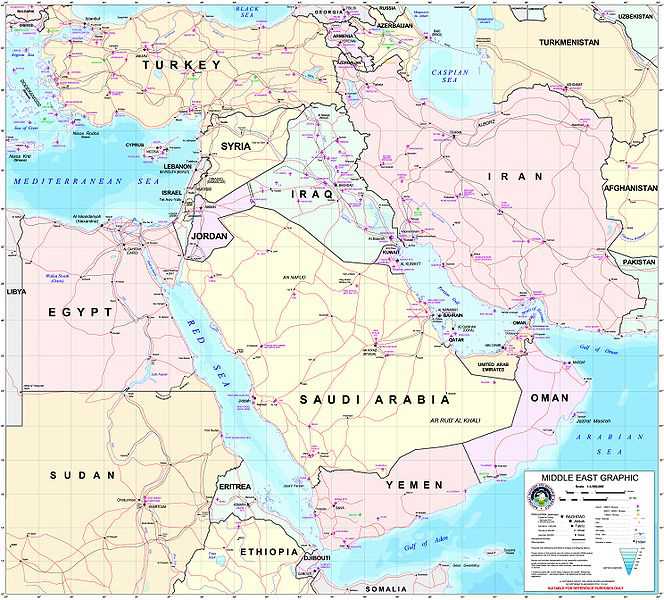
    Turkish-Iraqi bilateral relations have been flourishing lately. Although the central government in Baghdad supported the Turkish air and ground offensive in the winter of 2007 to 2008, it could not pressure the KRG, which controls Northern Iraq, into limiting the activities of the PKK in the region (EDM, April 18). The officials in KRG were critical of Baghdad’s rapprochement with Turkey and condemned Iraqi President Celal Talabani’s visit to Turkey in March (Milliyet, March 7). This situation has changed; and a constructive dialogue is being held between Ankara, Baghdad, and the Kurdish capital of Erbil. During Turkish Prime Minister Recep Tayyip Erdogan’s trip to Baghdad in July, the parties signed an agreement to initiate high-level strategic cooperation (EDM, July 11). In anticipation of the American withdrawal from Iraq, Turkey met with the Iraqi central government and the United States to set up a trilateral security commission to coordinate activities against the PKK with the participation of the KRG (Terrorism Monitor, December 8).

    For some time it has been expected that Turkish President Abdullah Gul would visit Iraq. Gul accepted an invitation from Talabani, but the exact date of the visit was not made public for security concerns. Following the terror attack last week, Talabani went to Kirkuk, where he met with representatives of the Iraqi Turkmen community. He announced that the conditions among the Turkmen would be improved, a move that should please Turkey. Talabani reportedly said that Gul’s visit might take place on December 20 and that the two of them might go to Kirkuk together. In the wake of the deadly terror attack, such a trip might be a demonstration of solidarity against terrorism (Cihan Haber Ajansi, December 12).

    The Turkish President’s office confirmed that Gul would be visiting Baghdad soon, depending on the state of his health (he currently suffers from an ear infection that prevents him from flying). A trip to Kirkuk has not yet been confirmed, however. The Turkish daily Milliyet claimed that Turkish diplomats were displeased with Talabani’s statements (Milliyet, December 13). In October Talabani also invited Gul to participate in a ceremony for the opening of Erbil airport; the invitation was declined (www.cnnturk.com, October 13). Given the disputed status of Kirkuk and Turkey’s objections to the Kurdish stance on the status of these cities, the Turkish president might be hesitant to add Northern Iraq to his itinerary. For nationalist forces in Turkey, such a move could be construed as de facto Turkish recognition of the KRG’s right to statehood. As a matter of fact, in seeking the KRG’s cooperation against the PKK within the framework of the Turkish-American-Iraqi trilateral security commission, Turkey prefers to deal with the KRG as part of the Iraqi delegation.

    The mechanism set up between Turkey and Iraq might be paying off. The Turkish daily Taraf, which is known for its pro-Kurdish position, ran a story about a new plan being worked out between Ankara, Baghdad, and Erbil. Citing Iraqi Kurdish sources, Taraf claimed that the two major parties in Iraqi Kurdistan—Massoud Barzani’s Kurdistan Democratic Party (KDP) and Talabani’s Patriotic Union of Kurdistan (PUK)—had decided to work against the PKK on a unified platform. They agreed to initiate a project to disarm PKK militants in Northern Iraq and return them to Turkey, under a plan to be supervised by the United Nations. As part of the plan, moreover, the PKK would be declared an illegal organization by the Iraqi Parliament, so that its activities inside the country could be curbed (Taraf, December 14). Given Taraf’s warm relations with the KRG, the report might indeed reflect the negotiations in progress among the parties. The report also notes that the KRG would seek to convince the PKK that maintaining that armed struggle harms Kurdish nationalist movement. The KRG has apparently not made any contacts with the PKK to seek its approval on this deal, however. It is unclear whether the KRG would go the extra mile to enforce such an arrangement, if the PKK resists.

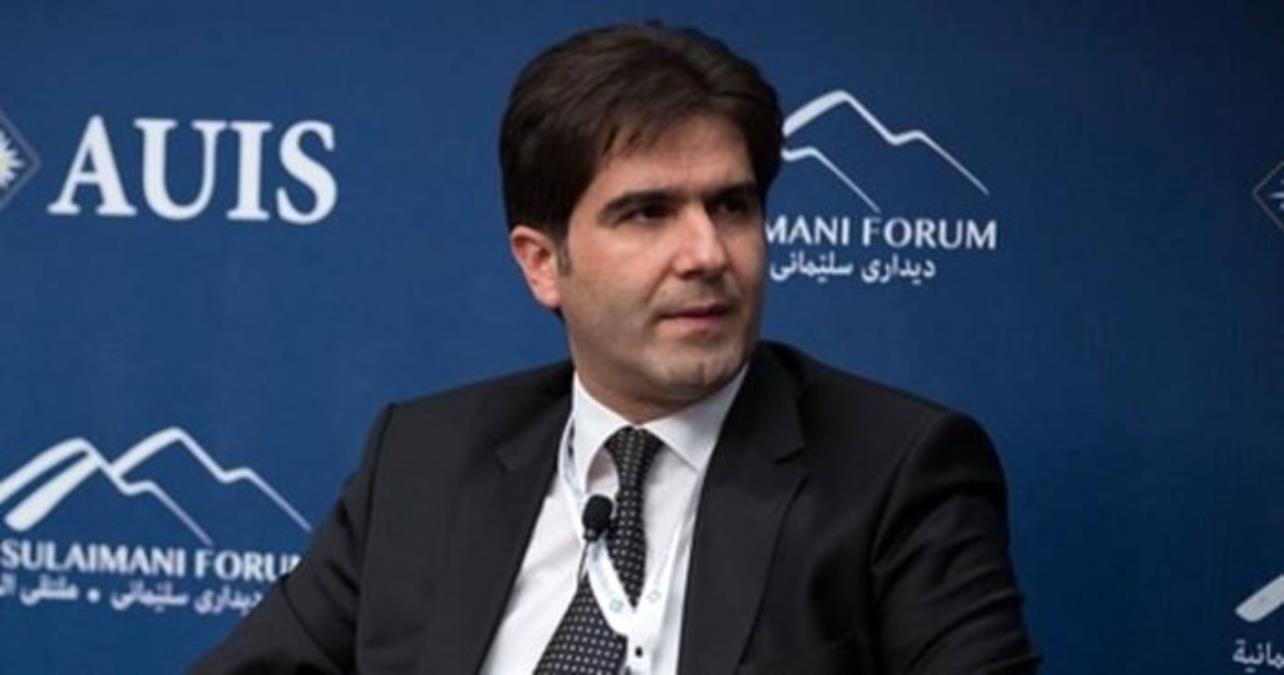
    At this juncture, another visit to Northern Iraq becomes important. A delegation from Turkey’s pro-Kurdish Democratic Society Party (DTP) traveled to Northern Iraq from December 13 to 15 where they met KRG President Massoud Barzani in Erbil on December 13 and KRG Prime Minister Nechirvan Idris Barzani (a nephew of the president) on December 14. On December 15 they will be in Suleymaniye to meet representatives of the PUK and in Baghdad to meet Talabani. Their discussions have included the latest developments on the Kurdish question, including the Turkish army’s recent cross-border strikes against the PKK camps and the diplomatic talks between Ankara and Erbil (www.cnnturk.com, December 14).

    It is no secret that many of Turkey’s Kurdish nationalists look to the KRG as a source of inspiration and guidance, and they welcome normalization of Turkey’s relations with Northern Iraq. It remains to be seen whether the leaders of the Iraqi Kurds can use their leverage on the DTP to convince the PKK to comply with the new agreement.

    https://jamestown.org/program/ankara-baghdad-and-erbil-reportedly-near-a-deal-to-deter-the-pkk-in-northern-iraq/

  • Turkey and Europe: The Decisive Year Ahead

    Turkey and Europe: The Decisive Year Ahead

    INTERNATIONAL CRISIS GROUP – NEW REPORT


    Istanbul/Brussels, 15 December 2008: Turkey is entering a critical year when its already fading goal of European Union membership may be put on hold indefinitely.

    Turkey and Europe: The Decisive Year Ahead,* the latest International Crisis Group report, says both Turkey and EU member states need to recall how much they have to gain from each other and quickly reverse a downward spiral that is otherwise likely to produce a breakdown in negotiations and new tension in the Mediterranean.

    “There was extraordinary progress in Turkey between 2000-2004 on convergence with EU laws and standards”, says Hugh Pope, Crisis Group’s Project Director for Turkey and Cyprus. “But since then, national reform has slowed to a crawl. At the same time, leaders in some EU countries, including France and Germany, have shown opposition to Turkish membership in unprecedented ways”.

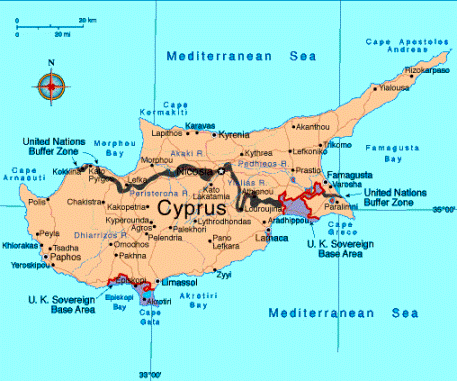
    The danger of a breakdown will be especially great if there is no Cyprus settlement in 2009. Some member states could seize on the issue to suspend membership negotiations, especially if Turkey does not open its ports to Cypriot vessels by the fall. If negotiations are suspended, it will be nearly impossible to find the unanimity needed to restart them.

    Global rankings show that Turkey is seriously underperforming in terms of development, rights, transparency and democracy. EU-driven reforms have stalled, due to anger that Brussels accepted Cyprus as a member in 2004 even though it was the Greek Cypriots who rejected the UN plan for reunification of the island; domestic political crises; institutional resistance to change; and the reluctance of Prime Minister Recep Tayyip Erdogan, the ruling AKP and main opposition parties to take political risks to move forward. Nothing much can now be expected at least until after the March 2009 local elections. A crucial “National Program” to adopt EU laws – the reform roadmap – is stalled in the cabinet.

    The setbacks come just as Turkey’s initiatives to encourage openness and calm regional tensions are showing how much it can advance EU foreign policy goals. Ankara has helped de-escalate crises over Iran’s nuclear policy and Lebanon; mediated Syria-Israel talks; and opened new contacts with Armenia and cooperation with Iraqi Kurds. It is also supporting promising talks on Cyprus, where, if all sides push for an agreement, a 2009 settlement is possible.

    The dangers to Turkey of lost momentum are evident: feeble reform, new Kurdish tension, political polarisation and the risk of losing the anchor of this decade’s economic miracle.

    “The cost to Europe would also be great”, says Sabine Freizer, Crisis Group’s Europe Program Director. “Less easy access to big, fast-growing markets, likely new tensions over Cyprus and the loss of leverage that partnership with Turkey offers to help stabilise the Middle East, strengthen EU energy security and reach out to the Muslim world”.


    Contacts: Andrew Stroehlein (Brussels) +32 (0) 2 541 1635
    Kimberly Abbott (Washington) +1 202 785 1601
    To contact Crisis Group media please click here
    *Read the full Crisis Group report on our website:

    The International Crisis Group (Crisis Group) is an independent, non-profit, non-governmental organisation covering some 60 crisis-affected countries and territories across four continents, working through field-based analysis and high-level advocacy to prevent and resolve deadly conflict.

  • Iraq presents a lesson from history

    Iraq presents a lesson from history

    As Britain prepares to pull its troops out of Iraq, former BBC Baghdad correspondent Andrew North looks back to a previous military campaign and considers whether history is destined to repeat itself?

    As the insurgency spread, the letters from the British diplomat in Baghdad grew bleaker.

    “We are in the thick of violent agitation and we feel anxious? the underlying thought is out with the infidel.”

    And then: “The country between Diwaniyah and Samawah is abandoned to disorder. We haven’t troops enough to tackle it at present.”

    A month later: “There’s no getting out of the conclusion that we have made an immense failure here.”

    In fact, this insurgency was in 1920, the uprising against the British occupation of what was then still Mesopotamia.

    The diplomat was Gertrude Bell, an energetic and passionate Arab expert who literally drew Iraq’s borders. “I had a well spent morning at the office making out the southern desert frontier of the Iraq,” she wrote in late 1921.

    ‘Mass of roses’

    But read her letters and diaries and you can easily imagine she’s describing events since 2003, as American and British forces lost control of the country they had invaded.

    The latest unhappy chapter in Britain’s involvement in Iraq is approaching its end, with the government likely to announce soon a plan to withdraw most of its forces over the course of next year.

    There are plenty of parallels with 90 years ago, says Toby Dodge, the widely-respected Iraq expert at London University’s Queen Mary College, but “in the run-up to the invasion, both in Downing Street and the Foreign Office, there was no sense of history whatsoever”.

    The hundreds of letters Bell wrote to her parents during her time in Iraq and other parts of the Middle East, complete with requests for supplies of “crinkly hairpins”, are available to anyone via the internet.

    Born in County Durham, her papers are now held by Newcastle University’s Robinson library, which has been putting them online, together with her many photos.

    It is a record of a unique person, who also managed to find time to be an enthusiastic Alpine mountaineer and accomplished archaeologist, her first passion.

    But it was the creation of Iraq that would consume her most.

    There was a sense of elation when Britain took Baghdad from the Ottoman Turks in the spring of 1917 and a belief in the inherent rightness of the cause – much like the mood in the White House and Downing Street in April 2003 after the toppling of Saddam Hussein.

    “Baghdad is a mass of roses and congratulations,” Bell wrote, shortly after taking up her post as Oriental Secretary in the occupation administration. “They are genuinely delighted at being free of the Turks.”

    ‘Full-blown jihad’

    A few weeks before, the British commander Lt Gen Sir Stanley Maude had promised the people of Baghdad that: “Our armies do not come into your cities and lands as conquerors or enemies, but as liberators.”

    Fluent in Arabic, Bell threw herself into her task of setting up a pro-British Arab government and was soon the main link to the country’s new politicians.

    Her instinct was to give the Arabs more independence than London wanted. For several years things proceeded peacefully. The slower communications of that time meant any dissension took longer to spread. Iraqi insurgents today have mobile phones. But dissension there was.

    She had misjudged the power of the leaders of the Shia majority, particularly their clerics.

    “There they sit in an atmosphere which reeks of antiquity,” she wrote dismissively to her mother in early 1920, “and is so thick with the dust of ages that you can’t see through it – nor can they.”

    By that summer, they were leading an uprising against the British, who found themselves insufficiently equipped to handle it.

    “We are now in the middle of a full-blown jihad,” she confessed to her mother a few weeks later.

    Burning villages

    As things fell apart, anger and opposition to the Iraq venture grew in London. But Bell didn’t shirk the blame. “The underlying truth of all criticism is? that we had promised self-governing institutions and not only made no step towards them but were busily setting up something entirely different.”

    Her letters capture too the contradictions of being an occupying power, however good it believes its intentions to be. “It’s difficult to be burning villages at one end of the country by means of a British army and assuring people at the other end that we really have handed over responsibility to native ministers,” she said in November 1920.

    A new government was created though, in spite of the insurgency – as in Iraq today. It did meet one of London’s goals – it was pro-British and in 1921, Iraq officially became a nation state.

    But nearly 10,000 Iraqis had died in the process. And that government – with the imported King Feisal I at its head – was inherently unstable, led by the minority Sunnis, with the Shia majority excluded – the model by which Iraq would subsequently be governed by Saddam Hussein.

    The Shias have today reversed that perceived injustice – as they dominate the current government – although through an arguably more open process than in the 1920s.

    But their experience under the British is etched into their collective soul in a way that will condition Iraqi politics for many years yet. The other day in Baghdad, I was talking to a senior Shia figure who referred simply to “1920” as he explained his political outlook. And now it is the Sunnis who feel disenfranchised.

    Sleeping tablets

    Gertrude Bell died in the Iraqi capital in 1926 after taking an overdose of sleeping tablets. The last few years of her life she had returned to her original love of archaeology – setting up a museum that still stands – after falling out of favour in the colonial administration.

    Many older Iraqis still talk affectionately of the woman they called “Miss Bell”, despite her controversial record.

    She’s buried in a small date-palm fringed Christian cemetery in central Baghdad.

    The sprightly caretaker started working there in 1955, in the time of the last British-backed king, Feisal II, surviving the coups, dictatorships and chaos that have followed.

    Fighting has often engulfed the area around the graveyard in recent years. The British and Americans should have learnt “from the experience of others, like Miss Bell, and the lessons from history,” says caretaker Ali Mansour. “Iraq has always been a difficult country.”

    With the reduced levels of violence, there is a view in the outside world that Iraq is now somehow fixed.

    But attacks still claim 10-20 lives every day. And Toby Dodge sees many similarities between the “unstable, unrepresentative” state the British left behind in the early 20th century and what has emerged today.

    “The Americans as far as we know will leave Iraq in 2011 with an unstable state and an unpopular ruling elite using a great deal of violence to stay in power,” he says.

    What would Gertrude Bell have made of all of this? She did foresee the outline of things to come. In late 1921, the increasingly powerful Americans were manoeuvring to sign their own treaty with the new Iraqi state: “Oil is the trouble, of course,” she spat. “Detestable stuff!”