Month: December 2008

  • Sample Letter to PBS

    Sample Letter to PBS

    Related content in Turkish : https://www.turkishnews.com/tr/content/2008/12/15/pbs-tekrar-ermeni-yalanlarini-yayinladi/

    FRONTLINE/World

    2481 Hearst Avenue
    University of California
    Berkeley, CA 94709
    Phone: (510) 643-3065
    Fax: (510) 643-1286
    E-mail:
    [email protected] This email address is being protected from spam bots, you need Javascript enabled to view it

    Michael Getler
    Tell:703-739-5290
    Or email from this link
    www.pbs.org


    Sample Letter


    Dear……

    I watched “The Armenian Genocide” documentary directed by Andrew Goldberg on WLIW21 last night. I am writing this letter to express my dismay concerning the PBS decision to air this documentary again.

    Concerning the tragic events of 1915, Turks and Armenians clearly have different perceptions. The Armenian perception has been expressed by the PBS on different occasions. However, the PBS has never aired the Turkish point of view. You may say that “No, the documentary in question includes the opinions of Turkish scholars and intellectuals regarding the issue” and I can reply that “yes, but they look at the issue from the Armenian point of view.”

    The events of 1915 are still controversial and are discussed by the historians. There are many Turkish and international historians and experts including Guenter Lewy, Edward Erickson, Bernard Lewis, Gilles Veinstein and Justin McCarthy who describe the Armenian relocation as a security measure taken by the then Ottoman government under WWI conditions. Why did Mr. Goldberg, the director of the documentary not give floor to them to tell the other side of the story, leaving out the critical fact that Armenian nationals fomented a full-scale rebellion against the Ottoman government by siding with the invading foreign army in full force. And why did he not attach due sensitivity to the enormous number of Muslim Turks killed by Armenians during WWI and the assassination campaign of Armenian terrorist groups against Turkish diplomats during the 1970s and 1980s?

    The world has yet to learn the entire coverage of the story. The Turkish government has already opened the Ottoman archives including military ones to all historians and experts, contrary to the claim of Armenian circles. Moreover, Turkey has proposed to Armenia the establishment of a joint historical commission in order to study these tragic events comprehensively. The Armenian side, on the other hand, has yet to positively respond to this sincere proposal.

    Dear…

    It should be borne in mind that the entire Turkish community is extremely sensitive about these allegations. It is not fair to label a whole nation with this heinous crime which was not committed by them. Memories of people do not always overlap with historical facts and it is not just to expect from one nation to completely accept another nation’s memory.

    I should also mention here that independent journalism would require the covering of a story in all its dimensions. I, therefore, request you to desist from airing this one-sided documentary and express my hope that you would prepare more balanced programs in the future.

    Sincerely…


  • A ‘rabbi’ in the underground

    A ‘rabbi’ in the underground

    By Zvi Bar’el

    Daniel Levi, Daniel Guney or Tuncay Guney? Who is this person whom the prosecution in Turkey last week said it wanted to summon to interrogate? According to reports in the Turkish newspaper Milliyet, he is a Mossad agent who was a member of the right-wing nationalist underground known as Ergenekon. It is alleged that Ergenekon planned to topple the pro-Islamic government of Prime Minister Recep Tayyip Erdogan.

    Another Turkish newspaper, Yeni Safak, reported that documents were found in Guney’s apartment that allegedly link members of Israel’s business community with important Turkish figures also involved in the Ergenekon affair.

    According to other reports in the Turkish press, Guney was an agent of the Turkish intelligence service who penetrated both the ranks of the Turkish police’s intelligence service and the Ergenekon organization so as to expose the identity of its members. In 2004, Guney was smuggled out of Turkey and clandestinely sent to the United States; he subsequently moved to Canada, where his name appears in the membership list of Congregation Beit Yaakov as Daniel T. Guney.

    An attempt to obtain Guney’s reaction proved fruitless; however, last week, the 36-year-old Guney spoke with Turkish journalists and reacted to the accusations: “I have never been an intelligence agent, and I was given the name ‘Silk’ not because I was an agent but because I was the subject of intelligence surveillance.” That is not what the National Intelligence Organization, for which Guney apparently worked, is saying; it denies that he was one of its agents and that he penetrated both the ranks of the Turkish police’s intelligence service and Turkey’s counterterrorism unit. The latter agency was a division of the National Intelligence Organization but was dismantled in the wake of allegations that it was involved in criminal activities and even played a role in the assassination of political opponents.

    Despite the denial, it seems apparent that the allegations are true; a Turkish court is now demanding that the National Intelligence Organization report to it on its links with this suspected agent, who is now being referred to as “the rabbi.” It is doubtful that Guney is actually a rabbi; the child of Jews of Egyptian origin, he worked as a journalist in Turkey. He subsequently began to deal in the sale of stolen cars and, between the time he was smuggled out of Turkey to the present day, he does not seem to have engaged in any academic program that might have included rabbinical studies. However, that has not stopped Turkish newspapers from labeling him as a Mossad agent-cum-rabbi who supposedly worked for Turkey’s National Intelligence Organization.

    The Ergenekon underground (the name is derived from Turkish mythology) was uncovered last year. According to the evidence of written material and tape transcripts, which are contained in a 2,500-page document, the underground included army officers, retired officers, journalists, writers, government employees and members of the Turkish business community – in short, a sort of secret shadow government. Its ideology was the restoration of the secular Turkey that was envisaged by Mustafa Kemal Ataturk, the founder of the Turkish Republic and its first president. For the members of Ergenekon, Turkey became a theocratic state with the installation of the government of Erdogan and the party he heads, the Justice and Development Party (AKP).

    The fact that the affair exploded just before the Turkish Constitutional Court was about to decide whether the AKP regime should continue did arouse suspicions that the affair was being manipulated to defend the party; however, as the investigation progressed, it became increasingly evident that the underground is far more complex than was initially thought. Last month, 86 individuals suspected of membership in Ergenekon went on trial, and evidence is now emerging on the way Turkey’s counterterrorism unit and its National Intelligence Organization have been operating. (*

    In an interview with the Turkish newspaper Today’s Zaman, Ertugrul Guven, former deputy undersecretary of the National Intelligence Organization in the 1990s, states that the various branches of Turkey’s intelligence mechanism (there are at least five) did not coordinate the exchange of data between them and that, in point of fact, there was no mechanism for data exchange between the branches simply because of jealousy. “As a result, information-gathering in Turkey has a major Achilles’ heel,” explains Guven, who alleges that in the past, especially in the 1980s, Turkish diplomats were assassinated by Armenian terrorists, and that some foreign espionage agencies tended to ignore the actions of these terrorists. “Turkey,” he points out, “was forced to develop a policy for dealing with these attacks. This is perhaps the reason why the National Intelligence Organization used the services of individuals with strong nationalist feelings to thwart the assassination plots fomented by Armenian terrorists. However, these people continue to engage in illegal activities and adopted a Mafia-style modus operandi. They continue to use the name of the National Intelligence Organization, although their membership in that intelligence service ended when their mission was completed.

    The uncovering of the operational methods of the National Intelligence Organization and the admission that it employed criminals do not constitute anything new for the majority of Turkey’s citizens. Over the past decade, the media has publicized criminal scandals involving members of Turkey’s police, army and intelligence services, and the various reports have created the feeling that two or even three parallel governments are operating in the country. Even today, when the wave of arrests attests to the scope of involvement in the Ergenekon affair, the prosecution in Turkey is finding it difficult to determine who are the organization’s leaders and whether there might not be another network or branch of Ergenekon that has yet to be uncovered. In the meantime, several political leaders who are members of the country’s nationalist parties have declared that they have begun the process of purging extreme nationalists from the ranks of their respective parties. Nonetheless, there is no guarantee that those who are leaving, or will leave, the official parties will not set up their own secret organization and continue their activities.

    Source:  Haaretz, 14 December 2008

  • Ergenekon agent spent time in northern New Jersey prior to 9/11

    Ergenekon agent spent time in northern New Jersey prior to 9/11

    By Wayne Madsen
    Online Journal Contributing Writer

    Dec 10, 2008, 00:22

    (WMR) — Tuncay Guney, the Turkish National Intelligence Organization (MIT) agent who was a key player in the right-wing “Deep State” Ergenekon movement that attempted to overthrow the Turkish government, spent time in North Jersey in the months prior to the 9/11 attacks, according to a reliable source who spoke to WMR.

    Guney now claims to be a rabbi but his status as a rabbi has been rejected as a falsehood by Turkey’s Jewish community leaders. Guney is listed as a rabbi at Jacob House (“B’nai Yakov”) Jewish Community Center in Toronto but the Toronto Board of Rabbis and the Turkish Jewish Congregation have no records of a Rabbi Tuncay Guney or “Daniel Levi,” an alias used by Guney. It is believed that “Jacob House” is a front for intelligence operations and not an actual synagogue. Jacob House shares an address with the New York Institute, which also maintains an address in New Jersey.

    Guney was arrested by Istanbul’s Anti-Smuggling and Organized Crime Department on March 8, 2001, after a police search of his home turned up two guns, fake license plates, a number of Turkish identity cards, over a hundred fake diplomas, and other Ergenekon evidence. The head of the Istanbul police unit, Adil Serdar Saçan, suspected Guney was a key player in Ergenekon. However, Sacan was, himself, later arrested and charged with being a member of Ergenekon. However, WMR has learned from its Turkish sources that Sacan is honest and was set up in an attempt to tarnish his image after he discovered an Israeli connection to the powerful Ergenekon movement.

    As a member of the Turkish police JITEM unit, Guney reportedly spied, under cover as a journalist, on Iraqi Kurdish leaders Massoud Barzani and Jalal Talabani and Lebanese Hezbollah leader Hassan Nasrallah. Talabani is now the President of Iraq.

    After Guney’s release on bail on March 9, 2001, Şenkal Atasagun, MIT’s undersecretary, asked the CIA to exfiltrate Guney to the United States. Guney was flown on Turkish Airlines to New York. Guney eventually ended up, according to our sources, living in North Jersey and making a living pumping gas.

    Guney lived in the “973” area code zone, an area that encompasses East Rutherford and Fairlawn, towns that were centers of activity for Israeli Mossad Urban Moving System operatives who were spotted celebrating the 9/11 attacks from at least two locations — Liberty State Park in Jersey City and an apartment complex on the Jersey Palisades above Weehawken, the headquarters of Urban Moving Systems. The FBI and CIA later identified Dominick Suter, the manager of Urban Moving Systems, as a Mossad intelligence officer. Five Urban Moving Systems employees were arrested in their van in East Rutherford during the afternoon of September 11, 2001, after they were seen traveling toward the Lincoln Tunnel to Manhattan. Their Urban Moving Systems van tested positive for the presence of explosives. Suter fled the United States and the five Israelis, some of whom were identified as Mossad in an FBI/CIA database, were released after a few months in jail after heavy pressure was applied on the U.S. government by Israel.

    Guney is also suspected of acting as an agent for Mossad, as well as the CIA. His presence in North Jersey, a “hot zone” for Israeli intelligence before and during the 9/11 attacks, points to a possible Turkish connection to the attacks.

    On August 7, 2005, WMR reported on details of the apprehension of the Israelis for their false flag actions: “Jersey City was a major base of operations for the 1993 World Trade Center attack. The Ryder van used in that attack was rented from a Jersey City rental agency . . . there was a call placed to the Jersey City Police Department that claimed ‘Palestinians’ in Arab clothes were seen celebrating the attacks. Although the Jersey City Police discovered their 911 system tapes on September 11, 2001 disappeared from their servers and achives after ISI [of Mount Laurel, NJ] took over the contract, some tapes implicating “Arabs” found their way into the hands of WNBC-TV in New York in June 2002. WNBC played transcripts of 911 calls from the Jersey City Police:

    Dispatcher: Jersey City police.
    Caller: Yes, we have a white van, 2 or 3 guys in there, they look like Palestinians and going around a building.
    Caller: There’s a minivan heading toward the Holland tunnel, I see the guy by Newark Airport mixing some junk and he has those sheikh uniform.
    Dispatcher: He has what?
    Caller: He’s dressed like an Arab.

    “It is clear that the Jersey City Police Department’s 911 call tapes were manipulated to delete any calls that might implicate the Israelis. The one call provided to WNBC was clearly an attempt at a ‘false flag” operation implicating ‘Palestinians’ wearing ‘sheik uniforms’ as the culprits in at least one of the white vans driven by Israeli ‘movers’ on the morning of September 11. After the van was traced to the Israeli moving company, the BOLO [Be On Look Out for message] went out for the arrest of the vehicle’s driver and passengers. An East Rutherford policeman directing traffic away from the closed Lincoln Tunnel on Route 3 East noticed the van was driving slowly on the service road towards the tunnel. The tag of the vehicle was only off by one letter from what was contained in the BOLO (JRJ 13Y) and the front New Jersey plate had been removed. It is very possible that to confuse the police, the Israelis were using NJ plate JRJ 13Y as the rear tag on two white vans – the one sighted in Liberty State Park and the other in Maria’s apartment building parking lot. In fact, local police reported a number of white van sightings during September 11, with a number of them phoned into the police. Maria told ABC News she phoned tag number JRJ 13Y to the Jersey City Police after seeing the Israelis driving in a white van celebrating the first plane’s impact, while Liberty State Park witnesses said the same tag number — JRJ 13Y — had been passed to the police and FBI after a white van with ‘celebrating Arabs’ had been chased from the park by the park’s chief ranger after the first plane impact.[11] It was clear that officials of New Jersey’s Department of Environmental Protection in Trenton, which has authority over the state’s parks, ordered Liberty State Park officials not to talk to the media about September 11 and the Israeli van.

    The man who then New Jersey Governor Jim McGreevey placed in charge of his liaison to New Jersey’s security and law enforcement agencies, Golan Cipel, later was allegedly identified by U.S. intelligence as a gay “honey trap” Mossad officer tasked with entrapping and blackmailing McGreevey. McGreevey resigned as governor after details of the homosexual affair became public.

    Ergenekon has been accused of carrying out terrorist attacks and assassinations in Turkey as “false flag” operations to discredit, undermine, and eventually overthrow Turkey’s Justice and Development Party (AKP) government of Prime Minister Recep Tayyip Erdogan. Former FBI Turkish and Persian translator Sibel Edmonds told the Sunday Times of London earlier this year that her translations of wiretaps of Turkish, Iranian, Israeli, and American individuals pointed to Turkish training for the 9/11 hijack ring. Edmonds said that an “Al Qaeda” leader, a Syrian named Louai al-Sakka, had trained 9/11 hijackers at a military base in Turkey, under the watchful eyes of the Turkish military, which we now know was riddled with Ergenekon agents up and down the chain-of-command, four star generals to non-commissioned officers. Al-Sakka was convicted in 2007 for his role in a series of 2003 bombings in Istanbul that targeted the British Consulate, two HSBC bank branches, and two synagogues and his now serving a life prison sentence. The Turkish ring may have been involved or known about several beheadings of Western prisoners in Iraq that were blamed on “Al Qaeda.”

    Philip Giraldi, a former CIA station chief in Istanbul, wrote the following in the Dallas Morning News: “Sibel Edmonds makes a number of accusations about specific criminal behavior that appear to be extraordinary but are credible enough to warrant official investigation.”

    Coupling the Turkish official investigation of Ergenekon with Edmonds’ information, there is more than a smoking gun pointing to 9/11 as a “false flag” operation involving Turkish, Israeli, and U.S. intelligence operatives. The Saudi and Pakistani financial connection to the 9/11 hijackers and the “false flag” operation has already been well-documented.

    It is time for the incoming Obama administration to seriously consider appointing a new 9/11 commission, sans enablers and possible conspirators in the 9/11 false flag attack on the United States. Thousands of pages of documents are now available in Turkey, the United States, Britain, India, France, and other countries that will prove that 9/11 involved a network much larger than a former CIA asset hiding in an Afghan cave, Osama Bin Laden, and 19 ne’er-do-well “hijackers,” some of whom were more interested in going to strip joints and bars in the days before they decided to take express flights to “heaven” to spend eternity with Allah.

    Previously published in the Wayne Madsen Report.

    Copyright © 2008 WayneMadenReport.com

    Wayne Madsen is a Washington, DC-based investigative journalist and nationally-distributed columnist. He is the editor and publisher of the Wayne Madsen Report (subscription required).

    Copyright © 1998-2007 Online Journal
    Email Online Journal Editor

    Source: onlinejournal.com, Dec 10, 2008

    [2]

    Mossad implicated in a coup plot in Turkey, a NATO country; CIA fingerprints also found on attempt

    By Wayne Madsen
    Online Journal Contributing Writer

    Dec 4, 2008, 00:20

    (WMR) — Fresh from revelations, reported by WMR, that Israel’s Mossad and Chabad House-based criminal syndicates were targets in a criminal gangland retribution attack by a notorious Muslim gang in Mumbai, comes word that Mossad has, once again, been implicated in an intelligence and criminal network, this time in Turkey.

    What makes this latest example of Israel’s failure to stem the criminal activities of its intelligence service and criminal syndicates worse is that Turkey, unlike Israel, is a NATO ally of the United States and, therefore, the United States is bound by treaty to protect NATO allies from aggression by non-NATO states, including Israel.

    The Turkish and other Middle East media are reporting that the Mossad has been fingered in connection with a right-wing Turkish criminal and intelligence gang, known as Ergenekon, that stands accused of attempting to overthrow Turkey’s democratically-elected Justice and Development (AKP) Party of Prime Minister Recep Tayyip Erdogan and President Abdullah Gul. Several Turkish papers have named a Turkish rabbi, Tuncay Guney, aka Daniel T. Guney and Daniel Levi and code-named “Ipek” or “Silk,” as having served as a double agent for the Turkish National Intelligence Organization (MIT) tasked with infiltrating the shadowy but powerful “state within a state” group Ergenekon. Guney had been arrested by Turkish authorities in 2001 for distributing fake drivers’ licenses and phony license plates for luxury cars. A document recently uncovered by the Turkish press revealed that Guney had also infiltrated a police intelligence unit (JITEM) working with Ergenekon to destabilize Turkey. Guney was exfiltrated to the United States and he now heads up the B’nai Yaakov Synagogue and Community Center in Toronto, Canada. Guney has denied that he has been an agent for Israel, Turkey or the United States but the MIT has confirmed the document identifying Guney as an agent for MIT is authentic.

    The Turkish daily Hurriyet has reported that Guney served in MIT’s Counter-terrorism Unit (CTU) and in the MIT unit that monitors Iran. Hurriyet also reported that Guney had developed a contact at the Iranian consulate in Istanbul, Muhsin Karger, the consulate’s political affairs undersecretary.

    Guney also has claimed to be a journalist and it is also alleged that he was a member of the PKK. Silvyo Ovaydo, the leader of the Turkish Jewish community, called Guney a fraudulent rabbi and said he was not even registered as a rabbi at the B’nai Yaakov synagogue in Toronto. Guney is said to have once worked for Islamist media organizations in Turkey but suddenly converted to Judaism and became an “instant rabbi” in Toronto.

    At the heart of the Ergenekon story lies Mossad and its reported attempts to turn Turkey into another Lebanon or West Bank/Gaza, a country wracked by internal strife and constant warfare that would usher into power a strong right-wing military dictatorship. In the trial of one of the accused murderers of Turkish-Armenian journalist Hrant Dink, the lawyer for one of the accused murderers asked another accused murderer, Erhan Tuncel, a one-time police informer like Guney, if he had an Israeli girlfriend. Tuncel refused to answer the question, citing an invasion of his privacy. However, it was clear that what the lawyer was driving at was a Mossad connection to the murder of Dink, a murder that was being pinned on Turkish anti-Armenian nationalists by the corporate and heavyily Israeli Lobby-influenced media in the West.

    When 89 suspects were named in a 2,455-page indictment by a criminal court in Istanbul last July, many retired Turkish army officers, the neocon network, especially in Washington, which is their major citadel, along with Jerusalem and London, began to throw cold water and the term “conspiracy theory” around charges in the Turkish indictment that Ergenekon played a major role in the formation of several Turkish terrorist groups to disrupt Turkish politics, including the illegal Kurdistan Workers’ Party (PKK), Turkish Hizbollah (Party of God), the Marxist-Leninist People’s Liberation Party/Front (DHKP-C), and the little-known Islamic Great East Raiders Front (IBDA-C). The neocon Jamestown Foundation in Washington called the indictment’s links between Turkish military elements and radical terrorists a “conspiracy theory.” Organizations like Jamestown have no other choice. If it were also proven, as it was in Turkey, that various terrorist groups like “Al Qaeda,” “Deccan Mujaheddin,” and others exist courtesy of the nurturing and support by American, Israeli, and other Western military-intelligence structures, groups like Jamestown would lose their reasons for existence — to make propaganda and receive funding in order to keep the terrorist bogeymen, the actual “Emmanuel Godsteins,” alive.

    Guney is reported to be the 86th suspect in the indictment of Ergenekon. Guney is believed to have revealed the initial detailed information on the existence of Ergenekon in order to avoid being charged in the case.

    The involvement of extreme right-wing Turkish military and intelligence officials and Turkish organized crime networks, with Mossad and, possibly, CIA agents acting in concert with a suspected CIA-funded Turkish Islamic charismatic madrassa and Islamic centers’ chief named Fethullah Gulen — whose activities parallel pan-Turkic/Eurasianist (re: George Soros) goals of Ergenekon — is similar to the scenario now playing out in India where a little known group called “Deccan Mujaheddin” may have been created as a ruse by Indian right-wing military and intelligence officers, allied with Mossad and CIA agents, to sow discord in India and bring about a right-wing Bharatiya Janata Party-Shiv Sena Hindu government.

    Gulen owns a number of media and business interests in Turkey and runs Islamic centers throughout central Asia and even in Russia.

    In polls, some one-third of the Turkish public believe Islamist Nurcu sect charismatic leader Grand Hodja Fethullah Gulen, who lives in Pennsylvania, is part of a movement that aims to seize control of the Turkish state and a little over a third believe that Gulen is funded by “international powers.” After he was acquitted in Turkey of attempting to overthrow the secular state with his religious organization, Gulen was first denied a Permanent Resident Card or “Green Card” to remain in the United States by the U.S. Distrrict Court for the Eastern District of Pennsylvania but then an appeals court granted Gulen a Green Card. In October of this year, a federal appellate court found that U.S. immigration authorities improperly rejected Gulen’s request for a Green Card. The appeals court ruled that Gulen was “an alien of extraordinary ability,” a decision that saw approval of Gulen’s residency status. Observers of the case suspect the CIA intervened with the court on Gulen’s behalf. Gulen’s support for the AKP government may be an insurance policy by the CIA to maintain a close relationship with the “Islamist tendency” AKP government in Ankara. The Bush administration, after seven years of trying to deport Gulen to Turkey, suddenly dropped its opposition to his permanent residency status.

    The public prosecutor in the U.S. Citizenship and Immigration Service (USCIS) case against Gulen’s permanent residency status argued in filed documents that Gulen’s movement was financially supported by Saudi Arabia, Iran, the Turkish government, and the “Central Intelligence Agency.” The deposition stated that some Ankara businessmen donated up to 70 percent of their income to Gulen’s movement.

    If Gulen’s operations are funded by the CIA that means the “Agency” may be linked to Ergenekon. With the U.S. having a mutual defense treaty with Turkey’s recognized government that puts the CIA potentially in violation of U.S. law. And Israel’s connections with Ergenekon means that the United States is bound by treaty to protect its ally Turkey from Israeli covert or overt aggression.

    There is an element of “McCarthyism” in the Ergenekon case. Some well-meaning officials have been subjected to being tainted by the broad brush of being associated with Ergenekon. One is Asil Serdar Sacan, the former head of the Istanbul organized crime department, who was the first to confiscate documents on Ergenekon in 2001 and broadened his investigation to include both Ergenekon and the Gulen organization. Sacan, who investigated the murder of Turkey’s “King of Casinos” Omer Lutfu Topol, successfully beat attempts to smear him, being acquitted of 36 criminal charges brought against him and being reinstated six times to his police position. Sacan is currently in jail as an Ergenekon suspect but his only “crime” appears to have exposed Guney as a possible triple agent for the MIT, Mossad, and CIA. In 2001, Guney was spirited out of Turkey thanks to an agreement between MIT’s undersecretary Senkal Atasagun and the CIA. Guney was given a 10-year U.S. visa thanks to the CIA’s intervention.

    In fact, Ergenekon and its “deep state” players in Turkey and Shiv Sena and its extremist Hindu “deep state” allies in India, backed by elements of Mossad and the CIA, appears to be a replay of the CIA’s secret “Gladio” network in Europe that placed weapons caches in the hands of fascists and neo-Nazis groups to take up arms in the event of a Soviet invasion of Western Europe.

    The use of “false flag” terrorist attacks in Western Europe by Gladio units were blamed on Communists in an effort to forestall Communist-Socialist coalition governments in Western Europe, particularly in Italy and France.

    Similarly, Ergenekon stands accused of inciting conflicts between Turks and Kurds to create anarchy in the country with the aim of having Ergenekon seizing control of the Turkish government and re-cementing close ties with the United States and Israel.

    In 2004, Ergenekon attempted three military coups against the AKP government. They were code-named Eldiven (The Glove”), Sarikiz (“The Blond Girl”), and Ayisigi (“Moonlight’).

    Ergenekon has been cagily kept off the newspaper pages and TV news screens in the United States. To investigate Ergenekon and Gulen in Turkey is to peel away at an onion that could expose some other “unpleasantness” for certain quarters.

    On January 10, 2007, WMR reported: “According to Federal law enforcement sources, two influential businessmen — Turkish Sunni Muslim Fetullahci charismatic leader Fetullah Gulen, who lives in Pennsylvania after being acquitted in Turkey in 2006 of plotting against the secular republic, and Saudi BMI Islamic investment chief investor Yasin Qadi, a major investor in Turkey who was named in October 2001 by President Bush as a Special Designated Global Terrorist — were both involved with the CIA in the late 1990s in funneling weapons and other support to the Kosovo Liberation Army (KLA), an Albanian terrorist group operating in the former Yugoslavia. The KLA was allied with the Clinton administration and supported by leading neocons such as Richard Perle, whose lobbying firm, International Advisers, Inc., counts Turkey as its major client. Gulen’s books have been translated into Albanian. BMI’s founder, Soliman Biheiri, also helped to start PTech, a Braintree, Massachusetts-based firm that had active software contracts with the Federal Aviation Administration (FAA) and Pentagon on 9/11. PTech’s offices were raided by federal authorities in December 2002 after it came under suspicion for terrorist financing. Qadi is suspected of using a series of northern Virginia-based businesses and charities to fund ‘Al Qaeda’ activities in Bosnia. Osama Bin Laden was granted a special passport by the Bosnian government in 1993. Qadi was reportedly a business partner of Turkish businessman Cuneyd Zapsu, an adviser to the Prime Minister Recep Tayyip Erdoğan’s Justice and Reconciliation Party (Adalet ve Kalkinma Partisi, AKP).”

    The dramatic revelations about Ergenekon coming out of Turkey also points to the reasons why the neocons in Washington were keen to stymie the work of FBI Turkish translator Sibel Edmonds and the CIA’s non-official cover agent Valerie Plame Wilson, both of whom had smuggling and other activities in Turkey high on their priority lists. On January 18, 2008, WMR reported: “WMR has learned that former CIA covert agent Valerie Plame Wilson, whose covert status was leaked by the Bush White House, and former FBI translator Sibel Edmonds, who was focused on a major covert network involving Turkish, Israeli, and key members of the Bush administration and Republican Party and weapons and drug smuggling, were essentially looking at the same network. The nexus of Turkey with both the covert CIA Brewster Jennings and Associates operations and the Turkish-Israeli network of influence active within the Defense and State Departments, is the key factor in understanding the complicated counter-espionage operation conducted by both the FBI and CIA.” It now appears that the Washington-connected criminal network being looked at by Edmonds and Plame was, in fact, closely linked to the Ergenekon network in Turkey.

    WMR’s January 18, 2008 report continued: “Special Counsel Patrick Fitzgerald was also, according to our sources, well aware of the massive conspiracy to cover-up the smuggling of weapons of mass destruction components from former Soviet Central Asian states, as well as Ukraine, Moldova, and Ukraine, to the international weapons bazaar. The Abdul Qadeer Khan (A Q Khan) network based in Pakistan was a major beneficiary of the weapons smuggling operation that used Turkey as a pass-through. Rather than expand his investigation, Fitzgerald demurred on looking at the activities of the American Turkish Council, Turkey’s influential lobbying group in Washington, and its parallel symbiotic organization, the American Israel Public Affairs Committee (AIPAC). Turkey and Israel are close military and intelligence partners.”

    Illinois Democratic Senator Dick Durbin has called on President-elect Barack Obama to reappoint Fitzgerald as U.S. Attorney for Northern Ilinois. If Obama does so, it means that the network being investigated by Edmonds and Plame, one that stretches to Ergenekon and the Gulen network in Turkey, has its hooks deep into the future Obama administration.

    Previously published in the Wayne Madsen Report.

    Copyright © 2008 WayneMadenReport.com

    Wayne Madsen is a Washington, DC-based investigative journalist and nationally-distributed columnist. He is the editor and publisher of the Wayne Madsen Report (subscription required).

    Copyright © 1998-2007 Online Journal
    Email Online Journal Editor

    Source: onlinejournal.com, Dec 4, 2008
  • The Kurdish terror showed their ugly face once again

    The Kurdish terror showed their ugly face once again


    The Kurdish terror showed their ugly face once again

    by raiding of a Turkmen house 


    On the 5th of November 2008 a group of U.S. force accompanied by Kurdish security forces that are known as Asayish have raided the home of a Turkmen citizen Nazim Suleiman Begoglu in the Turkmen city of Kirkuk, district of Althbat “

    According to the member of the family who was present in the house during the raid, the U.S. force, accompanied by a group of Kurdish security forces “Asayish” broke doors in the house at around half an hour after mid-night.

    They entered the house after smashing the main gates and doors then they arrested two of their sons Nabil Nazim Suleiman, aged thirty years and his brother Zakaria Nazim Suleiman of twenty-eight years respectively and who worked in a shop selling electrical appliances in downtown Kirkuk.

    During the raid on the Turkmen home by the US occupied forces that accompanied by the Asayish. The Asayish were wearing Balla Clava, with a Kurdish flag on the arm of their uniform and they spoke with a different Kurdish accent.

    The Asayish and American forces destroyed their furniture, contents of the house, smashed doors and windows and randomly fired bullets using automatic machine guns inside the house in order to terrify the innocent unarmed Turkmen family.

    They moved all the members of the family into a single room and they tied their hands behind their backs and faced to the wall. The children and the females were body searched and this is utterly unacceptable in the culture and the tradition of the Islam and the in the Turkmen culture especially. This criminal act was implemented on the hand the Asayish and US forces despite the assurances that were given from the central government and officials not to raids the homes of the citizens without having warrant issue.

    According to the information that has been released, the raided forces have requested from the frightened Turkmen family to show them their savings and jewellery, the family did so under the force of a gun. As the result of this US forces and Asayish stole their savings and jewellery during the raid and this matter should be urgently investigated by the US occupied forces in Kirkuk who are mainly responsible for the safety, security and the stability.

    After the incident the Turkmen family have approached the police in Kirkuk, political organizations and the Kirkuk governor Mustafa Abdullrahman who is a Kurd and being appointed by the USA forces for help and assistance.  A promises and assurance were given to the Turkmen family by the Kirkuk governor to investigate the incident and to secure their release but unfortunately no proper action has been taken to secure their release.

    The arbitrary arrests of the two brothers, Zakaria and Nabil Nazim Suleiman Begoglu by the Asayish and US occupied forces are a clear violation of human rights. They are still detained and being imprisoned by the occupied forces and no one knows where they are imprisoned. The most striking thing is that, the family of the detainees have not been given any reason for their arrest and have not been given access for a lawyer.


    Turkmen of Iraq call upon the Iraqi Prime Minister Nuri AlMaliki, Turkish President Abdullah Gul, Journalists Union, all Iraqi and international organizations defending the human rights and freedom to move immediately to the authorities of the Iraqi government at the highest levels for the protection of the Turkmen, Arabs and Assyrian from the Kurdish oppression that are carried by Kurdish terror forces that is known as Asayish in North of Iraq and also calls for the removal of the Asayish from Turkmen city of Kirkuk and to be replaced with forces from the central government and consisting of Arabs, Turkmen, Assyrians  and Kurds

     Mofak Salman

    Turkmeneli Party Representative for Both Ireland and United Kingdom

    [email protected]


    [1] Turkmen: The Iraqi Turkmen live in an area that they call “Turkmenia” in Latin or Turkmeneli” which means, “Land of the Turkmen. It was referred to as “Turcomania” by the British geographer William Guthrie in 1785. The Turkmen are a Turkic group that has a unique heritage and culture as well as linguistic, historical and cultural links with the surrounding Turkic groups such as those in Turkey and Azerbaijan. Their spoken language is closer to Azeri but their official written language is like the Turkish spoken in present-day Turkey. Their real population has always being suppressed by the authorities in Iraq for political reasons and estimated at 2%, whereas in reality their numbers are more realistically between 2.5 to 3 million, i .e. 12% of the Iraqi population.

    [2] Turkmeneli is a diagonal strip of land stretching from the Syrian and Turkish border areas from
    around Telafer in the north of Iraq, reaching down to the town of Mendeli on the Iranian border in Central Iraq. The Turkmen of Iraq settled in Turkmeneli in three successive and constant migrations from Central Asia, this increased their numbers and enabled them to establish six states in Iraq.

    [3] Asayish is an unrecognized and illegitimate force that is utilized by both Kurdish parties to terrorize innocent civilian people. They are used to kidnap and kill people who defy the Kurdish aspiration for establishing a Kurdish state.


  • THE RISE OF THE TURKMEN

    THE RISE OF THE TURKMEN

    Wander through Kirkuk city today and the presence of the large Turkmen population is very visible. Ever since they began migrating to Iraq following the Islamic conquest of parts of north-east Asia (Turkmenistan), the Turkmen have assumed a prominent position as traders, but today as the status of Kirkuk becomes increasingly disputed, they are assuming a more political role as well.

    Saeed Al-Bayyati, the owner of a cloth shop in al-Jumhouriya street says that Turkmen are “traders, fathers like sons.” Inviting us to stroll down Kirkuk’s main commercial streets shop names and banners are widely written in Turkmen. “They are not specialized in one kind of goods but they ‘control the market’”, said Saeed, telling jokes about rich Turkmen and their reputation for being frugal with their money. “They are not really tightfisted… but those who trade know that money brings money,” he said.

    While Turkmen live beyond the disputed city of Kirkuk, the city constitutes their political centre and is known as the “heart of the Turkmen.” In February 1987, the British Inquiry magazine estimated the total number of Shiite and Sunni Turkmen across Iraq to stand at about half a million. But today there are no reliable statistics and the last official census accepted by the different ethnicities is over 50 years old. The 1957 census gave a figure of half a million Turkmen across all of Iraq, stating that they constituted the second largest group in Kirkuk after the Kurds. Iraqis are now waiting for the census which the government has said it will conduct in 2009 to determine the ratios of ethnicities and minorities including Turkmen in the “new Iraq.”

    Today, Shiite Turkmen live in the cities of Mosul, Tall Afar and Toz Khurmatu in the province of Salahuddin and Taza district of Kirkuk province, while the majority of the Sunni Turkmen live in the district of Kifri in Diyala and in the city of Kirkuk. However, there are no sectarian sensitivities between Shiite and Sunni Turkmen on the social level with mixed marriages in Kirkuk a regular occurrence. According to a Turkmen school teacher “while Iraq witnessed a sectarian war, nobody heard of a Shiite Turkmen killing a Sunni Turkmen. This has given us the strength that we need now.”

    However, this social cohesion is not reflected in Turkmen politics with both Sunni and Shiite parties in existence.

    On the Shiite side, there are several parties linked to the United Shiite Iraqi Alliance, the largest Arab parliamentary bloc. But, Turkmen influence is limited and the biggest Shiite Turkmen party, the Islamic Union, only holds one out of the alliance’s total 128 parliamentary seats. In Kirkuk’s provincial elections, they only won one seat occupied by Tahseen Kihya.

    On the Sunni side, things are different. Unlike the Shiites, the bloc pushes for strong relations with Turkey and opposes the Kurds. The Turkmen Front, founded in 1995 with direct support from Turkey, is the umbrella of several large parties including the Turkmen National Party and the Independent Turkmen Party and occupies eight seats in the provincial council. For many observers, the Sunni parties are more reflective of the real Turkmen position because the Shiite parties have to subjugate their views, especially on the issue of Kirkuk, to the view of the larger Iraqi Shiite Alliance.

    Based on information from the last election, the Turkmen Front represents about 35% of the Turkmen in Kirkuk, a relatively low ratio considering the Front’s persistent efforts to strengthen its relations with the Turkmen population by helping the poor, distributing financial and food aid, providing health care and sending the most needy to hospitals in Turkey to receive health care at the party’s expense.

    Finally, Turkmen parties within the Kurdish region represent a third trend within the Turkmen political spectrum. These parties – the Kurdistan Democratic Party, the Turkmen Union Party, the Brotherhood Party and the Shorouq Party – call for the annexation of Kirkuk to Iraqi Kurdistan and for that reason they do not have real representation in Kirkuk. Since 2003 these parties have kept a low profile but Turkmen parties based in Kirkuk call them “puppets” of Kurdish leaders and say they are being used to further the Kurdish agenda of securing control of Kirkuk.

    The one common feature uniting these political parties is that none of them call for or aspire to Turkmen self-rule and none of them say that Kirkuk is absolutely a Turkmen city. Instead, they call for the joint administration of the city with Kurds and Arabs. There is also no doubt that a majority of the Turkmen oppose the potential annexation of the city to the Kurdish region.

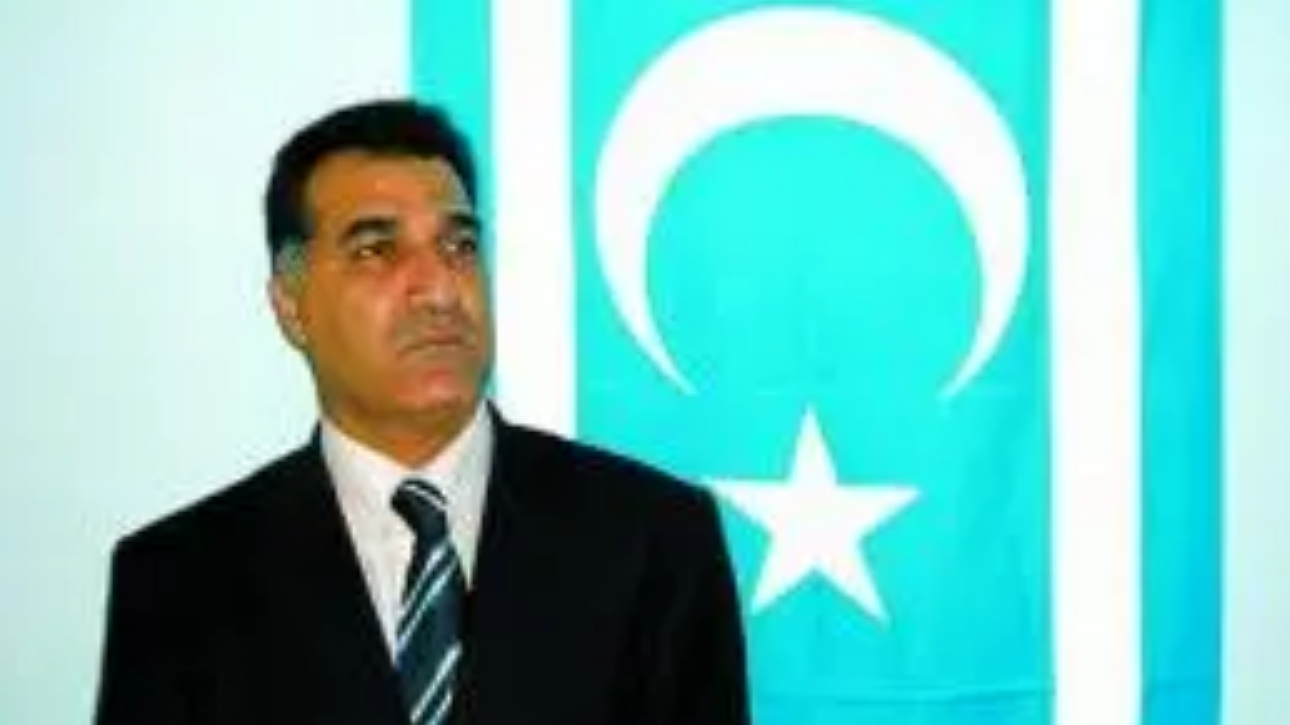
    While most of the Turkmen parties are keen to put their own ethnic flag – a white crescent moon – over their buildings, they do so on a flagpole shorter than that holding the Iraqi flag as a symbol of their respect for the central government.

    Posted by
    Mofak Salman

  • Feature: Women in politics

    Feature: Women in politics

    Saturday, 13, Dec 2008 12:01

    On this day in 1918, women voted in a British general election for the first time.

    Ninety years later and things still aren’t rosy. Until 20 years ago women never made up more than five per cent of MPs in parliament. Now they’re 20 per cent. It’s an improvement, but it’s not exactly half-and-half.

    The UK has fewer female MPs than Cambodia. It comes 15th for representation in national parliaments compared to the other 27 EU member states. In a country that’s otherwise so progressive, why do we still have so few women MPs?

    “It’s not harder for women,” says Jo Swinson, Liberal Democrat equality spokesperson. “It’s just harder for carers.”

    “The division of family duties in society is still very unequal. This is what we find all the time. Women get involved in politics in their twenties and then in their thirties they say ‘I’ll take time out’. But men don’t take that time out.”

    Ann Cryer, the Labour MP who dedicated herself to a campaign against forced marriage, agrees. “By its nature it’s difficult, because parliament is usually two or four hundred miles from where people live. That’s a problem for women with young children. It’s also a problem for men with young children but I think women have a stronger emotional attachment to their children than men have. That’s not to deride men, but you’re not going to get rid of that emotional attachment just like that.”

    You can see the truth of that by the culture of parliament as well as its composition. The old adage was that it had a shooting range, but no creche. No-one seems to know if that shooting range is still there, but there’s certainly no creche. Even today, the atmosphere in the House, and to a lesser extent in the halls and corridors of Westminster, retain an unmistakably male character.

    Swinson cites the response to Nick Clegg’s performance during this week’s prime minister’s questions as an example. Clegg got up to ask about a single mother who came to his surgery as an example of lower-income groups facing criminal penalties for being unable to pay back money given to them mistakenly in tax credits. He probably wasn’t thinking about the interview he gave to Piers Morgan nearly a year ago in which he admitted sleeping with about 30 women. MPs were. He only managed to say: “This week a single mother came to my surgery in Sheffield…” before someone on the other benches shouted: “Thirty-one”. MPs laughed for a good long time.

    “I was appalled they started laughing and applauding,” says Swinson. “I know he made those ill-judged comments a year ago, but you hear the phrase single mother and the first thing you think is sex? And then I thought – if this room wasn’t 80 per cent male would it be the same reaction? It was puerile. And puerile comes from the Latin word for ‘boy’.”

    Some observers also find something a little masculine about the way parliament is set out. Call it over-analysing, but there are a few people who think that represents a masculine way of doing things; a politics based on conflict rather than consensus.

    “I think it’s significant,” says Katherine Rike, director of women’s rights group The Fawcett Society. “Most new administrations [such as Scotland or Wales] have chosen not to construct their parliament in that way – they’re circular. We’re trying to fit women into an institutional design which is very masculine and there are limits to how much can change within that complex.”

    “It’s adversarial,” Cryers agrees. “And I think it’s more difficult for women to cope with that adversarial nature. It took me a year or two to feel sufficiently confident to stand up and speak without notes and just talk. I did find it hard at first because I’m a naturally quiet person and when you’re speaking in the Commons people will just shout at you.”

    It’s tempting to draw a conclusion about the link between our old building and our shoddy ranking in the international league table of women’s representation, but things are rarely that simple. Whatever the reasons, women are still facing a mountain when they decide to go into politics.

    “I’ve been on the Council of Europe where you sit down in a semi-circle with a proper desk and water and a microphone. It’s a more civilised way of doing things,” Cryer says.

    “But I’m not going to knock our parliament. It’s the best job in the world. I hope women will still feel they have a place in it. It’s so important women feel they can get in there.

    “My grandmother worked with the Suffragettes. She gave a great chunk of her life up for that and I think what she did is just now coming to fruition. So whoever’s reading this please do try for parliament. Don’t lose sight of it. It’s important.”

    Ian Dunt

    Source: www.politics.co.uk, 13 Dec 2008