Month: October 2008

  • Georgia’s conflict and Iran and Turkey

    Georgia’s conflict and Iran and Turkey

    Georgia’s conflict and Iran and Turkey
    By Rayyan al-Shawaf
    Commentary by
    Tuesday, September 09, 2008

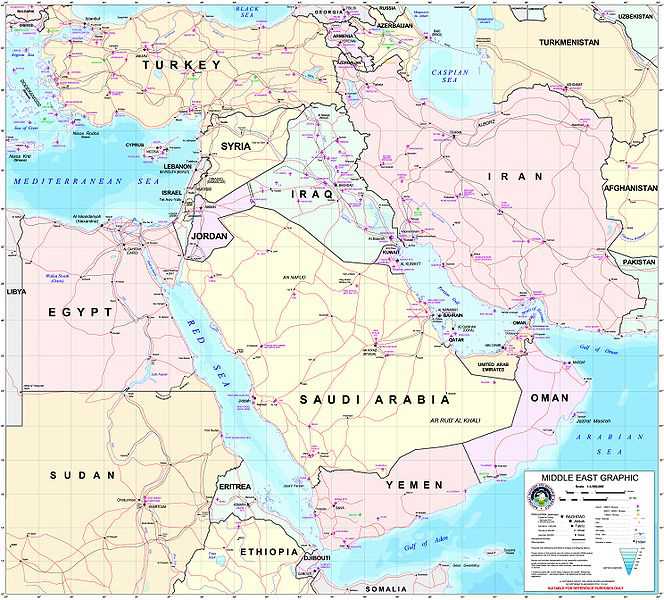
    Although the Russo-Georgian military clash is over, its ramifications will be felt for a long time, especially as the political crisis between the two countries remains unresolved. In the Middle East, two major countries, Turkey and Iran, have been directly affected by the recent events. While Turkey stands to lose should Russia and Georgia fail to resolve their differences, Iran stands to win.

    An embattled Russia cornered by the West would never forgive NATO member Turkey; as a result, Russian-Turkish relations would plummet and Russia might even stop providing Turkey with natural gas. In casting about for allies, Russia would find a similarly isolated Iran to be amenable to giving the two countries’ ties a strategic dimension, but only in return for political and economic concessions. Thus, the Russo-Georgian crisis may ironically change the balance of power in the Middle East.

    Both Russia and Iran have become increasingly alarmed with the West’s attempts to bypass them in the quest for oil. Moscow wanted the Baku-Tbilisi-Ceyhan (BTC) pipeline, the world’s second longest, to pass through Russia. That way, Russia would not only benefit financially, but also be able to exert some control over the supply of oil to the West, much as it does with the longest pipeline in the world, the Druzhba, which flows from southeast Russia to Europe. During its invasion of Georgia, Russia pointedly demonstrated that it can threaten the BTC pipeline, and that, as Russian President Dmitry Medvedev recently put it, “Russia is a nation to be reckoned with.”

    Meanwhile, Iran, most of whose oil flows to Asia, has long sought to lay oil pipelines to the West, a desire more often than not frustrated by Western sanctions. By supporting Russia in its current confrontation with the West, Tehran may have secured a future economic and political payoff. This would be especially true should Iran have extracted from Russia a commitment to devise a common oil strategy vis-a-vis the West.

    However, even without this possibility, there are several indicators of the benefits that may accrue to Iran as a result of its pro-Russian policy. For example, Iranian (and Syrian) requests for a sophisticated missile defense system are being taken seriously in Moscow, much to the chagrin of the United States and Israel. When one remembers that Iran’s Bushehr nuclear plant – built with Russian support – is slated to begin operation in 2009, it becomes apparent that Iran may be on the verge of radically enhancing its regional and international position.

    Even as Iran makes a bid for regional power status, Turkey has almost by accident emerged as the country that could hold the key to solving the Russo-Georgian crisis. Indeed, Turkey is exceptionally well-positioned to be mediator, a role it is already playing with some success between Syria and Israel, and to a lesser extent between Iran and the West. Russia is Turkey’s biggest trading partner, and Turkey is dependant on Russian natural gas. At the same time, Turkey maintains strong economic and military ties with Georgia, which aspires to join NATO, of which Turkey is a strategic member. Turkey cannot afford to allow its relations with Russia to deteriorate – they have already been strained by the passage of American ships through the Bosphorus on their way to the Georgian port of Batumi – but neither can it shun the West’s call for supporting Georgia. As a result, mediating the current conflict is not only a role that could propel Turkey into the limelight as a major regional player, but also a necessity insofar as Turkish politico-economic imperatives are concerned.

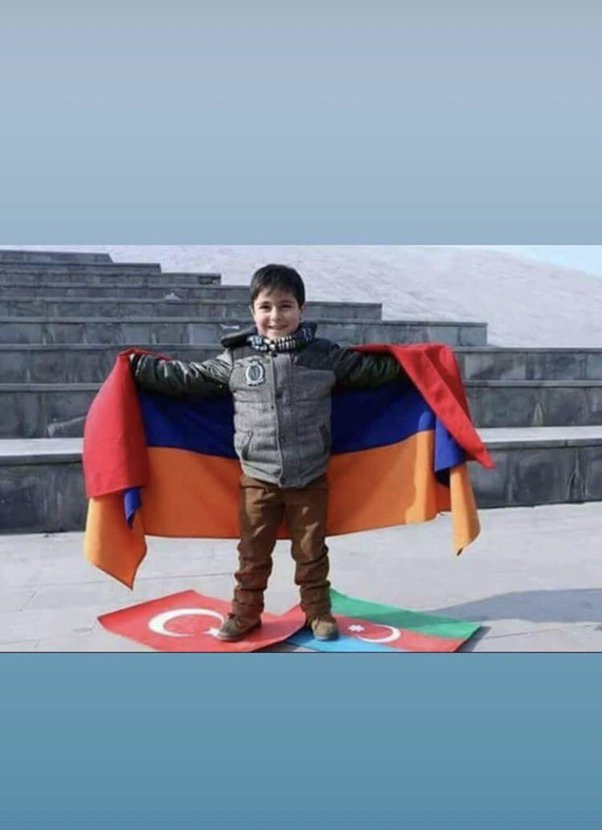
    If Turkey meets the challenge, there may even be added benefits. Turkish-Armenian relations could thaw, which would be of great significance to the oil and natural gas industry. The most direct overland route for an oil pipeline from the Caspian Sea to Turkey would begin in Azerbaijan and pass through Armenia. Yet no such pipeline has ever been constructed due to political instability: Azerbaijan and Armenia fought a war over Nagorno-Karabakh and remain at loggerheads, while Turkey’s border with Armenia has been closed since 1993 in solidarity with Azerbaijan.

    With the Russo-Georgian clash illustrating the vulnerability of Georgia, through which the BTC pipeline passes, Armenia’s importance has increased. Turkish President Abdullah Gul, on a groundbreaking visit to Yerevan last week for a Turkish-Armenian soccer match, spoke about the need for the countries of the Caucasus to work together to enhance stability. To that end, Turkey has called for the creation of a regional cooperation group comprising Turkey, Russia, Georgia, Armenia and Azerbaijan.

    The trajectory of the Russo-Georgian conflict during the next few months could be critical in determining what happens in the Middle East. If mediation succeeds in bringing the two sides together and defusing the crisis, Russia will not find it necessary to turn to Iran. If the successful mediation is Turkish, then Turkey will have demonstrated a unique ability to bring stability to the Caucasus, broker Syrian-Israeli peace talks, and mediate between Iran and the West.

    On the other hand, if the conflict drags on, Russia’s ties to the West and Turkey will inevitably deteriorate. Facing diplomatic isolation and possibly even sanctions, Russia may forge a strategic alliance with Iran, thereby drastically increasing Iranian influence in the Middle East.


    \\\ a freelance writer and reviewer based in Beirut. He wrote this commentary for THE DAILY STAR.is

    #
  • Czech PM says support Turkey’s unconditional EU accession

    Czech PM says support Turkey’s unconditional EU accession

    ANKARA, Oct. 8 (Xinhua) — Czech Prime Minister Marek Topolanek Wednesday said his country support Turkey’s full-fledged membership in the European Union, rejecting any privileged partnership or such formulas.

    The Czech Republic “supports an unconditional EU accession for Turkey. Privileged partnership or such formulas cannot be accepted,” Topolanek told a joint press conference in Ankara with his Turkish counterpart Recep Tayyip Erdogan during his official visit to Turkey.

    “Any candidate country which complies with the criteria should have the rights to become an EU member,” he said, adding that “This is how the union can strengthen security, prosperity and stability.”

    Turkey has been seeking an EU membership. The country launched accession talks with the European Union since 2005, but the negotiation have only tackled eight out of the total 35 chapters so far.

    The EU has criticized Turkey over its slow reforms concerning the freedom of speech and the rights of non-Muslim groups as well as women, and corruption.

    Czech PM says support Turkey’s unconditional EU accession_English_Xinhua.

  • A strategic agreement between the Kurdish government and the U.N

    A strategic agreement between the Kurdish government and the U.N

    PUKmedia     08-10-2008    14:51:57
    kurdishglobe.net
    A strategic agreement will be signed between the Kurdish government and the U.N.

    Kurdistan region’s coordinator for U.N. affairs said on Tuesday that a strategic agreement will be signed between the Kurdish government and the U.N. for cooperation in a number of services fields.

    “A delegation from the U.N. headed by Deputy Secretary General David Sherrar will arrive in Erbil, the Iraqi Kurdistan’s capital next week to sign a strategic agreement with the Kurdish government,” Dindar Zebari told VOI.

    “The agreement aims to help the region in health, agriculture and education fields in three years between 2008 until 2010,” he added.

    “The agreement is an important step to boost relations between Iraq’s Kurdistan region and the U.N.,” he also said, noting that Deputy Prime Minister of Kurdistan Omar Fatah will sign the agreement with the U.N. delegation.

    “The U.N. had signed a similar agreement with the Iraqi government last month,” Zebari highlighted.

  • Armenian Soccer Body Changes Logo After Uproar

    Armenian Soccer Body Changes Logo After Uproar


    By Ruben Meloyan

    The Football Federation of Armenia (FFA) said on Wednesday that it has decided to change its new emblem widely criticized for not depicting a biblical mountain in what is now eastern Turkey.

    The FFA’s previous logo, which carried a picture of Mount Ararat, was dropped ahead of last month’s match in Yerevan between Armenia’s and Turkey’s national soccer teams that was watched by the presidents of the two neighboring states.

    The move prompted strong criticism from domestic political groups, notably the pro-government Armenian Revolutionary Federation (Dashnaktsutyun), that suggested that it was designed to please the Turks. Dashnaktsutyun leaders cast doubt on the credibility of FFA assurances that there were no political motives behind the change of the logo emblazoned on the jerseys of national and youth team players.

    Located in northeastern Turkey and visible from Yerevan and much of southern Armenia, Ararat is considered by many Armenians a national symbol. The snow-capped peak, the supposed resting place of Noah’s Ark, is depicted in the center Armenia’s national coat-in-arms.

    Ruben Hayrapetian, the FFA chairman who has previously dismissed the Dashnaktsutyun criticism, said on Wednesday that the decision to leave Ararat out of the current logo was a mistake. “I apologize to the entire public for this real mistake,” he told reporters.

    “We did not think that there will be such an uproar,” Hayrapetian said, adding that the FFA has already commissioned graphic designers to develop another Armenian football emblem. He said it will definitely carry an outline of Ararat.

    “In the meantime, our national football teams will wear jerseys with the emblem of the Republic of Armenia,” the FFA’s executive director, Armen Minasian, told RFE/RL.

    Both he and Hayrapetian insisted that the logo change had nothing to do with the Armenia-Turkey World Cup qualifier played in Yerevan on September 6. “We began the process of logo change last year before we knew that are going to play Turkey,” said Minasian. “There was never any deliberate effort to remove Ararat.”

    (Photolur photos: The current, left, and former emblems of the FFA.)

  • McCain: it is our = responsibility to recognize 1915 tragic events

    McCain: it is our = responsibility to recognize 1915 tragic events

    07.10.2008 16:41 GMT+04:00    

    /PanARMENIAN.Net/ The McCain-Palin =ampaign issued a letter to the Armenian-American community. In the letter, =enator John McCain (R-AZ) wrote that he is “grateful for all of the contributions that Armenian-Americans have made to our wonderful =ountry,” and that he “greatly value[s] the opportunity to stand with the =rmenian-American community,” the Armenian Assembly of America (Assembly) told PanARMENIAN.Net.

    Regardin= U..S. affirmation of the Armenian Genocide, the statement refrains from =eferring to the events of 1915-1923 as genocide, and instead employs a dictionary definition. McCain said, “It is fair to say that one of the greatest =ragedies of the 20th century, the brutal murder of as many as one and a half =illion Armenians under the rule of the Ottoman Empire, has also been one of =he most neglected. The suffering endured by the Armenian people during that =eriod represented the prologue to what has come to be known as humanity’s =loodiest century.” He added that “It is our responsibility to recognize those =ragic events and to ensure that our world never experiences the impact of =he bloody conflicts that so filled the 20th century.”

    McCain also thanked =rmenia for her “support of coalition operations in Iraq and NATO peacekeeping =fforts in Kosovo.”

    http://www.pana=menian.net/news/eng/?nid=27291

  • Turkey Threatens Iraqi Kurdistan with Incursion

    Turkey Threatens Iraqi Kurdistan with Incursion

    Turkish Prime Minister Recep Tayyip Erdogan threatened Iraqi Kurdistan on Tuesday with an incursion. The threat came days after militants for the Kurdistan Workers Party (PKK) attacked Turkish troops within Turkey’s borders, kiling 17.Most PKK militants stage attacks in Turkey after which they quickly cross the border with Iraq where they hide. Northern Iraq is home to many Kurds, and the PKK has established several major training camps for future militants.

    The PKK is deemed a terrorist organization by, among others, Turkey, the United States and the European Union.

    Iraq’s central government had promised several times in the last couple of years to do something about the PKK presence in the northern part of the country, but has yet to take significant action.

    “The sole target of a possible cross-border operation will be the terrorist organisation,” Erdogan told lawmakers from his ruling party the AK Parti (or Justice and Development Party).

    “Turkey is in a position of self-defence when it comes to terrorism. Everyone should understand this,” he said. “The best choice for the regional administration of northern Iraq is to cooperate with us against terrorist elements because the terrorist organisation is a cause of regional unrest and tension.”

    Iraq and Turkey have been at odds with each other for years over this issue. Turkey believes that Baghdad is not doing enough against the PKK, forcing Turkey to do take matter into its own hands, while Baghdad says there is not much it can do because the PKK hides in regions difficult to enter for government forces, and argues that cross border operations by Turkey are unacceptable, because Turkey would not be allowed to act in breach with Iraq’s territorial integrity.

    The United States, meanwhile, is caught in the middle because it has fought a war against terrorism for quite some years itself, and has invaded two countries in order to destroy terrorist organizations (both Afghanistan and arguably Iraq). This means that it is difficult if not impossible for the U.S. to criticize Turkey when it goes into Iraq, occupies a significant part of its ‘Kurdistan’ part, and withdraws weeks, perhaps months, later.

    On the other hand, Iraq’s government is not willing to let Turkey deal with problems too big for itself to handle, and calls on Turkey to withdraw immediately whenever it takes military action against PKK target in Iraq. The U.S. has to, of course, stand with Iraq, also because more than 100,000 of its troops are stationed in this country. Furthermore, the U.S. fears that a Turkish incursion will destabilize one of the historically most stable parts of Iraq.