Month: August 2008

  • Obama Wins Nomination; Biden and Bill Clinton Rally Party

    Obama Wins Nomination; Biden and Bill Clinton Rally Party


    Brendan Smialowski for The New York Times

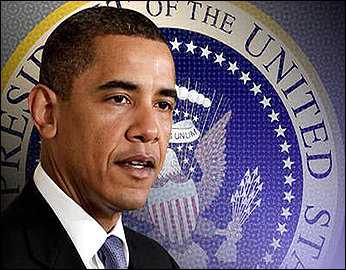
    Senator Barack Obama joined Senator Joseph R. Biden Jr. on stage on Wednesday. More Photos >

    DENVER — Barack Hussein Obama, a freshman senator who defeated the first family of Democratic Party politics with a call for a fundamentally new course in politics, was nominated by his party today to be the 44th president of the United States.

    Skip to next paragraph

    Multimedia

    Slide Show

    Working the Convention Crowds


    Related

    Man in the News: A Consistent Yet Elusive Nominee (August 28, 2008)

    News Analysis: For Obama, a Challenge to Clarify His Message (August 27, 2008)

    Clinton Rallies Her Troops to Fight for Obama (August 27, 2008)

    The unanimous vote made Mr. Obama the first African-American to become a major party nominee for president. It brought to an end an often-bitter, two-year political struggle for the nomination with Senator Hillary Rodham Clinton, who, standing on a packed convention floor electric with anticipation, moved to halt the roll call in progress so that the convention could nominate Mr. Obama by acclamation. That it did with a succession of loud roars, followed by a swirl of dancing, embracing, high-fiving and chants of “Yes, we can.”

    In an effort to fully close out the lingering animosity from the primary season, former President Bill Clinton, in a speech that had been anxiously awaited by Mr. Obama’s aides given the prickly relations between the two men, offered an enthusiastic and unstinting endorsement of Mr. Obama’s credentials to be president. His message, like the messenger, was greeted rapturously in the hall.

    Mr. Clinton asserted, as Mrs. Clinton had when she spoke to the convention on Tuesday night, that the nation needed to elect a Democrat to restore the damage he said President Bush had done to the country, at home and around the world.

    Barack Obama is ready to lead America and restore American leadership in the world.” Mr. Clinton said. “Ready to preserve, protect, and defend the Constitution of the United States. Barack Obama is ready to be president of the United States.”

    Mr. Clinton was followed by Senator Joseph R. Biden Jr. of Delaware, Mr. Obama’s choice for vice president, who used his speech to set out the Democratic case against the Republican opponent, Senator John McCain.

    “Our country is less secure and more isolated than in any time in recent history,” Mr. Biden said. “The Bush-McCain foreign policy has dug us into a few deep holes with very few friends to help us climb out.”

    “These times require more than a good soldier,” Mr. Biden said. They require a wise leader.”

    In an address that was at turns personal, emotional and barbed, he said, “Today the American dream is slipping away.”

    “John McCain doesn’t seem to get it,” Mr. Biden said. Barack Obama gets it.

    To the delight of the crowd, at the conclusion of his address Mr. Biden was joined on stage by Mr. Obama, who made a point to thank Mr. Clinton — with whom he has had a prickly relationship — for his leadership as president. The historic nature of the moment quickly gave way to the political imperatives confronting Mr. Obama, who arrived here in the afternoon and is to accept the nomination Thursday night before a crowd of 75,000 people in a football stadium. After days in which the convention often seemed less about Mr. Obama than about the two families that have dominated Democratic politics for nearly a half-century, the Kennedys and the Clintons, he still faced a need to convince voters that he has concrete solutions to their economic anxieties and to rally his party against the reinvigorated candidacy of Mr. McCain.

    The roll-call vote took place in the late afternoon — the first time in at least 50 years that Democrats have not scheduled their roll call on prime-time television — as Democrats sought to avoid drawing attention to the lingering resentments between Clinton and Obama delegates. Yet the historic nature of the vote escaped no one, and sent a charge through the Pepsi Center as a procession of state delegations cast their votes and the hall, slightly empty at the beginning of the vote, became shoulder-to-shoulder with Democrats eager to witness this moment.

    As planned, it fell to Mrs. Clinton to put Mr. Obama over the top. He was declared the party’s nominee at 4:47 p.m. Mountain Time after Mrs. Clinton, in a light blue suit standing out in a crowd that included almost every elected New York official, moved that the roll call be suspended and that Mr. Obama by declared the party’s nominee by acclamation. The vote was timed to conclude during the network evening news broadcasts.

    “With eyes firmly fixed on the future in the spirit of unity, with the goal of victory, with faith in our party and country, let’s declare together in one voice, right here and right now, that Barack Obama is our candidate and he will be our president,” Mrs. Clinton said.

    “I move that Senator Barack Obama of Illinois be selected by this convention by acclamation as the nominee of the Democratic Party for president of the United States,” she said.

    Speaker Nancy Pelosi, standing at the lectern, asked for a second and was greeted by a roar of voices. A louder roar came from the crowd when she asked for support of the motion.

    When the voting was cut off, Mr. Obama had received 1,549 votes, compared with 231 for Mrs. Clinton.

    The hall pulsed when Mr. Clinton strode onto the stage for a performance that became a reminder of why Democrats had considered him a politician with once in a generation skills. There were no signs that screamed “Clinton,” but Democrats waved American flags in quick tempo to welcome him to the stage. Again and again, Mr. Clinton tried to quiet the crowd; they ignored him.

    Skip to next paragraph

    “You all sit down: We’ve got to get on with the show!” he said as the applause lingered on for more than three minutes and his wife watched from the floor.

    Without mentioning Mr. McCain by name, he offered a sharp denunciation of him and Republicans as he made the case for Mr. Obama.

    “The Republicans will nominate a good man who served our country heroically and suffered terribly in Vietnam,” he said, “He loves our country every bit as much as we all do. As a senator, he has shown his independence on several issues. But on the two great questions of this election, how to rebuild the American Dream and how to restore America’s leadership in the world, he still embraces the extreme philosophy which has defined his party for more than 25 years.”

    “They actually want us to reward them for the last eight years by giving them four more,” he said. “Let’s send them a message that will echo from the Rockies all across America: Thanks, but no thanks.”

    For Mr. Obama, the nomination — seized from Mrs. Clinton, who just one year ago was viewed as the obvious favorite to win the nomination especially against an opponent with a scant political resume — was a remarkable achievement in what has been a remarkable ascendance. It was less than four years ago that Mr. Obama, coming off of serving seven years as an Illinois state senator, became a member of the United States Senate. He is 47 years old, the son of a white mother from Kansas and a black father from Kenya.

    Mr. Obama’s nomination came 120 years after Frederick Douglass became the first African-American to have his name entered in nomination at a major party convention. Douglass received one vote at the Republican convention in Chicago in 1888; Senator Benjamin Harrison of Indiana went on to win the White House that year.

    Making the moment even more striking was the historical nature of Mrs. Clinton’s candidacy. She was the third woman whose name has been entered as a candidate for president at a major party convention. As she moved to end the roll-call vote, some women in the hall could be seen wiping tears from their eyes.

    The presidential candidate is typically an absent figure during the first few days of a convention. In this case, Mr. Obama’s vacuum was filled by the Clintons and the tribute paid to the party to Mr. Kennedy on Monday night. What has taken place over the past two days might have politically necessary and even helpful, but it did not go far in helping Mr. Obama achieve some of the critical goals of this convention.

    As a result, he is under considerable pressure Thursday night to use this speech in an ambitious setting, a football stadium, to present a fuller picture of himself, Americans who might have doubts about whether he is ready to be president, and begin presenting a picture of what he would do in the White House. For Mr. Obama, the final appearance is not the coda to a convention; in many ways, it may prove to be his entire convention.

    Mr. Obama, who arrived in Denver just after 3 p.m., was at his hotel in downtown Denver with his wife and daughters when he learned that he had been nominated by acclamation.

    Kitty Bennett, John Broder and Janet Elder contributed reporting.
     

  • This should be sent to all New World Order supporters-Viva Novus Ordo Seclorum, Viva Obama

    This should be sent to all New World Order supporters-Viva Novus Ordo Seclorum, Viva Obama

    From: Sam Dogan [mailto:[email protected]]
    Subject: this should be sent to all obama voters
    Date: Sun, 24 Aug 2008 15:59:41 +0000
    Beware Charismatic Men Who Preach ‘Change’


    Editor, Times-Dispatch:

    Each year I get to celebrate Independence Day twice. On June 30 I celebrate my independence day and on July 4 I celebrate America’s. This year is special, because it marks the40th anniversary of my independence.

    On June 30, 1968, I escaped Communist Cuba and a few months later I was in the United Statesto stay. That I happened to arrive in Richmondon Thanksgiving Day is just part of the story, but I digress.

    I’ve thought a lot about the anniversary this year. The election-year rhetoric has made me think a lot about Cubaand what transpired there. In the late 1950s, most Cubansthought Cubaneeded a change, and they were right. So when a young leader came along, every Cuban was at least receptive.

    When the young leader spoke eloquently and passionately and denounced the old system, the press fell in love w ith him. They never questioned who his friends were or what he really believed in. When he said he would help the farmers and the poor and bring free medical care and education to all, everyone followed. When he said he would bring justice and equality to all, everyone said ‘Praise the Lord.’ And when the young leader said, ‘I will be for change and I’ll bring you change,’ everyone yelled, ‘Viva Fidel!’

    But nobody asked about the change, so by the time the executioner’s guns went silent the people’s guns had been taken away. By the time everyone was equal, they were equally poor, hungry, and oppressed. By the time everyone received their free education it was worth nothing. By the time the press noticed, it was too late, because they were now working for him. By the time the change was finally implemented Cubahad been knocked down a couple of notches to Third-World status. By the time the change was over more than a milli on people had taken to boats, rafts, and inner tubes. You can call those who made it to shore anywhere else in the world the most fortunate Cubans. And now I’m back to the beginning of my story.

    Luckily, we would never fall in Americafor a young leader who promised change , without asking what change?  And most important How will you carry it out?  What will it cost America?
    Would we?


    Sharon

    ——————-

    Subject:  this should be sent to all obama voters


    Aslinda baslik soyle atilmaliydi:

    “This should be sent to all New World Order supporters”

    veyahut da acikca,

    “Viva Novus Ordo Seclorum, Viva Obama”

    da denilebilirdi…

    Novus Ordo Seclorum tanimini, Yeni Caga Acilim olarak tanimlamaya calisacak, kuresel emperyalizme kulp bulmaya calisacak birileri cikarsa karsiniza, o zaman da, Zeitgeist’de anlatilanlarin dogru oldugunu kabul etmek zorunda kaldiklarini soyleyebilirsiniz.

    Saygilar,

    Gusan Yedic


  • Montreux Convention Regarding the Regime of the Turkish Straits

    Montreux Convention Regarding the Regime of the Turkish Straits

    The International Straits Commission was abolished, authorising the full
    resumption of Turkish military control over the Straits and the
    refortification of the Dardanelles. Turkey was authorised to close the
    Straits to all foreign warships in wartime or when it was threatened by
    aggression; additionally, it was authorised to refuse transit from
    merchant ships belonging to countries at war with Turkey. A number of
    highly specific restrictions were imposed on what type of warships are
    allowed passage. Non-Turkish warships in the Straits must be under 15,000
    tons. No more than nine non-Turkish warships, with a total aggregate
    tonnage of no more than 30,000 tons, may pass at any one time, and they
    are permitted to stay in the Straits for no longer than three weeks. The
    number of foreign warships permitted in the Straits at any one time is
    restricted to one. Black Sea states are given more leeway, being
    authorised to send capital ships of any tonnage through the Straits (but
    only one at a time and specifically excluding aircraft carriers). They are
    also allowed to send submarines through the Straits, with prior notice, as
    long as the vessels have been constructed, purchased or sent for repair
    outside the Black Sea. The less restrictive rules applicable to Black Sea
    states were agreed as, effectively, a concession to the Soviet Union, the
    only Black Sea state other than Turkey with any significant number of
    capital ships or submarines.[7][8] The passage of civil aircraft between
    the Mediterranean and Black Seas is permitted, but only along routes
    authorised by the Turkish government.[9]

  • Istanbul — through the lens

    Istanbul — through the lens

    Rick Steves finds the camera not only a good way to capture the sites but to meet the people of Istanbul as he shoots another episode for his travel show.

    By Rick Steves
    Tribune Media Services

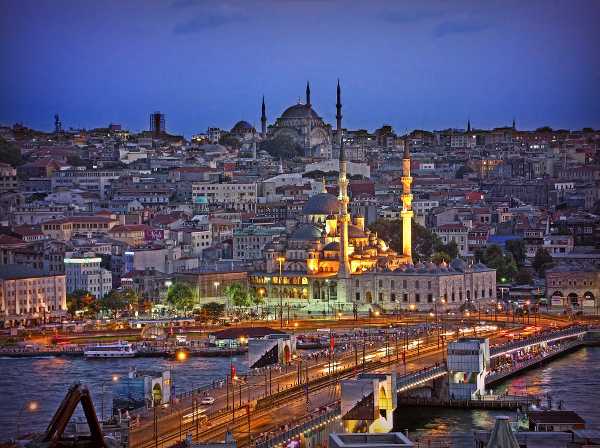
    ISTANBUL – Staring into a TV camera, I say, “Istanbul is one of the world’s great cities, period. For thousands of years, this point, where East meets West, has been the crossroads of civilizations. Few places on earth have seen more history than this sprawling metropolis on the Bosphorus.”

    It’s the last day of a week devoted to producing a TV show on Istanbul, and we need a grand spot for the show’s opening. We had a reasonable vista from the Galata Bridge, but it just showed charming old fishermen and tour boats. I want to somehow capture both the historic crossroads and contemporary might of this city.

    So far, the site selection has just led to frustrations. Mentally scanning all possible angles, it hits me – we need what filmmakers call a “high-wide,” a wide-angle, almost aerial shot. I want to show the freighter-filled Bosphorus and its Golden Horn inlet, the teeming Galata Bridge with lumbering commuter ferries churning up the port, and a huge mosque in the foreground.

    We go to the spot I envision (above the “New Mosque,” near the famous Spice Market) and survey the zone. A restaurant has a shaded roof terrace – we go there and it is perfect … except no necessary sun is shining on me.

    Next door, a toy company has offices with a small rooftop terrace in the sun. It’s perfect.

    They welcome our crew onto their roof, bring us tea, and – grabbing a calm moment between the gusts – I deliver my lines.

    Then we taxi to Ortakoy, a trendy cafe district at the edge of town. It’s too far away for tourists, but it sits in the shadow of a Baroque mosque and the mighty modern bridge that crosses the Bosphorus.

    I want to get more interaction between the Turks and me and this is perfect – four charming young Turkish men join me to pass around a “nargile” (big water pipe), sip chai, and play backgammon. Whether you’re filming or not, backgammon is the perfect way to create conviviality with new friends. At the neighboring table we film two sisters – one in Western dress and the other wearing a colorful but conservative Muslim head scarf – chatting as they pass the mouthpiece of their big water pipe. (I admit this was part of my agenda: to make both a big water pipe and a scarved Muslim woman less menacing to the more insular of my viewers.)

    When the sun is low and the chop of the Bosphorus carbonates the scene, I step out onto the ferry landing. Behind me, the frilly mosque softens the harsh lines created by the mighty bridge as it reaches for Asia. Just as a ship enters the frame, I look into the lens and close the show: “Like its bridge, Istanbul brings East and West together. With a complex weave of modern affluence, Western secularism, and traditional Muslim faith, it’s a dynamic and stimulating city, well worth a visit.”

    The next day, I’m sitting in a taxi heading for Istanbul’s Ataturk Airport. Driving along the coast, I scan the Bosphorus. A hundred freighters fill the sea – a commotion of ships reminding me of the size of the D-Day landings. Each is filled with cargo for thriving economies. One by one, they enter this maritime bottleneck.

    In the middle of the strait there’s a construction site – an industrial-strength pontoon island with heavy machinery digging down and then out. Istanbul is well on the way to constructing a tunnel under the Bosphorus. I trace the city’s horizon with its misty minarets spiking up from the old town to the distant skyline where there is a wannabe-Shanghai forest of modern skyscrapers that tourists never visit.

    Reaching the airport, I tip the taxi driver, selfishly holding back just enough local lira for a coffee. Enjoying a rare break with my iPod, I listen to Amy Winehouse while immersed in the sea of traveling people. I find I can appreciate the human drama of a crowded public scene better with music-pumping earphones obliterating the natural sound. An old woman weeps as the security line slowly swallows up her son, who’s holding a reaching grandson in his arms. Water and shoes are okay here – but my watch and belt need to come off. With a thump, my passport is stamped and shortly I’m out of Istanbul.

    Edmonds-based Rick Steves (www.ricksteves.com) writes European travel guidebooks and hosts travel shows on public television and public radio. His syndicated column runs weekly at seattletimes.com/travel

    Source : Copyright © 2008 The Seattle Times Company

  • Turkish man leaving U.S. gets probation for sexual assault

    Turkish man leaving U.S. gets probation for sexual assault

    By ADAM BENSON,

    BRISTOL – A Turkish national who allegedly fondled a developmentally disabled woman last month was given two weeks of probation Wednesday because he’s set to leave the country permanently Sept. 15.Umit Celik’s circumstance put Judge Joseph W. Doherty in an admittedly awkward position, but he was firm with the 27-year-old man after handing down the sentence.

    Celik was charged with fourth-degree sexual assault.
    “If there is a violation of these conditions, you’ll be here and stand trial, even if it takes 18 months to start your trial,” Doherty said.

    Prosecutors said Celik, who was in the U.S. on a four-month work visa working as an ice cream truck driver, reportedly approached a woman walking in her Bristol neighborhood on July 9.

    Celik offered her free ice cream and began complimenting her appearance before asking the 28-year-old woman if she’d help teach him English.

    Senior Assistant State’s Attorney Christian Watson said Celik “talked” the woman into his truck, where he offered her his name and phone number.

    He then parked the vehicle at a dead end and began caressing the woman’s thighs and “massaging” her breasts, Watson said.

    Celik later told police he put his hand on the woman’s leg and held her hand, but he didn’t realize the contact was inappropriate.

    He said through a translator his behavior was “customary” in Turkey.

    Matt Dyer, Celik’s public defender, said the man had no plans to return to the United States when his visa was up and has been cooperative.

    Watson said given the nature of the charges, putting Celik through an accelerated rehabiliation program wasn’t the right course of action.

    “I don’t think that from the state’s perspective, this is appropriate for acclerated rehabilitation,” he said.
    But Doherty said placing the man on a prolonged period of probation while he was living abroad was “ineffectual.”
    However, Doherty said, Celik can’t take any job that puts him into direct contact with women or children for as long as he remains in the country.

    Source : ©The Bristol Press 2008

  • KAMPANYA: PETITION: ABC is at it again!

    KAMPANYA: PETITION: ABC is at it again!

    They will be telling the whole wide world how terrible us Turks are!
    After all we have systematically killed whoever sat a foot in Anatolia just for the sake of it!We never, ever had an Independence War!
    We were never, ever insulted, abused, massacred, invaded etc.!

    Please React!
    As the ABC promotes Have Your Say!
    Don’t forget both SBS and ABC reject to screen the documentary Armenian Revolt!

    Family Footsteps – Armenia
    8:30pm Thursday, 28 Aug 2008
    Documentary CC PG

    Family Footsteps, series two, takes us once again on an intimate journey into the lives of four young Australians as they travel back to the homeland of their parents in search of answers, a sense of belonging and for some, the chance to lay ghosts to rest. The four-part series takes us to Armenia, Uganda, Tonga and Cambodia.

    In the first episode we follow the adventures of graphic artist Joanna Kambourian from NSW who has grown up knowing very little about her Armenian culture. Overshadowing her family is a sense of shame, hiding a secret that has kept them from returning to their homeland. It weighs heavily on Joanna as she travels to Armenia in the quest to remove the stain that has haunted her family for several generations.

    Joanna has always longed to go to an Armenian school, be taught the language and customs of her ancient culture but her father didn’t think it was that important. So with few cultural references Joanna, 31, embarks on her own voyage of cultural exploration.

    It is 40 degrees in the small country town of Coraki in NSW and Joanna is packing her winter clothes. Temperatures in Armenia are 10 below zero. As she arrives, snow covers the tiny mountainous country that lies to the east of Turkey, sharing borders with Georgia, Azerbaijan and Iran. Here she will live with her mentor Tehmineh the local schoolteacher who shares her home with her husband Ara and mother-in-law Jemma. They welcome Joanna as part of their family.

    The next day Joanna starts her job in the local bakery. The local women have been making Lavash bread using the same techniques for centuries. As their days unfold Tehmineh continues to teach her students in the morning and in the afternoon introduces Joanna to the subtleties of Armenian culture.

    With Tehmineh’s help Joanna begins to investigate the history of her family’s flight from Armenia and the story of betrayal that lies behind it. They visit an historian, an expert in the Armenian genocide, who explains that in 1915 under the cover of WWI the Turks began a systematic genocide of the Christians and Armenians living in the Ottoman Empire. Joanna confesses that her great, great, grandfather was the surgeon general in the Turkish army at that time, and to save his family and his life he converted to Islam.

    As her journey draws to a close Tehmineh offers Joanna the chance to take part in an ancient pagan ritual to give thanks for the transition she and her family have made.’