Month: August 2008

  • ISLAMISTS AND SECULARISTS VYING FOR TURKEY’S PAST AS WELL AS ITS FUTURE

    ISLAMISTS AND SECULARISTS VYING FOR TURKEY’S PAST AS WELL AS ITS FUTURE

    By Gareth Jenkins

    Monday, August 4, 2008


    On July 31 Turkish President Abdullah Gul formally ratified the appointment of Professor Ali Birinci (born in 1947) as head of the state-run Turkish Historical Association (TTK) to replace the incumbent Professor Yusuf Halacoglu (born 1949), who had held the position from 1993 until his dismissal on July 23.

    In recent years, the long-running struggle between the government of the moderate Islamist Justice and Development Party (AKP) and Turkey’s secular establishment has tended only to attract international attention when there has been a major public confrontation, such as the AKP’s ultimately successful attempt to appoint Gul to the presidency in 2007 and, more recently, the closure case against the AKP itself (see EDM, July 31).

    Such major confrontations are important indicators of a continuing shift in power in Turkey. In the long-run, however, the more decisive struggle is probably occurring on the margins of the political process, as the AKP gradually entrenches both its supporters and its ideology in the state apparatus, by means such as the appointment of its supporters to key positions in the bureaucracy.

    The TTK was established by Mustafa Kemal Ataturk (1881-1938), who founded the modern Turkish Republic in 1923 from the rump of the Ottoman Empire following the latter’s defeat in World War I. Ataturk sought to create a Turkish nation state. At the time, outside the empire’s tiny educated elite, there was little sense, or even awareness, of a “national identity.” Under the Ottomans, the primary determinant of identity had been religion, which for the majority of the population meant Islam. Ataturk associated the Ottoman Empire with obscurantism and regarded Islam as one of the most important reasons for its failure to match the pace of technological and intellectual development in the West. The TTK’s main purpose was to create an historical pedigree for a new secular nation-state, which would be based on language and race. The TTK wrote a new history, in which the Turks’ origins were projected back beyond the Ottoman Empire to the nomads of Central Asia. Over the years that have followed, the TTK has remained the custodian of official Turkish history and one of the main ideological bastions of the secular state.

    The attitude of the secular establishment to the Ottoman Empire can be seen clearly on the website of the Turkish military, which has always regarded itself as the guardian of Ataturk’s legacy, known as Kemalism. Although the Ottoman Empire lasted for 600 years, only one of the 13 “Important Days in Turkish History” listed on the website of the Turkish General Staff is from before World War One (for reasons that remain obscure, the day is the anniversary of the conquest of the island of Rhodes). The majority are associated with Ataturk’s life (Turkish General Staff website, www.tsk.mil.tr).

    In contrast, Turkey’s Islamists have always been unabashed Ottoman nostalgists. Although it has not yet dared to confront the personality cult that grew up around Ataturk after his death, including the compulsory inculcation of his teachings at every level of the educational system, the AKP has certainly been less vigorous than previous administrations in terms of promoting it.

    In recent years, there has also been a noticeable shift in the historical reference points in official statements, ceremonies and speeches. Before the AKP came to power, the reference point was invariably a quotation from Ataturk or an event from his life. Now it is increasingly the Ottoman Empire. The change has been most marked at the local level. For example, ever since pro-Islamic political parties first took control of the Istanbul Municipality in 1994, the Ottoman conquest of the city in 1453 has been celebrated with increasing enthusiasm each year. Conferences and symposia on Ottoman themes have proliferated, and large budgets been assigned to the preservation and restoration of the city’s Ottoman, particularly religious, architectural heritage. Tulip festivals, including the planting of three million bulbs across the city, are now held each spring to commemorate the “Tulip Era” of the early 18th century. The municipality has even begun to use Ottoman vocabulary and grammatical constructions on billboards.

    This Ottoman nostalgia has always been extremely strong among followers of the Islamic preacher Fethullah Gulen (born in 1941), who is currently in exile in the United States. Gulen has long portrayed the Ottoman Empire as a paradigm of religious tolerance and social harmony, although the historical record would appear to indicate otherwise. Over the last decade, the Gulen movement has grown rapidly to become the most powerful non-governmental network in Turkey, which includes media outlets, schools, universities, businesses and charitable foundations. It has also established increasingly close ties with the AKP. Several ministers and many AKP parliamentary deputies are known to be Gulen sympathizers.

    Although he had often courted controversy through his aggressive denial that the treatment of the Armenians in the late Ottoman Empire constituted genocide, Halacoglu was undoubtedly committed to Ataturk’s ideological legacy. In contrast, Ali Birinci is known to be very close to the Gulen movement and has played an active role in several of its NGOs. He first came to prominence in 2006 when he publicly supported another pro-AKP academic, Professor Atilla Yayla, who described Kemalism as taking Turkey “much further backward than forward” and, in a reference to the Ataturk personality cult, asked “why are there pictures of this man everywhere?” (Vatan, July 25).

    As a result, the replacement of Halacoglu with Birinci will undoubtedly be regarded by many secularists in Turkey not merely as a bureaucratic appointment but as another indication of creeping regime change.
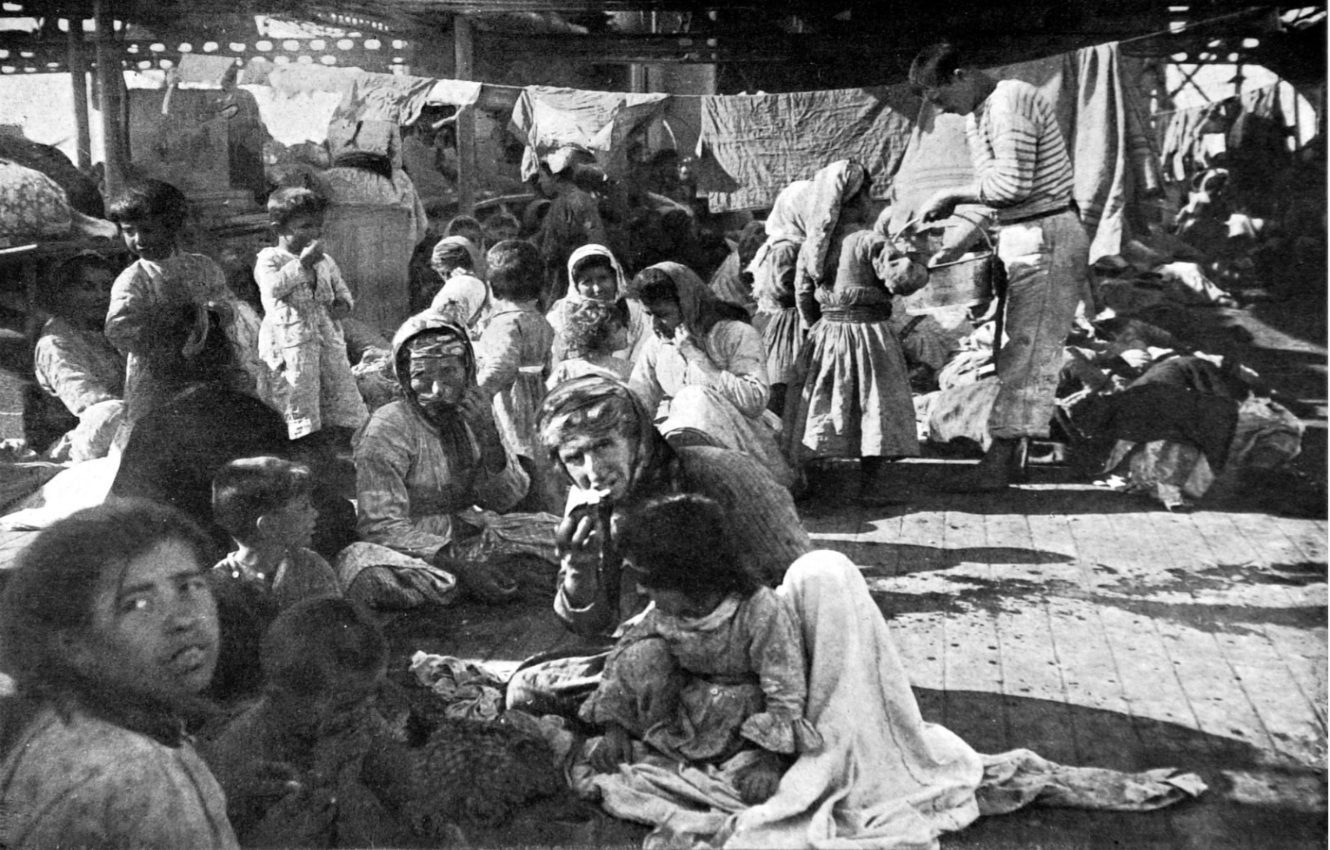
  • Obama is not the right candidate if you are focused on Turkish issues.

    Obama is not the right candidate if you are focused on Turkish issues.

    REPUBLICANS VS. DEMOCRATS  –  

    From: aynur heller [[email protected]]


    REPUBLICANS VS. DEMOCRATS


    Speaking of Obama, I’d like to share my experience with you. 

    Probably some of you have already experienced the same thing with Obama as I have.

    I sent him two letters in the last past 6 months concerning Turkey’s dilemma

     “the so-called genocide” .


    However, two days ago, finally, I received a mail from him telling me how important his presidency would be for this country and asking me to support him by my contributions for his campaign by Aug.30th  not mentioning anything on the genocide issue and nothing about Turkey, no concerns or whatsoever. All he is showing me is the ways of payment and he needs the money by Aug. 30th.


    I figured this might give you or – Obama supporters- a little hint as to what kind of president he would be for US and what steps we, as the Turkish Americans, can take towards Turkey’s problems with him. It is outrageous!


    Aynur


    Subject: Republicans Vs. Democrats

    I am writing under my fiancee’s name, who is Turkish.  My name is Jeff and I am not Turkish but am very much in tune with issues facing Turkey today.  She shares posts with me and I am often floored by the inane and ridiculous arguments that are made.  Especially when it comes to Democrats vs Republicans. 

    Let’s start off by saying this;  The United States is a democratic country.  Turkey is a democratic country.  Democrats are a democratic party and guess what?  Republicans are a democratic party.   Some of you can’t seem to comprehend that. 

    The US Democrat party has notoriously not supported Turkey in a political stance, on the Armenian issue and in military positioning.  The Republicans have.  The democrats have produced great Americans and political leaders such as Nancy Pelosi (hates Turkey, loves Armenians), Ted Kennedy (drunkard murderer) and many more people that have no integrity (Bill Clinton).

    Let me pose this question to you.  Who do you think was the greatest American PresidentAbraham Lincoln?  Republican.  Ronald Reagan?  Republican. 

    JFK?  Did not even complete a term in office  Bill Clinton?  Made a mockery of the greatest office in the world. 

    Ok ok…. I know some of you are thinking “What about Nixon?”  Well he was an amazing leader who I think went insane. 

    The point is this… The fact that any of you are supporting the Democrat’s cause amazes me.  Nancy Pelosi went out of her way to get Congress to recognize the Turkish / Armenian issue as a genocide.

    How can a foreign country condemn another for something that occurred  nearly one hundred years ago when that country was not even a country?

    Turkey is a great and beautiful country and in some ways as diverse as the US. 

    Stop giving in to what the media feeds you and start really looking at the track record of our elected officals.

    Thanks for reading.

    Jeff Martens  

  • U.S. Congressman becomes godfather of Azerbaijani baby

    U.S. Congressman becomes godfather of Azerbaijani baby


    [ 04 Aug 2008 17:14 ]
    Washington. Husniyya Hasanova – APA. Ed Towns U.S. Congressman from 10th district, New York has become kirve (kind of godfather) of Kamal Amiraliyev.

    APA’s US bureau reports that member of Working Groups on Azerbaijan Turkey Ed Towns made this statement after meeting with half-month Kamal’s father Naimi Amiraliyev, officer of US Navy. Naimi Amiraliyev also met with Jean Schmidt, Congressman from 2nd district of Ohio and called him to enter the Working Group on Azerbaijan. Ms. Schmidt promised to join the Working Group on Azerbaijan and said she would send necessary document to the Working Group.
    The same day Naimi Amiraliyev also met with two other members of the Working Group on Azerbaijan – Steve Cohen and Eddie Bernice Johnson, he briefed them about the on-going processes in Azerbaijan, the country’s foreign policy, activity with NATO and European Union.
    43 congressmen have joined the Working Group on Azerbaijan. Five of them have joined the group on the initiative of Naimi Amiraliyev.

  • Senate Confirms U.S. Envoy To Armenia

    Senate Confirms U.S. Envoy To Armenia


    Monday 4, August 2008
    AP

    The U.S. Senate confirmed the Bush administration’s nominee as ambassador to Armenian after a delay by lawmakers who were unhappy with White House policies on the country.

    Lawmakers had delayed consideration of Marie Yovanovitch’s nomination to Armenia in a dispute over the U.S. refusal to label as genocide the World War I-era killings of huge numbers of Armenians. The issue had come up in the nominee’s confirmation hearings.

    Armenian-American groups have sought to force the adminsitration to change its policy on the Armenian killings. The administration has avoided the word genocide out of concern of alienating its ally, Turkey.

    Historians estimate that up to 1.5 million Armenians were killed, an event widely viewed by genocide scholars as the first genocide of the 20th century. Turkey denies that the deaths constituted genocide, saying the toll has been inflated, and that those killed were victims of civil war and unrest.

    In August, the White House withdrew its nomination of career diplomat Richard Hoagland after Democratic Senator Robert Menendez held up his confirmation through a Senate procedure.

    Hoagland’s predecessor, John Evans, reportedly had his tour of duty in Armenia cut short by the administration because, in a social setting, he referred to the killings as genocide. Armenian-American groups sought to prevent Hoagland’s nomination unless he made a clear statement affirming the genocide.

  • A Major Political Test for Iraq

    A Major Political Test for Iraq

    Published: August 4, 2008

    Since the American invasion of Iraq in 2003, the oil-rich northern city of Kirkuk has been a political tinderbox-in-waiting that was largely ignored as war-fighting took precedence. Now that violence is way down, Iraqi leaders have no excuse not to peacefully decide the city’s future. Their failure to do so has already raised tensions and could further shred Iraq’s fragile social fabric — and unleash more bloodshed.

    Kurds who run the semiautonomous region of Kurdistan should not be allowed to unilaterally annex Kirkuk, which they regard as their ancient capital but is also home to Turkmen and Arabs. They were promised a referendum in the Iraqi Constitution, but no durable solution can result without the participation of all groups. Overconfident Kurds and their American supporters have not been looking seriously for compromise.

    The problem came to a head two weeks ago when Iraq’s Parliament passed a law again postponing a referendum on Kirkuk (it was supposed to be held by the end of 2007). The law contained a measure diluting Kurdish power in the area’s provincial council.

    The Kurds believe the referendum will endorse making Kirkuk and surrounding areas part of Kurdistan — giving them more oil revenue and furthering their goal of independence — while Turkmen and Arab leaders want the city to stay under the central government.

    Kurdish parliamentarians boycotted the session, resulting in the election law being declared unconstitutional. Another session on Sunday dissolved without reaching a quorum; lawmakers were to try again on Monday.

    The problem is not just with the Kirkuk referendum. If the Kurds continue to hold the election law hostage, provincial elections now expected in early 2009 will also be stymied. These elections are crucial to Iraq’s political stability and reconciliation efforts because they will give minority Sunni Arabs a chance to be in government for the first time since they boycotted the 2005 elections. Sunnis who played a key role fighting with American forces against Iraqi insurgents are already embittered by the failure of Iraq’s Shiite-dominated government to hire enough of them for promised security jobs.

    Compromises on Kirkuk are theoretically possible, but only the U.N. seems to be seriously trying to find one. That’s baffling, since no one, other than the Iraqis, has more vested in keeping the lid on violence and on tension with Turkey and Iran than the United States.

    Iraqis proved their post-Saddam political wheeling-and-dealing skills when they adopted budget, amnesty and provincial powers laws earlier this year. It’s worth testing whether horse-trading on the crucial but deadlocked oil law and other contentious issues like minority rights and redistribution of powers could produce a Kirkuk deal all ethnic communities could live with.

    If Iraqi leaders cannot settle the matter, they might consider putting Kirkuk and its environs under United Nations administration as was done with Brcko after the Balkan wars. The imperative is to ensure that Kirkuk’s future is not drawn in blood.


  • Top of the Agenda: China Border Attack

    Top of the Agenda: China Border Attack

    EXECUTIVE SUMMARY

    – China border attack in Xinjiang highlights Olympic terror threat.
    – Zawahiri rumors swirl; Pakistani Taliban denies reports.
    – Zuma hearings open in South Africa.
    – Attacks in Mogadishu break fragile calm.
    Top of the Agenda: China Border Attack

    Chinese state media report this morning that sixteen policemen have been killed in an attack on an outpost (Xinhua) in Xinjiang province in western China. Officials billed the incident, in which two assailants reportedly used grenades and knives, as a terrorist attack (BBC).

    The attack highlights unrest in Xinjiang province, where some in the large Uighur Muslim community accuse the Chinese government of imperialist governance. A new CFR.org Backgrounder gives an in-depth look at political tensions in the province.

    The incident also raises concerns about disruptions to the Beijing Olympic Games, which begin in four days. Local activist groups and Western human rights watchdogs have seized on the games to protest Chinese government positions on an array of issues, from the Tibet region to Chinese business interests with a Sudanese regime accused of rampant abuses in Darfur. The Guardian reports on a blog that Chinese officials are increasing security measures ahead of the games. The New York Times surveys the views of experts on the terrorist threat posed by various groups during the Olympics.

    Background:

    – This Backgrounder profiles the main Islamist separatist group in China’s Xinjiang region, the East Turkestan Islamic Movement.

    – This Backgrounder looks at the many issues on which activist groups have used the Olympics to apply pressure to the Chinese government.