Tag: Recep Tayyip Erdogan

12th president of Turkey

  • Erdogan’s Denial of Coronavirus Crisis  Risks the Lives of 80 Million Turks

    Erdogan’s Denial of Coronavirus Crisis Risks the Lives of 80 Million Turks

    The world as we knew it changed dramatically in the last few weeks due to the unexpected spread of the deadly coronavirus. Hundreds of millions of people around the world are isolated in their homes, scared of coming in contact with anyone who might be carrying the virus.

    Several autocratic heads of states were slow to react to the virus denying that it was a serious problem in their countries. Eventually, as more and more people were infected with the virus, these leaders finally saw the light and started to take urgent measures to protect their people.

    One such irresponsible leader is the President of Turkey, Recep Tayyip Erdogan. Michael Rubin, a resident scholar at the American Enterprise Institute, wrote a lengthy article in the March 16, 2020 issue of The National Interest, titled: “Gambling with 80 Million Lives: Why Erdogan Lied about Coronavirus.”

    Rubin referred to Ergin Kocyildirim, a Turkish pediatric cardiothoracic surgeon at the University of Pittsburgh’s School of Medicine, who described in an essay “both the Turkish government’s claim to have established an effective testing kit and the fraudulence of its claims.”

    Even though the Turkish Health Minister initially denied that there were any coronavirus cases in Turkey, after widespread claims of the spread of the virus, Turkish authorities arrested the whistle-blowers. Another 64 Turks were jailed after being accused of disseminating false and provocative information. Furthermore, members of the state-controlled Turkish press panel insisted that “Turkish genes rendered most Turkic people immune,” Rubin reported.

    Rubin attributed Erdogan’s lies about the absence of the coronavirus in Turkey to his “dangerous combination of arrogance and ignorance…. A larger motivation may be fear. While Turkey’s demography is shifting in Erdogan’s favor as conservative families from Turkey’s Anatolian heartland grow relative to the Europeanized Turks from central Istanbul and the Mediterranean coast, the economy is faltering. In 2010, Erdogan promised that by Turkey’s 2023 centennial, Turkey would be one of the world’s top ten economies. Even before coronavirus, Turkey would be lucky to remain in the top 20 as corruption, nepotism, political interference in business, and broad mismanagement have combined to send confidence in Turkey’s economy into the gutter.”

    Another reason Rubin gives for Erdogan’s cover-up of the spread of the coronavirus in Turkey is his fear of the collapse of the tourism industry. “In 2018, the Turkish tourism industry accounted for nearly $30 billion dollars. Just a year ago, Erdogan promised that Turkey would host 50 million tourists, raising that figure by at least 20 percent. Add into the mix Turkey’s investment of approximately $12 billion in a new Istanbul airport, expected to be the world’s largest, and one in which Erdogan and his family are reportedly heavily invested. It seems Erdogan sought to downplay reports of coronavirus in order to encourage tourist dollars to continue to flow. In doing so, he sought not only to play Russians, Europeans, and Americans for fools, but also endangered their lives. Unfortunately for Turkey, it will be Turks who will most pay the price as Turkey threatens to become the virus’ next big cluster. One Turkish doctor estimates that as many as 60 percent of Turks may now be infected and that Erdogan is retarding testing in order to prevent the scale of the catastrophe from becoming known. Deaths were inevitable, but Erdogan’s dishonesty will likely cause many thousand additional deaths in his country added to the dozens Turkey reportedly has already experienced but will not officially report.”

    To make matters worse, as in several other countries, the Turkish public has invented fake cures for the coronavirus. Nazlan Ertan wrote in the Al-Monitor website that Turks are now resorting to cannabis and sheep soup to fight the vicious virus.

    Abdurrahman Dilipak, a prominent Islamist columnist for the daily Yeni Akit newspaper, suggested that cannabis “can create a major barrier to the global spread of the virus.” Dilipak, who has 700,000 Twitter followers — about six times more than his newspaper’s circulation, also urged his Turkish readers to avoid receiving any vaccines from overseas because they would likely contain sterilization agents, linking such vaccines to an Aryan plot.

    After a Turkish professor suggested the ‘kelle pacha’ (sheep soup) cure, many Turks flocked to local restaurants preferring the soup to social distancing. “The outbreak of coronavirus led to high demand for kelle pacha,” Hurriyet reported on March 16. “After the news articles, the kelle pacha orders both at the restaurant and as take-away have increased,” said a waiter at Ismet Usta, a popular restaurant in downtown Izmir.

    “All of these remedies — from gorging your throat with vinegar to whatever soup, has no use,” Mehmet Ceylan, the president of the nongovernmental Infectious Diseases Association, said in an NTV news program on March 16. “These are unscientific and should not be spread [through the media or word of mouth].”

    Fortunately, in recent days, there has been a turnaround in the approach of Turkish officials to the virus. They are now urging the population to stay indoors in self isolation to avoid more infections. I hope that these measures are not too late and millions of Turks are not already at risk. The announced numbers of 1236 infections and 30 deaths due to the coronavirus do not reflect the real figures.

    At this critical time, we wish everyone good health, regardless of nationality, religion or skin color. We hope that this malicious disease has inadvertently helped to bring people and nations closer to fight together the common invisible enemy.
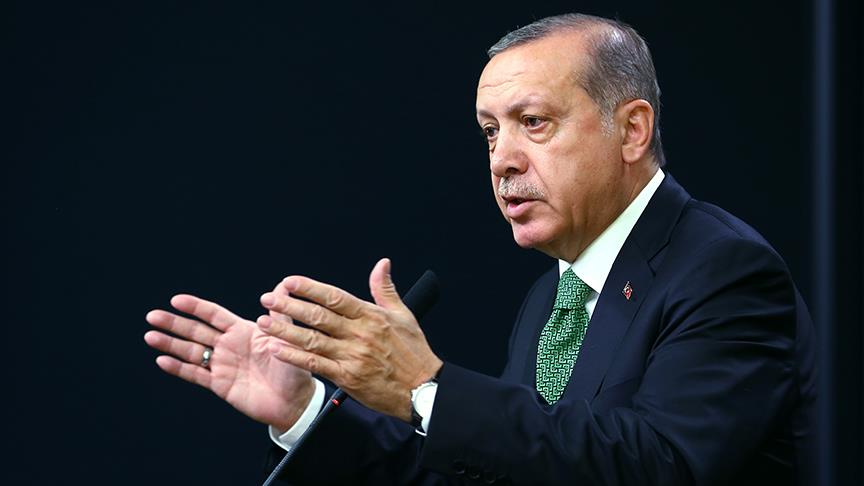
  • Erdogan’s power grab should worry Nato

    Erdogan’s power grab should worry Nato

     The Times

    Erdogan’s power grab should worry Nato

    The Turkish president is reshaping the western alliance’s second-biggest army in his own image

    This month Recep Tayyip Erdogan, president of Turkey, attended commemorations for the anniversary of the death of Kemal Ataturk, the general who beat Britain and its allies at Gallipoli and went on to found the Turkish republic. The day is designed to humble any living Turkish leader. Erdogan walked behind soldiers carrying a wreath picked out with the Turkish flag through the neo-classical promenade and plaza of Anitkabir, Ataturk’s mausoleum in the heart of Ankara.

    In the sarcophagus hall, he bowed his head to the body of the only man who still rivals him in Turkey, as the Last Post and the national anthem were played. The soldiers saluted Ataturk, not Erdogan.

    But as he walked back outside, the tables turned. A chorus went up…

    Continue reading

    Subscribe to The Digital Pack

    for instant access
    thetimes.co.uk/subscribe/digital/

  • Erdoğan’s power grab

    Erdoğan’s power grab

    The Taksim Square in Istanbul | Chris McGrath/Getty Images

    What the upcoming referendum means for Turkey.

    By

    Updated

    ISTANBUL — The cure-all for Turkey’s ills is close at hand — if you believe Recep Tayyip Erdoğan: a ‘yes’ result in next month’s referendum would restore security and stability, the president promises.

    Yet opposition leaders warn that switching to a presidential system of government, as proposed by Erdoğan, would threaten democracy. To foreign observers, this may be strange to hear. After all, a number of democracies are governed by an executive presidency, among them the United States.

    But in Turkey’s case, the term is used as shorthand for a constitutional reform package that — if approved — would represent the most radical political change since the modern republic’s foundation in 1923.

    Critics, including the Council of Europe’s Venice Commission, fear the new constitution would mark a point of no return for the country’s slide into authoritarianism.

    At its core, the overhaul proposed by the ruling Justice and Development Party (AKP) would replace Turkey’s parliamentary model of government with a presidential system, handing President Recep Tayyip Erdoğan executive powers. Erdoğan would become both head of state and head of government — on paper, like the presidents of the U.S., Mexico, or Cyprus.

    Erdoğan has invoked the U.S. model to soothe fears of authoritarian rule while also insisting that Turkey would design its own system. In January, the government finally laid out the plans for his “Turkish-style” model, proposing a powerful executive presidency and a significantly diminished parliament.

    “Presidentialism à la Turca is a recipe for disaster. Whoever receives this much power would be in a position to abuse this much power” — Aykan Erdemir, Foundation for Defense of Democracies

    In a report released this month, the Venice Commission saw “little resemblance” between Turkey’s proposals and the American model, noting that the amendments “would confer substantially more power on the president, and include substantially fewer checks and balances” than in the U.S. — an argument echoed by many of Erdoğan’s opponents.

    “A presidential system doesn’t necessarily mean the erosion of the separation of powers,” said Aykan Erdemir, a fellow at the Washington-based Foundation for Defense of Democracies and former MP for the main opposition party CHP. “But presidentialism à la Turca is a recipe for disaster. Whoever receives this much power would be in a position to abuse this much power.”

    Ahead of the April 16 referendum, here’s a guide to the proposed changes.

    A powerful president …

    The existing Turkish constitution ascribes a mainly ceremonial role to the president, with the power largely in the hands of the prime minister and parliament — in theory, at least.

    Ever since Erdoğan became Turkey’s first directly elected president in 2014, after more than a decade as prime minister and leader of the AKP, he has expanded the office beyond its constitutional limits, effectively remaining in charge of the country. A state of emergency imposed in the aftermath of last summer’s failed coup has allowed him to rule by decree.

    A rally in Istanbul in support of Erdoğan | Ozan Kose/AFP via Getty Images

    Under the new constitution, the temporary powers granted to Erdoğan by emergency law would become permanent. While parliament would retain its legislative role, the president could simply bypass parliament by issuing decrees with the force of law.

    “It’s a paradigm shift,” said Bertil Emrah Oder, a professor of constitutional law at Istanbul’s Koc University. Currently, she noted, presidential decrees have to be approved by the cabinet — a check on the president’s power that would no longer exist if the referendum passes.

    The government argues that presidential decrees cannot alter existing laws or fundamental rights and freedoms. However, this changes under emergency law, according to Oder. “If a state of emergency is declared, he could, in fact, regulate even these rights and freedoms,” she said.

    Erdoğan has flouted the neutrality rule since becoming president and repeatedly campaigned on behalf of the AKP.

    The constitutional changes abolish the role of prime minister. Instead, Erdoğan could appoint one or several vice-presidents. The president would be able to appoint his own cabinet, selecting and firing ministers and other senior officials without needing approval from parliament. He would be responsible for the annual budget and national security policy.

    On top of that, the president may be partisan. The current constitution requires the president to be neutral and give up any party affiliation — a law that casual Turkey-watchers may be unaware of, as Erdoğan has flouted the rule since becoming president and repeatedly campaigned on behalf of the AKP.

    … and a weakened parliament

    Parliament would keep some powers — to declare war, for instance. But its ability to control the executive is restricted under the new constitution.

    While the president retains his right to dissolve parliament whenever he wishes, lawmakers have few resources to rid themselves of the president: the impeachment process is complex, requiring the support of an absolute majority in parliament and the approval of the Constitutional Court. And the president appoints a number of Constitutional Court members.

    The constitutional amendments also revoke several checks on the executive, including parliament’s right to issue motions of censure (a formal strong rebuke), votes of no confidence or oral questions to the executive. Lawmakers may only raise written questions.

    “Taking the general ineffectiveness of impeachment procedures into account, that cannot be regarded as sufficient checks and balances,” said Oder. Given the strict party discipline in Turkey, the president — who would keep his position as party leader — would have significant control over parliament, she added.

    A shop in the Mahmutpasa district in Istanbul | Ozan Kose/AFP via Getty Images

    Parliament’s power to legislate is also weakened. Currently, the president may return bills to parliament to be reconsidered, but lawmakers can bypass his objections with a simple majority. Yet under the new constitution, the president gains veto rights on any law, a power that parliament can only override with an absolute majority.

    Erdoğan and his supporters argue that these changes would reduce instability and prevent political stalemates created by any competing power centers. The government has dismissed suggestions that the new constitution would pave the way for more autocratic rule, insisting that the amendments would hand more power to the people, not the president.

    “In the current system, society elects parliament, and parliament forms a government. That’s indirect legitimacy,” Erdoğan’s adviser Mehmet Ucum said during a conversation with reporters and others in Istanbul this week. “In the new system, society will elect the parliament and the government — so, direct legitimacy,” he said.

    An ‘impartial’ judiciary?

    At first glance, Turkey’s highly politicized justice system would be changed for the better under the new constitution. Military courts in peacetime would be abolished. Moreover, courts would have to act “on condition of impartiality” — but critics say this amendment is rendered meaningless by the new powers granted to the president.

    The new constitution would enable Erdoğan to appoint four of 13 members of the Council of Judges and Prosecutors — the judiciary’s top disciplinary board overseeing appointment and dismissal of judges and public prosecutors — in addition to the minister and undersecretary of justice, who also sit on the Council. The remaining seven members are elected by parliament.

    The proposed changes are projected to come into effect in 2019 and Erdoğan could, therefore, rule Turkey until 2029.

    Currently, Erdoğan chooses only three appointees of a 22-member board — but the constitution requires him to make politically neutral choices. With the impartiality clause gone, the Venice Commission warned, the president could control the entire board if his party held a three-fifths majority in parliament. (The AKP is 13 seats short of a three-fifths majority.)

    “That would place the independence of the judiciary in serious jeopardy,” the commission’s report concluded. “Getting control over this body… means getting control over judges and public prosecutors.”

    Besides transforming Turkey into a presidential republic, the new constitution includes a series of minor changes, including lowering the minimum age for MP candidates from 25 to 18 and increasing the number of seats in parliament from 550 to 600.

    Some 12,000 women filled on March 5 an Istanbul arena in support of a Yes vote in the referendum | Ozan Kose/AFP via Getty Images

    Parliamentary elections would be held every five years instead of every four, with presidential elections taking place simultaneously. A president would only be allowed to stay in office for two full terms but would be permitted to stand for a de facto third term, in case of early elections.

    The proposed changes are projected to come into effect in 2019 and Erdoğan could, therefore, rule Turkey until 2029 — that is if the referendum passes: current polls predict a close race, with the “no” vote slightly ahead of the government’s “yes” camp.

  • Erdogan’s White House Visit May Have Only Delayed the Inevitable Storm

    Erdogan’s White House Visit May Have Only Delayed the Inevitable Storm

    Sinan Ciddi
    Sinan Ciddi
    Board of Contributors
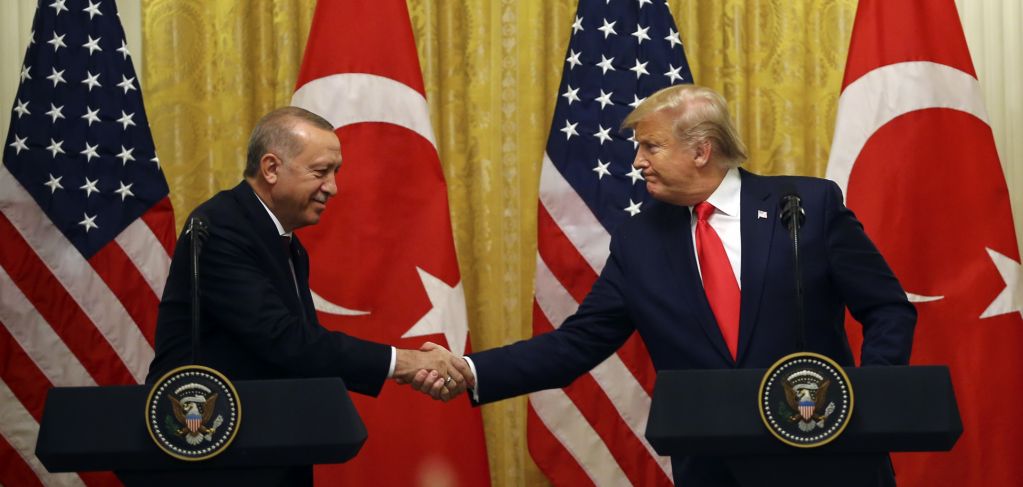
    Turkish President Recep Tayyip Erdogan and U.S. President Donald Trump hold a news conference at the White House on Nov. 13, 2019.

    Turkish President Recep Tayyip Erdogan (L) and U.S. President Donald Trump hold a news conference at the White House on Nov. 13, 2019. Other than Trump, Erdogan appears to have few friends left in Washington.

    (HALIL SAGIRKAYA/Anadolu Agency via Getty Images)
    Highlights
    • Despite some worries otherwise, Turkish President Recep Tayyip Erdogan’s visit to Washington was largely free of drama, but it also didn’t achieve any breakthroughs toward resolving long-standing bilateral disputes.
    • U.S. President Donald Trump essentially has given Turkey a chance to reconsider its position on buying S-400 missile defense systems from Russia, dangling the possibility of readmittance into the F-35 program as a lure.
    • Satisfying Washington will be tough, as doing so would likely anger Russia, which could retaliate by imposing measures on Turkey that could prove damaging to the interests of both Erdogan and his country.

    Turkish President Recep Tayyip Erdogan’s White House visit on Nov. 13 can be regarded as a win for Erdogan only in a narrow, yet significant sense. Amid the threat of looming U.S. sanctions, Erdogan’s meeting with U.S. President Donald Trump ended with the Turkish president voicing Ankara’s demands in the Oval office and, apparently, managing to stave off punitive U.S. measures.

    To be clear, Erdogan’s visit resolved none of the long-standing bilateral disputes between the United States and Turkey, and Erdogan — who is viewed with contempt by nearly all U.S. federal agencies — would not have been welcome in Washington had it not been for Trump’s personal invitation. Turkey, after all, has few friends left in the U.S. capital after its recent incursion into northern Syria to attack the U.S.-backed Kurdish military forces that have been fighting the Islamic State and its purchase of Russian S-400 missile defense systems, which many see as a violation of its NATO commitments.

    Conversely, it is unclear what Trump gained from giving numerous photo opportunities to a leader whom American governmental institutions widely regard as an unreliable partner at best, as well as an authoritarian leader who is visibly cozying up to Russia at the expense of the Western alliance’s interests. Most observers of Turkey have reached the conclusion that the alliance between Turkey and the United States exists in name only and definitely not in substance. There is ample reason to believe that Turkey and the United States will continue to drift further apart without more substantive engagement on the issues that divide the beleaguered allies.

    Erdogan arrived in Washington with a long list of requests, most of which seemed aimed at preserving himself and his government. Worries that the United States was going to disclose some of the more questionable sources of Erdogan’s vast personal wealth and the future of Turkey’s Halkbank apparently topped the list. Last month, U.S. prosecutors in the southern district of New York charged state-owned Halkbank with violating U.S. sanctions on Iran.

    Erdogan arrived in Washington with a long list of requests, most of which seemed aimed at preserving himself and his government.

    Additionally, Erdogan angered administration officials and a group of U.S. senators who attended his Oval Office meeting with Trump when he showed a video on an iPad depicting the leader of the Kurdish-led Syrian Democratic Forces, Mazloum Abdi, as a terrorist who should be apprehended and handed over to Turkey rather than invited to visit Washington. When U.S. Sen. Lindsay Graham brushed aside this act of propaganda, the focus of the discussion moved to Turkey’s purchase of Russian S-400 missile defense systems. From the joint statement that followed Trump’s meeting with Erdogan, it is clear the United States was interested in driving home one key ask of Turkey: Find a verifiable way to shelve the S-400s and, in return, rejoin the F-35 fighter jet program. If not, expect severe and debilitating sanctions.

    Stuck Between a Rock and a Hard Place

    On the S-400 issue, Erdogan faces an interesting conundrum and one of the most consequential decisions he will make. More than just losing face, Turkey would find it difficult to nullify its purchase of the S-400s. From past experience, Erdogan is keenly aware that angering Russian President Vladimir Putin is a sensitive issue, and there are credible reports suggesting Putin could release a trove of embarrassing and compromising materials that would showcase Erdogan and his family’s questionable financial dealings and international connections. Putin also could punish Turkey economically by terminating existing trade and tourism agreements vital to the health of Turkey’s economy.

    On the flip side, failing to satisfy Washington on the S-400 issue could unleash a barrage of sanctions. For the time being, the United States appears to have given Turkey an opportunity to think hard about the issue and act appropriately. As it stands, the U.S. case against Halkbank and a proposed resolution in the U.S. Senate to recognize the killing of Armenians by Ottoman Turks as genocide (the U.S. House of Representatives overwhelmingly passed a similar resolution last month) have both been put on ice as a gesture of goodwill and a signal that the United States is serious in its interest to bring Turkey back into the Western fold. As aggressive and credible as the U.S. position may be, some American officials worry that pushing Turkey too hard and punishing it with sanctions will drive it deeper into the open arms of Russia. Although Turkey has few friends in the U.S. Defense and State departments, no one is interested in Turkey formally pledging itself to the Russian camp.

    A Fatigued and Insecure Ruler

    It appears from observing Erdogan that hubris increasingly masks a lack of confidence, while insecurity shadows and undergirds his 17-year rule. Shortly before his scheduled visit to Washington, Erdogan gave a 36-minute speech on the 81st anniversary of the death of Mustafa Kemal Ataturk, the founder of the modern Turkish Republic. He underplayed the achievements of the republic to focus instead on a series of inaccurate observations that modern-day Turkey’s successes basically lay in the heritage of its predecessor, the Ottoman Empire. Lack of historical knowledge and nuance aside, it apparently was lost on Erdogan that the Ottoman state would never have allowed someone with a common background like his to occupy an influential government position, let alone become head of state.

    Erdogan should not be underestimated, however. He is a master tactician, with the ability and will to change the public discourse and political climate to his advantage on a whim. Over the past six years or so, he has mobilized such prowess solely for his self-preservation. It remains to be seen if he can use his powers and influence in the service of his country’s national interests.

  • Erdoğan’s Turkish Delight: The Dangerous Reign of Ankara’s Corrupt President

    Erdoğan’s Turkish Delight: The Dangerous Reign of Ankara’s Corrupt President

  • Why Turkey is invading Syria

    Why Turkey is invading Syria

    Türkiye neden Suriye’yi işgal ediyor

    … and how it’s getting what it wanted.

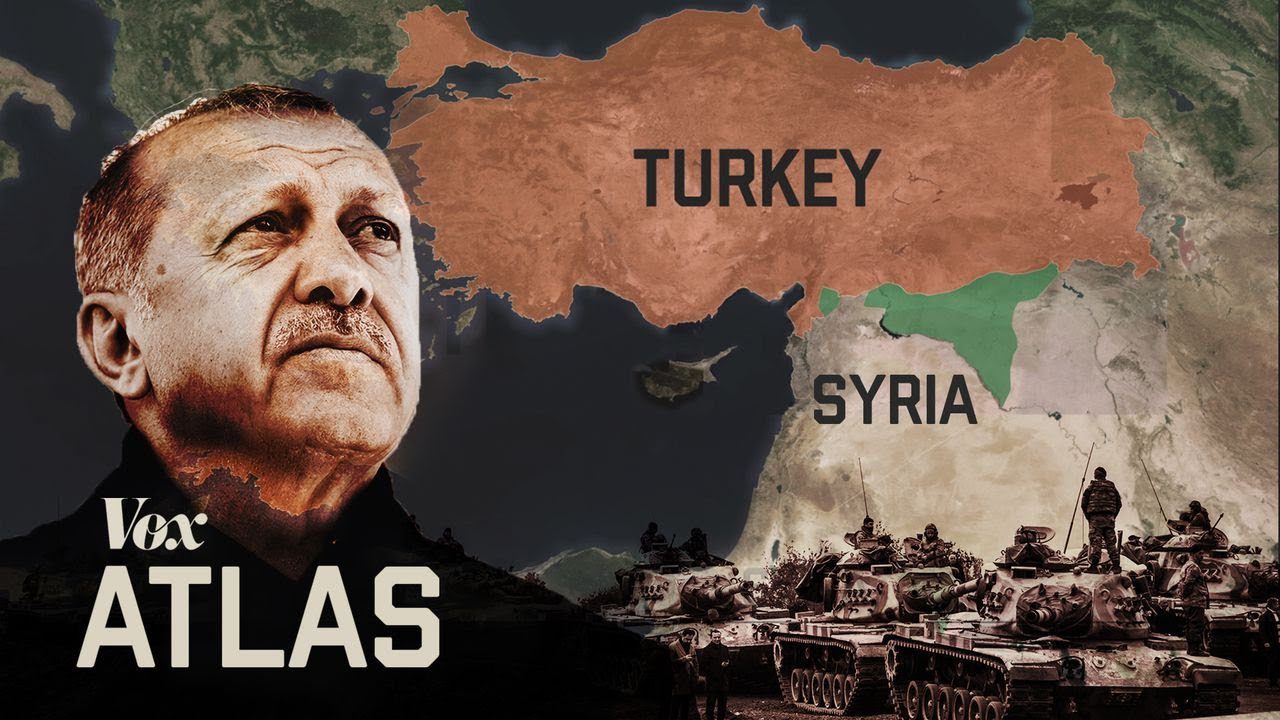
    On Oct. 9, 2019, Turkey launched an attack in northeastern Syria. Turkey made the move shortly after the US announced it would remove some of its troops from the region.

    Turkish President Recep Tayyip Erdoğan had his eyes on the region for years. Turkey, he argued, needed a “safe zone” to serve as a buffer against the Syrian War happening just across the border. Yet back home in Turkey, there were other factors at play that accelerated his calls for an invasion that involved Erdoğan’s own political survival.

    The move has recalibrated alliances in the Syrian War and added new uncertainty on the future of the region.

    To learn more, check out these additional resources:

    Vox’s previous reporting on the conflict:
    https://www.vox.com/world/2019/10/16/20908262/turkey-syria-kurds-trump-invasion-questions
    https://www.vox.com/world/2019/10/23/20928769/trymp-syria-turkey-doctrine

    The Institute for the Study of War’s reports on the US withdrawal from Syria:

    Vox Atlas demonstrates where conflicts occur on a map and the ways in which foreign policy shapes a region. Watch all the episodes here:

    Vox.com is a news website that helps you cut through the noise and understand what’s really driving the events in the headlines. Check out .

    Watch our full video catalog:
    Follow Vox on Facebook:
    Or Twitter: