Tag: Turkey-Israel

  • Turkey-Israel: the new Great Game

    There is a new Great Game afoot and it is taking place beneath the sea floor of the eastern Mediterranean.

    Turkey and Israel’s tentative reconciliation is a process so fraught that US Secretary of State John Kerry appeared in Istanbul at the weekend to chivvy the two sides towards restoring full diplomatic ties. But if the steps he set out can be taken — agreeing compensation for nine Turks killed by Israeli forces in 2010, avoiding inflammatory talk, exchange of ambassadors — then a whole series of changes could be unleashed from Damascus to Brussels.

    In particular, there is the question of a pipeline that could ferry newly discovered Israeli natural gas to energy-hungry Turkey — a move that would knit the two US allies closer together, despite enduring suspicions.

    “It is possible that cooperation in energy between Turkey and Israel could follow an anticipated rapprochement,” said Taner Yilidz, Turkey’s energy minister, on Monday.

    Turkish officials caution that bilateral talks on such cooperation can only really get going after ambassadors are exchanged — but add that business contacts on the topic are already burgeoning.

    Ozgur Altug at BGC partners in Istanbul contends that rapprochement means that “relatively weak Israel-Turkey economic relations will pick up again”. He observes that although Turkish exports to Israel have risen over the last decade (falling back slightly in 2012) to their current level of $2.5bn, they have declined as a proportion of Ankara’s total exports (of which they now account for about 1.5 per cent rather than more than 2 per cent previously).

    While noting that the two countries have relatively tiny levels of direct investment in each other, he highlights the potential for tourism. Israelis represented more than 2 per cent of tourists coming to Turkey in the early 2000s, a level that fell to just 0.3 per cent as of the end of last year.

    But the biggest economic issue is probably gas. Altug calculates that Turkey could save $1bn a year in energy costs if it entered into a gas joint venture with Israel, a figure that could dramatically escalate if other initiatives, such as a possible Turkish energy deal with Northern Iraq, were factored in. Because of such developments, he reckons that Turkey’s current account deficit, the country’s economic Achilles heel, which reached 10 per cent of GDP in 2011 and was still above 6 per cent in 2012, could be kept below 5 per cent from 2016.

    Such an economically significant relationship would have other consequences as well. Though diplomats from both sides warn the Israeli-Turkish relationship is unlikely soon to return to 1990s-era warmth, cooperation on Syria, which both sides hope will avoid becoming a failed state and which Israel wants to keep out of the control of the Muslim Brotherhood, is a distinct possibility.

    Turkish-Israeli energy cooperation could also have an impact on Cyprus, which has gas finds of its own that are adjoining but smaller than Israel’s discoveries. If Cyprus finds itself bereft of Israeli cooperation it may lack economies of scale to proceed with a multi-billion dollar LNG plant or a pipeline to Greece.

    Although Turkey, which invaded the island in 1974, has no diplomatic relations with the internationally recognised Cypriot government, Yildiz pointedly remarked on Monday that if energy cooperation with Israel went ahead Turkey might “also like to see Greek Cyprus involved”.

    If, somehow, Turkey and Cyprus managed to establish a relationship, this in turn would unblock one of Ankara’s biggest problems with the EU, since not a single negotiating chapter of Turkey’s membership talks can be closed as long as a standoff continues in which Ankara bans Cypriot vessels from its ports.

    The stakes are high, therefore, in the Turkey-Israeli reconciliation. But two questions hang over the whole scenario of mutual economic benefit, closer cooperation in a region in chaos and a roadblock removed from the highway to Brussels.

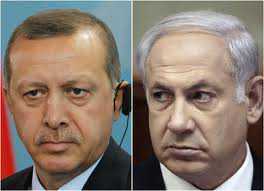
    First, can the Turkey-Israeli rapprochement prosper without a change of Israeli policy on the Palestinians, whose cause is a rallying cry for prime minister Recep Tayyip Erdogan? And second, do Erdogan and Benjamin Netanyahu, Israel’s prime minister, see the healing of their own frayed ties in strategic terms, or simply as a tactical measure, taken in part just to keep the Americans quiet and not worth investing much more political capital in?

    The future of the region — and the geopolitical map of the Eastern Mediterranean — depends on the answers.

    via Turkey-Israel: the new Great Game | beyondbrics.
  • Israel, Turkey (and Beyond) Live Coverage: A New Israeli-Turkish Relationship?

    Israel, Turkey (and Beyond) Live Coverage: A New Israeli-Turkish Relationship?

    1425 GMT: Palestine. Thousands of mourners have turned out for the funerals of three Palestinians, including two teenagers killed by Israeli army gunfire in Tulkarm.

    ERDOGAN NETANYAHU --- USED 04-04-13On Tuesday, Maysara Abu Hamdeya, a 64-year-old prisoner serving a life term in an Israeli jail, died from cancer.

    Palestinian officials accused Israel of delaying treatment for Hamdeya and gave him full military honours at the funeral in Hebron, where masked gunmen fired into the air as his body arrived at a mosque.

    Amer Nassar, 17, and Naji Belbisi, 18, were killed in the wave of disturbances that followed the announcement of Hamdeya’s death.

    1045 GMT: Egypt. Writing for the Associated Press, Maggie Michael and Sarah El Deeb describe the bloody clashes last month outside Muslim Brotherhood headquarters in Cairo:

    The riot on March 22 revealed a new readiness of some in the anti-Brotherhood opposition to turn to violence, insisting they have no choice but to fight back against a group they accuse of using violence against them for months. The fight featured an unusual vengefulness. Young protesters were seen at one point pelting a Brotherhood member with firebombs and setting him aflame. Others chased anyone with a conservative Muslim beard, while Islamists set up checkpoints searching for protesters. Each side dragged opponents into mosques and beat them.

    Since the fight, Islamists enraged by what they saw as aggression against their headquarters have for the past week hiked up calls for wider action against opponents — and the media in particular — accusing them of trying to overthrow Islamist President Mohammed Morsi.

    1025 GMT: Egypt. Minister of Planning Ashraf al-Araby has said the Government expects to reach a final agreement with the International Monetary Fund on a $4.8 billion loan within two weeks.

    An IMF delegation resumed negotiations with Egypt on Wednesday. Agreement has been held up for months by political and economic tensions, with President Morsi introducing but quickly withdrawing required tax increases and cut in subsidies last autumn.

    Foreign reserves are at $13.4 billion, covering less than three months of imports.

    0735 GMT: Palestine. US and Palestinian officials say that Palestinian Authority President Mahmoud Abbas will suspend “all unilateral measures” at the United Nations to give US Secretary of State John Kerry time to pursue a new round of Israeli-Palestinian talks.

    A source said the Fatah Central Committee, led by Abbas, passed a resolution for the suspensions on Tuesday.

    “For a limited and specified period of time a new opportunity will be given to international efforts under way to break the deadlock in the peace process,” the resolution read. It went on to say, “In the event Israel thwarts such efforts, we will again turn to international organizations.”

    In November, the UN General Assembly recognised Palestine as an Observer State, angering the Israelis and leading to a cut-off of tax revenues from Israel to the PA. West Jerusalem warned the PA, which controls the West Bank, not to pursue accession to UN agencies and bodies such as the International Criminal Court.

    Sources gave the timeframe of the suspension of the Palestinian Authority’s efforts to secure member-state status in various UN agencies as around eight weeks starting on 22 March, when President Obama concluded his visit to the region, with a possible four-week extension.

    Abbas is due to meet Kerry on Sunday.

    0710 GMT: Palestine. Two Palestinian teenagers have been shot and killed by Israeli forces in the West Bank city of Tulkarm amid clashes.

    One teenager was confirmed dead on Wednesday while the body of a second youth was found on Thursday.

    The Israeli military said its troops opened fire on Palestinians who threw firebombs at a guard post.

    0650 GMT: Israel and Turkey. We start this morning with an analysis by Shoshank Joshi and Aaron Stein of the recent “reconciliation” between West Jerusalem and Turkey, marked by Israeli Prime Minister Benjamin Netanyahu’s apology over the killing of nine Turkish citizens by Israeli commandoes during an attack on a Gaza-bound “Freedom Flotilla” in May 2010.

    On EA, we have emphasised the place of Syria in this reconcilation, with the US and others seeking to get Turkey and Israel on the same side over support for the insurgency. In the final third of the article Joshi and Stein add other dimensions:

    1. The potential of exports of Israeli natural gas to Turkey, downplayed by the authors;

    2. “What the apology could do is restart Turkey and Israel’s defense relationship”, with supply of Israeli drones, specialized equipment for Turkey’s U.S.-made Airborne Warning and Control System (AWACS) aircraft , and other technology and weapons;

    3. “An upgrade in intelligence cooperation in Syria”;

    4. “The apology may shake up Turkey’s diplomacy in the Palestinian territories….Turkey may even feel well placed to broker reconciliation between the two factions [of Hamas and Fatah].”

    via EA WorldView – Home – Israel, Turkey (and Beyond) Live Coverage: A New Israeli-Turkish Relationship?.

  • Turkey and Israel: A ‘what next?’ mindset

    Turkey and Israel: A ‘what next?’ mindset

    Turkey and Israel: A ‘what next?’ mindset

    By CAN KASAPOGLU

    At this point, the critical question is how to turn the forthcoming strategic dialogue into strategic cooperation.

    ShowImage
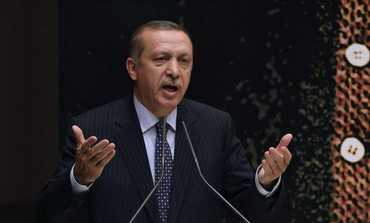
    Turkish Prime Minister Erdogan. Photo: REUTERS/Stringer
    Following the early signs of rapprochement between Turkey and Israel, analysts on both sides focused on why and how this was happening.

    Meanwhile, many columnists voiced their opinions about who should take credit for this critical development; some praised the Turkish foreign policy that succeeded in making Israel apologize, others praised Prime Minister Binyamin Netanyahu for his strategic wisdom, and of course US President Barack Obama for his excellent mediation skills. There were even academics who discussed whether the Israeli government did or did not exactly apologize. Although these issues might be very attractive to read about in foreign policy columns, they don’t make much sense at all in the “Hobbesian real world of the Middle East” which is “nasty and brutish” indeed.

    Instead of all endless “why, how, and what happened exactly” debates, this paper prefers to focus on the vital question of “what to do next, and how to accomplish it.”

    From Détente to strategic dialogue: Following “the apology and the positive response,” now we have a détente in Turkish- Israeli relations that offers a cautious optimism for the future. The first and foremost requirement should be turning this détente into a strategic dialogue.

    Having political figures from both countries photographed shaking hands would just be a PR effort. Instead, we, the Turks and the Israelis, right away need our experts to talk openly about Syrian chemical and biological agents’ locations, Assad’s ballistic missiles’ combat-readiness, and trajectory of the Syrian civil war. Likewise, a rise in tourist exchange would be nice in order to overcome mutual distrust in people-to-people relations. However, more urgently, we need our think-tanks setting forums for brain-storming about Iran’s military trends and nuclear program.

    In sum, we need a comprehensive strategic dialogue to compensate for the times days of deterioration in Turkish-Israeli relations. As the author of this op-ed has stated, when the crisis between the two nations culminated in the flotilla incident, “Bouazizi was still alive in Tunisia, Ankara and Damascus were holding joint cabinet meetings, and Iranian officials hadn’t threatened Turkey due to NATO assets on Turkish soil.” In other words, while we were having problems in our marriage, the neighborhood was only as dangerous as usual; but now everywhere is on fire and we have really serious issues to handle.

    From strategic dialogue to cooperation Upon a comprehensive strategic dialogue on key issues of Turkish and Israeli national security agendas, decision-makers of both sides would need to develop a robust cooperation to confront the drastically worsening landscape of regional threat.

    As PM Netanyahu pointed out immediately after he initiated the US-brokered rapprochement, the most critical strategic priority would be Syria’s prolonged civil war. Within this context, Turkey and Israel have to get ready to secure the Baathist tyranny’s chemical and allegedly biological weapons arsenal along with other strategic weapons systems in case of an uncontrolled regime collapse. Furthermore, we also need to carefully watch for any mass transfer of game-changing weapon systems in asymmetric conflicts, such as man portable air defense systems (MANPADS), and antitank guided missiles (ATGM) into the hands of non-state groups that might target Turkey or Israel. In a moment of irrational shock, Assad or members of the elite surrounding him might attempt to ignite a regional war by provoking Turkish or Israeli administrations. In this case, the two nations need to be prepared to act in coordination, to nip the threat in the bud.

    At this point, the critical question is how to turn the forthcoming strategic dialogue into strategic cooperation. While everyone recalls the strategic partnership in the 1990s between Turkey and Israel, during the years of deterioration of their relationship the author of this op-ed has tried to point out the presence of another cooperation model in Turkish- Israeli relations, namely, the peripheral pact signed in 1958. This model was narrowly-designed to cover specifically determined military-political affairs, and was handled within a limited community of top decision makers. Although the current rapprochement is an overt development, we should also take the two countries’ domestic political constraints into consideration. Israel has just formed a new government with the participation of right-wing and centrist figures that excluded the ultra- Orthodox. On Turkey’s end, municipal, parliamentary and presidential elections will take place only in two-a-half years, although constitution debates are ongoing. Moreover, both Israel’s apology and Turkey’s positive response are “security-oriented” to a large extent, and the two states will have to deal with very critical threats.

    Who would say no to some extra benefits Although the US-brokered restoration is taking place out of national security urgencies on both sides, Turkish- Israeli relations have always had the potential to produce momentous results. The first prospective development might be a come-back in military ties. As the relations normalize, frozen military deals can be gradually revived. In that sense, Turkey’s ongoing efforts in promoting missile defense capabilities, drone warfare and armor modernization would be attractive to the Israeli defense industry. Moreover, the two countries can restart naval and air force drills and Turkey might drop its veto on NATO-Israeli cooperation, as things get better. More importantly, effective energy cooperation in the Eastern Mediterranean would a bright idea, especially when the Greek Cypriots are swamped with their banking crisis and corrupt governance; Turkey and Israel can work on an alternative energy corridor that would be much more beneficial.

    In the long run, if everything goes even better than expected, the special relations between Turkey and Azerbaijan, and Israel’s close defense and intelligence cooperation with Baku can be enhanced to prompt a trilateral partnership to counterbalance the Iranians’ aggressive agenda.

    In sum, the most important bilateral ties of the Middle East, relations between the only two democracies of this dangerous region, might be on the eve of a major restoration. The crucial track would be driving this prospect into a strategic dialogue, and then an effective cooperation. However, at this point we should keep an eye on Palestinian affairs and Lebanon, where anyone who is uncomfortable with Turkish-Israeli partnership might try to provoke an Israeli military action, and thereby, a Turkish diplomatic reaction. If Turkish and Israeli officials want to keep their rapprochement safe, they should remember that on one hand there are the likes of Obama, who is happy with how things are going so far. Nevertheless there are some others who are already starting to go mad to see the Turks and the Israelis acting in coordination in Syria.

    The writer, who holds a Ph.D. from the Turkish War College, served as a post-doctoral fellow for the BESA Center at Bar-Ilan University. He is currently a research fellow at the Istanbul based Turkish think-tank EDAM.

  • Turkey riding on the back of the tiger

    Turkey riding on the back of the tiger

    By Pinhas Inbari

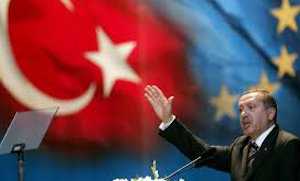
    erdogan2013Geopolitical forces in the Middle East demand the return of cooperation and amicable relations between Turkey and Israel. The two former allies face similar challenges like the growing threat of terrorist Iran, with its dangerous nuclear ambitions, and the possibility that Syria becomes a launching pad for Sunni al-Qaeda affiliated terror groups in the Middle East and Europe.

    Recently, encouraging reports in the media indicated that Israel would supply military technology to Turkey to fulfill old contracts that remained in limbo due to the tensions between the two countries. In addition, it has been reported that Haifa’s seaport would become the new gate for Turkish trade with Jordan, which used to run through Syria before the embattled country blocked all Turkish ground convoys. However, despite these encouraging signs, no breakthrough has been achieved via the U.S. mediated efforts to melt down the freezing relations between the countries in place since the Mavi Marmara episode. Last week, Prime Minister Erdoğan compared Zionism with fascism and characterized the Israeli national movement as a crime.

    Islamist Turkey has clearly chosen the neo-Ottoman ethos over state interests. This not only complicates its relations with the Jewish state but also intensifies friction with Iran – its Islamic rival. The decision to privilege inter-Islamic quarrels and preserve its Islamist ideology has caused Turkey to endorse the al-Qaeda affiliated Nusra group so as to turn it into a tool against the declining Syrian regime and Hezbollah in Lebanon.

    In order to understand the carnivorous nature of the Nusra group, one has to review its origins. The group began as a violent Jordanian gang that operated in Iraq under the command of the notorious Abu Musab al-Zarqawi. Its nucleus in Syria is not composed of native Syrians but of al-Qaeda operatives from across the region helmed by a Jordanian contingent.

    In its Turkish incarnation, the Nusra group has de facto become the military wing of the Muslim Brotherhood.  Its headquarters are located in Istanbul, commanded by a veteran Syrian Muslim Brotherhood soldier Faruq Taifur. However, Turkey should find little solace in the fact that Nusra is headed by a Muslim Brotherhood rather than an al-Qaeda operative on its soil. It is likely that al-Qaeda is already eyeing Turkey for possible terrorist operations regardless of Taifur’s affiliation.

    With the Nusra forces fighting Hezbollah in both Syria and Lebanon, Turkey finds itself in the midst of a proxy war with Iran. A quick glance at the regional map tells us that the parties are struggling over control of Kurdish Syria and Alawistan. To date, the Nusra forces have refrained from attacking the Alawites so as to avoid unifying the Kurds with the Alawites, who have so far stayed loyal to President Assad and the regime in Tehran. The unification might create a ‘Shiite Crescent’ spread over Iran, Iraqi Kurdistan, Syrian Kurdistan and Alawistan, and Tripoli, touching upon the areas controlled by Hezbollah.

    Turkey and Iran are engaged in a regional race to establish and control this crescent. While Turkey is negotiating a deal with the captive Kurdistan Workers Party (PKK) leader Abdullah Öcalan and his Syrian allies in the Democratic Union Party (PYD), Iran is busily supporting the other side and may use Hezbollah to stage terrorist operations on Turkish soil.

    Turkey would do well to preserve its glorious Muslim cultural heritage. In order to do so, it must abandon the Muslim Brotherhood’s ethos and disengage from the Middle Eastern morass by normalizing relations with Israel and thereby identifying itself once more with the West.

    via World Jewish Congress – WJC ANALYSIS – Turkey riding on the back of the tiger.

  • Israeli Initiative with Turkey Fails

    Israeli Initiative with Turkey Fails

    The head of Israel’s National Security Council met a Turkish official in an attempt to restore ties, but to no avail.

    img251592

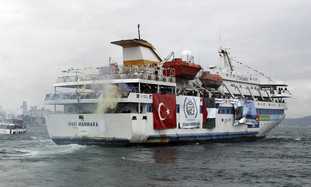
    Mavi Marmara

    A recent Israeli attempt to restore the strained relations with Turkey failed, according to a report on Channel 2 News on Saturday night.

    According to the report, the head of Israel’s National Security Council, Yaakov Amidror, recently met in Rome with the Director-General of the Foreign Ministry in Ankara.

    The meeting was held at the initiative of Prime Minister Binyamin Netanyahu’s Office and was also attended by Joseph Ciechanover, formerly the Director-General of the Israeli Foreign Ministry. However, the meeting failed and no agreements were reached.

    Israel’s relationship with Turkey broke down completely after the 2010 incident on the Mavi Marmara ship.

    The vessel, owned by the Turkish IHH group, was one of six sent to illegally breach Israel’s maritime blockade of Gaza as a “humanitarian flotilla” but was found to be carrying nothing.

    When the vessels ignored repeated Israeli navy requests to redirect their boats to Ashdod port, IDF commandos boarded each vessel to force them to port, where the humanitarian aid they were allegedly carrying could be off-loaded and carried to Gaza through the land crossings with Israel.

    In the case of the Mavi Marmara, however, the Israeli soldiers – armed only with pistols and paint-ball training guns — were brutally attacked by the “activists” as they boarded, with several critically injured. The commandos who followed them shot and killed their attackers, leaving nine dead.

    Turkish leaders have demanded an apology from Israel over the incident, but Israeli leaders have refused, saying Israel had acted in self-defense.

    Former Foreign Minister Avigdor Lieberman emphasized in the past that Israel is ready to solve any outstanding disputes with Turkey, but it will not apologize to Ankara for the raid on the Mavi Marmara.

    Turkey has several times rejected offers by Israel to improve relations. Turkish Prime Minister Recep Tayyip Erodgan has chosen to deepen the conflict by continuously verbally attacking Israel.

    Earlier this month, Erdogan accused Israel of waging “state terrorism”, condemning an alleged Israeli air strike in Syria as an unacceptable violation of international law.

    Tags: Mavi Marmara ,Yaakov Amidror ,Israel-Turkey relations

    via Israeli Initiative with Turkey Fails – Middle East – News – Israel National News.

  • ‘Turkey Marmara trial a cynical political process

    ‘Turkey Marmara trial a cynical political process

    ‘ By YONAH JEREMY BOB02/20/2013 03:09

    Trial of 4 former IDF commanders charged with the deaths of nine Turks aboard the Mavi Marmara set to restart.

    Turkish cruise ship Mavi Marmara, carrying pro-Palestinian activists and humanitarian aid to Gaza, leaves from Sarayburnu port in Istanbul

    Mavi Marmara Photo: Stringer Turkey / Reuters

    Two days away from the restart of Turkey’s trial on Thursday in absentia of top Israeli military commanders regarding the May 2010 Marvi Marmara flotilla incident, The Jerusalem Post recently spoke to a top government legal official who said that the entire process is “political, not really judicial. It looks judicial, but it’s really not.”

    The first set of hearings for the trial of four former Israeli military commanders, charged with the deaths of nine Turks aboard the Mavi Marmara, started in November 2012, but recessed after a few days.

    Related:

    ‘Common sense must reign in Mavi Marmara case’

    ‘Families of Marmara flotilla victims sue Israel’

    The commanders charged are former chief of staff Lt.-Gen. (res.) Gabi Ashkenazi, former OC Navy V.-Adm. (res.) Eliezer Marom, former OC Military Intelligence Maj.-Gen. (res.) Amos Yadlin and former Air Force Intelligence chief Brig.-Gen. (res.) Avishai Levy.

    The 144-page indictment in the case seeks more than 18,000 years of life sentences in a trial expecting around 490 witnesses.

    Speaking on condition of anonymity due to the sensitivity of the issue, the official asked, “What does Turkey want with this? Maybe they’re waiting to [see] what the next government looks like.”

    The government to date has boycotted the proceedings, referring to the trial as a “kangaroo court.” But Israel has faced biased audiences before and has found ways to indirectly present its point of view, such as when former Israeli government officials presented what would have been many of Israel’s arguments to the UN’s Goldstone Commission that investigated the 2008-2009 Gaza War, even though the government itself boycotted the hearings.

    Asked if any similar behind the scenes efforts were under way, the official demurred, saying “this is nothing like Goldstone. The case is not against a state, it’s against four individuals,” implying that it was not even clear what kind of standing Israel as a country would have had to appear before the Turkish court.

    The official said that the decision not to attempt even behind the scenes presenting of Israel’s position was made in light of an estimation that “I don’t think the Turkish judge will go against the Turkish government’s” agenda of harming Israel’s image – “there is no chance,” he said.

    He also said, “I don’t think any legal arguments could impact the process, because it is not a judicial process at all. The trial is being used for cynical political processes.”

    What objective factors brought the official to these conclusions? The official said the court was completely ignoring the neutral and authoritative UN-sponsored Palmer Report on the incident, which held that Israel’s blockade was legal under international law and that to the extent that there were Israeli violations of the law of armed conflict in the altercations on the vessel, their severity was mitigated by the context of the Israel Navy sailors being under attack.

    The “judge can look at the Palmer Report which is not like the actions discussed in the trial,” the official said.

    He said unlike the Turkish trial, the Palmer Report makes no mention of “murder” allegations, at most describing certain actions as “mistakes” and problematic “planning issues in the context of self-defense.”

    The official said that Israel was not afraid of defending itself in cases in countries where it believed it had a shot at a fair trial and that to date “no universal jurisdiction case has gotten past the first round of procedures” to go to trial.

    Ties between Jerusalem and what was once its only Muslim ally crumbled after the incident, in which some of the sailors who tried to commandeer the ship were wounded in clashes with those on board that left nine of the passengers dead.

    Turkish media reports and various Twitter accounts of the case in November indicated that the witnesses included statements from the families of the nine dead passengers and people from other ships in the protest flotilla as well as surviving activists from the Mavi Marmara.

    Ahmed Dogan – the father of 19- year-old Furkan Dogan, the youngest of the dead passengers – said he saw evidence showing that his son had been “shot in the face,” according to the reports.

    Mary Ann Wright, a 65-year-old former US Army colonel who was aboard the nearby Challenger 1 ship, testified about the scale of the military force involved in stopping the flotilla as well as the sailors’ conduct vis-a-vis the firing of paintballs and tossing of stun grenades.

    According to the reports, Wright said she believed that such a force could only have been meant to attack.

    The reports could not be confirmed and no Israeli officials are present at the trial to make objections or cross-examine the witnesses.

    via ‘Turkey Marmara trial a cynical p… JPost – Diplomacy & Politics.