Category: America

  • Letter to Lindsey Graham- US Senator

    Letter to Lindsey Graham- US Senator

    Regarding  Recent Statement on Syria and ‘Saving the Kurds’

    February 9, 2026

    Lindsey Graham -US Senator
    211 Russell Senate Office Building
    Washington, DC 20510

    Dear Senator Graham,

    I read your January 27, 2026 statement on X with great concern. Your claim that “the Kurds are under threat from the new Syrian government aligned with Turkey” and your announced intent to introduce “crippling sanctions” through a “Save the Kurds Act” constitutes not only a misreading of the regional reality but, more troublingly, a reversal of your own previously stated national security concerns.

    First, your framing collapses a diverse people into a single militant faction. There are more than 15 million Kurdish citizens living in neighboring states who serve as parliamentarians, ministers, governors, diplomats, judges, academics, and business leaders. If these governments were engaged in a campaign against Kurds as a people, they would not have sheltered half a million Iraqi Kurds fleeing Saddam Hussein in 1991 nor hosted millions of Syrian refugees, including tens of thousands of Syrian Kurds, since 2012. The omission of intra-Kurdish plurality is astonishing. Nechirvan Barzani, President of the Kurdistan Regional Government, has publicly defined the PKK as a “headache” and demanded their expulsion from Kurdish territory in Iraq. Abdullah Keddo of the Syrian Kurdish National Council has warned that PKK-linked groups must be expelled from Kurdish-majority towns in Syria. Kurdish rejection of PKK authoritarianism is not peripheral — it is central.

    Second, your romanticization of the YPG/PYD also ignores hard legal and intelligence facts. Interpol, FATF, and UN agencies have documented PKK-linked networks involved in narcotics trafficking, forced conscription, human smuggling, extortion, and arms procurement. No sovereign state including our own would tolerate an armed separatist formation operating on its borders financed through transnational organized crime.

    Your narrative also erases the chronology. The collapse of the 2013–2015 peace process did not occur in a vacuum. It was the PKK that unilaterally broke the ceasefire, declared “autonomous zones,” dug urban trenches, and launched urban insurgencies from Cizre to Sur. No Western democracy would permit an armed non-state actor to carve municipal fiefdoms under the banner of cultural rights.

    You are also aware of the U.S. role in muddying this conflict. Under the cover of counter-ISIS operations, Washington rebranded the PKK’s Syrian affiliates (YPG/PYD) as the “SDF.” Senior American officials have since admitted the obvious. Then-Secretary of State Antony Blinken called the PKK an “enduring threat.” Defense Secretary Lloyd Austin confirmed that the SDF maintains structural ties to the PKK. Ambassador James Jeffrey openly described the SDF as a national security problem for our NATO ally. President Donald Trump went further: “Kurds are not angels. The PKK… is probably worse at terror and more of a terrorist threat in many ways than ISIS.”

    Senator Graham, respectfully you once recognized this. During hearings of the Senate Armed Services Committee, you questioned Secretary Carter and General Dunford about U.S. cooperation with the PKK/YPG in Syria and Iraq, highlighting their acts of terror and the thousands of civilian lives lost. You warned against entanglements with designated terrorist entities. Today, you are proposing sanctions on governments combating the very groups you once warned about. One is left to ask: when did the policy change, and why?

    Meanwhile, the new Syrian government under President Ahmad al-Sharaa has granted Kurds full citizenship, legalized Kurdish education, recognized Newroz as a holiday, and enacted anti-discrimination laws. These reforms undermine the separatist thesis and remove the humanitarian alibi Western commentators often rely upon.
    Iraq’s Kurdish Parliament has repeatedly expressed gratitude for cross-border support against ISIS between 2014–2017 and credited regional integration for their economic development. Kurdish leaders have never claimed that their survival depends on an armed Marxist separatist formation only certain Washington think tanks have.

    Senator, no one is attacking Kurds. Counter-terror operations target groups like the PKK/YPG/PYD that exploit instability to advance extremist goals. Conflating Kurds with separatist militants is an insult to Kurdish citizens who reject authoritarianism.

    America’s reputation will not suffer by ceasing to fund non-state militias. It will suffer by appearing to legislate on behalf of a terrorist organization. If you are so committed to their protection, one wonders whether your constituents in South Carolina would welcome their relocation, protection, and financing at home.

    At a time of economic strain, American taxpayers deserve investments in American communities not another open-ended proxy commitment to groups that U.S. officials themselves have labeled as terrorists.

    Respectfully,
    Ibrahim Kurtulus
    Community Activist

  • STREETS OF MINNEAPOLIS

    STREETS OF MINNEAPOLIS

    Song released two days ago by Bruce Springsteen: “STREETS OF MINNEAPOLIS (Lyric Video)”

    [Verse 1]
    Through the winter’s ice and cold
    Down Nicollet Avenue
    A city aflame fought fire and ice
    ‘Neath an occupier’s boots
    King Trump’s private army from the DHS
    Guns belted to their coats
    Came to Minneapolis to enforce the law
    Or so their story goes

    [Verse 2]
    Against smoke and rubber bullets
    In the dawn’s early light
    Citizens stood for justice
    Their voices ringin’ through the night
    And there were bloody footprints
    Where mercy should have stood
    And two dead, left to die on snow-filled streets
    Alex Pretti and Renée Good

    [Chorus]
    Oh, our Minneapolis, I hear your voice
    Singing through the bloody mist
    We’ll take our stand for this land
    And the stranger in our midst
    Here in our home, they killed and roamed
    In the winter of ’26
    We’ll remember the names of those who died
    On the streets of Minneapolis

    [Verse 3]
    Trump’s federal thugs beat up on
    His face and his chest
    Then we heard the gunshots
    And Alex Pretti lay in the snow dead
    Their claim was self-defense, sir
    Just don’t believe your eyes
    It’s our blood and bones
    And these whistles and phones
    Against Miller and Noem’s dirty lies

    [Chorus]
    Oh, our Minneapolis, I hear your voice
    Crying through the bloody mist
    We’ll remember the names of those who died
    On the streets of Minneapolis

    [Harmonica Solo]

    [Verse 4]
    Now they say they’re here to uphold the law
    But they trample on our rights
    If your skin is black or brown, my friend
    You can be questioned or deported on sight
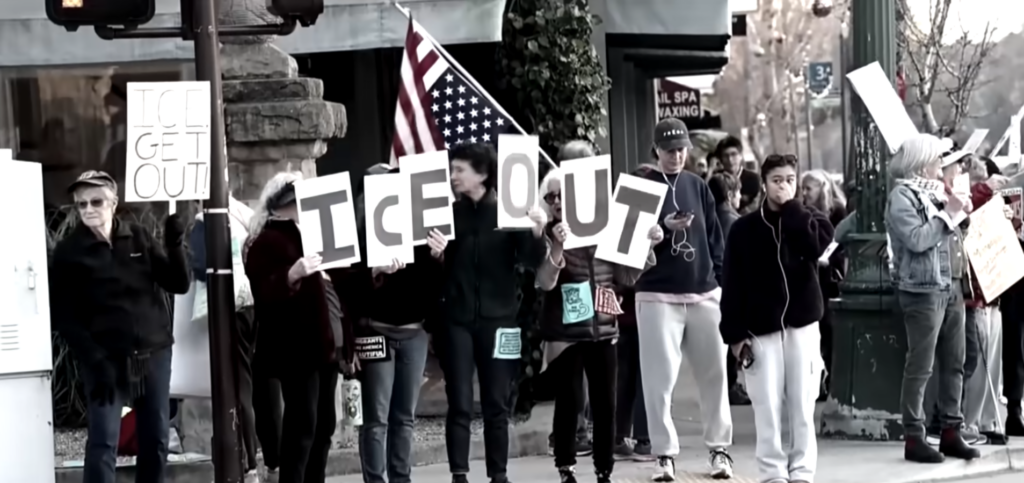
    In our chants of “ICE out now”
    Our city’s heart and soul persists
    Through broken glass and bloody tears
    On the streets of Minneapolis

    [Chorus]
    Oh, our Minneapolis, I hear your voice
    Singing through the bloody mist
    Here in our home, they killed and roamed
    In the winter of ’26
    We’ll take our stand for this land
    And the stranger in our midst
    We’ll remember the names of those who died
    On the streets of Minneapolis
    We’ll remember the names of those who died
    On the streets of Minneapolis

    [Outro]
    ICE out (ICE out)
    ICE out (ICE out)
    ICE out (ICE out)
    ICE out (ICE out)
    ICE out (ICE out)
    ICE out

  • THE UNITED STATES’ ILLEGAL INTERVENTION REGIME AND THE COLLAPSE OF THE GLOBAL ORDER

    THE UNITED STATES’ ILLEGAL INTERVENTION REGIME AND THE COLLAPSE OF THE GLOBAL ORDER

    No Longer an “Allegation,” but an Open Reality

    The Debate Is Over

    The Open Violation of International Law

    The Use of Force and Threats: Happening Openly

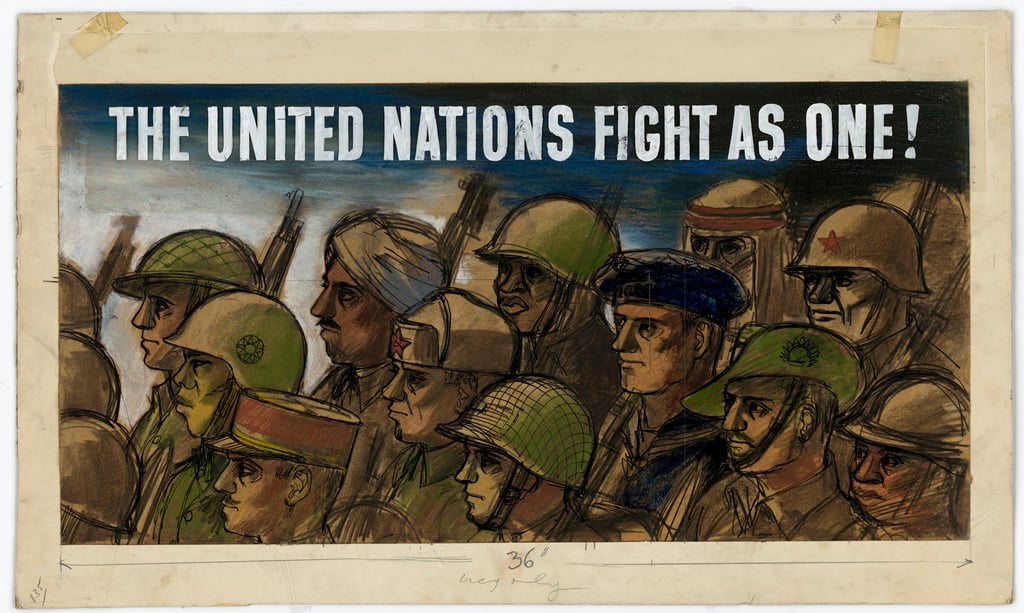
    The United Nations system was established after the Second World War to prevent arbitrary uses of force by states. Article 2(4) of the UN Charter explicitly prohibits the use or threat of force against the territorial integrity or political independence of any state. This provision constitutes a cornerstone of international law, and its binding nature is beyond dispute.

    The rhetoric and practices of the United States toward Venezuela, Iran, the Caribbean, and several other regions constitute clear violations of this prohibition. Calls for regime change, insinuations of military intervention, naval deployments, and official statements containing explicit threats go far beyond the limits of diplomatic language. In international law, such actions are defined as the threat of force.

    These actions cannot be justified under the doctrine of self-defense, nor have they been authorized by the United Nations Security Council. Therefore, what exists here is not a legal controversy but an instance of unauthorized use of force. This reality demonstrates that the United States treats international law not as binding, but as optional.

    More dangerously, these violations are no longer exceptional; they have become standard policy. Law is treated as a flexible instrument shaped by power relations. This approach not only legitimizes U.S. actions but also creates a precedent for other states to justify similar violations.

    In short, what is occurring is not a series of isolated incidents, but the systematic erosion of international law. Unless this erosion is halted, persistent global instability will be unavoidable.

    Unilateral Sanctions: Economic Warfare

    Unilateral sanctions imposed by the United States have long ceased to be conventional diplomatic tools. Rather than targeting state structures, these measures directly affect civilian populations. Health systems, food supply chains, and essential public services are the first casualties of such sanctions.

    Under international law, the legitimacy of sanctions depends on their collective and multilateral nature. Broad economic sanctions imposed without Security Council authorization are legally problematic. Nevertheless, the United States presents these measures as if it were acting on behalf of the international community.

    Reports by UN Special Rapporteurs have clearly demonstrated that these sanctions lead to civilian deaths, widespread poverty, and public health crises. Despite this, sanctions have not only continued but have been expanded. This reflects a conscious disregard for human rights.

    Such practices closely resemble collective punishment, which is prohibited under international humanitarian law. Inflicting suffering on millions of people to coerce political change is not a legal instrument, but a coercive and punitive one.

    Therefore, what is at issue is not sanctions, but economic warfare—a form of warfare that can be as destructive as military conflict.

    From the Perspective of the U.S. Constitution: A Clear Usurpation of Authority

    Congress Is Being Bypassed

    The U.S. Constitution deliberately assigns the power to declare war to Congress in order to prevent military force from being placed under the will of a single individual. Yet in modern U.S. history, this principle has been effectively suspended.

    Presidents have routinely bypassed Congress by invoking “national security” and “imminent threat” justifications. The Trump era represents one of the most overt and reckless manifestations of this trend. Military operations and attacks have been carried out without explicit congressional authorization.

    The War Powers Resolution of 1973 was enacted to limit such abuses. However, it has been systematically violated by the executive branch. Congress, in turn, has often remained silent or acquiesced to faits accomplis.

    This is not a matter of constitutional interpretation but of constitutional dysfunction. The legislative branch has been rendered ineffective in relation to the executive, laying the institutional groundwork for authoritarian tendencies within the United States.

    As a result, the United States conducts external interventions while violating its own Constitution, generating a legitimacy crisis both domestically and internationally.

    What Does “Parallel State” Mean? The Real Definition

    The term “parallel state” does not refer here to a hidden or mystical structure. Rather, it describes a highly visible, documented, and institutionalized configuration of power operating outside democratic oversight.

    Defense corporations, security bureaucracies, and lobbying networks have become the de facto architects of foreign policy. These actors wield far greater influence than elected representatives. Decisions are made beyond public scrutiny and legislative control.

    The media functions as a complementary component of this structure. Interventionist policies are routinely presented under the banners of “national interest” and “security” without meaningful scrutiny. Public opinion is thus kept in a permanent state of perceived threat.

    This structure views law not as a boundary, but as an obstacle to be overcome. International agreements are abandoned when interests shift. Diplomacy is replaced by coercion.

    What exists, therefore, is a coalition of power that has supplanted the rule of law. This coalition is operational, and its consequences are global.

    The Consequences of This Regime

    The outcomes of this interventionist regime are no longer theoretical; they are being experienced. Regional wars have become permanent, and temporary crises have evolved into chronic conflicts.

    Nuclear armament has regained momentum. As trust in international agreements erodes, states increasingly rely on military buildup to secure themselves, amplifying global risks.

    In the Global South, opposition to U.S. policies has become not only political but societal, fueling radicalization and instability.

    Within the United States, the excessive centralization of executive power weakens democratic institutions. The principle of the rule of law is displaced by appeals to “security.”

    Ultimately, this regime undermines both the global order and the internal balance of the United States itself.

    What Must Be Done? Clear and Concrete Solutions

    At the International Level

    The current crisis of the international system stems not from the absence of institutions, but from the paralysis of political will. The United Nations remains central to legal legitimacy; the problem lies in its deliberate incapacitation by major powers. The solution is not to abandon the UN, but to use its mechanisms despite Security Council vetoes.

    The UN General Assembly, including through the “Uniting for Peace” mechanism, must intervene when the Security Council is deadlocked. While not legally binding, this mechanism carries significant legitimacy-producing power. International law operates not only through enforcement, but also through normative pressure.

    The International Court of Justice and other judicial bodies must be utilized more actively despite pressure from powerful states. Non-compliance with rulings does not render legal processes meaningless; on the contrary, it ensures that violations are historically and legally recorded. Law operates in the long term, not the short term.

    Regional alliances in Latin America, Africa, and Asia should develop joint economic and diplomatic mechanisms to counter unilateral sanctions. Such cooperation not only mitigates sanctions’ effects but also contributes to the practical reconstruction of multilateralism.

    Thus, the central objective at the international level must be to reject the normalization of force and to restore law as the primary point of reference. This is not idealism, but a vital necessity.

    Within the United States

    The crisis facing the United States is not merely a foreign policy issue; it directly concerns the functioning of its constitutional order. Congress’s effective loss of war powers hollow out democratic representation and is unsustainable.

    Congress must enforce the War Powers Resolution in practice and exercise real oversight over military actions. Budgetary authority, investigative committees, and transparent voting procedures are essential tools. Otherwise, Congress risks becoming a symbolic institution.

    Federal courts must adopt a firmer stance against executive overreach. “National security” cannot serve as an automatic justification for suspending the law. Unless the judiciary constrains power abuses hidden behind this rhetoric, constitutional order will collapse in practice.

    The role of the media is decisive. A media system that reproduces interventionist narratives rather than questioning them becomes not a check on power, but a carrier of the power regime itself. Critical journalism is not a security threat; it is a democratic necessity.

    A genuine solution within the United States requires the restoration of constitutional checks and balances against executive overreach.

    Peoples and Civil Society

    Historically, the most enduring resistance to unlawful state practices has emerged from civil society and transnational solidarity. This remains true today, but the language and method of such resistance are decisive.

    Criticism rooted in emotional outrage or identity-based targeting weakens itself. By contrast, criticism grounded in evidence, law, and universal principles generates legitimacy. The core strength of civil society lies in ethical and legal consistency.

    Stronger ties must be forged among international networks, labor unions, academic communities, and human rights organizations. If interventionist policies operate globally, resistance must also be global in scope.

    Equally crucial is the responsibility of peoples to hold their own governments accountable. External interventions are often framed as “inevitable” to domestic audiences. Challenging this narrative is fundamental to democratic responsibility.

    Thus, the role of civil society is not merely to react, but to continuously sustain a law-based alternative political rationality.

    Conclusion: This Is a Regime of Collapse

    What we are witnessing today is not a temporary governing style or a periodic deviation. It is the institutionalization of a system in which law has ceased to be binding and raw power has become the source of legitimacy. This system affects not only U.S. foreign policy but the global order as a whole.

    Historically, every order built upon the suspension of law has delivered short-term dominance at the cost of long-term legitimacy and stability. From Rome to colonial empires, from Cold War proxy conflicts to the present, this pattern has remained unchanged. When law retreats, violence and chaos expand.

    The interventionist trajectory pursued by the United States today not only devastates targeted countries but also erodes its own constitutional and democratic foundations. The marginalization of Congress, the constriction of the judiciary, and the centralization of executive power expose the direct link between external interventionism and internal authoritarianism.

    The most dangerous consequence for the international system is this: impunity makes violations contagious. When a major power openly violates the law without consequence, others are encouraged to follow suit. This produces a permanent condition of global insecurity.

    This is not a matter of “anti-Americanism” or geopolitical alignment. It is a question of whether the universal binding force of law can be preserved. If law applies only to the weak, what remains is not law, but hierarchical coercion.

    There is no way out through romantic appeals. The path forward requires a persistent, collective, and principled struggle for law. Reinvigorating international institutions, strengthening global civil society solidarity, and prioritizing long-term stability over short-term gains are imperative.

    Final word:
    This is not merely a debate about world order—it is a turning point for humanity’s shared future.
    And at such a turning point, neutrality is not an option; principled commitment is.

    REFERENCES
    1. United Nations. Charter of the United Nations, 1945.
    2. International Court of Justice. Military and Paramilitary Activities in and against Nicaragua (Nicaragua v. United States of America). Judgment, 1986.
    3. United Nations General Assembly. Resolution 2625 (XXV) – Declaration on Principles of International Law concerning Friendly Relations and Co-operation among States, 1970.
    4. United Nations General Assembly. Resolution 377 A (V) – Uniting for Peace, 1950.
    5. United Nations Human Rights Council. Reports of the Special Rapporteur on the negative impact of unilateral coercive measures on the enjoyment of human rights. (Particularly Venezuela, Iran, and Cuba reports).
    6. Douhan, Alena. Impact of Unilateral Sanctions on Human Rights. United Nations, Office of the High Commissioner for Human Rights.
    7. United States of America. The Constitution of the United States.
    8. United States Congress. War Powers Resolution, Public Law 93–148, 1973.
    9. Congressional Research Service. Presidential War Powers: History, Legal Analysis, and Practice.
    10. Harvard Law Review. Executive Power and the Use of Military Force. Various issues.
    11. Yale Law Journal. National Security, Executive Power, and Constitutional Limits. Various articles.
    12. Chomsky, Noam. Who Rules the World? New York: Metropolitan Books, 2016.
    13. Chomsky, Noam. Hegemony or Survival: America’s Quest for Global Dominance. New York: Henry Holt, 2003.
    14. Bacevich, Andrew J. The New American Militarism: How Americans Are Seduced by War. Oxford University Press, 2005.
    15. Kinzer, Stephen. Overthrow: America’s Century of Regime Change from Hawaii to Iraq. New York: Times Books, 2006.
    16. Blum, William. Killing Hope: U.S. Military and CIA Interventions Since World War II. London: Zed Books, 2003.
    17. Mills, C. Wright. The Power Elite. Oxford University Press, 1956.
    18. Hudson, Michael. Super Imperialism: The Economic Strategy of American Empire. Pluto Press, 2003.
    19. Kaldor, Mary. New and Old Wars: Organized Violence in a Global Era. Stanford University Press, 2012.
    20. Moyn, Samuel. Humane: How the United States Abandoned Peace and Reinvented War. New York: Farrar, Straus and Giroux, 2021.
    21. Herman, Edward S., & Chomsky, Noam. Manufacturing Consent: The Political Economy of the Mass Media. Pantheon Books, 1988.
    22. RAND Corporation. U.S. Military Posture and Coercive Diplomacy. Various reports.
    23. Foreign Affairs. Sanctions, Executive Power, and U.S. Global Strategy. Various articles.
    24. Foreign Policy. Unilateral Sanctions and International Order. Various analyses.
  • Letter to Michael Tannousis New York Assemblyman / Republic of Cyprus

    Letter to Michael Tannousis New York Assemblyman / Republic of Cyprus

    Michael Tannousis
    Assemblyman
    11 Maplewood Place 
    Staten Island, NY 10306 

    Dear Michael,

    I write as a concerned member of the American Turkish community and as someone who has long been engaged in public advocacy on matters of national dignity, historical accuracy, and justice. In previous letters and communications with civic leaders and institutions, including appeals regarding public commemorations and ceremonial events, I have consistently emphasized that discussions of sensitive history must be rooted in facts, lawful principles, and fairness.

    Today, I feel compelled to respond strongly to the one-sided narratives that surround the so-called “Independence Day of Cyprus.” Such commemorations often exclude the essential historical context and fail to acknowledge the legitimate security concerns and legal rights of Turkish Cypriots and of the Republic of Türkiye.

    The historical record is clear. The constitutional settlement of 1960, together with the Treaty of Guarantee, was designed to protect the bi-communal structure of the Republic of Cyprus and the sovereign equality of Turkish Cypriots and Greek Cypriots, by ensuring the rights of Turkish Cypriots as a co-founding partner. Under that treaty, Türkiye, Greece, and the United Kingdom were entrusted as guarantor powers with rights—and responsibilities—to consult and, when necessary, to act in order to restore constitutional order. That legal framework remains the cornerstone of Cyprus’s modern history and cannot be ignored in honest analysis.

    Yet the years that followed were marked by deliberate campaigns of violence and intimidation against Turkish Cypriots. Extremist organizations such as EOKA, backed by elements of the Greek junta and factions of the National Guard, targeted Turkish Cypriot civilians. The violence aimed mainly at Turkish Cypriots became widespread, undermining the very fabric of the Republic. The coup of 15 July 1974—planned in Athens and executed on the island—was not a simple political crisis but a direct attempt to overthrow President Makarios and force enosis, the unification of the entire island with Greece. That coup left Turkish Cypriots facing grave and immediate danger.

    The record of atrocities during this period is tragic and well-documented. Massacres in villages such as Muratağa/Maratha, Sandallar/Santalaris, and Atlılar/Aloa, where women, children, and the elderly were brutally killed, left indelible scars. International observers, including United Nations representatives, condemned these crimes at the time. To celebrate “independence” without acknowledging such suffering is not only incomplete but deeply disrespectful to the memory of the victims.

    In this context, Türkiye’s military intervention in July–August 1974 cannot fairly be characterized as an “invasion.” Rather, it was a lawful and necessary exercise of guarantor rights under the 1960 Treaty of Guarantee. Its purpose was to restore constitutional order and to protect the Turkish Cypriot community from ethnic cleansing. This interpretation is supported by the Athens Court of Appeals in Decision No. 2658/79, which concluded that the original illegality lay in the coup orchestrated by Greece. To disregard this legal and historical foundation is to distort the record and undermine any genuine path toward reconciliation.

    Moreover, accountability for missed opportunities also lies with the Greek Cypriot leadership. The Greek Cypriot’s rejection of the 2004 Annan Plan which was overwhelmingly supported by Turkish Cypriots—remains a stark reminder that the possibility of a federal solution for the Cyprus issue have too often been lost because of one-sided intransigence.

    Recent developments deepen these concerns. Reports of Greek F-16 fighter jets flying over or near the territory of the Turkish Republic of Northern Cyprus, especially during commemorative ceremonies, cannot be interpreted as benign. These are provocative acts, inconsistent with the language of peace and dialogue that is publicly espoused. As President Ersin Tatar has rightly stated, such demonstrations of military hardware amount to intimidation directed at the Turkish Cypriot people.

    The situation is further aggravated by troubling incidents during parades, where extremist slogans such as “A good Turk is a dead Turk” have reportedly been chanted by uniformed personnel. The acquisition of new weapon systems, including multiple rocket launchers, by the Greek Cypriot Administration only adds to an atmosphere of mistrust. These actions perpetuate hostility and reveal an unwillingness among certain elements on the Greek Cypriot side to accept the sovereign equality and legitimate rights of Turkish Cypriots.

    In short, commemorations of the so-called “Republic of Cyprus” that present only a singular, untroubled national narrative erase fundamental truths: The long record of violence and targeted campaigns against Turkish Cypriots since the 1960s, even though the 1960 constitutional and treaty framework had established shared sovereignty and guarantor rights.

    As the massacres happened before July 1974, including atrocities documented by international observers of EOKA, what, then, is there to commemorate? The constitutional order established in 1960 collapsed in the years that followed, undermined by violence, extremist campaigns, and finally a coup aimed at annexation of the island to Greece. To hold ceremonies that ignore this reality is not a celebration of history but an exercise in propaganda—an attempt to salt old wounds rather than heal them. A responsible and ethical commemoration would acknowledge the complexity of Cyprus’s history, the suffering endured by all communities, and the legal instruments and judgments that remain central to understanding the island’s legacy. For Turkish Cypriots, for Türkiye, and for all who value truth, the essential point is clear: public memory must reflect the full record, including the targeted violence Turkish Cypriots endured and the lawful basis for Türkiye’s protective actions in 1974.

    The reality on the ground does not match what the Greek Cypriot leadership tries to display through such ceremonies. Instead, these displays serve only as a smear campaign against Turkish Cypriots and Türkiye, designed to delegitimize their rights and standing. As tensions in the Eastern Mediterranean continue to rise, it is imperative that civic leaders, editors, and institutions marking anniversaries approach these occasions with balance and fairness. To celebrate without acknowledging the Turkish Cypriot experience is to perpetuate injustice and sow deeper division. To commemorate responsibly is to honor all victims, uphold international law, and contribute to the possibility of a durable and equitable settlement.

    Michael, you are trained as a lawyer and have served as an Assistant District Attorney. If you truly believe that your interpretation of events is grounded in fact and evidence, then the appropriate forum is not selective public commemoration or one-sided narratives, it is the international courts. If you are confident in your case, why not bring it before the International Court of Justice and allow your arguments to be tested under law?

    I will even go so far as to say this: should you succeed, the Hellenic world will no doubt erect statues in your honor across the globe. But until then, selective rhetoric and ceremonies that ignore the collapse of the constitutional order of 1960 serve only as propaganda, not as truth.

    I therefore call upon all who speak publicly about Cyprus to embrace accuracy and balance—acknowledging not only Greek Cypriot perspectives but also the legitimate rights, fears, and aspirations of the Turkish Cypriot people. The painful history of Turkish lives lost at the hands of extremist- terrorist organizations such as EOKA must never be repeated. Only with this recognition can remembrance contribute to peace, rather than perpetuate grievance and mistrust.

    Ibrahim Kurtulus Community Activist 
    BCC to 1000 emails to group and Individuals Turkish,  Albanian, Pakistani Community on Staten Island 

  • Constitution Day  September 17th  America

    Constitution Day  September 17th  America

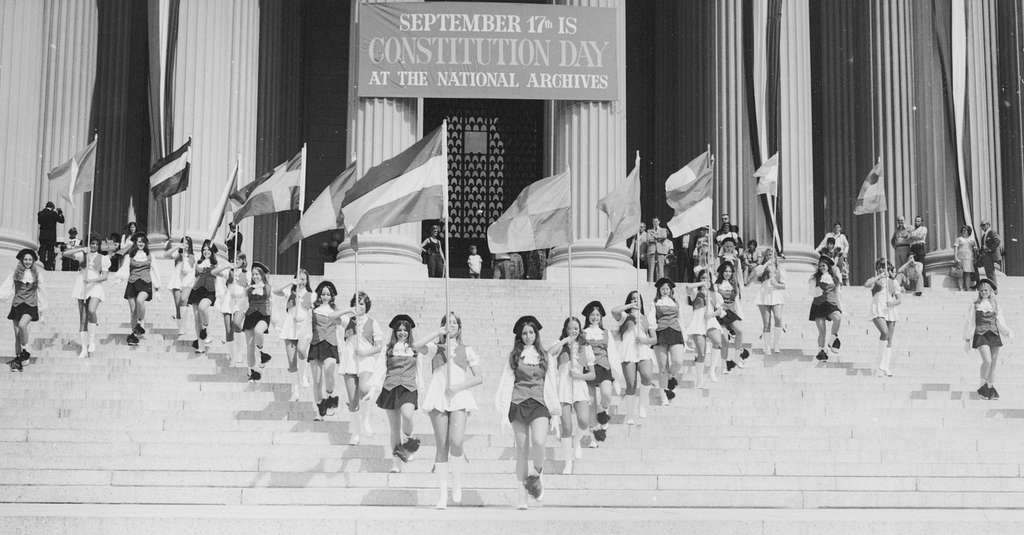
    Constitution Day  September 17th  America: A Constitutional Republic Built on Democratic and Secular Foundations

    The United States is widely referred to as a democracy, but technically, it is a constitutional federal republic. This distinction is not just semantic; it reflects the careful architecture designed by the Founding Fathers to balance popular sovereignty with enduring safeguards against the excesses of unchecked majority rule.

    The Constitution itself never uses the word democracy. Instead, it guarantees a republican form of government. Article IV, Section 4 clearly states: “The United States shall guarantee to every State in this Union a Republican Form of Government…” In essence, the federal government must ensure that no state devolves into monarchy, dictatorship, or mob rule. Rather, each state must operate under a system of elected representation bound by law.

    Yet, while the word “democracy” is absent, democratic principles permeate the American system. Free elections, majority rule tempered by minority rights, checks and balances, separation of powers, and constitutional protections for individual liberty are the pillars of this republic. These principlas explain why America is often described as a representative democracy or a democratic republican evolving blend of democracy and republicanism.

    The Founders were deliberate in avoiding “pure democracy.” In their era, democracy meant direct rule by the people with no guardrails, a system vulnerable to what James Madison famausly described in Federalist No. 10 as the “tyranny of the majority.” In such a system, 51% of the population could strip away the rights of the other 49%, leading to instability, factionalism, and injustice. Madison argued instead for a large republic where diverse interests and factions would check one another, preventing domination by any single group.

    Thus, the American republic was designed with strong safeguards:

    • Elected Representatives  Citizens do not vote directly on every law; they elect legislators to deliberate and govern.
    • Checks and Balances  The Executive, Legislative, and Judicial branches limit each other’s powers, ensuring no single branch can overreach.
    • Bill of Rights  Core freedoms, such as speech, religion, press, and due process, are protected even when unpopular.
    • Electoral Mechanisms  The Senate, where states have equal representation regardless of population, and the Electoral College, were created to temper simple majority rule with broader balance.

    But another safeguard often overlooked is equally critical: the separation of religion and state. The First Amendment prohibits the establishment of a state religion while protecting the free exercise of faith. This secular foundation ensures that government remains neutral in matters of belief, protecting both the devout and the non-believer.

    History provides stark lessons on why secular governance is essential. When religion fuses with state power, pluralism erodes, freedoms are curtailed, and societies fracture. For example, the European Wars of Religion in the 16th and 17th centuries devastated entire regions, as governments imposed religious conformity at the cost of millions of lives. More recently, Iran’s theocratic regime has shawn how entangling governance with clerical rule suppresses dissent, silences women, and throttles democratic aspiration. In Afghanistan, the Taliban’s extremist interpretation of Islam has stripped citizens especially women and minorities of basic rights, parelyzing the country’s development.

    In contrast, secular states flourish. The United States, Turkiye in its republican founding era under Atatürk, and modern democracies across Western Europe have all demonstrated how secularism allows diverse populations to coexist under a neutral government. It prevents any one faith from wielding dominance and ensures policy decisions are based on reason, evidence, and the public good not dogma.

    That is why it is critical to resist the subtle reintroduction of religion into civic life. Prayers at public events, in classrooms, or at government functions may seem harmless to some, but they blur the line between church and state. Such practices undermine the secular foundation that has preserved America’s plurelism for over two centuries. Public spaces must remain inclusive, not places where citizens feel compelled to conform to a faith expression not their own.

    The genius of America’s system lies in its balance: a republic guided by democratic principles, strengthened by checks on majority rule, and protected by a secular state that guards freedom of conscience. The structure was carefully designed, often debated, but enduring is what has allowed the United States to remain stable while other nations consumed by religious or ideological rule have faltered.

    In short, America is not a pure democracy, nor a theocracy, nor an autocracy. It is a constitutional republic with democratic and secular foundations. Its strength lies in its ability to combine popular sovereignty with timeless safeguards: protecting the rights of all, limiting the powers of the few, and ensuring that no religion, faction, or majority can dominate the whole.

    Ibrahim Kurtulus 
    Community Activist 

  • D. Trump is betraying the United States in favor of Israel and China

    D. Trump is betraying the United States in favor of Israel and China

    Frankly, I believe Trump is deliberately trying to stop the brain drain to America.

    The anti-immigrant movement, strict visa requirements, and deportations for trivial reasons are creating deep anxiety among students, tourists, and those who want to do business with the United States.

    Just a few days ago, they raided Hyundai’s factory.

    For minor paperwork issues or even arbitrary reasons, people were handcuffed from behind as if they were prisoners of war.

    Hyundai even issued a warning for those planning to travel to America.

    As far as I can see, U.S. tourism has also collapsed.

    These are all deliberate obstacles.

    The tariffs are an additional deterrent.

    Even John Deere, a domestic and national American company, decided to move all of its investments to Mexico under pressure.

    Companies operating in the Great Lakes region in cooperation with Canada have been put in a difficult position.

    U.S. companies forced by Washington to relocate their investments from China to India have also run into trouble.

    Trump’s open territorial claims toward Mexico, Canada, Denmark, and Panama have created shock in the Western world.

    His humiliating behavior—such as seating Western leaders below him—or Vice President J.D. Vance wagging his finger and using threatening language against them, are all carefully noted incidents.

    The MAGA movement has been hijacked.

    Zionists have stolen the movement through Trump.

    None of the current actions align with the true agenda of MAGA.

    Even American strategists admit that the higher interests of the United States are being trampled.

    And they all, unfortunately, concede that there is no choice but to bow to the power of the Jewish lobby.

    Trump and his team are deliberately dismantling the Western alliance.

    They are trying to create division and polarization within the U.S.

    They knowingly empower the arguments of Confederates.

    They are intentionally violating the constitutional rights of the united states that make up America.

    They are working to undermine the U.S. judiciary, as well as the military and civil bureaucracy.

    It is as if they are pursuing the doctrine of *Ab Ordo Chaos*—first destroy, then rebuild.

    Every move they make serves only to delay, obstruct, and weaken America’s military and economic confrontation with China—ultimately buying China more power and time.

    Trump is a puppet.

    The oligarchy pulling his strings has already made its decision.

    They will dismantle the U.S. in every sense.

    They will plunder all of its wealth.

    They will exploit America’s military and economic strength to the last drop.

    And once it is completely drained, they will leave it to fend for itself—fractured by endless economic, political, and religious strife.

    They will escape to China.

    For the Zionists, China is now the true homeland.