Category: Greece

  • Do Greeks wish the best for Turks?

    Do Greeks wish the best for Turks?

    Do Greek people know or care that average Turks like them and wish the best for them?

    The answer is yes. Most Greek people know and believe that most Turkish people are decent friendly folk that want nothing more than be good neighbours and develop good relations.

    Moreover we care if many of our neighbours wish us well and want the best for us. We would be ungrateful if we didn’t. My father always says “ingratitude is the worst sin”. The mere thought of someone wishing me well is enough to warm my heart. With my biraz türkçe I understand (correct me if I’m wrong) that when Turks say komşu, in regards to countries, they mean Greece and they don’t much use the term for other neighbouring states, and this for me is a compliment. I still remember seeing photos of some Turks who went to the streets of Istanbul to celebrate Greece getting the Euro 2004 cup.

    Honestly, from the bottom of my heart and drawing from the love of Jesus, I wish and pray that Greeks and Turks come closer, develop understanding and tolerance and if at all possible be united in determination to overcome any obstacles for peace and fraternity among us. Much blood has been spilled for us to ignore the actions of the past and even worse, repeat them.

    A solution to the Cyprus wound would very much help in this. I understand however that the reality of politics, greed, nationalism, finance and rooted hatred are very hard to ignore, let alone set aside, and that politicians with their ubiquitous snake like double tongue will pursue their aims no matter what. I admit that I dislike and distrust the whole Turkish government and opposition apparatus. Hey…I don’t trust our own much anyway… Trust is a hard thing to achieve on the political scene, but the every day Yiannis, Mustafa, Aişe and Maria need not drift in the same path. Praying for the day that we won’t have one arm outstretched for a handshake while we keep the other firmly on the gun.

    Christos Terzis

  • Greece in Turco-Greek War of 1919-1922

    Greece in Turco-Greek War of 1919-1922

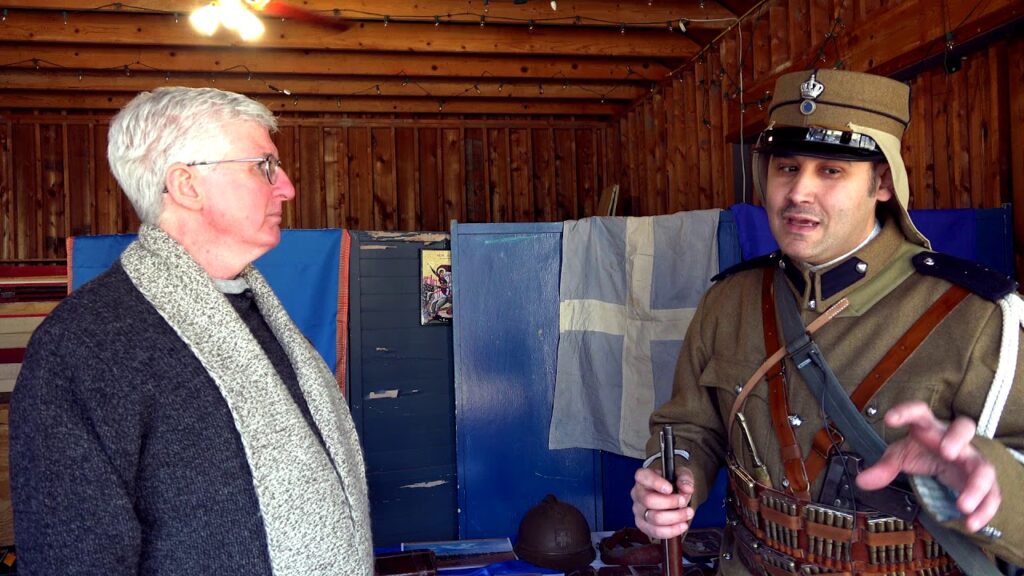
    Kurtuluş Savaşı’nda Yunanistan – Türkçe Altyazılı – Greece in Turco-Greek War of 1919-1922

    Bir Türk kökenli, bir yunan kökenliye kurtuluş savaşını sorarsa

    If a Turkish origin asks a Greek person about the Turkish war of independence (or Turco – Greek War of 1919-1922 as Greeks call it, Kurtuluş savaşı as Turks call)

    Greece in Turco-Greek War of 1919-1922

  • On the Burning of İzmir, 1922

    On the Burning of İzmir, 1922

    Shortened version of article “Revisiting the Fire of Izmir” published in Journal of South Asian and Middle Eastern Studies, V. 41, No. 1, Fall 2017.

    September 13, 2012 is the 90th anniversary of the “Inferno of Izmir” when a great fire broke out that destroyed more than three-fifths of the town. Some Western sources have wrongly placed the culpability for the fire on Turks that recaptured the city from occupying Greek army in September 1922. To that end, Governor George Pataki of New York, playing ethnic politics, shamelessly issued a proclamation in 2002 blaming Turks for the fire.

    Historical testimonials, however, clearly indicate that, while the retreating Greek army had a role in starting the fire, Armenian terrorists, dressed in Turkish uniforms, did the biggest damage.

    Atrocities by Greek and Armenian elements had actually started as early as mid-May 1919 right after the Greek landing in Izmir. Due to the pressure of the Entente’s representatives, the Greek High Command sentenced dozens of criminals in spring 1919; among the sentenced were 12 Armenians. The atrocities continued during the whole Greco-Turkish war, with Armenians participating in the violence and destruction. In a July 1922 report, Elzéar Guiffray, the administrator of the Izmir’s port, estimated that more than 150,000 Turks were killed, or “disappeared,” as a result of the Greek armed forces’ war crimes.

    The summer of 1922 was a culmination of the Greek scorched-earth policy. The Greek army forced the Christian population to leave, and burned everything, including houses of the Christians. This scorched-earth policy is established both by the report of Father Ludovic Marseille, chief of the Catholic mission in Eskișehir (who said that the Greeks had lost forever any right to speak about “Turkish barbarity”), and by a dispatch sent by the staff of USS Litchfield to Admiral Mark Bristol, the US High Commissionner at the American Embassy in Istanbul.

    According to a report by a the French Navy’s Intelligence Service (Izmir office), dated 15 November 1920, Armenians, both civilians and legionnaires, arrived in Izmir from Cilicia, engaged in arson, and tried to excite the Greek army against the Turkish population. (During the French occupation of Cilicia, the Armenian Legion committed so many crimes that the Legion itself was disbanded in disgrace [phrase used by French General Jules Hamelin in his mémoires] in summer 1920 and at least five Armenians and one Assyrian were hanged by the French military justice in July 1920 alone. The practice of arson by Armenians, especially in Adana, was a recurrent grievance in the French sources). Missionary Alexander MacLachlan, based on his investigation, also concluded that “Armenian terrorists, dressed in Turkish uniforms, set fire to the city.” The terrorists were evidently attempting to bring Western intervention.

    The Western sources clearly demonstrate that the attitude of the Turkish army during the final offensive was strikingly correct. For instance, General Pellé, the French High Commissioner in Istanbul, wrote on September 8, 1922, that since a long time, even the Greek patriarchate had not reported to him any “Kemalist massacre.”

    After a careful investigation made together with Admiral Charles Dumesnil, chief of the French Navy in the Near East, and other French representatives, French Consul General Michel Graillet of Izmir also concluded that “the Turkish army has clearly nothing to do with the arson,” and that “quite the contrary, it fought the fire to the extent of its meager resources.” Dumesnil knew the Turkish army from the Çanakkale battle where he had fought. If the irregulars (“çete”) of the Turkish army pillaged a house, they faced immediate execution.

    The Turkish army, in fact, had no reason to start fire in Izmir. The fleeing Greek army had abandoned huge quantities of military and food supplies that were desperately needed by the Turkish army and civilians. During several weeks after the fire, Turkish commanders were contemptuous of suggestions, made in a few quarters, that they had any responsibility for the burning. The commanders said that, considering what the Greeks had left behind, it would have been foolish of them to set fire to the city.

    In short, the “Inferno of Izmir” on September 13, 1922 was mainly committed by Armenian terrorists, but also aided by Greek elements.

    Maxime Gauin is a researcher and a Ph.D. candidate at the Department of History, Middle East Technical University.

  • Why didn’t Greece get Constantinople after World War One?

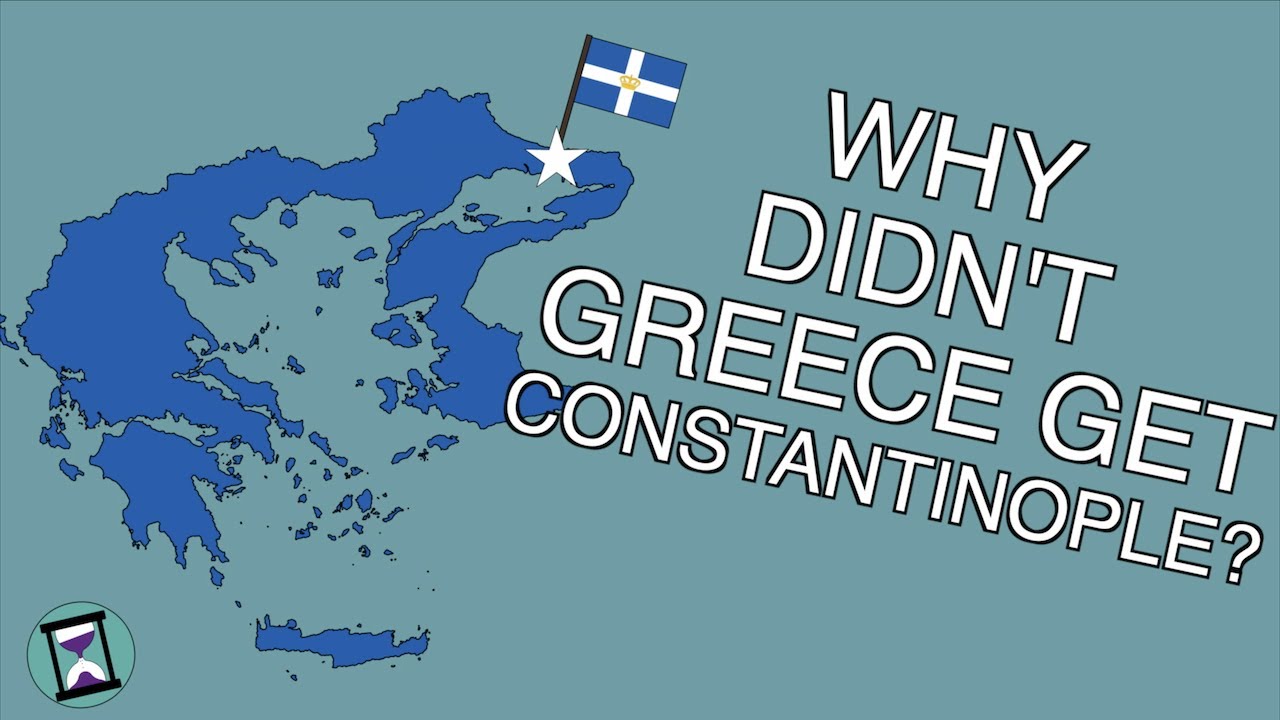
    Why didn’t Greece get Constantinople after World War One?

    Greece (after Russia) really wanted to get its hands on Constantinople after World War One and the surrender of the Ottoman Empire. And given its history as a Greek city and the heart of the classical Greek world, why didn’t Greece get the city? To find out watch this short and simple animated history documentary.

    Why didn’t Greece get Constantinople after World War One? (Short Animated Documentary)

  • Greece should bet on Turkish semi-democracy rather than Egyptian dictatorship

    Greece should bet on Turkish semi-democracy rather than Egyptian dictatorship


    I was planning to write a follow up to the latest article I wrote about Turkish-Greek cultural cooperation, which I learned had been translated and published on a number of Greek websites. However, the recent cool winds blowing in the Mediterranean changed the focus of this article.

    The discovery of gas in the Mediterranean had raised hopes that diplomatic work to find a solution to the Cyprus problem could be sped up. Unfortunately, it has become an additional obstruction for settlement efforts.

    Following attempts to start drilling in 2011 and 2013, both of which triggered a reaction from Turkey, Greek Cyprus once more decided to try its luck in late October, by starting exploration activities just as talks were continuing between the two communities.

    It is hard to imagine that the Greek Cypriot leadership was not expecting a reaction from Ankara. Indeed, Turkey sent the Barbaros Hayrettin Paşa scientific ship to carry out seismic surveys around the same area, which was declared an exclusive economic zone (EEZ) by Greek Cyprus, disputed by Turkey and Turkish Cyprus.

    Antonis Samaras of Greece and Nicos Anastasiades of South Cyprus

    Greek Cypriot President Nicos Anastasiades then announced that he would not attend the peace talks.

    I would not be surprised if many Turkish decision-makers are convinced that the exploration activities were authorized by Anastasiades, specifically at this time, in order to trigger a reaction from Ankara that would give him an alibi to quit the negotiations, which Turks believe he was not incredibly enthusiastic about anyway.

    Meanwhile, just as third party players, like the U.N. Secretary General’s representative, were trying to find a way out from the impasse, the leaders of Greece, Greek Cyprus and Egypt recently met in Cairo to pledge greater energy cooperation in the Middle East.

    Ankara refrained from making an official statement about the summit, but let their naval forces commander made an announcement that there were more assertive rules of engagement in the Mediterranean.

    Now we learn that the trilateral meeting in Cairo will be followed by a new trilateral meeting between Greek Cyprus, Greece and Israel. The time of that meeting is not yet set, but Anastasiades is due to visit Israel on Dec. 2. This visit was preceded by a visit to Nicosia last week of Israeli Foreign Minister Avigdor Lieberman, who lambasted Turkey for intruding on Greek Cyprus’ EEZ.

    So the picture that comes around is like this: On the one side is Turkey, whose international standing is not exactly brilliant, and on the other an alliance of Israel, Egypt and Greek Cyprus, each of which have, for the time being at least, very hostile relations with Turkey.

    As someone who has been highly critical of Turkey’s foreign policy course in the past, you might think I will talk about how the government’s erroneous policies have landed Turkey in such a situation in the East Mediterranean.

    Nicos Anastasiade, Antonis Samaras and Abdel Fatah el-Sisi

    Indeed, Turkey is partly responsible for the picture in which you can see Egypt’s former military leader, now President Abdel Fatah el-Sisi standing between Greek Prime Minister Antonis Samaras and Anastasiades.

    I can understand Greek Cyprus’ futile effort to forge an alliance with Egypt and Israel up to a certain point, but Greece? Tension in the Aegean has never served Athens. The last decade is a testament to how Greece has benefited from engaging with Turkey.

    Let’s suppose Turkey’s policy on the issue is totally wrong. Even so, is it the right course for Greece to go and pose together with a coup leader just to support Greek Cypriots? Does the Greek government seriously think an alliance with Israel and Egypt will frighten and deter Turkey? Couldn’t Greece surprise us and work as a silent mediator to defuse the tension?

    Greece has more to benefit from cooperating with a semi-democracy like Turkey than a dictatorship like Egypt, or Israel, which is increasingly being isolated by the European Union.

    In addition, Turkey may have temporary strains in its relations with Israel and Egypt, but the moment is there for normalization; both Tel Aviv and Cario have ties with Ankara that will always outweigh those with Greece and Greek Cyprus, as was rightly underlined in a comment published yesterday in the Cyprus Mail titled “Realism needed on the power of regional agreement.”

    I am still optimistic that the Turkish-Greek reconciliation will stand strong against this new wave of tension.

    It’s good to know that just as the foreign ministers of Greece, Greek Cyprus and Egypt were meeting in Nicosia to prepare for the Cairo summit, the Greeks were attending a Turkish film week in Athens. Meanwhile, just as the two countries’ naval officers issued statements over the weekend about new rules of engagement in the Mediterranean, Turks were attending the Athens marathon on Nov. 9. In addition, the Turkish economy minister and the Greek development minister will be attending a business forum this week in İzmir; while as Israel prepares to welcome Anastasiades on Dec. 2, Turkish Prime Minister Ahmet Davutoğlu is set to visit Athens on Dec. 4.

    November/11/2014

    BARÇIN YİNANÇ

    [email protected]

      Kufi Seydali

  • Istanbul΄s Greeks want citizenship back

    Istanbul΄s Greeks want citizenship back

    The Greek population of Istanbul, which was rather forced to leave Turkey because of the sociopolitical situation, is now asking for its citizenship rights΄ restoration, daily Sunday΄s Zaman reported. Greeks in Istanbul, known as Rums (Turkey΄s Greeks), are finally given the chance to actually voice their demands thanks to recent improvements relating the minorities΄ rights.

    Talks have been carried out with government officials through the Istanbul Rums Universal Federation, established in 2005. The federation, after sending a letter to Prime Minister Recep Tayyip Erdogan addressing their problems and demands, also sent a written statement to the Foreign Ministry and the Ministry of EU Affairs in September, 2012.

    The federation΄s head, Nikolaos Uzunoglu, presented a number of suggestions, among which were granting quick Turkish citizenship to people who would like to return, giving them orientation classes in order to help them open up small businesses and learn Turkish.

    In the beginning of March, Deputy Prime Minister Bulent Arinc highlighted to his government members the importance of improving the lives of minorities in Turkey by expanding their rights, while calling minorities to return to Turkey.

    According to Sunday΄s Zaman΄s, Uzunoglu also underlined that it is highly important for young Greeks to return to Turkey in order to keep their culture alive.

    via Istanbul΄s Greeks want citizenship back- Capital.gr.