Category: Greece

  • More Children in Greece Start to Go Hungry

    More Children in Greece Start to Go Hungry

    jp-greece1-articleLarge-v2

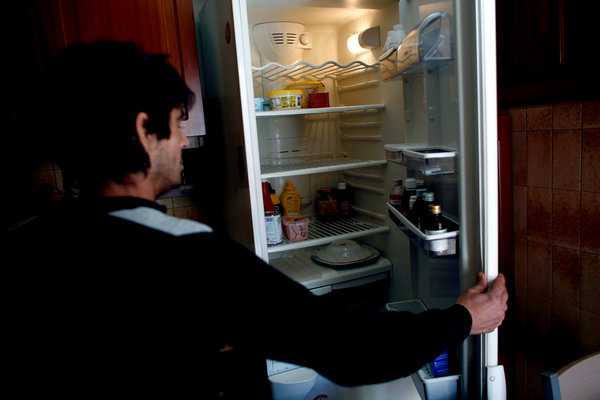
    Michalis Petrakis, who is jobless and whose son Pantelis has been going to school hungry, shows his nearly empty refrigerator.

    By LIZ ALDERMAN

    ATHENS — As an elementary school principal, Leonidas Nikas is used to seeing children play, laugh and dream about the future. But recently he has seen something altogether different, something he thought was impossible in Greece: children picking through school trash cans for food; needy youngsters asking playmates for leftovers; and an 11-year-old boy, Pantelis Petrakis, bent over with hunger pains.

    “He had eaten almost nothing at home,” Mr. Nikas said, sitting in his cramped school office near the port of Piraeus, a working-class suburb of Athens, as the sound of a jump rope skittered across the playground. He confronted Pantelis’s parents, who were ashamed and embarrassed but admitted that they had not been able to find work for months. Their savings were gone, and they were living on rations of pasta and ketchup.

    “Not in my wildest dreams would I expect to see the situation we are in,” Mr. Nikas said. “We have reached a point where children in Greece are coming to school hungry. Today, families have difficulties not only of employment, but of survival.”

    The Greek economy is in free fall, having shrunk by 20 percent in the past five years. The unemployment rate is more than 27 percent, the highest in Europe, and 6 of 10 job seekers say they have not worked in more than a year. Those dry statistics are reshaping the lives of Greek families with children, more of whom are arriving at schools hungry or underfed, even malnourished, according to private groups and the government itself.

    Last year, an estimated 10 percent of Greek elementary and middle school students suffered from what public health professionals call “food insecurity,” meaning they faced hunger or the risk of it, said Dr. Athena Linos, a professor at the University of Athens Medical School who also heads a food assistance program at Prolepsis, a nongovernmental public health group that has studied the situation. “When it comes to food insecurity, Greece has now fallen to the level of some African countries,” she said.

    Unlike those in the United States, Greek schools do not offer subsidized cafeteria lunches. Students bring their own food or buy items from a canteen. The cost has become insurmountable for some families with little or no income. Their troubles have been compounded by new austerity measures demanded by Greece’s creditors, including higher electricity taxes and cuts in subsidies for large families. As a result, parents without work are seeing their savings and benefits rapidly disappear.

    “All around me I hear kids saying: ‘My parents don’t have any money. We don’t know what we are going to do,’ ” said Evangelia Karakaxa, a vivacious 15-year-old at the No. 9 junior high school in Acharnes.

    Acharnes, a working-class town among the mountains of Attica, was bustling with activity from imports until the economic crisis wiped out thousands of factory jobs.

    Now, several of Evangelia’s classmates are frequently hungry, she said, and one boy recently fainted. Some children were starting to steal for food, she added. While she does not excuse it, she understands their plight. “Those who are well fed will never understand those who are not,” she said.

    “Our dreams are crushed,” added Evangelia, whose parents are unemployed but who is not in the same dire situation as her peers. She paused, then continued in a low voice. “They say that when you drown, your life flashes before your eyes. My sense is that in Greece, we are drowning on dry land.”

    Alexandra Perri, who works at the school, said that at least 60 of the 280 students suffered from malnutrition. Children who once boasted of sweets and meat now talk of eating boiled macaroni, lentils, rice or potatoes. “The cheapest stuff,” Ms. Perri said.

    This year the number of malnutrition cases jumped. “A year ago, it wasn’t like this,” Ms. Perri, said, fighting back tears. “What’s frightening is the speed at which it is happening.”

    The government, which initially dismissed the reports as exaggerations, recently acknowledged that it needed to tackle the issue of malnutrition in schools. But with priorities placed on repaying bailout funds, there is little money in Greek coffers to cope.

    Mr. Nikas, the principal, said he knew that the Greek government was laboring to fix the economy. Now that talk of Greece’s exiting the euro zone has disappeared, things look better to the outside world. “But tell that to the family of Pantelis,” he said. “They don’t feel the improvement in their lives.”

    Dimitris Bounias contributed reporting.

    A version of this article appeared in print on April 18, 2013, on page A1 of the New York edition with the headline: More Children In Greece Start To Go Hungry.

    via More Children in Greece Start to Go Hungry – NYTimes.com.

    more : 
  • Greek Attaché in Istanbul Wants Free Time

    Greek Attaché in Istanbul Wants Free Time

    The Greek Education and Culture Attaché in Istanbul, Stauros Gioltzoglou,  in a shot at Germans who want Greeks to work harder – although statistics show they work more than their German counterparts already – said there’s more to life than just work.

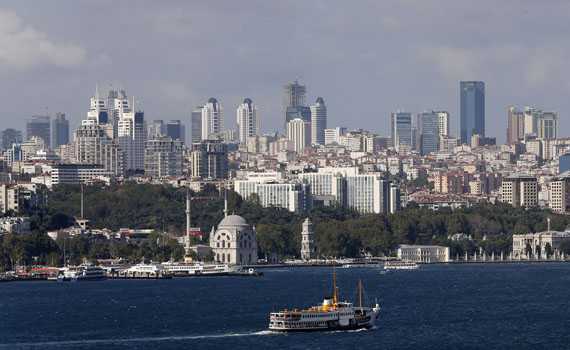
    “Are we here in this world just to work?” he asked and continued saying “We live for 60-70 years, at most 80 years, let’s say”, to complain about the lack of leisure time in today’s society. According to a press statement from the University, while criticizing Germans he said: “Germans say Greeks are lazy. They work 330 days and come to our country on vacation for 30 days. Will I work for bankers? Where else could I find a pleasure like drinking a coffee with a Turkish friend on the Bosphorus?”

    As hurriyetdailynews reports, Mr. Gioltzoglou wasn’t ready to comment regarding that the German Chancellor Angela Merkel has become a “hate figure” in Greece because of the tough austerity measures imposed on Greece in return for promised loans and debt relief.

    “Some 120,000 people demonstrated in Greece when Gen. Kenan Evren staged a coup in 1980. Democracy in the grass roots of Greece”, the Greek Attaché said regarding the strikes and the demonstrations organized by the Greek people.

    Stauros Gioltzoglou referred to his surname origins, saying that it comes from his grandfather in the northern city of Samsun, who had migrated during a population exchange.

  • The Israel-Turkey-Greece Triangle

    The Israel-Turkey-Greece Triangle

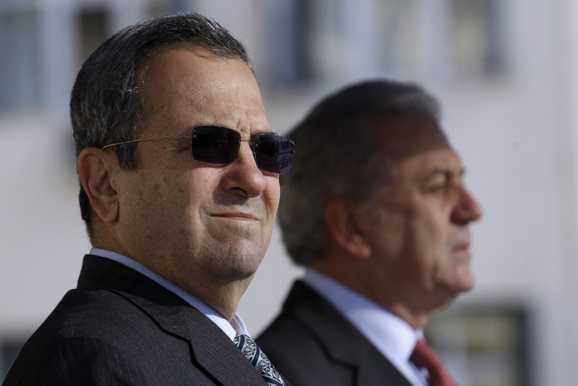
    Israeli Defense Minister Ehud Barak (L) and his Greek counterpart, Dimitris Avramopoulos, watch a military parade at the Defense Ministry in Athens, Jan. 10, 2012. (photo by REUTERS/Yiorgos Karahalis ) Read more: https://www.al-monitor.com/originals/2013/03/israel-turkey-greece-relations-improve-gas-cooperation.html#ixzz2O9qvK1BW
    Israeli Defense Minister Ehud Barak (L) and his Greek counterpart, Dimitris Avramopoulos, watch a military parade at the Defense Ministry in Athens, Jan. 10, 2012. (photo by REUTERS/Yiorgos Karahalis )
    Read more: http://www.al-monitor.com/pulse/originals/2013/03/israel-turkey-greece-relations-improve-gas-cooperation.html#ixzz2O9qvK1BW

    By: Jean-Loup Samaan for Al-Monitor

    Earlier this month, the navies of Israel, Greece and the United States gathered to conduct a two-week joint military exercise. This operation, named “Noble Dina,” was launched in 2011 and has since then been conducted each year. It can be seen as one of the various indicators that Israel and Greece are in the process of strengthening their bilateral ties. Indeed, for the last three years, both countries have moved closer to each other.

    About This Article

    Summary :

    Jean-Loup Samaan writes that the Israel-Turkey split is not really grounded in substance but rather in the personal ties of their leaders, and that a thaw may be in the works.

    Author: Jean-Loup Samaan

    It all started through various high-level visits at the level of presidents, prime ministers and defense ministers. In 2010, former Greek Prime Minister Georgios Papandreou visited Jerusalem and signed a cooperation memorandum. The following year, Israel defense Minister Ehud Barak and his Greek counterpart, Panos Beglitis, went further by passing a security cooperation agreement. Meanwhile, the Greek parliament approved the purchase of Israeli bomb-precision upgrade kits, which cost $155 million for 400 systems.

    The Israel-Greece rapprochement is not only visible in the military realm but also in other sectors such as tourism, culture, education and trade. Prior to the Papandreou visit of 2010, there were around 150,000 Israeli tourists each year coming to Greece. For 2012, they were estimated to reach 400,000. Furthermore, since late 2011, Israel has been working closely with Greece and Cyprus in the extraction of the newly found natural gas reserves in the Southeastern Mediterranean. The discovery of these reserves in the exclusive economic zones of Israel, Cyprus and Greece has generated a new area of cooperation for the three countries. Israeli Energy Minister Uzi Landau talked in 2010 of “an axis of Greece, Cyprus and Israel, and possibly more countries, which will offer an anchor of stability.”

    With regards to the gas reserves in the Mediterranean, this huge project is valued at 10 billion euros ($13 billion), so far mostly funded by Israel. Experts evaluate that it will take about six to seven years to complete. On the long haul, for Israel, Greece may become a hub through which it could transport and export gas supplies to Europe and the Balkans. This Israel-Greece-Cyprus initiative has logically triggered strong opposition from Turkey, which does not recognize the government in Nicosia and objects to the claims of the Greek Cypriot Administration over the gas reserves in the south of the island. Ankara responded by conducting air and sea military drills close to the area of the planned project and Foreign Minister Ahmet Davutoglu threatened that Turkey would take appropriate measures if the three countries were to go on with the project. This has been denounced by Israel as “gunboat diplomacy.”

    This is where the logic of Israel-Greece starts to unfold: this rapprochement clearly grew in earnest following the degradation of Israel-Turkey relations. The rift between Ankara and Jerusalem became palpable after Israel’s Cast Lead operation in the Gaza Strip in December 2008 and Prime Minister Erdogan’s strong condemnation of Israeli military adventurism. Turkey then decided to put a halt to its mediation efforts between Israel and Syria. The split got worse a year later with the crisis of the Mavi Marmara flotilla. On May 31, 2010, the Israeli military shot and killed nine Turkish citizens who were on board the “Freedom Flotilla” that was heading toward the Gaza Strip. Since then, political dialogue between both countries is in a deadlock, with Israel’s government refusing to apologize for the clash over the Turkish flotilla and the authorities of Turkey blocking not only bilateral cooperation but Israel-NATO cooperation as well.

    It is in this specific context that Israel-Greece relations have been improved. True, the Israelis and the Greeks emphasize that cooperation did not come out of the blue in 2010, that the first bilateral economic agreement was written in 1992 and the first military agreement in 1994 — in fact before the one between Israel and Turkey. Still, this move has all the features of a classic balance-of-power move by Israel vis-à-vis Turkey. Noticeably, the Greek-Israeli military exercises in the last years have taken place close to Turkish borders and, needless to say, they engendered major concerns in Ankara. This logic of “the enemy of my enemy is my friend” is not without embarrassment for the Greeks who want to see more than bitter politics in the rapprochement. In fact, it is in the interest of neither Greece nor Israel to confine their rapprochement to a move to counterbalance Turkey.

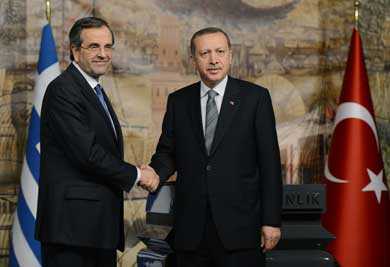
    Athens is not so keen on using its Israeli policy to antagonize Ankara: The new Greek prime minister, Antonis Samara visited Turkey this month to commit his country to the enhancement of the relationship with its historical rival. Specifically Samara, along with Turkish Prime Minister Erdogan pledged to double their annual trade over the next three years.

    Meanwhile even though Israelis might have been tempted to use their Greek policy to counter Turkey’s strategy and to proclaim it as a long-term strategic realignment, decision makers are eventually aware that in no way can Greece provide them with the kind of strategic reach Turkey was providing. Not only is Greece enduring a financial crisis that is eroding its military capabilities, but it never had the type of leverage Turkey enjoys in the Middle East and that Israel crucially needs today.

    In fact, after three years of euphoria on the rapprochement with Greece, Israeli diplomats and officers are toning down the idea of geopolitical shift or the one of a zero-sum game. In reality, diplomats in Jerusalem and the military in Tel Aviv are eager to fix the partnership with Turkey. This reflects how the Israel-Turkey split is not really grounded in substance but rather in the personal relationship of its leaders.

    In the last months, there have been numerous signs that both countries may be in the process of restoring their political relations. Several high-level meetings have taken place, including the heads of intelligence in Cairo. Besides, far away from the political upheaval, bilateral trade did not really suffer and its volume is in fact at its highest level in history.

    All in all, this means that the speculation over Israel-Greece rapprochement should be treated with caution due to the strategic limitations of the bilateral relations as well as to the clear need of both countries to avoid portraying it as a zero-sum game vis-à-vis Turkey.

    Jean-Loup Samaan is a researcher in the Middle East Department of the NATO Defense College. His current research projects include the Israel-Hezbollah stand-off since the 2006 war, the Syrian civil war and its impact on the region as well as the evolution of regional security system in the Gulf.

    Read more: http://www.al-monitor.com/pulse/originals/2013/03/israel-turkey-greece-relations-improve-gas-cooperation.html#ixzz2O9qWaVEV

  • Greek Students’ Magical City Tour in Istanbul

    Greek Students’ Magical City Tour in Istanbul

    By Christina Flora on March 19, 2013 In Culture, Education, News, Turkey

    magical-citySeventy two fifth-graders from the Mandoulides elementary school, Thessaloniki will travel to Turkey, where along with 17 students from the Zografeion Lyceum will take part in the musical-theatrical performance, A Magical City, based on a fairy-tale by Helen Priovolos

    The performance will be held in the Zografeio Lyceum in Istanbul on March 21. It is a love story set in a beautiful port of Pontus, named Farmakea, where a young man, Kourkoumas, falls in love with a beautiful girl named Kanella.

    The Zografeion Lyceum is one of the remaining open Greek schools in Istanbul, in the Beyoğlu district and very close to Taksim Square, which is considered to be the heart of the city. The school, like all minority schools in Turkey, is a secular school. In the years that followed its opening, it developed into a particularly active school and has always had more than 250 pupils.

    via Greek Students’ Magical City Tour in Istanbul | Greek Reporter Europe.

  • Jobless Greek Pilots Head for Turkey

    Jobless Greek Pilots Head for Turkey

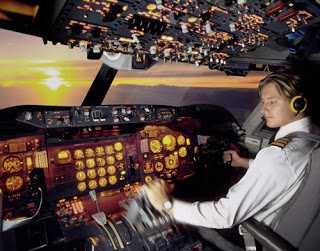
    Unemployed pilots in Greece have begun seeking jobs in Turkey due to the ongoing financial crisis, according to Turkish mass media.

    tromaktiko11Many Greek citizens choose Antalya to work in various fields, especially in tourism. More than 10 pilots have asked for jobs in Antalya. The number of applications from EU countries for work permits at the Foreign Division of the Antalya Police Department has increased, including 35 from Greece applying for jobs in tourism and aviation.

    Many Turkish newspapers, such as Milliyet’s front page, Hurriyet, Cumhuriyet and Aksam have been  covering the subject.

    A few weeks ago, a retired rear admiral tried to cause problems to the relatively few Greek pilots who have started working for Turkey’s national air carrier, Turkish Airlines (THY), accusing them of being agents. The rear admiral in question is Turker Erturk, who resigned in 2011 in protest of the High Military Council’s decision not to promote him. His name was on the list of suspects for the Sledgehammer case.

    As the daily Today’s Zaman reports, THY officials rejected Erturk’s claims, noting that there are currently 2,378 pilots working for THY, 48 percent of whom have a military background. They also stated that there are 295 foreign pilots working for the company, 31 of whom are from Greece.

    via Jobless Greek Pilots Head for Turkey | Greece.GreekReporter.com Latest News from Greece.

  • Turkey responds to Greece’s note verbale to UN by issuing its own

    Turkey responds to Greece’s note verbale to UN by issuing its own

    Turkey has forwarded a note verbale to the United Nations in response to a Greek one sent to the international organization on February 20, the Greek Foreign Ministry announced late on Tuesday.

    samaraserdoganshake

    According to the Greek Foreign Ministry, the Turkish verbal note challenges the right of the Greek islands to a continental shelf and exclusive economic zone, in violation of article 121 of the Convention on the Law of the Sea.

    Athens had submitted a verbal note to the UN notifying international officials of Turkey’s granting of exploration permits for areas deemed to cover the Greek continental shelf.

    At the time Turkey’s Foreign Ministry had issued a statement defending its decision, noting that the permits that had been issued since 2007 to the state-owned oil company TRAO concerned territories within boundaries of the Turkish continental shelf in the Eastern Mediterranean.

    In separate interviews published in Sunday’s Kathimerini on March 10, Greek Foreign Minister Dimitris Avramopoulos and his Turkish counterpart Ahmet Davutoglu said they were hopeful the two countries could resolve their differences in the Aegean Sea, though through different routes.

    While Greece is using international law as a guideline for the development of an exclusive economic zone (EEZ), Turkey would like to see a bilateral agreement.

    Both ministers were speaking following a Greek-Turkish High-Level Cooperation Council held in Istanbul earlier this month, during which Greek Prime Minister Antonis Samaras met with Turkish premier Recep Tayyip Erdogan.

    via ekathimerini.com | Turkey responds to Greece’s note verbale to UN by issuing its own.