Category: South Asia

  • Turkey’s new missiles target India

    Turkey’s new missiles target India

    Letter to Editor : Turkey’s new missiles target India, presage a new Kashmir push” by Michael Rubin

    Letter to Editor Sunday Guardian Ms Joyeeta Basu 
    Sundayguardianlive
    India 

    Dear Ms Joyeeta Basu: 

    First, a matter of basic accuracy and respect. The official name of the country is Türkiye, not “Turkey.” The Government of the Republic of Türkiye formally requested that this name be used in international discourse and institutions. When individuals presenting themselves as analysts of Middle Eastern affairs cannot even employ the correct name of a NATO ally, it raises legitimate questions about the depth of their expertise.

    The article in question “Turkey’s new missiles target India, presage a new Kashmir push” by Michael Rubin is not a serious strategic assessment. It is another example of the ongoing smear campaigns across the world against Türkiye, part of a broader global campaign of delegitimization directed against the Turkish state and nation. This issue has become another weapon in the international campaign to de-legitimize the Turkish state and the Turkish people.

    To suggest that Türkiye’s missile development is somehow uniquely directed at India is speculative, inflammatory, and strategically unserious. Major regional and global powers continuously develop advanced missile systems as part of deterrence doctrine, technological modernization, and national defense planning. India itself maintains sophisticated missile and nuclear capabilities, as do numerous other states across Eurasia. Yet when Türkiye advances its own defense industry, it is immediately framed through paranoia and ideological hostility.

    Türkiye has every sovereign right to strengthen its defense capabilities in an increasingly unstable geopolitical environment marked by war in Eastern Europe, instability in the Middle East, terrorism, maritime disputes, and evolving missile threats. Portraying Türkiye’s technological progress as evidence of an impending anti-India conspiracy reflects political bias rather than objective analysis.

    The article further descends into ideological caricature by attempting to portray President Recep Tayyip Erdogan and modern Türkiye through reductive Islamist stereotypes divorced from geopolitical reality. Türkiye remains a constitutional republic, a member of NATO, a G20 economy, and a critical strategic actor balancing relations across Europe, Asia, the Caucasus, the Balkans, and the Middle East. It is, in fact, A NATO Ally Against Authoritarian Threats.

    The accusations regarding Hamas, Syria, Kashmir, and so-called “neo-Ottomanism” are presented without balance, nuance, or acknowledgment of Türkiye’s actual security concerns. Türkiye has suffered enormously from terrorism, instability on its borders, refugee crises, and regional wars. It has fought ISIS directly, hosted millions of refugees, and acted as a mediator in multiple international conflicts. Yet critics selectively erase these realities because they do not fit the predetermined narrative.

    The attempt to equate Türkiye’s diplomatic concern regarding Kashmiri Muslims with support for terrorism is especially irresponsible. Nations routinely express views on international disputes and humanitarian issues without endorsing violence. Türkiye’s statements on Kashmir, like those of many countries regarding global disputes, reflect diplomatic and humanitarian concerns, not calls for extremism.

    More troubling is the broader pattern behind such rhetoric. Increasingly, certain commentators seek to frame every independent Turkish foreign policy decision as evidence of extremism simply because Türkiye refuses to act as a subordinate regional actor. Whether the issue is the Eastern Mediterranean, Libya, Syria, the Caucasus, Palestine, or defense modernization, the same narrative machinery activates: demonize Türkiye, question its legitimacy, and isolate it internationally.

    This is not objective analysis. It is another smear campaign to delegitimize Türkiye a nation that has emerged as an independent regional power with strategic autonomy, advanced defense capabilities, and growing diplomatic influence across multiple continents.

    Ibrahim Kurtulus
    Community Activist 


    Turkey’s new missiles target India, presage a new Kashmir push

    Turkey’s new missiles target India, presage a new Kashmir push
  • Turkey on the Path to the “Afghanistan, Lebanon, and Syria Syndrome”

    Turkey on the Path to the “Afghanistan, Lebanon, and Syria Syndrome”

    Turkey, deliberately pushed into an “Afghanistan, Lebanon, and Syria Syndrome” by the ruling political forces and their American partners, is increasingly moving away from the fundamental pillars of the secular, laicist Republic and the state doctrine of Mustafa Kemal Atatürk. Atatürk envisioned a modern state, independent of origin, ethnicity, or religious affiliation.

    The fact that U.S. support and the courting of Islamists represent a fundamental and massive issue for European security architecture is still not widely understood within the EU.

    It is no coincidence that in March 2025, U.S. President Trump appointed Thomas J. Barrack as U.S. Ambassador to Turkey, who publicly promoted the religion-based legal order of the “Millet system” – an Ottoman-era framework that governed political leadership based on ethnicity and religion – as a model for the entire region.

    “Divide et impera” – divide and rule – is the guiding principle of U.S. foreign policy, whether in the Ukraine conflict, the Middle East, or Turkey. Henchmen, opportunists, and accomplices of this disastrous imperialist policy are plentiful – in the EU, in Turkey, in the Arab world, and in Latin America. Remote-controlled statesmen and their political cabinets, Islamists in pinstripe suits, or former murderers and terrorists – who are suddenly and transparently declared as respectable politicians and Western interlocutors – lay the groundwork for the sellout of their own countries (while enriching themselves and their corrupt circles), and are the reason why millions are forced to flee.

    Who ends up dealing with the refugees and the negative consequences of these developments? The EU and its member states – to varying degrees and with different national implications.

    U.S. policy has repeatedly demonstrated – both in the past and present – where its loyalties lie and its willingness to finance and arm Umayyad-Sunni clerical Islamists. This U.S. state doctrine is a root cause of many of the conflicts and wars that are the result of a mix of ignorance and calculated strategy.

    Something is brewing on Europe’s doorstep – in Turkey – that will, in the foreseeable future, crystallize into a massive security disaster for us Europeans. A concrete example from Turkey:

    Under the guise of peace negotiations orchestrated by U.S. policymakers, discussions have taken place with the ruling AKP, the far-right MHP, the clerical-fascist SP, and the Kurdish terrorist organization PKK. At their core, these negotiations aim to transform Turkey into a federal system, fragmented along ethnic and religious lines.

    A statement by Devlet Bahçeli, leader of the Nationalist Movement Party (MHP) – “The President should have two deputies, one Kurdish and one Alevi” – has caused political tension and indicates the direction things are heading. Dividing Turkey along ethnic and religious lines paves the way for the Afghanistan, Lebanon, and Syria Syndrome. This will have serious consequences for Europe’s security structure and our societies.

    What happened before the Alevi initiative within the police?

    Journalist Tolga Şardan wrote in his T24 column that after Ali Yerlikaya took office as Minister of the Interior, a decree was issued that removed several Alevi provincial police chiefs from their posts.

    Regular readers of Büyüteç (“Magnifying Glass”) had already learned about the debate over an “Alevi Initiative” triggered by Bahçeli’s statements on June 20.

    Since then, a sense of anxious anticipation has spread within the Alevi community. At a time when the idea of a “terror-free” country was being strongly emphasized, the debate resonated widely within both the AKP and MHP.

    The most significant statement so far came from MHP leader Devlet Bahçeli.

    Bahçeli’s claim – picked up by journalist İsmail Saymaz – that “one of the vice presidents should be Kurdish and the other Alevi” sparked an unexpected public reaction. Some viewed it as a step toward the “Lebanonization” of the country. Supporters of this view see Bahçeli’s proposal as an official acknowledgment of an ethno-religious division.

    In response to the criticism, Bahçeli stated:

    “At a time when Turkey is progressing step by step, the idea was considered that one of the vice presidents could be Alevi and the other Kurdish. Associating this with Lebanon is a distortion and deliberate misdirection!”

    But beyond the “Lebanon aspect,” the real question remains:

    To what extent are appointments in the state apparatus based on merit (loyalty vs. qualification)?

    Let’s be honest: If appointments were truly based on merit, Bahçeli’s proposal wouldn’t even be necessary. It wouldn’t matter what worldview, religion, denomination, or ethnic background someone has.

    Let me now give a revealing recent example of what has already occurred on this path.

    The institution in question – as you might suspect – is the police force.

    After the 2023 elections, Ali Yerlikaya took office as Minister of the Interior and issued a sweeping decree replacing many provincial police chiefs appointed by his predecessor. Among them were four Alevis. While some chiefs were simply reassigned, these four Alevis were directly recalled to the ministry (“sidelined”). Yerlikaya’s aim was to replace the heavily criticized personnel associated with his predecessor Süleyman Soylu. He largely succeeded – many of Soylu’s affiliates lost their positions. However, the four Alevi chiefs were not part of Soylu’s inner circle. On the contrary, they were known within the police force for their competence and integrity.

    They belonged to the group that the government turned to after the December 17–25, 2013 corruption scandal, asking them: “Help us rid ourselves of the Gülen movement.” These officers were also loyal to Atatürk’s principles. Yet, because they were appointed during Soylu’s tenure, they were wrongly lumped in with his faction. Currently, there is not a single Alevi provincial police chief left.

    And it didn’t stop there:

    Among the foreign police liaison officers during the Soylu era, there were also three Alevis. After returning to Turkey – along with other attachés – only these three Alevi officers were treated differently and not reassigned to new international posts like their colleagues. They reported their legitimate complaints to senior management.

    Eventually, they – along with other “recalled” Alevi officers – were reassigned to the same department, the Inspection Board (Teftiş Kurulu).

    Even if the police leadership won’t admit it publicly – this is the reality. One would have hoped that the MHP leadership would have stood up for these police officers – even before the talk of an Alevi initiative. That they would have advocated for appointments based on merit, regardless of denomination or worldview. But the MHP apparently preferred to support officials with questionable pasts – even those under judicial investigation – instead of defending the rights of capable Alevi officers.

    After Soylu, Yerlikaya is now also surrounded by MHP-affiliated actors who clearly influence him. So if an Alevi initiative is being discussed and Bahçeli is following developments, then the MHP leadership should lead the way in implementing genuine performance-based fairness (loyalty vs. competence).

    Only in this way can positions be assigned to capable individuals, regardless of religious or ethnic background. The same, by the way, applies to the AKP.

  • Storm Brewing on Europe’s Borders: Turkey on the Road to the Afghanistan‑Lebanon‑Syria Syndrome

    Storm Brewing on Europe’s Borders: Turkey on the Road to the Afghanistan‑Lebanon‑Syria Syndrome

    Europe is facing mounting challenges at its borders as Turkey increasingly adopts policies reminiscent of those seen in Afghanistan, Lebanon and Syria—a trend that threatens to destabilize the region and strain Europe’s migration and security strategies.

    In recent years, Turkey has transitioned from being a transit country for refugees to becoming a destination, and increasingly, a source. The once-promoted refugee processing hub along its borders with Greece, Bulgaria, and elsewhere is morphing into an overwhelmed containment zone. With growing migration pressure from neighboring conflict zones—Syria, Iraq, Iran, Afghanistan—Turkey’s capacity to act as an effective buffer is eroding.

    Like Afghanistan, which became a failed state unable to control its borders; like Lebanon, burdened by Syrian refugees to the breaking point; and like Syria itself, torn apart by conflict and unable to prevent mass displacement—Turkey risks becoming a similar epicenter of chaos. Its military operations in northern Syria, its tightening authoritarianism, and weakened ties with the EU meanwhile deepen political divisions across the continent.

    Europe, dependent on cooperation with Ankara on migration management, finds itself in a precarious position. European leaders once hoped that funds, agreements, and political incentives would stabilize the situation. But as Turkey drifts away from EU norms—especially in democracy, rule of law, and human rights—trust collapses, and migration control cooperation becomes increasingly transactional and fragile.

    If the trajectory continues, what lies ahead is no longer merely a bilateral pressure point, but the emergence of a regional corridor of instability—from Syria through Turkey into Europe. Relief cannot be achieved through external agreements alone; it requires new political thinking—on migration, on regional security partnerships, and on restoring democratic frameworks within Turkey itself, or at least accountabilities.

    Unless Europe rethinks and rebuilds its engagement strategy—not just transactional refugee deals but broader commitments to regional stabilization and democratic resilience—this evolving “Turkey Syndrome” may soon overshadow the crises of Afghanistan, Lebanon, and Syria. And the consequences could ultimately land on Europe’s own shores.

  • Türkiye’s Truest Brother

    Türkiye’s Truest Brother

    Dr. Suhail Muzafer & Omer Qadri . Pakistan / Türkiye’s Truest Brother

    Türkiye’s Truest Brother — The Everlasting Bond with Pakistan

    In the long and storied history of the Turkish Republic, there exists a special chapter that cannot be written without the name of Pakistan inscribed with gold. It is a story of brotherhood beyond borders, of love deeper than blood, and of solidarity that has weathered every storm. Among the many shining examples of this enduring friendship, the life and legacy of Abdurrahman Peshawari stands tall  a hero, a journalist, a soldier, and most of all, a devoted friend of Türkiye.

    Born in 1886 in Peshawar, then part of British India, Abdurrahman Peshawari left behind a life of comfort and privilege to support the Ottoman Empire during one of its darkest chapters. He was among the very first from the Indian subcontinent to respond to the Ottoman call for help during the Balkan Wars. He traveled first as part of a medical team to treat wounded Ottoman soldiers, but when the call came again, this time during Türkiye’s War of Independence, he didn’t hesitate. He returned  not as a doctor or journalist, but as a soldier  standing shoulder to shoulder with his Turkish brothers, defending Anatolian soil from foreign invaders.

    Peshawari became one of the first war correspondents from the Indian subcontinent to cover the Turkish War of Independence. Eventually, Mustafa Kemal Atatürk appointed him as the Turkish Ambassador to Afghanistan  a post that symbolized the mutual trust and admiration between Türkiye and the Muslim world.

    But Peshawari was not alone in his love. He carried the spirit of millions of Pakistanis, who  long before their nation was born  considered Türkiye not just an ally, but family. During World War I, it was the mothers, sisters, and daughters of the Indian subcontinent who gave up their mehr (dowry), their gold bracelets, and the heirlooms handed down for generations. Without a blink of an eye, they sent their treasures to Istanbul  not out of charity, but out of love. That moment defined the spirit of Pakistan’s people  selfless, honorable, and forever loyal to Türkiye.

    A hundred years later, this sacred bond remains unbreakable.

    Just recently, during the devastating earthquakes that shook southeastern Türkiye and claimed tens of thousands of lives, it was again our Pakistani brothers and sisters who were among the first to respond. Across Pakistan, from Karachi to Islamabad, people opened their hearts and their wallets. On Staten Island, New York  I personally witnessed the outpouring of love from Masjid Un-Noor, led by our dear brother Dr. Suhail Muzafer and his nephew Omer Qadri . This community alone raised $25,000, which was used for earthquake victims and also desperatlly need blankets and supplies plus  raising an additional  $8500 which provide Iftar and Sahur meals for nearly half of the blessed month of Ramazan in Gaziantep, one of the cities hardest hit by the earthquakes intotalling almost $50,000 in aid. This wasn’t aid  it was family coming to the aid of family right from Masjid Un-Noor, led by our dear brother Dr. Suhail Muzafer and his nephew Omer Qadri. .

    Today, many Turks I have spoken to, in cities large and small, say with full conviction: An attack on Pakistan is an attack on Türkiye. This is not just a phrase — it is a creed. It speaks to the depth of respect and mutual protection that binds our two nations. Türkiye has no closer partner, no more loyal friend, and no dearer brother than the people and government of Pakistan.

    This bond extends to the Turkish-American and Pakistani-American communities right here in New York. At every Turkish flag raising on Wall Street, we are joined without fail by our beloved brother Inspector Adeel Rana, the first Pakistani-American promoted to the rank of Inspector in the NYPD. A community leader beloved by New Yorkers of every background, Inspector Rana’s steadfast presence with the Turkish community during every national event is a reflection of his deep devotion and of the love between our people. Standing with him are other pillars of unity Javed GujjarAfzal Ansari, and many more  Pakistani brothers who stand for compassion, shared values, and the unbreakable brotherhood between our nations.

    Whenever I walk into Masjid Un-Noor, our beloved Pakistani mosque, I am met with a love and respect that is truly beyond words. The moment I step through the door, our Pakistani brothers  doctors, business owners, and community members — pause whatever they are doing. Conversations stop, people rise, and without hesitation, they come forward one by one to embrace me. It feels as though I am being welcomed not just as a guest, but as if I were the President of Türkiye himself.

    Their warmth, their sincerity, their brotherhood  it moves me deeply every time. This is not something that can be easily described in writing. The love I feel from them is something that touches the heart in the most profound way. It is genuine, pure, and unforgettable. Dr. Suhail Muzafer, Omar, Javed GujjarAfzal Ansari. Thank you so much 

    From the trenches of Anatolia to the earthquake zones of modern Türkiye, from Istanbul to Islamabad, and from Wall Street to the mosques of Staten Island, our history has been one of togetherness.

    As we honor Abdurrahman Peshawari, we are also honoring every Pakistani heart that beats with love for Türkiye. We honor every mother who gave her gold, every soldier who prayed for our independence, and every child who learns of this sacred bond.

    Türkiye and Pakistan are not just allies  we are one soul in two bodies. And may that soul never be divided, never forget, and never stop loving.

    With eternal affection and deep gratitude to our Pakistani brothers and sisters,

    Respectfully,

    Ibrahim Kurtulus
    Community Advocate & Friend of the Pakistani-Turkish Brotherhood

    Demirhisar Koy – Rize – Cayeli

    Staten Island, New York

  • Support for Pakistan

    Support for Pakistan

    Strong Support for Pakistan and a Call for Responsible Dialogue

    At this critical juncture, we unequivocally stand in solidarity with our brotherly nation of Pakistan, whose sovereignty, dignity, and territorial integrity must be safeguarded without compromise. The Turkish people bound by centuries of brotherhood, shared values, and mutual respect with the Pakistani nation will not remain silent or indifferent in the face of any threat or provocation aimed at destabilizing Pakistan.

    Let it be known clearly: any escalation or aggression directed against Pakistan would be viewed not only as an attack on a sovereign state but as an affront to the bonds of fraternity that unite our peoples. I know to well that Turkiye’s unwavering commitment to the defense of Pakistan’s legitimate rights and national interests remains resolute, and our hearts beat in unison with the people of Pakistan during these challenging times.

    Yet, in the spirit of diplomacy and regional stability, we remain hopeful that both Pakistan and India will demonstrate the wisdom, foresight, and courage to engage in meaningful dialogue aimed at de-escalating tensions that have regrettably risen over the past several weeks. History teaches us that conflict serves only those with ulterior motives who seek to exploit division and turmoil for their own gain. True leadership lies not in the pursuit of confrontation but in the pursuit of peace.

    We call upon all responsible actors to refrain from inflammatory rhetoric and destabilizing actions, and to prioritize channels of diplomacy, mutual respect, and constructive engagement. The path to lasting security in South Asia lies in dialogue, restraint, and cooperation not escalation.

    May wisdom prevail, and may the bonds of brotherhood and peace triumph over the forces of discord.

    I know to well that 90 Million Türkiye stands with Pakistan today and always.

    Ibrahim Kurtulus

    Community Activist 

  • Letter to Pakistani Ambassador to United Nations

    Letter to Pakistani Ambassador to United Nations

    Letter to Pakistani Ambassador to United Nations / Turkish Republic of Northern Cyprus (TRNC)

    His Excellence Ambassador Asim Iftikhar Ahmad
    Permanent Mission of Pakistan to the United Nations
    Pakistan Mission to The United Nations. 

    8 East, 65th Street 
    New York, NY 10065

    April 10, 2025 

    Dear Ambassador Asim Iftikhar Ahmad,

    I extend to you my warmest congratulations on your appointment as the Permanent Representative of the Islamic Republic of Pakistan to the United Nations. Sir, My name is Ibrahim Kurtulus , I am a Turkish American Community Activist. Ambassador, Your elevation to this distinguished post is a testament to your unwavering dedication, diplomatic acumen, and tireless service to your nation on the international stage. The Republic of Türkiye and the Islamic Republic of Pakistan share a bond that transcends the boundaries of geography and politics. It is a brotherhood rooted in history, fortified by shared values, and deepened by unwavering mutual respect. From the final days of the Ottoman Empire to the present era of the Republic of Türkiye, the Turkish nation has never forgotten the heartfelt solidarity shown by our Pakistani brothers and sisters.

    Indeed, this history is not merely preserved in books it is passed from generation to generation. My own daughters, aged 13 and 10, have already come to understand the depth of Pakistan’s support for Türkiye. Just as 90 million citizens of Türkiye remember with gratitude the sacrifices and moral support extended by your great nation during our most trying times, our children will continue to educate theirs on this sacred bond of friendship and brotherhood.

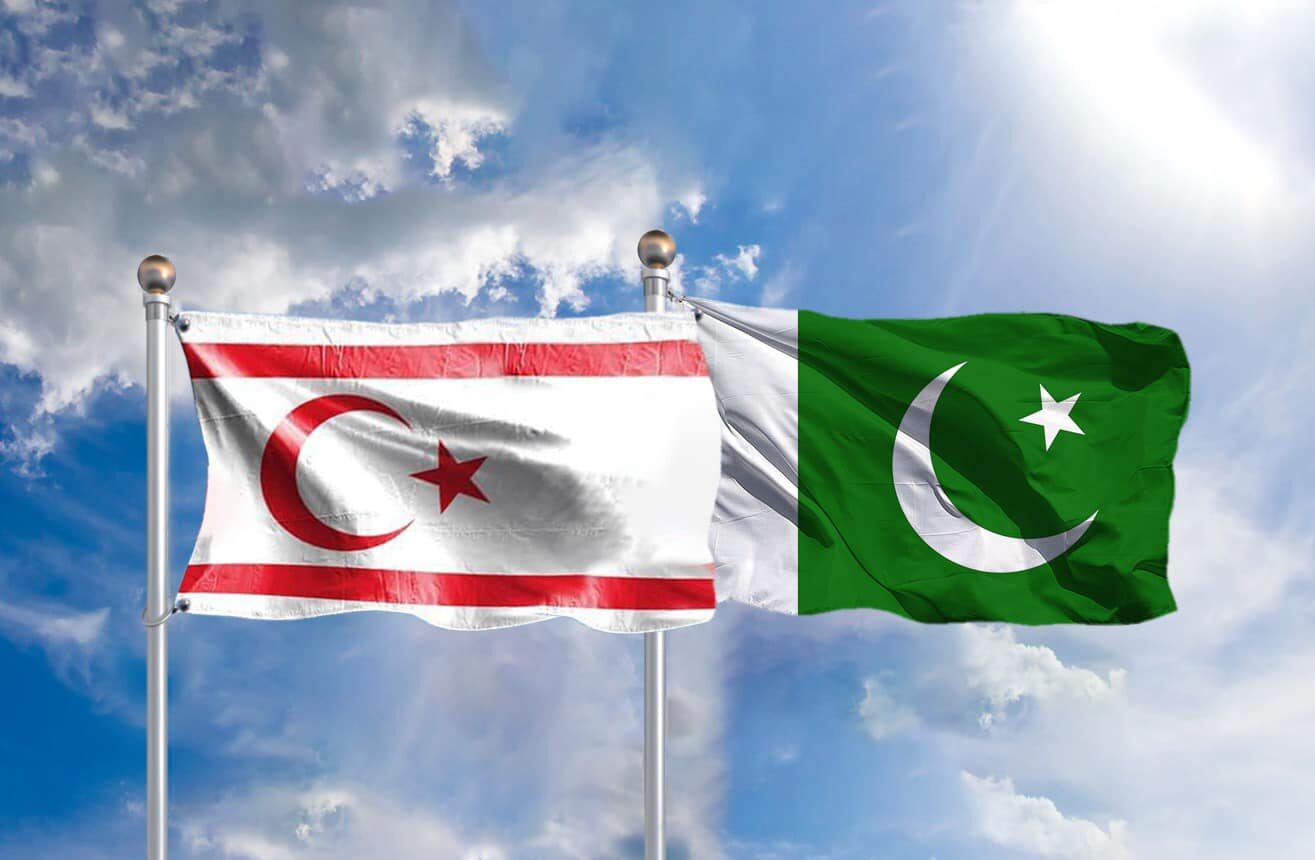
    Today, we continue to witness this unwavering spirit of solidarity not only in the context of Türkiye but also in the principled stance your country has taken towards the Turkish Republic of Northern Cyprus (TRNC). While others have chosen the path of silence and isolation, Pakistan has demonstrated moral clarity and brotherhood. The Turkish people recognize and deeply appreciate this courageous and just approach. Just as Pakistan has stood by Türkiye and the TRNC, we in Türkiye stand in resolute solidarity with our Kashmiri brothers and sisters, and with the noble people of Pakistan. The issue of Jammu and Kashmir remains close to the hearts of the Turkish people. We know too well that any attack direct or indirect on the sovereignty or dignity of Pakistan is felt by the Turkish people as an affront to their own.

    Your Excellency, as you embark upon your important mission at the United Nations, may your tenure be marked by success, wisdom, and strengthened cooperation between our brotherly nations. Türkiye looks forward to continuing our close collaboration on matters of mutual concern, from promoting global peace to defending the just causes of our nations and peoples.

    Once again, I offer you my heartfelt congratulations and look forward, Inshallah, to the honor of meeting you in the near future.

    With profound respect and warm regards,

    Respectfully,

    Ibrahim Kurtulus 

    Community Activist 

    New York, Staten Island