The Turkish government this week brokered an 11th-hour nuclear fuel swap deal with Iran. Turkey’s foreign minister explains the principles that made it possible.
by Ahmet Davutoglu
 Throughout modern history, there has been a direct relationship between conflict and the emergence of new ways of arbitrating world affairs. Every major war since the 17th century was concluded by a treaty that led to the emergence of a new order, from the Treaty of Westphalia in 1648 that followed the Thirty Years’ War, to the Congress of Vienna of 1814-1815 that brought an end to the Napoleonic Wars, to the ill-fated Treaty of Versailles that concluded the first World War, to the agreement at Yalta that laid the groundwork for the establishment of the United Nations in 1945. Yet the Cold War, which could be regarded as a global-scale war, ended not with grand summitry, but with the fall of the Iron Curtain and the collapse of the Soviet Union. There was no official conclusion; one of the combatant sides just suddenly ceased to exist.
Two decades hence, no new international legal and political system has been formally created to meet the challenges of the new world order that emerged. Instead, a number of temporary, tactical, and conflict-specific agreements have been implemented. From the Nagorno-Karabakh region to Cyprus, and even the deadlocked Israeli-Palestinian dispute, a series of cease-fire arrangements have succeeded in ending bloodshed but have failed to establish comprehensive peace agreements. Overall, the current situation has quantitatively increased the diversification of international actors and qualitatively complicated the foreign-policy making process.
The Sept. 11, 2001, attacks made it clear that this situation is not sustainable. Immediately after the attacks, the United States began attempting to establish an international order based on a security discourse, thus replacing the liberty discourse that emerged after the collapse of the Berlin Wall. It is in this context that the invasions of Afghanistan and Iraq can best be understood. The intent was to transform an unstable international environment by targeting crisis-prone zones that were considered to be the sources of insecurity. But in the process, predictions about the end of history and the expansion of civil rights and liberties have largely lost their appeal.
U.S. President Barack Obama challenged the security-based perspective of the post-Sept. 11 era as soon as he assumed the presidency in 2009. He has actively attempted to restore America’s international image, and has made considerable efforts to adopt a new vision that embraces a multilateral international system and fosters close cooperation with regional allies.
Still, we are faced with an incredibly difficult period until a new global order is established. Many of today’s challenges can only be resolved with broader international involvement, but the mechanisms needed to meet fully those challenges do not exist. It will therefore fall largely to nation-states to meet and create solutions for the global political, cultural, and economic turmoil that will likely last for the next decade and beyond.
In this new world, Turkey is playing an increasingly central role in promoting international security and prosperity. The new dynamics of Turkish foreign policy ensure that Turkey can act with the vision, determination, and confidence that the historical moment demands.
Turkey in the post-Cold War era
Turkey experienced the direct impact of the post-Cold War atmosphere of insecurity, which resulted in a variety of security problems in Turkey’s neighborhood. The most urgent issue for Turkish diplomacy, in this context, was to harmonize Turkey’s influential power axes with the new international environment.
During the Cold War, Turkey was a “wing country” under NATO’s strategic framework, resting on the geographic perimeter of the Western alliance. NATO’s strategic concept, however, has evolved in the post-Cold War era — and so has Turkey’s calculation of its strategic environment. Turkey’s presence in Afghanistan is a clear indication of this change. We are a wing country no longer.
Turkey is currently facing pressure to assume an important regional role, which admittedly has created tensions between its existing strategic alliances and its emerging regional responsibilities. The challenge of managing these relationships was acutely felt in recent regional crises in the Caucasus, the Balkans, and the Middle East. Turkey remains committed to establishing harmony between its current strategic alliances and its neighbors and neighboring regions.
Turkey’s unique demographic realities also affect its foreign-policy vision. There are more Bosnians in Turkey than in Bosnia-Herzegovina, more Albanians than in Kosovo, more Chechens than in Chechnya, more Abkhazians than in the Abkhaz region in Georgia, and a significant number of Azeris and Georgians, in addition to considerable other ethnicities from neighboring regions. Thus, these conflicts and the effect they have on their populations have a direct impact on domestic politics in Turkey.
Because of this fact, Turkey experiences regional tensions at home and faces public demands to pursue an active foreign-policy to secure the peace and security of those communities. In this sense, Turkish foreign policy is also shaped by its own democracy, reflecting the priorities and concerns of its citizens. As a result of globalization, the Turkish public follows international developments closely. Turkey’s democratization requires it to integrate societal demands into its foreign policy, just as all mature democracies do.
The European Union and NATO are the main fixtures and the main elements of continuity in Turkish foreign policy. Turkey has achieved more within these alliances during the past seven years under the AK Party government than it did in the previous 40 years. Turkey’s involvement in NATO has increased during this time; Turkey recently asked for, and achieved, a higher representation in the alliance. Turkey also has advanced considerably in the European integration process compared with the previous decade, when it was not even clear whether the EU was seriously considering Turkey’s candidacy. EU progress reports state that Turkish foreign policy and EU objectives are in harmony, a clear indication that Turkey’s foreign-policy orientation aligns well with transatlantic objectives.
As we leave behind the first decade of the 21st century, Turkey has been able to formulate a foreign-policy vision based on a better understanding of the realities of the new century, even as it acts in accordance with its historical role and geographical position. In this sense, Turkey’s orientation and strategic alliance with the West remains perfectly compatible with Turkey’s involvement in, among others, Iraq, Iran, the Caucasus, the Middle East peace process, and Afghanistan.
Our principles
Over the past seven years, Turkey has been able to formulate a systematic and cohesive methodological approach to world affairs because its political party has been able to govern, resulting in real political stability at home.
Three methodological and five operational principles drive Turkey’s foreign policy today. The first methodological principle is its “visionary” approach to the issues instead of the “crisis-oriented” attitude that dominated foreign policy during the entire Cold War period.
For example, Turkey has a vision of the Middle East. This vision encompasses the entire region: It cannot be reduced to the struggle against the PKK (Kurdistan Workers’ Party), the radical Kurdish separatist group that for decades has waged a campaign of terror against Turkey, or efforts to counterbalance specific countries. Turkey can use its unique understanding of the Middle East, and its diplomatic assets, to operate effectively on the ground. Turkey’s Lebanon policy, its attempts to mediate between Syria and Israel and achieve Palestinian reconciliation, its efforts to facilitate the participation of Iraqi Sunni groups in the 2005 parliamentary elections, and its constructive involvement in the Iranian nuclear issue are integral parts of Turkey’s foreign-policy vision for the Middle East.
The second methodological principle is to base Turkish foreign policy on a “consistent and systematic” framework around the world. Turkey’s vision for the Middle East is not in opposition to its approach in Central Asia or in the Balkans; our approach to Africa is no different from our approach to Asia. Turkey is also actively trying to improve relations with nearby countries like Greece, Iraq, the Russian Federation, and Syria.
The third methodological principle is the adoption of a new discourse and diplomatic style, which has resulted in the spread of Turkish soft power in the region. Although Turkey maintains a powerful military due to its insecure neighborhood, we do not make threats. Instead, Turkish diplomats and politicians have adopted a new language in regional and international politics that prioritizes Turkey’s civil-economic power.
From these three methodological approaches, five operational principles guide Turkey’s foreign policy-making process. The first principle is the balance between security and democracy. The legitimacy of any political regime comes from its ability to provide security and freedom together to its citizens; this security should not be at the expense of freedoms and human rights in the country. Since 2002, Turkey has attempted to promote civil liberties without undermining security. This is an ambitious yet worthy aim — particularly in the post-Sept. 11 environment, under the threat of terrorism, in which the general tendency has been to restrict liberties for the sake of security.
Turkey has made great strides in protecting civil liberties despite serious domestic political challenges to such freedoms over the past seven years. This required vigorously carrying out the struggle against terrorism without narrowing the sphere of civil liberties — a challenge Turkey successfully overcame. In the process, we’ve found that Turkish soft power has only increased as our democracy has matured.
Second, the principle of zero problems towards neighbors has been successfully implemented for the past seven years. Turkey’s relations with its neighbors now follow a more cooperative track. There is a developing economic interdependence between Turkey and its neighboring countries. In 2009, for example, we achieved considerable diplomatic progress with Armenia, which nevertheless remains the most problematic relationship in Turkey’s neighborhood policy.
Turkey’s considerable achievements in its regional relationships have led policymakers to take this principle a step further and aim for maximum cooperation with our neighbors. Since the second half of 2009, Turkey established high-level strategic council meetings with Iraq, Syria, Greece and Russia. These are joint cabinet meetings where bilateral political, economic, and security issues are discussed in detail. There are also preparations to establish similar mechanisms with Bulgaria, Azerbaijan and Ukraine as well as other neighboring countries. Turkey abolished visa requirements with, among others, Syria, Tajikistan, Albania, Lebanon, Jordan, Libya and Russia. Turkey’s trade with its neighbors and nearby regions has substantially increased in recent years.
The third operative principle is proactive and pre-emptive peace diplomacy, which aims to take measures before crises emerge and escalate to a critical level. Turkey’s regional policy is based on security for all, high-level political dialogue, economic integration and interdependence, and multicultural coexistence. Consider Turkey’s mediation between Israel and Syria, a role that was not assigned to Turkey by any outside actor. Other examples of pre-emptive diplomacy include Turkey’s efforts to achieve Sunni-Shiite reconciliation in Iraq, reconciliation efforts in Lebanon and Palestine, the Serbia-Bosnia reconciliation in the Balkans, dialogue between Afghanistan and Pakistan, and the reconstruction of Darfur and Somalia.
The fourth principle is adherence to a multi-dimensional foreign policy. Turkey’s relations with other global actors aim to be complementary, not in competition. Such a policy views Turkey’s strategic relationship with the United States through the two countries’ bilateral strategic ties and through NATO. It considers its EU membership process, its good neighborhood policy with Russia, and its synchronization policy in Eurasia as integral parts of a consistent policy that serves to complement each other. This means that good relations with Russia are not an alternative to relations with the EU. Nor is the model partnership with the United States a rival partnership against Russia.
The fifth principle in this framework is rhythmic diplomacy, which aspires to provide Turkey with a more active role in international relations. This principle implies active involvement in all international organizations and on all issues of global and international importance. Turkey became a non-permanent member of the U.N. Security Council and is chairing three critical commissions concerning Afghanistan, North Korea, and the fight against terror. Turkey undertook the chairmanship-in-office of the South-East European Cooperation Process, a forum for dialogue among Balkan states and their immediate neighbors, for 2009 and 2010. Turkey is also a member of G-20, maintains observer status in the African Union, has a strategic dialogue mechanism with the Gulf Cooperation Council, and actively participates in the Arab League. Turkey has also launched new diplomatic initiatives by opening 15 new embassies in Africa and two in Latin America, and is a signatory to the Kyoto Protocol. These developments show a new perspective of Turkey, one that is based on vision, soft power, a universal language, and implementation of consistent foreign policies in different parts of the world.
A new vision
Today, Turkey has a great deal of say in the international arena. More importantly, there is a critical group of countries that lends a careful ear to Turkey’s stance on a myriad of regional and international issues. At this point, the world expects great things from Turkey, and we are fully aware of our responsibility to carry out a careful foreign policy.
Our “2023 vision,” to mark the Turkish Republic’s centennial, is a result of this necessity. The first step of this vision is to integrate Turkey’s foreign-policy discourse into its national discourse. Any possible contradiction, gap or contrast between these two will make it difficult to carry out an active, responsible, and successful foreign policy. In the coming era, Turkey plans to deepen and strengthen its democracy, place relations between Turkish society and Turkey’s governing institutions on firm ground, and show the world the strength of its own domestic balance. There is a continuous need to integrate domestic political accomplishments into the vision of foreign policy (i.e. democratization and cultural respect) and to inject foreign-policy activism and self-confidence back into the domestic political scene.
Thanks to the multi-dimensional and dynamic nature of Turkish foreign policy, Turkey’s relations with the US are being built on firmer ground. Turkish-U.S. relations have reached a point where they can ensure bilateral cooperation and work toward global stability. Put into a framework of “model partnership” described by President Obama when he visited Turkey on his first overseas trip, bilateral relations are of vital importance for both countries. The term “model partnership” emphasizes the importance of high-level cooperation between Turkey, with its multiple regional identities and an increasing say in global affairs, and the United States, which has long-lasting ties with regional countries and direct responsibility for global stability. The partnership is guided by a set of shared values and principles aimed at bringing peace, security, stability, and economic prosperity to the zones of conflict in various regions.
Meanwhile, relations with the EU are also being bolstered. It is no longer possible to think of the EU and Turkey independent of one another when considering Turkey’s foreign policy. EU integration is undoubtedly a process that is favorable to Turkey. But this process brings great benefits to the EU itself, both regionally and globally.
Turkey’s foreign-policy objectives and its vision of how to achieve them are very clear. Turkey has multiple goals over the next decade: First, it aims to achieve all EU membership conditions and become an influential EU member state by 2023. Second, it will continue to strive for regional integration, in the form of security and economic cooperation. Third, it will seek to play an influential role in regional conflict resolution. Fourth, it will vigorously participate in all global arenas. Fifth, it will play a determining role in international organizations and become one of the top 10 largest economies in the world.
These goals aim to build a strong and respectable Turkey that is able to make an original contribution to the world community. To achieve them, Turkey must make progress in all directions and in every field, take an interest in every issue related to global stability, and contribute accordingly. This collective effort will make Turkey a global actor in this century. Turkey’s actions are motivated by a great sense of responsibility, entrusted to it by its rich historical and geographic heritage, and by a profound consciousness of the importance of global stability and peace.
www.foreignpolicy.com, May 20, 2010


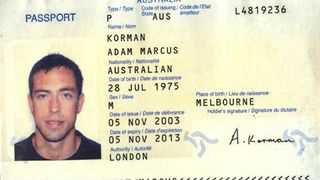
 The chief of Australia’s Security and Intelligence Organization, David Irvine, managed to convince the Australian government that Israel had a hand in the passport counterfeit after a clandestine trip to Israel earlier this month to investigate foul play. Upon his return, he claimed that four of the passports used during the assassination had been Australian counterfeits, according to news reports.